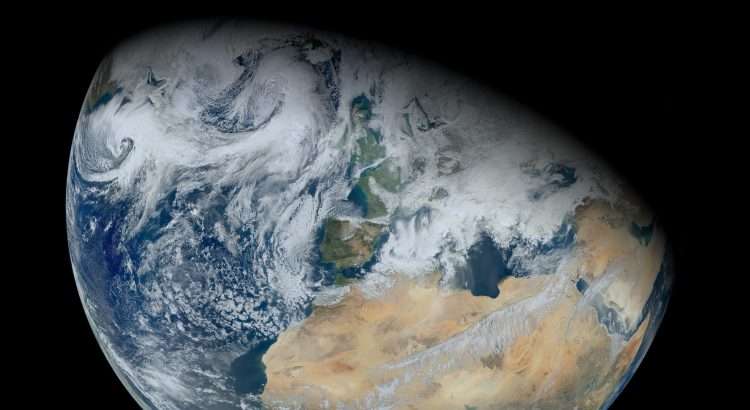
We are local and temporary expressions of larger social and ecological systems, so our whole life and existence is impacted by our global ecological crisis.
Our life-support system is in a massive crisis, we notice and know, and this will inevitably bring up things i many of us – stress, grief, anxiety, anger, old trauma, a wish to work for change, and so on.
A recent study found that in the US, a majority of young people are concerned (AKA scared) about the future. (Survey of young people aged 16-25 from all US states shows concerns across political spectrum in The Guardian.)
So how do we deal with it?
I won’t write a detailed and general overview, but I can share some of what I have found that helps me:
WORLDVIEW & ASSUMPTIONS
I explore more nourishing and life-centered worldviews, and I actively work on allowing these to transform me.
I love the Universe Story. It’s based in science and gives a context of wonder and awe for our lives. We are the local and temporary expressions of the unfolding of the universe. We are the universe bringing itself into consciousness. We are the local eyes, ears, thoughts, and feelings of the universe. The history of the universe is, in a very real sense, our history. It’s how we came to be.
Similarly, I am a local and temporary expression of the always-evolving living system we call Earth. I am nature.
Everything I am and know – thoughts, feelings, actions, human civilization – are local and temporary expressions of this unfolding universe and the processes of this living planet.
This is a view of holarchies, of wholes within larger wholes and with smaller wholes within it. It’s a view of all as inherently sacred. If we want, it’s a view of all of reality, whatever that is, as God.
This is a more life-centered worldview. It helps me see myself as an intrinsic – temporary and local – expression of the unfoldment of it all. It helps me hold my thoughts and assumptions more lightly.
IDENTIFYING THE LESS LIFE-CENTERED WORLDVIEWS AND ASSUMPTIONS
This is in contrast to the conventional worldview of our civilization, which is of separation. This is the worldview of our agricultural civilization, aimed at justifying unequal access to resources, domestication, social hierarchies, abuse of living beings and nature, theft of the land of those who are “inferior”, and so on.
Here, we are separate from nature. Mind is separate from body. Only humans have souls. The sacred is in a god in the sky. We should take someone’s word about the fundamentals of who and what we are, and pretend we believe it (whatever that means). Western civilization is superior. Nature is here for our benefit. Nature is infinite. Thoughts can tell us the full, absolute, and final truth about something. We best understand something by taking it apart to its smallest parts. If one thought is true, other perspectives must be false. Some emotions are good and others are bad. We see the world in polarities where one end is bad and undesirable and the other good and desirable. And more.
I find it helpful to know some of this history, recognize these kinds of worldviews and assumptions, explore the effects of these, and find worldviews and assumptions that are more life-centered and can help us develop a more ecologically sound civilization.
OTHER ASSUMPTIONS
I also use other assumptions that, in my experience, fit with a more life-centered worldview.
I see all beings as primarily consciousness. They are consciousness to themselves, just as I am, and we all live through different bodies with different psyches. All beings are then fundamentally the same as me. All beings want happiness and to be free of suffering, just like me.
Thoughts are questions about the world. They have a practical function only, to help us orient and function in the world. They cannot hold any full, final, or absolute truth. The world is always more than and different from our maps.
If people act in destructive ways, it’s either because of the system we are all part of or trauma. Usually, it’s both. The system leads to trauma, and the system and trauma come together to bring about destructive actions. (This is the system that comes from a worldview of separation.)
BEFRIENDING EXPERIENCE
I explore befriending my experiences and wounded parts of myself.
How do I relate to this experience that’s here? These sensations, mental images, words? Can I find a more gentle and kind way to relate to it?
When I experience distress, it comes from distressed parts of me. It’s not all of me. These parts want the same as me: Love, kindness, acceptance, understanding, support. How is it to give it to them? How is it to give them what they most deeply want? How is it to be a good parent to these parts of me?
ALLOWING MYSELF TO BE HUMAN
I allow myself to be human with easy and difficult days and the full range of human experiences, thoughts, emotions, hopes and fears. It’s normal. It’s human. It makes me like anyone else.
In a very real sense, these emotions are the emotions of this living system we call Earth. They are the local and temporary expressions of Earth, in this case, responding to what’s happening to itself. (Filtered through the usual biases, interpretations, hangups, and so on that this particular local and temporary expression of this living system has.)
THE REALITIES OF LIVING IN THIS SYSTEM
Most of us live within this global civilization which is inherently ecocidal and suicidal. It’s a system that assumes separation from nature, and infinite natural resources. That means that all of us, inevitably, live lives that are somewhat ecocidal and suicidal. It’s mostly about the system, and less about us as individuals.
I know that living in this system, my life will inevitably be somewhat destructive. It’s inevitable. It’s not personal, it’s how it is for all of us. What I can do is do my small part in nudging it in a more life-centered direction.
ENGAGEMENT
I do whatever small things I can do in my own life. I compost. Eat organic and local if possible. Take public transportation unless I have a good reason to use a car. Vote for those who take our ecological crisis seriously.
I am also in the fortunate situation that I have land in the Andes and am working on regeneration, reforestation, and creating a food forest here. I love the work we are doing to help this land. This morning, I planted more Maya nut seeds, and participating in the regeneration in this way, in partnership with the nature here, is deeply rewarding and meaningful.
Engagement in the solutions, even in apparently small ways, gives a more visceral sense of hope.
COMMUNITY
I seek out communities of like-minded people. I loved being at the Zen Center in Salt Lake City. I love the Breema community. I love the Permaculture community. I love the people in the Green Party in Norway that I have met. When I am reminded of the Universe Story, Deep Ecology, Permaculture, systems views, and so on, I feel connected to a worldwide community of people who share these interests and this orientation.
Here in the Andes, I seek out and have found people who work with regeneration, bodymind practices, and so on. Just knowing about them helps me a lot, and I also enjoy the interactions and exchanges.
VOTING
Voting alone is not going to save us, but it is an important piece of the puzzle.
If I know what’s happening in the world today, and it’s the consequence of the policies of the parties that have been in power for decades, it makes no sense to vote for these.
I personally vote for, and am a member of, the Green Party in Norway. They get the situation, want to do something about it, and get enough votes to be included in the government.
QUESTIONING STRESSFUL STORIES & EXPLORING PROJECTIONS
I identify and question my stressful stories. For this, I generally use The Work of Byron Katie, although I did it so much that The Work mostly does itself.
This is an effective way to explore – to notice and own – projections and the shadow. What I see in others is also here in me. Whatever story I have about someone else, I can turn it to myself and find genuine and specific examples of how it’s true.
I am in the same boat as everyone else. I am not inherently better or worse. (Also because ideas about better or worse are just that, ideas. It’s not inherent in reality.) I live in the same system as everyone else.
MEDITATION & YOGA
I have done a good amount of meditation in my life, although these days it’s mostly in the form of noticing in daily life. I especially like basic meditation – to notice and allow what’s here, fail at it, and then notice it’s all already noticed and allowed.
I find training more stable attention very helpful, it supports just about any activity in daily life and also general well-being.
I have also variously done tai chi, qigong, yoga, and Breema, and love it. It’s nourishing and brings me home to myself – as bodymind and the consciousness it’s happening within – in a more visceral way.
NOTICING MY NATURE
I have used the Big Mind process and Headless experiments to explore my nature, although these days I mostly just notice.
In one sense, I am a human being in the world. That’s not wrong. It’s an assumption that works relatively well, although it also comes with inherent stress and discomfort.
In my own first-person experience, I find I am fundamentally something else. I am what the world, as it appears to me, happens within and as. I am consciousness, and the world, to me, happens within and as the consciousness I am.
This gives a different and more real context to this life and everything else.
I should mention that this says something about my nature, not the nature of all of existence, and that’s more than enough. It leaves the nature of all of existence open for question and exploration.
HEART-CENTERED PRACTICES
I use tonglen and ho’oponopono.
In tonglen, I visualize someone in front of me. It can be an individual (including myself) or group or the whole world. I see their suffering as black smoke and breathe it in. In me, it transforms to light and I breathe that light out and into the other(s). I repeat many times until and beyond there is a deepening shift. This helps me viscerally see myself in others, it opens for empathy, and any sense of division softens and/or goes away.
In ho’o, I similarly visualize someone – perhaps someone I have a difficult relationship with in my life or the world. I say: I am sorry. Please forgive me. I love you. Thank you. (To me, they happen within and as what I am so this makes sense, although it works even if it doesn’t make sense at a thought level.)
NATURE
I love to spend time in nature. The more untouched the better, although any nature is nourishing – even if it’s just seeing the sky and clouds outside the window. I love to work in the garden. It’s amazing how plants grow and how a plant comes out of a seed and knows how to do all of it.
It also helps me to notice that I am nature. Everything around me is nature. It’s all this living system we call Earth forming itself into all of it, including what we think of as human civilization.
DON’T KNOW
I don’t know how this will all unfold. I don’t know what will happen with Earth and human civilization.
It’s possible we won’t have much time left, and that’s OK. Our time as a species and civilization always had an expiration date.
It’s also possible that some of us will come out at the other end.
I don’t know. I can know what science says. I can know the different scenarios and how likely each of them looks to us now. And I cannot know for certain.
For me, there is peace in resting in that don’t know. It’s what’s most honest to me.
DEATH GIVES LIFE
I also know that death gives life. The death of stars made this planet and us and all we know possible. The death of species allows new species to emerge. The death of individuals give space for new individuals.
Death is what allows everything we know.
We wouldn’t be here without it. This universe as we know it couldn’t exist without it.
THE BEAUTY OF THE FLEETING
Everything has an expiration date. Our civilization has an expiration date. Our species has an expiration date. I have an expiration date. It will all be completely gone one day, with no-one to remember any of it.
That can seem sad and terrible, and there is also an immense beauty in it. There is an immense beauty in that everything is fleeting. Everything has its time and is then gone.
IMPERMANENCE & OUR NATURE
One of the beautiful things in the fleeting nature of everything is that it invites us to notice our own fundamental nature.
Everything in my field of experience is fleeting. It’s always changing. Everything about this human self is fleeting and changing.
So how can I fundamentally be any of it? What am I more fundamentally?
I find I am what it all happens within and as. To myself, I am consciousness forming itself into all of it.
Getting this in mental representations is one thing. It’s a good start and can give inspiration to explore it in immediate noticing. What it is about is the noticing and viscerally getting it through noticing. That’s where it transforms this human self, over time. And it is more than possible to notice it and keep noticing it. If there is a sincere wish, and some guidance, it’s more than possible.