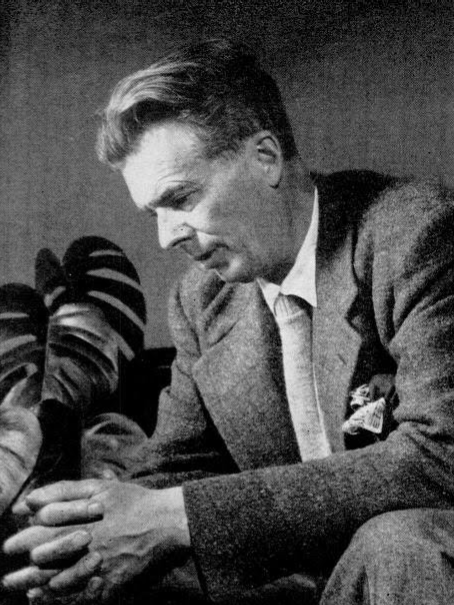
Too much consistency is as bad for the mind as it is for the body. Consistency is contrary to nature, contrary to life. The only completely consistent people are the dead.
– Aldous Huxley
IMMEDIATE ANSWER
Why is that?
The immediate answer for me is that life is far too rich and complex for too much consistency. What I am moved to in the moment, and what’s authentic for me now, may be different from how it was at another time and in another situation.
Consistency is an idea, and life is far more than and different from our ideas and shoulds about it.
At the same time, I use the idea of consistency in some ways. I use it to see if I live from what’s genuinely most important to me in different situations and areas of life. If not, am I caught up in some wound, unquestioned story, or unloved fear? I also use it to look at sets of ideas. Are they roughly mutually consistent? If not, am I missing something?
I can go into some of this in more detail…
WHAT TYPES OF CONSISTENCY ARE THERE?
First, what types of consistency are there?
There is the consistency over time, of staying with the same over time. If there is too much consistency here, if we don’t change and adapt over time, it may be because it’s imposed by a should that prevents flow and following what’s more authentic for us at the moment.
There is consistency across areas of life and situations and circumstances. If we lack consistency here, it may be good to look at and explore what’s behind it. Is it something I am not seeing? Am I caught up in shoulds or wounds in some areas of life or some situations? Do these create inconsistencies in how I am?
And there is internal consistency within a set of thoughts – a framework, model, or map. We can have a pretty good consistency, but complete consistency is neither possible nor desirable.
LIFE IS FAR TOO RICH TO BE CAPTURED BY THOUGHTS
Life is far too rich, complex, and fluid for complete consistency.
How is it to hold my ideas of consistency more lightly? How is it to acknowledge that life is far more than can be captured by my ideas of consistency? That it will always show up in ways that don’t fit my ideas, and that it’s a blessing when it does?
What are the shoulds in me around consistency? Where do they come from? My culture? My family? Others? What happens if I follow these shoulds? How do I live my life? What’s genuinely more true for me than these shoulds? What’s the validity in the reversals of these shoulds?
How is it to hold these shoulds more lightly? How is it to live from what’s genuinely more true for me?
EXAMINING THE IDEA OF CONSISTENCY
Why does something appear more or less consistent?
It seems to come from comparing my ideas about a series of things with an idea of consistency and seeing how well they match. It comes from comparing ideas with ideas.
That’s not wrong or bad, although it’s important to notice the limits of thoughts.
Thoughts are questions about the world. Each one is a perspective with some limited validity, and the type of validity varies from thought to thought.
Thoughts are maps, and reality is always more than and different from any map.
My ideas about consistency – whether there is consistency or not, or shoulds about consistency – are not inherent in reality itself. They are my ideas. They are my imaginations. They don’t capture reality.
THE IMPOSSIBILITY OF COMPLETE CONSISTENCY
Anything that presents itself as completely consistent – whether it’s a thought system, a life, or something else – pretends it’s something else than it is. If it’s a thought system, it pretends it’s more accurate and comprehensive than it is and can be. If it’s a life, it pretends it’s more consistent than what’s possible.
There are degrees of consistency, as far as we can tell by comparing ideas with ideas, and complete consistency is impossible, which is a good thing.
The idea that we can have full consistency and that it’s desirable comes from an orientation that’s out of alignment with life.
If it’s about a thought system, the idea of consistency rests on the assumption that thoughts can represent some kind of full, final, or absolute truth, and the assumption that if one thought is true, another one with a different view cannot be (either-or thinking).
If it’s about a life, the idea of consistency – and that it’s a good thing – rests on the idea of an ideal and that we should live up to it, likely to be loved, accepted, approved of, and so on.
These assumptions are found as a thread through Western history, and they go against the reality of life as Huxley suggests.
WHY IS IT BAD FOR THE MIND AND BODY?
Life is infinitely richer than and different from my ideas about it.
If I confine myself by telling myself I know how life is or should be, I create a mental prison for myself. I close myself off from my natural receptivity and curiosity.
This receptivity and curiosity seem inherent in what I am. It’s what allows me to be open to new opportunities and landscapes presented to me by life, explore and make use of them, and learn more about life.
If I imagine a prison and put myself in it, that’s bad for my mind and body. It’s bad for my health.
It’s also understandable, and natural since I live in this culture and civilization, and it comes from an innocent place.
MAKING USE OF THE IDEA OF CONSISTENCY
As mentioned earlier, I also make use of the idea of consistency.
The idea of consistency invites me to look at different areas of my life.
If something seems important to me, is it reflected in the many different areas of my life? Is it reflected through changing situations and circumstances? If not, what may be behind the apparent inconsistency? An unquestioned scary thought? A wound? Unmet fear?
Maybe there is a deeper consistency expressed differently in situations, circumstances, and areas of life?
NOT AN EXCUSE
This is not an excuse for indulging in whatever whims and wounds happen to come up.
When there is apparent inconsistency, that’s an opportunity for exploration. If there is an impulse to excuse it, that’s something to explore too.
MORE INFO
I asked ChatGPT 4o to write something on this topic and used what I wrote above as a prompt.
On Consistency: The Balance Between Order and Flow
Aldous Huxley’s words—”Too much consistency is as bad for the mind as it is for the body. Consistency is contrary to nature, contrary to life. The only completely consistent people are the dead”—offer a powerful starting point for exploring the tension between consistency and the dynamic nature of life. His assertion calls us to question cultural ideals of consistency and how they shape our thoughts, actions, and relationships with ourselves and the world.
THE NATURE OF LIFE: DYNAMIC AND EVER-CHANGING
Life is inherently dynamic. From the natural world to our internal experiences, nothing stays the same. Seasons shift, ecosystems adapt, and even the cells in our bodies regenerate. Similarly, our thoughts, emotions, and priorities evolve over time. To impose rigid consistency on such a fluid reality is to deny the essence of life itself.
Consistency, when overemphasized, can become a form of control, a way to feel safe in an unpredictable world. While it may provide a sense of stability, it can also stifle creativity, curiosity, and growth. In contrast, embracing inconsistency allows us to remain open to the richness and complexity of life, adapting as circumstances change.
TYPES OF CONSISTENCY
Consistency is not monolithic; it shows up in different ways:
- Consistency Over Time: Staying with the same habits, beliefs, or goals over time. While this can provide focus and discipline, excessive attachment to consistency can lead to rigidity and resistance to change.
- Consistency Across Areas of Life: Aligning values and actions in different contexts. If our behavior varies significantly across situations, it may signal unresolved inner conflicts or unexamined beliefs.
- Internal Consistency: Maintaining coherence within a thought system, framework, or worldview. While this can create clarity, it can also blind us to new perspectives that challenge our assumptions.
THE BLESSING OF INCONSISTENCY
Inconsistency is often viewed negatively in cultures that value predictability and control, but it can also be a source of freedom and vitality. It reflects our ability to adapt, grow, and respond authentically to the present moment. A deeper truth may underlie what appears to be inconsistency—a consistency of intention or values expressed in different ways.
For example, a person may value kindness, yet their expressions of kindness may vary depending on the context. They might offer comforting words in one situation and set firm boundaries in another. What seems inconsistent on the surface may actually reflect a deeper, dynamic consistency.
THE LIMITS OF CONSISTENCY
The quest for complete consistency often rests on flawed assumptions:
- In Thought Systems: The belief that thoughts can capture ultimate truth and that logical coherence equals accuracy. In reality, any thought system is a limited map, an abstraction of a far richer and more complex reality.
- In Life: The assumption that an ideal life is one lived according to rigid principles or rules. This overlooks the value of flexibility, intuition, and the wisdom that comes from engaging fully with life’s unpredictability.
CONSISTENCY AND SHOULDs
The cultural ideal of consistency often manifests as a “should.” We internalize expectations from family, culture, and society, creating mental scripts about how we ought to live. These shoulds can become mental prisons, limiting our ability to explore life authentically.
Recognizing these shoulds and questioning their origins can be liberating. What happens when we let go of the need to be consistent? What truths emerge when we live from a place of curiosity and presence rather than obligation?
CONSISTENCY AS A TOOL FOR SELF-EXPLORATION
While rigid consistency can be limiting, the concept itself can be a valuable tool for self-reflection. It invites us to explore:
- Are our actions aligned with what we value most deeply?
- Are there areas of life where apparent inconsistency reflects unresolved wounds or unexamined beliefs?
- How can we honor a deeper consistency—of intention or values—while allowing flexibility in how it is expressed?
THE IMPACT OF RIGIDITY ON MIND AND BODY
Excessive consistency can be harmful to both mind and body. Mental rigidity narrows our perspective, leaving us less adaptable and creative. It can lead to stress when life inevitably fails to conform to our expectations. Physically, this stress can manifest as tension, fatigue, or illness.
In contrast, embracing life’s unpredictability fosters resilience, openness, and well-being. It allows us to flow with life’s changes rather than resist them, reducing the burden of unnecessary mental and emotional strain.
FINDING THE BALANCE
The key is balance: valuing consistency where it serves us—such as in aligning actions with deeply held values—while embracing the fluidity and complexity of life. This balance reflects a “both-and” approach rather than “either-or” thinking. It recognizes that we can hold multiple perspectives, adapt to changing circumstances, and remain true to ourselves in the process.
CONSISTENCY AS A LIVING PROCESS
Ultimately, consistency is not a fixed state but a living process. It involves continually revisiting and refining our relationship with ourselves, others, and the world. It’s not about perfection but about presence—about showing up authentically and allowing life to shape us as much as we shape it.
By holding our ideas of consistency lightly, we can embrace the richness of life, honoring its complexity and impermanence while staying grounded in what truly matters to us.