
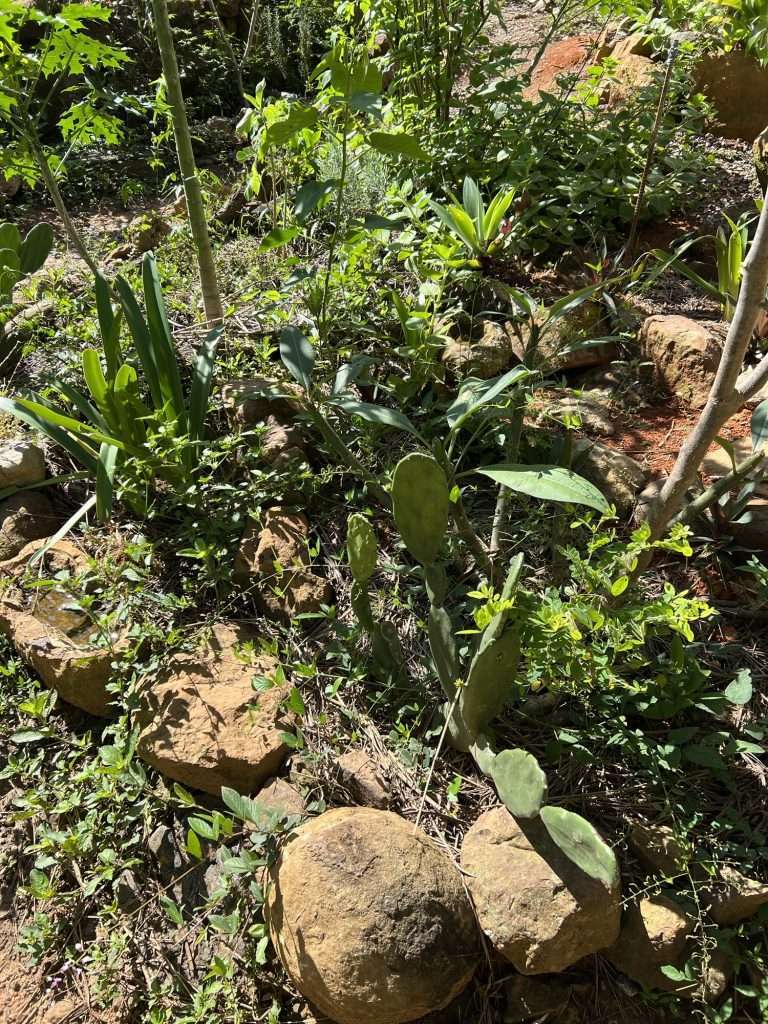


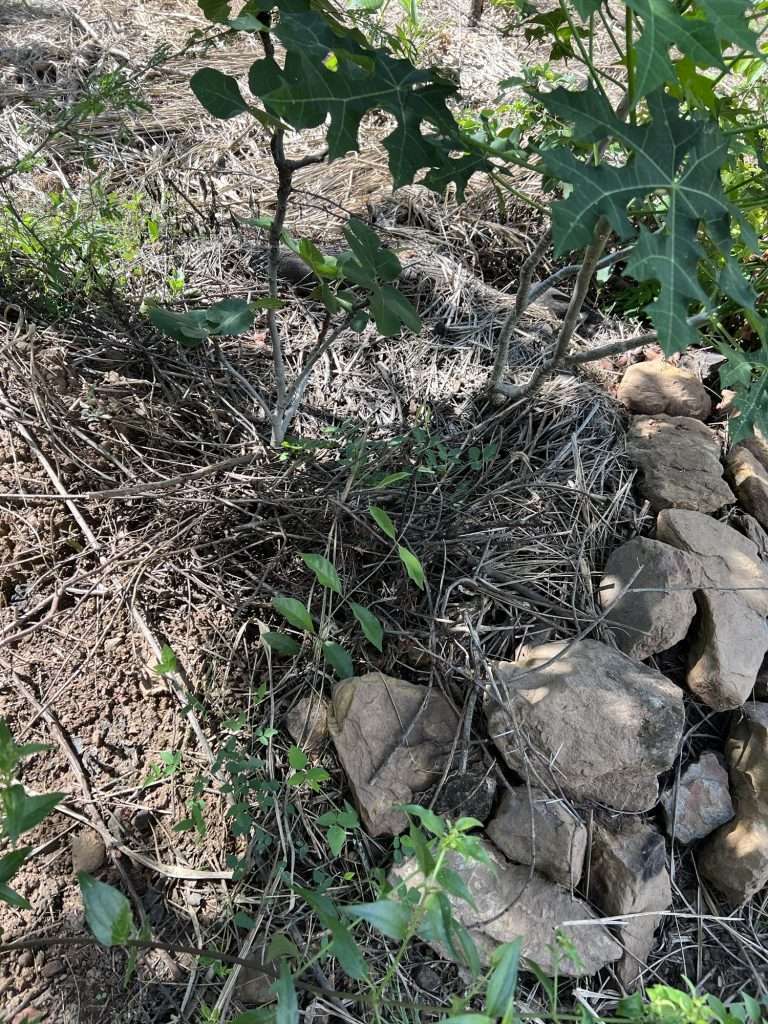
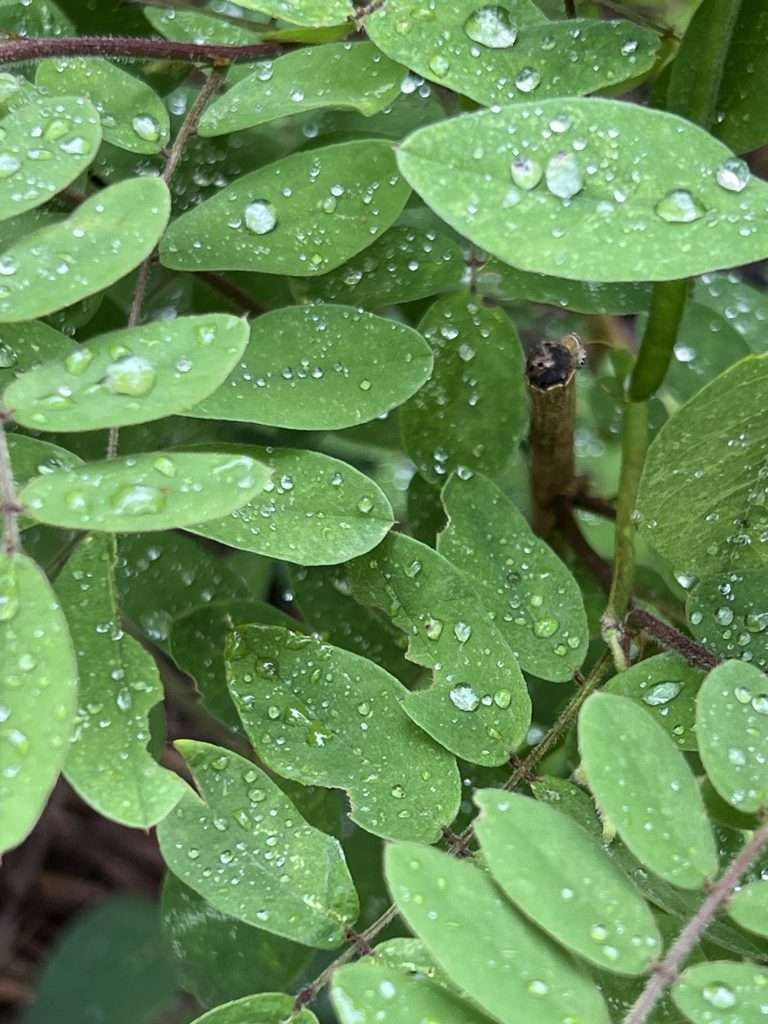
As our food forest matures, it will become increasingly resilient and self-reliant.
A food forest tends to need more inputs and management at first and then becomes more self-reliant as it matures.
A MATURE FOOD FOREST NEEDS LESS WATER
The need for water is no exception.
We have needed to water our plants quite a bit, especially during the dry season at the beginning of this year. They are young. Many are still seeds and seedlings. We are still working on the mulch cover. We are still creating swales and terraces to retain the rainwater. Many areas are still quite open so there is more wind, sun, and faster evaporation. Also, we are young in this project, just likely the food forest is young, so we may have watered more than we needed.
What are some reasons why the food forest will need less water as matures?
A thicker layer of mulch retains moisture better. It also helps slow down and absorb rainwater.
More vegetation in more layers creates more shade which reduces evaporation.
As trees and plants grow, their root system is more developed, goes deeper, and can better access water and moisture in the soil.
Healthier soil can absorb and retain more rainwater. It has a better structure and more organic matter.
More swales and terraces help retain and slow down the rainwater, allowing more of it to be absorbed into the ground.
For many reasons, including all of the above, a food forest creates a microclimate that’s cooler and more humid.
In general, we are focusing on natives since they are adapted to this climate, and also drought-tolerant species from similar climate zones that do well here. We have some that require more water close to the houses, although these also will need less watering as they mature.
In our case, we are also developing our rainwater catchment systems so we’ll be less dependent on the water from the municipality.
A MATURE FOOD FOREST DEALS BETTER WITH HEAVY RAIN
A more mature food forest not only deals better with heavy rain but also makes use of it for many of the reasons mentioned above.
Several layers of leaves and branches help slow down the drops as they fall, reducing the impact on the ground.
Swales, terraces, and thick mulch slow down the water, reducing or eliminating erosion.
Healthier soil absorbs the rainwater more effectively. It’s more porous and has more organic matter.
The roots hold the soil in place. In a food forest, there is a high density and diversity of plants with different root structures. Combined, they stabilize the soil to a remarkable degree.
We are developing a system of channels to channel rainwater into the terraces. This catches the rainwater, slows it down, and allows it to be absorbed instead of running down the hill.
THE DROUGHT TOLERANCE OF A MATURE FOOD FOREST
A more mature food forest is more drought-tolerant for the same reasons as mentioned above.
Rainwater is better absorbed into the ground, which even recharges the groundwater and benefits the larger trees.
The soil and ecosystem are better able to retain moisture.
The roots go deeper allowing them to access deeper layers of water and moisture.
More mature plants are better able to deal with droughts in general.
In our case, we are working on our rainwater catchment systems – in tanks and ponds – and this will help us during the dry seasons and drought.
THE RESILIENCY & WATER MANAGEMENT OF A MATURE FOOD FOREST
A mature food forest is amazing at regulating water, whether it’s rain or drought. After all, it mimics a natural forest ecosystem, and these evolved to do just that, among many other things.
In general, mature food forests are resilient when faced with extremes of weather and changing climate, at least more than mainstream systems of growing food and up to a point. They deal better with water and drought. They create their own microclimate. They are diverse so a higher number of plants are likely to do well as the climate changes.
PHOTOS
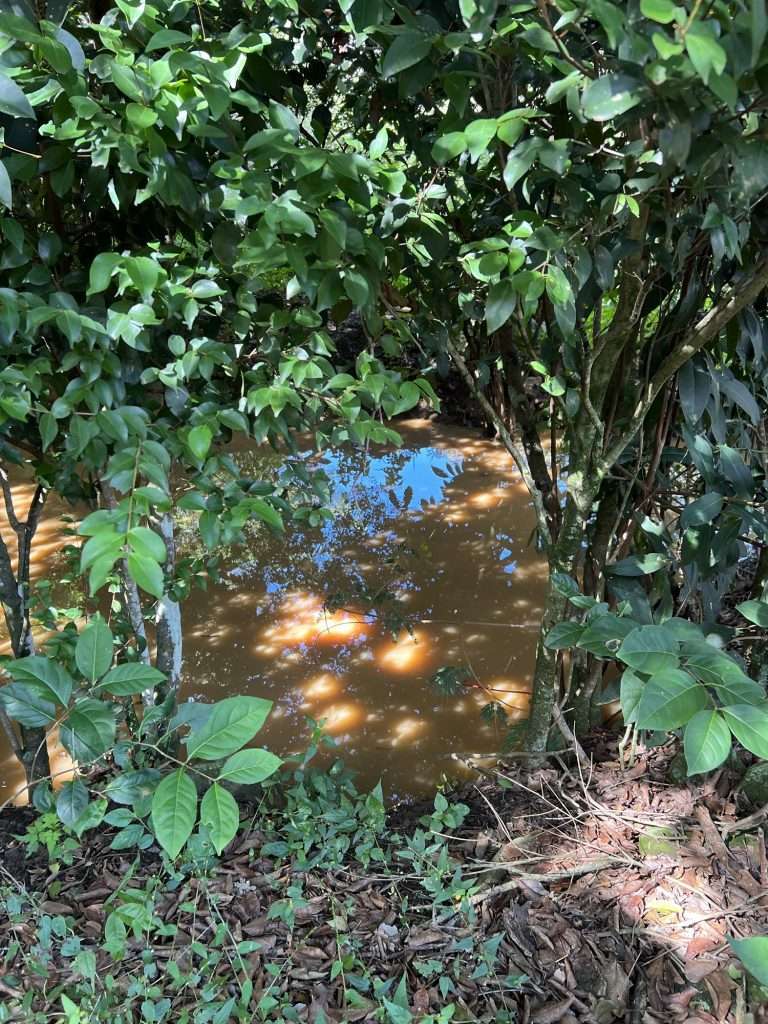
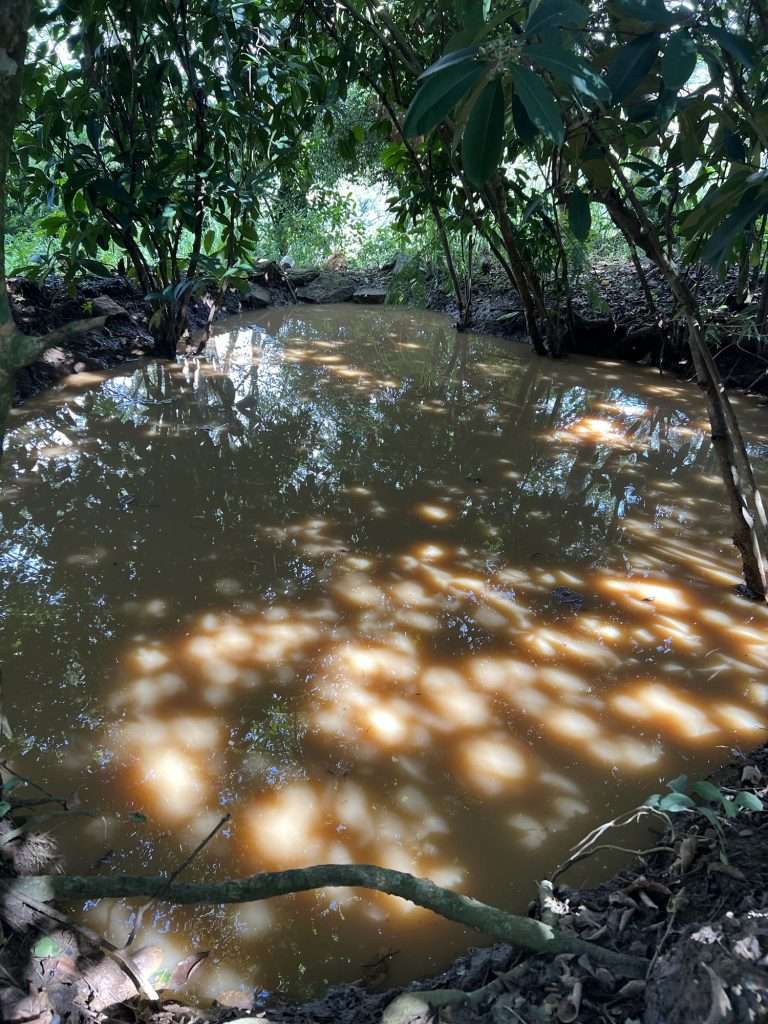
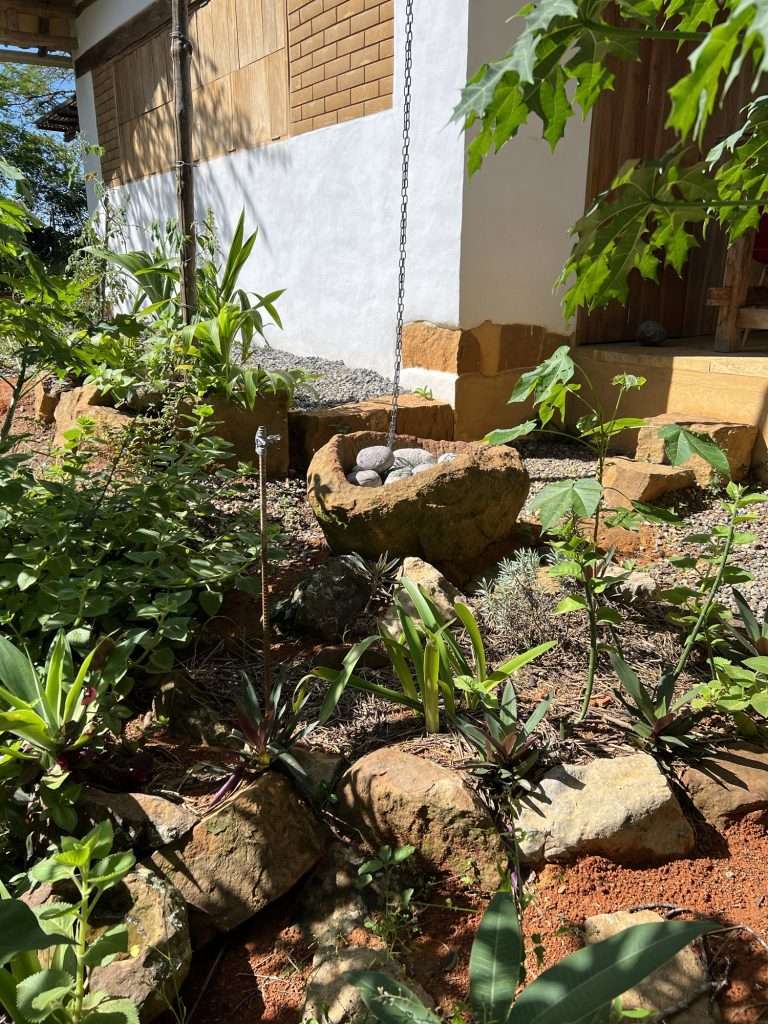
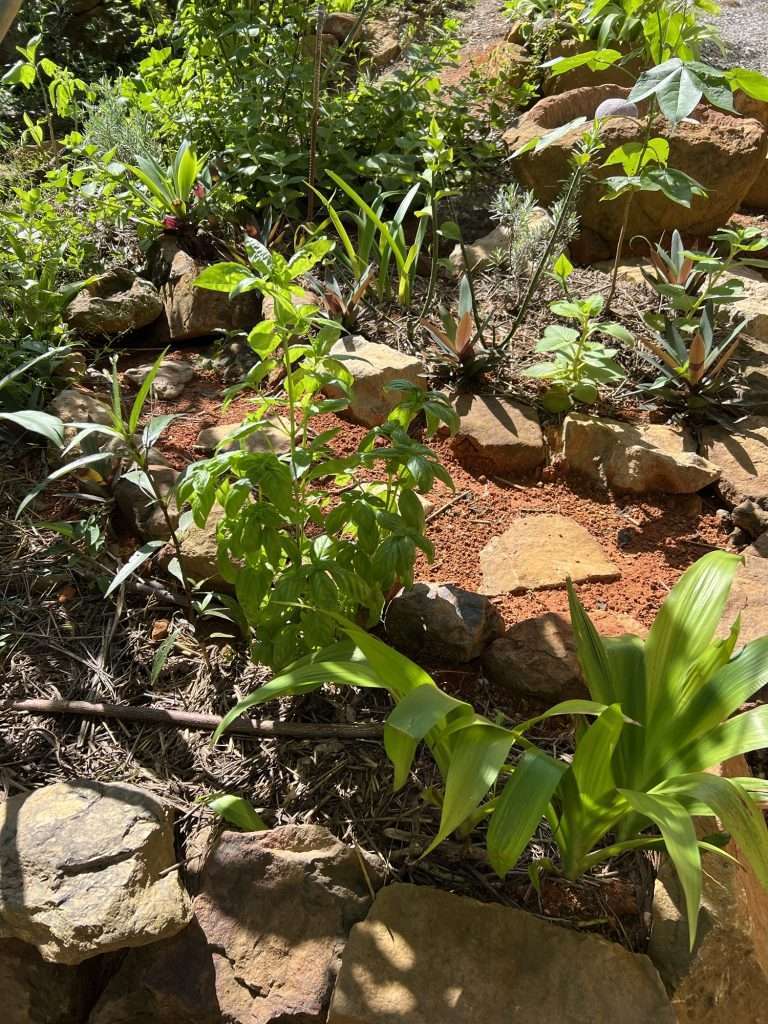
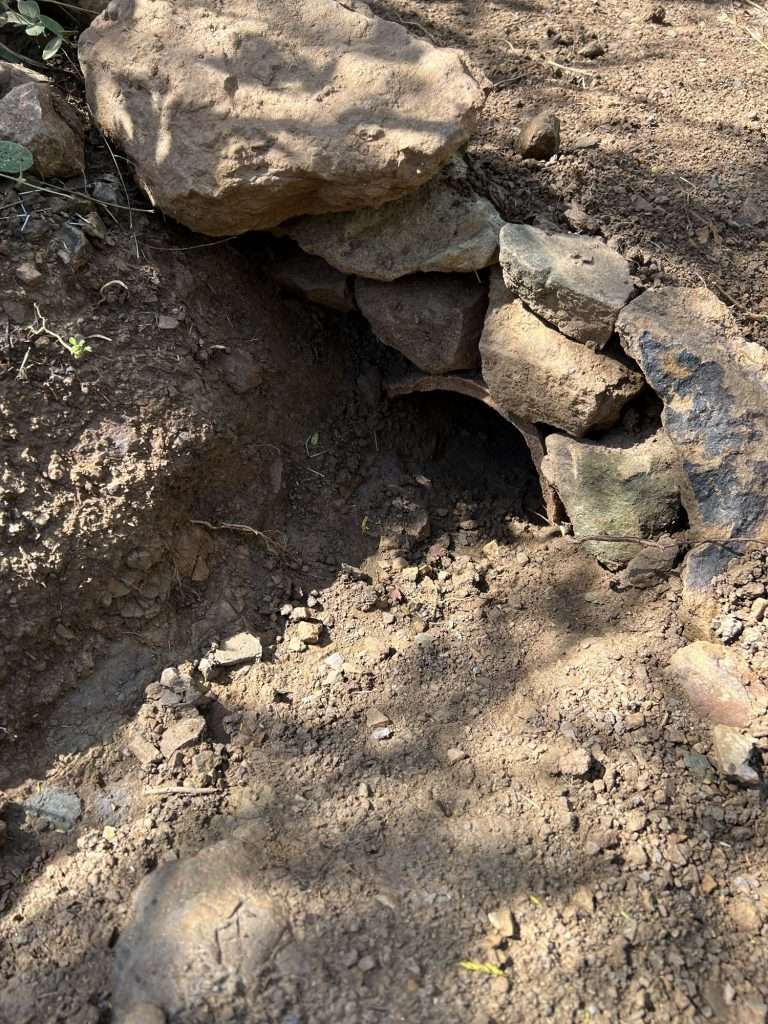
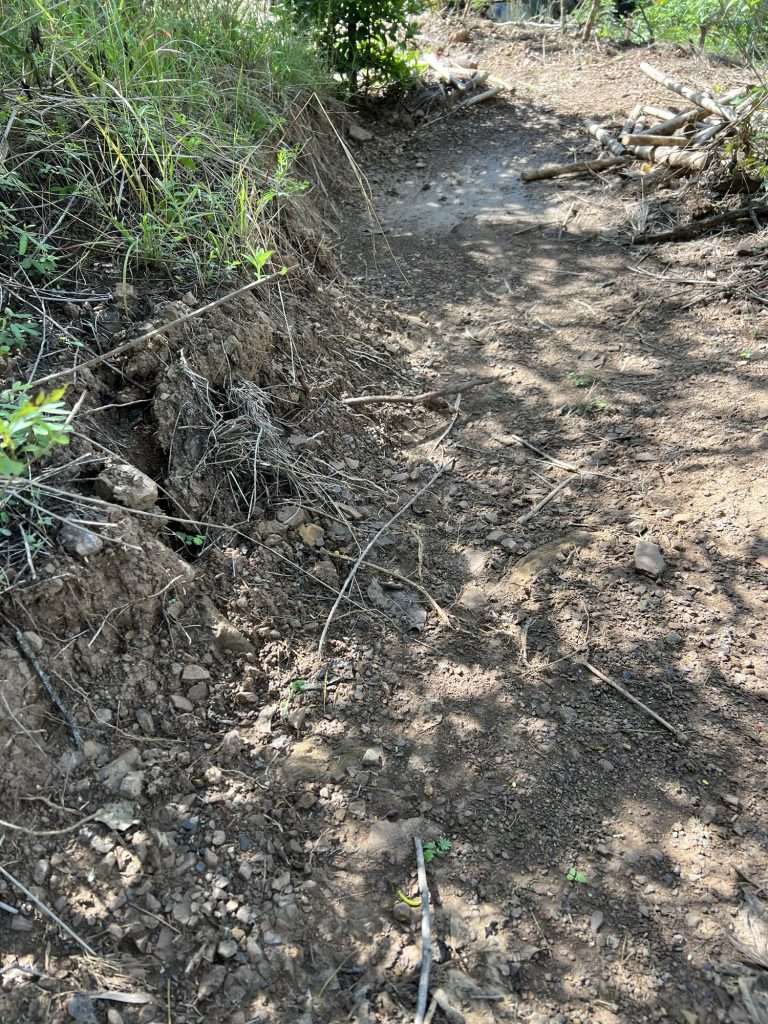
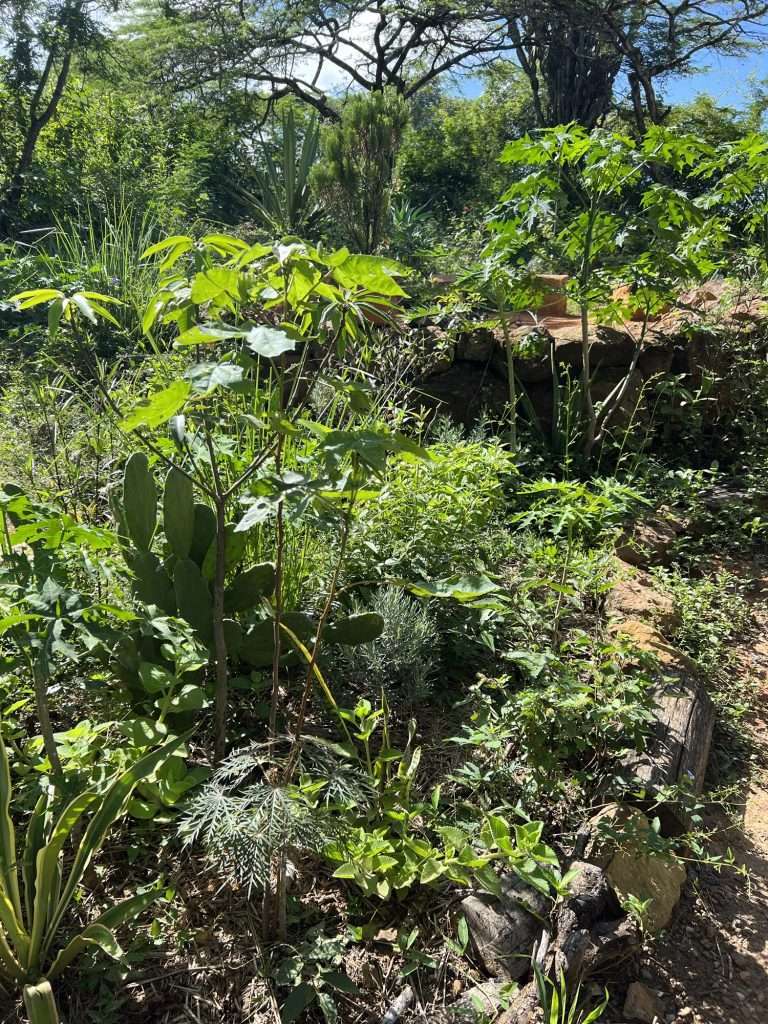
These photos are from our very young food forest. They show… A pond near the house. A carved stone that receives rainwater from the roof and channels it underground to storage tanks. A series of small terraces that receive the overflow from the stone. A rainwater channel that goes along and under a path and leads the water into a terrace. (It was just created so nothing grows there yet.) Terraces and swales. Rocks and wood used to create edges to retain the soil and rainwater. A retaining wall made of naturally rot-resistant branches used to retain soil and rainwater along the road.
We are just getting started so this will all continue to be developed as the food forest changes and we learn more.
MORE INFO
I asked ChatGPT 4o for input on these topics. See below.
Why a Food Forest Needs Less Water as It Matures
A food forest is a carefully designed, multi-layered ecosystem that mimics natural forests while producing food for people and wildlife. One of its remarkable features is its decreasing need for water as it matures. This transformation is the result of ecological processes that enhance water retention, efficiency, and recycling. Understanding these processes is key to appreciating the resilience and sustainability of mature food forests.
Canopy Development Reduces Water Loss
As a food forest matures, its canopy grows denser, reducing the amount of sunlight reaching the soil. This shade lowers the soil temperature, minimizing evaporation. The canopy also intercepts rainfall, allowing water to drip slowly onto the ground, where it can infiltrate more deeply rather than running off. Together, these factors help retain moisture within the system.
Root Systems Access Deep Water
Mature trees and plants in a food forest develop extensive and deep root systems. These roots access water stored deep in the soil, which is unavailable to younger, shallower-rooted plants. Some trees also redistribute water from deeper layers to surface soil at night, benefiting surrounding vegetation. This process, known as hydraulic redistribution, is a critical adaptation in mature forests.
Enhanced Soil Structure and Organic Matter
Over time, a food forest builds rich, organic soils. Leaf litter, decomposed plant material, and animal contributions create a thick layer of organic matter that acts like a sponge, soaking up water during rains and holding it for extended periods. The activity of soil microorganisms and fungi improves soil structure, increasing its capacity to absorb and retain moisture. This reduces the frequency and amount of watering needed.
Microclimate Creation
Mature food forests generate their own microclimate. The combination of canopy cover, understory plants, and ground covers creates a cooler, more humid environment that reduces water loss. Transpiration from plants and evaporation from the soil contribute to local humidity, helping to recycle water within the system.
Increased Biodiversity Optimizes Water Use
Diverse plant species in a mature food forest complement each other’s water needs. Some species, such as drought-tolerant or native plants, thrive with minimal water and help stabilize the system. Nitrogen-fixing plants enrich the soil, while ground covers reduce evaporation. The diversity of plants ensures that water use is spread efficiently throughout the ecosystem.
Soil Stabilization Prevents Erosion
Mature root systems stabilize the soil, preventing erosion during heavy rains. This ensures that water infiltrates the ground rather than washing away, making more water available for plants. Stable soils also retain nutrients, which reduces the need for additional inputs and enhances overall system health.
Recycling Water Through Mulch and Debris
The accumulation of organic debris, such as fallen leaves and branches, forms a natural mulch layer that prevents evaporation. This mulch not only retains soil moisture but also releases it slowly back into the environment, ensuring a steady supply of water during dry periods.
Reduced Water Competition
In the early stages of a food forest, pioneer species compete intensely for water. As the system matures, many of these species are replaced by long-lived, drought-tolerant plants that coexist harmoniously. This balance reduces overall water stress and improves the ecosystem’s efficiency.
Efficient Water Storage and Management Features
Permaculture design principles often incorporated into food forests, such as swales, berms, and terraces, become more effective over time. These earthworks capture rainwater, slow its flow, and direct it into the soil. As vegetation grows, these features integrate seamlessly into the ecosystem, enhancing its water-holding capacity.
Conclusion
A mature food forest demonstrates a natural ability to conserve and efficiently use water. Through canopy development, deep-rooted plants, organic soil building, and biodiversity, it becomes a self-sustaining system that thrives on minimal external water inputs. These characteristics make food forests a sustainable solution for agriculture, particularly in water-scarce regions.
How a Food Forest Deals with Drought
A food forest is a resilient system that can thrive in challenging conditions, including prolonged periods of drought. By mimicking natural ecosystems, it develops features and processes that conserve water, maintain soil health, and support life even with minimal rainfall. As the system matures, its drought resilience increases, making it a sustainable solution for arid and semi-arid regions.
Deep Root Systems Tap into Groundwater
One of the most significant advantages of a food forest is the development of deep root systems. Mature trees and plants access groundwater reserves far below the surface, allowing them to survive when surface moisture is scarce. Some species also perform hydraulic redistribution, bringing water from deeper soil layers to the upper layers, benefiting shallower-rooted plants.
Dense Canopy Reduces Evaporation
The canopy of a food forest shades the soil, reducing temperatures and slowing evaporation. This keeps the soil moist for longer periods, even during dry spells. The canopy also reduces the drying effect of wind, further conserving moisture within the system.
Organic Soil Retains Moisture
Over time, a food forest develops soil rich in organic matter, which acts like a sponge. This soil absorbs and holds water during rains and releases it slowly during dry periods. Microorganisms in the soil improve its structure, enhancing its capacity to store water and making it available to plants as needed.
Mulch and Ground Cover Protect the Soil
The forest floor is covered with mulch and ground cover plants, which shield the soil from direct sunlight. This protective layer prevents moisture loss through evaporation and keeps the soil temperature stable. It also reduces the impact of raindrops, helping the soil absorb water more effectively when it does rain.
Biodiversity Ensures Drought Resilience
A diverse range of plants with varying water needs ensures that some species will thrive even during drought. Drought-tolerant species form the backbone of the system, while others benefit from the moisture conservation strategies in place. This diversity reduces the risk of total system failure during extended dry periods.
Water Management Features Capture and Store Water
Permaculture-inspired designs like swales, berms, and terraces are often part of a food forest. These features capture rainwater when it is available, directing it into the soil and storing it for later use. Over time, these systems become more efficient as vegetation integrates with the landscape.
Self-Created Microclimate Maintains Humidity
A food forest creates its own microclimate, with higher humidity levels due to transpiration from plants and evaporation from the soil. This moisture recycling reduces the impact of dry conditions and helps maintain plant health during drought.
Minimized Water Competition
As a food forest matures, the ecosystem balances itself. Deep-rooted plants draw water from below, while shallow-rooted plants utilize surface moisture. This reduces competition and ensures efficient use of available water.
Long-Term Resilience Through Succession
The design of a food forest includes a natural succession process. Early-stage pioneer species prepare the soil and improve water retention, eventually giving way to long-lived, drought-tolerant trees and shrubs. This progression ensures the system becomes more self-sustaining over time.
Conclusion
A food forest deals with drought through a combination of deep-rooted plants, moisture-retaining soils, diverse vegetation, and thoughtful design. By mimicking natural ecosystems, it conserves water and supports life even in extended dry periods. This resilience makes food forests an invaluable tool for sustainable agriculture in drought-prone areas.
How a Food Forest Deals with Heavy Rainfall
A food forest is a highly resilient system that not only thrives during dry periods but also effectively manages heavy rainfall. By mimicking natural ecosystems, it incorporates features that prevent flooding, reduce soil erosion, and capture water for future use. These processes ensure that excess water is not wasted and that the system remains healthy even under extreme weather conditions.
Deep Root Systems Stabilize the Soil
The deep roots of mature trees in a food forest anchor the soil, preventing erosion during heavy rains. These roots also create channels that allow water to infiltrate deeply, reducing surface runoff and minimizing the risk of waterlogging. This natural stabilization is especially critical on slopes or areas prone to erosion.
Dense Canopy Slows Rainfall Impact
A mature food forest has a dense canopy that intercepts rainfall, slowing its impact on the ground. The water drips gradually from leaves to the soil, giving the ground more time to absorb it. This reduces the force of raindrops hitting bare soil, which is a primary cause of erosion.
Organic Soil Absorbs Excess Water
Rich, organic soil in a food forest acts like a sponge, absorbing large amounts of water during heavy rains. This reduces surface pooling and runoff. The soil’s ability to retain water ensures that plants can access it later, during drier periods. Additionally, organic matter in the soil binds it together, preventing erosion.
Mulch and Ground Cover Reduce Runoff
The forest floor, covered with mulch and low-growing plants, protects the soil from heavy rain. Mulch absorbs water and slows its flow, while ground covers prevent soil from washing away. Together, they reduce runoff and ensure that water stays within the system.
Biodiversity Provides Flood Tolerance
A diverse food forest includes plants that can tolerate temporary waterlogging. These plants help maintain the system’s balance during periods of excessive moisture. Additionally, the variety of root depths among species ensures that water is absorbed at multiple soil layers, further preventing pooling.
Water Management Features Direct Excess Water
Design elements like swales, berms, and terraces are integral to a food forest’s ability to handle heavy rainfall. Swales capture and hold excess water, allowing it to infiltrate slowly into the soil. Berms and terraces help redirect water flow, preventing erosion on slopes and distributing water evenly across the landscape.
Microclimate Regulates Water Use
The layered vegetation in a food forest creates a microclimate that helps moderate water flow. During heavy rains, the microclimate slows wind and rainwater movement, allowing for more controlled water absorption and less soil disturbance.
Self-Regulating Water Cycle
A food forest naturally balances water within its system. Excess water during heavy rainfall is absorbed into the soil, stored in organic matter, or directed into swales. Over time, this water is released back into the environment through transpiration and evaporation, maintaining a stable water cycle.
Resilience Through Succession
As a food forest matures, its plants and soil become more resilient to extreme weather. Pioneer species prepare the land to handle excess water, while the addition of deeper-rooted and water-tolerant species strengthens the system’s ability to manage heavy rainfall.
Conclusion
A food forest deals with heavy rainfall by absorbing, slowing, and redistributing water through its design and natural processes. Deep roots, rich soil, mulch, and carefully planned water management features prevent flooding and erosion, turning a potential challenge into an opportunity for replenishing water reserves. This adaptability makes food forests a sustainable and resilient choice for managing extreme weather conditions.
The Remarkable Resiliency and Water Management of a Mature Food Forest
A mature food forest is a masterpiece of ecological design, capable of thriving in diverse and often challenging environments. Its resilience and ability to manage water efficiently make it a model for sustainable agriculture, especially in the face of extreme weather and a changing climate. By mimicking natural forest ecosystems, food forests create a self-sustaining balance that buffers against droughts, heavy rainfall, temperature extremes, and unpredictable conditions.
Deep Root Systems Adapt to Weather Extremes
One of the cornerstones of a mature food forest’s resilience is its deep and diverse root systems. These roots anchor the soil, access underground water reserves during droughts, and create channels for rainwater to infiltrate deeply during heavy rainfall. This dual function allows the system to withstand both prolonged dry periods and sudden downpours without significant stress.
Efficient Water Retention and Recycling
A mature food forest excels in water management by retaining and recycling moisture within its ecosystem. The rich, organic soils developed over time hold water like a sponge, slowly releasing it during dry spells. Mulch, leaf litter, and ground cover protect the soil from evaporation while capturing rainfall and preventing runoff. Plants also release moisture into the atmosphere through transpiration, contributing to local humidity and even fostering rainfall.
Canopy and Vegetative Layers Regulate Microclimate
The layered structure of a food forest, from tall canopy trees to understory plants and ground cover, creates a stable microclimate. This system buffers against temperature extremes, reducing heat stress during droughts and minimizing the impact of heavy winds during storms. The canopy slows down rainfall, giving the soil more time to absorb water, while also reducing soil erosion.
Biodiversity Enhances Resilience
A diverse array of plants in a food forest ensures that the system is equipped to handle a variety of conditions. Drought-tolerant species maintain productivity during dry periods, while flood-tolerant plants survive temporary waterlogging. The combination of shallow-rooted and deep-rooted species ensures efficient use of water at multiple soil layers, reducing competition and maximizing resources.
Water Management Features Integrate with Nature
Food forests often incorporate design elements like swales, berms, terraces, and ponds that capture and store rainwater for later use. These features prevent flooding during heavy rains, replenish groundwater, and provide a reserve for irrigation in times of drought. As the forest matures, these systems become more effective, blending seamlessly into the ecosystem.
Self-Regulating Water and Nutrient Cycles
The cyclical nature of a food forest makes it highly resilient. Fallen leaves, decaying plants, and animal contributions enrich the soil, improving its water-holding capacity. Excess water during rainy periods is stored in the soil and organic matter, then released gradually over time. This self-regulating system reduces dependence on external inputs and enhances the forest’s ability to cope with fluctuations.
Adaptability to Climate Change
Mature food forests are uniquely equipped to adapt to the changing climate. Their ability to store carbon in biomass and soil helps mitigate climate change, while their resilient water management systems allow them to endure extremes. By mimicking natural ecosystems, food forests are not only sustainable but also regenerative, improving soil health, supporting biodiversity, and maintaining productivity in unpredictable conditions.
Community and Ecosystem Benefits
The benefits of a resilient food forest extend beyond its boundaries. By absorbing water during heavy rains, it reduces flooding in surrounding areas. Its ability to recharge groundwater reserves supports neighboring ecosystems and communities. During droughts, its efficient water use provides a stable food supply and habitat for wildlife.
Conclusion
A mature food forest is a powerful example of nature-inspired resilience and sustainability. Its remarkable water management capabilities enable it to thrive in both drought and heavy rainfall, while its adaptability positions it as a vital tool in addressing the challenges of a changing climate. By investing in and nurturing food forests, we create systems that not only sustain themselves but also protect and regenerate the planet for future generations.
Milagros Watering Needs Over Time
The watering needs of your food forest at Milagros will change over time as the ecosystem matures and becomes more self-sustaining. Here’s a breakdown of how watering requirements will evolve:
1. Initial Phase (Years 1–3)
- High Watering Needs: Young plants and trees have shallow root systems and require consistent watering to establish. Frequent irrigation, especially during the dry season, is essential. Drip irrigation, mulching, and shade cloths can help reduce water loss.
- Focus on Soil Building: Adding organic matter (compost, mulch) improves soil water retention. Planting ground covers like legumes or other low-water-use plants can reduce evaporation.
2. Early Establishment (Years 3–6)
- Decreasing Water Needs: As root systems develop, plants can access deeper soil moisture and rely less on surface watering. Shade from maturing trees reduces soil evaporation and creates a more humid microclimate.
- Swales and Rainwater Harvesting Impact: Swales and other earthworks increase water infiltration and reduce runoff. Rainwater collection systems can supply water during dry periods, reducing dependency on external sources.
3. Mature Phase (Years 7–10 and Beyond)
- Low Watering Needs: The food forest becomes more drought-resilient as trees create a protective canopy, reducing wind and direct sun exposure. Established plants have deep roots capable of tapping into groundwater or retained soil moisture.
- Rainfall Dependency: During the wet season, little to no irrigation may be required. In the dry season, supplemental watering may only be necessary for high-demand plants like vegetables or shallow-rooted fruits.
Key Factors Influencing Watering Over Time
- Plant Selection: Native and drought-tolerant plants will need less water as they adapt to the local climate. Exotic species with high water needs may always require supplemental irrigation.
- Microclimate Changes: The maturing forest will reduce water loss through evaporation and wind, creating a self-regulating system.
- Soil Improvement: Over time, soil health improves with organic matter and microbial activity, increasing water retention capacity.
- Water Conservation Practices: Continued mulching, pruning for green mulch, and swales will minimize water needs.
General Trend
- Year 1–3: Frequent watering for establishment (1–3 times per week depending on rainfall).
- Year 3–6: Reduced frequency as roots deepen and microclimates improve (1–2 times per week in the dry season).
- Year 7+: Minimal watering required, except during prolonged droughts or for specific plants like shallow-rooted crops.
Conclusion
As your food forest matures, the need for supplemental watering will significantly decrease. By using native species, swales, mulching, and rainwater harvesting, you can create a largely self-sustaining system. Over time, this will save resources and make your food forest more resilient to climate variability.