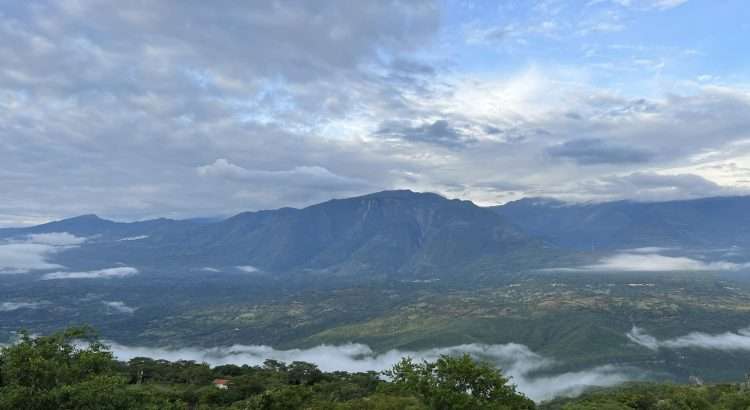


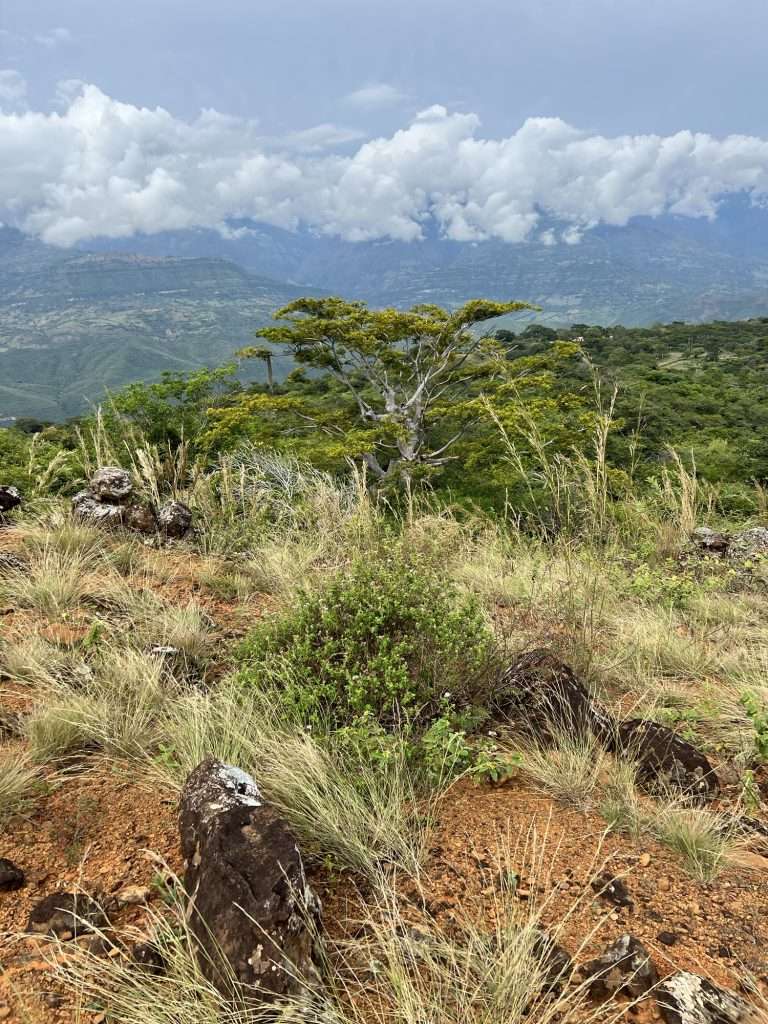


On Milagros, we have grass on maybe two or three hectares out of fifteen. At both entrances, there is quite a lot of grass, in both cases because the owners used the areas for grazing cows.
The rest is mostly trees, cactus, bushes, and pioneers.
So how do we deal with grass in our regeneration, reforestation, and food forest project?
MAIN APPROACH
We use it as mulch for the plants in the food forest. We cut it into small pieces to allow sprouts to easily grow through the mulch. The mulch provides cover to keep the moisture, some nutrients for the plants, and organic material for the soil. We keep on adding new layers as the older layers decompose.
Grass keeps the soil in place and prevents erosion. It’s better than nothing, and there are some areas where there is bare soil and few plants.
When we cut the grass for mulch, we use pruning shears (hedge shears, hedge scissors). This makes it possible to cut only the grass and leave any natives growing there. This allows the native bushes and trees to grow, become stronger, and better compete with the grass.
As the trees grow and provide more shade, they will eventually shade out the grass. The forest will take the place of the fields of grass.
THE DOWNSIDES OF GRASS
Grass has several downsides.
It can easily become a monoculture. It can take over large areas, especially if the land is degraded, and it won’t allow natives to grow very well.
During the dry season, dry grass is a wildfire hazard.
Grass is the perfect habitat for ticks.
A LESSON
Before we moved here, we asked some workers to cut a narrow footpath through a very beautiful area. Instead, it turned out that two people spent two or three days cutting down everything apart from the large trees.
This happened because we trusted they understood (we had emphasized several times that we just wanted a narrow footpath, just wide enough for one person to walk), and we did not check on them since we did not live here at that point.
Cutting down all the pioneers and small trees led to an almost immediate invasion of grass, and the area is now completely overgrown with tall grass.
I am hoping that revisiting this area relatively frequently to cut grass for mulch and leaving everything that’s native, will help the bushes and trees to gain a foothold.
For me, there are a few lessons here: (a) Local workers will typically default to what they know. These workers are used to people asking them to clear a whole area so that’s what they did, even if we thought the instructions were clear. (b) It’s important to ask them how they understand the task. (c) I need to follow up and check how it’s done. And (d) it is possible to get rid of the grass, it may just take time.
GRASS AS A TRANSITION SPECIES
So we can make use of the grass for erosion control, as a pioneer species, and for green mulch.
At the same time, the plan is to eventually shade out the grass with a multi-layered forest so there will be little or nothing left. This will take several years if not decades.
Some wildlife like or even depend on grassland. I am keeping that in mind, and I also know that the neighbors here have grassland so it’s not exactly a lack of it.

The series of six images above are from the two areas of our land with grass. At the distant entrance to Milagros, where there likely was most heavy grazing, bare soil is colonized by grass which prevents erosion. The image directly above is from the Camino Real that goes by Finca Milagros. This is a path that has been used by people here for generations.
MORE INFO
I asked ChatGPT 4o for input on this topic. See below.
Grass as a Transitional Element
Grass, as a ground cover, serves as a double-edged sword in the regeneration of Milagros’ dry tropical forest ecosystem. On one hand, it stabilizes the soil, prevents erosion, and offers a layer of organic matter as it decomposes. On the other hand, certain grasses, especially non-native or invasive species, can outcompete native plants, hinder tree growth, and contribute to wildfire risks during the dry season.
Challenges with Grass at Milagros
In Milagros’ dry tropical climate, grass often dominates areas where the forest has been disturbed or degraded. While it provides temporary ground cover, its presence can pose challenges:
- Competition for Water and Nutrients: Grass can compete with young trees and food forest plants for limited resources, slowing their growth.
- Wildfire Hazard: Dry grasses are highly flammable, increasing the risk of wildfires that threaten the growing forest.
- Biodiversity Reduction: Dense grass cover can suppress the natural regeneration of native species, reducing ecosystem diversity.
Grass Management for Regeneration
To regenerate Milagros’ ecosystems and support reforestation efforts, thoughtful grass management is essential. Strategies include:
- Creating a Living Mulch: By planting nitrogen-fixing ground covers or low-growing native plants, grass can be suppressed while enriching the soil and creating a favorable microclimate for tree seedlings.
- Mulching: Cutting grass and using it as green mulch around young trees helps suppress regrowth while returning nutrients to the soil.
- Strategic Grazing: Livestock or managed herbivores can help control grass in certain areas without overgrazing, which could damage the soil or young plants.
Reforestation and Food Forests: Grass as a Foundation
Grass is often the first step in ecological succession, setting the stage for the return of shrubs, trees, and eventually a food forest. At Milagros, reforestation involves planting native pioneer species that can establish a canopy, shading out aggressive grasses over time and creating conditions for slower-growing, more diverse native species to thrive. Food forest design incorporates a mix of layers, from canopy trees to ground covers, that eventually replace the grass with a more productive and biodiverse system.
Grass in the Food Forest Context
Within food forests, grasses are intentionally replaced by plants that serve ecological and agricultural functions. For example:
- Ground Covers: Legumes like clover or perennial peanut can fix nitrogen and suppress grass while providing habitat for pollinators.
- Green Mulch Plants: Species like comfrey or vetiver can outcompete grass, enrich the soil, and provide biomass for mulching.
- Pathways and Firebreaks: Grass can be maintained in pathways or as part of firebreaks with regular cutting and management to reduce fire risks.
Grass and Ecosystem Resilience
Grass at Milagros is not just a challenge; it is also a sign of the land’s resilience. Its presence indicates that the soil can support life, which is a foundation for the broader regeneration effort. By managing grass thoughtfully and gradually transitioning to a more diverse ecosystem, the land can transform into a thriving food forest and restored dry tropical forest, balancing ecological restoration with human needs.
Milagros’ journey is one of harnessing the potential of grass while working toward a future where trees, shrubs, and vines dominate the landscape, offering sustenance, biodiversity, and a model for sustainable land stewardship.
How Long Before Grass is Shaded Out in a Reforestation Project
The time it takes for a reforested area to shade out grass depends on several factors, including the type of trees planted, the climate, soil fertility, water availability, and the management practices used. Here are some general considerations:
- Fast-Growing Pioneer Species
- If fast-growing pioneer trees are planted (e.g., Albizia, Acacia, Leucaena, or native species suited to the region), they can start creating significant shade within 2–5 years. These species grow quickly, establish a canopy, and suppress grass through shading and leaf litter.
- Slower-Growing Species
- If slower-growing or hardwood species dominate the project, it may take 5–10 years or more for the canopy to develop enough to significantly shade out grass. These species often need pioneers or nurse trees to create initial favorable conditions.
- Grass and Ground Cover Management
- Proper grass management, such as using mulch, ground covers, or controlled grazing, can accelerate the process by reducing competition for nutrients and water, allowing trees to grow faster.
- Tree Spacing and Density
- Dense planting results in quicker shading. If trees are spaced widely, it will take longer to shade out grass—potentially 10–15 years or more depending on conditions.
- Climate and Ecosystem Type
- In wetter climates or ecosystems with naturally dense forests, shading occurs faster. In dry tropical forests like Milagros, where trees grow more slowly and grasses are resilient, shading may take longer, typically 5–10 years, even with fast-growing species.
- Soil Conditions
- Poor soil may slow tree growth and extend the time required for canopy closure unless amended or supported with nitrogen-fixing species and organic matter.
In short, under optimal conditions with fast-growing pioneer trees, the grass could begin to be significantly shaded out in as little as 2–5 years, but for full suppression, it might take 5–10 years or more depending on the project’s specific circumstances.