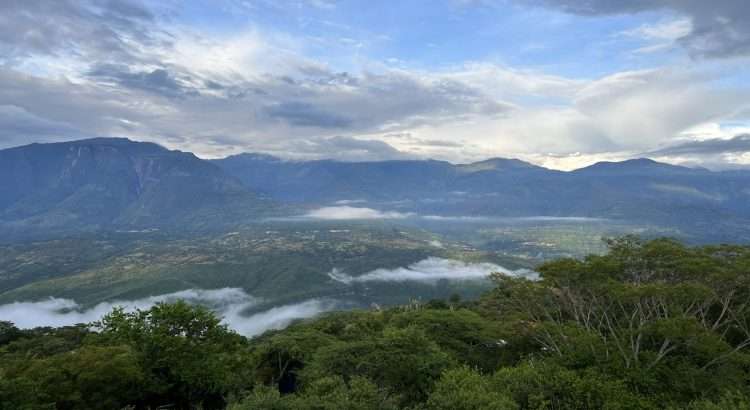
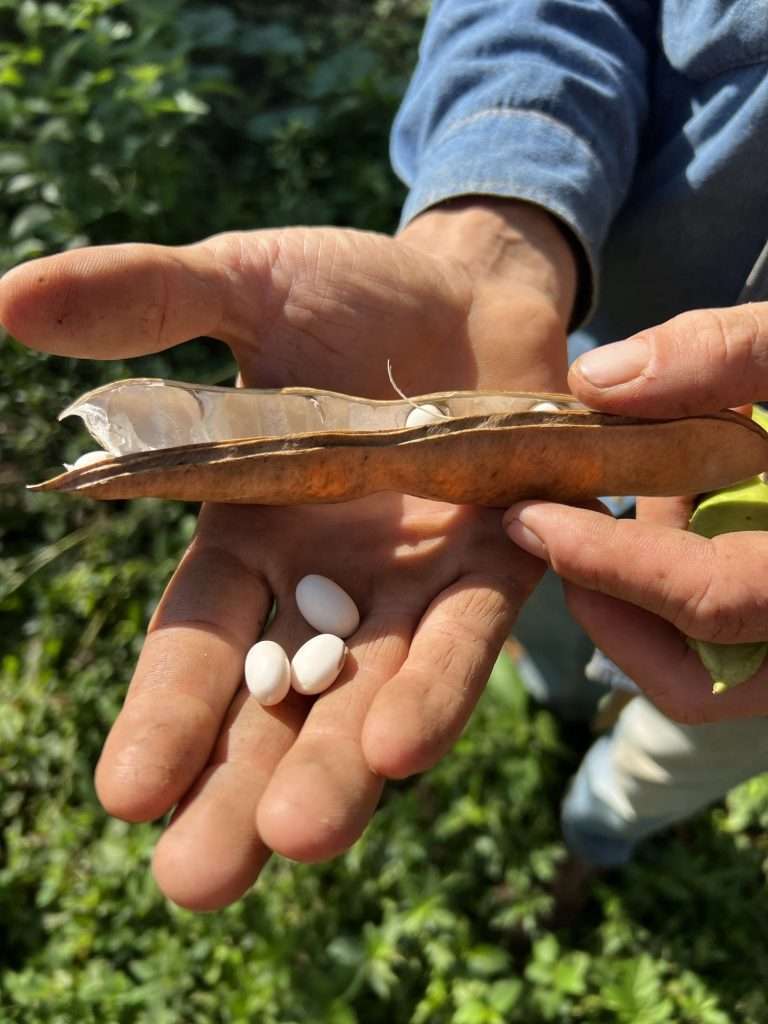
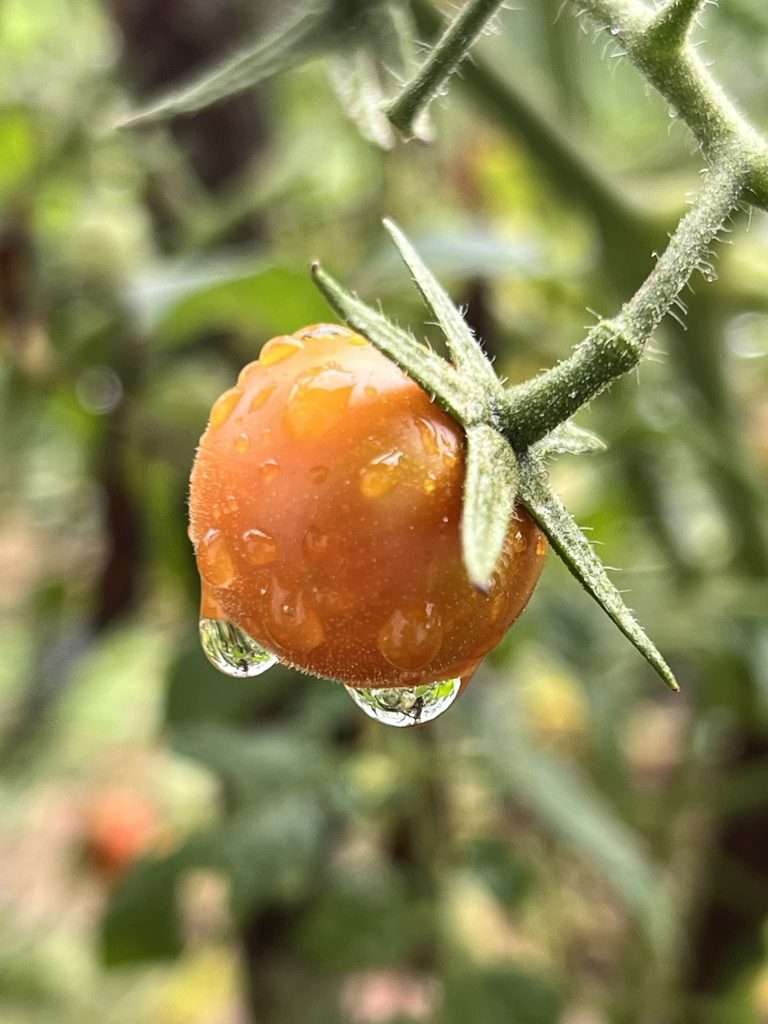
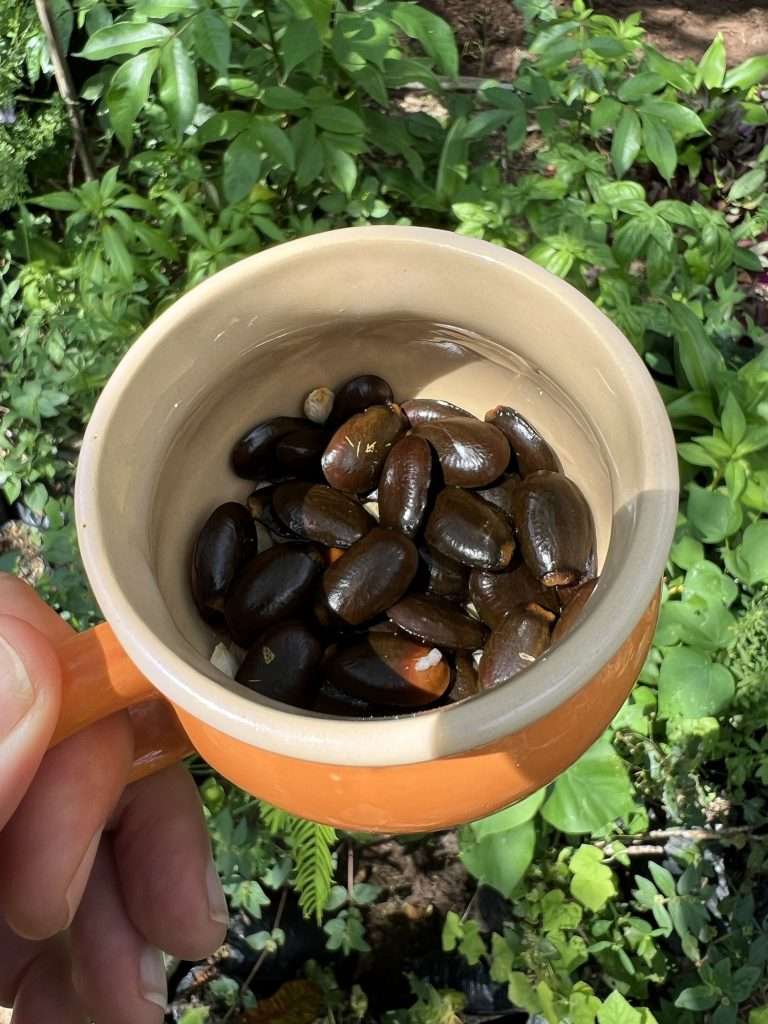




Over the last few weeks, I have walked around Finca Milagros and made small stone dams to reduce erosion, collected seeds from native plants growing here (and some other places) and spread them around, planted seeds in pots and bags in the nursery with others, put mulch around the plants, watered, imagined the future of the food forest (and set things in motion to create it), and so on.
I inevitably notice how much all this seems like, and is, play. It’s the type of thing I did as a kid. I made dams. I loved to run my hands over dry plants to release the seeds. I loved rummaging in the soil and natural mulch on the ground. I loved playing with water and the hose. I loved imagining different worlds and things that are possible and (apparently) impossible. I loved playing while talking with others about anything and everything.
In one sense, regeneration and food production is serious business. The mainstream approach to food production does produce a lot of food, and it’s also profoundly destructive to our ecosystems, our health, and it requires a lot of fossil fuel input. It’s hugely inefficient and it can’t be sustained in the long run. We need a profoundly different approach to our ecosystems and producing food, one that plays along with nature instead of working against it. This is a matter of our health and survival.
On the other hand, there is a lot of playfulness in developing and living the alternatives. The best of them are profoundly life-centered, which makes me feel joy and makes me come alive. They involve doing it with others, which at times is fun and playful. (And sometimes the opposite, as life is.) It involves wildly diverse and varied tasks. The hands-on work is often similar to how many of us played as kids. It involves creativity and imagination. It involves learning which is inherently joyful. (Even if schools often set out to make it as dreary as possible.) It involves working in intentional partnership with plants, soil, and ecosystems, which is profoundly meaningful. It creates vibrant and diverse ecosystems, which feel deeply enlivening, meaningful, and joyful to be in and around.
Developing the food forest on Milagros is also serious business. It will hopefully provide income in the future. Millions of beings depend on it for their habitat, thriving, and lives. We want to do it well.
And much of it also feels like play. It’s fun and enlivening, it makes me feel connected with nature here and the local community, it’s deeply meaningful, it helps me connect with myself as nature. All of that is joyful. It’s not laugh-out-loud joyful, but a quiet joy that comes from connection and feeling alive.
MORE INFO
I asked ChatGPT 4o for input on this topic. See below.
Playfulness, Regeneration, and the Living Symphony of Food Forests
Creating a food forest is an act of regeneration that mirrors the intricate harmony of nature. It is a process that transcends traditional agricultural practices, weaving together ecological understanding, creativity, and care to cultivate ecosystems that nourish both the land and the people who tend it. In this work, playfulness is not peripheral but integral—a dynamic quality that allows for adaptability, intuition, and a deeper relationship with the living world.
Playfulness in regeneration arises from the recognition that ecosystems are complex, evolving systems. Instead of rigidly following predefined methods, a playful approach invites curiosity and experimentation. It asks, “What if?” and remains open to surprises, trusting in nature’s ability to respond and co-create. When establishing a food forest, this means working with the land’s unique rhythms—placing plants in patterns that mimic natural succession, introducing diversity to support resilience, and embracing trial and error as part of the journey.
A food forest embodies this spirit. It is not a monoculture designed for maximum short-term yield but a thriving, interdependent web of plants, trees, fungi, and animals. Each element plays a role in the ecosystem, contributing to its health and productivity. The playful act of designing and tending a food forest involves observing these relationships, experimenting with new species or techniques, and adjusting based on what works and what doesn’t. It is a continuous dialogue with the land.
Regeneration through food forests also reflects a broader understanding of humanity’s place within nature. It recognizes humans as participants in ecosystems rather than separate from them. This perspective fosters humility and a willingness to collaborate with natural processes rather than dominate them. By planting food forests, we mimic the structures and functions of wild forests while aligning them with human needs, creating systems that are sustainable, regenerative, and deeply connected to their surroundings.
Playfulness deepens this connection. It allows for moments of joy and wonder—discovering a new plant thriving in the understory, seeing pollinators flock to a flowering tree, or finding unexpected growth in places left to nature’s care. These experiences remind us that regeneration is not just about restoring landscapes but about nurturing a relationship with the land that is alive, reciprocal, and filled with possibility.
Food forests, at their best, are expressions of this interplay. They are not static achievements but evolving systems that reflect the ongoing dance between human intention and nature’s innate creativity. They grow in response to care and attention, teaching us as much as we shape them. Playfulness fuels this learning, encouraging us to see challenges as opportunities and to approach the work with a lightness that sustains us through its demands.
In embracing playfulness, regeneration becomes more than a means to an end. It transforms into a process of co-creation, where the land and its caretakers grow together. Food forests, as living examples of this collaboration, stand as reminders that care, curiosity, and creativity can yield not only abundance but also profound connection and meaning. Through this work, we participate in a greater story of renewal—one that sustains not only ecosystems but also the human spirit.
Playfulness and Regeneration: A Partnership with Nature
Regeneration is more than a practical response to environmental challenges; it is a reflection of a deeper understanding of our relationship with nature. It acknowledges the interconnectedness of all life and embraces the complexity of ecosystems as opportunities for creativity and collaboration. In this process, playfulness emerges not as a luxury but as a vital aspect of engaging with the living world.
Approaching regeneration with playfulness allows for an intuitive, adaptive way of working with nature. Instead of rigidly imposing plans, it invites curiosity and experimentation. Each action—whether planting seeds, shaping the flow of water, or building soil—is an exploration of what the land needs and how it can flourish. This dynamic engagement fosters learning and cultivates a sense of partnership with the natural world.
Forests that thrive are often the result of this kind of approach. They are spaces where humans and nature co-create, where experimentation and observation shape ecosystems that are resilient, diverse, and beautiful. These forests are not designed as static entities but as evolving systems that respond to care and intervention.
Playfulness in regeneration goes beyond the surface. It embodies trust in nature’s capacity for renewal and a willingness to be surprised by what emerges. It encourages people to step into the flow of life with humility, recognizing that every small action contributes to a larger process. Whether it’s placing a rock to guide water or planting a tree, these acts carry a sense of joy and connection that enriches both the land and the one engaging with it.
This perspective also challenges the conventional divide between human activity and nature. It sees humans as participants in the ecosystem, not external agents acting upon it. Regeneration becomes a dance of mutual influence, where humans learn from nature’s rhythms and respond with care and creativity.
Ultimately, playfulness in regeneration reveals a profound truth: the process is not just about restoring ecosystems but about fostering a relationship with the land that is rooted in respect, collaboration, and wonder. It transforms the work of regeneration into an act of creation, where the health of the land and the well-being of its caretakers are deeply intertwined. In this partnership, forests grow not only as ecological havens but as living expressions of the interconnectedness of life.