A growth and “more is better” mindset has a bad reputation among many and for good reasons.
In our current system – a system that assumes a limitless Earth – growth and “more is better” are often destructive to the web of life we are part of.
And yet, growth and “more is better” is not inherently misguided, wrong, or destructive. In some contexts, it can be beneficial. It can support life.
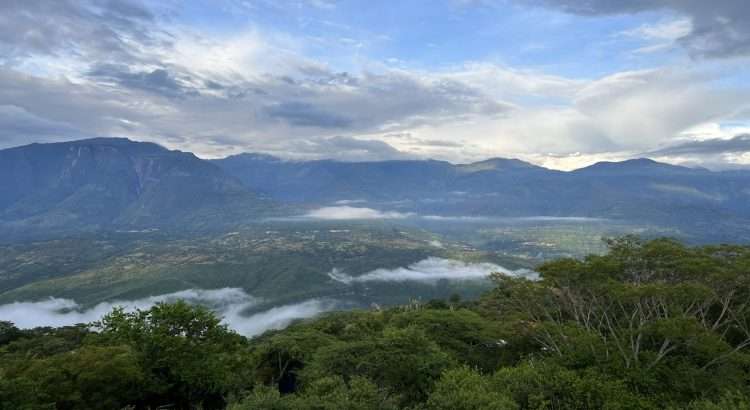
I notice that with our young food forest, and my vision for regenerating the 15 hectares of Milagros, I definitely have a growth and “more is better” mindset. I even have a slight obsession with it.
I envision the land as a mature ecosystem full of life. I envision all the layers filled in – small and tall trees, bushes, shrubs, roots, vines, and so on. I envision it bringing an abundance of food for wildlife and humans. I envision healthy soil. I envision the rainwater draining into the soil, giving life to the whole ecosystem, and recharging the groundwater. I envision it creating a different microclimate, one that’s cooler and more humid. I envision it as a home for innumerable beings of all kinds from insects to reptiles to birds to possums to mammals.
I am always looking for more and different food-producing plants for our food forest close to the houses. I am thinking of ways to generate income so we can continue the process of regeneration, reforestation, and creating a food forest.
I definitely have a growth mindset when it comes to Milagros, and I definitely have a “more is better” view on it. Of course, the growth and the “more is better” orientation has to be ecologically sound and informed, and I think it largely is, although we still have a lot to learn.
The focus on growth and “more is better” will look different as the project evolves. Right now, we have a focus on basic reforestation in the “wilderness zone” of Milagros, and on building soil and creating diversity in the food forest close to the houses. We are finding sources for different plants. We plant and see how the different ones are doing. We are learning a lot. We are exploring different visions for the future.
As it all matures, the focus will likely be more on what’s missing and filling in the gaps. What natives don’t we have in the wilderness zone? What native food-producing trees and bushes can we encourage and include more of? What other food-producing plants, from anywhere in the world, can we include in the food forest? What new plants will do well now that it’s more mature, and the microclimate is different?
So is growth and “more is better” inherently bad or wrong? Not at all. We may think it is because we typically see it play itself out in our current system. Since this system is out of alignment with ecological realities, it very often is.
In another context, in a system or project that’s more ecologically sound, growth and “more is better” can be very valuable. It helps us regenerate and support nature in producing abundance for the benefit of all life – including us.
MORE INFO
I asked ChatGPT 4o to write on this topic. See below.
Growth in Food Forests: A Different Kind of Obsession
In most areas of our economic system, an obsession with growth is often viewed critically—and for good reason. The relentless push for “more is better” leads to overconsumption, environmental degradation, and widening social inequalities. Growth for its own sake, disconnected from ecological limits or human well-being, can become a destructive force.
However, when it comes to food forests, this mindset takes on a completely different, and potentially beneficial, dimension. Here, growth isn’t about unchecked expansion or extraction. Instead, it aligns with natural cycles and regenerative processes. In food forests, the “more is better” philosophy manifests as a celebration of biodiversity, productivity, and resilience. Here’s why this obsession with growth can be not only acceptable but even necessary:
Growth as Regeneration
In a food forest, growth is synonymous with life. More plants, more trees, and more fungi mean greater carbon sequestration, improved soil health, and a thriving habitat for wildlife. Unlike in industrial agriculture or business, where growth often depletes resources, growth in a food forest builds resources. The more diverse and abundant the growth, the more resilient and self-sustaining the system becomes over time.
More Biodiversity Means Greater Stability
The “more is better” mindset in food forests drives an obsession with diversity—more species of plants, insects, and microorganisms. Each addition strengthens the web of life, creating a system that can withstand droughts, pests, and other challenges. Unlike monocultures, where more often equates to more vulnerability, a food forest thrives by weaving a complex and interdependent tapestry of life.
Productivity with Purpose
In a food forest, the goal isn’t just to maximize yield for short-term gain. Instead, growth is tied to long-term productivity and sustainability. A well-designed food forest produces more food over time with less human intervention. This growth serves ecological and human needs, harmonizing with the environment rather than exploiting it.
Encouraging Generosity in Nature
A “more is better” approach in a food forest mirrors nature’s own generosity. Nature thrives on abundance—seeds spread prolifically, trees bear more fruit than any one creature can consume, and plants create organic matter that nourishes the soil. A food forest amplifies this abundance by mimicking and enhancing natural patterns, creating systems where surplus is not waste but a gift for other beings in the ecosystem.
Healing Ecosystems
In degraded or damaged landscapes, more growth is often the best remedy. Trees, shrubs, and ground covers can heal eroded soil, restore water cycles, and create microclimates that allow life to flourish. This type of growth repairs what was lost, offering a counterbalance to the destructive overgrowth seen in economic systems.
A Shift in Perspective
The difference lies in how growth is framed. In food forests, growth isn’t about extracting value for profit but about creating value for the entire ecosystem. The “more is better” mindset isn’t about excess or greed but about abundance, balance, and giving back.
The Takeaway
An obsession with growth in a food forest context is fundamentally different from the growth fetish of traditional economic systems. It’s not about expansion at any cost but about fostering a regenerative cycle where life supports life. This type of growth heals rather than harms, sustains rather than depletes, and serves the whole rather than just a part. If there’s one area where a “more is better” mindset is not only harmless but transformative, it’s in the creation and cultivation of food forests.
Growth in Food Forests: A Pathway to Regenerative Balance
In the context of ecological footprint and global ecological overshoot, the concept of growth takes on a layered complexity. Humanity’s obsession with growth—fueled by industrial systems and linear economic thinking—has pushed the planet beyond its regenerative capacity. The annual overshoot day, marking when humanity’s resource consumption exceeds what Earth can replenish in a year, is a stark reminder of the consequences of this imbalance.
Yet, not all growth is created equal. While traditional economic growth often equates to the depletion of resources and ecological harm, growth in the context of food forests represents something fundamentally different. It offers a model of growth that regenerates rather than extracts, nurtures balance instead of creating deficits, and aligns with planetary limits while contributing to global resilience.
Rethinking Growth: From Extraction to Regeneration
In a world already in ecological overshoot, growth must shift from being a measure of extraction to a measure of regeneration. Food forests embody this shift. They are systems where growth strengthens the ecological foundation rather than depletes it. Every tree, shrub, and plant added to a food forest enhances biodiversity, sequesters carbon, and restores soil health. This form of growth doesn’t consume the Earth’s budget—it rebuilds it.
A Model for Living Within Limits
Global ecological overshoot is, at its core, a failure to live within the planet’s biocapacity. Food forests offer a way to model living within limits while still meeting human needs. By mimicking natural ecosystems, they maximize productivity without exhausting resources. Growth here is not about expansion but about deepening connections—between species, between the land and the water cycle, and between human and ecological well-being.
Biodiversity as Insurance
In a world facing the compounded crises of climate change, resource depletion, and biodiversity loss, food forests provide a living example of how growth can become a form of resilience. The diversity in a food forest acts as ecological insurance, buffering against shocks like drought, pests, or extreme weather. Growth in this context is not about exploiting resources but about enriching the system to ensure stability for future generations.
Balancing the Ecological Budget
Humanity currently uses the equivalent of 1.7 Earths annually to sustain its activities—a clear indicator of overshoot. Food forests are a way to “pay down” this ecological debt. They restore degraded landscapes, enhance carbon sequestration, and reduce reliance on industrial agriculture, which is a major driver of ecological imbalance. In this sense, growth in a food forest doesn’t add to the problem; it actively contributes to the solution.
A Regenerative Mindset
The mindset behind food forest growth reflects a deeper understanding of what it means to thrive within planetary boundaries. Instead of viewing nature as a resource to be used up, it sees nature as a partner in co-creation. Growth becomes a collaborative process where every new plant, every increase in canopy cover, and every layer of organic matter enriches the whole.
A Vision for the Future
As we grapple with the realities of global ecological overshoot, food forests provide a glimpse into a more balanced way forward. They demonstrate that growth, when aligned with natural principles, can regenerate ecosystems, support human communities, and restore the planet’s capacity to sustain life. This is not the reckless growth of industrial systems but a regenerative growth rooted in humility, balance, and care for the Earth.
In a world where the consequences of overshoot are becoming increasingly clear, the growth of food forests is a reminder that not all growth is destructive. It is possible to grow in ways that heal, nurture, and sustain. Food forests challenge us to rethink what growth means and to align our actions with the regenerative cycles of nature, ensuring a future where humanity and the planet can thrive together.