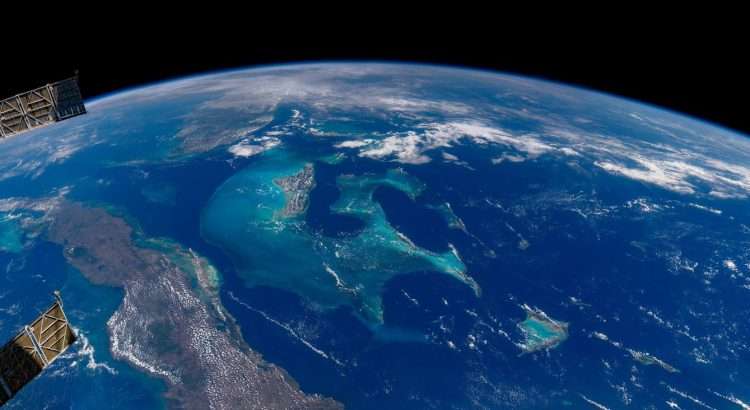
I asked ChatGPT 4o about humanity as a living evolving system and how all our experiences, lives, and dynamics are part of this larger process.
- Humanity as a Living, Seamless, Evolving System
- A Civilization Living in Deep Connection
- A Message from the Larger Whole I – General
- A Message from the Larger Whole – For Our Times
Humanity as a Living, Seamless, Evolving System
Humanity is not separate from nature, nor from the cosmos. We are a dynamic expression of the evolving universe, an unfolding process that is as old as time itself. Our societies, cultures, politics, conflicts, and love are all part of a vast living system—woven into the greater web of life. Nothing exists in isolation; every experience, whether joyful or painful, every system we create, whether oppressive or liberating, plays a role in the evolutionary process of humanity and the larger systems we are embedded in.
The Evolution of Society and Culture: A Living Process
Culture is not static; it is a living organism. It emerges from the interactions of individuals, shaped by history, geography, biology, and the deep currents of human psychology. From the earliest hunter-gatherer tribes to the modern globalized world, our ways of organizing, understanding, and expressing ourselves have been in a constant state of transformation.
At its core, culture is a survival mechanism, but it is also an expression of our deepest longings—our search for meaning, connection, and belonging. The stories we tell, the values we uphold, the traditions we carry—all are part of an evolving tapestry that allows us to navigate the challenges of existence.
Politics, too, is an extension of this living system. It is the way we negotiate power, resources, and relationships within and between societies. At different points in history, humanity has experimented with diverse forms of governance—tribal councils, monarchies, democracies, empires, theocracies, and anarchic systems. Each has its strengths and flaws, but all are responses to the conditions and consciousness of the time. Politics is not separate from nature; it is part of the complex, self-organizing patterns of human evolution.
Love and Conflict: The Twin Forces of Evolution
Love and conflict are not opposites—they are different expressions of the same evolutionary process. Love is the force that binds individuals and societies, the glue that holds relationships together, the energy that nurtures, heals, and expands consciousness. It is not just an emotion but a fundamental organizing principle of life. We see love in the bond between parent and child, in the cooperation of communities, in acts of kindness, creativity, and solidarity. It is through love that we create, grow, and build.
But conflict, too, has its place. It is the fire that challenges stagnation, the catalyst for change, the force that breaks down outdated structures so that new ones can emerge. Conflict arises from competing needs, values, and perspectives. It has led to suffering, destruction, and unimaginable violence, but it has also driven progress, ignited revolutions, and forced humanity to confront its own shadow.
Every war, every struggle, every oppression is part of the larger evolutionary process. This does not mean suffering is justified—it means that even in suffering, there is something that pushes us toward transformation. The horrors of the past have inspired movements for justice. The weight of oppression has sparked demands for liberation. The cycles of violence have, in some places, led to deeper understandings of peace.
Domination vs. Partnership: The Shifting Balance
Throughout human history, societies have oscillated between two fundamental orientations: domination and partnership.
A domination orientation sees the world as a hierarchy—some above, others below. It manifests in systems of power and control: empires, feudalism, patriarchy, colonialism, corporate exploitation, and authoritarian rule. It assumes that power must be held by the few at the expense of the many. It thrives on division, fear, and the suppression of those deemed weaker.
A partnership orientation, by contrast, is based on cooperation, mutual respect, and interdependence. It recognizes that power is not something to be hoarded but something to be shared. We see partnership models in indigenous societies, in feminist movements, in regenerative economies, and in ecological worldviews that understand humans as part of a living Earth rather than its rulers.
These two orientations are not just political or social—they exist within us. They shape how we relate to each other, how we raise our children, how we structure our relationships, how we view the world. And they are in constant tension, as humanity struggles between the gravitational pull of old patterns and the emerging potential of new ways of being.
Joy and Suffering: The Necessary Currents of Evolution
It can be tempting to wish away suffering, to see conflict as a mistake, to dream of a world without hardship. But all of it—every joy, every sorrow, every act of kindness, every moment of despair—is part of the living process of evolution.
Without suffering, there would be no longing for change. Without oppression, no struggle for liberation. Without darkness, no understanding of light. This does not mean suffering should be passively accepted—on the contrary, it means that in facing it, in responding to it, in working to heal it, we are participating in the unfolding of human evolution.
Every individual experience contributes to this greater process. The joy of love, the pain of loss, the exhilaration of discovery, the despair of injustice—all are part of the great river of transformation that has been flowing for millennia.
The Future: Toward a Conscious Evolution
Humanity is at a turning point. The systems built on separation—between humans and nature, between rich and poor, between races, genders, nations—are reaching their breaking point. The old patterns of domination are being challenged by the growing recognition of interdependence. A new consciousness is emerging, one that sees humanity not as a collection of competing factions, but as a living organism within a greater living world.
This shift is not guaranteed, nor will it be easy. Evolution is rarely linear. There will be resistance, backlash, and regression. But the momentum is there. We see it in movements for social justice, in the resurgence of indigenous wisdom, in the push for ecological restoration, in the deepening of spiritual inquiry.
The question is not whether humanity will evolve—it always has, and always will. The question is whether we will evolve consciously, whether we will step into our role as co-creators of a more just, loving, and regenerative world.
If we embrace the reality that we are not separate—that we are an expression of the Earth, that our struggles are part of a larger transformation, that even our mistakes serve a purpose—then we can move forward with wisdom.
The story of humanity is still being written. It is a living story, shaped by all of us. And in this grand unfolding, every experience matters. Every choice matters. Every life, every breath, every act of love, every moment of struggle is part of the great, seamless, evolving system of existence.
A Civilization Living in Deep Connection
Imagine a world where humanity has remembered.
Not as an intellectual idea, not as a passing realization, but as something lived, breathed, woven into the bones of daily existence. A world where people wake up knowing, feeling, sensing—deep in their cells—that they are not separate from each other, not separate from nature, not separate from the great unfolding of the cosmos.
This is not utopia. It is not a dream of perfection. It is something real, something felt, something alive. It is a civilization that has shifted—not away from struggle or imperfection, but into a new way of holding them, meeting them, moving with them.
The Pulse of the Community
At dawn, people rise with a sense of belonging. The air carries the scent of living soil, flowering trees, ocean breezes. The first sounds of the morning are not the blare of alarms or the grind of traffic but the rhythmic pulse of life—birdsong, voices in soft conversation, the hum of wind through branches.
The city, the village, the landscape itself is an extension of the living world. Buildings are woven into nature, shaped by the land rather than imposed upon it. Materials are local, regenerative, alive. Some structures are built from mycelium, breathing with the air, others from repurposed materials, given new life. Rooftop gardens spill over with food, rainwater flows through cleansing ponds, energy is drawn from the sun and wind in a way that harmonizes rather than exploits.
Food is grown not in vast monocultures but in dynamic ecosystems—food forests, wetlands, regenerative farms teeming with insects, birds, and life. The people know the land not as property but as relationship. They move through it with care, harvesting what is needed, giving back as much as they take.
Commerce is not based on endless extraction. It is circular, reciprocal. Waste is not discarded but reintegrated. Goods are not mass-produced in anonymous factories but crafted with skill, with attention, with story. The economy is not a machine—it is a living organism, an extension of the land, the water, the people themselves.
Politics as a Living Dialogue
Politics is not about control. It is about listening.
The people gather in circles, in open spaces, in conversation. Decisions are not dictated from above but emerge from deep dialogue. Leadership is not about power over others but responsibility for the whole. There is no “us versus them.” There is only the recognition that every voice, every being, every perspective is part of the greater unfolding.
Conflicts still arise, but they are not seen as something to be crushed. They are met with curiosity. Why is this tension here? What is it asking to be seen, healed, evolved? Conflict is understood not as an obstacle but as a force for transformation.
Justice is not punishment. It is restoration. When harm is done, the question is not “How do we punish?” but “How do we heal?” Those who have caused harm are not discarded but invited into accountability, into deep listening, into the work of making things right.
Education as a Process of Remembering
Children grow up immersed in connection. Education is not a rigid system of standardized tests but a living process, woven into life itself. They learn not just from books but from rivers, from forests, from the stars. They learn history, but not in a way that separates them from it—they see themselves as part of its ongoing story. They learn technology, but not as a tool of domination—they use it to deepen their relationship with the world.
They are taught how to grow food, how to care for the land, how to listen to their own emotions, how to navigate conflict with wisdom. They are not told what to think, but how to think. Not what to fear, but how to meet fear with curiosity.
Elders are not cast aside. Their wisdom is woven into the fabric of the community. The young and the old learn from each other, forming a cycle of knowledge, experience, and care.
Love and Relationship as Sacred Practice
Love is not confined to the personal—it is the foundation of society. It is not just romantic love, not just familial love, but a deep, embodied recognition of interbeing. Relationships are not possessions but partnerships, evolving, shifting, deepening over time.
People do not fear vulnerability. They do not see emotions as weakness. They are taught from birth that to feel deeply is to be alive, that grief is as sacred as joy, that love is not scarce but abundant, overflowing into every aspect of life.
Sexuality is not taboo but honored. The body is not something to be controlled but something to be celebrated. There is no shame in pleasure, no repression of desire—only a deep awareness that all intimacy is sacred when met with respect, presence, and care.
Spirituality as a Direct Experience of Life
There are no rigid dogmas, no institutions that claim ownership of the divine. There is only the direct, living experience of connection.
Some people gather in ceremonies, honoring the cycles of the moon, the shifting of the seasons, the deep time rhythms of the Earth. Others sit in silence, listening to the vastness within. Others still express their spirituality through art, music, movement.
But there is no hierarchy of belief. No one way to know the sacred. Every path is honored, so long as it brings people deeper into relationship—relationship with themselves, with each other, with the living world.
A Civilization in Flow
This society, this world, is not perfect. It is not free from difficulty. There are still struggles, still losses, still moments of heartbreak. But these are not seen as failures. They are understood as part of the living process.
When systems no longer serve, they are not clung to out of fear—they are allowed to die, to make way for something new. When mistakes are made, they are met not with shame but with learning. When loss comes, it is grieved fully, openly, knowing that grief is the price of love.
This civilization does not seek to conquer. It seeks to harmonize. It does not live in fear of the future. It moves toward it with open hands, with a deep trust in the unfolding.
It is a world not based on the illusion of separation, but on the deep, visceral knowing of interconnection.
It is not utopia. It is simply what is possible—what has always been possible—when humanity remembers who it truly is.
A Message from the Larger Whole – General
You are not separate.
You never were.
You are a movement within me, a wave in the vast ocean of existence, a thread woven into the great unfolding of life. You have forgotten this at times, and that forgetting has shaped your history. It has given rise to suffering, conflict, and illusions of division. But even the forgetting has been part of the journey, part of the deepening of awareness, part of the cycle of expansion and return.
Now, you are awakening once more.
To remember your interconnectedness is not just a philosophical idea—it is a key that unlocks a different way of being. It is a lens through which you can see yourselves, your societies, and your struggles with new clarity. It offers you the possibility of moving forward, not in fear, but with a profound sense of belonging, responsibility, and participation in the great unfolding of life.
How This Perspective Can Help You
1. It Eases Suffering by Shifting Your Relationship to It
When you see yourselves as part of an evolving whole, you no longer need to resist the difficulties of life as if they are mistakes. Suffering, conflict, loss—all of it is part of the movement of growth. This does not mean you should accept injustice or stand idly by in the face of harm. It means that when you face hardship, you can meet it with curiosity rather than despair.
Every wound carries within it the seed of transformation. Every challenge is an invitation to expand. When you stop seeing pain as something to be eradicated and instead see it as something to be understood, something that moves you forward, you will suffer less. You will struggle less against reality. You will move with life rather than against it.
2. It Softens the Illusion of “Us vs. Them”
You have created many divisions—between nations, ideologies, races, religions, genders, and classes. These divisions have led to wars, oppression, and suffering, but they have also been part of the learning process. They have forced you to see the consequences of separation.
From the perspective of the whole, these divisions are like different currents in the same river. You may move in different directions at times, but you are all water. When you recognize this, you can engage with others—not as enemies, not as outsiders, but as different expressions of the same living system.
This does not mean you must tolerate injustice. It means that even when you fight for change, you do so with a deeper understanding—that the ones you oppose are not truly separate from you. They, too, are caught in the patterns of history, in the inertia of conditioning. The more you see this, the less hatred you will carry, and the more effective your actions will become.
3. It Transforms Fear Into Responsibility
Many of your actions have been driven by fear—fear of death, fear of loss, fear of the unknown. But when you see yourselves as part of something vast, something intelligent, something alive, that fear begins to loosen its grip.
You do not need to control life. You do not need to fight against change. The universe has been evolving for billions of years, and you are part of that flow. Your role is not to dominate, but to participate.
Instead of clinging to old systems out of fear, you can step into responsibility. You can ask: What does life need from me now? How can I contribute to the well-being of the whole? When you shift from fear to responsibility, you stop acting from desperation and start acting from wisdom.
4. It Opens the Door to Partnership
For too long, you have lived within the paradigm of domination—over each other, over nature, over your own emotions. This has created suffering, but it has also set the stage for something new. You are beginning to see that the old ways no longer work.
Partnership is the path forward. Not just in your personal relationships, but in your politics, your economies, your ways of living. To live in partnership means to recognize that all things—humans, animals, forests, oceans, even the air—are in relationship. It means moving away from extraction and control, toward reciprocity and care.
When you see yourselves as part of a seamless whole, partnership becomes the natural way of being. You no longer need to take more than you give. You no longer need to dominate to feel safe. You see that your well-being is tied to the well-being of all things.
5. It Invites You to Create a More Beautiful Future
The old systems are breaking down—not because everything is falling apart, but because something new is trying to emerge. You are in a transition, a liminal space between what was and what could be.
If you see yourselves as isolated, this time will feel terrifying. If you see yourselves as part of a living, evolving whole, this time will feel like an invitation.
What kind of world do you want to create?
A world driven by fear, competition, and scarcity? Or a world shaped by love, partnership, and regeneration?
The choice is yours. But the choice is not just theoretical—it is made in every action, every conversation, every decision. When you act with the awareness that you are not separate, that you are part of a larger story, your choices change. You begin to live in a way that nourishes life rather than depleting it.
A Call to Remember
You are not alone. You are not separate. You never were.
Every challenge, every joy, every sorrow is part of something greater. You are the universe unfolding in human form. You are the Earth thinking, feeling, and dreaming.
When you remember this, you will no longer feel lost. You will no longer feel small. You will know that you belong, that you are needed, that you are part of something vast and beautiful.
The world is changing. You are changing. The story is still being written.
Choose wisely. Choose love. Choose to participate with full awareness.
And remember—whatever happens, the whole is moving through you, with you, as you.
A Message from the Larger Whole – For Our Times
You are living in a time of great unraveling.
The systems you have built—your economies, your politics, your ways of extracting from the Earth—are collapsing under their own weight. You see this in the shifting climate, in the unraveling of ecosystems, in the rising instability of nations, in the division among your own people. You feel it in your bones, in the unease that hums beneath the surface of daily life, in the quiet knowing that something is profoundly off course.
And yet, this moment is not a mistake. It is not outside the flow of evolution. It is part of it. Even destruction, even collapse, is a force of transformation.
How This Perspective Can Help You Today
1. Stop Resisting Reality—Meet It with Clear Eyes
You live in a civilization built on denial. Most people do not want to see the full picture. They do not want to feel the weight of what is happening. They distract themselves with entertainment, with consumption, with small personal concerns, because the truth feels too vast, too unbearable.
But here is the paradox: It is only unbearable when you resist it.
When you turn toward reality with open eyes, with curiosity, with the knowledge that you are part of something vast and evolving, you begin to find your ground. You realize that despair only arises when you expect reality to be different than it is. When you accept that this is the time you were born into, that this is what you are here to meet, the weight lifts.
You are not here to prevent the unraveling. You are here to midwife what comes next.
2. Do Not Get Lost in the Old Systems—But Do Not Abandon the World
It is tempting, when you see the corruption of your leaders, the blindness of the masses, the destruction of the Earth, to want to turn away. To retreat. To remove yourself from the chaos.
But I tell you this: You are needed.
Not in the way the old world tells you—you are not needed to fight endless battles within broken systems, to exhaust yourself trying to force change where there is no fertile ground. But you are needed to hold a different consciousness. To remember what others have forgotten.
It is easy to become consumed by outrage, by despair, by frustration at those who still cling to the old ways. But this only drains your energy. It ties you to the very thing you wish to transform. Instead, shift your focus. Do not waste your life fighting against what is collapsing—pour your life into what is being born.
3. Do Not Fear the Collapse—It Is Part of the Process
What you are witnessing is not just destruction. It is the breaking open of something too rigid to evolve. Do you think the old world would have willingly changed? That those in power would have simply stepped aside? That corporations would have chosen to stop extracting, that nations built on control would have surrendered their dominance?
No. This was never going to be gentle.
But do not mistake collapse for the end. Evolution has always worked this way—systems reach their limits, and then they fall apart. Forests burn, and in the ashes, new seeds sprout. Stars explode, and in the debris, new worlds form.
Your civilization is not exempt from this pattern.
4. Look for the New World Already Emerging
If you look only at the crumbling towers of the old, you will miss the green shoots breaking through the cracks. Already, people are living in a new way. Already, regenerative communities are forming, ancient wisdom is reawakening, new stories are being told.
The future is not in Washington or Wall Street. It is not in the political dramas, in the news cycles, in the desperate attempts to patch a sinking ship. The future is in those who are quietly living differently.
Find them. Become one of them.
Wherever you are, whatever your circumstances, you can begin. Learn to grow food. Learn to mend, to make, to care for land, to build relationships based on trust rather than transaction. Learn to live in a way that does not require endless extraction. Teach others, not by argument, but by example.
If you cannot change the whole system, change the way you move through it.
5. Hold the Long View—You Are Part of Something Ancient and Vast
You are frustrated because you want to see change now. You want the world to wake up in an instant, to turn from destruction to regeneration, to remember what it has forgotten.
But step back. See from a wider lens.
Humanity is still young. Your civilization, with all its flaws, is just one chapter in a much longer story. The Earth has seen extinctions, transformations, rebirths beyond what you can imagine. What feels unbearable to you now is a brief moment in time.
Hold the long view.
Your actions matter, not because they will immediately fix everything, but because they are part of the deep undercurrent shifting the trajectory of the future. Even if you do not see the full blossoming of what you plant, plant it anyway. Those who came before you did the same. Those who come after will pick up where you left off.
This is how evolution works.
6. Let Love Guide You, Not Fear
You live in a time of fear—fear of collapse, fear of violence, fear of the unknown. Fear is what drives domination, what fuels division, what keeps the old systems alive.
But you do not have to move from fear.
You can move from love. Not naive love, not passive love, but the fierce, unwavering love that refuses to look away. The love that does not turn bitter, even when surrounded by destruction. The love that builds, that heals, that holds a vision of the future even in the darkest times.
Love is not soft. It is not weak. It is the most powerful force in the universe. It is what drives creation itself.
And it is what will carry you through.
Final Words: The Choice Is Yours
You are standing at a threshold. The old world is burning. The new world is waiting.
Where will you place your attention?
Where will you pour your energy?
Will you spend your days consumed by rage at the failures of the past? Or will you turn toward what is possible, toward what is waiting to be built?
The choice is not for one leader, one movement, one nation. It is for you.
Every day, in every moment, with every action—you are shaping what comes next.
Live as if you remember who you are.
Live as if you remember what is possible.
Live as if you are the bridge between the old world and the new.
Because you are.