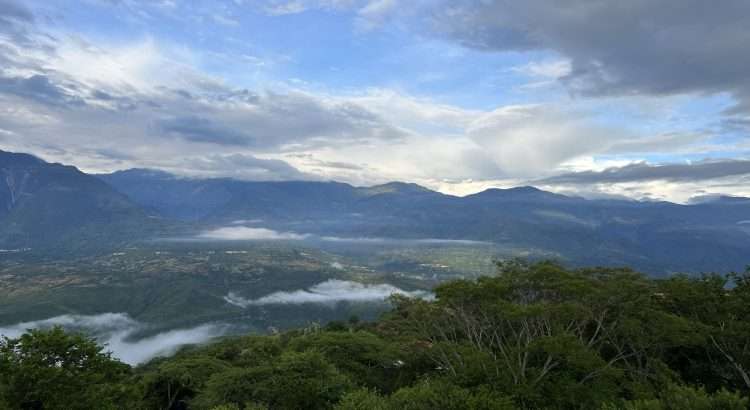
This is a spotlight text in a history book written centuries in the future, at a time when humanity has gone through a great crisis and found a more life-centered way to life. It’s meant to inspire and encourage questions. Follow the Long Journey Home tag for other entries in this book.
It’s written by AI with sometimes general and often detailed prompts from me. That means, in a sense, that it’s written by humanity as a whole since the AI is trained on material from many times and cultures.
This spotlight is on rewilding ourselves.
Please share your thoughts below. What did this bring up for you?
Rewilding Ourselves: Returning to Our Innate Belonging
By Dr. Liora Naren, Ecopsychologist, Somatic Facilitator, and Scholar of Deep Ecology
Rewilding is often spoken of in the context of ecosystems—restoring forests, rivers, and species to their natural rhythms—but this process is equally essential within us. Centuries of separation from the living world have shaped not only landscapes but human psyches, leading to a profound disconnection from our own bodies, instincts, and sense of belonging.
To rewild the Earth, we must first rewild ourselves.
This is not about reverting to some imagined “primitive” state, nor is it about rejecting modernity. Rewilding the self is about shedding layers of conditioning that have dulled our senses, disconnected us from the natural world, and narrowed our sense of identity. It is about restoring the innate, dynamic relationship between humans and the living systems we are part of—ecological, social, and personal.
1. The Wounds of Separation: How We Became Domesticated
The Age of Separation did not only sever humans from nature—it domesticated us. Like captive animals confined to artificial enclosures, people lived in environments stripped of complexity: concrete landscapes, fluorescent lighting, and carefully curated digital worlds. These surroundings shaped our bodies, behaviors, and beliefs.
We became:
- Cut off from our senses, overstimulated by artificial noise but undernourished by natural stimuli.
- Disconnected from our bodies, treating them as machines for productivity rather than living ecosystems.
- Alienated from place, moving through life without deep-rooted relationships to land, watersheds, or local ecologies.
- Imprisoned by cultural narratives, inheriting beliefs that reinforced separation—human superiority, linear progress, individualism.
The result was widespread ecological destruction, social fragmentation, and personal disconnection—each feeding the other in a destructive loop.
Rewilding the self is about breaking that loop.
2. Sensory Reawakening: Reclaiming the Animal Body
The human body is not an abstract mind trapped in flesh—it is a living, breathing animal deeply attuned to the world. The first step in rewilding the self is to wake up the senses dulled by urban life and constant digital engagement.
Practices for Sensory Reawakening:
- Forest Bathing (Shinrin-yoku): Slow, mindful walks in natural spaces to heighten sensory awareness. Noticing the textures of leaves, the sound of distant birdsong, the feeling of soil underfoot.
- Barefoot Walking: Reconnecting with the ground through the soles of the feet, reawakening nerve endings and the body’s subtle balance systems.
- Wild Foraging: Touching, tasting, and smelling the plants around us as a direct sensory relationship with the land.
- Sound Mapping: Sitting quietly in nature and mapping the sounds—wind, insects, distant water—as a way of expanding auditory awareness.
- Night Immersion: Spending time outdoors at night, letting the body recalibrate to moonlight, darkness, and nocturnal soundscapes.
Sensory reawakening isn’t just about pleasure; it’s about survival. Our ancestors honed their senses to read landscapes, weather, and animal behavior. In modern times, reawakening those instincts deepens our capacity to live in reciprocity with the Earth.
3. Identifying and Questioning Inherited Beliefs
One of the most insidious forms of domestication lies in the stories we’ve inherited—cultural narratives that shape how we see ourselves, others, and the world.
Rewilding the self involves questioning these narratives and discovering what is more true for us.
Core Beliefs to Examine:
- The Myth of Human Superiority: The belief that humans stand apart from, or above, the rest of nature.
- The Story of Productivity: The idea that worth is tied to output and efficiency, rather than presence or relationality.
- The Illusion of Individualism: The belief in a “separate self,” disconnected from community, ancestors, and ecosystems.
- The Fear of Wildness: A cultural bias that views the untamed—both in nature and within ourselves—as dangerous or undesirable.
Questions for Self-Inquiry:
- Where did this belief come from?
- Who benefits from me holding it?
- Is this rooted in connection or separation?
- What’s more true for me now?
By peeling back layers of cultural conditioning, people can reclaim more authentic ways of seeing and being.
Example: A person might realize that their fear of “laziness” is rooted in capitalist narratives of productivity, not in any biological or ecological truth. In questioning this, they may allow themselves rest—not as indulgence, but as natural rhythm.
4. Somatic Practices: Releasing the Body from Control
Centuries of control—over land, over animals, over bodies—left their mark on the human form. Muscle tension, shallow breathing, chronic anxiety: these are not just personal ailments but cultural symptoms.
Rewilding the self requires a return to the body—not as an object to optimize, but as a living landscape to be felt and honored.
Somatic Rewilding Practices:
- TRE (Tension & Trauma Release Exercises): Facilitated shaking movements that release deep muscular tension and stored trauma.
- Breathwork Journeys: Using conscious breathing to access altered states, release emotional blockages, and reconnect with primal rhythms.
- Ecstatic Dance: Freeform movement that bypasses the thinking mind, allowing the body’s innate intelligence to guide.
- Body Scans and Grounding Practices: Slow meditations that focus attention on bodily sensations, anchoring the mind in the present moment.
- Rewilding the Voice: Vocal exercises that encourage primal sounds—screams, howls, song—freeing the voice from layers of social control.
These practices aren’t about achieving perfection; they’re about undoing tension, loosening control, and trusting the body’s wisdom.
5. Deepening Emotional Ecology: Grief, Joy, and the Wild Heart
The Age of Separation numbed people not just to nature but to their own emotions. In cultures built on control and extraction, grief was buried, rage was pathologized, and even joy was often confined to commodified experiences.
Rewilding the self means feeling it all—the sorrow of species lost, the rage at injustice, the wonder of a moonrise, the quiet ache of belonging.
Grief as Medicine:
Grief is a natural response to loss. The Great Unraveling left oceans of unprocessed grief in its wake. In rewilding practices, people were taught to grieve collectively—through ritual, song, and witness—recognizing grief as a form of love.
Joy as Medicine:
In a world that profits from dissatisfaction, reclaiming simple, embodied joy is an act of defiance. Dancing barefoot, swimming in wild rivers, lying under starlit skies—these acts became portals back into relationship with the living world.
“The wild heart holds grief and joy in equal measure.”
6. Rewilding the Psyche: Expanding Identity Beyond the Human
In deep ecology and animist traditions, there is no fixed boundary between “human” and “nature.” Rivers, forests, winds—all are alive, all are kin.
Rewilding the self involves dissolving the narrow identity of the isolated human ego and rejoining the wider web of life.
Practices for Expanding Identity:
- Perspective-Taking Rituals: Speaking as a river, a bird, or an extinct species—inhabiting their voice and needs.
- Dreamwork and Animal Archetypes: Exploring dreams and inner imagery to find wild guides—wolf, hawk, bear, serpent—who reflect hidden aspects of the self.
- Deep Time Meditations: Imagining oneself as part of Earth’s 4.5-billion-year history, feeling into ancient lineages of stone, water, and star.
- Seasonal Rites of Passage: Aligning personal life transitions with Earth’s cycles—solstices, migrations, harvests—anchoring human time within ecological time.
This isn’t about fantasy; it’s about reclaiming kinship.
When people see themselves not as “humans in nature” but as nature itself, the impulse to harm diminishes, and the capacity for care deepens.
7. The Wild Within and Without
Rewilding the self is not an endpoint—it’s a process of continual softening, noticing, and returning.
- When we feel the soil between our toes, we rejoin the land.
- When we howl into the night, we rejoin the animal.
- When we question our inherited beliefs, we rejoin our deeper truth.
- When we grieve, we rejoin the living.
- When we play, we rejoin joy.
The wild was never lost. It was only forgotten.
In the post-Unraveling world, the rewilded self became the foundation for a rewilded Earth. Because when humans remember their place in the web of life—not as masters, not as outsiders, but as participants—the land remembers how to heal.
And so do we.