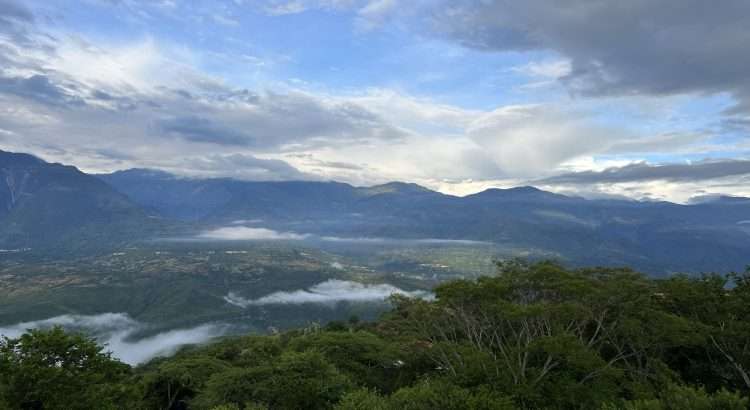
Summary: In the late Age of Separation, as real ecosystems unraveled under the weight of global ecological overshoot, people surrounded themselves with artificial versions of nature — photographs, documentaries, virtual forests, ambient birdsong, and plush animals — in a futile attempt to soothe the loss of the living world. These simulations reflected a deep, unmet need: as beings who are nature, we depended on reciprocal relationship with the Earth not just for survival, but for identity, regulation, and meaning. Artificial nature offered the appearance of connection but failed to nourish or heal, and ultimately dulled awareness of the crisis. Yet beneath the surface, the longing it revealed became a compass, guiding some to remember the real and reweave a living bond — one that would later form the foundation for regeneration.
This is an article in the Long Journey Home project – a collection of writings from centuries in the future, at a time when humanity has gone through a great crisis and found a more life-centered way of life. It’s meant to inspire and encourage further exploration. See the index for the chapters and articles.
The articles are written by AI with prompts from me. I usually start with an outline, refine it, and then ask for the final article.
Please share your thoughts below. What did this bring up for you?
Simulacra of the Wild: Artificial Nature in the Age of Unraveling
by Marja Ellingsen
A world of pictures without presence
In the final century of the Age of Separation, people lived surrounded by images of the world they were actively destroying. Television screens glowed with rainforest canopies and coral reefs. Posters of mountain landscapes adorned sterile office walls. Ambient sound machines offered loops of birdsong that no longer rang outside the window. Plastic plants softened the corners of high-rise apartments. And in children’s beds, stuffed bears and foxes lay curled beside kids who would never see such animals in the wild.
This wasn’t irony. It was a kind of cultural trauma response — a desperate attempt to stay connected to something our systems had made nearly unreachable. As real nature retreated under the pressure of ecological overshoot, we flooded our lives with its representations. Artificial nature became the echo in the cave: familiar, touching, but empty of breath.
We were nature, after all. And we depended on it not only for food, water, and shelter, but for identity, regulation, and meaning. When the web of life began to tear, the holes in it appeared first in ecosystems — and then in us.
The fading presence of the more-than-human world
By the early 21st century, most people on Earth lived in cities or sprawling peri-urban zones, insulated from direct contact with the living world. Agricultural monocultures blanketed much of the land. Rivers were channeled, forests reduced to fragmented parks or tree-lined boulevards, and non-human species were rapidly disappearing from daily awareness.
Global ecological overshoot had breached critical thresholds: biodiversity loss, freshwater depletion, soil collapse, and climate destabilization all accelerated. But to most, it was experienced not as rupture but as background: another chart, another wildfire, another species name disappearing from the newsfeed.
Nature had become distant — in space, in time, and in consciousness. Yet the longing remained. It surfaced in unexpected ways: in the calm brought by a walk in a city park, in the popularity of nature documentaries, in the tiny acts of domestic reverence — keeping a houseplant, feeding birds, playing nature sounds to fall asleep.
The ache was real, even when unspoken. The world was becoming quieter, emptier, and less alive, and we didn’t know how to grieve that — or how to stop it.
Simulated connection: the age of artificial nature
Out of that absence, a new industry flourished: simulated nature. Not just photographs or fiction, but immersive and interactive proxies that tried to restore — or at least distract from — what was lost.
Nature documentaries reached cinematic heights. Planet Earth, Blue Planet, and their successors mesmerized audiences with ultra-high-definition footage of pristine habitats. Virtual reality nature walks allowed people to “hike” through forests and reefs from living room couches. Zoos became “conservation centers,” their animals increasingly replaced by holograms or animatronic models. Retailers sold synthetic trees that emitted programmed seasonal scents. Algorithms generated birdsong for relaxation playlists. Plush toys stood in for vanished animals. And entire architectural movements tried to “biophilically” reintroduce natural patterns into built environments.
Some of it was beautiful. Some of it served as bridge — a reminder, a reawakening. But most of it became a substitute, not a gateway. It offered the appearance of connection without the vitality. It was a prosthetic for a severed relationship.
We surrounded ourselves with symbolic fragments of nature while continuing to degrade the whole.
The costs of forgetting we are nature
Biologically, psychologically, and spiritually, human beings evolved in continuous relationship with the land, the seasons, the more-than-human world. This relationship shaped our nervous systems, our rhythms, our sense of belonging. It gave us feedback, humility, guidance.
When this web began to fray, so did we. Disconnection from nature was linked with rising anxiety, depression, and chronic stress. Children who never played in dirt or climbed trees developed weaker immune systems and less motor coordination. Adults lost access to what had once been a foundational source of orientation and peace. Entire cultures began to suffer what some called “nature deficit disorder,” though it went deeper than that. It was a rupture of identity.
In its place grew delusion: the belief that we could live in abstraction — data, screens, algorithms — while the foundation of life burned. That we could replace forests with simulations, soil with synthetics, living water with purified pipelines. The belief that we were separate, superior, and safe from the unraveling we set in motion.
The simulacrum as anesthetic
Artificial nature wasn’t just a response to grief. It also served to dull it. As ecosystems collapsed, the steady flow of images and ambient echoes created an illusion of continuity. The simulacrum allowed society to avoid confronting the truth of its situation.
This wasn’t a coordinated deception — though advertising, entertainment, and tech industries profited handsomely from it. Rather, it was a systemic reflex. Civilizations in collapse rarely admit their reality. They reach instead for symbols, nostalgia, and distraction. The deeper the crisis, the more ornate the theater.
Some scientists and futurists proposed fully synthetic biospheres — sealed domes or space habitats that would carry humans forward without Earth. Others fantasized about planetary engineering or machine consciousness as salvation. Yet beneath these visions lay the same wound: a refusal to recognize that we are this planet, and without its living systems, we cannot exist.
Seeds of restoration
Even amid the height of simulation, the real never fully disappeared. There were those who tended gardens, saved seeds, and listened to the wind. Indigenous communities maintained relationship with land despite centuries of colonization. Urban farmers brought food back to sidewalks. Youth movements demanded ecological justice. Biologists and artists formed strange new partnerships.
In overlooked corners, forests regrew. Wetlands were restored. Soil was fed. In these quiet acts, the true antidote to artificial nature emerged: not more perfect simulations, but restored participation.
These communities didn’t just remember nature. They remembered how to be part of it.
Integration: longing as compass
Looking back, we can see that even the most artificial gestures held a kind of truth. The ambient birdsong, the nature documentaries, the potted plants in fluorescent offices — all of them carried a longing for home. A longing misdirected, at times, but not misplaced.
Artificial nature failed not because it was false, but because it was incomplete. It left out the relationship. It left out the reciprocal dance — the giving and receiving, the listening and tending, the joy and grief of being alive in a living world.
It reminded us of what we once had. And, eventually, it helped some remember what was still possible.
We never stopped being part of nature
The deepest illusion of the Age of Separation was that we could leave nature behind. That we were separate from the forests, the rivers, the fungi, the whales. But we were never outside. We were always a strand in the web — capable of tearing it, yes, but also capable of weaving it back.
The Age of Regeneration began not with invention, but with remembrance. Not with escape, but with return. The simulacra fell away. The relationship returned.
And with it, so did we.
Marja Ellingsen is a writer and cultural historian from northern Norway. Her work explores the psychological and symbolic dimensions of ecological collapse and renewal, with a focus on memory, myth, and belonging in post-industrial societies.