In a recent dream, I wrote a book on patterns of the awakening process.
It was a kind of modern update of Mysticism by Evelyn Underhill, a book that was important for me in understanding my own experiences and journey, and especially the dark night.
Where she organized her book by phases, and I would probably organize it around themes.
THE THEMES
As I wrote in that article, the themes could be…
(a) Fascination, draw, awe, and so on. (b) Active exploration. (c) Inviting our human self to heal, and also realign with oneness. (d) Our nature recognizing itself, and clarification and deepening of this. (e) Dark nights.
To fill out the picture, I would maybe add (f) states and their role in the awakening process. (g) Our conscious orientation related to awakening. (h) Our relationship with others and the wider world. And (i) side effects and oddities as part of the picture, although less central.
These are themes that are here throughout the process, and they shift – like a mix of sine waves – on being in the foreground or going into the background in terms of activity and what we notice.
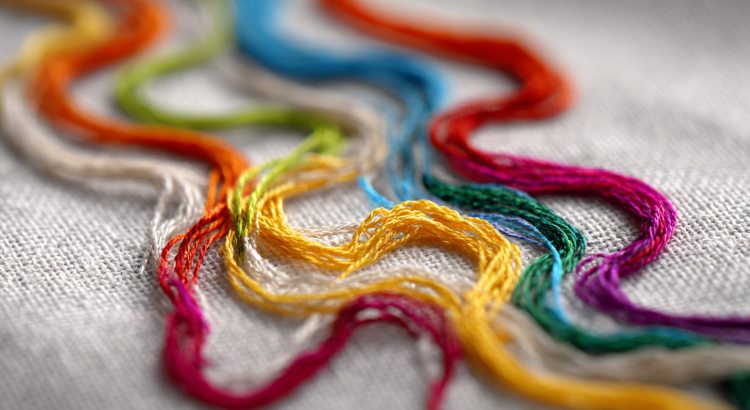
THE THEMES AS THREADS
Fascination, draw, awe, and so on are there throughout the process. In my case, there is no less fascination and awe than in the beginning, in my teens. Back then, it got mixed in with youthful enthusiasm and excitement. These days, it’s a little quieter although no less important.
Active exploration is here throughout, apart from in periods where we may take a break. There is always more to explore, discover, clarify, deepen into, bring into life, and so on. There are always more pointers and structured ways to explore that’s helpful to us. There is always more to explore in spontaneous and intuitive ways.
Inviting our human self to heal, and organize within oneness, is ongoing. There is always more, including what’s passed on through us through genetics, epigenetics, and culture. We have everything in us. We are, in many ways, a mirror of our ancestors and our civilization, culture, and society.
Our nature recognizing itself. This one is always here too. We are always our nature AKA consciousness AKA awake space AKA a lot of other labels. In flow states, it may come more into the foreground. We may intuit it. We may see it “over there” in a teacher, without noticing it in ourselves. We may notice our nature in glimpses. That noticing becomes more stable. It clarifies over time. And so on.
Dark nights are often here, as a thread through our experience and process. In some ways, any wound is a thread of dark night. Any idea we hold as true creates discomfort and sometimes pain, and is a thread of dark night.
States. Life and the awakening process involves a lot of changing states. All together, they show that all content of experience is in change and points to our nature as what it all happens within and as. And some specific states can highlight certain aspects of our nature – no-self, love, oneness, and so on. The states bring these to the foreground so they can’t be missed, and so it’s later easier to keep noticing them through changing states.
Our conscious orientation related to awakening. The awakening process sometimes seems to live its own life independent of this. In my case, this human was a self-proclaimed die-hard atheist when the initial oneness shift happened.
Our relationship with others and the wider world. This too evolves and shifts with the other threads.
Side effects and oddities. Although less important, this is another thread – one of synchronicities, premonitions, sensing at a distance, and so on.
Mystery. It’s all held within mystery and is an expression of mystery. We don’t really know what’s going on. These are questions and attempts to have some mental framework for it. It helps us orient and navigate, although it always happens within and comes back to mystery.
THE PHASES WITHIN THE THREADS
Within each thread, I would look at changes over time, and phases and trends when that applies.
It would be interesting to look at which threads tend to have trends and phases, highlight some common and typical patterns, explore how the threads interact (they are expressions of the same seamless process), and include examples from individual processes that match and don’t match those patterns.
THE PROJECT
I am fascinated by this topic, and it’s something it would be fun and meaningful to explore.
If I did it…
I would interview people. One group would be teachers who have seen patterns in their students. The other would be individuals sharing their own process.
I would also make myself more familiar with the models and maps out there on these topics, create some kind of synthesis of these, and also see what fits and don’t fit the real life experience of those in an awakening process.
Of course, I have my own experiences and mental frameworks, and these will color my approach, the questions I ask people, and how I understand and frame the data. That’s inevitable. It’s necessary for structuring the project and give it a focus. It’s not itself a problem. And it’s good to be aware and open about it, explore how it colors my approach, and imagine other ways it could have been colored – if I was another person with a different orientation.