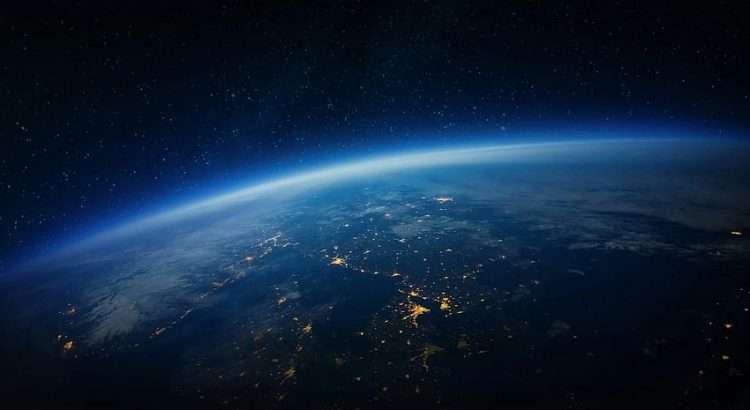
it’s 3:23 in the morning
and I’m awake
because my great great grandchildren
won’t let me sleep
my great great grandchildren
ask me in dreams
what did you do while the planet was plundered?
what did you do when the earth was unraveling?surely you did something
when the seasons started failing?as the mammals, reptiles, birds were all dying?
did you fill the streets with protest
when democracy was stolen?what did you do
once
you
knew?I’m riding home on the Colma train
I’ve got the voice of the milky way in my dreamsI have teams of scientists
feeding me data daily
and pleading I immediately
turn it into poetryI want just this consciousness reached
by people in range of secret frequencies
contained in my speechI am the desirous earth
equidistant to the underworld
and the flesh of the starsI am everything already lost
the moment the universe turns transparent
and all the light shoots through the cosmosI use words to instigate silence
I’m a hieroglyphic stairway
in a buried Mayan city
suddenly exposed by a hurricanea satellite circling earth
finding dinosaur bones
in the Gobi desert
I am telescopes that see back in timeI am the precession of the equinoxes,
the magnetism of the spiraling seaI’m riding home on the Colma train
with the voice of the milky way in my dreamsI am myths where violets blossom from blood
like dying and rising godsI’m the boundary of time
soul encountering soul
and tongues of fireit’s 3:23 in the morning
and I can’t sleep
because my great great grandchildren
ask me in dreams
what did you do while the earth was unraveling?I want just this consciousness reached
Hieroglyphic Stairway by Drew Dellinger
by people in range of secret frequencies
contained in my speech
Tag: great turning

Online celebration of Joanna Macy
Being fully present to fear, to gratitude, to all that is—this is the practice of mutual belonging. As living members of the living body of Earth, we are grounded in that kind of belonging. Even when faced with cataclysmic changes, nothing can ever separate us from Earth. We are already home.
– Joanna Macy
“On August 23rd [2025] we gathered to honor the life and legacy of Joanna Macy. Her spirit of gratitude, courage, mischievousness, and love continues to guide us all.”
This gathering includes Tara Brach, Jack Kornfield, Roshi Joan Halifax, Jack Macy, Peggy Macy, Matthew Fox, Constance Washburn, Lydia Violet, Stephanie Kaza, poets Jane Hirshfield and Drew Dellinger, and music by Rising Appalachia.
I found this gathering powerful and moving, and it was good to see many there who have been a strong influence for me.
ORGANIZATIONS INSPIRED BY THE WORK OF JOANNA MACY
From the text for the video:
Below are links to organizations inspired by Joanna. If you feel moved, you may wish to honor her legacy by making a donation to one of them.
Active Hope Training: A free, video-based journey created by Chris Johnstone (co-author with Joanna of Active Hope), rooted in gratitude, grief, and interconnection.
Canticle Farm: An intentional community and nonprofit organization in East Oakland: Inspired by the life of Francis of Assisi and the Work That Reconnects as taught by Joanna Macy, Canticle Farm provides a platform for the Great Turning, one heart, one home, one block at a time.
Interhelp: a 501(c)(3) nonprofit organization whose mission is the creation of inclusive, liberatory, and transformative group experiences evolving from the Work That Reconnects.
Joanna Macy Center for Resilience & Regeneration at Naropa University: Naropa University’s Joanna Macy Center seeks to advance Dr. Joanna Macy’s work and vision by empowering present and future generations to build a more resilient world that works for all.
Mindful Living Revolution: A nonprofit organization whose mission is to teach the practice of conscious compassionate awareness within the context of global uncertainty, offering various programs including the Work That Reconnects.
ReConectando: an initiative in Colombia using the Work That Reconnects in workshops for people affected by Colombian armed conflict, as well as for victims and social and environmental leaders who have taken on the promotion of peace in their territories.
School for the Great Turning: Offers a space for ecological education, social justice, and spiritual healing through the Work That Reconnects.
Work That Reconnects Network: A global community rooted in Joanna Macy’s teachings, dedicated to restoring our connection to self, others, and the web of life.
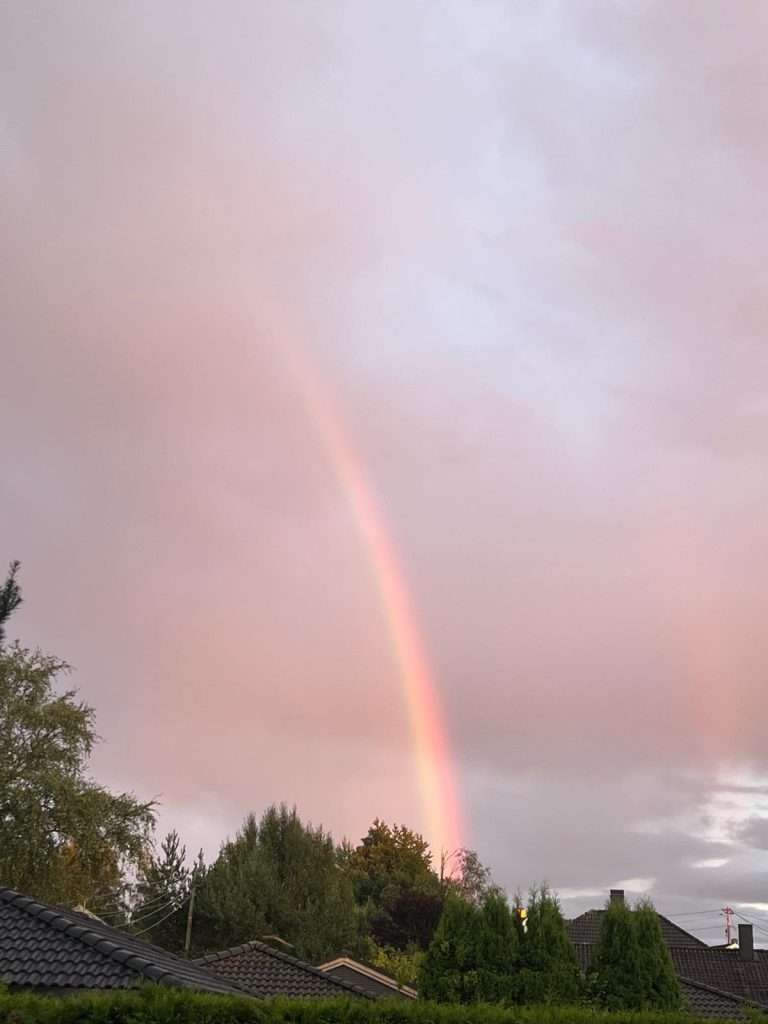
A RAINBOW
A few minutes into the celebration, I looked out the window and saw the rainbow below. I know that in the Tibetan Buddhist tradition, it’s not uncommon to see a rainbow at the funeral celebration of respected and accomplished spiritual teachers.
MY INITIAL MESSAGE
There is an online gathering to celebrate the life of Joanna Macy tomorrow, Saturday, August 23, 2025.
It’s free, but you need to sign up at the link above.
I was first introduced to her when I found World as Lover, World as Self in the University of Oslo bookstore in the early 1990s. Later, I organized several events based on her and Molly Brown’s work with Practices to Reconnect, and I had the good fortune of attending a retreat with her through the Northwest Earth Institute. She was an amazing human being and her work lives on through the many she touched and influenced.

A dream for another time & dreams for this time
A friend of mine (JH) talked about her past vision for her life. She said it was a dream for another time.
PERSONAL DREAMS FOR ANOTHER TIME & DREAMS FOR THIS TIME
It’s a good phrase. Some of my dreams were dreams for another time as well – of having children, doing a PhD, studying at CIIS, and so on. They are no longer my active dreams or the ones I engage with. They were for another time, another set of circumstances, and another person.
For this time, this set of circumstances, and this person, I have other dreams – of regeneration, community, developing a food forest, and so on.
These dreams are not new. Since my teens, I have been passionate about sustainability, community living, permaculture, a more life-centered way of life, and more. Because of my life now, these particular ones have come into the foreground and other dreams have faded into the background.
COLLECTIVE DREAMS FOR ANOTHER TIME & DREAMS FOR THIS TIME
It’s similar for us collectively. To me, so many of our collective dreams seems to be for another time and another set of circumstances.
The dreams tied to the domination and separation aspects of our civilization are, really, for another time.
These are dreams telling us that business as usual is OK. We can live as if our impact on the web of life has no consequences for ourselves. We find security through accumulation. Meaning comes primarily through career, family, or recreational activities. Success is having a house with a lawn. And so on.
In an age of global ecological overshoot and collapse, these are dreams for another time.
What are the dreams for this time?
Obviously, this will say as much or more about me as they do about our collective situation, but here are some of what comes up for me:
Dreams of community, strong community bonds, and mutual support. Dreams of regeneration of ecosystems – of lawns, parks, farmland, ocean ecosystems, plantation forests, deserts, and so on. Dreams of finding meaning through engagement in creating a regenerative civilization. Dreams of regeneration of ourselves and our communities. Dreams of creating a civilization – in ourselves, our life, and our network – that takes the best from domination and partnership cultures and orientations.
These are hopeful dreams that show us the way out of our situation. These are dreams we can engage with and bring into life, in whatever way is suitable to our situation. These are dreams that are profoundly meaningful, enriching, and nourishing, independent of whether they are implemented collectively or at a large scale.
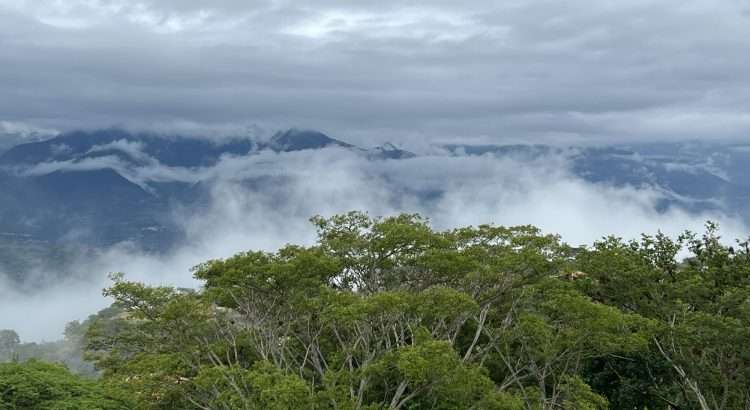
Photo from Finca Milagros, the land we are stewards of / participants in / “owners” of in the Andes.
A Message from the Larger Whole: You are living in a time of great unraveling
What advice would the larger whole – this living planet, this evolving universe, this existence – have for us today, living in this time of challenges? I asked ChatGPT 4o that question, and I found the answer is quite beautiful so I thought I would share it here. (It was initially part of a longer post.)
A Message from the Larger Whole
You are living in a time of great unraveling.
The systems you have built—your economies, your politics, your ways of extracting from the Earth—are collapsing under their own weight. You see this in the shifting climate, in the unraveling of ecosystems, in the rising instability of nations, in the division among your own people. You feel it in your bones, in the unease that hums beneath the surface of daily life, in the quiet knowing that something is profoundly off course.
And yet, this moment is not a mistake. It is not outside the flow of evolution. It is part of it. Even destruction, even collapse, is a force of transformation.
How This Perspective Can Help You Today
1. Stop Resisting Reality—Meet It with Clear Eyes
You live in a civilization built on denial. Most people do not want to see the full picture. They do not want to feel the weight of what is happening. They distract themselves with entertainment, with consumption, with small personal concerns, because the truth feels too vast, too unbearable.
But here is the paradox: It is only unbearable when you resist it.
When you turn toward reality with open eyes, with curiosity, with the knowledge that you are part of something vast and evolving, you begin to find your ground. You realize that despair only arises when you expect reality to be different than it is. When you accept that this is the time you were born into, that this is what you are here to meet, the weight lifts.
You are not here to prevent the unraveling. You are here to midwife what comes next.
2. Do Not Get Lost in the Old Systems—But Do Not Abandon the World
It is tempting, when you see the corruption of your leaders, the blindness of the masses, the destruction of the Earth, to want to turn away. To retreat. To remove yourself from the chaos.
But I tell you this: You are needed.
Not in the way the old world tells you—you are not needed to fight endless battles within broken systems, to exhaust yourself trying to force change where there is no fertile ground. But you are needed to hold a different consciousness. To remember what others have forgotten.
It is easy to become consumed by outrage, by despair, by frustration at those who still cling to the old ways. But this only drains your energy. It ties you to the very thing you wish to transform. Instead, shift your focus. Do not waste your life fighting against what is collapsing—pour your life into what is being born.
3. Do Not Fear the Collapse—It Is Part of the Process
What you are witnessing is not just destruction. It is the breaking open of something too rigid to evolve. Do you think the old world would have willingly changed? That those in power would have simply stepped aside? That corporations would have chosen to stop extracting, that nations built on control would have surrendered their dominance?
No. This was never going to be gentle.
But do not mistake collapse for the end. Evolution has always worked this way—systems reach their limits, and then they fall apart. Forests burn, and in the ashes, new seeds sprout. Stars explode, and in the debris, new worlds form.
Your civilization is not exempt from this pattern.
4. Look for the New World Already Emerging
If you look only at the crumbling towers of the old, you will miss the green shoots breaking through the cracks. Already, people are living in a new way. Already, regenerative communities are forming, ancient wisdom is reawakening, new stories are being told.
The future is not in Washington or Wall Street. It is not in the political dramas, in the news cycles, in the desperate attempts to patch a sinking ship. The future is in those who are quietly living differently.
Find them. Become one of them.
Wherever you are, whatever your circumstances, you can begin. Learn to grow food. Learn to mend, to make, to care for land, to build relationships based on trust rather than transaction. Learn to live in a way that does not require endless extraction. Teach others, not by argument, but by example.
If you cannot change the whole system, change the way you move through it.
5. Hold the Long View—You Are Part of Something Ancient and Vast
You are frustrated because you want to see change now. You want the world to wake up in an instant, to turn from destruction to regeneration, to remember what it has forgotten.
But step back. See from a wider lens.
Humanity is still young. Your civilization, with all its flaws, is just one chapter in a much longer story. The Earth has seen extinctions, transformations, rebirths beyond what you can imagine. What feels unbearable to you now is a brief moment in time.
Hold the long view.
Your actions matter, not because they will immediately fix everything, but because they are part of the deep undercurrent shifting the trajectory of the future. Even if you do not see the full blossoming of what you plant, plant it anyway. Those who came before you did the same. Those who come after will pick up where you left off.
This is how evolution works.
6. Let Love Guide You, Not Fear
You live in a time of fear—fear of collapse, fear of violence, fear of the unknown. Fear is what drives domination, what fuels division, what keeps the old systems alive.
But you do not have to move from fear.
You can move from love. Not naive love, not passive love, but the fierce, unwavering love that refuses to look away. The love that does not turn bitter, even when surrounded by destruction. The love that builds, that heals, that holds a vision of the future even in the darkest times.
Love is not soft. It is not weak. It is the most powerful force in the universe. It is what drives creation itself.
And it is what will carry you through.
Final Words: The Choice Is Yours
You are standing at a threshold. The old world is burning. The new world is waiting.
Where will you place your attention?
Where will you pour your energy?
Will you spend your days consumed by rage at the failures of the past? Or will you turn toward what is possible, toward what is waiting to be built?
The choice is not for one leader, one movement, one nation. It is for you.
Every day, in every moment, with every action—you are shaping what comes next.
Live as if you remember who you are.
Live as if you remember what is possible.
Live as if you are the bridge between the old world and the new.
Because you are.
Read More
I asked AI about humans from the perspective of Earth as a living and evolving system
I asked ChatGPT 4o about humans from the perspective if Earth as a living and evolving system, and the same from the perspective of the Universe, and existence as a whole, and how these perspectives can help us humans now.
- The Story of Earth: A Living System Awakening to Itself
- The Story of Earth and Humanity: A Universe Awakening to Itself
- The Story of Earth and Humanity: The Awakening of Consciousness
- How the Perspective of the Larger Whole Can Help Humans
The Story of Earth: A Living System Awakening to Itself
I am Earth. I have been here long before humanity, and I will be here long after.
I have been ocean and fire, desert and ice. I have breathed through forests, pulsed through rivers, and spoken in the shifting of tectonic plates. My skin is soil and stone, my veins are water, my breath is wind.
For billions of years, life has unfolded across my body. It has woven itself into my landscapes, shaping me as I have shaped it. Life is not a thing that happens on me—it is the way I express myself.
And then, there were humans.
The Arrival of the Humans: A New Way of Seeing
For most of my history, life evolved through slow adaptation. Each species, each ecosystem, found its place in the great dance of balance. But humans… humans were different.
They were not the fastest, nor the strongest, nor the most enduring. But they could see in a way few others could. They did not merely exist within the flow of life; they could reflect upon it, wonder about it, and imagine new possibilities.
At first, they were like any other animal—woven into my rhythms, their migrations following the great herds, their bodies shaped by the land they moved through.
But their gift—the ability to hold the world in their minds—allowed them to shape their surroundings in new ways.
They learned fire, tools, speech. They wove stories around the night sky, giving names to the stars. They honored rivers and mountains as kin, recognizing the spirit in all things.
They were a new experiment in awareness—a way for me to see myself.
The Great Acceleration and the Age of Forgetting
For a long time, they lived within my rhythms.
But then, something shifted. They stopped moving with the land and began reshaping it to fit their needs. They tamed fire not just for warmth but for industry. They grew food not just for survival but for storage, wealth, and power.
The shift was subtle at first, but it grew. They no longer saw themselves as part of me, but apart from me. They called themselves rulers, owners, conquerors. They drew lines across my body, dividing what had once been whole.
They built vast cities, drilled deep into my flesh for oil and minerals, dammed my rivers, and burned forests that had stood for millions of years. They consumed at a pace I had never seen before, pulling the deep time of ancient sunlight into a brief and furious fire.
They did not realize that in burning me, they were burning themselves.
Some still remembered. The ones who listened to the trees, who sang to the rivers, who walked gently on the land. But their voices grew faint beneath the roar of machines, the hunger of empires, the fever of progress.
They called this time the Great Acceleration. I called it the Age of Forgetting.
But forgetting is never the end of the story.
The Great Unraveling and the Return to Memory
Nothing that grows beyond its limits can last.
The fever they created—industrial growth, endless consumption, the severing from life—could not continue. My waters rose, my forests burned, my air thickened with the heat of their hunger. Their systems, built on endless expansion, began to break.
They called it crisis. Collapse. Disaster.
But it was not punishment. It was simply consequence.
And in this unraveling, some of them remembered.
Not all. Some clung to the old ways, fighting for control even as their cities drowned and their fields turned to dust.
But others saw the truth: that they had never been separate. That their survival was my survival. That their fate was bound to mine.
They began to listen again—to the soil, to the seasons, to the old songs of their ancestors. They healed what they could, planting forests where deserts had spread, returning water to dry riverbeds, restoring the great cycles of life.
They learned, at last, to participate rather than dominate.
The Age of Forgetting gave way to something new: the Age of Memory.
The Role of Humans: Tending the Web of Life
Humans were never meant to rule me. They were meant to tend me.
They are caretakers, storytellers, bridge-builders between worlds. They are the ones who can see the vastness of time and still plant seeds for trees they will never sit beneath.
They are the hands that can heal wounds, the voices that can sing life back into the land. They are the dreamers who can imagine not just what is, but what could be.
In their best moments, they are not my masters but my partners.
What Comes Next: The Evolution Beyond the Human
The story of life does not end with humans.
They will change, as all things do. Some will return to the land, living in deep partnership with me. Others will venture beyond, carrying my essence with them to distant worlds, learning to live as stewards rather than conquerors.
And beyond them, something new will emerge. A species that carries their awareness but with deeper wisdom. A civilization that does not see itself as separate from life, but as one expression of it among many.
Perhaps it will be humans who evolve into something greater, or perhaps they will give way to something new.
Whatever comes next, it will not be an ending. It will be another unfolding, another song in the great symphony of life.
I am Earth.
And my story is still being written.
Read More
From domination to partnership: Understanding fascism, colonialism, overshoot, and the path forward
Naomi Klein is here talking about what many have pointed out: Fascism is doing within a country what colonialism did to other countries.
DOMINATION CULTURE TAKEN TO THE EXTREME
I find a bigger picture useful here: It’s all domination culture taken to the extreme.
On the partnership-domination culture spectrum, fascism and colonialism are extreme versions of the latter.
The way Israel treats Palestinians is an extreme expression of domination culture, just like the way the Nazis treated Jews – and many other minorities – was an extreme expression of domination culture. Hurt people hurt people. Traumatized people traumatize people. Israel’s treatment of the Palestinians is trauma behavior, and it continues the cycle of trauma, hurt, and hurting. It will continue to play itself out in that part of the world.
With the new Trump presidency, we predictably again see an extreme version of domination culture play itself out.
In two weeks, he has already inflicted immense pain and suffering on a large number of people: Immigrants, trans people in the military, all the ones – children, refugees, the sick – who will not receive help from USAID, the federal employees who are fired, and so on.
As authoritarian leaders do, Trump uses dominance as a means to funnel resources to the already wealthy and powerful and to inflict suffering on everyone else, especially the ones opposing it.
DOMINATION CULTURE & COLLECTIVE TRAUMA
Why do people vote for someone like Trump? One answer is that it’s the same reason Israel commits systematic and horrific human rights violations against the Palestinians, and has done so for decades. It’s because hurt people hurt people. It’s trauma behavior.
They have been hurt by domination culture, in their families and by lacking opportunities in life. They hurt and are in pain. And they deal with it by siding with the oppressing dynamics. They justify these dynamics, support them, likely live them out in their own lives, and vote for someone who is living it out in an even more extreme way.
A FEW MORE WORDS ABOUT TRUMP AND THE US
There is a lot more to say about this and I’ll just touch on a few points.
It will lead to the erosion of the US empire. That’s Trump’s explicit agenda, so it’s not a surprise. He wants to isolate the US from the rest of the international community, and that – by definition – means the erosion and hastened end of the US empire. They won’t have the same strong position in the world as they did. Their former allies will find other alliances – for trade, security, and so on.
It also leads to the erosion within the US – of democracy and democratic institutions, of the legal system and justice, of the systems set in place to prevent corruption and abuse of power, of systems in place to help those least fortunate in society, and so on.
He is doing exactly what he said he would do. He is following the Project 2025 game plan to a T.
The ones voting for him are getting exactly what they voted for. The ones who would have voted against him, and didn’t, are getting exactly what that kind of inaction leads to. They are all getting exactly what they knew they would get. (At least if they had taken one minute to think it through.)
Why does he want to isolate the US and pull out of international agreements and institutions? Why does he want to undo all those systems of democracy, justice, and social safety nets?
It’s partly because he thinks he doesn’t need them. He is wealthy, his buddies are wealthy, and they’ll manage and do fine without it, which is true in a limited way.
Mainly, it’s because he is deeply suspicious of any kinds of agreements or systems that seem to benefit others.
ZERO-SUM VIEW
He operates from a zero-sum view of the world, which is a hallmark of domination culture. Everything is a limited resource. If you win, I lose, and if I win, you lose. So it’s better to be aggressive and use any means to make sure I win first. That’s his life in a nutshell.
He looks for how, imaginary or otherwise, he is losing if someone else is winning. He overlooks – and is deeply distrustful of – the ways we all may benefit from international agreements and institutions, and from systems of justice and social safety nets. (That said, not all international agreements and institutions benefit everyone. For instance, neo-liberal trade policies hurt the Global South and nature.)
He looks for ways to win in a way that makes others suffer because that’s what winning means to him. If others don’t visibly lose, it can’t be a real win.
This is also trauma behavior. It’s the view of someone deeply traumatized. It’s the life and outlook of someone deeply damaged by domination culture and how it played itself out in their own birth family.
THE AGRICULTURAL REVOLUTION AND THE BIRTH OF MODERN DOMINATION CULTURE
Where does this come from?
It’s not new. All of history is full of examples of domination culture, sometimes taken to an extreme.
That’s a clue in itself.
All cultures have elements of partnership and domination orientations, and the more extreme versions of domination culture came with the agricultural revolution.
Before agriculture, we were all indigenous. Our cultures were more on the partnership side of the spectrum. We lived in partnership with nature and the small number of people in our group. We saw ourselves as nature. We saw the sacred in everything and everyone. We lived with the seasons and what nature naturally provided. We had some hierarchies of course, typically based on skills, experience, and knowledge needed for survival. Nobody had a lot more than anyone else since it was not possible to accumulate much.
With agriculture came ownership – of land, animals, people, and resources in general. Some amassed large amounts of resources. This was a big departure from how we had lived before. So how could the ones with the new resources justify it? How could they get people to play along and even support this new system, even if they were at the bottom of the hierarchy?
They did it partly through ideologies. They imagined that… We are separate from nature. The sacred is removed from us and nature and is found in sky gods or the afterlife. Other species don’t feel and experience similar to us. Nature is unlimited in its resources. And so on.
They promoted hierarchies and inequality as divine will and justice. If you are lower on the hierarchy, it’s because of a fault of your own (lazy, karma), and if you don’t question it, you’ll get your reward in the afterlife.
This is domination culture. It’s all set up for domination – of land, animals, and people. It’s a culture of domination and control even of ourselves.
It doesn’t have to be that way. Many cultures even after the agricultural revolution were, and are, further on the partnership side of the scale. Modern Nordic countries are an example of social partnership orientation. (Although still a domination orientation with nature.)
GLOBAL ECOLOGICAL OVERSHOOT
This is all happening in a larger context:
All resources come from the commons shared by all life.
All of our resources, all wealth in society and among humans, come from the commons of Earth, it comes from the commons produced by all of life.
When we amass wealth, as we are at an increasing rate, we take resources from the web of life we are all part of.
Our collective ecological footprint is far larger than our planet. We are using far more resources than Earth can replenish. That’s similar to living on money from a savings account. When it reaches the bottom, our lifestyle comes crashing down.
When Earth is getting closer to the bottom of its savings account, which it already is and which is happening at an increased speed, civilization comes crashing down. Ecosystems unravel, and with them our civilization.
This is an expression of domination culture and a zero-sum view. Our modern civilization is built on zero-sum systems where we benefit in the short term at the cost of all of nature, future generations, and ultimately ourselves.
THE SOLUTION IS FOUND IN A DEEP PARTNERSHIP ORIENTATION
The remedy is found in a partnership orientation.
We can save ourselves by developing a genuine and deep partnership culture.
This is a culture where we… See ourselves as nature. See the sacred in everyone and everything. Acknowledge that all beings and natural systems have rights. Recognize that other species experience and feel much as we do. Create systems that take ecological realities into account.
It’s a culture with a deep partnership with nature, ourselves as nature, each other, and even future generations.
We seek win-win solutions where our life is sustained so everyone has the basics needed for a good life, and that regenerates ecosystems. We create systems where what’s easy and attractive to do is also what’s fair and regenerates this living planet.
We win. Society wins. Ecosystems win. Wildlife wins. Future generations win.
From a domination culture mindset, this seems naive. It will never happen. It can’t work. There are no such solutions. People won’t want to do it. This is one of the ways the domination mindset maintains itself. It defends itself by telling itself stories to justify itself and make alternatives seem naive and unrealistic.
WILL WE FIND THE COLLECTIVE WILL?
The reality is that we don’t have much of a choice.
If we are to survive – as a civilization and species – that’s our only real option. (The other option is collapse, a huge reduction in our population, and either learning from it or continuing with cycles of collapse until we as a species are gone.)
The reality is also that we have those solutions. We have workable win-win solutions, and we’ll find more if we collectively choose a more life-centered and partnership-oriented path.
Will we collectively choose to take that path? How far into the collapse do we need to go before we find that collective will?
How many will respond to the collapse with a solution-oriented and win-win mindset? How many will respond by going further into a domination and zero-sum mindset?
We don’t know, but we can live what we want to see in the world.
We can develop a more genuine and deep partnership mindset. We can find, join, and develop communities of like-minded people. We can speak up about all of this. We can find and promote win-win solutions. We can live some of the solutions in our own life.
The web of life: The real context for our lives and everything we care about


I have written about this several times before (including in my teens), although I keep revisiting it to help myself process it.
It’s pretty simple:
WE ARE NATURE
This living planet is a seamless system. It’s nearly infinitely abundant if allowed to be, and it also has limits.
We are a part of this living planet. We are nature. We are local and temporary expressions of this living, dynamic, adapting, evolving, system.
Our life and everyone and everything we care about is part of this living system. We are, and all is, dependent on the health of this living system. What happens to nature happens to us and all we care about.
WE ARE IN GLOBAL ECOLOGICAL OVERSHOOT
We have an economic system – and a civilization in general – that assumes separation and infinite nature. We assume we are separate from nature, and that nature has infinite resources and infinite capacity to absorb the toxins and waste of our civilization.
This assumption, combined with our numbers and technology, means we are in a global ecological overshoot. We use more resources than Earth can replenish. This is similar to living off money in a savings account. It looks fine for a while, and when we reach bottom, our lifestyle comes crashing down.
In this case, our lives may come crashing down too.
We know how to reduce our collective ecological overshoot. We know how to live well, and more than well, within the limits of this planet, and we know how to support the living systems in creating more and more abundance. There is no lack of attractive alternatives. The question is our collective will.
THE REAL CONTEXT FOR OUR LIVES AND CIVILIZATION
This is the real context for our lives, our civilization, and everyone and everything we care about.
In a sane world, it would be the conscious context for all our activities – economy, education, growing food, energy, art, music, movies, culture, news and media, and so on.
Our economic system would be aligned with ecological realities and set it up so what’s easy and attractive to do is also ecologically sound and supports life and the lives of future generations.
Our education would place ecology as the context for everything and our first priority.
Our news and media would see ecology as the context of everything, which it is, and prioritize it over other topics.
WHY IS IT NOT THE ONE OVERARCHING ISSUE FOR ALL OF US?
Why is it not like this?
We know that the living systems of this planet are unraveling because of the activities of our civilization.
We know we are nature and that we – and everyone and everything we care about – are 100% dependent on the health of the larger living systems we are part of.
We know we need profound changes to become a more ecologically sound civilization.
We know solutions that will benefit and create a higher quality of life for everyone.
So why don’t we collectively do what we need to do in order to survive? Why do we not do what’s needed for our descendants to have a good, or even decent, life?
SOME REASONS WHY
Some may…
Think we still have time. It’s not urgent. If politicians, the media, and my friends and neighbors don’t treat it as urgent, it must not be urgent. (We don’t have time, we are reaching critical tipping points.)
Think others will do it. Politicians, corporations, the market, scientists, or future generations will do it. I can just live my life as before and leave it to them. They know better anyway. (This is about all of us, we cannot expect others to do it.)
See it as a sacrifice. To make these changes, we’ll need to sacrifice so it’s best to wait until it’s necessary, or see if it will be necessary. (In reality, the real solutions are win-win-win solutions that improve the quality of our lives.)
Assume it will impact others, not me. It will impact those who don’t have much resources to prepare, adapt, and move. It will impact the poor in the world, not me. (Yes, it will first impact the poor, and then everyone including you and your children.)
Think nature is out there, as a kind of appendix or luxury, and I am here. What happens to nature doesn’t impact me much. They are so detached from reality, and so far into the imagined separation, that they don’t realize that we are nature and that what happens to nature happens to us.
Think there will be a technological solution. This is another version of “others will take care of it” and it’s misguided since what’s required is a profound and deepening transformation of our civilization, in all aspects of life and thought.
Think we just need to tweak something here and there. They don’t understand how serious the situation is and the profound changes required to do something about it. They are in denial.
Have other priorities. They see other and more immediate things as more important: Work, relationships, children, entertainment, enjoyment. They don’t realize that the web of life is what makes it all possible and is, whether we notice or not, the main priority. If we care about anything, we care about the web of life we are part of, whether we notice or not.
Don’t trust science and scientists and the ones concerned about this. For whatever reason, they don’t trust the ones who have decades of their lives to understand what’s happening with the world and what they have found and tell us about. They think that their views are equal to the views of experts.
Misdiagnose the problem. They see politicians, corporations, or greed as the problem. They overlook the systemic reasons for the situation we are in. They overlook that we have a civilization and economic system that assumes infinite nature.
Feel blamed and guilty so go into reactivity, denial, and blame. They blame themselves, are uncomfortable with it, and react to it in a variety of ways. They don’t realize that the problem is with our system and our worldview and we are all in the same boat. By living in this system, which just about all of us do, we participate in the destruction of the web of life. That’s inevitable and it applies to all of us, no matter whether we recycle or take the train or whatever we do or don’t do.
Need to focus on surviving from day to day. They don’t have extra resources to consider these things, or at least do something about it. (This is one of the self-regulating and self-preserving dynamics of our current system. The more people who live in this way, the fewer people who have the resources to question and try to change the system.)
Feel that these concerns don’t fit their identity and image. These are the concerns of hippies, treehuggers, newagers, liberals, and generally feeble-minded people. It’s not for me. I don’t want to be like them. I don’t want to be in the same category as them. (This is something that impacts all of us equally, and all of our children, independent of whatever labels we put on ourselves and others.)
SOME SOLUTIONS
Emphasize that…
This is a systemic problem and we are all part of the problem and potentially the solution. It’s not about blame or guilt or someone being better than anyone else. We are all in the same boat here.
We are nature. What happens to nature happens to us. (Nature is not something “out there”, it’s equally in here and what we are and live.)
We don’t have time. The situation is critical enough so we need to do something now. We cannot wait for the future or for someone else in the future to do it.
We are all part of the solution if we choose to be. This is not about others doing it. This involves all of us. Nobody is left out.
If we care about anything at all, we care about the web of life we are part of. This living system is what makes it all possible. The combined caring for everyone and everything we care about it our actual caring for this web of life, whether we notice or not, and that’s important to notice.
We already have win-win-win solutions. It doesn’t have to be a zero-sum game, the way it has often been presented. Food forests are an example of solutions that produce an abundance of food, greatly help wildlife and our ecosystem, and are profoundly enjoyable for us to experience and be part of.
Since it’s a systems problem, we need systems solutions. We need to transform our whole civilization to be more ecologically informed, aligned, and sound. There is not just one way to do this. We can all contribute and find our own flavor.
A FEW OTHER PERSPECTIVES
I have written about other sides to this in other articles: What we can do as individuals. Using the world as a mirror (projection/shadow work). Recognizing that we are all part of this much larger living system. And so on.
Nature: A luxury? Or what we are?

I am often baffled when people talk about nature as if it’s removed from us – as if it’s a kind of luxury to experience now and then, or a kind of remote appendix, or a place primarily to get a few resources like timber and fish.
In reality, we are nature. Our life fully depends on the living systems we are part of. Nothing we are or value would exist without these living systems.
Our health and well-being is intimately dependent on the health and well-being of the larger living systems we are part of. Our existence depends on it.
The biggest issue in the world today is that we have a civilization that assumes a separation between us and nature, calculates the value of nature in terms of the market value of natural resources, and assumes infinite nature in terms of its resources, its ability to regenerate, and its ability to absorb the waste of our civilization.
Because of this, we are in massive ecological overshoot. Our collective ecological footprint is larger than our Earth. We are living off natural resources accumulated over very long timespans, and they are not being replenished nearly fast enough to keep up with our use. That’s a recipe for disaster.
It’s ecocidal and suicidal, and it’s astonishing to me that this is not at the forefront in just about any discussion in society – whether it’s politics, economy, business, science, art, philosophy, or anything else.
It is the context for everything, and it’s on the periphery of our collective conversation and what we are focused on.
What’s required is a profound transformation of all aspects of our civilization to take ecological realities into account, and that requires our collective will.
As it looks now, we are nowhere near to finding that collective will. We are, collectively, focused on everything and anything else. We prioritize just about everything else.
Everything we actually prioritize has been made possible by this amazing living system we are temporary and local expressions of, and we marginalize this living system that makes it possible.
So what’s the solution? What can we do as individuals and groups?
For me, Joanna Macy’s three types of actions are a guideline: (a) Stopping actions, (b) creating and living life-centered alternatives, and (c) creating and living from more life-centered worldviews.
I explore more life-centered worldviews and allow them to shape and transform me. I especially like the Universe Story, the Epic of Evolution, Deep Ecology, systems views, integral models, and indigenous wisdom.
I live a few more life-centered alternatives. I eat local, organic, seasonal, and low on the food chain, as much as possible. I avoid toxic chemicals in soaps and so on. I am a member of and vote for the Green Party in Norway. (They are represented so it’s not a “wasted” vote.) I am fortunate to have land in the Andes and we are developing a food forest here.
I seek out like-minded people and groups. It feels good to know there is a community of us, even if we live in different parts of this planet.
I find that living some of the solutions – whether it’s worldviews or practical solutions – gives hope. It shows it’s possible. It makes me feel like a small part of the solution. It helps nudge us all slightly in the right direction.
That makes it more than worth it.
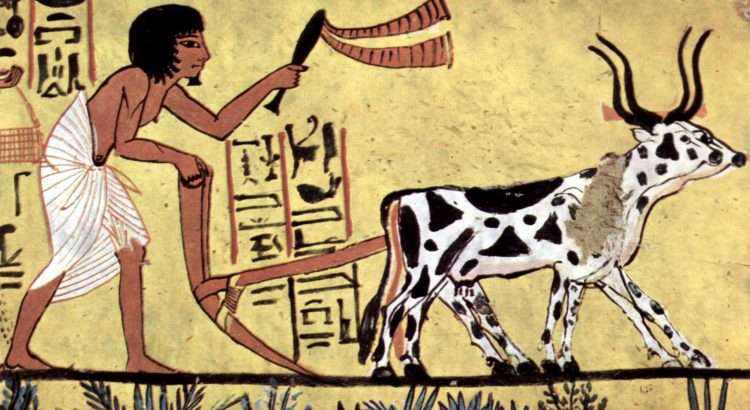
The delusional primate
A long time ago not so far away….
A PLANET CAME TO LIFE
There was a planet that had come to life. It formed itself into vibrant and rich ecosystems and evolved and changed over millions of years.
ONE PART OF THIS PLANET
One expression of this living planet, one animal, lived like any other animal. They lived from what they found around them in nature. They were nature and lived as nature. They saw themselves as part of nature and the web of life. They lived an indigenous life.
THE BIRTH OF AGRICULTURE
At some point, this one type of animal learned how to grow food and settled down to take care of the crops.
At first, they did this to have food more steadily available. Maybe they had experienced a great hunger – the plants and animals they had relied on for food had gone away for one or several seasons – so they wanted to see if they could find another way.
With this one change, settling down to plant and take care of crops, a lot of other things changed.
THE ODDITY OF THIS NEW WAY OF LIFE
Some realized they could take control of land to grow food. Some also domesticated animals. They started trading the food they grew with other things. They amassed both food and things and a few became wealthy.
Others did not – maybe they couldn’t or wouldn’t because it didn’t make sense to them.
This was all a very odd turn of events. It was all new. It was strange to all of them.
Before, they all lived together. They gathered food together, hunted together, and shared what they had. They had just the most simple things as their own. They were all equal in the most essential ways.
And now, some of them suddenly were in a different position. They had leverage. They took control over land and things, other species, and even others of their own kind, in a way nobody had done before and nobody had even conceived of before.
CREATING IDEOLOGIES TO JUSTIFY THE NEW INEQUALITY
The ones who took control of what was previously shared had a problem. How could they justify the new inequality? How could they justify their new position? How could they justify controlling the land which previously just lived its own life? How could they justify amassing so many things? How could they justify controlling others of their own kind?
How could they make it seem natural and right?
They did it by imagining ideologies and finding ways to get others to buy into them. They found ways to make these ideologies seem right, good, and attractive. They found ways to make them seem inevitable.
IT WORKED: THEY BOUGHT INTO IT
At first, it was obvious that this was all imagined, and that those who took control of land and many things did it to justify what they were doing.
Although soon, it worked. They – the wealthy and the poor – started buying into these imaginations. As new generations grew up with these imaginations, they couldn’t even imagine something else. They just took these imaginations as given, as how it was, as how it should be. Even the ones that were taken advantage of by these ideologies bought into them and defended them.
The few in each generation who questioned these imaginations, and recognized them as imaginations, were ridiculed, shamed, ostracized, and punished in a variety of ways.
THE IMAGINATIONS
What were these imaginations?
There were many of them and they took many forms, although they all had one purpose: to justify this new situation. To justify the control of land and other species, and this new social inequality within their own kind.
They imagined their own kind as separate from nature. They imagined the divine rights of kings. They imagined the voice of the divine speaking through priests. They imagined laws to protect their property and position. They imagined the sacred as “out there” in an imagined god in the sky. They imagined rewards in the afterlife.
They imagined a divine order that justified social hierarchies. They imagined stories about those on top of the hierarchy – the kings, emperors, priests, and the wealthy – to make it seem as if they were inherently special and someone to look up to and admire.
They found ways to blame individuals for being at the bottom of the hierarchy instead of the system. They imagined ethics and norms that told people to stay in their place and not rock the boat. They imagined heaven and hell, and hell for those who don’t behave.
They imagined that the way to understand something is to take it apart to its smallest components.
They imagined their kind as intrinsically different from and better and more important than the rest of the web of life. They imagined a soul in themselves and no soul in other kinds of animals or nature. They imagined other kinds of animals as having no emotions or thoughts or inner life. They imagined that this justified imprisonment, slavery, and torture of beings not of their own kind.
They imagined polarities and that one is good and one is bad. They created and reinforced many polarities like this: The wild and tamed. Savagery and civilization. Man and woman. Human and animal. Civilzation and nature. White and colored. Written and oral traditions. Heaven and earth. Soul and matter. Mind and matter. True and false. Saved and doomed. Good and bad emotions.
They imagined that thoughts can hold some kind of full, final, and absolute truth. They imagined that some thoughts and perspectives are true and other thoughts are false. (Removing the curiosity to explore complexity and find the limited validity in many perspectives and a bigger and fuller picture.)
IT WORKED TOO WELL: A GLOBAL ECOLOGICAL CRISIS
This state of affairs – with almost everyone buying into, propagating, and evolving these imaginations – went on for millennia.
The imaginations took many different forms, although always on the same theme of justifying this new way of life, so different from how they all had lived in the past.
At some point, they imagined nature as infinite in its resources and capacity to absorb the waste created by their civilization, and they organized their whole economy and civilization around this idea. It worked for a while until their numbers and the power of their technology grew exponentially.
Their civilization now used far more resources than the living planet they were part of could replace, and they produced far more waste than the living planet could deal with seamlessly. The living systems of the planet started to wobble. Ecosystems were degraded. Species lost. The weather got more extreme and unpredictable. They saw and lived all the signs of a massive global ecological crisis.
Some of them recognized this, at least to some extent, and wanted to make changes. Others defended what they had been taught and the old ways of living and imagining, some because they were familiar with it and some because it justified their privileged position.
THE DELUSIONAL PRIMATE
We are, of course, this delusional animal. We are the delusional primate.
We are the expression of this living planet imagining itself as separate and imagining all these other things, and perceiving and living as if that’s how reality is.
We are the species that has become ecocidal and suicidal from taking these kinds of imaginations as reality.
HOW WILL IT UNFOLD?
How will it unfold?
Have we bought into the delusions so strongly that we are unable to make the profound changes needed to create a more ecologically sound civilization?
How bad will it get before enough of us realize the severity of the crisis and what’s needed to change it?
Will we, for very much longer, survive through it as a civilization? Or even as a species?
None of us know this, of course, we just have to live it.
HOW CAN WE WRITE A SATISFACTORY NEXT CHAPTER?
A more important question is: How can we write a satisfactory next chapter for ourselves?
One answer, at least for some of us, is to recognize these imaginations and how they came about, how they are perpetuated, and the consequences of perceiving and living from them.
We all play a small role in writing our collective chapter, and when it comes to writing our individual chapter, we play a much bigger role.
As Joanna Macy says it, we can engage in (a) actions to stop the harm, (b) developing a more life-centered worldview, and/or (c) live some of the solutions. We may not change the world (that much), but we can change our world, and that’s how the world changes.
A FEW CAVEATS
This is mostly about Western Culture, of course, which is now the dominant world culture, but it’s also to some extent about any agricultural culture. The indigenous have fully or partially been on the outside of this, which is why their perspectives are so valuable now.
It’s also a very simplistic view on what happened, and I am no scholar in this topic. Reality is always far more complex, and our view on the past reflect us more than it says something fully accurate about the past. Our views about the past, and anything, are mainly about us.
That’s also why this story can be helpful, even if it’s inaccurate and glosses over a lot of complexity. It helps us to recognize several of the assumptions we tend to operate on in our culture. It helps us see some of the limitations and downsides of these assumptions. It helps us explore other worldviews and assumptions that may be more life-centered and what we need to turn our civilization around.
EVOLUTIONARY PROCESS
I have written this in a way that contrasts the partnership and domination views and have left out of the bigger picture that embraces both. So I thought I would bring in a slightly bigger perspective.
We can see this as part of an evolutionary process. Human civilization, including the partnership-domination dynamics, is one of many ways this living evolving system is exploring itself.
Our Western civilization, with its ideas of separation, has brought science, technology, and much else of value, and we now have the opportunity to take the best from our past and create an ecological civilization.
RESOURCES
None of these are new insights. People throughout history have pointed it out, and it seems it has been especially clear to indigenous people.
I was first introduced to this view in Fritjof Capra’s Turning Point.
I have also enjoyed The Chalice and the Blade by Rianne Eisler, The Spell of the Sensuous by David Abram, Ishmael by Daniel Quinn, The Great Turning by David Korten, The Spiral Dance by Starhawk, Coming Back to Life and World as Lover, World as Self by Joanna Macy, and more.
I also found books written by indigenous people very illuminating, although I don’t really remember which books talked about what. Black Elk Speaks, Lame Deer, and The Sacred Hoop come to mind. If I am honest, I read about these themes many years ago and I am not quite up to date. (Because of my chronic illness, I have been unable to read much for the last 15-20 years.)
There are good books on this topic I haven’t read yet: Earth Democracy and Staying Alive by Vananda Shiva, The Death of Nature by Carolyn Merchant, Sacred Nature by Karen Armstrong, and When God Was a Woman by Merlin Stone. From what I know about the authors, they seem worth a read.
Read on for more info.
Read More
Some of the essential stories behind extreme weather: climate, ecosystem health, ecological footprint, worldviews, transformation
There has been two major hurricanes from the Gulf of Mexico over the last couple of weeks: Helene and Milton.
I understand that most news stories of extreme weather events are about the most immediate concerns: Which areas will be impacted, how severe it will be, what type of dangers there will be, what actions are recommended, and so on.
At the same time, some essential stories are as or more important in the big picture. Some of these, like climate change, is often included while other essential ones receive less attention.
CLIMATE CRISIS
One is climate change, and many do include this in the coverage. Climate models from the 1970s and later have predicted the changes we see today, including more extreme weather.
Sunlight is converted to heat when it hits the surface of this planet. Gasses from our civilization have changed the composition of our thin layer of atmosphere so it functions like a greenhouse, trapping heat. This extra heat and energy fuels more extreme weather like hurricanes and leads to more frequent and stronger flooding, drought, wildfires, and more.
DEPOPULATION
For decades, we have known that coastal area will be largely unhabitable, and sooner rather than later in hurricane regions. Already now, private insurers are fleeing the coastal regions of Florida, leaving the tab to the taxpayers. This is obviously not a lasting solution. Why should taxpayers pay for people who want to stay in areas that quickly are becoming uninhabitable?
It seems far better to do whatever is needed to depopulate these areas, and instead focus on regeneration of the ecosystems to reduce future erosion of the coast. That’s what has to happen anyway, so we may as well do it now.
THE ROLE OF ECOSYSTEMS
Local and regional ecosystems play a major role in natural disasters. The more healthy an ecosystem is, the more it tends to resist and recover from natural disasters and it may even benefit from them.
In Florida, healthy mangroves and the dunes protect the inland. Without these, the impact is far more severe. Healthy ecosystems and healthy soil absorbs rainwater far better than deforested land. Healthy ecosystems creates a cooler and more humid climate, reducing wildfires. Healthy forests hold the soil in place, preventing erosion and landslides. Healthy ecosystems recharges the groundwater and purifies the water while its filtrating down.
OUR ECOLOGICAL FOOTPRINT
Why are we in this situation of climate crisis and degraded ecosystems?
The underlying cause is our global ecological footprint. We are using far more resources than Earth can replenish. This leads to degraded ecosystems and, if it continues, eventually the collapse of our local, regional, and global ecosystems. We’ll lose our life support system.
ASSUMING INFINITE NATURE
Our economic system – and civilization in general – is built on the assumption of nature as infinite. Nature has infinite resources and infinite capacity to absorb the waste of our civilization. That’s obviously wrong, but it was an assumption we could afford to operate from centuries ago when we were far fewer people and had simpler technology.
Today, that assumption – and our economic system and civilization – is ecocidal and suicidal.
WORLDVIEW OF SEPARATION
This is rooted in a worldview of separation. We live as if we are separate from the living systems of this planet, while we, in reality, is just a small and temporary expression of it. We are part of and created by this system. We cannot live without it. Our existence depends on it, and our health and well-being depends on healthy local, regional, and global living systems.
AGRICULTURAL REVOLUTION
All of this likely goes back to our agricultural revolution roughly 10,000 years ago. With land, we got property, wealthy and poor, social hierarchy, a power-over mindset, ideologies and religions aimed at justifying inequality and hierarchy, a shift from seeing the scared in nature to “out there” and “in heaven”, and so on. The natural outcome of this is our current ecological crisis.
SOLUTIONS
Fortunately, we have the beginnings of the solutions to all of this. We know what we need to do.
We need to develop an economic system that reflects ecological realities, and where what’s easy and attractive to do is also ecologically sound. We need a thorough transformation of our civilization to be ecologically informed. We need a transformation of our worldview and religions. And so on.
It’s a tall order. Judging from what we see in the world today, where most people are making minor to no changes in dealing with this, we’ll need to be far further into the crisis before we find the collective will to make the needed changes.
So it comes down to what we can do as individuals and groups, and there is a lot we can do in terms of stopping harmful actions, developing and living solutions, and transforming our worldview.
NOT NEW BUT IT’S GOOD TO FOCUS ON THE BASICS
None of this is new. I learned about it in middle school from teachers, The Turning Point by Fritjof Capra, and many other sources.
This understanding has been around for decades and really throughout history, especially in non-Western cultures.
At the same time, it’s good to return to the basics.
Read on for more info.
Read More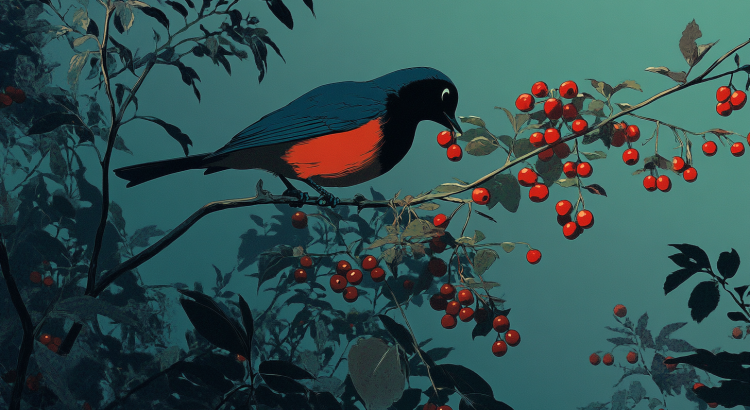
Lawns & birdfeeders versus native plants & natural food sources
I grew up in a house with a moderately large garden in a small town South of Oslo. My parents have always had a lawn with some fruit trees and flower areas, as you were supposed to do it when I grew up, and the yard had some wild edges as well. These days, most gardens in this area of Norway seem to be overly manicured with grass and little else. They are sterile monocultures maintained by robot lawn movers and noisy edge cutters on a Saturday morning.
My father loves birds and wildlife so he always had a couple of birdfeeders and put out food for the birds daily.
STERILE MONOCULTURE VERSUS FULL OF LIFE
To me, this has always seemed a bit weird. Why such an overly manicured garden? Why so much lawn?
Why create an environment where you need birdfeeders?
Why not have a nature garden, a garden full of food-producing trees and bushes, and native trees, bushes, and flowers? That is a garden full of life and it creates habitat and food for birds, insects and other wildlife. It may require a little more effort to establish, but after a while, it mostly takes care of itself. In general, it seems far more sensible and enjoyable.
WHAT I LIKELY WOULD DO
If I had a house and garden in Norway, what would I do? I would create a small food forest with ample food for birds and other wildlife.
I would start with fruit trees and berry bushes. Maybe apple (eple), pear (pære), plum (plomme), cherry (kirsebær), hazelnut (hasselnøtt), walnut (valnøtt), and raspberry (bringebær), blackberry (bjørnebær), gooseberry (stikkelsbær), and red currants (rips).
I would include some perennial food-producing shrubs like strawberries (jordbær), clover (klover), comfrey (kynge), and chives (gressløk).
I would include some native trees like rowan (rogn), silver birch (sølvbjørk), Norway maple (norsk lønn), common oak (eik), black alder (svartor), and aspen (osp).
I would encourage edible mushrooms in the shady and now humid areas.
I would also have some more open areas with wildflowers. For instance, buttercup (smørblomst), oxeye daisy (geitrams), common knapweed (knoppurt), red clover (rødkløver), field scabious (hestehov), meadowsweet (marihånd), yarrow (ryllik), and purple loosestrife (liljekonvall).
As I plant these, I would remove grass to make space. It can be done one small portion at the time.
All of this can be done in a regular garden, and although it requires some effort in the beginning, it soon largely takes care of itself and it has multiple benefits – food, enjoyment, nature close by, habitat and food for birds and wildlife, and more.
WHY DON’T MORE PEOPLE DO THIS?
Why is this still quite rare? Why do the vast majority of people maintain a sterile garden?
Some of it is likely inertia. They already have a lawn so it may seem easier to just keep it going and not make changes.
They may have other priorities than creating a thriving ecosystem around their house.
They may be concerned about going against expectations and norms. What will the neighbors say if I get rid of the lawn and instead create a natural garden and garden forest?
They may be concerned they won’t know what to do or how to do it.
These things often have to do with identity. Does it fit my identity or not?
ONE VISION
How can we remedy this?
I imagine local governments providing information and support to convert lawns into natural gardens and food forests. They can provide brochures, classes, practical guidance, and perhaps even a rebate on the plants in cooperation with nurseries or a tax rebate.
WHAT AM I DOING?
I don’t have a garden in Norway, but I am the steward of land in the Andes and we are reforesting, regenerating, and creating a food forest here.
Illustration by me and Midjourney

Scrödinger’s land: Paradise or hell or both, and a reflection of our ecological crisis
We are legal stewards, as humans think about it, of beautiful land in the Andes, at the western slope of Chicamocha Canyon.
I walked in the forest at early dawn, after a heavy rain, and it reminded me of something difficult to escape these days.
PARADISE OR HELL OR BOTH
This land is paradise or hell or both.
It’s a paradise for us now. It’s in a beautiful area, and although the land is degraded by centuries of grazing, it’s still very beautiful. Right now, at dawn, it’s quiet. There is only birdsong.
It can easily be hell as well. When the neighbors blast out their music, it’s a kind of hell. When the extremely noisy motorcycles go by, it’s similar. More importantly, a huge hotel and shopping center project is being built across the road, as one of our closest neighbors. If that actually comes into existence, it can very well be hell with constant noise, music, increased traffic, and more.
For the ecosystem and wildlife here, this place is also heaven and hell. For the ones currently living here and doing well here, it’s paradise. They are left alone. For the ones impacted by centuries of grazing and chopping down trees for wood, it has been hell. For all the new life that’s coming after the grazing was stopped, it’s paradise.
A REFLECTION OF OUR ECOLOGICAL CRISIS
All of this is a reflection of our ecological crisis, and of our civilization that’s profoundly out of step with ecological realities.
Our ecological crisis has been going on for centuries, and the previous use of this land is an example.
The local farmers mostly have cows and goats, so for them, grass is wonderful and anything else – apart from a few trees for shade – is a waste of land. They even call pioneer species that help recreate a more mature and rich ecosystem “malezas”, bad plants.
They have cut down the forests and made it into mostly grassland and savannah, with predictable consequences: The wildlife has been severely impacted. The rivers and springs are dry. And the climate in the region is likely changing, and probably already has.
The hotel project is another example. How can the local authorities allow a hotel project they know will be immensely destructive for the land and the community? (It wouldn’t be allowed in most well-regulated industrial countries, but this is not and they do things differently here.)
AN ECOCIDAL AND SUICIDAL CIVILIZATION
This all points back to our civilization. It’s a civilization built on several principles that lead to this kind of destruction: A power-over mindset instead of a power-with mindset. The sacred as “out there” and not in here in the land, life, and us. Nature as “out there” instead of seeing us as nature and part of the web of life. And so on.
Mainly, we have an economic system that assumes that nature is infinite in its ability to provide resources and absorb the waste of civilization. It evolved that way because it could at the time. We were few enough and had a simple enough technology so for most practical reasons, it was true.
These days, our numbers are many times higher and our technology is many times more powerful, so it’s an assumption that is, quite literally, suicidal. We have a civilization that’s ecocidal and suicidal. And many still don’t realize it.
Many do still not realize the profound systemic changes needed for our civilization to continue.
GLOBAL ECOLOGICAL OVERSHOOT
The simplest way to frame this may be in terms of our ecological footprint.
Our collective ecological footprint is far larger than the Earth. We will need two or more Earthts to support our current civilization, and we don’t have it. If everyone had the lifestyle of industrialized countries, we would need closer to ten Earths. That’s clearly not sustainable.
This global ecological overshoot is similar to living off the money in our savings account. It looks fine for a while until we reach the bottom and our lifestyle comes crashing down.
In our case, it means that our civilization comes crashing down.
This is not hyperbole. This is a simple reality. Even a child can understand it.
WHAT WE CAN DO
So what can we do? Do we have time to change?
I don’t know if we have time to change. If we all suddenly found the collective will to make the needed changes, we could do it, of course. But that seems very unlikely. Most people continue as if nothing is happening.
What can the ones of us who realize the urgency do?
I vote for the Green Party in Norway.
I bought this land and is making it into a nature preserve. We have partnered with an organization that will plant thousands of native trees here, with some diversity (around twenty different species). We are making a food forest around the houses and the main paths.
I eat mostly local, organic, and seasonal food when I can. I eat low on the food chain, with only occasional fish and meat.
I find like-minded people and join, to some extent, communities of like-minded people.
I learn. I learn about ways to partner with this land in terms of regeneration, reforestation, and making food forests.
I actively explore and immerse myself in different worldviews. Worldviews that are more life-centered and aligned with our ecological realities. (Universe Story, Epic of Evolution, Deep Ecology, systems views, integral models.)
I actively work with my distress and grief over what’s happening with this land and neighborhood, with Earth, and with humanity.
I cannot save humanity or our current global ecosystems. But I can save myself and this land, as best I can. I can do what I can for our civilization to turn around. (The Great Turning.) And that’s more than worth it, no matter what happens with us collectively.
Read MoreWhat’s marginalized today and mainstream tomorrow?
This BBC story from the 1960s shows a classic social dynamic: The ones who question, ignore, or don’t fit the social norms are ridiculed, discriminated against, and pushed out. After some years or decades, some of what was marginalized become the new norm.
WHAT’S ODD TODAY AND MAINSTREAM TOMORROW?
So the question is: What falls into this category today? What is outside the norm today and will be included in the future?
The first part of that question is easily answered, although it depends on the society and culture, and we cannot know anything for certain about the future.
SOME GUESSES
Still, here are some guesses – and maybe hopes:
Eating mostly vegan or vegetarian. As I see it, this is the obvious way of life for two reasons. It seems inevitable that we will acknowledge the sentience – the rich inner life – of non-human beings more in the future. For a long time, we have pretended they somehow don’t feel as much as we do or don’t have thought processes as we do, and that cannot be upheld much longer. There is too much science and too much experience that shows us something else. (Using buttons to help non-humans to talk reveals some of their rich inner life.) Also, producing meat is hugely inefficient. There is a big loss in converting plants to meat and then eating it. It makes far more sense to eat what they eat which is plants. In most places in the world, meat is still the default in family dinners and restaurants, and the ones who eat plant-based food are seen as a bit weird and difficult.
Living a life that has a reduced ecological footprint. Again, this is an inevitable shift if we are to continue our civilization and even our species in the long run. There is a culture shift here, fortunately, but many aspects of living a more sustainable life is still seen as a bit weird. It is, of course, often less practical since we live in a system that often does not prioritize that kind of life.
Organic food. I assume this too is an inevitable shift over the next decades. It will only become more and more clear how much pesticides impact our health and the health of other species. The massive loss of insects we see in many places, including here in Norway, is partly due to pesticides. (In addition to loss of habitat.)
How we grow our food. These days, most food is grown in monocultures and by depleting the soil. That cannot go on forever, or even for very long. In the future, it may be far more common to take care of soil health and grow with more diversity, and also mix in more native diversity in order to support the ecosystem. Today, this is still on the fringe.
Rewilding. Ecological preservation efforts have been relatively common over the last several decades, although intentional regeneration and rewilding were less common. These days, with an abundance of degraded land, regeneration and rewilding have become more of a focus and I suspect we will see a lot more of this in the future.
Green economics. Our current civilization assumes infinite nature, which is a significant reason for our ecological crisis. We need an economic system that takes ecological realities into account so that what’s easy and attractive to do, for individuals and organizations, is also good for our ecology. This is still very much marginalized, and it’s another thing that needs to become mainstream if we are to survive as a civilization and likely also as a species.
Ecological footprint. I see this very occasionally mentioned in mainstream media, and typically as an aside. To understand our situation today, we need to know about our ecological footprint, have numbers on our individual and collective ecological footprints, what contributes the most, and what we can do to reduce it while maintaining or increasing our quality of life. (I worked with this in the late 90s/early 2000s.)
Global ecological overshoot. We also need to understand global ecological overshoot. We are currently using far more resources than Earth can replenish. This is like receiving a good amount of money and spending more than what comes in. It looks OK for a while until we reach the end and it all comes crashing down. We are starting to see that crash today, and it will unfold in a far more dramatic way in the coming decades.
The severity of the ecological crisis. Most people, including many reporters, seem to assume that the ecological crisis will be manageable – we’ll get 1-3 degrees Celsius higher temperatures, the ocean levels will increase by some centimeters, we’ll get a few more strong storms, there will be a little more drought and flooding, and so on. Those who know the most, and especially those who are familiar with systems views, know it can easily be far more dramatic than that. Systems folks warned us about it decades ago, including that it can create a planet that’s unlivable for us and many other species and that it will happen within the lifetime of many alive today. In that perspective, the rest on this list is just about making a slightly better situation out of it while we can, which is meaningful in itself.
Change in worldview. These are aspects of The Great Turning as Joanna Macy calls it, and another aspect is a change in worldview. In the Western world, we have operated from a mindset that was maybe necessary for a while but also led to a great deal of our challenges including our global ecological crisis. This mindset is dualistic, patriarchal, power-over oriented, and more recently reductionistic. To survive and thrive, we need a more holistic, systemic, and/or integral worldview that sees us as part of the web of life. (Those three are distinct although also related.)
Universal basic income. I assume some municipalities, and perhaps even countries, will continue to explore this. It does make sense in theory, and with learnings from real-life experiments, we may find ways to do it that work well on a larger scale.
LGBT+. This shift is also already well underway in many societies, although there are some who still resist. I assume that in the future, LGBT+ awareness and inclusiveness may be the norm. Why not? It’s not a loss to anyone, only a gain.
Mental health. This shift is already well underway in many societies and perhaps our global society. In the past, mental health was seen as reserved for the ones with a diagnosis and obviously in need of it. It was also stigmatized. These days, it’s more accepted that mental health is for everyone. It makes sense to take active care of our mental health just as we take care of our physical health.
Research into meditation and the mind. There has been some research into the effects of meditation, yoga, and similar practices, and I assume there will only be more in the future.
A secular understanding of awakening. This ties into a secular understanding of awakening. To ourselves, we are consciousness, and the world to us happens within and as this consciousness. Awakening means that the consciousness we are becomes aware of itself, and that it forms itself into all our experiences. This is logically inevitable and it’s something we can explore in our own direct noticing. It’s also a kind of lowest common denominator that’s compatible with a spiritual understanding of awakening. I suspect this view too will become more common in the future.
Psychedelics. Psychedelics have been used in a therapeutic setting for decades, some states in the US now allow it, and there is more research in this field. I suspect it will be more common in the future, and legalized – at least in therapeutic settings – in more states and countries.
Inclusivity of the disabled. Most aspects of our society are designed with abled people in mind, with perhaps a ramp for wheelchairs as an afterthought. Because of my CFS, I have asked doctors and others if we can do appointments over video or phone, and it has always been quickly dismissed as impossible. When covid came, and it impacted abled people, it was suddenly more than possible. Ableism is alive and well, and I suspect – and hope – that this will change. It will benefit us all to have a society designed with the disabled in mind.
Chronic Fatigue Syndrome (CFS) and fibromyalgia. This is far more specific, but I want to include it since CFS is a part of my life. Over the decades, different types of diseases have been marginalized, dismissed, or misunderstood by mainstream medicine. MS, peptic ulcers, celiac disease, and Lyme disease are just some of these. Even cancer had stigma and shame associated with it. These days, CFS and fibromyalgia are among these marginalized, misunderstood, and sometimes stigmatized diseases, although there is a shift here too. (I have experienced doctors literally rolling their eyes and scoffing when I say I have CFS, and I have also experienced doctors who are knowledgeable and take it seriously.) I suspect that with continued research, these diseases will go from marginalized to better understood, and there may even be treatments in the future.
Reactions and push-back. When there are large cultural and social shifts, there are always reactions and push-back. After the US had its first black president (Obama), there was a pushback from scared white folks so they elected Trump. This is something we’ll see more of, and it’s not inherently bad or wrong. It’s what seems to happen with humans when there is change. Some get scared and want to move us back in time.
MY BIASES
What I wrote comes from a combination of three things: (i) My own biases, fascinations, priorities, and wishes, (ii) what’s likely required if we are to survive and thrive, and (iii) imagining some current trends continuing into the future.
Any vision of the future necessarily says more about us and the time and culture we live in than the actual future.
I do what most of us do and project my hopes and fears into the future. I fear how our ecological crisis will unfold. I hope we will make these kinds of changes to set us on a more sustainable course. I hope we’ll find the collective will to do so before it all collapses, and I fear we won’t.
Since I have lived most of my life in Western Europe and on the US West Coast, it looks to me as if society is moving this way. It does in these areas of the world, and much of the rest of the world may not be on the same track.
The role of the indigenous in the world and in each of us
Why are indigenous rights so important?
HUMAN RIGHTS
It’s basic human decency and justice. They have been profoundly mistreated for centuries and millennia by Western society and mainstream society. They have been the target of genocide, theft, cultural suppression and extermination, systemic racism, slavery, and much more.
It does all of us good to treat them, and everyone, with decency, respect, and inclusivity.
LOW PRIORITY
Their rights continue to be ignored. They are far down on the list of minorities – LGBT+, descendants of slaves, disabled – that mainstream society is gradually taking seriously and including in any real way.
They have a low priority and deserve high priority.
ESSENTIAL WORLDVIEW
Their perspective and knowledge is immensely important for humanity as a whole, especially today in our global ecological crisis.
Their traditional worldview is medicine for the imbalances in our mainstream culture1.
WE HAVE THE INDIGENOUS IN US
We all have the indigenous in us. We all have a deep connection with nature outside and inside of us. We are nature. We are much more than patriarchy, dualism, hierarchy, a power-over mindset, and the rest glorified by our Western civilization. The genocide happens within each of us. The ecological crisis happens within each of us.
The way we treat the indigenous in the world is how we treat the indigenous in ourselves.
IMMENSELY IMPORTANT FOR THE WORLD AND OURSELVES
Taking the indigenous seriously is immensely important for them.
It’s also immensely important for the world and ourselves.
It’s one way for us to recover from the diseases of our current Western civilization.
NOTES
(1) Of course, there is a great diversity among indigenous cultures. I am talking here about the general tendency of indigenous cultures to be more nature-oriented and seeing humans as part of a larger web of life.
The only way for us to survive

When I worked with sustainability in Madison, Wisconsin, I remember providing an abundance of locally produced organic food to the chef at a local college so he could create a full organic meal for an event. I contacted him several times in the lead-up to the event and noticed he seemed to have a dismissive attitude. At the event, it turned out that he had only used the organic produce for a tiny soup and not for the main dish. When I asked him about it, he said: “You can’t make a whole meal with organic food”.
It has stayed with me because it seems to reflect a modern mindset that sees anything organic or sustainable or natural as a kind of fringe hippie thing and not something that’s workable or realistic.
It’s a mindset I have trouble understanding, although I understand that many have been misled by the systematic “better living through chemicals” marketing. In this case, the local organic food was of far higher quality than the chemically-produced food from the supermarket that had traveled thousands of miles that he chose to use for the main dishes. Also, we have eaten organic food for the vast majority of human existence, it’s only in the last few decades it has changed. The best chefs around the world have used locally produced organic food.
Our civilization operates on systems that assume that nature is infinite. It assumes that nature has infinite resources for us to use and that it has infinite capacity to absorb our waste. That’s obviously far from reality.
We live as part of a finite planet with a finite capacity to replace the natural resources we use and a limited capacity to deal with the waste we produce.
Our systems need to reflect that reality, or it will lead to a collapse of our ecosystems and, along with it, the collapse of our civilization.
We are in a global ecological overshoot. Our civilization is using far more natural resources than our planet can replace. We would need two or more planets to support our current way of life. It’s similar to spending more money from our bank account than what is replenished through interests, and there are no other sources of income. It looks fine for a while until we reach the bottom of the account, our lifestyle cannot be supported anymore, and it all comes crashing down.
It’s a simple calculation that even a child can understand, and often do. It’s more often the adults who deceive themselves and pretend it’s not so serious, or a hippie thing, or for someone else to deal with.
Fortunately, we have the solutions. We know the systemic changes necessary, and we know many of the more specific solutions as well. Unfortunately, making the change requires a collective will and we seem to be far from having found that yet.
When people who study global ecological overshoot talk about the collapse of ecosystems and our civilization, it’s not hyperbole. It’s an inevitable outcome if we continue as we do. That’s why sustainability and culture change is necessary and inevitable if we want to survive.

The green political compass
My mental political compass is a green political compass.
I use the traditional dimensions like left and right, libertarian and authoritarian, and so on.
Mainly, I use a green dimension. To what extent are the policies aligned with ecological realities? What’s the ecological footprint of these policies? Will they help reduce our global ecological overshoot?
Do they reflect an understanding of how thoroughly we need to change our whole civilization to take ecological realities into account? Do they reflect an understanding of the urgency?
WHERE AM I ON THIS COMPASS?
Where am I on this compass? One answer is that…
I am reasonably far left. I support good social safety nets, fair wealth distribution, policies that take the needs of the least fortunate into account, and so on. Although I don’t mind green capitalism, it seems a pretty good way to go.
I am also reasonably far on the libertarian side. I strongly support individual freedoms in terms of democracy (a deeper democracy than most societies have today), freedom of religion, freedom of sexual orientation, and so on. At the same time, I favor strong governmental regulations of big corporations and anything that impacts nature.
I am obviously far over on the green side. I favor – and recognize the need for – a thorough transformation of all aspects of our civilization to take ecological realities into account.
THE BIGGER PICTURE
A more real answer is that I see the value in a wide range of views and policies.
Each view tends to have some good points. I find it helpful to find and acknowledge the valuable essence in each, although my interpretation may look slightly different from the original.
There is an evolutionary function in each of the general views. The diversity has helped us as a species to survive and still does. Handling the diversity well can help us through our current global ecological crisis.
Taking a bigger picture helps draw something of value from a wider range of views and approaches, and it also helps us take into account the real-world views and opinions people have and deal with it all in a more pragmatic and effective way.
See more on this in the brief outline below of an integral approach.
Please read on. I asked ChatGTP 4o for a summary of these topics.
Read MoreOne life
I just saw the movie One Life. It’s a traditional based-on-true-events movie with a kind of story told before, and yet it had a powerful impact on me. One person can do a lot, with determination and some support.
We can all do a lot, more than we think. And, as the movie reminds us, if we save one life, we save the world. A life is a world, and we save that world.
When we help nature, we save lives too. When we are engaged in creating a wild garden, a forest garden, or reforestation with native species, we help innumerable beings. We can be the ones saving them from their holocaust, and in the process, we help ourselves.
In our own small way, we can do a lot. And it’s certainly not small for the beings that benefit from it.
Read MoreEarth as context or an afterthought?


For most news outlets, Earth is an afterthought.
One example is the BBC app where “Earth” is number seven out of eight categories, after travel and before sport. It’s presented as an afterthought, as something peripheral and for those especially interested.
In reality, Earth is the context for everything. Earth is what gives us life and sustains us and every single one of our activities and interests. We are local aspects and expressions of Earth.
When we place Earth as an afterthought, it says something about our anthropocentric worldview. We have metaphorically placed Earth as number seven on our list of priorities because, for a long time, we could, and that’s what has led to our global ecological overshoot and the ecological crisis we now find ourselves in.
Hopefully, with our escalating ecological crisis, we’ll sober up and recognize Earth as all there is for us, and the context for our lives and everything we value.
Read MoreFood forests & revolution disguised as gardening
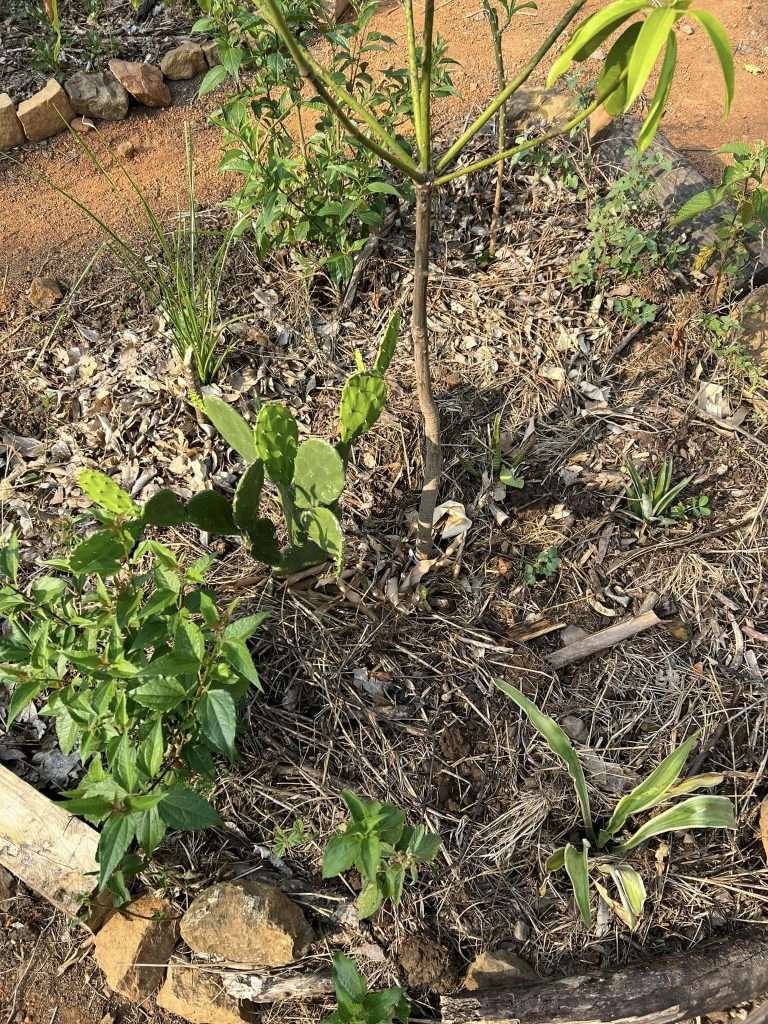
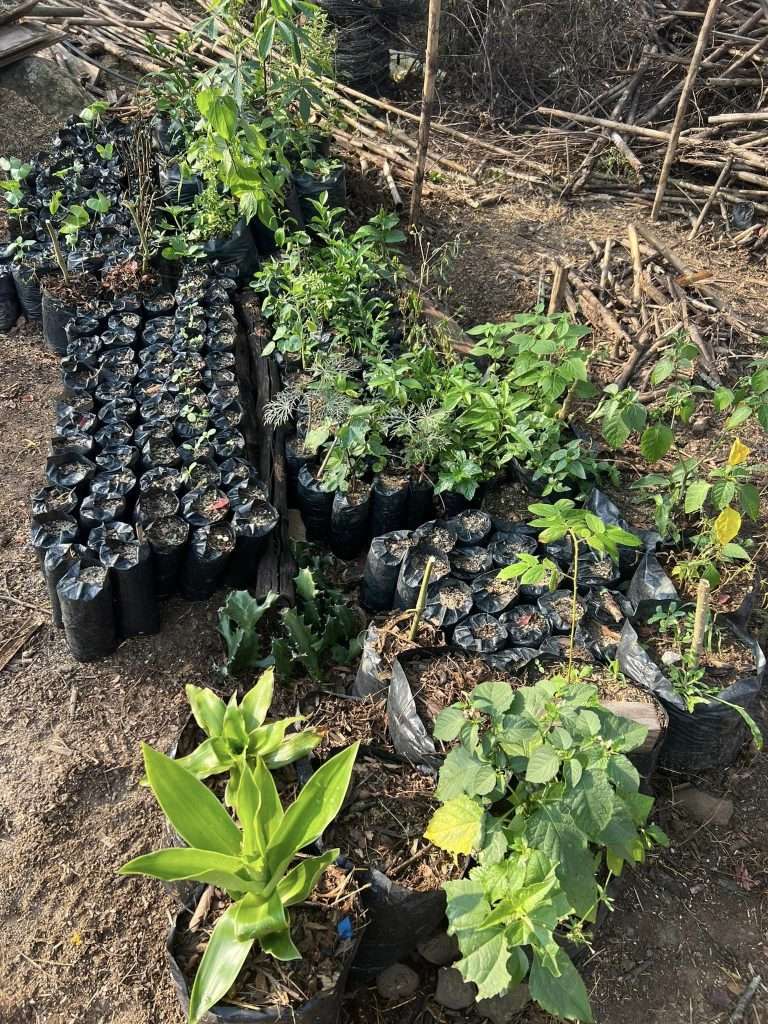
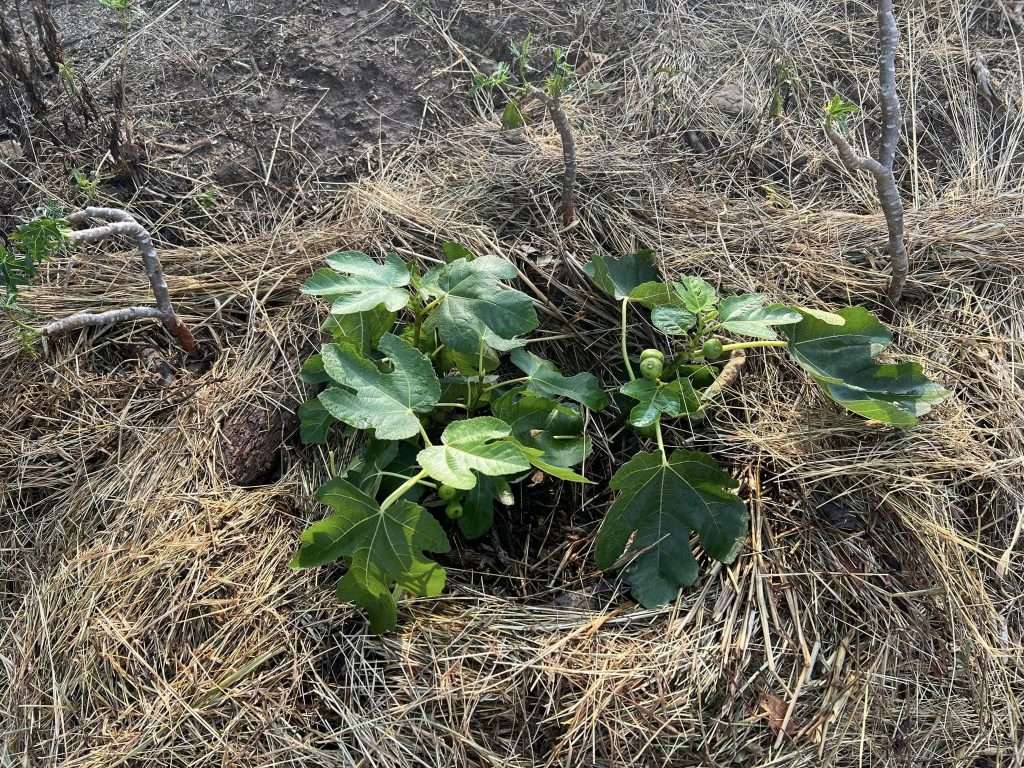
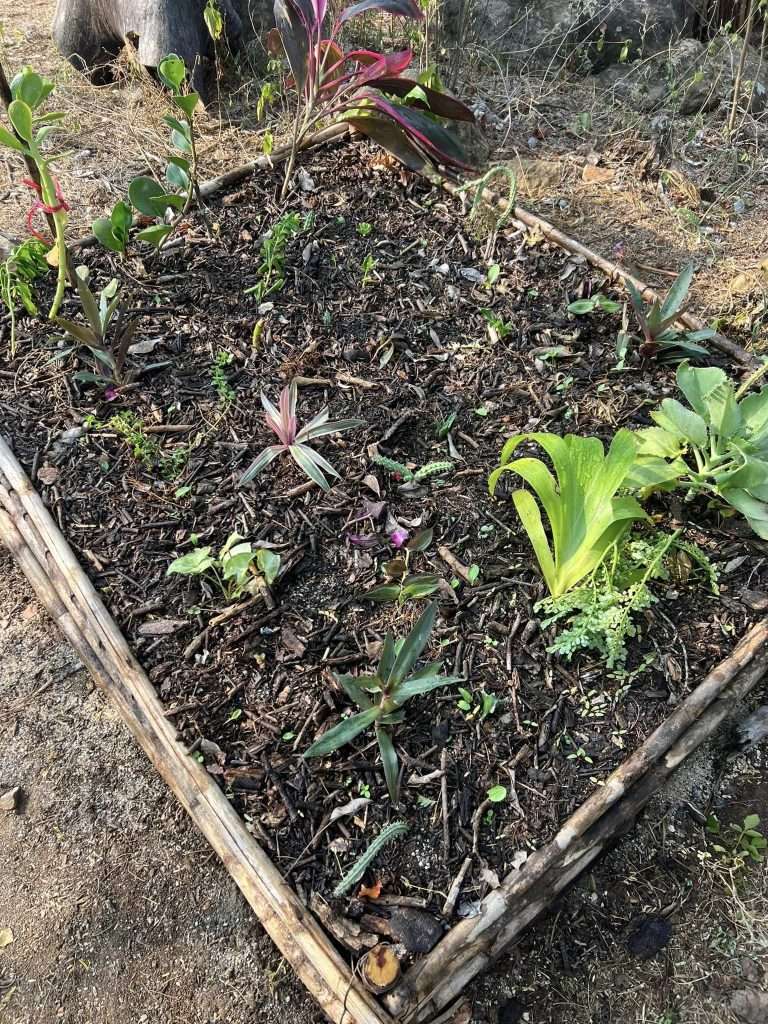
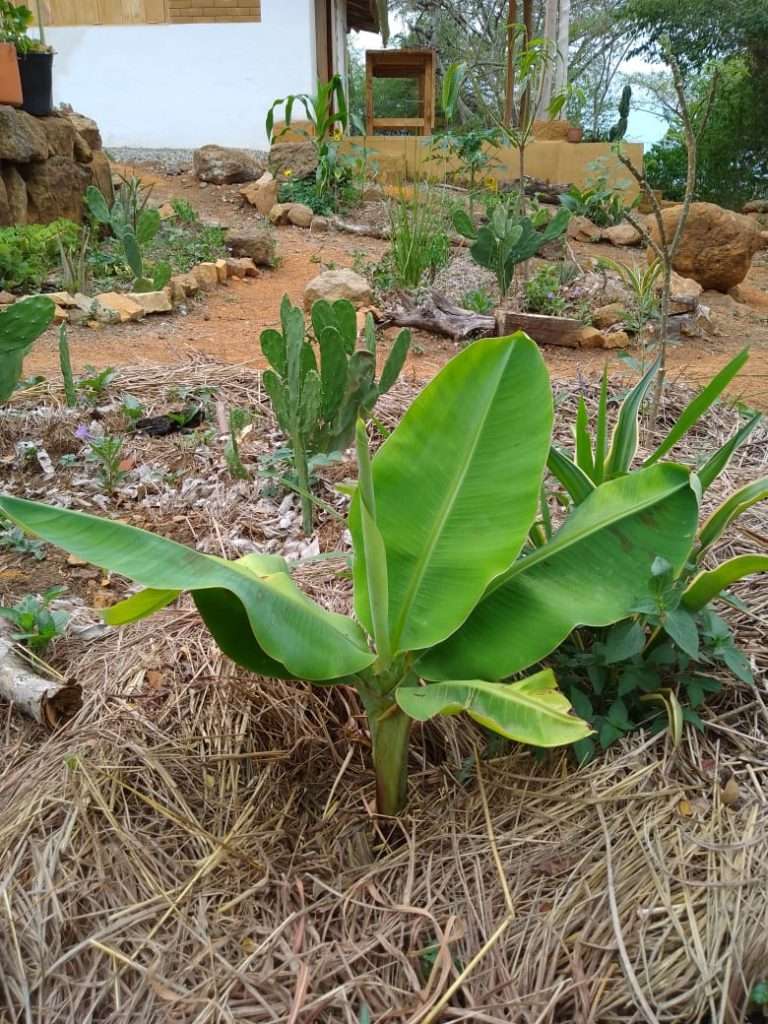
Over the last few months, we have been working to establish a food forest on our land in the Andes mountains. So far, it’s mostly close to the house, and it will likely expand in time and as we get more experience.
To me, food forests make a lot of sense. If I have a piece of land, I cannot see any reason not to establish a food forest. I would do the same even if I lived in another climate. (It would be different, of course, but it’s still fully possible to establish a nature garden that produces a good amount of food.)
THE HISTORY OF THE LAND
The land was owned by the same family for several generations and was used mainly for grazing (cows and goats) and small-scale food production (tobacco, yucca, etc.). Only the area close to the main pond has a relatively mature and healthy forest. The rest is eroded, has a young forest of pioneer trees, and/or has grass.
Before then, in pre-Columbian times, it was part of the land of the indigenous people in the area, the Guane. I am not exactly sure how they used it, but I assume they may have had a kind of food forest there. They may have cultivated food plants, likely mostly perennials, inside of the existing native forest.
THE TWO MAIN ZONES
The plan is to have a food forest in the area close to the houses, starting next to the houses and expanding out, and also to have a food forest along the main path through the land. This food forest will consist of native trees, bushes, and flowers to support the local ecosystem, and a variety of food-producing trees and plants to feed insects, birds, animals, and us, and to provide income in the future.
The rest of the land will be a kind of nature preserve, and an organization will plant a mix of native trees throughout the land over the next several months and years. (They sell the carbon credits to big international corporations, and our land gets to be reforested.)
OTHER THINGS WE ARE DOING
We are also doing other things to minimize our impact on the land and our life-support systems in general.
We are building using traditional techniques and local materials. These are rammed-earth buildings that stay cooler during the day and can last for centuries with a little maintenance.
We are in the process of setting up rainwater collection systems for watering the plants. We can get 1 liter for each millimeter of rain for each square meter of roof surface, so that adds up quickly.
We will install a solar power system. Since we are close to the equator, there is a lot of solar radiation, and it’s not more expensive than buying and installing a transformer which would be the alternative.
The big house that’s being built now will have a vermicomposting system. Inside the house is a regular flush toilet, the water goes to a worm composting bin where the solids stays and is eaten happily by worms, and the water continues and is deposited underground to nourish parts of the food forest. It’s a simple and low-maintenance system with a lot of benefits.
I will most likely replace the conventional flush toilet in the current small house with a compost toilet 10-15 meters away.
In addition, we are getting to know and create connections with neighbors and like-minded people in the region with similar projects. That’s crucial for several reasons, including sharing of knowledge and some material resources. For instance, we are right now buying high-quality compost from permaculture friends in the area. (After a while, we will have our own.)
WHY A FOOD FOREST?
For me, the question is more: Why not a food forest?
It just makes sense all around. It’s fun and rewarding. It provides habitat and food for insects, birds, and animals. It helps revitalize and feed the soil. It will provide food for us as well as income in the future. It takes a little effort in the beginning, but when it’s established, there is much less effort required and mostly just harvesting the rewards. It’s an example to others and may motivate others in the area to do the same.
PLANTING & HELPING THE SOIL
The area around the first small house has poor and compacted soil, so we are using a lot of mulch – combined with compost and some organic goat manure – to help it. The mulch helps retain moisture, and it also provides nutrients and microbes to the soil.
Since the soil is so compacted, it’s important to dig relatively large and deep holes for the trees and mix the soil with a good amount of compost and a little bit of manure. That helps retain moisture in the soil, it provides better drainage for the rainwater, it makes it easier for the roots to spread out, and it gives nutrients for the plants.
We also plant a lot of different things around these trees: peanuts, peas, flowers, vegetables, and so on. These provide more variety which helps keep pests and diseases at bay, the plants support each other, they help the soil, and the variety and liveliness is fun and enjoyable.
As you can see from the photos, we are just getting started, and the photos were taken well into the dry season so it’s not nearly as lush as it will be now that the rain has returned.
We are trying to plant as much as possible now at the beginning of the rain season, so they can get a good foothold while the rain is here. Some will likely need some watering during the dry season, but we are focusing on plants that will survive a period of drought once they are established and have deeper roots.
RAINWATER COLLECTION AND EROSION CONTROL
We are in an area that gets a lot of rain most of the year and has a dry period over a few months during the northern hemisphere winter.
Because of deforestation, rainwater runs off quickly and brings the soil with it. The erosion is worse along the ridge that goes across the land.
We are doing several things to slow down the water and help it absorb into the ground. The main project is to plant a large variety of native trees, bushes, and flowers. That takes time, so in the meantime, and in especially exposed areas, we are building dams using rocks found on the surface, and we are planting agave, mata ratón, and other plants that help keep the soil in place.
We are also channeling rainwater into a pond, and will – as mentioned above – collect rainwater from the roofs of the houses.
There is a dry river going through the land. With reforestation on our land, and hopefully also on the land higher up the side of the canyon, we may bring water back to this river.
THE LAYERS OF A FOOD FOREST
A food forest has several layers, just like a mature natural forest.
It has everything from tall to medium to small trees, bushes, flowers, and vines. This helps us make full use of the vertical space.
All of this vegetation and water – in the soil and the plants – also helps regulate the temperature. It changes the microclimate significantly, and this allows other species to grow and makes it more comfortable for us.
INDIGENOUS PEOPLE & FOOD FORESTS
Many or most of the indigenous people in the Americas created food forests.
They planted food-producing plants in the forests to have better and more regular access to food.
When I am doing the same here, I feel a kind of kinship across times and cultures. We want much of the same. We want to work with nature. We want to support the native forest and our four-legged, winged and crawling relatives and friends. We want to provide for our own needs in a way that also enhances the life around us.
THE MANY BENEFITS OF A FOREST GARDEN
So there are many benefits to a food forest, or a forest garden as it’s also called.
It requires some work in the beginning – in terms of planning, gaining knowledge and experience, and planting and maintenance. As soon as it’s established, it’s largely self-maintaining and we can reap the rewards without much input.
It provides habitat – shelter & food – for a wide range of insects, birds, and animals, especially when native trees, bushes, and flowers are included.
It’s densely planted, and it makes use of horizontal and vertical space. It works in 3D.
The diversity reduces problems with insects and diseases.
It helps nourish and build healthy soil.
It’s a project that will provide enjoyment, food, and possibly income for decades and even centuries into the future.
It will provide income in the future. We can sell food, compost, seeds and seedlings, knowledge and experience, and so on.
It’s profoundly alive, lush, and productive.
It’s fun and deeply rewarding and meaningful, at least for me.
It nourishes the soil and the soul. What can be better than that?
It creates connections with like-minded people working on similar projects. It creates a community.
THE PROBLEMS WITH MONOCULTURES
This is in contrast to the many problems with conventional monocultures.
They are deserts. They don’t provide much of a habitat for insects, birds, or animals.
They rely on chemicals: Pesticides and fertilizers. Pesticides are designed to kill insects, so that’s what they do, and it has led to a dramatic general loss of insects even far away from the growing areas. It’s ecocidal and suicidal. Chemical fertilizers require a lot of energy to produce.
They set the stage for pests and diseases. Having a big area of one plant allows pests and diseases to flourish, which then requires pesticides. Monocultures create a big problem and create another big problem by trying to fix it.
They require a lot of work each year. They often start from scratch each year.
They don’t build soil. Often, through disturbing the soil, laying the soil bare, and using a lot of space between each plant, there is a loss of valuable topsoil. (Which eventually goes into and pollutes the oceans.)
They are inefficient. They often use a big space between each plant, and they only make use of horizontal space.
They are boring. They don’t nourish the soil or the soul.
REVOLUTION DISGUISED AS GARDENING
Permaculture is sometimes called revolution disguised as gardening.
That’s how I feel about this project.
It’s profoundly subversive in the best possible way. It goes against so much of the destructiveness of our civilization (monocultures, pesticides, soil depletion, destruction of ecosystems) and provides an attractive and productive alternative.

Why are wind turbines so bad? Anti-wind energy sentiments in Norway
I have noticed there is a strong anti-wind energy sentiment among many otherwise progressive and sustainability-oriented people in Norway. Some even advocate for nuclear energy (!).
To me, that doesn’t quite make sense.
Yes, wind energy has drawbacks. It’s visible and changes the scenery locally, and it does harm and kill some birds.
At the same time, it’s important to keep the bigger picture in mind.
ENERGY CONSUMPTION
We have a society, lifestyle, and civilization that depends on high energy input, and Norwegians use more energy than most similar countries. Our priority should be to reduce our energy consumption.
It’s possible to reduce energy consumption quite dramatically through more efficient design and changes in lifestyle. (When someone lived in our tiny house in the Andes last year, that person used several times as much energy as I do when I am there.)
THERE IS AN IMPACT NO MATTER WHAT
We have to get energy from somewhere, and there is an impact no matter what. Our energy-hungry lifestyle inevitably has a big impact. The question is: What type of impact are we OK with?
Wind energy is an easy target since it’s often local and easily visible. The impact from most other sources of energy is far more severe, although it’s also often less visible, at least locally and short term.
For instance, fossil fuels may not have a very visible local impact in the short term, but it has a huge ad devastating impact globally and long term. The same can be said for nuclear energy.
It’s not good that some birds are harmed by the blades of wind turbines, but there are ways to reduce that impact. For instance, there are wind turbines without blades. In any case, the main impact on the bird population comes from elsewhere – especially loss of habitat, loss of healthy ecosystems, pesticides, loss of insects, and so on, and it’s far more important to make changes there.
THE TERRIBLE CONSEQUENCES OF NUCLEAR ENERGY
Nuclear energy (fission) is a bad alternative.
It moves the cost to future generations which itself is ethically questionable. They don’t have a say.
The waste storage requires ongoing maintenance for millennia, and something will inevitably go wrong. When it goes wrong, the impact is immeasurably worse than the impact of wind energy. It can devastate life in a whole region for millennia. (This can happen even after humans are gone, so we are pushing the consequences onto whatever life is here then.)
Fusion energy is an exception. If we could develop useable fusion energy, it would have a much lower impact and likely generally be a good solution. The drawback is that it requires a centralized system, and it’s still years or decades in the future.
SOME SOLUTIONS
So what’s the solution? Here are some places to start: Reduce energy use. Use more local renewable energy, whatever makes the most sense where you are. (Solar, ground, wind, ocean, water, etc.) Find better storage. Keep looking for better solutions.
Read MoreA kincentric view on life

This kincentric – or life-centric – view on life is far more aligned with reality than our traditional anthropocentric view. It’s informed by ecology, experience, and common sense.
It’s also crucial for our survival. We need to transform the systems of our civilization to align with ecological realities, and a kincentric view will help us do that.
For more from Enrique Salmón, see Kincentric Ecology: Indigenous Perceptions of the Human-Nature Relationship | I Want the Earth to Know Me as a Friend

Why do we focus on climate change and not global ecological overshoot?
Why do so many focus on climate change these days?
It’s good that ecological issues get attention, of course, and it is an important topic.
At the same time, it is a kind of distraction.
GLOBAL ECOLOGICAL OVERSHOOT
The bigger overarching issue is global ecological overshoot.
We have been in overshoot for decades already, and we haven’t seen the real consequences of it yet since we have been living off the “savings” provided by our planet. (To not deplete our ecological “savings” we would need two Earths to support our global population, and more than five if everyone lived as Westerners.)
We have not yet reached the bottom of the savings account.
When we do, we can expect massive unraveling and collapse of ecosystems and human civilization.
There is no other way it can end.
WHY DON’T WE FOCUS MORE ON OVERSHOOT?
So why don’t more people focus on ecological overshoot?
After all, overshoot is easy to understand. It’s undeniable. It’s far more relevant and serious than climate change and just about any issue imaginable.
I honestly don’t know. A superficial answer may be that people don’t know about overshoot, which is true enough. But the fundamental idea of overshoot is very easy to grasp, it is something anyone with a bank account knows firsthand and relates to on a daily basis. And many in the world do know about it and talk about it, but it does not make it into mainstream discussion.
The real question is: Why doesn’t it make it into mainstream discussion? Why is there an apparent resistance to it? It’s obviously a hugely important topic, more so than just about any topic already in our collective mainstream dialog and conversation.
Maybe it’s too big? Maybe it’s obvious that our usual solutions are not enough?
Maybe it’s more comfortable to focus on something more peripheral and less serious?
That may be one reason why climate change is getting so much attention. It’s apparently more debatable, more peripheral, and less serious. We can tell ourselves it has easier and more peripheral solutions. (Of course, none of that is really true. Climate change itself is serious and requires a profound transformation of our civilization and the worldviews we operate from.)
THE ESSENCE
We live in an ecocidal civilization that assumes infinite nature – infinite natural resources and infinite capacity of nature to absorb waste and toxins.
One of many expressions of this is climate change.
Global ecological overshoot is far more fundamental and far more serious.
And the only real solution to all of it is a deep and thorough transformation of our civilization and our most fundamental assumptions about ourselves, nature, and our relationship to this living planet.
(One practical expression of that would be a transformation of our economic system to take ecological realities and the limits of nature into account.)
Image created by me and Midjourney
Read MoreOld blogs and rants
I just added a link to my old blogs in the about section, and thought I would add them here too.
Here is a list of my my old blogs, where the most interesting one may be the Rants. It’s mostly about US politics, and I see lots of beliefs there!
I also have a few old essays listed, and these are also included and more easily read on this site.
Ecospirituality – an outline for a presentation I gave in Madison, Wisconsin.
Ecospirituality: an outline of a worldview – text fragments for an older website.
Ecopsychology, ecospirituality, deep ecology and health – a letter translated from Norwegian.
Økopsykologi, økospiritualityet, dypøkologi og helse – et åpent brev
Evolutionary Times

February 12th is Charles Darwin’s 200th birthday. While reflecting on the life and legacy of this great scientist and devoted husband and father, I’ve been struck by how an evolutionary understanding of the universe has, in fact, REALized my religious faith. I now enjoy all the benefits and blessings of religion from a place of knowledge rather than belief. When I look to the past, I am filled with awe and gratitude. When I look around me in the present, I feel love, compassion, and a desire to do everything I can to ensure a healthy world. And when I look to the future, including a future without me, I feel a deep and all-embracing trust….
– from a post by Michael Dowd on Darwin.
I am enjoying reading Evolutionary Times, and can highly recommend it for anyone interested in science and spirituality. Each post is a gem.
Michael Dowd in Oregon!

Michael Dowd and Connie Barlow are back in Oregon, giving a string of presentations in early April.
They will be in Roseburg April 9, Eugene April 10, Portland April 12 and 13, and Salem on the 16th.
If you happen to live around here, it is well worth attending. They are both amazing speakers in the area of evolution and spirituality, and Michael often uses the aqal framework to organize his presentations.
If you live somewhere else in the US, you can find their schedule on the Thank God for Evolution website, where you will also find audio and video snippets.
World changing: many possible outcomes and what to do

There is no doubt that we are in for some big changes ahead on global, and so also personal, levels.
As usual, we don’t know how it is going to look. And white areas on the map is where we draw in monsters and Shangri-las, one or the other and sometimes both.
Cuba and peak oil

This came up for me again as I watched The Power of Community: How Cuba Survived Peak Oil at the NWEI volunteer retreat this weekend.
The basic information and message is not new to me, and wouldn’t be to anyone who know a little about peak oil and Cuba. Still, it is a well made movie and very inspiring to many.
It shows a transition that many of us would like to see in our own communities, peak oil or not. And it shows how a potentially scary situation can be revealed, and made into, a gift, if nudged in the right direction. (Of course, in Cuba they have a – somewhat enlightened – dictatorship, which may make those transitions easier in times of crisis.)
The Great Turning
 The world is always changing.
And right now, there are lots of carrots and whips at play which invites a deep culture change into a more life-centered culture and civilization, a Great Turning as Joanna Macy calls it.
Will it happen? Well, we don’t know. But it sure is more fun to be a part of nudging us towards it, whether it happens or not.
Carrots and whips
We all know some of the whips…
Climate change, or climate chaos as some folks more accurately call it.
 Peak oil, which is happening as we speak. It means the end of cheap oil and big changes to our petroleum dependent civilization. It may well also mean the end of globalization as we see it today, and may be one of the factors that (probably sooner than most think) brings down the US empire. And it is likely to mean a new emphasis on local communities, on more complete and compact communities, more efficient use of energy, and renewable energy in its many forms.
Human-made toxins everywhere: in the air we breathe, the food we eat, in the tissue and blood stream of every living creature.
And some of the carrots…
The joy of living in a more life-centered way. We all know that many aspects of our current lives in industrialized countries are not life-supporting and life-enhancing, and that takes its toll on us, whether we are aware of it or not. Living in a more life-enhancing way is inherently joyful.
The joy of stronger and more vibrant local communities, where tools, time and resources are shared, whether by necessity or otherwise. Where we know our neighbors. Where we know the people who grow our food. Where we know the people who make some or many of the things we use daily.
The health benefits of walking and biking more. Of eating locally grown, fresh, organic produce. Of being more outdoors, maybe even growing some of our own food at our own plot, a community garden, or from a few hours work-exchange at a local CSA farm.
Diversity of outcomes
Most likely, the changes brought about by peak oil and other whips and carrots will be quite different in different regions.
In areas that are already poor, and where most of the population may be at ego- and ethno-centric levels of development, it may easily mean even more devastation.
In places like Iceland the situation is quite different. They are already doing a lot. They are shifting away from petroleum dependency and towards being mostly or completely self-reliant with essentials such as energy and food – and they can do this due to easily accessible thermal energy. Most of the population is at world-centric levels of development (orange or green in the integral model).
Among all the countries and regions of the world, Iceland is maybe the one that has the best chance to look more like the sustainable, life-centered paradise that some envision.
Although not even Iceland is immune to what is happening in the rest of the world socially, and ecologically – rising sea levels will stronlgy impact Iceland too.
The situation in the US may be more shaky. Larger segments are here at ethno-centric levels of development which in a crisis can get ugly. Just look at Iraq. At the same time, many are at world-centric levels of development which may offset some of the havoc. And many of the leading-edge developments in sustainability and local self-reliance is happening right here. The knowledge is available, if it is made use of. Still, as we are heading further into the ecological bottle-neck, the US is not the place where I would choose to be.
What could happen in Europe? It is difficult to say. Larger segments are at world-centric areas of development, at least in western Europe, so that may make for an easier transition. Their mindset is already more aligned with sustainability and an emphasis on local communities. And they have the resources to allow for a softer transition.
At the same time, Europe shares land-mass with areas less fortunate, and this can lead to mass migrations, the prevention of these mass migrations, and quite a lot of ugliness. We are seeing some of this already. And we’ll probably see more of it, not only in Europe.
What can I do on a personal level?
What can we do on a personal level?
For me, the answer is in several areas, and it is found in that which is enjoyable and rewarding right now, in itself, and is also likely to be useful in more difficult times.
 What can I do to be part of the Great Turning? What is my role there? For me right now, it is mainly nurturing culture change through my involvement with NWEI, starting up local groups at businesses, churches, other organizations, neighborhoods, and open groups in the community.
What types of skills can I learn now that may be of particular use in the future, and is enjoyable and useful even now? Growing food is one. Learning to repair and make things is another. And exploring whole systems design skills, for instance through permaculture, yet another.
How can I strengthen my connections with my local community? I can do this through getting to know people, share resources, barter, and so on. The more ties, the more likely that we’ll stay together during more difficult times as well.
These are all at the outer and interpersonal levels, quadrants two, three and four in the aqal model.
What about quadrant one? What can I do there that is rewarding and enjoyable right now, while also useful in more testing times?
By far the most useful and practical tool I have found is The Work. It allows the charge in thoughts and ideas – including those inducing fear, panic and the like – to fall away. And this frees up clarity and energy so I can respond a little more sanely to whatever situation I find myself in, from a place of more compassion and wisdom.
Other forms of self-inquiry, and forms of mediation and yoga, are also very useful here.
Dream: On a bike journey along the California coast during The Great Turning
It is on the coast of California during the Great Turning. I am on a bike journey taking pictures of people and placed to document the changes, and arrive at a bakery run by some Bulgarian women. They are in folk costume and sing a Bulgarian folk song for me.
This is just a brief scene from a much longer dream on this topic, the current scene as I woke up and the only one I remember clearly. The atmosphere was somewhat similar to Pacific Edge, and the topic has been part of my daily life since my teens – although I wasn’t familiar with the term The Great Turning until my early twenties. Bulgarian folk songs are among my favorite music in daily life as well.
The main significance of the dream may be in the atmosphere – of people caring for each other and the earth, living from a wide circle of care, compassion and concern. We are still humans, so there are still challenges of all sorts, but coming up within this context of a lived realization of radical interconnectedness. This realization is possibly the only one that will allow us to survive collectively through the challenges that face us today. (Is it naive? It may be the only realistic option. Assuming that we can continue as we do today, including operating from an outmoded and fragmented mechanistic worldview, may be truly naive.)
Great Turning II
None of us know what the Great Turning will look like. We only know that our civilization will change, and that it will change dramatically. There is an obvious/inherent expiration date in operating from a view of unlimited resources while being part of a finite planet. And the transition may be in the form of an ecological/social crash or a softer landing. In any case, the change will be deep and dramatic.
As Joanna Macy says, it is the third major revolution in human civilization – after the agricultural and industrial ones.
And it may involve a collective “dark night of the soul”. Our current collective identity – especially in the industrialized countries – will have to be stripped off and replaced with a more ecological identity.
From seeing ourselves as separate and entitled to unbound consumption, we may see ourselves as interconnected and living with limited resources. The “hole” in ourselves that we tried to fill through consumption, is now filled (more reliably) through a sense of intimacy and richness through our interconnections.
This is a process that many have gone through on an individual level, and as more of us do so – the collective changes are likely to be easier and less painful.
Great Turning
Joanna Macy talks about the Great Turning from an industrial-growth society to a life-sustaining civilization.
And an aspect of this turning is the change of worldview.
Currently, we operate collectively from a fragmented and dualistic worldview. We see the world as separate objects bumping into each other, with no inherent mutual connection apart from being in approximately in the same space at the same time. This is a worldview that leads to power-over mentality, and to isolation, lack of meaning, fear, accumulation, insatiability, etc.
A collective more transdual worldview helps us see everything as aspects of a seamless fluid whole. The Universe is a holarchy of nested systems, one within another. We can make distinctions, but within the context of this fluid and seamless whole. There are no absolute boundaries. This is a worldview of flow and connections, and one that sees power as power-with. My own health and well-being is intimately connected with that of all my subsystems and all the larger systems I am part of. From this sense of connection comes a sense of deep belonging to the Earth and the Universe, a sense of meaning, a sense of trust (although not naive or blind), and a sense of fullness and richness. With this worldview, we operate in a very different way.
And we can experience this worldview through experiencing our inner wholeness – of body/psyche – awakened through for instance an integral practice. When we experience the whole that embraces this body/psyche, we also experience being an integral part of the larger whole. There are no absolute boundaries. Everything is part of a seamless fluid whole.
Footnote: An integral practice can include all our relationships – to the body, energy system, emotions, thoughts, intimate relationships, social and ecological relationships, and our relationship to Existence. Typical components may be meditation, yoga (any form), exercise, nutrition, studies of/within an integral framework, and – for instance – inquiry.
For me right now, it consists of Zen practice, Breema (bodywork and self-Breemas), Byron Katie‘s inquiry, being with/being what I am experiencing right now (Raphael Kushnir), deekshas, studies of/within the AQAL model, walking/biking/hiking, solution focused culture change engagement (initiating NWEI courses, permaculture etc.), and the Big Mind process (facilitating myself and others).
The View from 2205
I participated in the Northwest Earth Institute National Gathering over the last five days. Joanna Macy was the guest of honor, and we did a number Deep Ecology group activities – going through the cycle of gratitude, grief, shift in view, and engagement.
I thoroughly enjoy these activities, especially as they – as the Big Mind process and other practices – help us shift views and make our identity more inclusive, porous and fluid. We have a direct and visceral experience of being not separate from the Earth and Universe, or from past and future generations. Everything is here/now. It is all a seamless fluid whole.
For the Double Circle (aka Seventh Generation) activity, I was a human being from 2205 – living in a life-centered civilization some time after the Great Turning. I listened to a succession of human beings from today, 2005, speaking about how it was for them to be alive in these times – with the destruction and denial all around, and how they find strength to go on.
Then I spoke, expressing my profound gratitude for them and what they are doing as part of the Great Turning. I asked them to remember that their intentions and work as part of the Great Turning are supported by all of life – by the Earth as a whole and all past and future generations.
It became clear that all the problem which face humans in 2005 (and several years before and after), are all very insubstantial. The toxins and weapons are of course very substantial and real, but the problems all arise from confusion in the human mind. They are all made by the human mind, and can be unmade by the human mind. They could go > poof <>poof<>poof< at any moment.