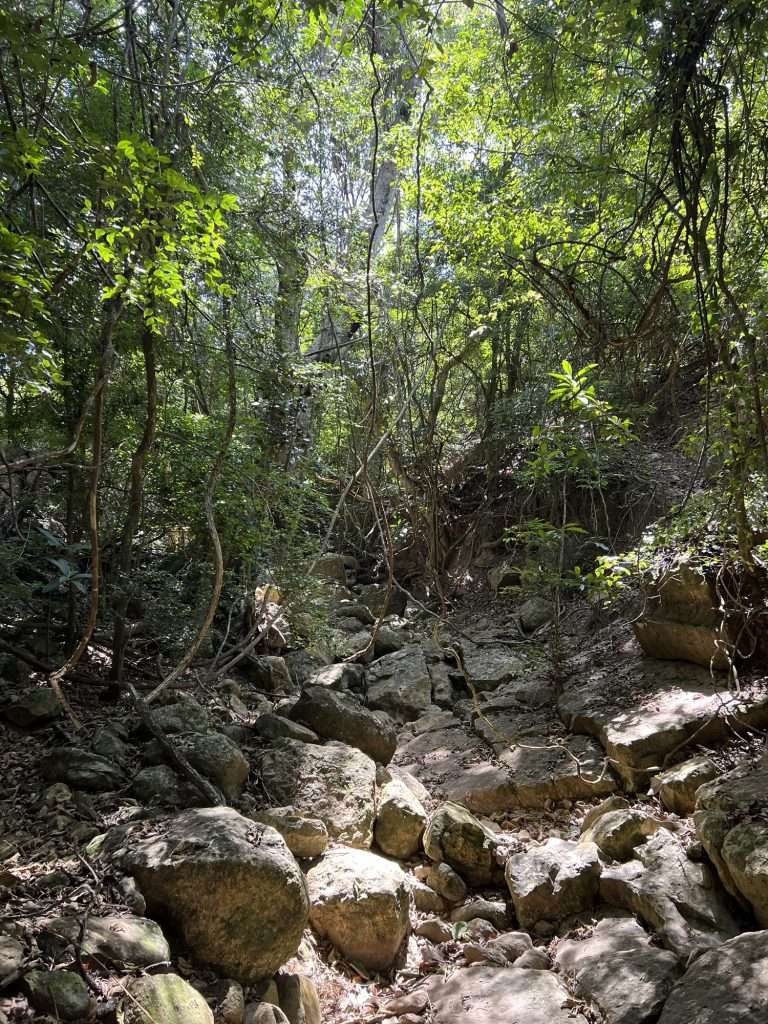
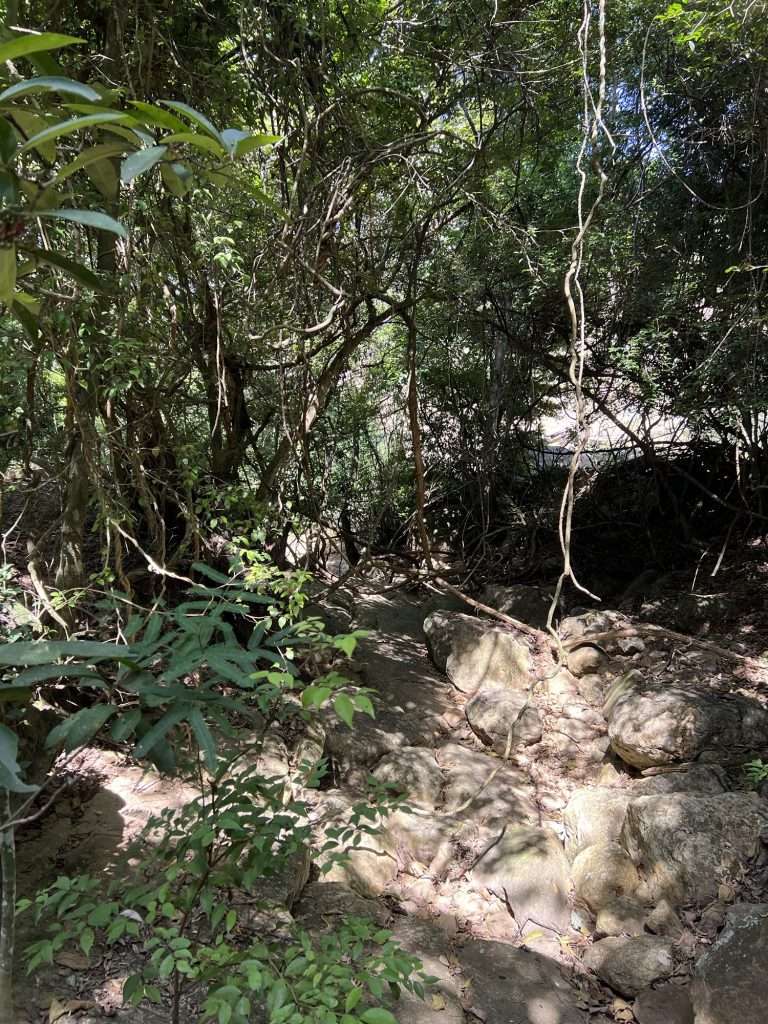
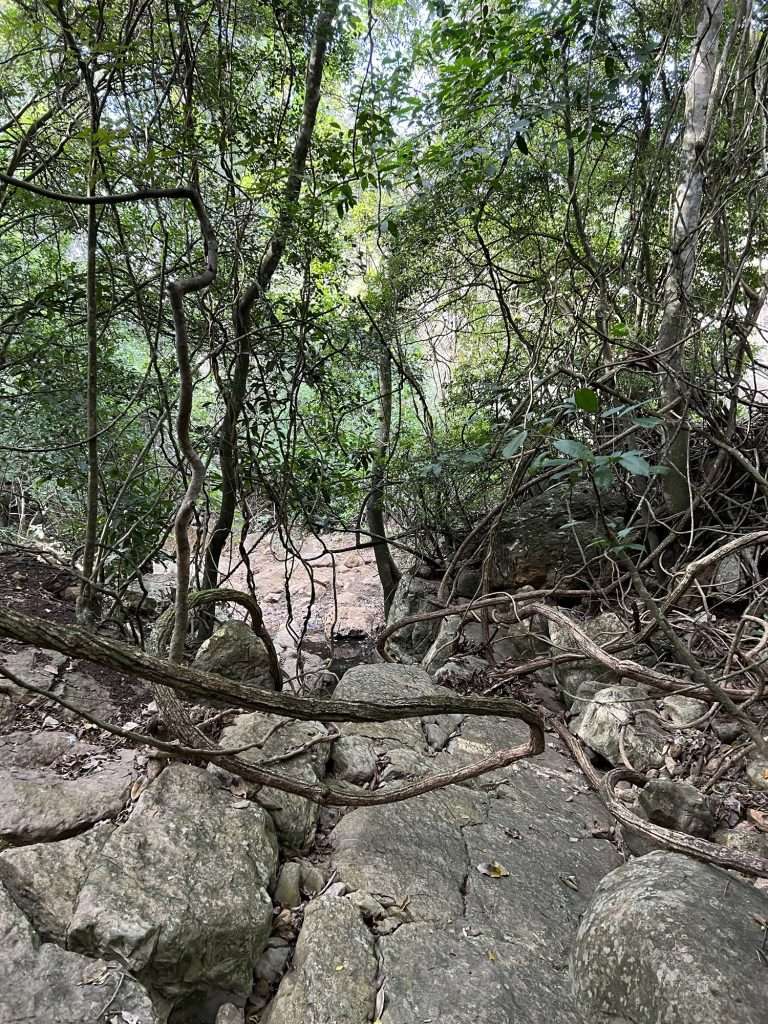
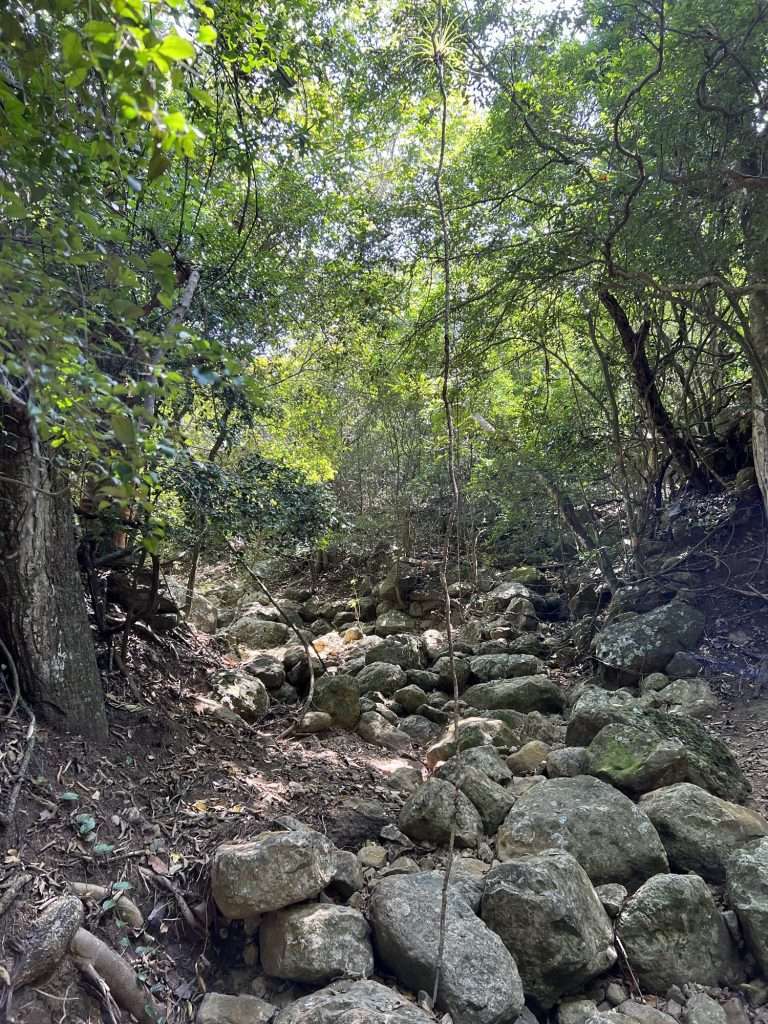
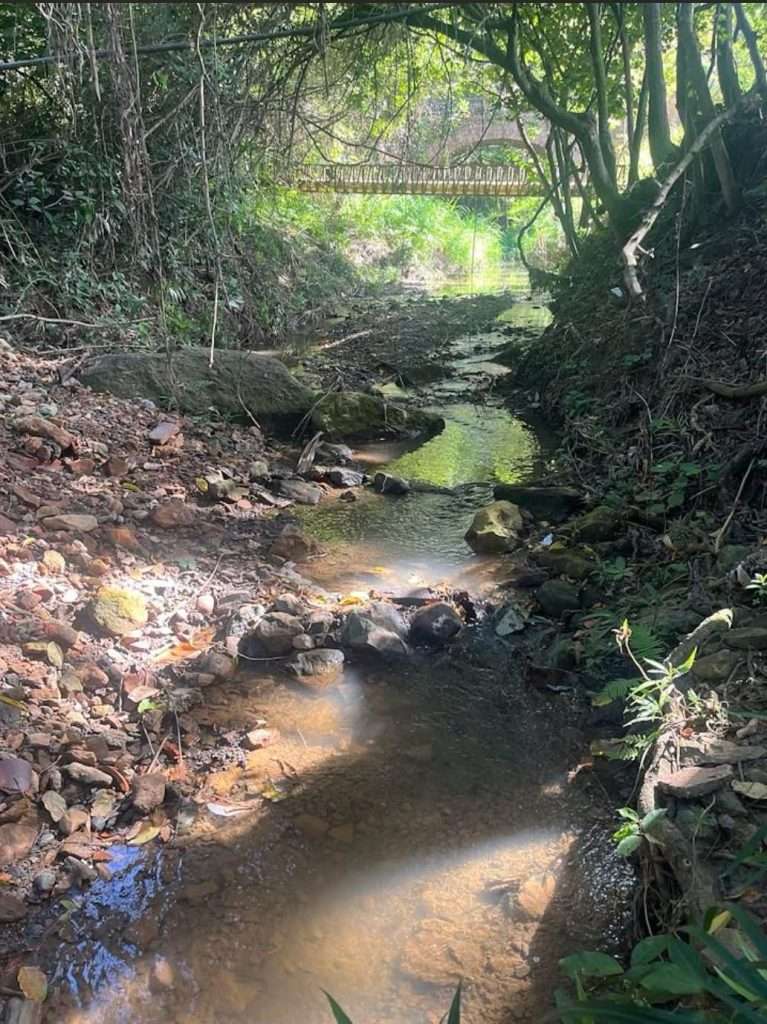
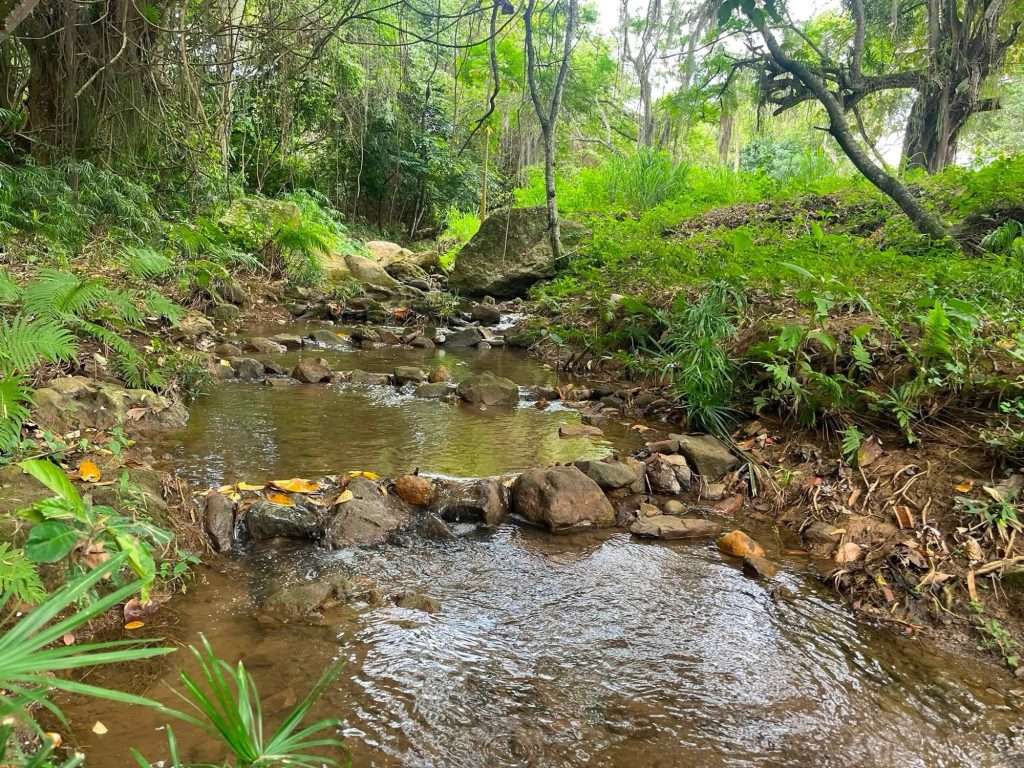
Porous dams in the river slows down the water and allows for infiltration

Porous dams in the river

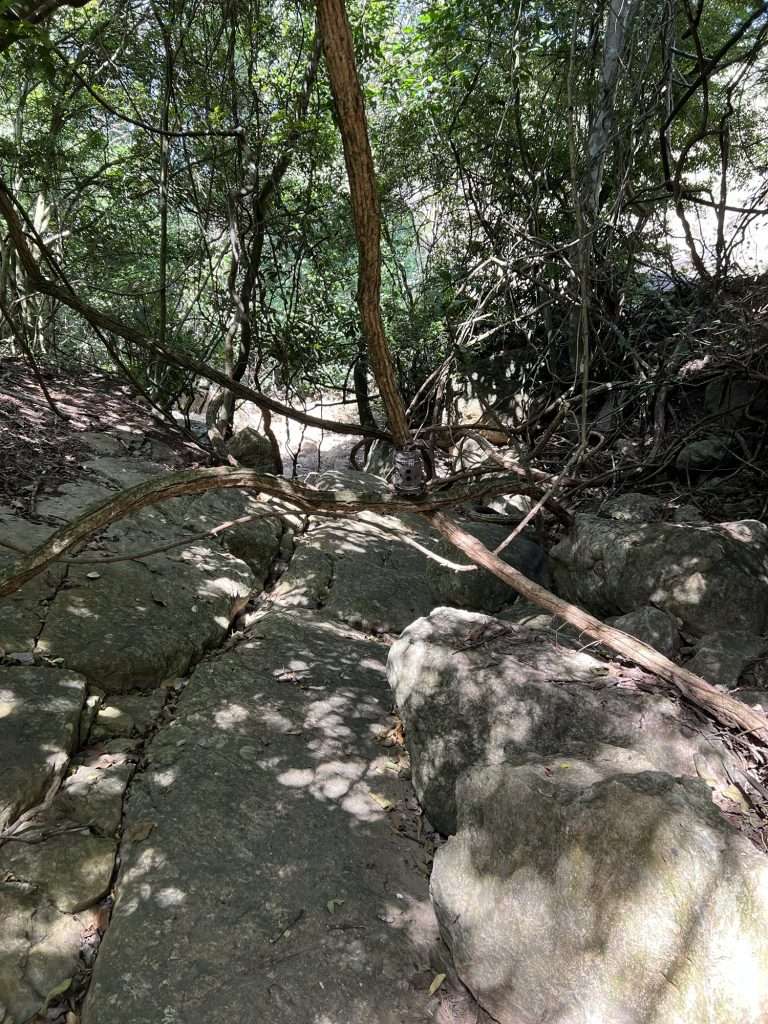
I asked one of the people working for us to start a new project today. It’s a series of porous dams in the river that runs through the finca. The river is mostly dry. When it rains, it has a good amount of water, although it runs through swiftly and is gone. The dams will help slow down the water so it can infiltrate into the ground.

This will bring moisture into the ground which will help the vegetation along the river, it and it will provide water for longer for the animals in the area. Until about twenty years ago, there was a spring near the river, not too far from our current houses. These dams may help bring that spring back, especially in combination with more trees and improved soil. (The spring likely went dry because of grazing and deforestation.)

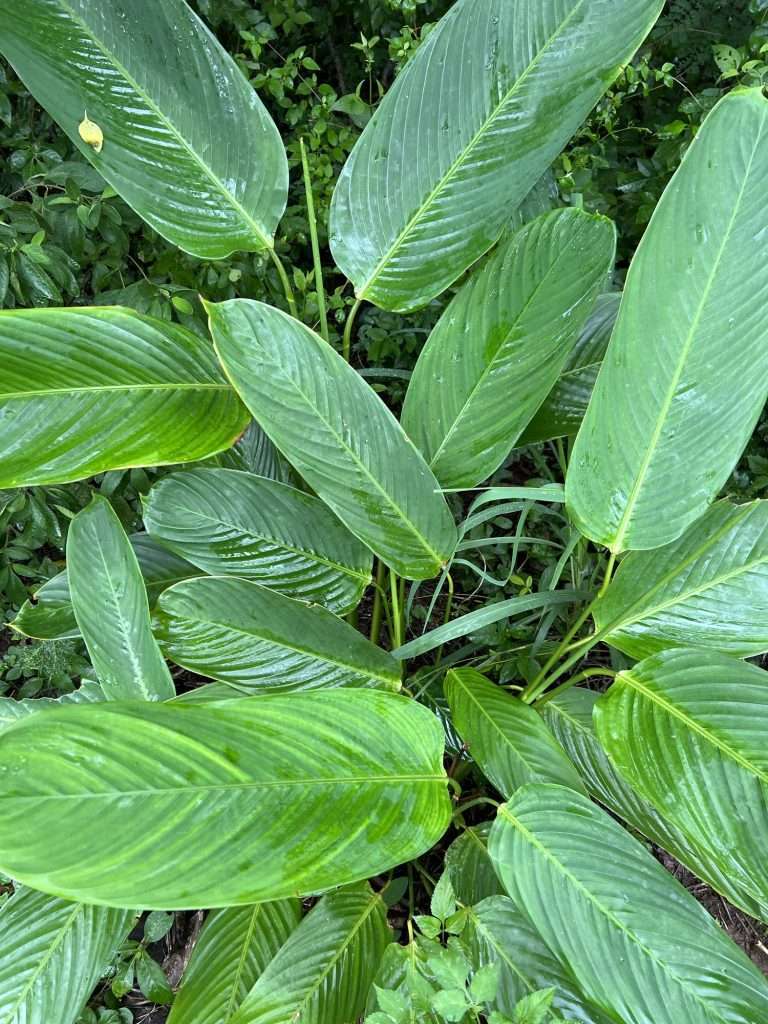
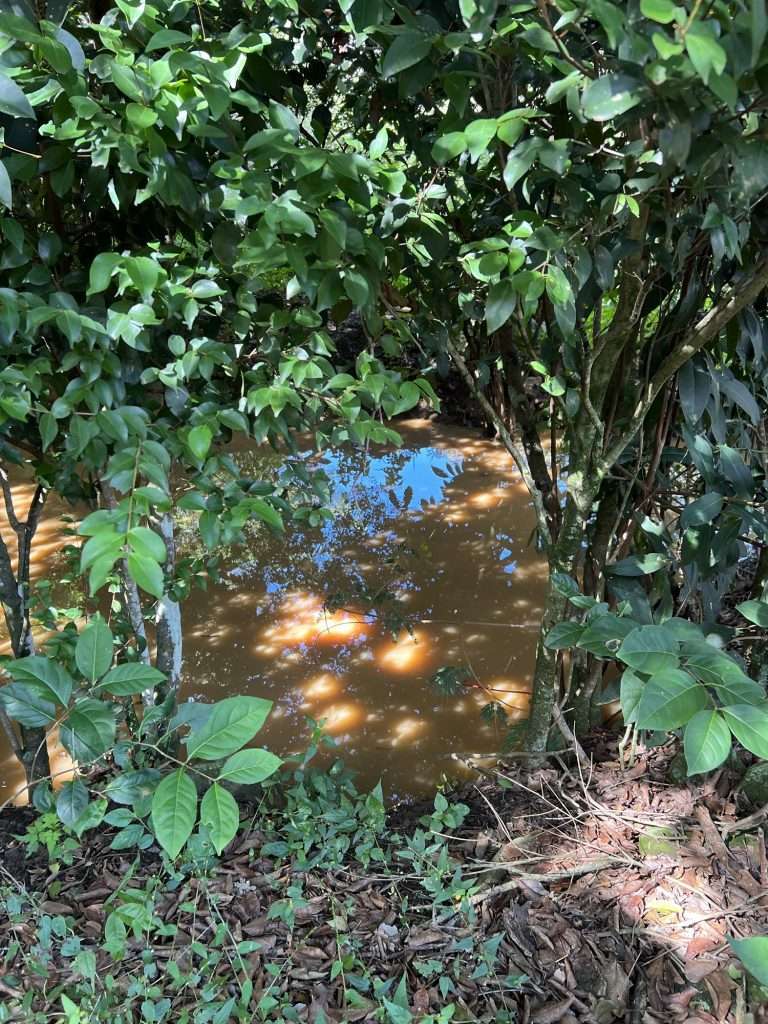
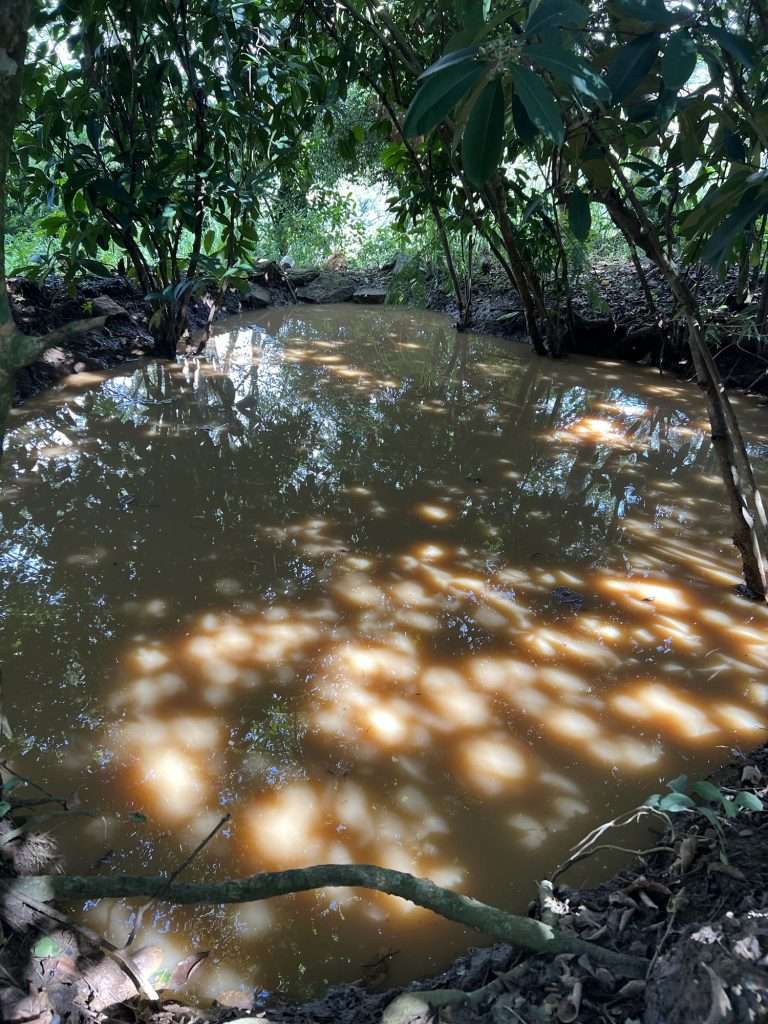
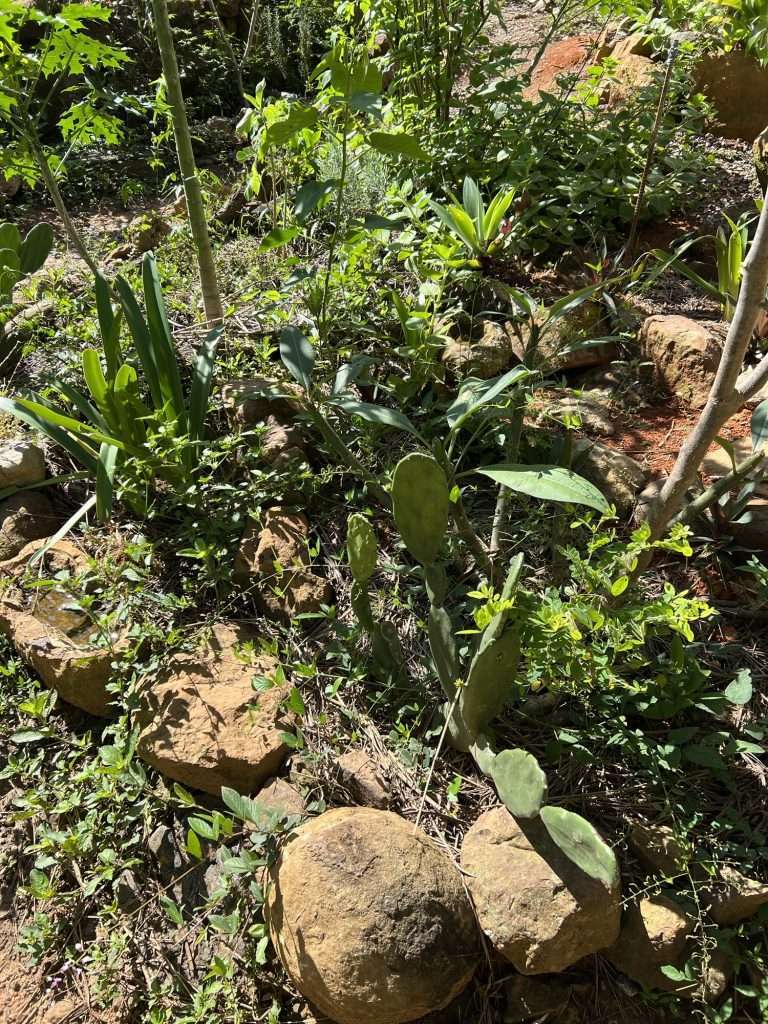
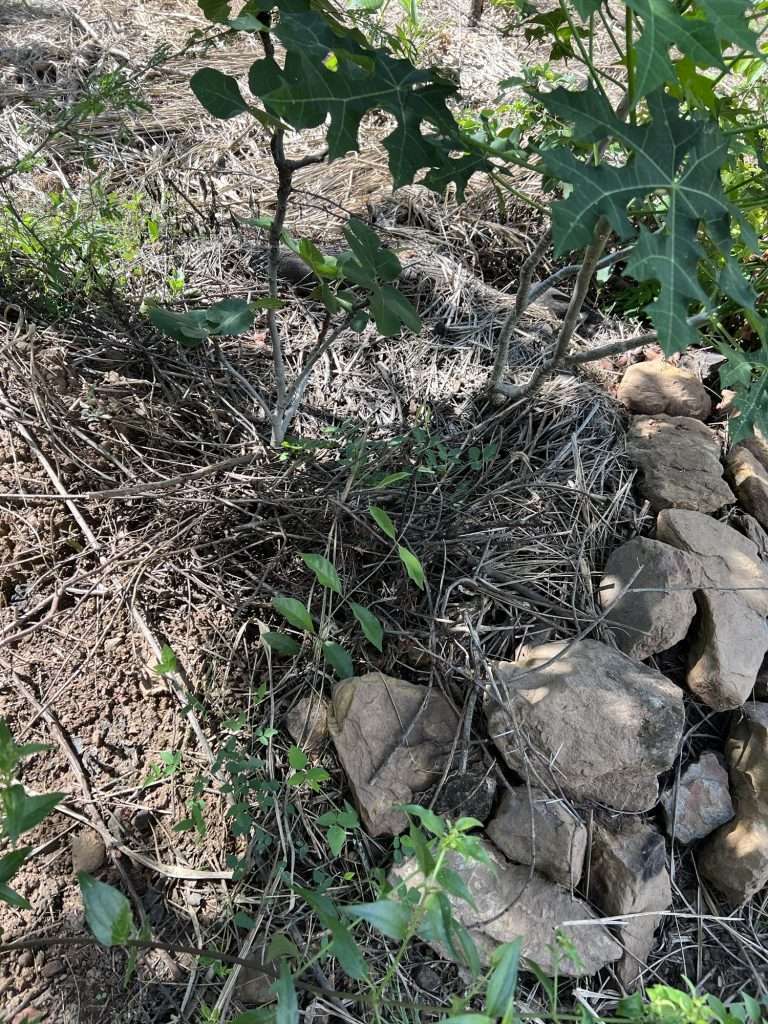
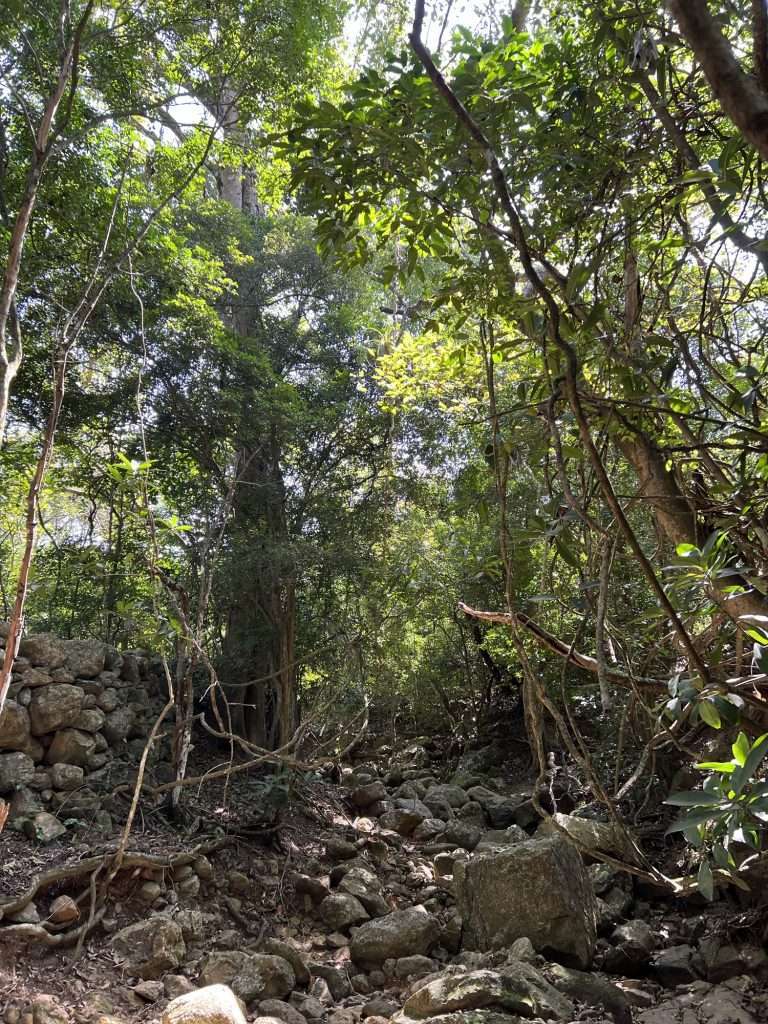
The top series of photos are from the river from a couple of years ago and I assume it looks similar now. The two photos below show dams from a similar project in the area (not my photos).

Dam construction and spacing

We have two small rivers meeting on our land. I checked the distances and elevation differences on Google Earth. The longer section is about 280 meters with 25 meter elevation difference. The shorter is about 70 meters with 8 meter elevation difference. That’s a slope of 5-7 degrees. This is straight line, and the river meanders a bit, so the actual slope will be a little less.

I suspect low dams about 5 meters apart may be ideal. Maybe 3-4 meters where it’s steeper, and 5-6 meters apart where it’s less steep. The distances are just a very rough guidelines, and it’s important to follow the terrain and make use of what’s already there. For instance, there may be large boulders we can use as part of the dams.

The dams should be low so they are less likely to be damaged from strong flows during heavy rain. We will use larger stones as anchors and smaller stones to fill in between the larger ones. The dams should be slightly lower in the middle to center the water flow in the channel.

There is no need to make the dams perfect. They can be rustic as long as they are stable. The purpose is just to slow the flow of the water.

It’s best to start at the downhill side of the river since the water flow is stronger there.

The dams should be inspected after the first heavy rains to see how they hold up.

Reservoirs?

In time, we can also create one or more natural reservoirs next the river, and channel some of the river water into these. We would use simple natural filtration, and a small channel or pipe to bring the water into the reservoirs. It’s also important to channel any overflow back into the river (or into a second reservoir).

This water can be used for watering plants, for the houses, as a swimming pool, and so on. They will also allow more water to infiltrate into the ground and recharge the groundwater.

If several are located uphill from and in the vicinity of the now-dry natural spring, they may also, in the best case, help bring the spring back. I will ask the previous owners to show us where the spring used to be. It will help us plan where to focus the regeneration work and where to locate the reservoirs.
How a food forest manages water as it matures: less need for watering, improved drought tolerance, making good use of heavy rainfall

As our food forest matures, it will become increasingly resilient and self-reliant.

A food forest tends to need more inputs and management at first and then becomes more self-reliant as it matures.

A MATURE FOOD FOREST NEEDS LESS WATER

The need for water is no exception.

We have needed to water our plants quite a bit, especially during the dry season at the beginning of this year. They are young. Many are still seeds and seedlings. We are still working on the mulch cover. We are still creating swales and terraces to retain the rainwater. Many areas are still quite open so there is more wind, sun, and faster evaporation. Also, we are young in this project, just likely the food forest is young, so we may have watered more than we needed.

What are some reasons why the food forest will need less water as matures?

A thicker layer of mulch retains moisture better. It also helps slow down and absorb rainwater.

More vegetation in more layers creates more shade which reduces evaporation.

As trees and plants grow, their root system is more developed, goes deeper, and can better access water and moisture in the soil.

Healthier soil can absorb and retain more rainwater. It has a better structure and more organic matter.

More swales and terraces help retain and slow down the rainwater, allowing more of it to be absorbed into the ground.

For many reasons, including all of the above, a food forest creates a microclimate that’s cooler and more humid.

In general, we are focusing on natives since they are adapted to this climate, and also drought-tolerant species from similar climate zones that do well here. We have some that require more water close to the houses, although these also will need less watering as they mature.

In our case, we are also developing our rainwater catchment systems so we’ll be less dependent on the water from the municipality.

A MATURE FOOD FOREST DEALS BETTER WITH HEAVY RAIN

A more mature food forest not only deals better with heavy rain but also makes use of it for many of the reasons mentioned above.

Several layers of leaves and branches help slow down the drops as they fall, reducing the impact on the ground.

Swales, terraces, and thick mulch slow down the water, reducing or eliminating erosion.

Healthier soil absorbs the rainwater more effectively. It’s more porous and has more organic matter.

The roots hold the soil in place. In a food forest, there is a high density and diversity of plants with different root structures. Combined, they stabilize the soil to a remarkable degree.

We are developing a system of channels to channel rainwater into the terraces. This catches the rainwater, slows it down, and allows it to be absorbed instead of running down the hill.

THE DROUGHT TOLERANCE OF A MATURE FOOD FOREST

A more mature food forest is more drought-tolerant for the same reasons as mentioned above.

Rainwater is better absorbed into the ground, which even recharges the groundwater and benefits the larger trees.

The soil and ecosystem are better able to retain moisture.

The roots go deeper allowing them to access deeper layers of water and moisture.

More mature plants are better able to deal with droughts in general.

In our case, we are working on our rainwater catchment systems – in tanks and ponds – and this will help us during the dry seasons and drought.

THE RESILIENCY & WATER MANAGEMENT OF A MATURE FOOD FOREST

A mature food forest is amazing at regulating water, whether it’s rain or drought. After all, it mimics a natural forest ecosystem, and these evolved to do just that, among many other things.

In general, mature food forests are resilient when faced with extremes of weather and changing climate, at least more than mainstream systems of growing food and up to a point. They deal better with water and drought. They create their own microclimate. They are diverse so a higher number of plants are likely to do well as the climate changes.

PHOTOS

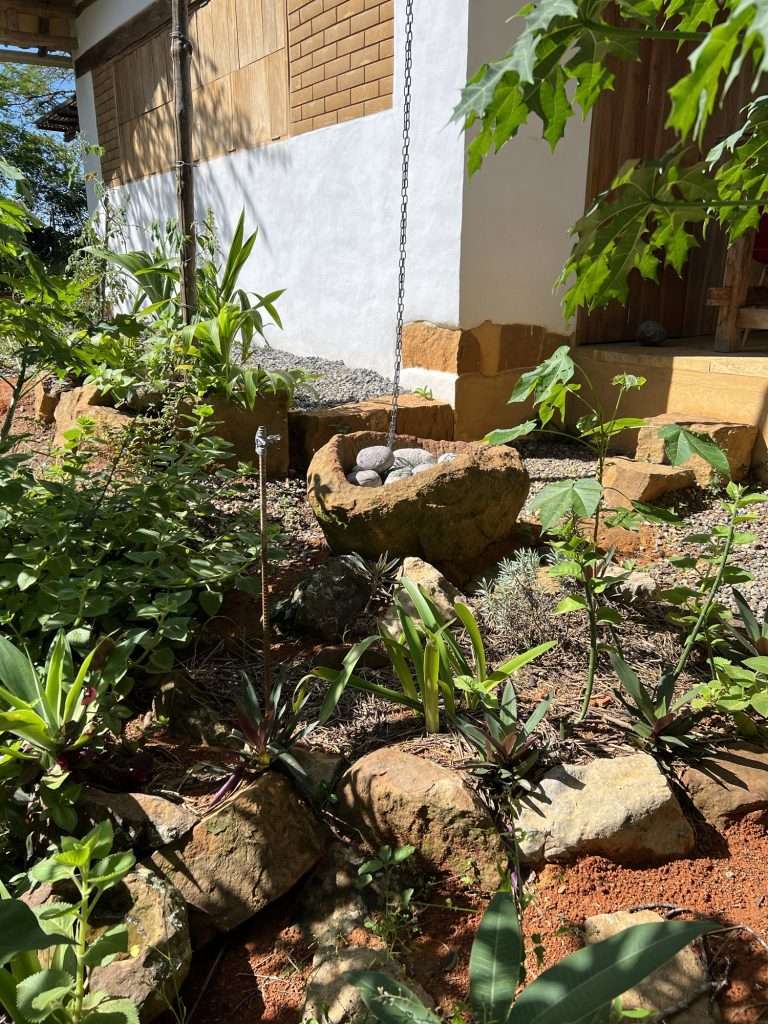
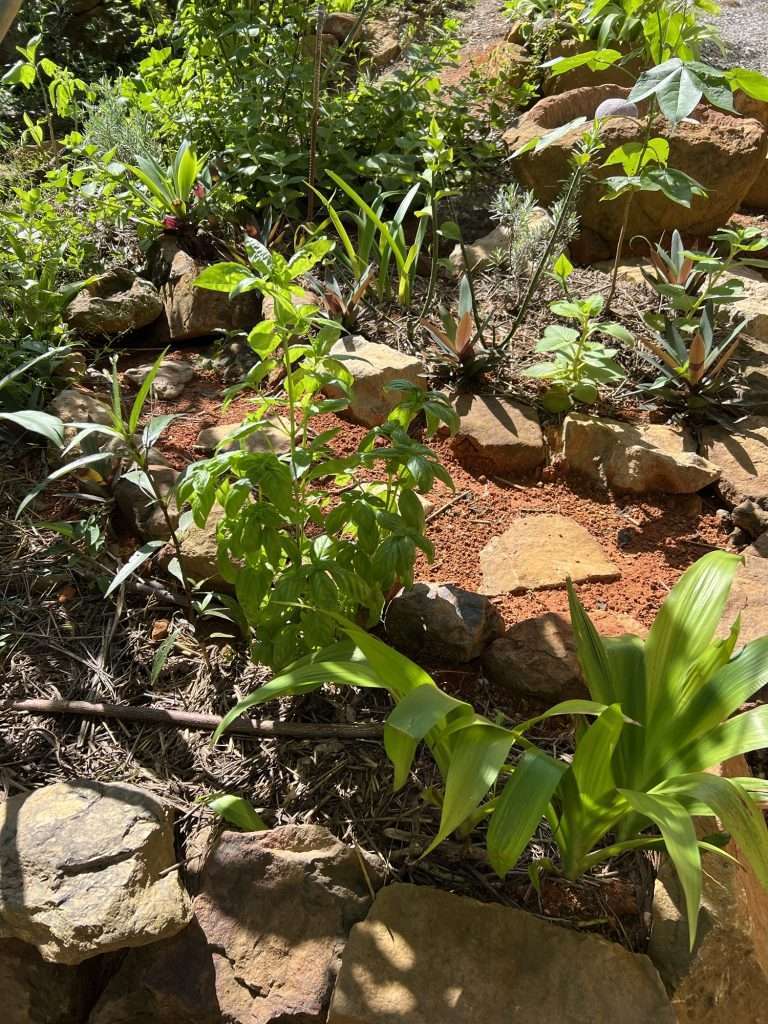
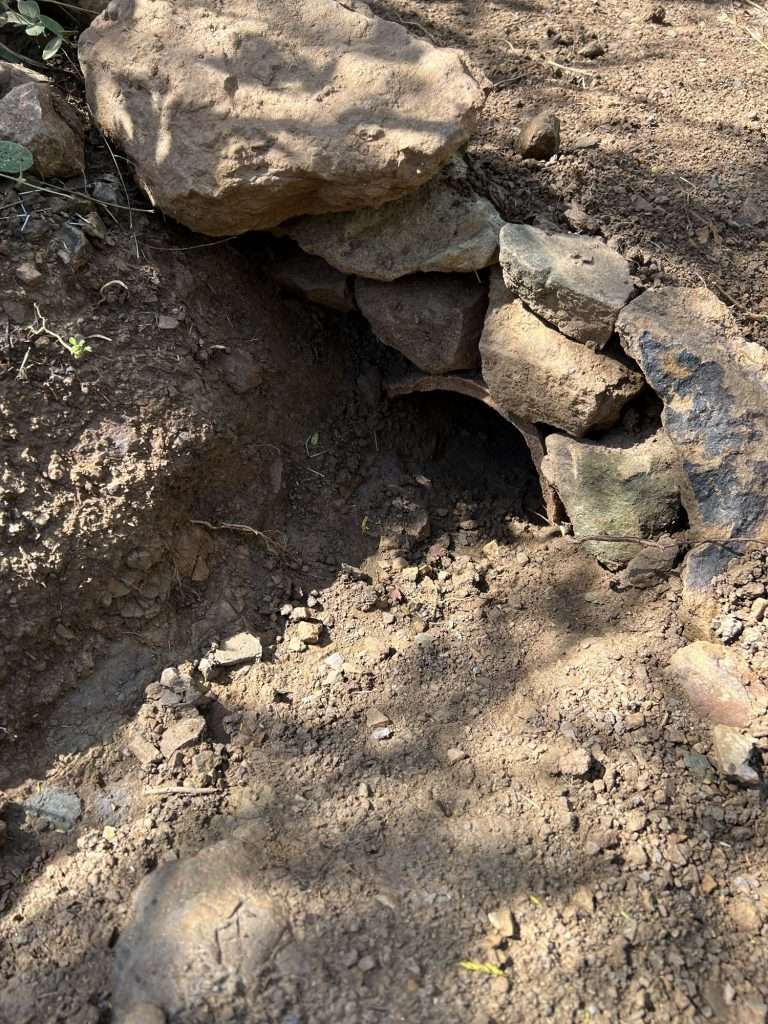
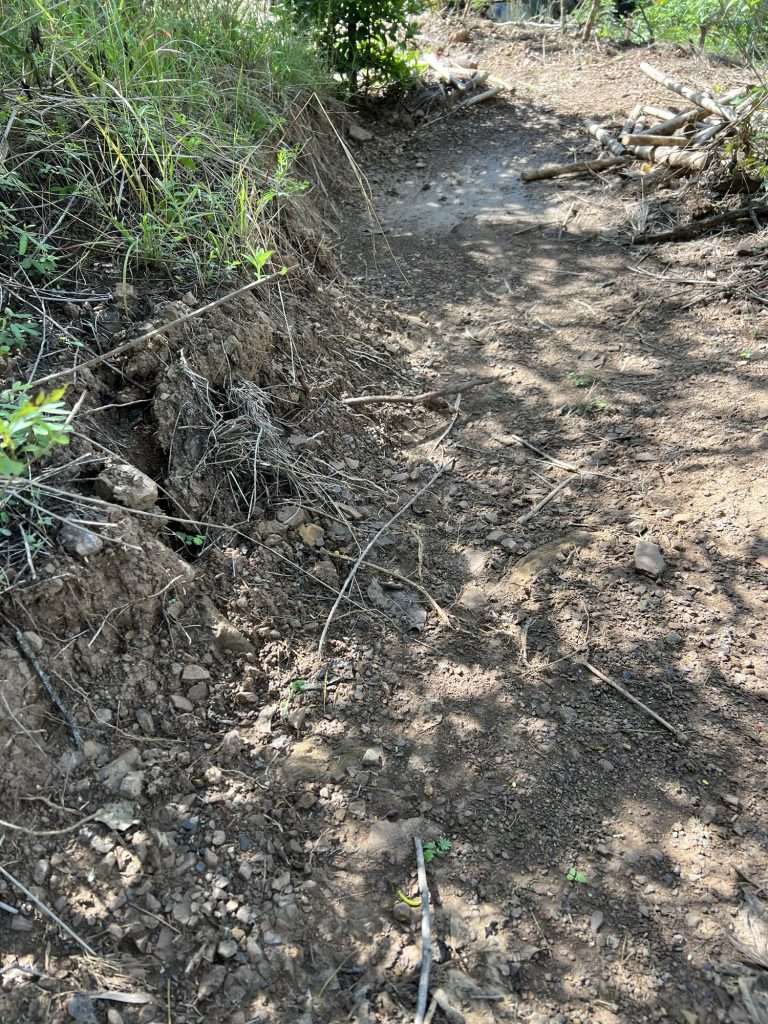
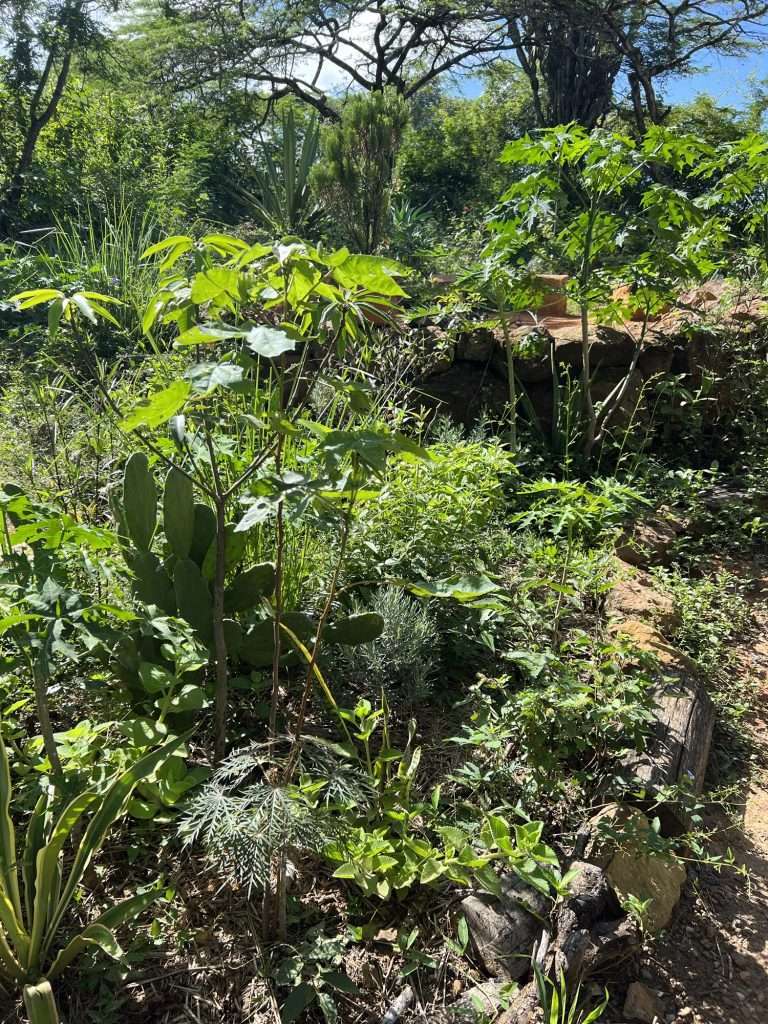
These photos are from our very young food forest. They show… A pond near the house. A carved stone that receives rainwater from the roof and channels it underground to storage tanks. A series of small terraces that receive the overflow from the stone. A rainwater channel that goes along and under a path and leads the water into a terrace. (It was just created so nothing grows there yet.) Terraces and swales. Rocks and wood used to create edges to retain the soil and rainwater. A retaining wall made of naturally rot-resistant branches used to retain soil and rainwater along the road.

We are just getting started so this will all continue to be developed as the food forest changes and we learn more.

Read More

Can we bring the river back on Milagros?

There is a dry river going through Milagros, within an area that’s not easily accessible. This morning, on a walk after a night of rain, I heard water in the river in the distance.

We have been told it used to have water year-round until about twenty years ago, and also that there was a spring in the same area used by the neighborhood (on the border of Milagros and Francisco’s land).

Why did the water go away? Likely because of deforestation. A healthy ecosystem – with trees, mulch, humus, and so on – slows down the rainwater and allows it to be absorbed into the ground to give water to rivers and springs and recharge the groundwater. In a degraded ecosystem – with fewer plants, more shallow root systems, and poorer soil –  the rainwater typically runs off and is not so easily absorbed into the ground.

How can we get it back? Through reforestation and by supporting the regeneration of the ecosystem. A healthier ecosystem will have more plants with deeper root systems, a thicker layer of natural mulch, more organic matter in the soil, and so on. We can support the process by making swales and creating ponds. This will help slow down the rainwater and absorb it into the ground.

We will do what we can here, and we will likely need to talk with the upstream neighbors to see if they want to join this project.

We are reforesting Milagros with the help of a regional organization. They planted close to 2000 native trees on Milagros a few months ago, as the first phase in a process that will hopefully continue for years. They have not planted in the river area yet, but it’s part of the plan. Right now, our priority is the food forest around the houses and basics like housing, solar, rainwater collection, wastewater use, and so on. If we are to put more effort into bringing the river back, it will have to be after we have the basics in place.

The photos are from a walk in January this year. The river is ready to receive water although it’s beginning to grow over with vines and more.

Read on for more info.

Read More

Healthy soil and rain on Milagros

We had a good rain last night, at least 3cm. (I got the rain measuring device out a while after it started.) I love that it mostly rains at night here, and I love falling asleep to the sound of the rain and the thunder rolling through the canyon.

I am also aware of some of the ways the rain impacts Milagros. In general, it impacts the land in two different ways.

DEGRADED AND COMPACTED SOIL

Milagros has been used for grazing and small-scale agriculture for centuries. Although it could be far worse, they have not always followed ecologically sound practices.

In many areas, and especially along the ridge, the soil is severely eroded and compacted. Here, rainwater runs off and creates further erosion. In other areas, there is grass which is not ideal but better than naked soil.

Poor land management has led to a vicious cycle where the rain only continues the erosion.

HEALTHY SOIL

In contrast, healthy soil is porous and absorbs rainwater. The water nourishes the ecosystem and recharges the groundwater, which is hugely important. It nourishes and replenishes instead of causing erosion and flooding.

Healthy soil reflects a healthy ecosystem and is the literal foundation for a healthy ecosystem.

WHAT WE ARE DOING IN THE MORE DEGRADED AREAS

The more degraded areas are along the ridge in the 14 hectares or so that is set aside as a wilderness area.

We have planted native succulents and very hardy native trees in the areas closer to the houses, although it’s just a start.

We are also partnering with an organization that has planted close to two thousand trees in the largest of these more eroded areas, close to the peak. These are native trees well adapted to this ecosystem, and they have planted twenty different types. Again, it’s just a start. We wish for far more diversity than this, so plan to interplant more species in the future. The shade created by this growing forest will eliminate the grass over time.

This is the beginning of building better soil in these areas. Over time, the bushes and trees will slowly create a natural layer of mulch and start feeding the soil. The roots will penetrate the hard soil and make it more porous and able to absorb water. All of this will also increase the healthy microbial life in the soil which is crucial for plant life and the ecosystem.

It will allow the rainwater to be absorbed into the ground instead of running off, which will feed the ecosystem and recharge the groundwater, and it reduces and eventually prevents further erosion.

CLOSE TO THE HOUSES

We have worked on building soil around the small house for a little over a year now, with a more focused effort for the last half year. Daniel P. is coming once a week and is helping us greatly.

We mulch heavily. We plant the plants very close together. We dig relatively deep holes for the new trees so we can fill the holes with good soil. We are bringing in some mulch, worm compost (from a nearby permaculture farm), goat manure (from a neighbor who uses organic methods), and microbes (the Korean type).

We use swales to slow down and hold the rainwater and allow it time to absorb into the ground. Below the house, we are building terraces for the same reason.

We love all the ants here. They are crucial to the ecosystem and bring nutrients into the soil, help make the soil more porous, and help clean up dead plants and animals. They are essential for a healthy ecosystem. (In the beginning, before we got more diversity here, they did eat some of the new plants, which is fine. We used them as an indicator of which plants needed help since they often go for unhealthy and struggling plants.)

We channel some of the rainwater into a pond near the house. To slow down the water and reduce erosion, we have put larger stones in the channels. We may also dig deeper holes and plant some trees there. This too is very much a work in progress.

We are also collecting rainwater, although need to install pumps so we can actually make use of the water! (We don’t need that water right now since we are in the wet season.) From our 100m2 roof, we will get 100 liters of water for each millimeter of rain. Last night’s rain gave us 300 liters of rainwater. (1mm rainwater x 1m2 x 100 = 100 liters of water.)

The photo is from close to the house at dawn after rain a couple of days ago.

See below for more info.

Read More