Energy drawings 1995-2026

This is a somewhat random collection of energy drawings from 1995 to today. I see these more as Rorschach tests than representing what’s actually there. They are projections when they are made, and I put more projections on them if I look at them later. They tell me something about me.

The ones included here are a few I happen to have access to. Some of the others are in storage in Norway, and many (ca. 1997-2010) were in notebooks that are now lost.

Some of the drawings below are from previous posts on this website, and I have included the original text (or parts of it).

Read More

After the initial oneness shift: A massive influx of energy, inspiration, and insights

I have written about the two significant shifts in my teens in other articles.

New Year’s Day when I was fifteen, there was a shift where the world went far away. Later, I understood this as an absorption into the witness, or, more accurately, an identification with the mental construction of witness.

One year later, between Christmas and New Year, there was a oneness shift that never really went away.

Here, I feel I should write a bit about the fallout of that second shift. Mainly, the massive influx of energies, insights, and inspirations that came with it and was ongoing in the following years.

Influx of insights

At the moment of the oneness shift, it was clear that everything without exception is God. Everything is the divine taking the form of existence, the universe, this human being, and a perception of being this human self or recognizing itself as the whole. It’s all the play of the divine.

It was utterly simple, obvious, and familiar.

In the following days, it was also clear that it was impossible to express or record this in words. Words can’t touch it.

And in the following days, weeks, months, and years, there was a huge influx – or bubbling up – of other insights. I wrote thousands of pages in my journal. Last year, I found them again and I see that what I wrote about then is what I write about in these articles now. The main difference is that then, it was all new and there was more youthful exuberance. And now, I know more about what others have said about it. (Back then, I knew nothing about that.)

The thousands of pages from then, and the thousands of articles now, is because it is impossible to put it into words. It also helps my human self digest it.

I am still exploring and digest those insights, and learning to live more from and as it.

Influx of energies

With that oneness shift came an experience of huge amounts of energies running through my system. Even at the time, I felt as if high voltage was running through ordinary housing wires. This lasted for years.

At times, it seemed this had an impact on things around me, including – during my first time in Salt Lake City – light bulbs going out as soon as I came into a room.

Influx of inspiration

Along with all of this was also a huge influx of inspiration. I would see amazing and beautiful visual art for my inner eye, and hear amazing, beautiful, and textured music for my inner ear, and yet I had very little ability to get it out. I didn’t have the skills or experience.

I did try, and I did get into art with a passion for many years. The drawing above is one of the first drawings I made and with that one, I was able to be more of an open channel although my technical skills were not very good. (That drawing was later accepted into a prestigious juried exhibition in Norway, Høstutstillingen.)

The summer when I was fifteen, I borrowed a sound module from a friend for a week. (I already had an Amiga computer with music software.) During that week, I composed and created some music that I still happen to have recordings of. Again, what I heard was far more textured and beautiful than what I was able to express with limited skills and time. Here are these early compositions on SoundCloud.

When did it start? How long did it last?

If I am honest, I am not sure if all of this started with the oneness shift. Some of it did likely start the year before, especially some of the inspiration. I am pretty sure I made that music the summer when I was fifteen.

For how long did this last? It lasted for at least ten years, with some reduction in intensity over time.

It slowed down after about ten years since I went against my clear inner guidance on a major life decision. That dampened it all.

Side-effects of awakening

Awakening itself is our nature noticing itself. The awake space we are, and always are and have been, notices itself. That’s it.

There can also be side-effects. In my case, the side effects were quite dramatic. Why? Likely because the shift was unexpected, sudden, and this human self was completely unprepared in every way. I was just an angsty atheist teenager.

If you have a practice of meditation, prayer, mindful movement, learning, and so on, I suspect the shift may be easier and far less dramatic.

After-effects

When this massive influx comes to mind, it brings up discomfort. I haven’t written about this before because of that discomfort, and it has taken months to finish this article. That makes me think that for all the wonders of the side-effects of the initial oneness shift, something about it was also quite traumatizing for my human self and psyche.

On the one hand, it was not overwhelming since it all happens within and as the awake space I am. On the other hand, for my human self, it was overwhelming. Although that, in itself, seemed OK.

What was more difficult at a human level was when I derailed myself. That has left a deep wound. I derailed myself when I was twenty seven by going against a clear inner guidance on a major life decision. That disrupted the natural unfolding of all of this, and that was immensely difficult and painful for me. (And all of it is part of the process.)

Additional articles

I have written about other aspects of what happened within and before this shift. See the autobiographical section on the selected articles page.

A note on words

I call it influx but it’s not clear that it’s coming from anywhere. It’s more a bubbling up of insights, inspiration, and energies.

Also, I call it a oneness shift. It gets the point across but doesn’t really match my experience. It’s more that it’s all the divine without exception. It’s all consciousness without exception. As they say in Advaita, it’s not-two.

Tibetans in Kathmandu (1997)

I wrote this mainly to see if I could get an article into a relatively large newspaper (4-5 million readers they said), and the text was mainly an excuse to print the photos. These are very small versions of the photos, and I am missing some of my favorites. (I have larger versions on a CD in storage and will update if or when I access them.) The article went over a few pages in the Sunday edition. As with so much in my life, it was enough for me to see that I could do it, and I haven’t really written articles for publication since. I was in Boudha and the Kathmandu valley for half a year to study Tibetan Buddhism and stayed in a couple of different monasteries. The first photos are from the Loshar celebration at the Boudhanath Stupa, and the rest are from Swayambhunath, both in Kathmandu.

Tibetans in Kathmandu and the celebration of Loshar

Printed in the Salt Lake Tribune in May 1997

A colorful crowd gathers in the area around the stupa. Hundreds of Tibetans, outnumbering the few curious westerners present, are dressed in a wide variety of traditional costumes sometimes mixed with western clothes. They smile, laugh and greet family and friends as they bump into them in the crowd. The atmosphere is saturated with anticipation. A group of monks led by a high rank teacher appear and pass through the lion-framed gate into the inner area of the stupa.

The Tibetans lift their arms, singing with voices slowly increasing in volume and pitch. As the song reaches its climax, hands open and white clouds fills the air. Flour is slowly descending on us, symbolizing hopes of a coming year of sufficient material resources, good health, and happiness. My friend tries to brush it off, is gently prevented, then informed that to keep it on his jacket is a sign of good fortune.

This is Loshar, Tibetan New Year, celebrated at the time of the new moon in February. The setting is Boudha, a village northeast of Kathmandu and the site of one of the largest Tibetan communities in Nepal.

Two forces formed this refugee community. One being the intolerable conditions in Tibet following the Chinese occupation in the 1950s, and the subsequent steady stream of Tibetan refugees re-settling in countries across the world. The attracting force of this particular village is the Tibetans familiarity with Boudha and the journey there. A familiarity acquired through centuries of pilgrimage to Boudhanath, one of a number of stupas found across the Buddhist areas of the world, and this one among the most important religious monuments for Buddhists in the Himalayan region.

Despite differences in appearance, large or miniature, domed or with a pyramid shaped spire, all stupas express the Buddhist view of the nature of mind and reality. Every feature, from their overall form and down to their smallest details, represent aspects of Buddhist philosophy. This particular stupa is one of the largest and most well-known. Its white dome and painted eyes, the all-seeing and compassionate eyes of the Buddha, are made known across the world through photographs and movies.

This year monks at only two Tibetan monasteries in Kathmandu performed the traditional Tor-gya rite at Loshar. Usually more monasteries take part in the celebration but this time a high-ranking and deeply respected teacher had died just a few days prior to the celebration, dampening the festivities.

As is the case with stupas, and nearly every aspect of a culture permeated by Buddhism, this ritual dance is an expression of the Buddhist philosophy and world-view. Featuring ghosts, demons and jesters, it is also an example of how Buddhism adopts local cultural traditions and use them as vehicles for Buddhist philosophy.

Of great entertainment value for Tibetans and westerners alike, it attracts a large audience. I must admit that the detailed symbolism of the dance escapes me, not being initiated into the apparently intricate events it depicts. At various times the performance is dominated by monks in beautifully brocaded silk costumes performing slow dances, a group of pale ghosts, demon-like figures, and two jesters performing practical jokes on each other and the audience. Everything dramatically accompanied by cymbals and various horns.

Later in the afternoon, as the sun is about to set, the abbot of the monastery appears. Performing a slow intricate dance he throws small figures into the flames of a fire below the monastery. This act can be seen as having different levels of meaning. On a “folk” level the dance is a symbolic exorcism of the evil of last year. The demons symbolize and are scapegoats for these actions and are sacrificed to “clear the slate” for the coming year. On a more profound level they symbolize ones own actions performed out of a selfish motivation, and the burning of them the resolution to work on changing these attitudes.

Loshar is the main holiday for Tibetans. It provides a day or two off from work and an opportunity to indulge in a favorite past time for Tibetans—celebration and spending time with family and friends. Apart from the morning festivities by the stupa the streets are unusually quiet and empty at this time.

Normally though, Boudha is buzzing with the activities of daily life. The area around Boudhanath houses an abundance of shops, restaurants and guest houses run by Tibetans and also dozens of larger and smaller monasteries.

These secular and religious activities testify to the ability and willingness of the Tibetans to create a new life in a foreign country, partly adopting aspects of modern western life and partly recreating their traditional life. Modern western technology and lifestyle coexists in a striking way with traditional clothes and artifacts and and lifestyles formed centuries ago. Here you find robed monks drinking tea, watching CNN and Fashion Channel satellite transmitted to local guest houses.

Not only the traditional and the modern, but also the spiritual and the secular are interwoven. Both monks and lay people perform ordinary mundane activities as well as religious activities such as reciting mantras, circumambulating the stupa and turning small prayer wheels located in recesses in the stupa wall. The secular takes on a spiritual significance and the spiritual is manifested through the activities of ordinary life.

In addition to being industrious the Tibetans are known to be sincere and friendly. It is not unusual for even a short-term visitor to be invited into a shop, a home, or a monastery kitchen for a cup of tea, a meal, and a good conversation. Living there for a few weeks you easily make friends among the people, be it the family running the guest house where you live, monks you meet at the streets or in tea shops or shopkeeper families. Tibetans in Boudha more often than not know enough English to converse.

You also easily make friends among the other travelers. When in a foreign and exotic culture people sharing the common fate of being an visitor tend to gravitate together, sharing the joys and frustrations that is part of this experience. Here you find people from every continent of the world. Some are here for a few days, staying at hotels downtown. Some are traveling in Asia for months at a time, living in local guest houses and seeking to experience the flavor of the places more intimately.

There is also an opportunity to study the philosophy that forms the world view of the Tibetans. You can live in one of the monasteries that take guests and get to know the monks and activities of the monastery. In addition, several monasteries arrange classes and seminars on the subject of Tibetan language, meditation, Buddhist philosophy and practical guidelines for how to relate to situations of life. These are held by often high ranking Tibetan teachers and translated by some of their long-time western students. During the three months I was there a large number of seminars were arranged, lasting from a few days to a month.

Buddhist world-view and practice are an integral part of life for most Tibetans, be they monks, nuns or lay people. The founder of Buddhism, Siddharta Gautama, set out to explore the nature of mind 2500 years ago in northern India. After years of meditation he realized the nature of mind and reality and attained Enlightment. In the Four Noble Truths, Buddhism in a nutshell, he points out that we are chronically dissatisfied with life and the cause of this dissatisfaction is identified as the dualistic and fragmented way we experience the world. Fortunately there is a path which, if followed diligently and under guidance of a teacher, will lead to a lasting and profound fulfillment. This eightfold path, which includes meditation and ethical activities, will open up for a direct, intimate and liberating experience of the nature of mind and reality. Through realizing the oneness and ever changing nature of all phenomena one develops an attitude of non-attachment to fleeting phenomena and compassion for all beings.

So, if you live in Boudha what can you expect from an ordinary day? Just before sunrise Boudha comes to life. Stray dogs bark, roosters crow, monks in the monasteries blow horns and chant, flickers of light escape through cracks in doors and walls, some people walk to their shops, others are on their bikes quietly rattling along the dirt roads, a few cars are expelling black fumes. Buildings and people appear as blue silhouettes in the dim morning light. At the stupa people are circumambulating and reciting mantras, by the road circling the stupa a few women are selling still warm bread.

The sun rises. Details of the surroundings are gently washed out by the morning mist and later reappear as the mist dissolves. Shops open, more people are on the streets, a leper takes her position at the main entrance to the stupa area. The main street becomes an inferno of bikes, honking cars driving on either side of the road, buses bursting with their human load, and dogs, cows and people filling the available areas of the road and the sidewalks.

As it gets closer to noon more westerners appear, drawn by images and tales of Boudhanath. They are amazed by the stupa, fascinated by the Tibetan merchandise offered, and enjoy a meal at one of the restaurants in the area. In the afternoon most return to downtown Kathmandu.

At sunset the shops are closed and people go home to their families and a meal. Some evenings candles are sold on the street circling the stupa. There is a room opposite of the entrance into the stupa, dark and with Buddhist wall paintings, where candles are lit and placed. At full moon the stupa is lit by candles or electric lights. As in the Christian traditions these express a wide range of human hopes and aspirations such as good health and sufficient material resources. For the Tibetans a few more are added: a home country free from occupation, and the ultimate relief from suffering in Buddhism — a direct insight into the nature of mind.

As the night falls fewer people are outside. The streets become the domain of a few late wanderers and packs of howling dogs. Boudha is quiet for a few hours, then it awakens to a new day for locals and visitors alike—as the darkness is dispelled by the rising sun.

Outline of a Holistic Worldview: Ecospirituality, Sustainability, Ecopsychology & Deep Ecology (1997)

This was originally written in 1997 and published on my first website. I retrieved it from the archived site on the Internet Archive. The original wording, spelling, and punctuation are preserved. The only changes are the merging of the original linked pages into one article and the addition of heading structure for navigation.

Ecopsychology, Ecospirituality, Deep Ecology, and Health is a shorter companion piece from the same year.

A BRIEF NOTE

It’s interesting to look at these articles now. I remember my enthusiasm at the time, my wish to continue writing about these things, and maybe eventually teach at a college or university. That did not happen, partly because of going against my clear inner guidance that same year (going to Wisconsin and abandoning just about everything important in my life) and partly because of my health.

I also see an interesting dynamic. After the oneness shift, my mental aspect tried to make sense of it. It sought out worldviews that matched the immediate noticing of oneness and all as a seamless whole. That’s mainly what these articles are about – making sense of oneness. Re-educating the mental field so it is on board with what’s noticed in immediacy.

These days, that’s less of an interest. Maybe those years did the trick, at least enough for now.

Welcome

Welcome to this outline of a holistic worldview.

Feel free to read this collection of thoughts and text fragments in a non-linear fashion. Each fragment should to some degree reflect the whole of the worldview they are born from, and at the same time flesh out and give substance to a part of this whole.

Note that this is only one of an endless number of possible and equally valid and useful worldviews – each fitting nicely in with one or more of the multitude of possible world experiences. It does not reflect any “absolute truth”.

Feel free to let it inspire and challenge to own reflection.

Introduction

This Text

This “Outline of a Holistic Worldview” is a collection of texts meant to be for inspiration and challenge. We all need challenges to our habitual ways of experiencing our world – to stay flexible, open to new experiences, and open to new and more appropiate ways of organizing our experiences. This is one contribution in that direction.

These texts are by no means representative for all ecospiritual views, and barely so for a minority of them. If there is anything here that seems to be of value, it can be attributed to the wisdom of the universe being expressed through people I have shamelessly stolen from. It can also be attributed to direct experiences of the Universe – as it has arisen within and without of myself. All that is obscure, loopsided, muddled and not grounded, can be attributed to my own obscurations.

As diversity appears to be of immense value both in ecological and social systems, I do sincerely not wish these views to be adopted by all or even a majority. What I do hope is that it will inspire each one that take time to read some of this to reflection, to modification and formation of own views. Even, or maybe especially, if they are very different from those expressed here.

A Note

Please note that some texts are written from a traditional human perspective, and some from the so far more unusual perspective of the larger whole. Some are written in two versions, giving examples of both perspectives.

This will hopefully give a feel for the difference between the two, and a sense of the value of them both.

The content is often the same, but the perspective, and thus the experience of its meaning, differ.

This Perspective

The perspective outlined above is only one of an endless variety of possible world views, models or maps of existence.

As any other map, it is wrong.

It is based on an incomplete experience of the world, and in addition is an incomplete reflection of this experience. The world is always more and different from our experiences and maps of it.

At best, this perspective can be a guide for how to perceive and act in the world. It can be an aid of preliminary value until new experiences and new situations demands a different map, more appropriate for the new situation.

Read More

Økopsykologi, Økospiritualitet, Dypøkologi og Helse (1997)

Et essay fra 1997 som utforsker forbindelsene mellom økopsykologi, økospiritualitet, dypøkologi og helse.

Menneskelige individer, menneskelige samfunn og Jorden er alle deler av ett sømløst system. Alles helse og velvære er gjensidig avhengig av hverandre.

Når vi innser dette – og i økende grad lever ut fra denne erkjennelsen – faller den falske grensen mellom egoisme og altruisme bort. Vi søker og velger handlinger som er gode, så langt vi kan se, både for oss selv og for helheten.

Flere praksiser som har som mål å bringe disse forbindelsene inn i bevisstheten, foreslås – inkludert kroppsorienterte praksiser, sosialt og økologisk engasjement, bønn og meditasjon.

NB: Jeg legger ut denne mest for å ha den et sted. Jeg ville nok skrevet det anderledes nå.

Read More

We are multitudes

My mother died yesterday, after a long illness, and it has amplified a digestion process that has been going on for a while, probably my whole life.

We are all complex and layered, and so are our relationships.

I can find a deep gratitude for the support from my mother. She was almost always kind, loving, supportive, and encouraging.

I can find hurt from experiences with my mother.

I notice sadness for how her wounding played out during her life, and over the last months and years of her life.

I find sadness and grief for how and when her and mine wounding came between us.

I can find wounds and trauma in me passed on through my parents to me, and these are intergenerational and collective. I notice a freeze tendency in me as part of this.

I find a deep sense of love and connection when I see her healthy and whole side, and when I imagine her as healthy and whole.

I seem to connect with her now, as consciousness, everywhere, and as love and a loving presence.

I see her as consciousness, as I am and all beings are to themselves.

Mainly, there is a deep love for her – as whole, as presence, for her past human expression.

TRAUMA AND WOUNDS

We have trauma, wounds, reactivity, and so on, and some of us more than others. In my birth family, we have had our share.

Some of this have, at times, made my interaction and relationship with my mother difficult. In my case, it was the dynamics between her and my father that was challenging and that I felt got between us.

I put it between us because it’s all I knew to do. A part of me wanted to protect me by putting it between us, although I also was able to see through it and set it aside at different times.

OUR WHOLE AND HEALTHY EXPRESSION

Then there is who we are when we are whole and healthy. Nearly all of us have a whole and healthy side that comes out in some, or many, situations and relationships. My mother was always kind, encouraging, and supportive of me. (Apart from some stressful interactions in childhood that I can remember, but I assume I was difficult too.) It’s also easy to imagine how we would be if we were thoroughly whole and healthy at a human level. We know how that feels and looks.

OUR NATURE

To myself, I am consciousness, and the world as it appears to me happens within this awake space I am. Even more to the point, I am capacity for this consciousness and all it forms itself into.

I suspect it’s the same for all “conscious beings”. To themselves, they are like me, they are awake space for the world, and they are capacity for all of it.

To herself, my mother was – and still is – consciousness, whether the consciousness she is notices or not. She is like me. She was and is space for her world.

INTERGENERATIONAL AND COLLECTIVE TRAUMA

To swing back to the wounding and trauma…

It’s not all that personal, even if it plays itself out in our unique and personal lives.

Most or all of this is rooted in intergenerational and collective trauma and wounding. I know enough about my grandparents and their situation to see some of where the wounding of my parents came from, and that wounding was likely passed on through generations in different forms.

That wounding is rooted in collective wounding and trauma. It comes from our particular flavor of domination culture and how it has been expressed and lived through the generations. It goes all the way back to the agricultural revolution.

And really, it goes back even further, to our evolutionary past since the conditions for all of it to play itself out is built into us through evolution and biology.

MEMORY

My memory is here and now. It’s constructed here and now.

It’s far from a faithful reproduction of the past.

It’s colored by my mood, focus, biases, the orientation of others, and so on.

When we work on healing wounds and traumas, it’s natural to focus on the aspects of our history and relationships related to that. And yet, that’s just one part of the full picture. Often, it’s a relatively small – although significant – part.

When I remind myself of all the other parts of my history and relationships, it all looks quite different. It’s a tapestry of love, joys, affection, challenges, and – yes – some wounds and trauma too.

An important part of life – and the healing process – is to remember this fuller picture, this rich tapestry.

DIFFERENT ASPECTS AT DIFFERENT TIMES

In grief, as in life in general, different aspects come up at different times.

Grief over the loss of the person. Joyful memories. Sad memories. Regrets. Gratitude for connections, experiences, support, opportunities. Grief over what could have been, and wasn’t. Love. All as consciousness. And so on. It’s all part of the tapestry.

A MIRROR

The world is my mirror, and my parents and birth family are large part of that mirror.

I have explored it in many ways over the years, through just living my life and noticing, and also in a more structured way through inquiry (The Work of Byron Katie, Kiloby Inquiries), parts work (Big Mind process), therapy (Process Work), tonglen and ho’oponopono, and so on.

PRE-INCARNATION MEMORY & SENSING

Right now, I also notice a couple of central things in my life colors how I experience her transition.

As a young child, I had flashbacks to the time before this incarnation. All was consciousness, golden, infinite and indescribable love, infinite wisdom and knowing (I was kind of swimming in it, it wasn’t directly “my” wisdom and knowing), time passed very far away almost like a whisper, and there was a profound sense of being home – far beyond what home usually refers to.

I had a deep longing for something later in childhood, and I realize it very likely was for this. Later, I also realized that this was likely a flashback to the time between incarnations.

In my teens, I noticed I could see energies around living beings and objects, and also that I could sense and invite healing at a distance. This sensing has been amplified over the last years (through Vortex Healing classes), and I have sensed several I know who passed on. It’s interesting how, in each case, it was different. One was in turmoil for a day or so after dying. One was in deep relief and quiet joy. It’s also as if the layers soften and go one at a time, starting with the personality and personal orientations.

My experience of my mother is that she is everywhere, and she went through several phases already. Now, I notice mostly presence, curiosity, and a kind of support through that presence.

A SYNCHRONICITY

Last night, around 9pm, the electricity went in my parents’ house and neighborhood. I am staying in the house, and my parents are at a care home not far away. I knew that my mother was on the last few days or hours of her life, and felt that this is a synchronicity. The house where she had lived for most of her life, and where she had my father had put so much work into making it cozy and a work of art – filled with antiques and art – went dark, just as she died. As the electricity returned, I received a message from my brother saying that she had just passed.

A NOMADIC LIFE

For me, there is another side to this. I love community. I envisioned having children. I have wanted to live in a co-housing community or eco village since my teens. I loved it when I had an instant family of my own – with a girlfriend, (her) son, and dog – in my early twenties.

What unfolded was different. I have had a nomadic life. I make friends and find a community, and then go somewhere else. I have no children. How will my old age be? I still have some decades before then, but it’s something to keep in mind.

From the archive: Yogananda’s Autobiography of a Yogi

I am packing the last few boxes of books in Norway, and came across my old copy of Autobiography of a yogi by Yogananda. It was one of the books in my teens that made the strongest impression on me, along with The Turning Point by Fritjof Capra (age 16), Bak tid of Rom by Erik Damman (age 17), and I Ching in the Richard Wilhelm translation. I think I got this book when I was nineteen. I read it several times, subscribed to the little regular newsletter from the Self-Realization Society, and bought and read most or all of the other books by him available through them. His presence was strong for me during that time, in and around me. I am deeply grateful for his presence and work, and for what he did to introduce Indian philosophy and spirituality to a Western audience.

I was introduced to The Turning Point by Fritjof Capra by my middle-school teacher (Randulf S.), and my high school teacher may have introduced me to Bak Tid og rom by Erik Damman the year after. I found I Ching through someone who helped me with earth acupuncture (Aake Y.). And I was introduced to Autobiography of a yogi by an astrologer I saw, whom I initially thought lived much closer to me. Finding that book made the longish train journey more than worth it.

From the archive: a presentation on the universe as a living system

I have been going through some of my old letters, university documents, drawings, and so on.

Here are the overheads (!) for a presentation I made in the Human Bias class at the University of Utah in 1995. The class was a systems view on understanding ourselves and our place in the universe, and my presentation reflected my passion in my teens and early twenties. It’s still here, although in a slightly different form. (I chose University of Utah since I saw health and environmental psychology classes in their curriculum, and also systems view classes in the psychology department. At the time, none of that existed in Norway.)

The topic of the presentation came from direct noticing, in the sense that the oneness I am noticed itself and sought out stories to match it. Back then, it took a more intellectual and elaborate form. I read a lot at the time outside the curriculum, including the authors referenced at the end.

There was an actual paper that went with this presentation, but that seems to be lost (along with my other things from the US).

Looking at the overheads, I am not sure why I called it “unfoldment” instead of unfolding! I also see much I now would talk about in a more immediate and simple way.

The Unfoldment of the Universe and Everything in It – in Five Minutes

Written by MoE, March 1995


Universe and Mind

  • The universe may be part of a larger whole.
  • The universe can be seen as mind.
  • Mind is a property of every system – both living and nonliving.
  • The signs of mind are self-organization – including self-transcendence and self-renewal.
  • Every aspect of the universe is ultimately a part of the mind of the whole universe.

The Phases in the Self-Transcendence of the Universe

  • Nonliving systems
  • Living systems
  • Half-awake dualistically aware systems
  • Fully awake transdual awareness
NonlivingLivingDawning AwarenessHalf-aware DualisticFully Aware Transdual
ExamplesAtoms, sunsPlantsAnimalsSome animalsSome humans

The examples of self-aware systems are necessarily from this planet, which is not to say these are the only self-aware systems in the universe.


Universe and Mind II

  • The universe has evolved awareness through living systems, including the Earth and humans.
  • Everything in the human mind and formed through the human mind – like any other aspect of the universe – is a part of the universe and born from the universe.
  • Culture, technology, wars, blind desire and blind repulsion, compassion, love, art, science, religion, philosophy, dance – are all part of the Earth just as rainforests, butterflies, and clouds are, and they are also part of the universe just like galaxies, nebulas, and other solar systems.
  • Everything in and formed through the human mind is a part of the evolution of the universe and the Earth – any parts of the universe are integral aspects of its evolution.
  • Everything is both a whole and a part of a larger whole at the same time. Through duality we experience ourselves as wholes (“individuals”); through transduality we also experience ourselves as parts of a larger whole.
  • The world is always more than and different from our perception of it. We never mistake a painting or sculpture for what it is – an abstraction or representation – but we tend to do so in science and religion.

Duality and Transduality

Duality

Duality is the first phase of awareness, both for humanity and for the individual – through this we learn to discern aspect from aspect.

The Qualities of Blind Duality
  • Blindly dualistic perception of existence
  • Half-awake / half-asleep (in a relative or more absolute sense)
The Signs of Duality
  • Fragmented perception
  • Perceiving aspects of existence as existing “in itself” – not as part of a larger whole
  • Perceiving poles in polarities – but not the polarity as a whole
  • Seeing desired qualities in one pole, and undesired qualities in the other
  • Different behavioral guidelines for the different poles
  • Blind aversions and sympathies; blind desires and repulsions
  • Blind arrogance and blind sense of inferiority
The Fragments – Discontinuity
  • Mind–Body
  • Self–Other
  • Creator–Creation
  • Humans–Nonhumans
  • Culture–Nature
  • Living–Nonliving
  • God–Devil
  • Truth–Nontruth

Duality and Transduality II

Transduality – The Transcendence into a Fully Awake Nondual Awareness

(a) Transcend beyond blindly dualistic awareness:

  • Dissolve blind arrogance and sense of inferiority
  • Dissolve blind anti- and sympathies
  • Dissolve the sense of anything, including oneself, as existing “in itself”
  • Perceive everything as part of a larger whole

(b) Transcend beyond half-awake awareness:

  • Dissolve lack of concern
  • Unfold spontaneous compassion with all beings
  • Unfold spontaneous sense of gratitude, humility, and joy

Duality and Transduality III

The Spiritual Traditions

There are individuals in many traditions who may have unfolded fully awake nondual awareness. Here are a few:

Theistic traditions:

  • Hinduism – Yogananda
  • Christianity – Jesus, St. Francis, St. Theresa, St. Hildegard, Jacob Boehme
  • Islam – Rumi (Sufi tradition)

Non-theistic traditions:

  • Taoism – Lao Tsu
  • Buddhism – Buddha Sakyamuni, Milarepa

The Esoteric Parts of Spiritual Traditions (teachings for a few):
Surprisingly similar across traditions, especially teachings on way of life, prayer, and meditation.

The Exoteric Parts of Spiritual Traditions (teachings for the masses):
More influenced by cultural context and focused on behavioral guidelines, yet still play an important role in human evolution.


The Methods of Transcendence

BoundariesMethods of Transcendence
Psyche–PsycheWestern psychotherapies
Mind–BodyYoga, mind–body therapies
Individual–Larger WholeMeditation, Prayer

The First Boundary – Psyche/Psyche
We are unaware of parts of our psyche due to repression or undeveloped potentials. “Psyche” here refers more to personality. By recognizing projections and seeing in ourselves what we see in others, we begin to transcend this boundary.

The Second Boundary – Mind/Body
Transcending this boundary allows us to experience ourselves as an integrated whole. We see the influence of mind and body on each other, and we begin to experience the larger whole (e.g. the Earth) as one.

The Third Boundary – Individual/Larger Whole
We transcend the illusion of separateness and experience everything as part of a larger organic whole. This is nondual awareness.


The Methods of Transcendence II

An Important Principle: As You Relate to the Outer, You Relate to the Inner

  • How we relate to the larger whole reflects how we relate to ourselves.

Examples:

  • If you have strong aversion or sympathy toward something or someone, that quality likely exists in you.
  • If you lack concern for the larger whole, that likely reflects a lack of concern for parts of yourself.
  • Lack of care for long-term collective consequences reflects the same inwardly.

Becoming aware of this can:

  • Dissolve arrogance and inferiority
  • Open up the experience of being a small part of a vast living whole
  • Lead to natural compassion and empathy

The Methods of Transcendence III

Buddhism and Meditation

Create conditions where the mind can self-transcend.

Way of Living:

  • Do no harm
  • Cultivate mindfulness
  • Recognize interconnection of all things

Meditation:

  • Unfold spaciousness, mindfulness, and non-attachment to internal and external phenomena

Important:

  • Realization comes through experience, not intellect
  • Guidance from someone with lived realization is helpful
  • Let go of mental obscurations

The Situation Today

How the system may have formed the conditions for its own self-transcendence.

Certain global factors support a broader nondual awareness:

Large Number of Humans (Critical Mass):

  • Shared behavioral patterns have amplified impact
  • Globally interconnected society

Technological Developments:

  • Global communication
  • Space exploration – seeing Earth as a whole
  • Weapons that can destroy the web of life
  • Climate change due to pollution
  • Potential global resource crises

References and Related Writings

Teilhard de Chardin – Evolution of universe and mind in a Christian perspective
Steiner – Evolution of the larger whole of the universe and Christian mysticism
Jung – Nature of mind and integrating projections at the personality level
Bertelsen – Western psychotherapy and Eastern philosophy
Wilber – Western psychotherapy, Islamic & Christian mysticism, Eastern philosophy
White – Planetary “overview system” and self-awareness through space exploration
Buddhism – Writings of Dalai Lama, Chögyam Trungpa, Sogyal Rinpoche, Thích Nhat Hanh
Jantsch – The Universe and the Mind
Capra – Systems theories
Sagan – Gaia model

Childhood fasciations reflected in my fascinations now: space and nature

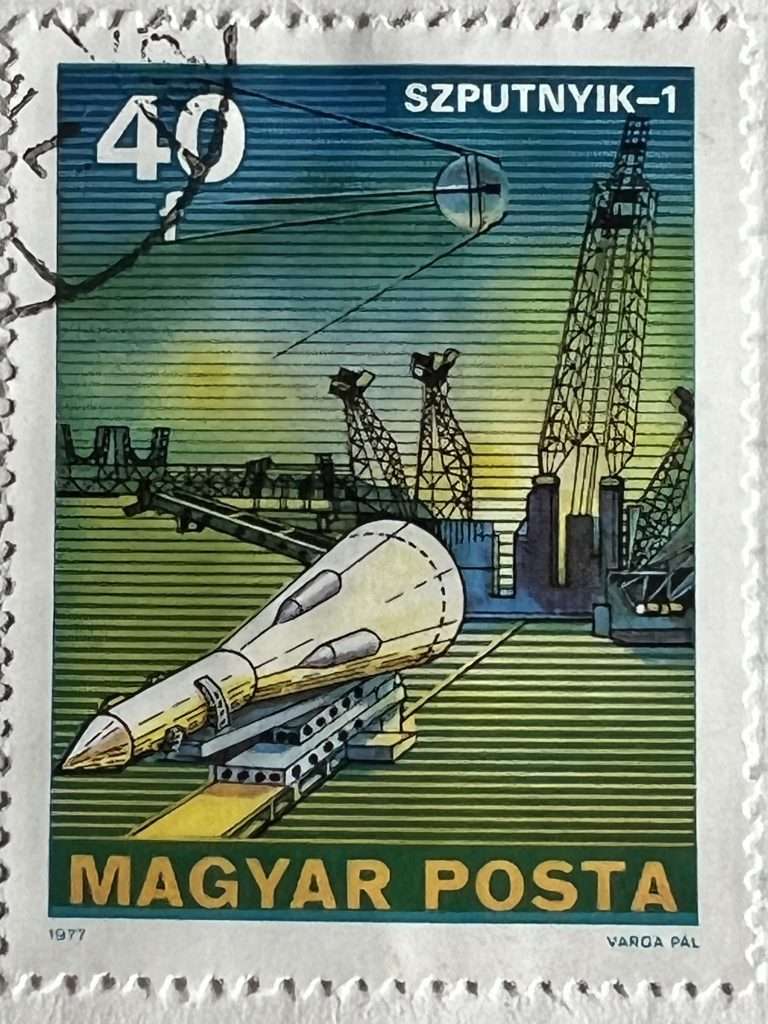
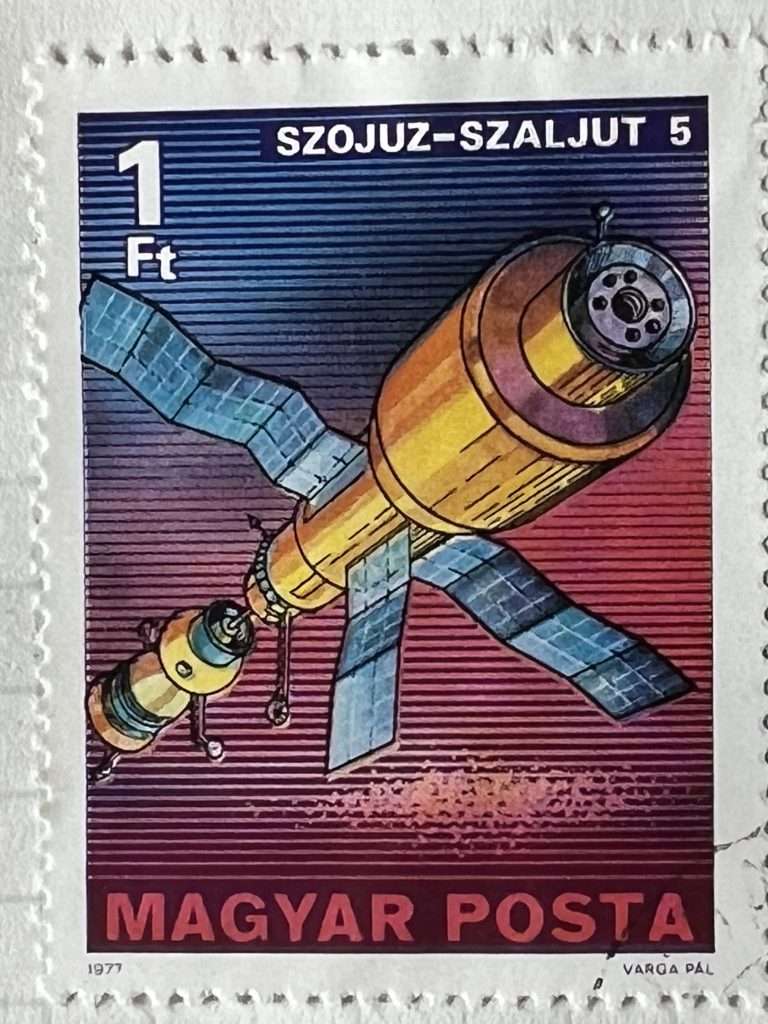
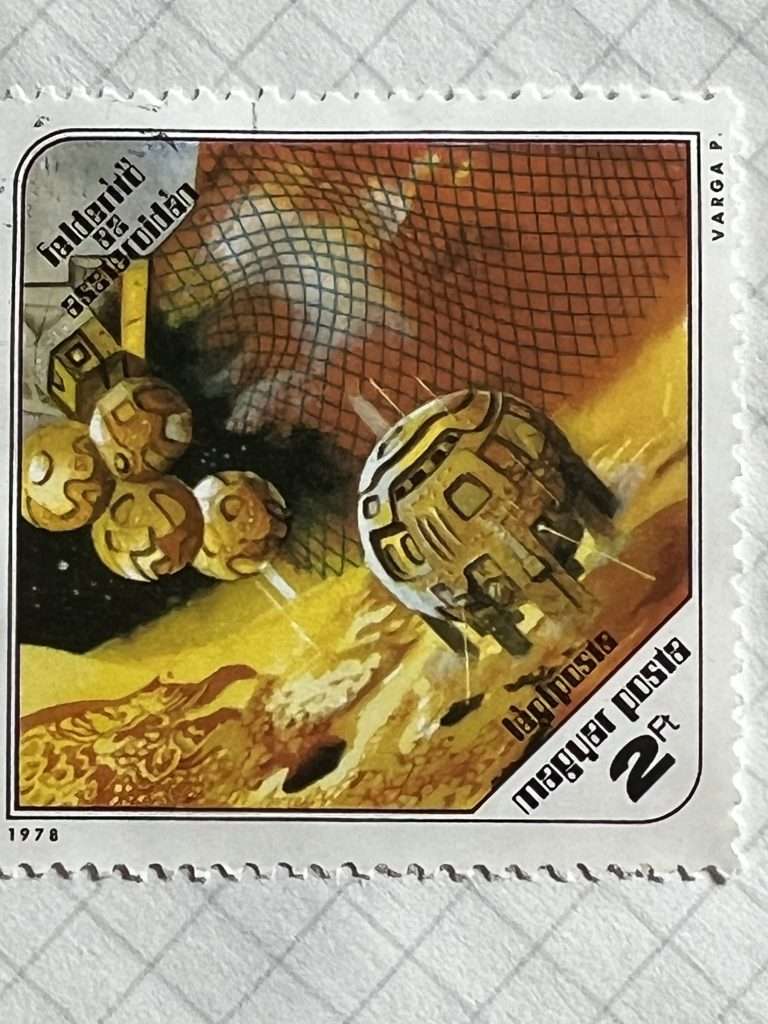
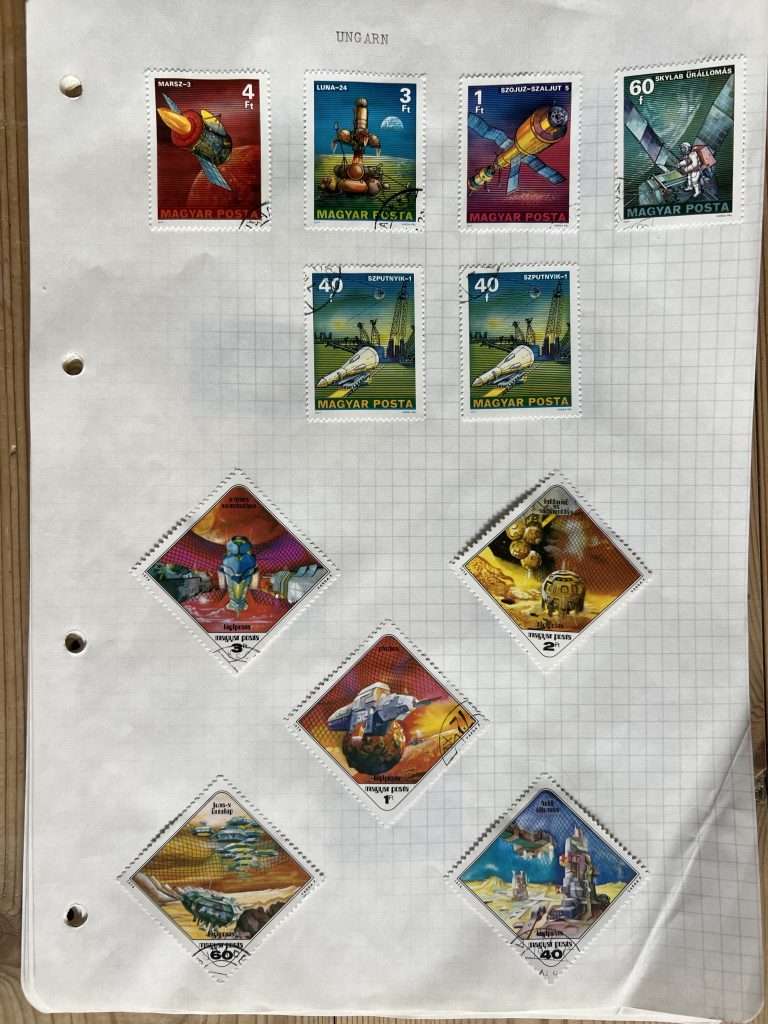
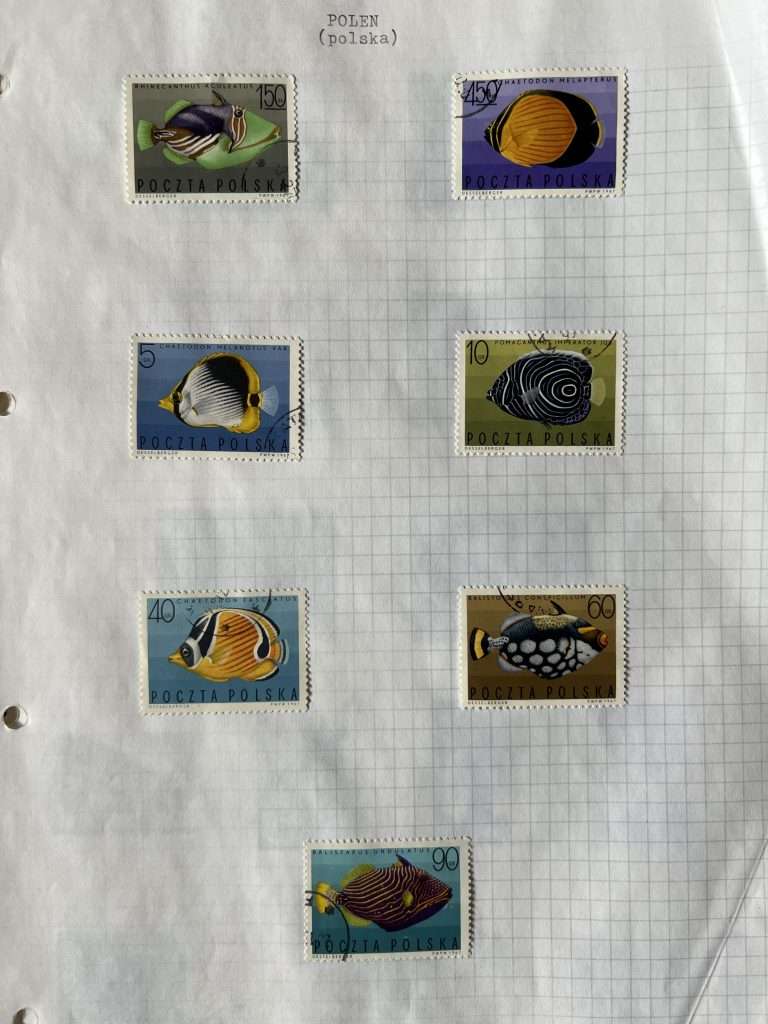
I am going through my old things, and found a few pages from my old stamp (!) collection. It must be from when I was somewhere around seven and ten years old. (I don’t know what happened to the rest.)

I remember I especially loved colorful stamps with images from space and nature, since those were two of my passions at the time.

Those are still among my passions.

Back then, I loved space exploration, the Cosmos series by Carl Sagan, and animals and fish. That’s what I was exposed to through the media.

Later, in my mid- to late teens and early twenties, I still loved the same general topics, although it took a different form. It transformed into a deep fascination with cosmic views and this planet as a living system. It was a fascination with the larger systems we are all a part of and local expressions of.

That’s how it still is. These days, it takes the form of a continued fascination with Big Mind and Headlessness, practical regeneration work on Finca Milagros and developing a food forest, and a systems and Big History view on humanity and our cultural changes and evolution.

Very often, the essence of early childhood passions is still what we are fascinated by, passionate about, and have love for.

It can be helpful, and interesting, to ask: What were my childhood fascinations, loves, and passions? What’s the essence of those? How can I bring those into my life now? How can I live them more fully?

It’s enlivening.

From the archive: some early drawings

I am going through some of my old things, and I have found some of my drawings from my teens and early twenties. The self-portrait above is from when I was sixteen which was later accepted into Høstutstillingen, an annual juried exhibition in Oslo. I thought the drawing was lost, but found it when I went through some old framed drawings in storage.

Above is a small selection of sketches and practice drawings. The first and last drawings are from the mirror, the second is a copy of a drawing from an old master, the third is from a photo (likely National Geographic), the fourth is a copy from an old master or a drawing from a sculpture, and the fifth is a drawing from a sculpture in the Vigeland Museum in Oslo.

Below is a mix of live drawings (studies & croquis), studies in the mirror, drawings of sculptures, drawings from photos, drawings from anatomical drawings and photos, copies of drawings of the old masters, and a few drawings from etchings and paintings of the old masters.

Read More

From the archive: a few early drawings

I am going through my old things stored at my parents’ house, and found a few early drawings, mainly from my teens.

This drawing is a self-portrait in charcoal I made when I was sixteen. It was later accepted into a prestigious juried exhibition in Norway (Høstutstillingen).

These are a few of hundreds of drawings where I copied the old masters. I suspect the second drawing is from life.

I think this may be a copy of a drawing by Michelangelo.

A composition sketch from – I think – an etching by Rembrandt.

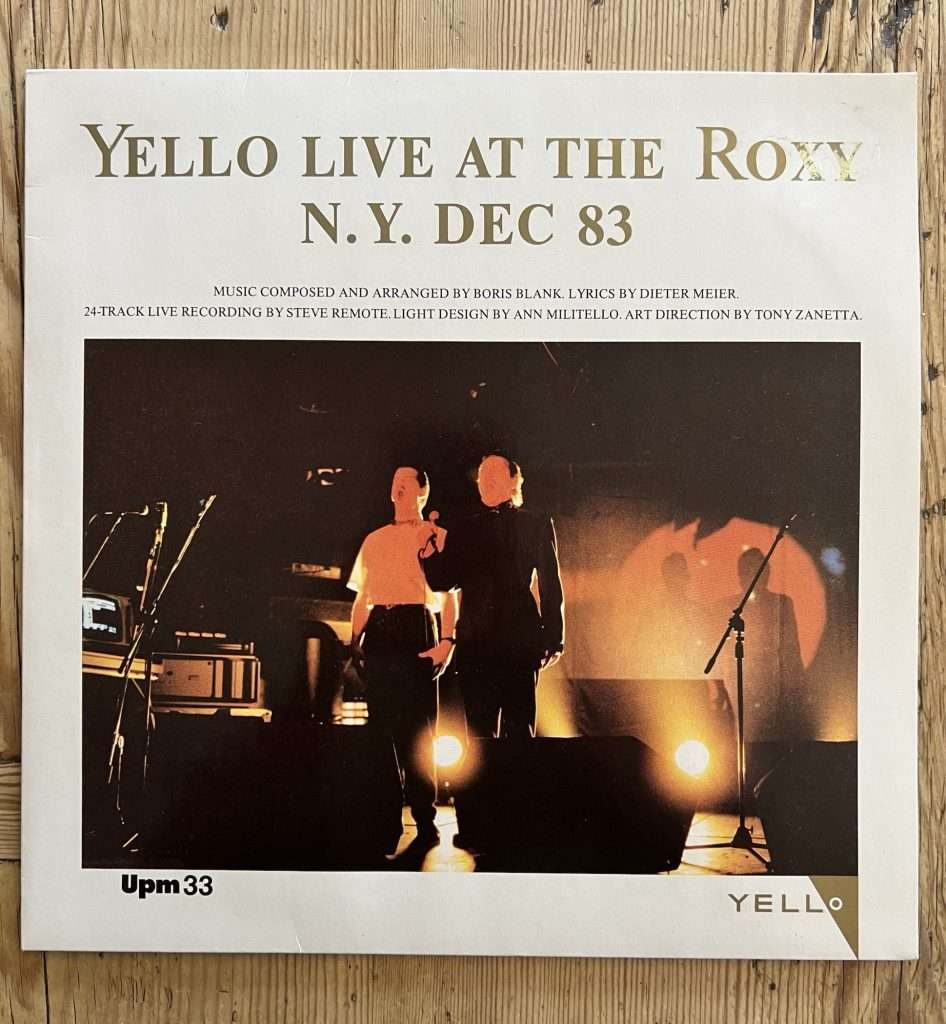
From the archive: Yello – Live at the Roxy

Since I use this blog mostly as a journal, I occasionally put some more personal things here.

I am going through some of my old things from my teens and early twenties, and found this album which I absolutely loved in my early teens. I loved Yello in general, along with Frankie Goes to Hollywood, Kraftwerk, Depeche Mode, Zang Tumb Tuum artists, Laurie Anderson, and others.

My wife will say that my love for Yello: Live at the Roxy is an expression of my venus in Aquarius. I guess that also means I love to explore new things, including music that’s new to me, so I have gone through many phases since then – Arvo Pärt, Philip Glass, Steve Reich, Meredith Monk, Huun Huur Tu, African, Latin, and so on.

From the archive: I Ching

I got into I Ching when I was 181 and was introduced to it by Aake Y. who was a kind of mentor for me at the time. Unsurprisingly, I got the Richard Wilhelm translation with a foreword by Jung. (I was deeply into Jung at the time.)

I loved I Ching and read it over and over, and also occasionally used it as an oracle – to reflect or give a view on the situation. It was remarkably accurate, and I also found that if I asked it about frivolous things, or asked too much, I would typically get the “Youthful Folly” hexagram (!).

When Aake introduced me to it, he asked I Ching about me in general and got no. 1 Chien / The Creative which changed to 56 Lu / The Wanderer. I remember I liked the first one, but not so much the second. I didn’t really want to be a wanderer metaphorically or geographically. I wanted to settle.

Of course, it turned out to be accurate. I have been a wanderer metaphorically – in terms of my exploration, and geographically. I have lived in several countries.

After talking with Aake, I asked I Ching about myself. This was the first time I used I Ching as an oracle. To my astonishment, I got exactly the same. I got no. 1 changing to no. 56. That’s a one in 4096 probability. Out of 4096 times, it is likely to happen once.

It’s been a long time since I have used it as an oracle. These days, I prefer to use my inner guidance.

NOTES

(1) I was still living in the basement of my parents’ house for the first year after high school, before moving to Oslo. I got into Taoism before then, through Fritjof Capra’s The Turning Point, and had read several Taoist classics for a couple of years before this. I think I had put off getting into I Ching since I had seen it mainly as an oracle and didn’t know the amazing wisdom in the hexagrams and elaborations.

A few things from the archive: books important to me in my teens, a signed book, a lending list

I am going through storage in Norway, mostly from my teens and early twenties when I still lived in Norway. It’s interesting to revisit that time and see what has changed and what has remained as threads through my life.

I thought I would put a few things up here. It’s interesting to me, although I can’t imagine it’s very interesting to others!

A book by the painter Odd Nerdrum and signed by him. I was an apprentice/student of his at the time so it was easy to get it signed. I thought this book was lost, but it was just in one of the cardboard boxes from that time.

These are two books that were important to me in my mid-teens. They helped transform my worldview and orientation to life, I was passionate about both books and the topics they talk about, and remember searching out other books referenced in these.

My middle school teacher introduced me to Fritjof Capra’s The Turning Point in 1986, and it became hugely important to me. It’s about quantum physics, systems theories, similarities between certain areas of Western science and Eastern philosophy, and so on. I also loved his other books, and still do although I haven’t read them for a while. (I later got to see Fritjof Capra give a talk at Schumacher College at Dartington near Totnes.)

Likely the year after, I read Erik Damman‘s Bak tid og rom (“Beyond Time and Space”). This one is about scientific research that goes beyond the materialism that’s mainstream in science today. I love this kind of science, and for a while, I dreamt about doing it myself. I kind of did, in my own life. I also got to later meet and talk with Erik Damman, at one of his monthly Sunday gatherings at his house.

This is a book-lending list, to keep track of who I had lent which books to. I imagine some of these books could still be with these people!

My brother had Science, Order, and Creativity by David Bohm.

A friend from art school and university had Ken Wilber’s No Boundary. Another hugely important book for me at the time, reflecting and helping me further organize how I saw things.

A friend from school had a book by Rupert Sheldrake. I had several of his books and am not sure which one this was. (I later got to see Sheldrake too at Schumacher College at Dartington near Totnes.)

A friend from Art History at university had Goethe’s Fairy Tale of the Green Snake and the Beautiful Lily which I remember also made an impression on me at the time.

Another friend from Art History had borrowed Energi og bevissthet (“Energy & Consciousness”) by Jes Bertelsen. Jes Bertelsen and his books were very important to me at the time, especially as he took a similar approach to me in terms of using elements from Christianity (prayer, meditation), Buddhism (Buddhist practices), energy work, and depth psychology (Jung). I visited Vækstsenteret, his place in Denmark, and felt deeply at home there. I likely would have been far more involved with that community had I not left Norway and Europe at around that time.

She also borrowed a collection of short stories by Kahlil Gibran. I loved his writing and drawings.

Marianne borrowed two books by the Jungian analyst Strephon Kaplan-Williams. He lived in Oslo at the time, I had done some sessions with him, and I loved his books and his dream cards. Marianne is Marianne Ihlen whom I met in a workshop in Oslo held by Hanne Bertelsen. We became friends. (She was a whole and amazing human being in her own right, although is publicly more known as the ex-partner and muse of Leonard Cohen. I discovered it when we talked on the phone one time, and she told me she had to go to catch a concert with her ex-partner.) Hanne divorced Jes Bertelsen, and I am not sure if she continued to teach. I had a very good connection with her and met her in person several times, so I miss that connection too.

A friend I met in Tai Chi class, Bitte, borrowed Smilende livskunst (The Importance of Living) by Lin Yutang, and also Tao Te Ching . I loved Lin Yutang’s books and read whatever I could find from him. Even more, I loved Tao Te Ching by Lao Tzu (Laozi), and I read and re-read whatever Taoist classics I could find or order through the main bookstore in Oslo. Bitte was and is far along the awakening path and is highly sensitive and clairvoyant. I remember we sat at the train station after tai chi class, comparing what we saw in the energy system of the different people there. We always saw the same. (Maybe she saw more than me, I wouldn’t be surprised.)

There is also a note I don’t quite understand about “a larger whole” and someone called Boyesen.