Some like to talk about the polycrisis – a confluence of several different global crises from climate change to biodiversity loss, from huge economic disparity to authoritarianism, and so on.
What if this is really a monocrisis? (Or a unicrisis?)
In terms of the unraveling ecological systems, it all ties back into global ecological overshoot. We are collectively using far more resources than this living planet can replenish. This is due to a combination of numbers, technology, and worldview.
And that brings us to the even more essential monocrisis, which is a civilization organized around the idea of separation. This idea comes with a zero-sum mindset (I seek solutions so I win, and I don’t care if you lose. If you win, I assume it means I lose.) and an either/or mindset (if this thought is true, that competing one is not). In our civilization, it’s tied in with a domination or power-over orientation. It depends on some degree of collective and integenerational trauma. And it’s the reason we have organized ourselves so what appears beneficial for a narrow us is often destructive for others – ecosystems, nonhuman beings, future generations, and so on. This is also what has led to global ecological overshoot.
It’s sometimes misguided to simplify a diverse set of symptoms to one underlying apparent cause, but in this case, it makes sense. Without the idea of separation, a visceral sense of separation that comes from internalizing it from a very young age, and a civilization organized around the same idea – in terms of culture, science, technology, infrastructure, production, education and everything else – we very likely wouldn’t see all the many troubles we have today.
It’s not so difficult to imagine a civilization organized around the idea of interconnectedness. It wouldn’t be without its own challenges, but many of the most serious challenges we see today would or could be designed out of our systems and lives. We would see ourselves as temporary and local expressions of this seamless living planet. We would seek win-win solutions and have a both/and mindset. We would use a deep partnership orientation – seeking solutions in partnership with natural systems, and taking what works best from both partnership and domination orientations. We would create a civilization and society where what’s easy and attractive to do, for organizations and individuals, is also what benefits the larger whole and future generations.
Of course, I am sure many who speak about the polycrisis are aware of this, and point it out.
Still, I like the terms monocrisis or unicrisis. It doesn’t mean we have all the answers, but it does invite curiosity about whether it is really one unified crisis that leads back to an essential assumption behind just about everything in our civilization. It also invites us to investigate other ways to organize ourselves.
Whether we notice or not, we are part of this seamless, evolving, living system we call Earth. For most of our history, we lived without being consciously aware of this bigger picture, or of how basic cultural assumptions shape our civilizations.
The question then is: If we join in with the evolution of this living system in a more conscious and intentional way, how may it look? What role do we wish to play?
I mentioned to someone that a lawn could be made into an old-fashioned diverse garden with fruit trees, berry bushes, flowering bushes, perennial flowers, and wild areas. His response was: won’t the wild animals take the food? Isn’t a manicured lawn good?
To me, this illustrates a few different things.
First, it’s a reminder of the general lack of ecological literacy in our society.
We are in global ecological overshoot, and whatever we can do to regenerate ecosystems – even if it’s “just” converting a lawn into a more natural garden or a food forest, moves us in the right direction.
We have a massive loss of insects here in Norway, and the recent fashioned of overly manicured lawns is part of the problem. Where there used to be trees, bushes, flowers, and wild areas and edges, there is now a green desert that can’t support much if any life. (Pesticides used in agriculture and green area is another reason for the collapse of the insect world, as is natural areas made into buildings and roads.)
Converting a lawn to a more wild area with a diversity of flowers will support the local insects, which is invaluable. What happens to the insects will happen to us. What we do to the web of life, we do to ourselves.
Then, there is the difference between a zero-sum vs win-win mindset.
The fear of animals taking the food comes from a zero-sum mindset. If they take it, there won’t be enough for me. It may be better to not do anything than allowing the wild animals to eat food from the garden.
The reality is that a diverse and lush garden provides more than enough food for everyone. Also, we can get our food from the supermarket, and the wildlife can only get it from nature.
A win-win mindset comes from recognizing that we are all part of the web of life. Our existence depends on a thriving web of life and wildlife. We can’t exist without it.
We all win or we all lose, together. And right now, we are all losing. The whole web of life is losing because of our civilization organized around the idea of separation and a zero-sum mindset.
Recognizing this can be challenging and bring up grief, despair, and more, and the remedy – for us collectively and individually – is for each of us to do what we can, including in our own literal backyard.
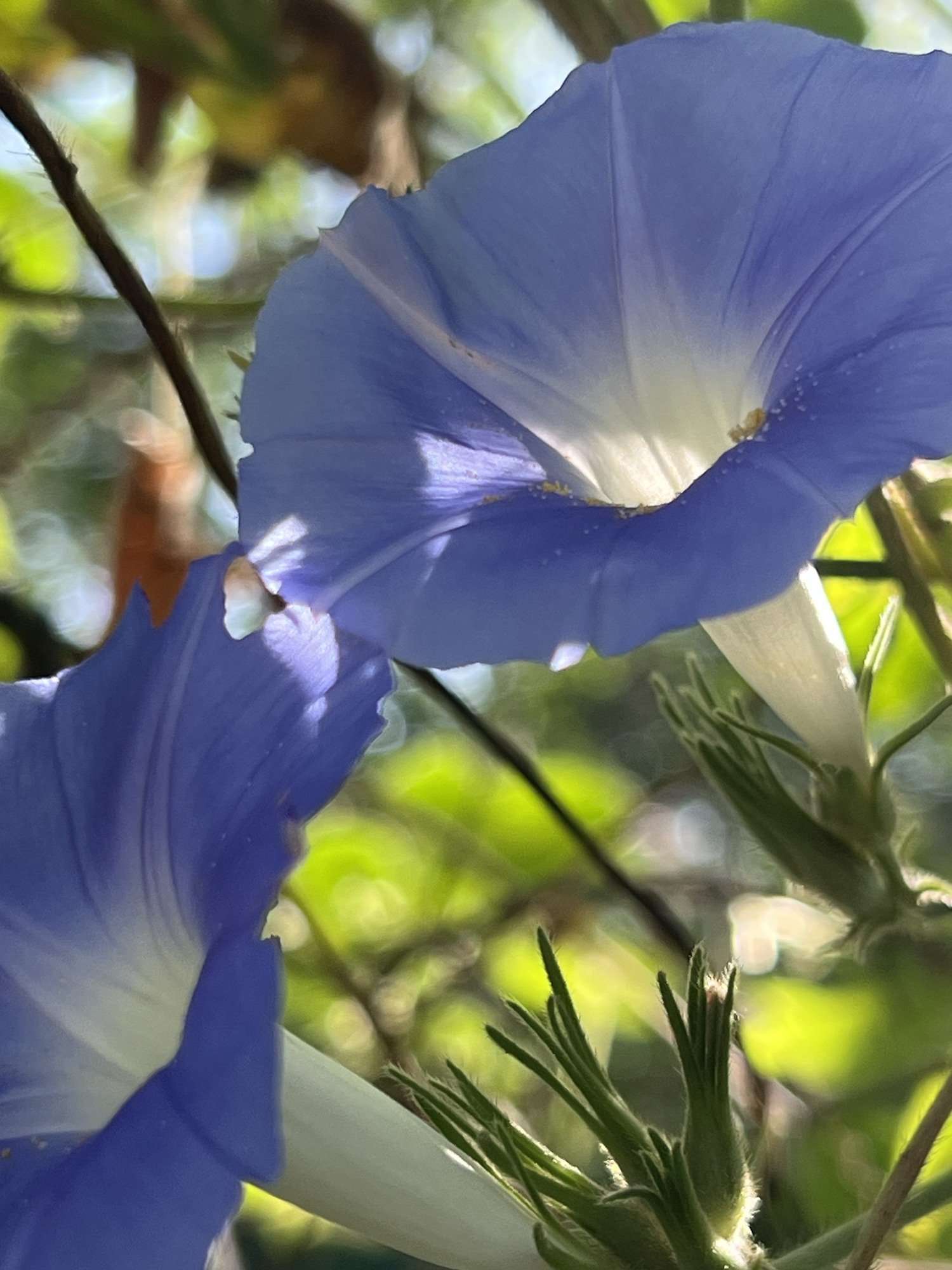
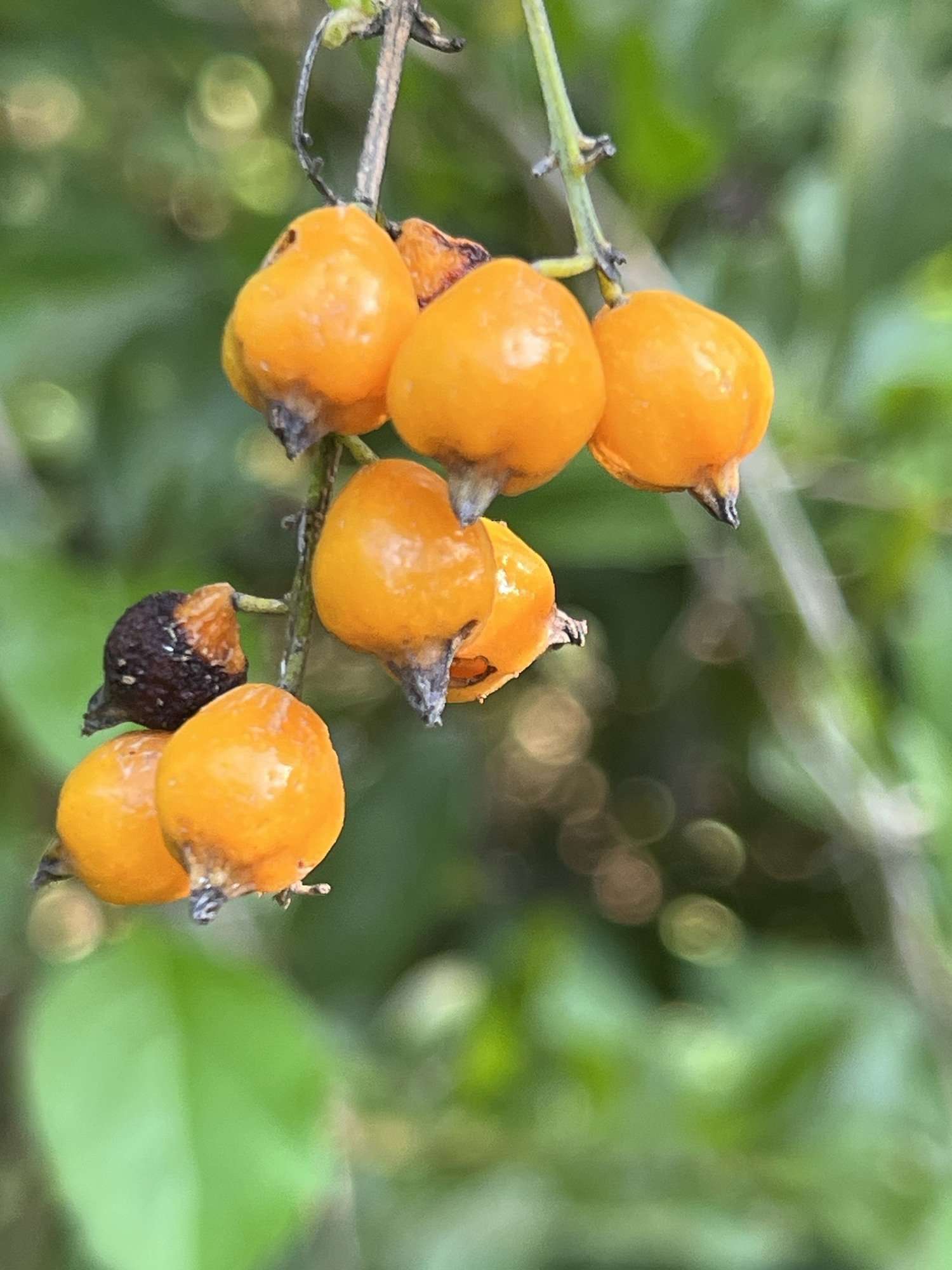
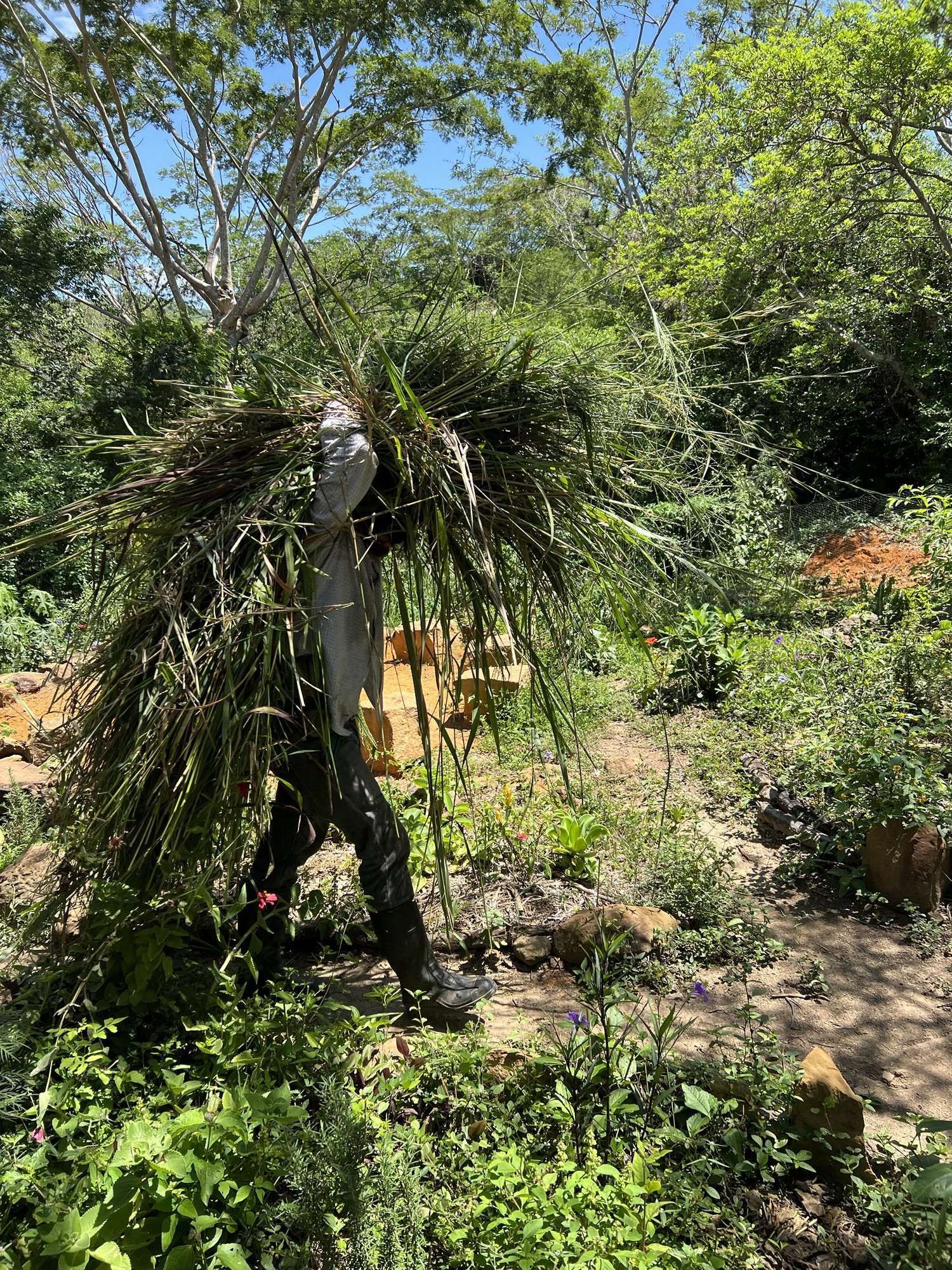
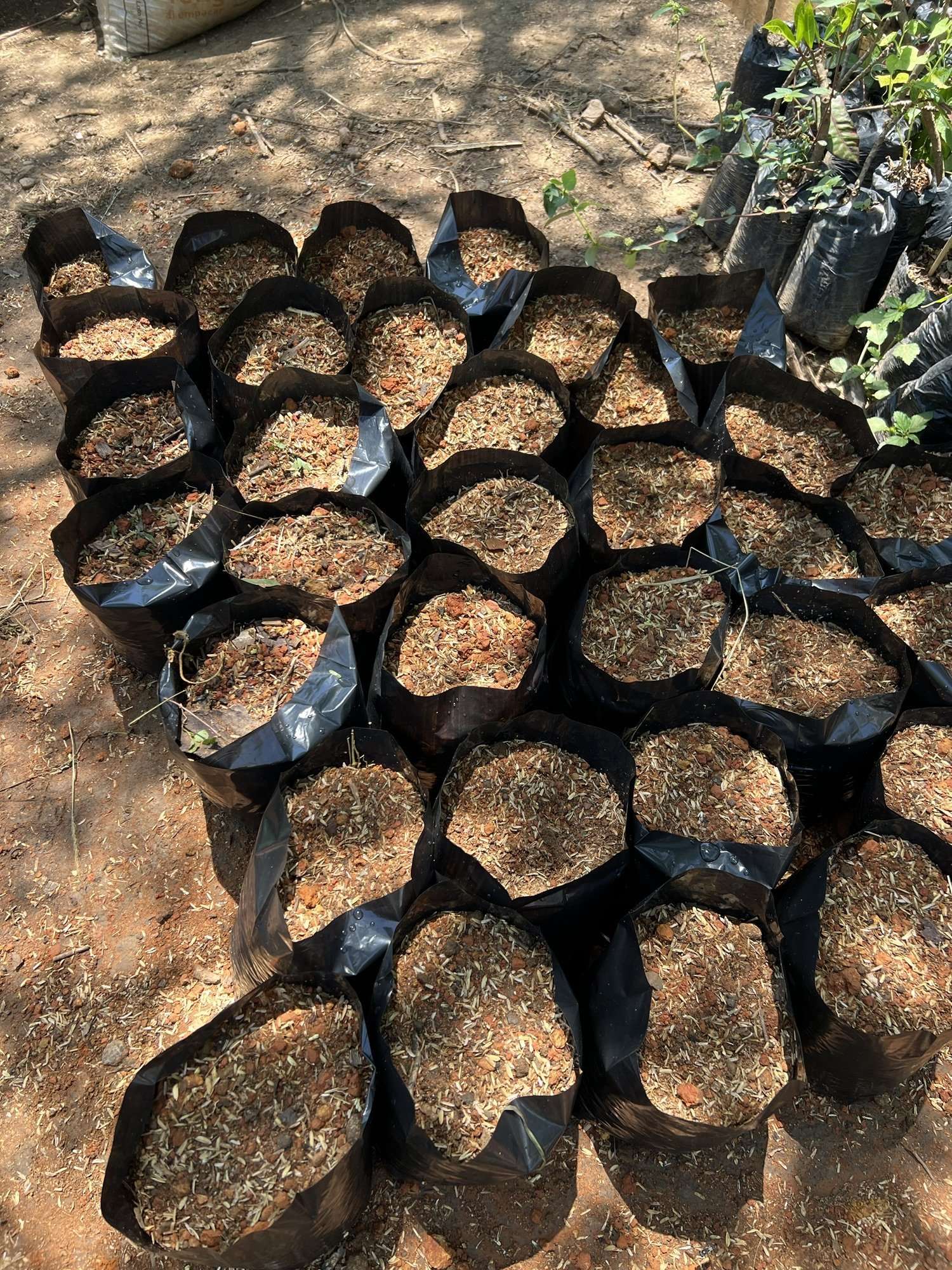
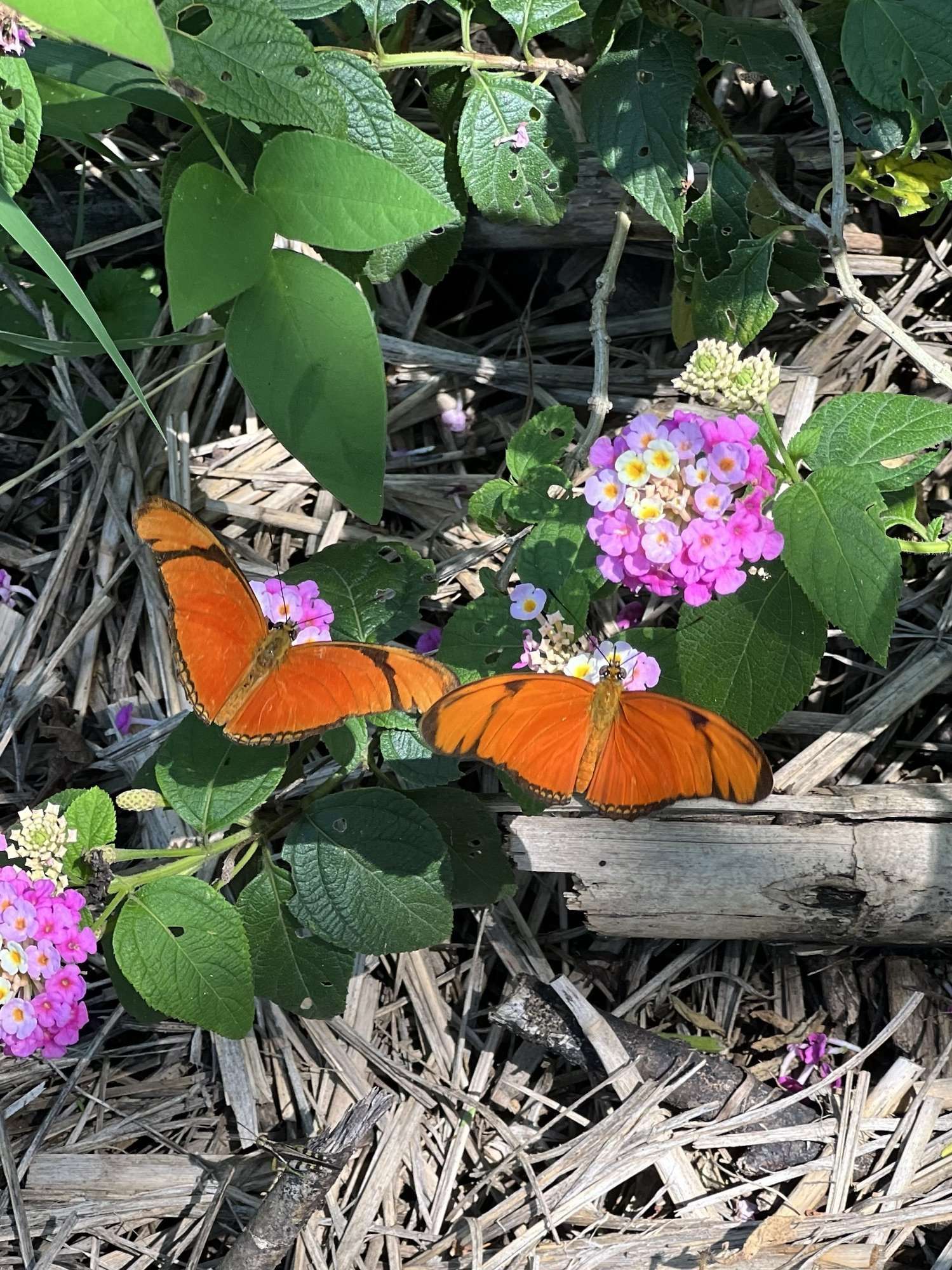
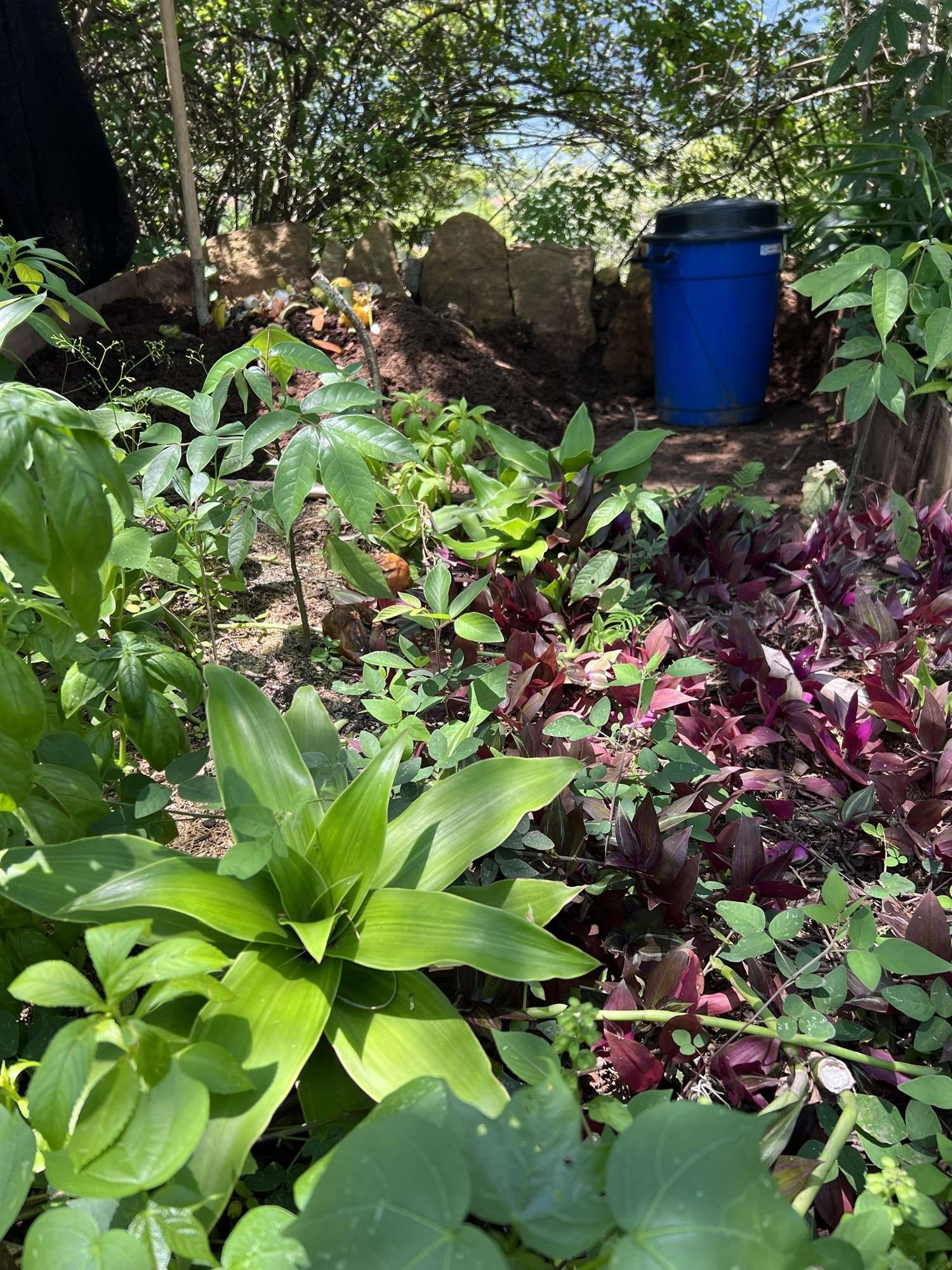
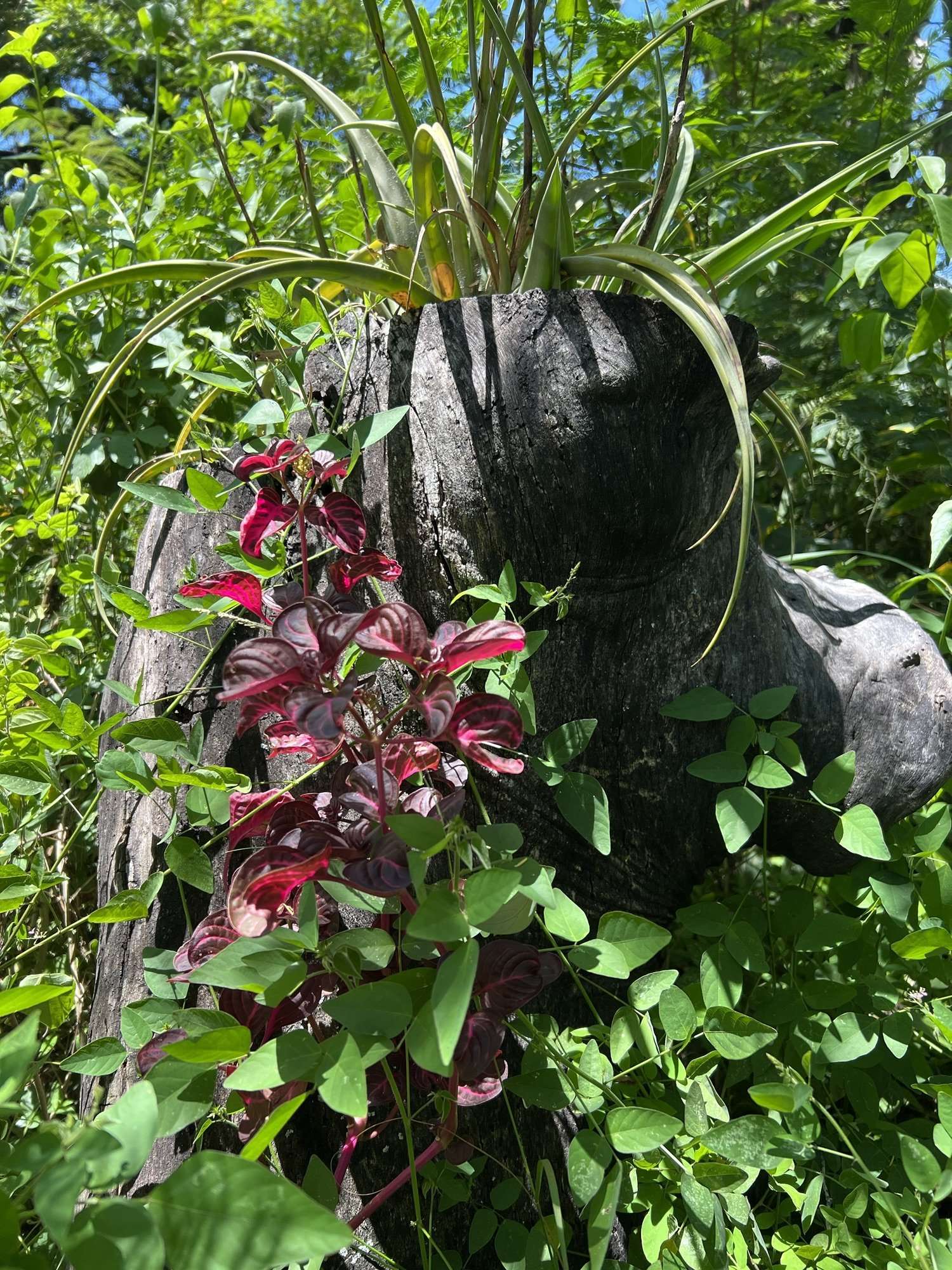
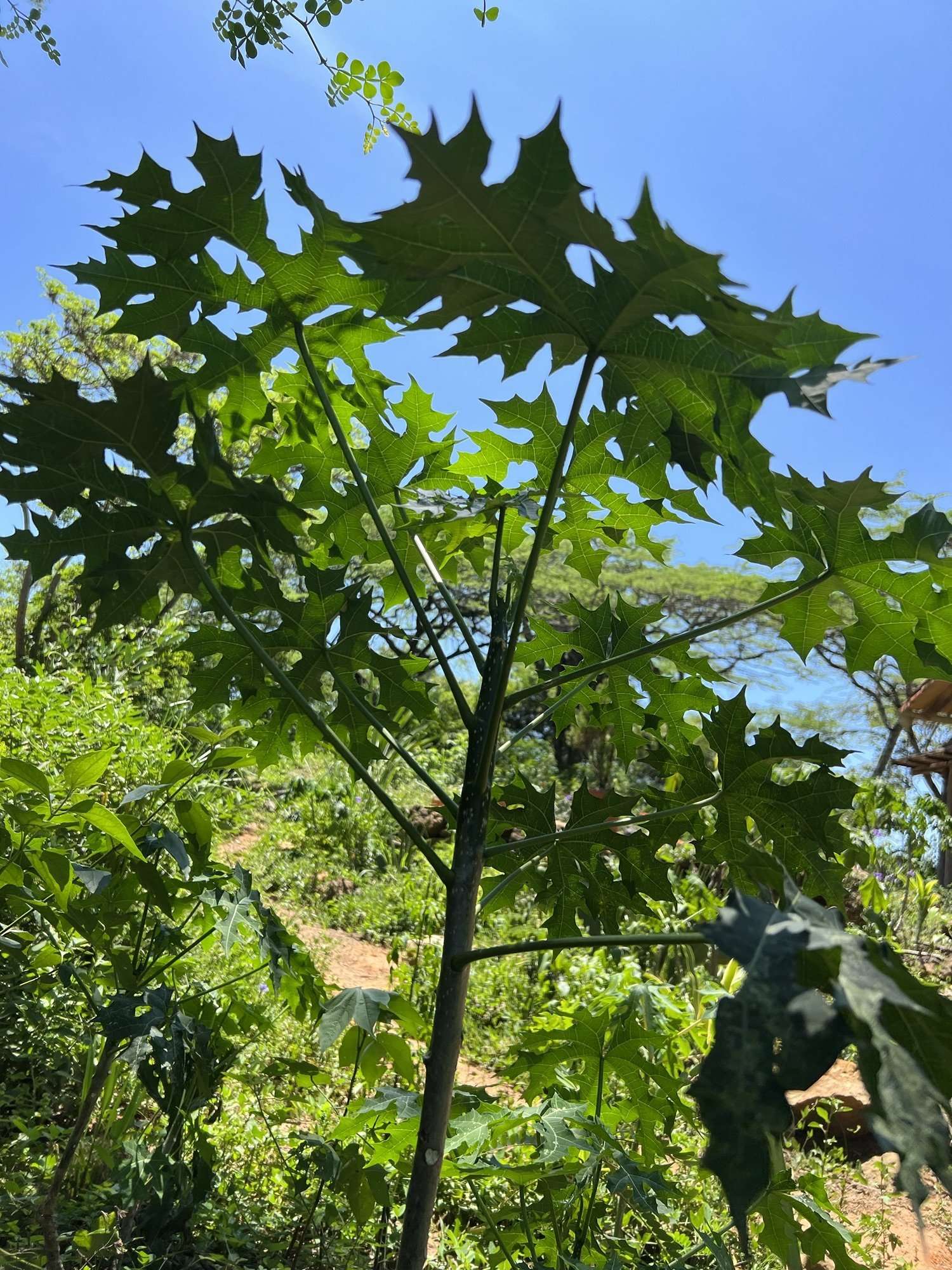
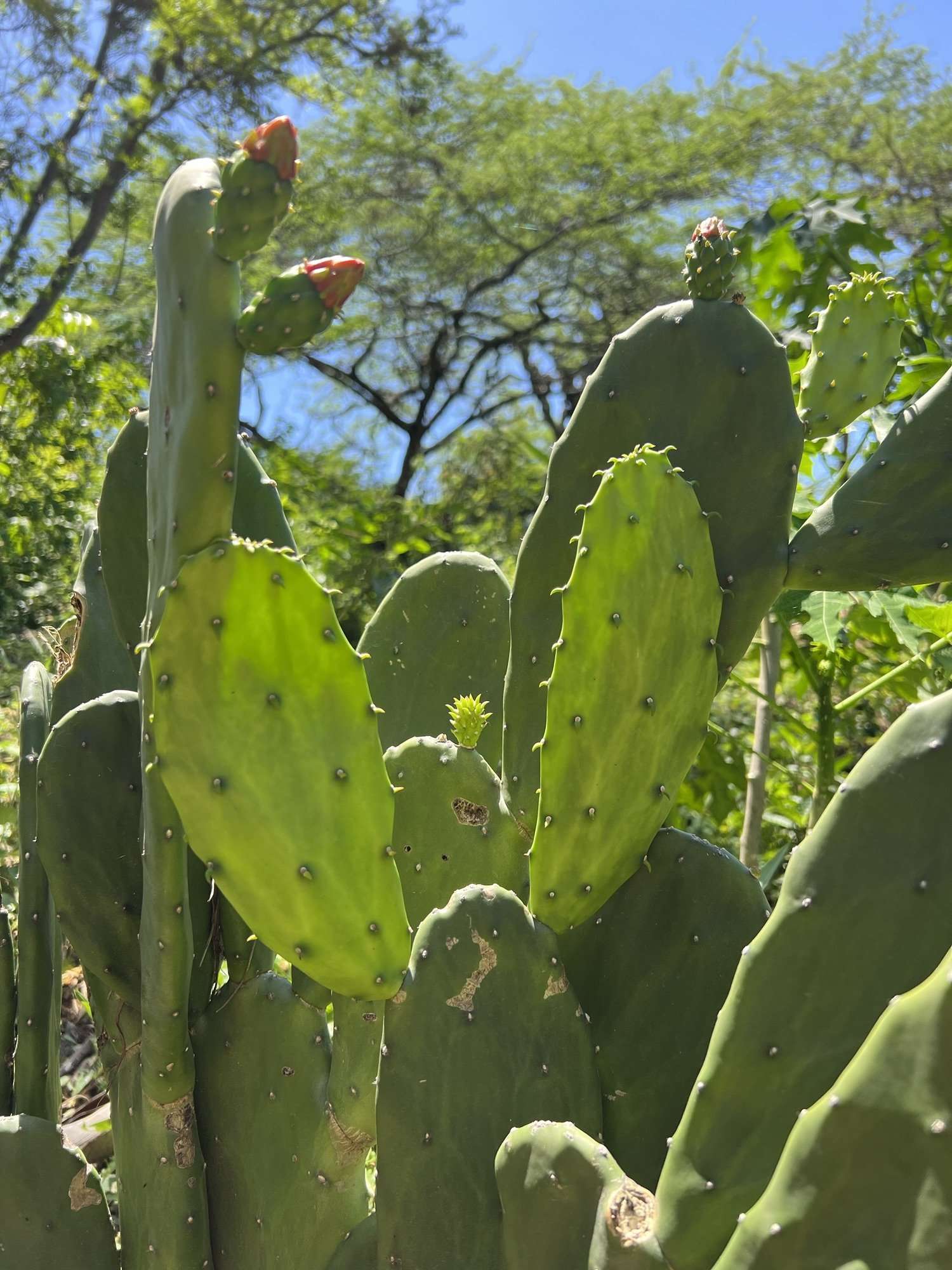
The featured photo is from one of the apple trees at my childhood home. The rest are from a recent trip to Drøbak where some old-fashioned gardens still exist.
JD Vance has said that Christian love means to prioritize your family, then community, then country, and last the rest of the world.
Before he became Pope Leo XIV, Prevost tweeted the reply above, reminding Vance and others that love cannot be ranked.
THE TWO VIEWS
I came across someone talking about this. He said that the views reflect the difference between (a) our fallible human tendency to prioritize those close to us versus (b) the ideal of loving everyone equally. To me, that’s missing the mark.
It’s not fallible to prioritize those close to us. It makes sense to do so since we are in the best position, perhaps among everyone, to make a difference to those close to us.
It’s also not an ideal to love all equally, it’s what we are and it doesn’t go counter to prioritizing those close to us.
ZERO-SUM VS WIN-WIN
To me, the two views – of Vance and Prevost – are really about the difference between a zero-sum and a win-win orientation.
Zero-sum
Trump, Vance, and MAGA tend to operate from a zero-sum view of the world.
If you win, it likely means that I – somehow, even if I don’t know how yet – will lose.
Similarly, I’ll seek out ways to win that makes sure that you lose. That’s the only way I can be sure I won.
We see this in just about all aspects of Trump’s policies, and this is very far from the life and words of Jesus.
It’s also very far from the reality of a profoundly interconnected world, a world that’s one seamless system where the health and well-being of the larger whole is profoundly interconnected with my own health and well-being.
Win-win
Prevost seems to come from more of a win-win orientation, and an orientation more aligned with the life and words of Jesus.
He knows that we can find solutions that benefit us and our families, and also the larger social and ecological whole. He knows we can find, chose, and live win-win solutions.
We can take care of our families, communities, and country, and do so in a way that also benefits the wider world, the living web we are part of, and future generations.
For me, that’s the essence of the difference in view between Vance and Prevost.
DOMINATION VS PARTNERSHIP LENS
There is a lot more to say about this, and I have written about it in other articles.
Trump and Vance’s view is an expression of a strong and relatively one-sided domination culture. Central to that culture is a view of separation, zero-sum strategies, either-or thinking, and so on.
Trauma is also central to that culture. Collective and intergenerational trauma is part of how it perpetuates itself, and a zero-sum orientation is – in many ways – a trauma response.
Although Prevost is part of an institution that has strong domination culture elements (a history of supporting fascist regimes, strong patriarchical hierarchy, an idea of the sacred as “out there”, dogmas you are supposed to pretend to “believe” in, colonialism/missionary work, and so on), he and the Catholic Church has elements of a partnership orientation, as expressed in his tweet.
Although that’s another topic for another time, there is a fundamental dissonance in the Catholic Church. As an institution, it’s an expression of a strong domination culture that far too often sides with the powerful. It’s supposedly built on the teachings and life of Jesus, who had a radical partnership orientation. And to acknowledge that, they need to soften their edges a bit and bring in some elements of a partnership orientation.
Naomi Klein is here talking about what many have pointed out: Fascism is doing within a country what colonialism did to other countries.
DOMINATION CULTURE TAKEN TO THE EXTREME
I find a bigger picture useful here: It’s all domination culture taken to the extreme.
On the partnership-domination culture spectrum, fascism and colonialism are extreme versions of the latter.
The way Israel treats Palestinians is an extreme expression of domination culture, just like the way the Nazis treated Jews – and many other minorities – was an extreme expression of domination culture. Hurt people hurt people. Traumatized people traumatize people. Israel’s treatment of the Palestinians is trauma behavior, and it continues the cycle of trauma, hurt, and hurting. It will continue to play itself out in that part of the world.
With the new Trump presidency, we predictably again see an extreme version of domination culture play itself out.
In two weeks, he has already inflicted immense pain and suffering on a large number of people: Immigrants, trans people in the military, all the ones – children, refugees, the sick – who will not receive help from USAID, the federal employees who are fired, and so on.
As authoritarian leaders do, Trump uses dominance as a means to funnel resources to the already wealthy and powerful and to inflict suffering on everyone else, especially the ones opposing it.
DOMINATION CULTURE & COLLECTIVE TRAUMA
Why do people vote for someone like Trump? One answer is that it’s the same reason Israel commits systematic and horrific human rights violations against the Palestinians, and has done so for decades. It’s because hurt people hurt people. It’s trauma behavior.
They have been hurt by domination culture, in their families and by lacking opportunities in life. They hurt and are in pain. And they deal with it by siding with the oppressing dynamics. They justify these dynamics, support them, likely live them out in their own lives, and vote for someone who is living it out in an even more extreme way.
A FEW MORE WORDS ABOUT TRUMP AND THE US
There is a lot more to say about this and I’ll just touch on a few points.
It will lead to the erosion of the US empire. That’s Trump’s explicit agenda, so it’s not a surprise. He wants to isolate the US from the rest of the international community, and that – by definition – means the erosion and hastened end of the US empire. They won’t have the same strong position in the world as they did. Their former allies will find other alliances – for trade, security, and so on.
It also leads to the erosion within the US – of democracy and democratic institutions, of the legal system and justice, of the systems set in place to prevent corruption and abuse of power, of systems in place to help those least fortunate in society, and so on.
He is doing exactly what he said he would do. He is following the Project 2025 game plan to a T.
The ones voting for him are getting exactly what they voted for. The ones who would have voted against him, and didn’t, are getting exactly what that kind of inaction leads to. They are all getting exactly what they knew they would get. (At least if they had taken one minute to think it through.)
Why does he want to isolate the US and pull out of international agreements and institutions? Why does he want to undo all those systems of democracy, justice, and social safety nets?
It’s partly because he thinks he doesn’t need them. He is wealthy, his buddies are wealthy, and they’ll manage and do fine without it, which is true in a limited way.
Mainly, it’s because he is deeply suspicious of any kinds of agreements or systems that seem to benefit others.
ZERO-SUM VIEW
He operates from a zero-sum view of the world, which is a hallmark of domination culture. Everything is a limited resource. If you win, I lose, and if I win, you lose. So it’s better to be aggressive and use any means to make sure I win first. That’s his life in a nutshell.
He looks for how, imaginary or otherwise, he is losing if someone else is winning. He overlooks – and is deeply distrustful of – the ways we all may benefit from international agreements and institutions, and from systems of justice and social safety nets. (That said, not all international agreements and institutions benefit everyone. For instance, neo-liberal trade policies hurt the Global South and nature.)
He looks for ways to win in a way that makes others suffer because that’s what winning means to him. If others don’t visibly lose, it can’t be a real win.
This is also trauma behavior. It’s the view of someone deeply traumatized. It’s the life and outlook of someone deeply damaged by domination culture and how it played itself out in their own birth family.
THE AGRICULTURAL REVOLUTION AND THE BIRTH OF MODERN DOMINATION CULTURE
Where does this come from?
It’s not new. All of history is full of examples of domination culture, sometimes taken to an extreme.
That’s a clue in itself.
All cultures have elements of partnership and domination orientations, and the more extreme versions of domination culture came with the agricultural revolution.
Before agriculture, we were all indigenous. Our cultures were more on the partnership side of the spectrum. We lived in partnership with nature and the small number of people in our group. We saw ourselves as nature. We saw the sacred in everything and everyone. We lived with the seasons and what nature naturally provided. We had some hierarchies of course, typically based on skills, experience, and knowledge needed for survival. Nobody had a lot more than anyone else since it was not possible to accumulate much.
With agriculture came ownership – of land, animals, people, and resources in general. Some amassed large amounts of resources. This was a big departure from how we had lived before. So how could the ones with the new resources justify it? How could they get people to play along and even support this new system, even if they were at the bottom of the hierarchy?
They did it partly through ideologies. They imagined that… We are separate from nature. The sacred is removed from us and nature and is found in sky gods or the afterlife. Other species don’t feel and experience similar to us. Nature is unlimited in its resources. And so on.
They promoted hierarchies and inequality as divine will and justice. If you are lower on the hierarchy, it’s because of a fault of your own (lazy, karma), and if you don’t question it, you’ll get your reward in the afterlife.
This is domination culture. It’s all set up for domination – of land, animals, and people. It’s a culture of domination and control even of ourselves.
It doesn’t have to be that way. Many cultures even after the agricultural revolution were, and are, further on the partnership side of the scale. Modern Nordic countries are an example of social partnership orientation. (Although still a domination orientation with nature.)
GLOBAL ECOLOGICAL OVERSHOOT
This is all happening in a larger context:
All resources come from the commons shared by all life.
All of our resources, all wealth in society and among humans, come from the commons of Earth, it comes from the commons produced by all of life.
When we amass wealth, as we are at an increasing rate, we take resources from the web of life we are all part of.
Our collective ecological footprint is far larger than our planet. We are using far more resources than Earth can replenish. That’s similar to living on money from a savings account. When it reaches the bottom, our lifestyle comes crashing down.
When Earth is getting closer to the bottom of its savings account, which it already is and which is happening at an increased speed, civilization comes crashing down. Ecosystems unravel, and with them our civilization.
This is an expression of domination culture and a zero-sum view. Our modern civilization is built on zero-sum systems where we benefit in the short term at the cost of all of nature, future generations, and ultimately ourselves.
THE SOLUTION IS FOUND IN A DEEP PARTNERSHIP ORIENTATION
The remedy is found in a partnership orientation.
We can save ourselves by developing a genuine and deep partnership culture.
This is a culture where we… See ourselves as nature. See the sacred in everyone and everything. Acknowledge that all beings and natural systems have rights. Recognize that other species experience and feel much as we do. Create systems that take ecological realities into account.
It’s a culture with a deep partnership with nature, ourselves as nature, each other, and even future generations.
We seek win-win solutions where our life is sustained so everyone has the basics needed for a good life, and that regenerates ecosystems. We create systems where what’s easy and attractive to do is also what’s fair and regenerates this living planet.
We win. Society wins. Ecosystems win. Wildlife wins. Future generations win.
From a domination culture mindset, this seems naive. It will never happen. It can’t work. There are no such solutions. People won’t want to do it. This is one of the ways the domination mindset maintains itself. It defends itself by telling itself stories to justify itself and make alternatives seem naive and unrealistic.
WILL WE FIND THE COLLECTIVE WILL?
The reality is that we don’t have much of a choice.
If we are to survive – as a civilization and species – that’s our only real option. (The other option is collapse, a huge reduction in our population, and either learning from it or continuing with cycles of collapse until we as a species are gone.)
The reality is also that we have those solutions. We have workable win-win solutions, and we’ll find more if we collectively choose a more life-centered and partnership-oriented path.
Will we collectively choose to take that path? How far into the collapse do we need to go before we find that collective will?
How many will respond to the collapse with a solution-oriented and win-win mindset? How many will respond by going further into a domination and zero-sum mindset?
We don’t know, but we can live what we want to see in the world.
We can develop a more genuine and deep partnership mindset. We can find, join, and develop communities of like-minded people. We can speak up about all of this. We can find and promote win-win solutions. We can live some of the solutions in our own life.
As many point out: You don’t need to be a historian to know that the ones who ban books are never the good guys.
IT’S NEVER THE GOOD GUYS WHO…
It’s never the good guys who speak and act on xenophobia, misogyny, racism, and bigotry.
It’s never the good guys who scapegoat vulnerable minorities for social and systemic troubles.
It’s never the good guys who want to impose their religion on others and marginalize other religions.
It’s never the good guys who feel threatened by science and deny or marginalize it.
BOOKS BANS DON’T WORK
Book bans are not about banning books or preventing people from reading them. That doesn’t work.
Books bans only instill curiosity about the books and the thoughts and lives represented within them.
There are plenty of lists of banned books out there, and people reading these books mainly because they are banned somewhere, and that is a very good thing.
If someone doesn’t want to you read a book, that, in itself, is a good reason to read it. There is something there they don’t want you to know. There is a perspective there that’s threatening to them.
I suspect book bans are really about something else.
WHAT ARE BOOK BANS ABOUT?
At one level, book bans are about marginalizing and trying to eliminate other people’s lives, experiences, and the world they live within.
Most of the books banned by schools, libraries, and so on in the US today are books representing minorities, and banning these is an attempt to marginalize and silence these groups of people.
In a more immediate sense, book bans is a message to the community: If you belong to these groups, don’t speak up. We don’t want to hear it. You and your experience are not welcome here. We will do what we can to silence you.
WHY THE DESIRE TO SILENCE?
Why this desire to silence? Why don’t they want to hear from people living other and different lives?
I am not sure, apart from that it likely has to do with discomfort. Having these books around – and the lives and lived experiences represented in these books – is uncomfortable for them.
It may upset their worldview. They have the world neatly figured out, and these minorities disrupt their world. They show them that they try to live in a fantasy, in a world that doesn’t exist, and that the real world is different.
It may show them that they and their ancestors are not (only) the good guys they imagine they are. Their ancestors were racists, supported slavery, committed genocide, stole land from people already living on it, and so on.
It may show them that being LGBT+ is completely fine. These are normal people just like you and live ordinary lives just like you and everyone you know.
It’s an attempt by the privileged to keep their privilege, whether that privilege comes from being male, white, Christian, or something else. They don’t want to share the stage with other groups.
DIVERSITY
They likely come from a zero-sum view of the world and imagine that if the lives of the marginalized are improved, theirs have to get worse. Reality is different.
The reality is that diversity is a part of the human experience, and it enriches us all.
There is a reason for this diversity. We need this diversity of lived experiences, views, insights, and knowledge. We need it to understand ourselves and the world. We need it for resiliency. We may need it in ways we don’t fully understand.
Nature creates diversity and we know that more diverse ecosystems are more resilient, adapt better to change, and recover faster after a crisis.
When it comes to us humans, evolution has brought about this diversity because it has a survival function for humanity as a whole. We may not understand all of the mechanisms (we certainly do not), but it’s likely that this diversity still plays an important role in helping us survive, adapt, deal with crises, and thrive.
When it comes to intolerance, the only intolerance we need, applied with self-reflection and caution, is a degree of intolerance for intolerance.
THE CULTURE WAR AS A DISTRACTION
The culture war in the US is absurd on its surface and serves as a distraction from far more important, serious, and systemic issues.
Mainly, it distracts attention from the growing wealth gap in the US and the (neoliberal) systems and policies in place to maintain and increase that gap.
The culture war is a remarkably convenient distraction from these issues. It divides those who otherwise could unite in creating a real change that would benefit everyone.
GOOD GUYS?
When I use the words “good guys” it’s because it’s succinct, it takes a position, it’s familiar in this context, and it’s also a bit tongue-in-cheek.
Most of us think we are the good guys. Even most of the ones banning books probably see themselves as the good guys. They are protecting innocents from the evils of the world. They are trying to uphold some idea of morality.
From our modern Western worldview, book banning is clearly wrong, and the ones who have engaged in it in the past – Nazis, Soviets, and dictators everywhere – are wrong in what they did. They are on the wrong side of history.
By referencing history and using the phrase “not the good guys”, we invite reflection. Maybe there is even a hope that we are inviting those engaging in book banning to reflect on what they are doing, how it looks to others, and how it looks in the context of history. Do you really want to be on the side of those guys?
I have a long list of reasons why book banning is not a good idea and does not create the kind of society I want to live in. At the same time, I am very aware that my view reflects my own background.
FINDING IT ALL IN MYSELF
As usual, this all reflects me. Whatever I see in others and the world is something I can find in myself.
What’s the essential dynamic in book banning? For me, it’s to silence and eliminate what’s uncomfortable.
Something makes me uncomfortable, so I want that thing gone.
Said more accurately: I make myself uncomfortable about something, don’t like the discomfort, and want it – whatever in the world I tell myself creates the discomfort – to go away.
As so often, I find this is playing itself out in me at the moment I am judging people for banning books. Their views and actions bring up discomfort in me. I make myself uncomfortable because of the stories I tell myself about it. And I want them to be gone. I don’t want those kinds of people in the world.
What I really want gone is the discomfort I create in myself.
It’s good to notice this.
I create the discomfort in myself.
I want that discomfort (not them) gone.
At the moment I am judging them, I am living out exactly the same dynamic as I see in them.
FINDING IT IN ME & ACTING IN THE WORLD
This process helps me see what’s here and find myself in the other. It gives a little more understanding of them and me and the universal dynamics in us, and there is less of a sense of I and other or we and them.
It does not in any way excuse book banning. If anything, it helps me do something about it – to speak up and do something about it if I am ever in that situation – from a little more clarity.
We don’t know anything for certain about the future.
The only thing we know is that it won’t be as we expect. Even if we get the big picture right – which is not a given – it will be different in the details, and living it is always different from imagining it.
THE CURRENT PICTURE
That said, we know we are in global ecological overshoot, we know what will happen if we continue the overshoot, and we know that we collectively are not doing nearly enough to change it.
That’s a pretty dismal image of the future, and it’s unfortunately rooted in data, science, and what we see in the world today.
Unless we find the collective will to change, and to make profound changes to all aspects of our civilization and lives, we are headed for collapse.
We are already in that collapse, it’s just that some of us have the privilege to imagine otherwise, or we need all our resources to deal with the challenges of daily life.
GLOBAL ECOLOGICAL OVERSHOOT
What is global ecological overshoot?
It’s when we collectively use more natural resources than this living planet can replenish.
And it’s when we emit more pollution of all kinds than the natural systems can deal with gracefully, without being severely disrupted and impacted.
That’s already happening. We need more than one Earth to deal with the activities of our civilization. If we all lived like we do in industrialized countries, we would need several Earths.
This is similar to living on a savings account and spending more than the interest that replenishes it. It looks fine as long as there is money left. We can still live our lives as normal, while perhaps ignoring warnings from people who see the savings going down. When we hit the bottom of the account, our lifestyle comes crashing down.
We are currently close to the fuzzy bottom of our ecological savings account. We are seeing the signs all around us: unraveling ecosystems, massive loss of species, massive loss of different types of ecosystems, extreme weather, and so on. We also know that the oceans may die, the ocean currents may shift, we’ll have more desertification, coastal areas will flood, and so on.
THE PRIMARY AND OVERARCHING ISSUE
We are nature. We are ephemeral and local expressions of the living systems of this planet.
What happens to these living systems happens to us.
That means that this – our global ecological overshoot – is the primary and overarching issue in our times.
It’s the context for our lives and everything we care about.
Nothing is even close since everything else happens within this context.
WHY IS THIS NOT THE MAIN ISSUE?
It seems pretty simple and easy to grasp.
So why is it not the main issue for us collectively?
Why are those of us concerned about this still on the margins and in the minority?
As usual, there are probably many answers:
It can seem too big and overwhelming. I am just one person and can’t fix it on my own, so it’s easier to focus on other things.
It may seem too abstract anddistant. It’s global so perhaps difficult to grasp for some. It may seem like something that’s happening in other places or in the future. It’s not so relevant to me.
We may have more pressing and urgent things to take care of. If we live from paycheck to paycheck, or below or close to the poverty line, we may not have the resources – mental and otherwise – to learn and be concerned about this. Billions of people live in this situation.
We may be caught up in too much trauma and reactivity to take in, analyze, and respond to the situation. We chose trauma reaction over the bigger picture and don’t seem to have much choice.
We may misdiagnose the problem. We may think the problem is with corporations, politicians, capitalism, or greed. If so, we may not find effective solutions.
Some may think they know how it will unfold. They think they know we are headed into collapse, or that we’ll get through it. In either case, that imaginary knowing may lead to inactivity.
We may think we can tweak a few things here and there and that’s enough. We don’t realize that what’s required is a profound change in all aspects of our civilization. We need systems that take ecological realities into account.
We may expect a technological solution. We just need to improve solar power or find some new amazing technology, and that will solve our problems. (It won’t.)
A few even rely on some kind of technologically based geo-engineering, which is almost guaranteed to create more problems than it solves. We understand far too little about the complexities of our living systems to do that successfully. (It will likely always be that way.) The only geo-engineering we know works is regeneration, reforesting (with a diversity of native species), regenerative agriculture, and similar.
We may think that the changes involve too much sacrifice. Yes, we have to sacrifice a lot that’s familiar, but the real solutions are win-win solutions that benefit us along with ecosystems and future generations. They involve healthier foods, far more diverse and vibrant nature within and around our communities, the return of forests and wildlife, and so on. What we sacrifice is nothing compared to what we gain.
A few may have some kind of religious idea about it that prevents engagement and action. They may wait for a savior, or see it as a welcome apocalypse, or expect aliens to intervene, or something similar.
It may not fit our identity. We may see concerns about ecology as something for hippies, liberals, or progressives, so we don’t want to touch it with a mile-long stick. We want to distance ourselves from it as much as possible. We dismiss, ridicule, or ignore it.
WILL WE CHANGE IN TIME?
The big question is if we’ll collectively change in time.
How much change are we talking about? If we are to change to become ecologically sound and sustainable, that requires a profound and thorough change of all aspects of our society, culture, and civilization. That’s a tall order.
What do we mean by “in time“? We are already far into the destabilization of the Earth systems, and it will get worse before it gets better, even with massive changes in how we organize our lives.
For a long time, I assumed people were smart, informed, and flexible enough to change when the scale and severity of our ecological crisis was more clear. Now, it is inescapable and there is very little response and few signs that we collectively understand the severity of the situation or are willing to make the necessary changes.
What we are seeing instead is increased fragmentation and the same old distractions and focus on minor issues compared to this overarching one. In the US, we have just seen that a large segment of the population is willing to support an authoritarian populist who explicitly wants to undo any kind of environmental regulations and attempts to slow down the destruction of our life support systems.
COLLAPSE ACCEPTANCE
Even if we cannot know anything for certain about the future, It’s good to find acceptance for the possibility of a collapse.
It’s possible that within the lifetime of many of us alive today, we’ll see a far more dramatic unraveling of our ecosystems and with it, the unraveling of our civilization.
Realizing that can bring up a lot of grief, at least at first, along with anger, hopelessness, not giving a fuck, and so on. We will likely go through the many aspects and phases of grief, and it will visit again in new waves.
It’s important to feel all of that. This is the grief of this living system – through its temporal and local aspect that’s us – grieving itself. It’s healthy and natural and allows us to move on.
We may eventually find a kind of acceptance of collapse.
WHAT COMES TOGETHER FALLS APART
What comes together falls apart.
Everyone and everything we know has come together and will fall apart.
It’s not a question of if but when. In a sense, it has already happened. It’s inevitable.
In that context, when it happens matters less – whether it happens within a few decades or centuries or millennia.
For me, it may well go away when this human self goes away. The world may turn off.
We also know that death leads to new life.
The death of stars led to this living planet. The death of species made space for new species. The death of individuals gives space to new individuals. The death of civilizations has made space for new civilizations.
Everything is change. Change is what allows anything new to exist. It’s what allows this moment to exist.
Another word for change is death. The death of all previous moments allows this moment to be. The death of everything that has been allows what’s here to be.
Death may seem terrible from an exclusively individual perspective, and it’s also what allows everyone and everything we know to be here. We wouldn’t be here without it.
It’s the cost of everything being at all. It’s what allows anything to be.
A GOOD PLACE TO LIVE AND MOVE FROM
Collapse acceptance is a good place to live and move from.
It’s realistic. Acceptance means we don’t mentally fight with it so much.
It can help us set our priorities straight. We won’t so easily get distracted by minor issues and the many manifestations of the collapse.
We can find a deeper and more genuine gratitude for what’s here now. We may more fully appreciate the wonders of what’s here.
It gives us a context for our lives. It can even give us a direction.
We know we don’t know for certain. We don’t know what will happen or how it will look.
WHAT WE CAN DO AS INDIVIDUALS
What can we do?
Here are some things I find helpful for me:
Learning about ecological footprint and overshoot and what’s required to significantly reduce our collective footprint. Learn about the solutions.
Learning about the collapse of civilizations and how it looks. (Some will be similar and some different, especially since this is a global civilization.) Expect political instability, social fragmentation, an upsurge in conspiracy theories, radicalism, fascism, nationalism, disinformation, denial, and so on. It’s part of the process.
Identifying and questioning stressful thoughts. (The Work of Byron Katie.)
Setting aside time for nourishing movement. (Qigong, tai chi, Brema, dance.)
Setting aside time for somatic tension release. I like Tension and Trauma Releasing Exercises (TRE).
Doing an all-inclusive gratitude practice, at least now and then. (“I am grateful for…”). I include everything, including what my personality is not so easily grateful for.
Exploring heart-centered practices. I find tonglen most helpful and effective, and also ho’oponopno.
Finding communities of like-minded people, especially the ones focusing on living some of the solutions. (I happen to like the ecospirituality and permaculture communities.)
Creating ties within my actual IRL community. Finding people growing food and buy from them. Finding likeminded people. Create close connections that benefit you and them now and possibly later.
Finding life-centered worldviews and explore how it is to live from them. My favorites are the Universe Story, the Epic of Evolution, Deep Ecology, systems views, and integral models.
These also help me come to terms with death at all scales – from planets to individuals. Death is what gives space for something new and different. We are here because of the death of stars, ecosystems, and species. Our death will give space for new ecosystems, species, and individuals.
Focusing on the solutions and living them, even if it’s just one or a few. This gives momentum and hope.
If appropriate and possible, it can make sense to move to a location that’s more conducive to weathering the coming changes. For instance, a place where it’s easier to grow food and where there are many interested in regeneration and similar solutions.
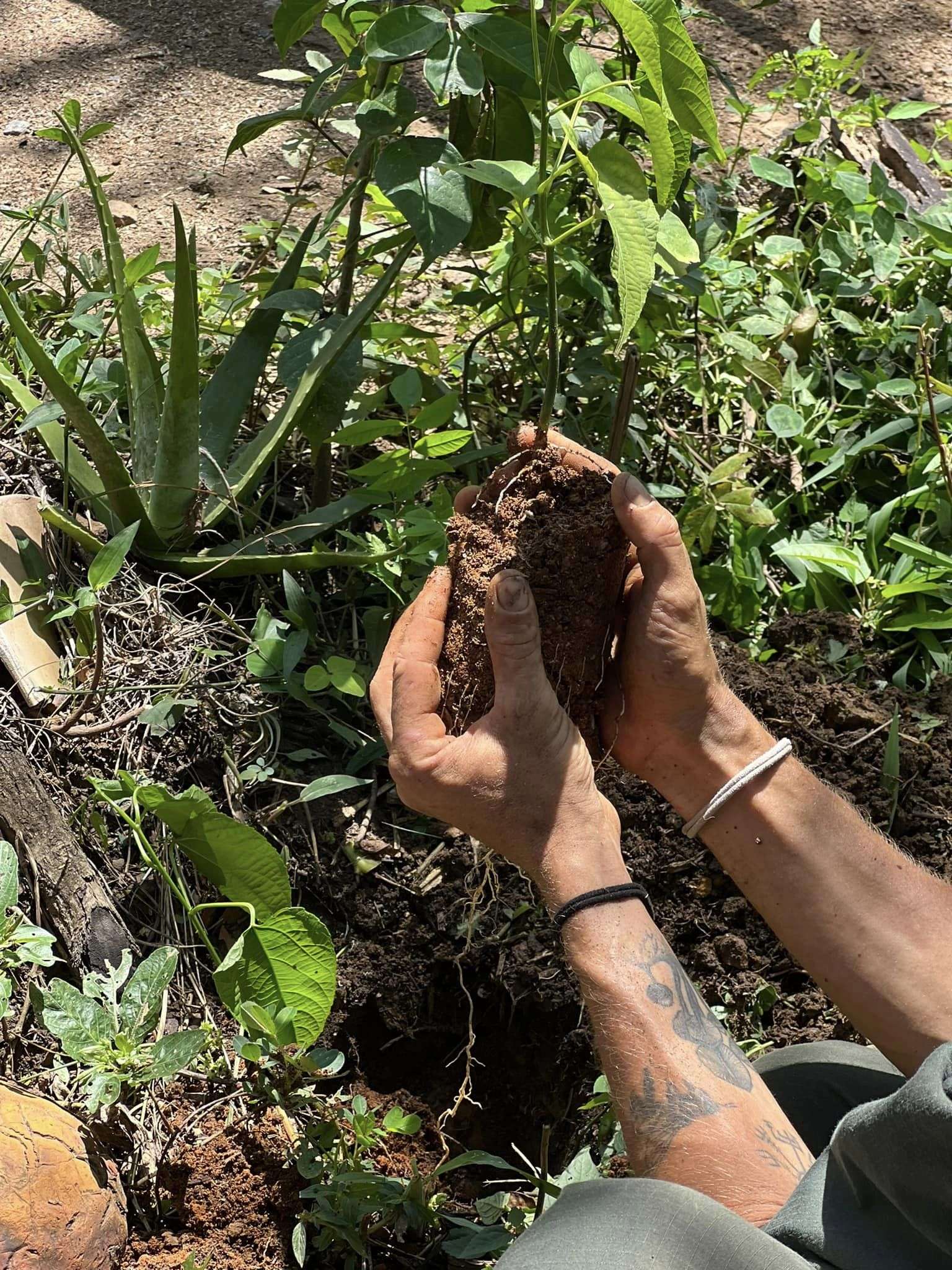
I moved to a small town in the Andes where there is an international community of people interested in these kinds of things. We are fortunate to be stewards of some land here, and we are developing a food forest, collecting rainwater, installing composting toilets, planning to get a woodburning stove, and so on. We are also helping this land regenerate and reforest, and are creating good connections in the process.
We are also creating ties within this community. The more people we know, and the closer the personal ties, the better we may be able to navigate what’s coming.
I also find it helpful to notice my nature and explore living from that noticing. To myself, I am fundamentally consciousness, and the world, as it appears to me, happens within and as the consciousness I am. This helps soften and release identifications with and as something in particular within the world. It gives a different context for it all.
WHAT WE CAN DO AS GROUPS
At a group level, we have the opportunity to do more.
Communities are immensely important in times of crisis. We need to rely on each other for support and practical assistance. It’s important to create good community ties before the crisis happens and to create a culture where we help and support each other.
It’s also important to identify the most vulnerable in the community and help them.
It’s also important to be mostly self-reliant at the community level – with food, water, fuel, healthcare, and other basics.
One of the main things we can do is regeneration – of gardens, parks, forests, and degraded land everywhere.
Where we live in the Andes, many collecting rainwater, grow food without chemicals (including in food forests), learn about and practice regeneration, and so on. All of this will be extra important in the coming decades.
HOW IT MAY LOOK
How may the collapse look?
I imagine there will be an increasing divergence between those still in denial and those who acknowledge what’s going on and seek practical solutions.
There will be mass migrations, and people opposing these migrations.
Some will go further into reactivity, anger, scapegoating, nationalism, fascism, conspiracy theories, and zero-sum solutions.
There will be increased political instability and social fragmentation.
In many places, there may be a shift from national to local governance.
There will be more extreme weather, including drought and flooding.
There will be famine and scarcity of clean water.
There will be more small communities focusing on living the solutions, including creating polycultures and food forests. Some regions may also do this if enough people are on the same wavelength.
Many have already died, and more will. How many is anyone’s guess.
Some may survive and live in a different world, but who and where and how many is an open question. It also depends on how far our global living system will shift and how livable it will be for creatures like us.
I have written about this before, but thought I would revisit it briefly.
When I look at the public discourse in general, and especially the public discourse about our ecological situation, I see a lot of distractions and misconceptions.
THE IMPORTANCE OF THE LIVING SYSTEMS OF THIS PLANET
The main misconception is the importance and role of the living systems of this planet.
In the public discourse and in the media, it’s often prioritized after a long list of other issues, and it’s often framed as one of many topics.
I assume this is because of our idea that we are separate from nature and have a dominant relationship with nature. This makes us feel insulated from what happens with the planet, and we also secretly think we can control and manage it, whatever happens. This is a typical Western, and increasingly global, imagination. Ultimately, it’s an ecocidal and suicidal imagination.
In reality, the condition of the living systems of this planet and our relationship with it is the one topic that encompasses everything else. It’s the context for our lives and everything we care about. We can’t talk about anything without also talking about that.
We are nature. What happens to this living planet happens to us.
If we were more aligned with our ecological reality, it would not only be our priority, it would be the frame for every other issue and topic.
GLOBAL ECOLOGICAL OVERSHOOT VS CLIMATE CHANGE
If the media and politicians focus on ecology, it tends to be climate change. The petroleum industry has known about climate change for decades and has also been successful in its strategy of sowing doubt and creating confusion which contributes to inactivity. Both are well documented.
I remember a conversation I had with a teacher in high school in the ’80s. During a break, he wanted to discuss whether there is human-created climate change or not. I said that in the big picture, it doesn’t matter. We need to make the same changes anyway. It’s a distraction.
That’s how I still see it.
Yes, the activities of our civilization have nudged our planetary system in a direction where it retains more heat, which has massive consequences.
Science shows us that, and it’s also easy to understand: We have a thin atmosphere. We are 8+ billion people with powerful technology, much of which releases certain gasses into the atmosphere that we know let through light (sunlight) and retains heat (what much of sunlight converts to when it hits matter).
That combination inevitably creates a greenhouse effect, and it can create a runaway greenhouse effect.
But since there is confusion about this, let’s not use that as our main focus or argument for the need for profound change. A much better argument is our collective ecological footprint.
This living planet is unable to replace as much as we use and deal with the waste we create. We are in a global ecological overshoot. This is similar to living off a savings account with less coming in than we spend. At some point, we reach the bottom and our lifestyle comes crashing down.
What we see in the world today is our ecological savings account going down fast. When we reach the bottom, which is fuzzy in this case, not only will our lifestyle come crashing down but our lives may crash down with it.
That’s not hyperbole. That’s simple logic. If we continue as before, there is no other way it can play itself out.
WHAT’S THE CAUSE OF OUR ECOLOGICAL CRISIS?
Before we can successfully deal with a problem, we have to have some level of understanding. We need to diagnose it correctly. So what’s the underlying cause of our current ecological crisis?
Why are we in a global ecological overshoot?
Some seem to blame corporations and politicians. Say that was true: Who voted for the politicians? Who supports the corporations with their money? It’s us.
This is a systemic problem. We have a civilization built on the idea of separation and domination.
We are separate from nature. We are more important than nature. Nature is here for our use. Nature is infinite. It’s our right to dominate nature. The sacred is “out there” in the sky, in a sky god, in the afterlife. Humans have souls and other beings don’t. We understand things better by taking them apart, by separating them from all the other things they belong to.
Every aspect of our civilization, including the minds of individuals, reflects this worldview. We have all internalized it, at least to some extent.
The origin of this worldview, at least in its modern form, is likely the agricultural revolution and our newfound ability to amass wealth and control land, plants, animals, and some humans. Before then, we were all indigenous. We lived in small groups. Were more or less equal, apart from in experience and knowledge. Saw ourselves as nature. Saw the sacred in everyone and everything.
That’s the deeper reason for our ecological crisis. It’s the predictable outcome of such an orientation, especially combined with large numbers of us and advanced technology.
We are all part of this system. Even if we recycle, eat vegetarian, avoid toxins, take bus and train, and so on, our lives are still destructive for the living systems we are part of. It’s inevitable since we live within this system.
It’s not about corporations or politicians. It’s about all of us.
It’s not about greed. It’s about a system based on fundamentally flawed assumptions about reality.
THE MISMATCH BETWEEN OUR GLOBAL SITUATION AND WHAT WE EVOLVED TO DEAL WITH
We evolved to live in small groups and deal with our immediate surroundings and relatively short timespans. At most, we needed to think one or a few seasons ahead.
These days, our challenges are global and play themselves out over decades and centuries.
Our bodies and minds have evolved to deal with the world of our relatively distant ancestors, and we are born into a very different world.
I suspect this is a big part of why we collectively are not even close to taking this seriously enough or doing enough about it. Collectively, we are distracted by anything and everything else, we are mostly focused on fragments of the bigger picture, and we operate on relatively short timespans.
A FEW MORE DISTRACTIONS
I thought I would mention a few other distractions and misconceptions.
(a) Some think we’ll find a technological solution. Technology will be part of the many solutions, but it’s not enough in itself, and it’s not even what’s most important.
What’s most important is our collective will. Will we find a collective will to make the needed change? Will enough of us recognize that the problem is systemic and that we need a thorough transformation of every aspect of our civilization?
(b) Some think it’s not that serious.
This is about the living system we are all part of. The living system we fully depend on for our existence and quality of life. The living system we are fleeting and local expressions of. The living system that not only gives us our life but everyone and everything we care about. What can be more important than that?
(c) Some think others will do it.
We are all part of the problem. This is about all of us. If we don’t make changes in our own lives, how can we expect a change?
(d) Some think we still have time.
What we do today has impacts decades, centuries, and even millennia into the future. Some of it has impacts forever, for instance with extinctions of species and whole ecosystems. We cannot wait.
Also, we are already far into this global ecological crisis. It’s already unfolding all around us and within us (plastics and toxins in the bodies of all living beings including ourselves). We cannot wait.
WHAT CAN WE DO?
We can start by…
… educating ourselves about ecology, sustainability, life-centered solutions, etc.
… identifying and questioning our worldview, finding what’s more aligned with our ecological reality, and exploring living from that. I find the Universe Story, Epic of Evolution, systems views, integral models, deep ecology, ecospirituality, and Practices to Reconnect inspiring and helpful.
… finding like-minded communities and individuals. It’s easier to make changes with the support of a community. It’s inspiring, we share experiences and knowledge, we can help each other in practical ways, and so on.
… living some of the solutions in our own life. Make it real to you by making it real in your life. By doing so, we create momentum, become part of the solution, and give ourselves hope.
… and making sure there is some balance between (a) focusing on and learning about the problems (useful up to a point), and (b) focusing on, learning about, and living some of the solutions. If we focus too much on the many challenges in the world, it can lead to frustration and burnout. If we focus one-sidedly on what appears as solutions, we may engage in solutions that are less grounded in reality.
PARTNERSHIP WITH NATURE
Since most of our collective challenges come from an orientation of separation and domination, the medicine is found in an orientation of connection and partnership.
There is inevitably always some of each, and these days, we need an infusion of the latter.
This can be applied in all areas of society and our life.
FOOD PRODUCTION FROM DOMINATION VS PARTNERSHIP MINDSETS
I am mostly focused on food production and regeneration these days, which are major pieces of the puzzle.
Modern food production comes from a domination mindset, with monocultures, dependence on huge energy inputs, use of chemical fertilizers and toxins, depletion of the soil, destruction of wildlife habitat, suffering of domestic animals, poisoning of insects, birds, animals, water, soil, and air, and much more. It’s food production from a zero-sum mindset where a small temporary gain (food) comes at the expense of massive ecological destruction.
The soil, ecosystems, and our health become worse over time. It’s a downward spiral.
Food production from a partnership mindset is different. It’s typically polyculture, uses non-toxic methods, includes as many natives as possible, focuses on and improves soil health, provides wildlife habitat, and more. It comes from a win-win orientation where we seek solutions that provide food for us and the wildlife, improve the soil and ecosystem over time, and provide habitat for a diversity of wildlife.
The soil, ecosystems, and our health becomes better over time. It’s an upward spiral.
We are developing a food forest on our land in the Andes. Large areas will have only or mostly natives, with as much diversity as possible, and as many food-producing plants as possible. The areas closer to the houses will have a diversity of native and non-native (non-invasive) food-producing plants. We focus on building healthy soil with mulch, manure, microorganisms, and so on. We want as much diversity as possible. We plant 95+% perennials.
As this food forest matures, it will become more and more self-sustaining and our work will mostly consist of harvesting, some maintenance, and continued diversification. Over time, it enhances soil health, reduces erosion, and provides habitat for more and more species.
It becomes better with time because we work in partnership with nature.
Some will say that we need modern monocultures to produce enough food for everyone, but that’s clearly not the case. It’s an example of brainwashing from those who benefit from it.
In the big picture, it’s not true since modern agriculture is so destructive to life.
Even from a narrow perspective, it’s not true since polycultures can produce as much if not more than modern monocultures. This is especially true for perennial polycultures like food forests. As they mature, production increases, inputs go down, and the return on investment continues to go up.
HOW WE CAN SUPPORT OUR LOCAL ECOSYSTEMS
We can all do something to live this partnership orientation with nature.
We can find local organic farms and buy directly from them. If we can’t get everything from local farms, we can buy organic as much as possible.
If we have a garden, we can make it into a nature garden that replicates the local ecosystem where we live. This will benefit the wildlife and ourselves and can be an inspiration to others. We can start small, even just in a small corner of our garden, and then expand as we get more experience.
We can join a community project. For instance, planting native trees or wildflowers in a park, along a river, or in any public area. If there is a larger regeneration project in our area, even better.
We can join a community garden, use organic methods, and mix in native flowers to support the pollinators.
We can talk with local organizations and governments to see if they are willing to set aside some parts of public areas for wildflowers. It can start small, as an experiment, and then go from there.
This living planet is a world of limits and of abundance.
That’s perhaps obvious, but the implications of this seem not so obvious to us collectively.
A WORLD OF ECOLOGICAL LIMITS
This planet is finite, and it has finite resources and a finite capacity to replenish what we take from it.
Our collective ecological footprint is larger than Earth. That means that we are in global ecological overshoot. We are using more resources than Earth can replenish, and we are putting more toxins into these living systems than they know how to handle.
This is similar to living off a savings account and spending more than what’s coming in. At some point, we reach the bottom of the account and our lifestyle comes crashing down.
We are now getting closer to the bottom of our ecological savings account, and we see the signs everywhere: ecosystem loss, climate instability, possible changing ocean currents, ocean acidification and warming, toxins and plastics in all living systems, loss of insects, loss of species, and so on.
There is no hard or clear bottom to our ecological savings account, as there is in a bank account. What happens when we get closer to the bottom is the destabilization and unraveling of most or all the systems of this living planet. That includes us since we are local and temporary expressions of these systems.
A WORLD OF ECOLOGICAL ABUNDANCE
This living system is also a world of abundance.
We are developing a food forest, and although it requires resources and effort at first, it will in time give a significant and increasing return on that investment. The return on investment is almost infinite because we are working with the systems and inherent productivity of nature.
A food forest produces healthy soil, an abundance and variety of foods for humans and wildlife, seeds, seedlings, natural mulch, experience and knowledge that can be shared, and it becomes more abundant and self-reliant as it matures. It’s an immensely valuable gift for future generations.
If we work withthe living systems of nature and the inherent productivity of these systems, this is a world of abundance.
DOMINATION VS PARTNERSHIP ORIENTATION
This ties into a domination vs partnership culture, and a zero-sum vs win-win mindset.
Modern agriculture is an expression of a domination and zero-sum mindset. It’s a way of growing food that relies on monocultures and chemical inputs which reflects a domination mindset. It produces food while damaging the soil and ecosystems, which reflects a zero-sum mindset. There is a win on one side of the equation and a loss on the other.
Food forests are an example of a partnershipand and win-win orientation. We mimic natural forests, we improve the soil, we put in a lot of effort in the beginning, and then let nature do most of the work. It’s a win-win solution since it provides food for humans and wildlife while improving the soil, regenerating the land, and creating habitat for wildlife. There is a win on both – or all – sides of the equation.
SCARCITY AND ABUNDANCE
It may seem that our world is one of scarcity, and yet we have more than enough for all humans. It’s a problem of distribution, not scarcity.
Yes, this planet has current limits for how much it can produce and keep up with, and these limits become tighter as ecosystems degrade. As we keep consuming more, and doing so in ecologically unsound ways, this living system we call Earth becomes less able to produce.
At the same time, nature is abundant. If we work with nature, we can support it in becoming wildly abundant. In such a world, our natural living systems will produce more than enough for a large population of wildlife and all humans.
WE ARE LOCAL AND TEMPORARY EXPRESSIONS OF THIS LIVING PLANET
We are local and temporary expressions of the living system of this planet and this universe, whether it’s us as individuals or humanity as a whole.
As Carl Sagan said, we are the universe bringing itself into consciousness. We are the local eyes, ears, thoughts, and feelings of the universe.
When we develop and participate in ecologically unsound systems, we are the Earth destroying itself. When we develop and participate in more life-centered systems, we are the Earth healing itself and coming into more abundance.
To me, it’s an example of the empire striking back.
People who have internalized the mindset of dominationand power-over voted for him and want that culture strengthened, even if it doesn’t seem to be in their interest.
A CULTURE OF DOMINATION
They seem to want a culture of domination and all that comes with it: A zero-sum mindset. Xenophobia, misogyny, racism, and bigotry. Continued destruction of nature. Continued marginalization of the already marginalized.
Why? Because they identify with the values of empire, with the mindset of separation, domination, and power-over.
They know what they are doing. They know what he wants to do. He has said it very clearly. They know he wants to consolidate power, be a dictator from day one, replace civil servants with loyalists, persecute his political opponents, use the military against his own citizens, and in general undermine and attack democratic institutions and principles.
They know he adores Hitler and read Hitler’s speeches to his ex-wife as bedtime stories. They know that the ones who worked most closely with him, including conservative generals, say he ticks all the boxes of fascism. (If they don’t, it’s because of willful ignorance since the info is easily available.)
They may not agree with everything he says or does, or with everything in Project 2025, but they are certainly OK with it. Otherwise, they wouldn’t have voted for him.
THE AGRICULTURAL REVOLUTION
It’s easy to think that this domination mindset has always been here. It’s just part of human life.
In reality, it very likely came with the agricultural revolution.
Before, we were all indigenous. We lived in more egalitarian groups, although obviously with leaders and the higher status of elders with wisdom and practical experience. We saw ourselves as part of the web of life. We saw the sacred in everyone and everything.
With agriculture came the accumulation of wealth, domestication of land, plants, and animals, and social and economic inequality.
How could the wealthy justify this new social order? Why was it OK for them to accumulate while others went without?
To justify this, they created the mindset of empire: We are separate from nature. Nature is here for our use. Nature is infinite. We are better and more important than the rest of what’s living. The sacred is out there in the sky and in a sky god. There is a social hierarchy which is good and divinely prescribed. You will reap your reward in the afterlife. (So don’t bother trying to change anything now.) If you don’t behave, you’ll go to hell. It’s good and honorable to respect those higher up in the hierarchy and uphold the hierarchy itself. If you (pretend to) believe something weird others tell you, and you can’t check out for yourself, you’ll be saved. Thoughts can tell us a final, full, and absolute truth. If one thought is true, alternative ones are wrong. In most polarities, one end is good and the other is less good, bad, or evil. (Men vs women, mind vs body, humans vs non-humans, humans vs nature, our religion vs other religions, European vs non-European, civilization vs savagery, good and bad emotions, and so on.)
Don’t question or challenge any of this, or live alternatives. If you do, you will go to hell, you’ll be ignored, ostracised, ridiculed, marginalized, put in prison, or something else unpleasant.
I imagine that this mindset seemed strange at first and an underhanded way to justify social inequality. It likely came gradually and stepwise, and the specifics have changed over time, although the essence is to justify domination and a few living in luxury while others lived in poverty.
Over time, this mindset became the new normal. New generations grew up with it, internalized it, and most didn’t question it or realize that other worldviews are possible.
TRUMP AND THE MINDSET OF EMPIRE
It was so successful that we now have Trump, and half of the US population wants him to run their country.
The irony is that the alternative, Harris and the Democrats, is also an expression of empire, it’s just a gentler and more compassionate expression of empire. It’s empire with softer edges. (Unless you look at their support for Israel’s decades-long violation of human rights and year-long genocide in Gaza. They seem happy to do their domination abroad.)
It seems that was not enough for many people. They want the more extreme version of it. They want to live in a culture of even stronger domination and marginalization.
DOMINATION AND TRAUMA
Trauma is an important part of this.
A culture and family that operates largely on domination is traumatizing for its citizens and children, and this collective trauma is passed on through the generations.
Hurt people hurt people. If we are hurt, a common way to respond to that hurt is to continue to hurt ourselves and to also hurt others. That’s one way the domination culture continues.
Trump’s behavior is trauma behavior. Bigotry, anger, defensiveness, scapegoating, lies, and so on are all classic, and somewhat extreme, examples of trauma behavior. It’s one of the ways we deal with our own hurt and pain.
I suspect the same is the case for many of those who support and vote for him. Much of that too looks like trauma behavior.
WHAT WILL HAPPEN?
Of course, we don’t know what will happen in the next four years.
We don’t know if or to what degree the US democratic institutions will be able to resist and stay intact.
We don’t know what the consequences will be for what little nature is left.
We don’t know how much suffering women and minorities will have to endure.
We don’t know to what extent far-right bigots around the world will be emboldened by Trump and what they see in the US.
We don’t know how far his MAGA followers in the US will take it in terms of intimidation and even violence against minorities and political opponents.
We don’t know what wars Trump may start, possibly in an attempt to distract from unpopular policies and unite the US population behind him. He avoided wars during the first presidency, but Trump 2.0 will be different.
We also know very well what he wants to do, and some of the things he can do relatively quickly and easily. He clearly wants to deepen our already massive global ecological crisis and hasten a possible end to civilization. (That’s not hyperbole. It’s inevitable with his policies. We are already using far more natural resources than planet Earth can replenish.)
Whatever he does – with the support of Congress and the Supreme Court – can and likely will take decades to correct.
PEOPLE VOTING AGAINST THEIR INTERESTS
To me, there are many ironies in this situation.
One is the many people who seem to vote against their own interests. Why do they vote for someone who has promised to make their lives worse?
For instance, why do Latinos and Hispanics vote for someone who is publicly racist, bigoted, and has nothing but disdain for them? One answer is that they are conservative because of Catholicism, and they mistakenly see him as conservative. Some may want to join the ranks of the oppressor since it seems safer, and they think that voting for Trump and joining the Republicans will do that. Some may assume that when he disparages Latinos, he means the others, not them. Some may think that when he talks about deporting immigrants, he doesn’t mean it (he does) or it will impact others and not them (how do you know?).
Why do some Christians support him? He is clearly not a Christian. In his life, he is the polar opposite of the example set by Jesus in the New Testament. His policies of cruelty are the most un-Christian imaginable. The answer is likely that some brands of conservative Christianity, especially in the US, represent a very distorted form of Christianity, one that’s far from the original principles laid out by Jesus.
Why do women vote for someone who is a misogynist and rapist and wants to allow states to ban abortion? (Likely because they buy into patriarchy, other things matter more, or they think abortion is something others will need and not them.)
Why do minorities and vulnerable groups vote for Trump when they know his presidency will embolden bigots worldwide? Why do women support Trump when they know his presidency will cause an upsurge in misogyny and misogynist behavior that may even impact them directly? Why do ethnic minorities, like Latinos, vote for a racist who will invite openly racist behavior among many, when they may be the target of it? (A large percentage of Latinos voted for Trump, while few Blacks did – likely because they know what may and will happen based on their history.)
Why do workers vote for someone who wants to do away with unions? (Likely because they think he is anti-elite, while he really is in it for himself and his rich buddies.)
Why do working and middle-class people vote for someone who wants to cut taxes for the super-rich and increase taxes for everyone else? Why do they vote for someone who wants to impose tarrifs when it’s the ordinary people that will have to pay for it? (Likely because they are unaware of it, or other things matter more for them.)
Why do people who depend on the Affordable Care Act (ACA, PPACA, ObamaCare) vote for someone who wants to do away with it? (Likely because they don’t realize what will happen and the impact it will have on their lives.)
Why do people who depend on the (already imperfect) social safety net in the US, or who may depend on it in the future, vote for someone who wants to erode and – if he can – remove it? (Do they think this too is about others, not them?)
Why do people who want to shake things up and try something different choose an openly fascist felon, rapist, and con man like Trump? He is very unlikely to give them what they want, and far more likely to give them what they don’t want. From history, we know what authoritarianism and fascism lead to, and he is a textbook authoritarian and fascist.
Why would anyone vote for someone who wants to expand our collective ecological footprint when it’s already larger than this planet? Our planet cannot replenish natural resources at the rate we use them. We are living on a savings account that’s rapidly going down. This is ecocidal and suicidal.
BAD THINGS WILL HAPPEN TO OTHERS, NOT ME
The ones supporting Trump know he wants to do terrible things to several groups in society, including migrants, women, LGBT+ people, and his political critics and opponents.
They must be OK with it.
Why? Perhaps because of dehumanization. They don’t see these people as real people. They don’t see them as deserving to be treated humanely and with respect and understanding.
Equally important, they likely think that bad things will happen to other people, not themselves.
History tells us a different story.
PROTECTED BY PRIVILEGE
The “bad things will happen to others” attitude has another aspect, and that’s privilege.
White people think the bad will happen to non-whites. Christians think the bad things will happen to the non-Christians. Born citizens think bad things will happen (only) to immigrants. Men think the bad things will happen to women. Republicans (including Latinos etc.) think the bad things will happen to non-Republicans.
They all feel protected by privilege. They are protected because they belong to a privileged group.
That’s not how this works.
THOSE WHO GET INTO HIS ORBIT
I am also surprised by those who willingly join his orbit. (Elon Musk is one of them.)
Have they not seen what tends to happen to those who do?
Do they think this too will happen to others and not them?
BLAME & SCAPEGOATING
The first chapter in the authoritarian playbook is blame and scapegoating, which Trump masters.
When things inevitably go haywire during his presidency, he will continue to blame and scapegoate. It’s not his actions and policies that are the problem, it’s all the other people.
Many of his followers will do this as well. When things get worse for them during his presidency – prices go up because of tariffs, they lose social safety nets, public programs they depend on are cut, people they know are deported, they find themselves in a more harsh and unforgiving society – they will overlook that this is the predictable and predicted outcome of Trump’s policies and instead continue to blame the same groups.
THE US HISTORY OF OVERTHROWING DEMOCRACIES
Another irony is that the US has a history of undermining and overthrowing democracies and installing far-right dictatorships. They have done so across the world for decades.
Now, they are installing someone as president who (a) openly admires dictators, (b) explicitly says he wants to create a dictatorship and be a dictator, and (c) has a plan (project 2025) and people in place to do exactly that.
Again, we don’t know exactly what will happen and how it will unfold. There are institutions and people who will resist. But we know that’s what he wants.
THE LARGER TRENDS
It’s always tempting to look at how these events fit into larger trends, although it’s by necessity speculation.
Some think the world is moving in a more progressive direction, focused on sustainability, inclusivity, and so on. Trump and his followers represent a backlash from the dying mindset of empire. I would like that to be true. The history of the West, at least, has been a slow movement of widening circles of inclusivity and who we see as “us”. It’s a projection into the future and it’s easy to see it as wishful thinking.
Some see liberal democracies as a historical aberration. They are a recent innovation, had their peak for a few decades after WW2, and are now on the decline in the world. Maybe we won’t see that many healthy liberal democracies in the future, and Trump and his movement are a part of the overall decline of democracies.
It’s also possible that this election is just part of the usual fluctuations between progressive and regressive tendencies, and it will be a blip in the larger history of a flawed democracy. It won’t be as bad as some think, or as good as his followers assume. (Personally, I think it will be pretty bad and it will take decades to undo and correct.)
If I were to guess, I imagine we’ll see a continued divergence in the US and the world. Some countries, states, and regions will move in a more partnership-oriented direction, and others will move in a more domination-oriented direction.
THE OVERARCHING ISSUE: GLOBAL ECOLOGICAL OVERSHOOT
One thing we know for certain is that we are in a massive global ecological crisis.
We are in a global ecological overshoot where we use far more resources than Earth can generate. That can’t last, and it will get much worse before it gets better if it gets better while we are around.
This is the context for our civilization today and it’s by far the most important issue, although it seems quite far down on the list of priorities for most people. (Understandably so since most people have enough with daily tasks and challenges and surviving.)
Will we find the collective will to make the necessary and thorough changes to all the systems of our civilization? How many will die before this happens? Will we be able to correctly identify the problem? Will we be able to focus on and implement the solutions, many of which we already have?
How will we deal with the consequences of the breakdown of our local, regional, and global ecosystems? The inevitable mass migrations? The loss of infrastructure? The food shortages? The lack of clean drinking water? Not having enough resources to repair and fix all the damage? Will large parts of humanity decent into infighting instead of focusing on the real solutions?
Will we see a world where some regions and countries take this seriously and do most of the heavy lifting, while other parts of the world continue much as before?
If we don’t find the collective will in time, there is only one outcome and that’s the unraveling of our civilization and huge loss of human life. (Along with an even more enormous loss of individuals of other species, and whole species.)
WHAT WILL HAPPEN WITH THE US?
It’s tempting to look at what may happen with the US in the coming decades, although that too is obvisouly speculation.
One thing that may happen is a shift from federal to state control and power. That’s what the Republicans want, and I imagine many in the more liberal states may eventually want it as well to avoid laws and regulations dictated by votes of conservatives in other states.
It will also indirectly reduce the problem with the electoral college which may be difficult to impossible to correct in itself.
In that case, we’ll see largely conservative states move further in a conservative direction, and liberal states move further in a liberal direction. We’ll also likely see more people moving to the states where they feel more at home.
It will also be a large scale experiment. We’ll get to see the effects of the different policies. Of course, the world is already that experiment. It doesn’t seem that countries often look to other countries for good solutions. (If they did, and they looked at what actually works in terms of the well being of the citizens, most would want to adopt a model similar to the Nordic countries.)
Several years ago, I started on a fiction story set a few decades in the future on the US West Coast. It’s set in that type of system where the states and local government decides most things, many states and regions have moved further in a conservative direction, and the West Coast has moved further in a progressive and sustainable direction.
I don’t know how that kind of process would unfold. What I know is that if it happens, it will come with its own drawbacks, many of which it’s difficult for us to foresee.
BE THE CHANGE YOU WANT TO SEE IN THE WORLD
Whether this is the first day of the Apocalypse or the first day of the Golden Age, the work remains the same…to love each other and ease as much suffering as possible. – often attributed to Ram Dass
No matter what happens, we know what to do. As Joanna Macy says, there are (a) stopping actions to reduce the harm, (b) engaging in developing and living from more life-centered and partnership-oriented worldviews, and (c) developing and living practical solutions.
CONSERVATIVE PARTNERSHIP MINDSET
I know it’s unfair to real conservatives to call Trump a conservative. Other labels would be more fitting, like populist, nationalist, authoritarian, oligarch, fascist, reactionary, demagogue, or isolationist.
It’s also unfair to assume that a progressive orientation is always a partnership orientation, or that conservatism means domination.
There is always elements of both domination and partnership in all movements, cultures, and subcultures. It’s not possible to have just one.
It’s not difficult to find examples of domination elements in progressive politics. Sometimes, they are necessary since we live in that kind of system. Other times, they are excessive, misguided, and alienating.
It’s also easy to imagine conservatism with a partnership mindset. A conservative orientation can very well come with a genuine care of nature and creation, a genuine wish for deep democracy, a genuine desire to take care of those least fortunate in society, and so on.
I love that kind of conservatism. It may not be exactly how I see it in every way, but I love it and feel aligned with it.
WHAT I CAN DO
I lived in the US for about two decades, love the nature and the progressive subculture, and still feel quite connected, also because many of my friends are there. That’s why I still have some emotional investment in what’s happening in the US. Right now, immediately after this election, I make myself sad and angry over what I see happening there.
So what can I do?
I remind myself that about half of the people in the US didn’t want Trump. Many feel the way I feel now.
A lot of good things are happening in the world. Many people worldwide are working for a more inclusive and sustainable society. Many are developing and living the solutions.
In the bigger picture, it’s likely a blip. (Unless something catastrophic happens, but something catastrophic can happen anyway.) In five years, it may well belong to the past and the US is onto something quite different.
I am grateful for my friends and communities who tend to have more of a partnership orientation, and maybe especially the permaculture community these days.
I spend time in nature and work in the food forest. It’s nourishing and feels good.
I did tonglen yesterday – with Trump, his followers, and myself. I will do it again today and plan to continue. It feels good and softens a sense of I and Other.
I keep exploring projections, including Trump in myself. What stories do I have about him and his followers? What do I find when I turn those stories to myself? Can I find specific and genuine examples of doing the same? (Including right now, in how I see them?)
I use the natural stress-releasing processes of the body to release tension and find more resilience. (Tension and Trauma Release Exercises / TRE.)
I notice how the consciousness I am forms itself into my experience of all of it – this human self, Trump, the US, this world.
I remind myself that we are local and temporary expressions of the unfolding dynamics of the universe and this living planet. All f this is existence – the universe, this planet, consciousness – expressing, exploring, and experiencing itself in always new ways.
I will be even more conscious of my news diet. I also read rather than watch, which makes it easier.
I will speak up about and live what I want to see more of in the world.
I keep living my life. My daily life consists of the same as before. Life goes on.
I remind myself that this too will pass. Authoritarian leaders are a natural outcome of the civilization we have (domination mindset), and they come and go.
I am curious about the white / male / heterosexual / Christian etc. fragility we see in the Western world these days.
MY CONSCIOUS VIEW
On the surface, I can’t relate to it so much. I love Woke. I love inclusivity. It’s something that so clearly benefits all of us.
I want to live in a more inclusive society and culture because it means I am more likely to be included as well – with all my many sides and weirdnesses.
Also, it doesn’t cost anything. It doesn’t take anything away from me. It doesn’t in any way diminish me or my life. On the contrary, it enhances and enriches my life.
A more vibrant society makes my life more vibrant.
(In a more real sense, I am – of course – doing exactly what I see in others. I’ll come back to that later.)
WHY THIS FRAGILITY?
Why do we see this fragility? Why do some seem threatened by others being acknowledged, honored, and included?
Why is it so terrible to lift up and include those who have been marginalized?
Why do you act as if it costs you something? Why do you act as if you are somehow diminished by it?
ONE ANSWER: YOUR SELF-WORTH IS IDENTITY-BASED
One answer is what the quote above points to.
Maybe you wouldn’t feel so emasculated by feminism if your manhood was rooted in something other than oppressing women.
If you place your value and self-worth in certain identities, and in those being magically “better” than other identities, then I can understand it.
You see yourself as white / male / hetero / Christian / human and so on. You feel better because you imagine that white is better than non-white, male is better than female (or other genders), Christian is better than non-Christian, or human is better than non-human. So if society says that non-white / female / LGBT+ / non-Christian / non-human is as good, you feel threatened. You feel that your self-worth – built on imagination and fantasies – is threatened.
I am a man. I feel good about myself because men are better than women. If women are treated as equals, it means I can’t feel good about myself in this way anymore.
I am hetero. (At least, I tell myself that.) I feel good about myself because I am hetero, and being hetero is better than LGBT+. If LGBT+ people are included as equals, it means I can’t feel good about myself in this way anymore.
I am Christian. I feel good about myself because I am Christian and Christianity is better than other religions. If non-Christians are treated as equals, it means I can’t feel good about myself in this way anymore.
I am human. I feel good about myself because I am human and humans are better than other species. If all species have equal value, I can’t feel good about myself in this way anymore.
SELF-WORTH BASED ON A ZERO-SUM VIEW
This seems to come from a zero-sum view of life. If you win, I lose. If I win, it means you need to lose.
That’s a sad way to look at life, and it clearly doesn’t have to be that way. Life is not set up that way.
REQUIRES MENTAL GYMNASTICS
It also requires an impressive amount of mental gymnastics to (a) identify as something, (b) see that as superior, (c) make yourself upset because the idea of being superior is threatened, (d) continuously remind yourself of all of this and put energy into it, (e) avoid looking at and questioning these dynamics and see if it makes sense, and (f) avoid looking at more life-centered alternatives to finding self-worth.
PARENTAL LOVE
I suspect it may also come from a lack of genuine and accepting parental love.
Most of us in the Western culture are wounded here. We experienced conditional love, so we didn’t learn to fully love ourselves with all our different parts and experiences. That’s something we have to learn and discover in our own life, often as adults.
If we are unable to love ourselves – genuinely and fully, then one way to deal with it is to put ourselves above others based on whatever identity we can use, typically one that is supported by common ideas in our particular culture.
FINDING SELF-WORTH IN OTHER AND MORE LIFE-CENTERED WAYS
Why not find your self-worth in another way? In finding genuine love for yourself, the different parts of you, and your experience.
In being a part of a community of explorers, no matter what label we put on it? In being someone who loves, no matter who we love? In being a human? In being part of this amazing and beautiful web of life?
In just being? A baby has infinite worth independent of identities, so why not you?
OTHER ASPECTS AT PLAY
Of course, this is not the whole picture. There are other ways to understand why someone feels threatened by a more inclusive society. It may be unusual to them and they prefer status quo. They may be used to being privileged, and now they no longer are. They may be used to having certain out-groups to denigrade and put down, and now they feel they are no longer allowed to do that.
None of these are mutually exclusive, and several of them feed into each other and are expressions of the same underlying dynamics.
DIFFERENT CULTURES
This will obviously look different depending on what culture we happen to live in.
If my culture is pathriarchical and I am man, I can use my identity as a manly man to feel better about myself. If my culture is Christian and I happen to be Christian, I can use Christianity to feel better about myself. If my culture is heteronormative, I can use a hetero identity to feel better about myself. If my culture is anthropocentric, I can use an identity as a human to feel better about myself.
Similarly, if I live in a mainly Muslim culture, I can use my identity as a Muslim to feel better about myself, as long as non-Muslims are seen – and treated – as inferior.
COLLECTIVE TRAUMA & TRAUMA PASSED ON THROUGH THE GENERATIONS
This is all related to collective trauma and trauma passed on through the generations.
One form of collective trauma is the trauma many of us live with because we live and breathe this culture. Pathriarcy, heteronormacy, anthropocentrism, and so on, traumatize all of us, and are – in a very real sense – an expression of trauma. Trauma is what perpetuates it.
That’s also how it’s passed on. We learn from our parents and other we grow up with. These ideas and this trauma is passed on through the generations, until someone notices, relates to it more consciously, and is able to find some healing for it and another way of living.
AGRICULTURAL REVOLUTION
I suspect these dynamics also largely come from the agricultural revolution.
Before the agricultural revolution, we were all indigenous. We were all mostly equal with a mostly equal status. We couldn’t amass things or material wealth. We saw the sacred in all. We saw ourselves as part of the web of life.
With agriculture came the possibility for some to amass material wealth and we got material and social inequality. To justify this, we needed to create ideologies that probably seemed very strange at the time and are very familiar – and even ordinary – to us today. We saw ourselves as separate from nature. We found ways to justify social inequality and social hierarchies. We saw the sacred out there in the sky and a sky god. We saw men as better than women. Humans as better than non-humans. Humans as separate from nature. And so on.
We created a lot of dynamics to control people and society. (Including ideas of heaven and hell, rewards in the afterlife, and so on.) We created ideas of polarities, and that one end of the polarity is good and the other bad. (Human and nature, human and non-human, men and women, spirit and matter, heaven and hell, whites and non-whites, hetero and non-hetero, and so on.)
We used these polarities, and the idea that one end is better than the other, to control society and people. At an individual level, we have used it to feel better about ourselves, as outlined above.
HOW DO I DO THE SAME?
The question here is: How – and where and when – do I do the same?
If I see it in them, it’s because I recognize it from myself.
Where do I create an identity for myself, pretend it’s better than something else, and feel threatened by the idea that it may not be better?
I do it a lot, including on this topic. I see myself as more woke, inclusive, insightful, kind, and so on. I see it as better than the opposite, so it means I am better than them. A part of me feel threatened by the idea that it may not be inherently better. (It clearly is not. Our ideas of better and worse are our ideas, they are not inherent in reality.)
ZEN VOW
I am reminded of a Zen vow from the Fusatsu ceremony: I vow not to elevate myself or put others down.
For most of us, me included, this is impossible to do all the time and in all situations, and that’s fine. Since we live in this culture, we are programmed to elevating ourselves by putting others down, one way or another, and this program runs in us whether we consciously want it or not, and whether we notice or not.
The precept is there to help us notice when we are doing it, and find some curiosity about it. When do I do it? What’s behind it? What do I hope to get out of it? What are the alternatives? Can I give to myself what I hope to get out of it in another way?
Almost against my will, I find myself fascinated by why so many support Trump’s policies (and Project 2025), even if it will very likely hurt them1.
WE ARE NOT ALWAYS RATIONAL
Why do some support Trump and his policies even if it will likely hurt them?
The short answer is likely that these things are not completely, or even mostly, rational. Or it’s rational in a way I am not aware of or wouldn’t call rational.
I tend to investigate, learn, and think through these things, and support and vote for the one(s) who seem to have the best policies for society as a whole, for ecology, and for future generations. So I – unconsciously and viscerally – assume it must be like that for others too, even if I know it’s not always that way. It’s not always that way for me, in other areas of life.
Why did many in Germany in the 1920s and 1930s support Hitler even if they (somewhere in them) must have known that his ideology – based on misinformation, hatred, and division – would lead them into dictatorship and disaster? It was certainly not just for rational reasons, or for reasons that fit my kind of rationality.
A GUESS: IGNORED BY THE POLITICIANS AND THE “ELITE”
Why do some support Trump even if his policies will likely hurt them?
The main reason may be that many feel let downby politicians and the “elite”. They feel overlooked, ignored, and left to fend for themselves. They don’t have good social safety nets. Their income may be below the poverty line even if they work two jobs. They see a few others earning huge amounts of money. They may see their bosses earning tens or hundreds or more times as much as they do, and apparently do less for it. They are aware of the enormous and increasing gap in income and wealth between the few wealthy and the many poor.
They know that mainstream politicians have done little to help them. Neither Democrats nor Republicans have taken this seriously, prioritized it, and done much about it. They know that policies often follow the interests of Big Money and that politicians are in the pockets of corporations and the super-wealthy. (Of course, there are politicians who take this seriously, but it’s limited what they can do because of the system they function within.)
This is nothing new, of course. This inequality and ideologies to justify it came with the agricultural revolution. It’s inherent in our system. The most recent form is the neo-liberalism made popular in the 1980s (Reagan, Thatcher) and continued until now. I have seen statistics saying that the wealth inequality in the US these days is similar to France before the French Revolution, and although there are several ways to calculate these things, I wouldn’t be surprised. They had their revolution, and the US has Trump.
I completely agree and sympathize with the frustration that inevitably comes with this dramatic inequality. At the same time, I don’t understand how Trump can be the solution (if anything, he is this problem on steroids), but I understand the desperation, frustration, anger, and despair that can lead someone to support a candidate who seems different and outside of the mainstream.
This also points to a solution to the Trump and emerging fascism problem in the US: Create good social safety nets. Tax the super-wealthy and use the money for the benefit of everyone. Make higher education tax-sponsored and free to the students. Implement good universal healthcare. (Far less expensive than the current system.) Encourage strong unions. Take the concerns of the working class seriously. Of course, this is easier said than done. Strong forces oppose this, and many ordinary citizens have been brainwashed to reject these solutions.
MORE GUESSES
What are some more specific reasons? Why do some support Trump even if his policies may hurt them?
Some may be guided by misinformation. They assume his economic policies will be good for them, and don’t realize that tariffs are ultimately paid by ordinary people and that the tax cuts go to the already extremely wealthy, not to them (their taxes are likely to go up).
Some may be seduced by his cheap scapegoating of minority groups. Instead of going into a real analysis of the problem, Trump blames immigrants and foreigners for the problems in the US. (A classic leaf out of the fascist playbook.)
Some know that he has a dislike or hatred for their group – women, people of color, immigrants, LGBT+ – but other things take priority for them. They may be loyal to the Republican party. They may be misled to think his economic policies will be good for them. Maybe they think his policies targeting these groups won’t affect them.
Some may assume that much of his rhetoric is political theater. He says a lot of weird things, and he won’t actually do it. They ignore Project 2025 and that he has a system, people, and plan in place to do exactly what he says he will do.
He says he will use the military against US citizens, he will persecute his political enemies, he will be a dictator from day one, he will consolidate power in the presidency, he will undo the normal checks and balances of democracy, he will limit the freedom of the press, he will replace civil servants with loyalists, and so on, and he won’t actually do it, in their mind. (Or maybe they naively assume it won’t matter that much.)
Some may see him as a strong leader or successful businessman and the right person to lead the country and don’t care much about his specific policies. Of course, he is not a strong leader. He is far too volatile, irrational, and egocentric to be a good leader. He is also far too enamored with authoritarian leaders abroad to be able to stand up to them.
He is also clearly not a successful businessman. Would a successful businessman have time or interest in signing on to a TV show? (The Apprentice.) Would a successful businessman have six bankruptcies?
Would a capable businessman have such a huge string of past and current lawsuits against him? Would a good leader have so many people from his previous administration go against him in public, calling him dangerous, unhinged, and fascist?
A few extremely wealthy may benefit from his economic policies, at least in the short term. It comes with a huge cost to the rest of society, and especially several minority groups, and they don’t seem to care enough about that to not support him.
They also don’t seem to care that his policies will very likely be damaging to the US – and US economy – in the long run. He alienates former allies, he loves tarrifs, he doesn’t support research or higher education, he wants to undo the fabric of society that makes the US work as well as it does.
Some may be contrarians. Most media, experts, and well-educated liberal people see Trump as deranged, unhinged, and fascist, so they want to support him just to poke the liberal elite in the eye. They prioritize this over supporting someone who, by all normal criteria, actually is a fascist.
Some may see someone who mirrors their own pain and hatred. He hates women, people of color, LGBT+, immigrants, and so on, and they do too. They are happy that he seems to validate their own hatred and don’t care much about anything else. Some within these groups may have internalized this hatred, even if they are the target. Some may also see themselves as the exception: Yes, I am a woman, person of color, immigrant, LGBT+, but I am not like others in that group.
Said another way, some may resonate with his trauma behavior. Trump is a living ball of trauma behavior. They too have trauma and choose to deal with it through going into anger, bigotry, us vs them thinking, blame, scapegoating, and so on, so they resonate with it in him. He is one of them. They don’t care so much about the rest.
Some may not know enough about history to realize that this is exactly how democracy dies. Trump’s approach fits all the hallmarks of fascism, and the shift into a dictatorship has often looked just like the Trump movement looks now.
Some, about half of us, have a genetic predisposition for conservatism. Some of these may lean towards supporting any conservative candidate independent of specifics.
Some say they want change just of the sake of change. They don’t care so much what kind of change. To me, this seems profoundly misguided.
Some may think that anything is better than what they have now. To me, that’s a clear trauma response. They don’t realize what they have and how much worse it can get. They likely don’t know enough history to understand, or they assume it won’t be that bad or that they won’t be affected.
Some see him as the Great Disruptor that will usher in something new. Yes, he will. At least, he will try, although the changes may not be what you wish to see or experience. His dystopian world may not be as amazing as you think or lead to the changes you wish to see.
Some see their privilege fading, as white Christians in an increasingly more diverse society. They are so attached to being on top of the hierarchy that they cannot bear being just one group of many. This is so important to them that they don’t care if they lose democracy, if large groups of innocent people are made to suffer, if their economy worsens, and so on.
Some may have a zero-sum mindset. They assume, perhaps based on personal painful experience, that if you win, I lose, and for me to win, you must lose. Trump embodies that zero-sum mindset. They overlook that the world is full of examples of win-win solutions where we all benefit. (The social safety net in the Nordic countries is one of many examples.)
WHAT’S RATIONAL TO ME MAY NOT BE RATIONAL TO YOU
I have my own ideas of what’s rational, and these reflect my own background and biases.
To me, it’s rational to find solutions – and support policies – that seem good for society as a whole, for the living systems we are part of, and for future generations. I support democracy since, although it’s a flawed system, it’s the best we have. I seek win-win-win solutions since they are better for all of us. I support inclusivity since a more inclusive society is better for all of us.
What’s rational for someone else may be different. As mentioned above, they may operate on misinformation. They may prioritize one or a few things, and ignore or be OK with the rest that comes with it. For them, that’s rational.
THE WORLD IS MY MIRROR
The world is my mirror, also here.
I can take any one of the stories I have about Trump or his supporters, turn it to myself, and find genuine and specific examples of how it’s true. Most likely, I can even find it in the moment I have these thoughts about them. I do what I see in them, at this moment.
That’s humbling, and it’s also amazing, liberating, and enlivening. It helps me find more of my own richness. It helps me relate to these sides of me with a little more awareness. It helps me see myself in them and erode my imagination of me versus them.
This is an ongoing process. My fascination, which I started with in this article, is a clear sign that there is more for me to explore and discover here. The fascination is a sign that I see something in them I am not so aware of in myself yet.
Also, all of this is happening within and as what I am. The consciousness I am forms itself into all of it.
THE UPSIDE OF TRUMP
What are some upsides of Trump?
He highlights the frustration among many about the growing inequality coming from decades of neo-liberal policies. He highlights how the working class feels left behind.
He highlights the weirdness of the US political system where one candidate wins the popular vote, and the other becomes president. (Because of the arcane, outdated, and essentially meaningless electoral college.)
He mirrors what’s in all of us. He shows us our shadow. (Whether we consciously notice, embrace, and make use of it is another matter.)
A Trump presidency will fuel a lot of effort to create a more life-centered and kind society. Many of us will channel our frustration into this kind of work. (I know it’s that for me.) It will create even more of a sense of urgency.
Who knows what social dynamics will be set in motion from a Trump presidency? In a slightly larger historical picture, it’s a blip, and we may see it as a transition leading into something more life-centered. (The question is if we have time for this now, considering we are in the middle of a global ecological crisis.)
We will still live our daily lives. Life moves on. Whatever he represents and creates will not last. There have been many like him throughout history, and they are soon left in the dust of history after some years or decades.
THE BIGGER PICTURE
There is a bigger picture here too.
The Universe forms itself into this living planet and us, including our politics and social dynamics.
It’s all part of existence expressing, exploring, and experiencing itself in always new ways.
It seems that the exploration is the point, not any particular outcome.
From another angle, we can say that this is Spirit taking all of these forms. It’s Spirit expressing, exploring, and experiencing itself in all of these ways.
It’s the play of existence. And just like a theater play, it’s the experience that’s the point.
NOTES
How may those voting for him be hurt by his policies? What are some examples of how they are voting against their interests? (a) Latinos may be deported or have friends or family deported, even if they are legally in the US. Trump will seek to find ways to remove the protection even of many who are in the US legally, so they can be deported. This, of course, goes for all immigrants. (b) Trump will find ways to erode the already weak social safety nets in the US. If you benefit from the Affordable Care Act (Obama-care), Medicaid, or similar, you may find you suddenly lost it. (c) In general, Trump’s aim is to funnel money to the already super wealthy and away from everyone else. If you are not super wealthy, you will likely find you are in a worse financial situation. (d) He is unhinged, and unhinged policies are generally not good for the society or economy. (e) Although he seemed war-averse during his first term, that may change. Trump 2.0 will likely be quite different from Trump 1.0. (f) If you live in the US, you’ll find that society becomes increasingly more polarized. That’s not good for anyone. (If you are bigoted, you may think so, but it’s not true.) (g) If you are a worker, expect your worker rights to be eroded. (h) If you have a child in school, or work in the public school system, expect the school system to be further weakened. (i) If you like democracy, or the ability to speak up without fear of the consequences, or free press, expect all of that to get worse. (j) Expect the US economy and position in the world to worsen over the coming years and decades through the gutting of science and education. (k) Expect the US position in the world in general to worsen, through Trump’s bullying and mafia tactics in terms of international relations. (l) Don’t expect much of a boost in terms of foreign students and visitors to the US. Most people around the world don’t like facism or countries that elect facist leaders.
These are just a few examples, and none of it is very difficult to predict. It comes naturally from his words, actions, and generally inclinations. It’s also a part of his playbook, Project 2025.
NOTE ON ELECTION DAY
It’s the morning of the election day in the US (November 5, 2024). The ones I follow predict (a) a clear win of the popular vote for Harris which doesn’t matter, and otherwise (b) a very close election that (c) can lead to a landslide in either direction because of the winner-takes-all system in the US, (d) and likely a very messy situation if Harris wins. How that messiness unfolds is anyone’s guess, although it will likely involve many legal cases, a politicized legal system, intimidation, possible violence, and so on.
Trump has, of course, set the stage by repeating that the previous election was stolen and that the only way he can lose this time is if they steal it again. This is another example of his habitual projections. He says that others are doing, or will do, what he is planning to do or are already doing.
I am also reminded that the US has a long history of undermining and overthrowing democracies and installing right-wing governments. Now, they may be doing it to themselves. I guess that’s a kind of karma. They are finally applying their habit to themselves.
UPDATE JULY 2025
It’s now July 5, 2025, and the “big bill” has been approved by congress. This bill is explicitly designed to fullen money to the already extremely wealthy (tax cuts for the rich) and cut programs that benefit everyone else, including the most poor.
There is nothing new here. This is what we knew Trump wanted to do, and what he had everything in place to do, long before the election. This is what Project 2025 is about.
Still, more than half of the voters in the US voted for him and these policies, and these changes that directly hurt most of them.
I haven’t written follow-ups to my 2024 posts about Trump because there isn’t much to say. What’s unfolding is what we knew would unfold, unless a miracle happened.
The ones who voted for him are hurt by his policies. It’s what we knew would happen.
Of course, we see that in many other areas of life. Daily, the vast majority of people vote for “business as usual” – with their lives, priorities, money, and in elections. They want us to go further into global ecological overshoot. They want the collapse of our civilization. That’s what they vote for through how they live.
They can’t say they didn’t know, because this information is widely available. They can’t say they thought someone else would take care of it, because that obviously isn’t happening. They can’t say they thought we had more time, because we are already in the middle of it.
In our food forest, we use a partnership approach with nature.
To me, it’s a reminder of how our worldview shapes our relationship with nature and growing food.
GROWING FOOD ON A SPECTRUM FROM PARTNERSHIP TO DOMINATION
It seems that we can approach food growing on a spectrum from partnership to domination, or maybe we should say partnership and control. There will always be some elements of each.
At one end of the spectrum is what some Indigenous do and have done, which is to encourage food-producing plants in forests. (Or whatever ecosystem they live in.) These forests will look natural to outsiders, but they are nudged in the direction of producing more food for humans while still remaining quite natural and full of life. This is food growing in conscious partnership with nature.
At the other end of the spectrum is our modern agriculture. It has allowed us to increase our food production dramatically, and the science related to modern agriculture has a lot of value to us.
On the other hand, it has downsides that are becoming increasingly obvious. It’s a system that mostly grows monocultures and is dependent on chemicals, toxins, and constant input. It’s highly energy intensive, depletes the soil, causes soil runoff, creates ecological deserts, removes habitat for wildlife, poisons living beings including us, and is a big reason for our insect apocalypse.
In the middle are traditional forms of agriculture found around the world. These come from a mindset of domestication – of the land and animals, although they don’t have such a big impact as modern agriculture.
THE AGRICULTURAL REVOLUTION
It’s tempting to imagine that our worldview – of partnership or domination – comes before the type of food growing we prefer. After all, that’s how it tends to be these days. Historically, it was likely the other way around: with the change to agriculture came a new worldview.
Before agriculture, we were all indigenous. We all lived in mostly egalitarian groups. We didn’t accumulate much apart from experience, knowledge, and wisdom. We likely saw the sacred in nature and everything. We saw ourselves as part of the web of life. We saw ourselves as nature.
With agriculture came a worldview of separation and domination. Some started to accumulate wealth while others did not, either because they couldn’t or wouldn’t. To justify controlling land, animals and humans, and to justify this inequality, the wealthy developed a range of imaginations: Humans are separate from nature. Humans are more valuable than the rest of life. The sacred is out there in the sky and a sky god. Social hierarchies reflect a divine order. Only humans have soul. Nature is primarily here for us. Nature is a resource for us to use as we wish. If you are lower in the social hierarchy, it’s your fault (lack of character, bad karma). You’ll get your reward in heaven. (No need to try to change an unjust system.) Thoughts can reflect a full, final, and absolute truth. If one thought is true, other perspectives must be false. If you win, I lose.
In modern times, this was taken even further: We understand something best by taking it apart to its smallest parts. Only humans have an inner life with cognition, emotions, and a wish to avoid suffering. It’s fine to imprison and inflict immense suffering on non-human beings as long as it serves us. Nature is infinite. We don’t need to account for a finite Earth in our economic system or how our civilization operates. The living systems of this planet is “environment” and not something we are inherently part of.
WIN-WIN VS ZERO-SUM
One expression of these two worldviews – and these two ways of growing food – is a win-win versus a zero-sum orientation.
A partnership approach seeks win-winsolutions. When we are growing our food forest here, it’s a win for nature and wildlife (diversity, habitat), it’s a win for us (food, multiple sources of income), it’s a win for future generations (get to enjoy the food forest).
A domination approach sometimes operate from a zero-summindset. They seek solutions that are a short-term win for themselves and a loss for nature, future generations, and the health of all of us today.
HOW THE DIFFERENT SYSTEMS CHANGE OVER TIME
One expression of this is how the different systems change over time.
For instance, food forests require some investment upfront in terms of learning, planting, and maintenance. Over time, it takes more and more care of itself. The soil health improves, there is a thicker layer of mulch to retain moisture, there is more diversity, the different forest layers are more filled in, and the production – of food, flowers, seeds, seedlings, and so on – increases. There is more and more surplus for wildlife and humans. Nature does the vast majority of the work so there is an increasing return on investment.
In contrast, modern monocultures tend to go in the other direction. It’s dependent on chemical fertilizers and toxins. They often rely on annuals. The soil gets more and more depleted. The ecosystem gets more and more damaged. At best, the production stays the same with the same input requirements. In the bigger picture, this system is destructive.
ALWAYS SOME OF BOTH
There is, of course, (nearly?) always some of both.
There is always some kind of partnership with nature, otherwise nothing would grow.
And there is always – if not domination – some control. We decide what to plant where. We add plants into an ecosystem. We plant a selection of natives. We improve the soil with compost, manure, and mulch. These are all interventions from our side.
The question is where on the spectrum our approach falls. Is it closer to the partnership end or the domination end?
A DEEPER PARTNERSHIP APPROACH
We can see that spectrum as having a “good” and “bad” end. Partnership is good, domination is bad. (Or the other way around.) That actually reflects a domination mindset.
There is a deeper partnership approach that works in partnership with nature AND what’s of value across the whole spectrum.
WHAT’S OF VALUE IN MODERN AGRICULTURE AND SCIENCE
What’s of value in the domination orientation to growing food? What can we learn from modern agriculture? From the last ten thousand years of growing food after the agricultural revolution?
Here are some possibilities:
General knowledge from modern science, including about plants, interactions, soil, succession, water cycles, and ecology.
Soil science – learning about the structure and life in soil from modern science.
Soil testing – to get an idea of how the soil changes over time and with different practices.
Irrigation systems– making use of modern irrigation systems like drip irrigation. This is often a more efficient use of water.
Integrated Pest Management (IPM).
Climate modeling – to make educated guesses about how the climate in our local may change and plan and plant for it now.
Nutritional science – to plant for a balanced diet.
Understanding of interactions of all the different elements in the ecosystem – plants, soil microbiome, and so on – from science.
Understanding of natural succession – from pioneers to a mature ecosystem, and planting and planning with this in mind.
Mapping and data collection.
Scaling and markets.
Using AI for information and ideas. (I use AI for information and to generate lists of possible plants for the food forest. This has to be checked, of course.)
Understanding wildlife and creating an ecosystem that best supports wildlife.
THE BEST OF BOTH WORLDS
How can we transition into a system of growing food that takes a deep partnership approach? One that works more in partnership with both nature and history?
We need good examples, and we already have them. Many are growing forest gardens and food forests around the world, using Permaculture and other approaches. There are good examples of diverse and ecologically sound agroforestry. In general, there are many good examples of organic polyculture systems. Organic farming, in general, is well known although they sometimes use more of a monoculture approach.
We can emphasize an approach that takes the best of what’s gone before, including modern agriculture. It’s not about replacing modern agriculture, it’s about evolving it in a more ecologically informed direction.
We need to make the information available. It is available, of course, but it needs to be included in education at all levels.
Government incentives can help new growers get a start and can support the transition. This is especially important since it can take time to get a good income from growing perennials.
Government programs to help transition would be even better. These programs can help existing farms change to become organic, use polyculture, and better and more ecologically sound practices.
Taxes on food grown in monocultures and with chemicals and taxes are the other side of this. Right now, food grown from a win-win mindset is often more expensive than food grown from a zero-sum mindset, and this can be reversed.
Of course, the main ingredient is our collective will. Without it, it won’t happen.
A NEXT STEP IN OUR CULTURAL EVOLUTION
This is a next step in our cultural evolution.
We have gone from an indigenous partnershiporientation with (the rest of) nature, to a domination approach with amazing results and many downsides, and our next step may be to take the best from all of what’s gone before.
There are a few more sides to this I want to mention:
This is all the living system of this planet expressing, exploring, and experiencing itself in different ways. It has tried one approach, through modern domination culture, is receiving feedback, and is reorganizing to adapt. (It may reorganize to create a more ecologically sustainable human civilization, although it may also reorganize so human life is no longer possible.)
If we are to make use of the best of what’s gone before, that includes culture, worldviews, and spirituality.
Indigenous cultures tend to see us as nature. We are part of the web of life. Everyone and everything is sacred – it’s all expressions of this amazing existence we are part of.
We can include this to see ourselves as nature. See all of existence as sacred – as creation, as the body of God, as expressions of the seamless whole of this universe, and so on. Find reverence in our relationship with Earth and all life. See this living planet as a seamless system. See ourselves as the local eyes, ears, thoughts, and feelings of the Earth, the universe, and existence.
This is a deeply meaningful shift that brings in Indigenous wisdom, fits modern science, and can take on different flavors depending on what’s most important to us and what we feel comfortable with.
Our young food forest is medicine in several ways.
MEDICINE IN A CONVENTIONAL SENSE
It’s medicine in a conventional sense in that it has many medicinal plants. Most of these are edible and also have medicinal properties, many of which are supported by modern science.
Local, organic, and fresh whole food grown in rich soil is medicine. This is the real medicine.
MEDICINE FOR US
It’s medicine for us. We love being here. It’s amazing to wake up to birdsong. It’s amazing to see all the diversity here and all the flowers and insects.
I feel healed by this food forest, the land here, and the regeneration project.
It heals me as much as it heals the land.
MEDICINE FOR THE LAND
It’s medicine for the land.
In the wilderness zone, the regeneration is with all native plants and a certain amount of food-producing plants. Closer to the house, it’s a mix of natives and non-invasive non-natives.
In either case, it helps build soil, create a natural layer of mulch, increase diversity, and make the ecosystem here more healthy, rich, and vibrant.
MEDICINE FOR OUR CIVILIZATION
It’s medicine for our civilization. We have an ecocidal and suicidal civilization built on the idea of separation from nature, nature as primarily a resource for us, and nature as infinite1. It’s an extractive and power-over mindset that came with agriculture and wealth inequality. It’s a mindset that has led to our chemical-dependent monoculture way of growing food that creates ecological deserts, poisons life, and depletes the soil. It’s also a zero-sum mindset where we look for solutions that gain us and not necessarily anyone else.
Food forests are very different. They are diverse. They mimic a natural healthy ecosystem. They provide habitat and food for wildlife. They produce a wide range of valuable products for us, the wildlife, and the ecosystem. They get better as they mature. The return on investment increases and builds on itself over time. They reflect a more ecological and life-centered mindset. They are an example of a win-win-win orientation. Nature wins, wildlife wins, we win, society wins, our civilization wins, future generations win.
FOOD FORESTS ARE MEDICINE
So food forests are medicine in many different ways.
Already, our very young food forest is medicine, and we will hopefully be more so as it continues to grow and mature.
There are many similar types of medicines in the world today, of course, in all areas of life.
NOTES
(1) We are separate from nature. Nature is here primarily as a resource for us. Nature has value only by its value to us. Nature is infinite. The sacred is not here, it’s out there somewhere in the sky with a sky god. We understand something by seeing it in isolation and taking it apart to its smallest components. One end of each imagined polarity is good and the other is bad. Thoughts can tell us something real and true about reality. Non-human beings don’t have rights or the same value or inner life as us. The divine speaks to us through priests. If you are at the bottom of a hierarchy, it’s your fault – through karma, lack of character, or similar.
Today is Indigenous Peoples’ Day in the US. For me, it’s a reminder of the importance of indigenous and life-centered perspectives in the world today.
They serve as a vital correction to the mainstream worldview and orientation in the world today. This mainstream worldview has justified treating nature primarily as a resource, which, in turn, has led to the massive global ecological crisis we are now living. Since it also includes a view of nature as separate from us, there is also a remarkable mainstream complacency about this crisis.
THE ORIGIN OF THE WORLDVIEW OF SEPARATION AND POWER-OVER
Where did this worldview and these assumptions come from?
They seem to have appeared with the agricultural revolution about ten thousand years ago, and they were likely invented to justify all that came with the agricultural revolution: wealth inequality, ownership of land and living beings, social hierarchies, domestication of plants and animals, control and use (and abuse) of living systems and living beings, and so on.
ASSUMPTIONS OF SEPARATION AND POWER-OVER
What are some examples of these worldviews and assumptions?
We are separate from nature. Humans have a special status. Only humans have souls. Non-humans are inferior.
Nature is infinite. Nature is an infinite source of resources for us. Nature has an infinite capacity to absorb our waste.
The sacred is out there in a god in the sky.
One end of each polarity is inherently better than the other: Heaven and hell. Light and dark. Spirit and matter. Mind and matter. Men and women. Adults and children. Whites and non-whites.
We understand things by taking them apart to the smallest parts.
Thoughts can tell us the truth. If one thought is true, a different one has to be wrong.
Emotions are good or bad, desirable or undesirable.
If you gain, I lose. (Zero-sum thinking.)
And so on.
MORE LIFE-CENTERED PERSPECTIVES
What are some examples of worldviews that are more life-centered and can help us today?
Systems views. This planet is a living system. We are temporary and local expressions of this living system.
This universe is made up of nested systems (holarchies). We are smaller systems within larger systems, and we contain smaller systems.
We are nature. We are nature thinking, feeling, developing technology and civilization, reflecting on itself, and so on.
Everything is the sacred – humans, non-human beings, nature, this living planet, the universe.
We can find solutions that benefit individuals, society, ecosystems, and future generations.
Thoughts are questions about the world. They are mental images and words to help us orient and function in the world. They cannot give us any full, final, or absolute truth. Realty is always more than and different from our ideas about it.
Multi-generational thinking benefits us now.
All “conscious beings” are consciousness to themselves and essentially the same, it’s only the body and psyche the consciousness functions through that differs.
This living planet that we are all local and temporary expressions of, is itself a local and temporary expression of this evolving universe. We are the local eyes, ears, thoughts, and feeling of the universe. The sacred is in all of it, all the expressions of this living planet, the universe, and existence as a whole.
INDIGENOUS PERSPECTIVES
The examples of life-centered views listed above are not all indigenous perspectives, of course, even if some or all of them may be roughly in the same family. (I am not sure, it’s not for me to say.)
So what are some indigenous perspectives? How do us non-indigenous find and learn from them?
The best is to get to know indigenous people, of course. I follow some indigenous people on social media, and I have read quite a few books written by indigenous people.
One that’s on my list is An Indigenous Peoples’ History of the United States by Roxanne Dunbar-Ortiz, which seems to be mostly the post-colonial indigenous history. On my shelf, waiting to be read, is also Brading Sweetgrass by Robin Wall Kimmerer, along with How to Be Animal by Melanie Challenger (not from indigenous perspective but aligned).
THE RIGHTS & POSITION OF THE INDIGENOUS
This is, of course, not only about the importance of life-centered and indigenous perspectives, although those are crucial for us to transform our civilization to be more ecologically sound and sane.
This is also about the rights and role of the indigenous people around the world. They have been treated in the most terrible ways by agricultural and colonialist cultures around the world, and still are. They have been displaced, lied to, raped, killed, forbidden to use their language and follow their traditions, and more. And their rights still seem far down on the list of priorities of most mainstream societies.
For them to have a strong position in society, to live in the way that is right for them, and have what they see as vital, is not only important for them but for all of us. It’s about their and ours dignity, and – as mentioned above – their perspectives are invaluable to the world today.