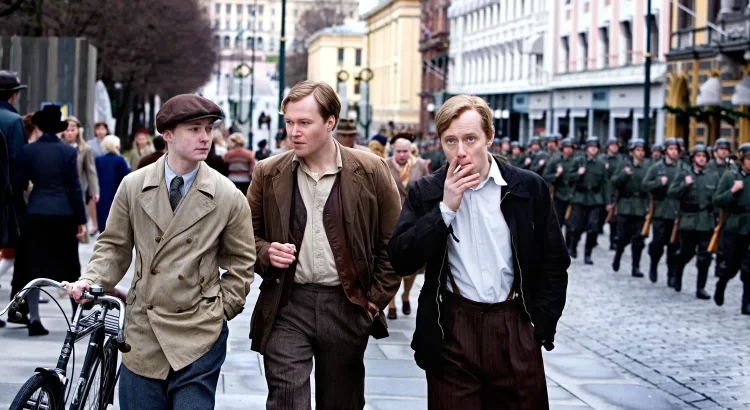
A war is starting, similar to WW2. I am called in to service in Norway, but just to work on design and overseeing production of bikes. I am also called in by Russia/Soviet Union to fight nazi Germans in several successive locations. I have a Russian passport since I am married to a Russian. Since I am in Norway, I can get out of it by not going to Russia or any communist country. I have CFS so I know I wouldn’t be able to be a soldier anyway, but I can do the bike service. It’s very clear that this is all happening within and as the divine. It’s the divine exploring itself in all of these ways.
In the dream I am me as I am now and also somehow at the beginning of a war similar to WW2. I have two passports and chose between two ways to get engaged. One is violent, destructive, and impossible for me because of my health. The other is simple, local, constructive, and something I can do. Throughout the dream, it’s clear that this is all the divine exploring itself in these ways.
That choice, which seems very obvious, may be the essence of the dream. Choose something that simple, sustainable, local, somewhat creative, not too demanding or ambitious, and something I can do within my health limitations.
Note: In the dream, Norway was not occupied by anyone. Also, I am not married to a Russian in waking life!
Update: It’s now a few days later and I have found the metaphor from this dream very helpful for me. In daily life, I find I often have this choice. Go to war in Russia or work in a local bike-shop. The second choice is much more enjoyable.
MORE INFO
After exploring this dream for a while, I asked ChatGPT for input using inner, outer and Jungian perspectives, and also how it all fits into Spiral Dynamics. See below.
Two Ways of Serving (AI)
The dream brings together several of your central themes: living with CFS, respecting your actual limitations, finding the right form of service, responding constructively to collective crisis and authoritarian power, and recognizing that everything happens within and as the divine.
Its central choice seems clear:
- Go to Russia and fight. This is violent, destructive, distant, and impossible for you because of your health.
- Stay in Norway and help design and produce bicycles. This is simple, local, constructive, somewhat creative, and something you can do.
The essence of the dream may be: Choose what is sustainable, local, constructive, and possible within your actual capacity.
Outer perspective
The approaching war may reflect today’s geopolitical instability, militarization, authoritarianism, and conflict between political blocs. As in WWII, individuals are absorbed into large collective systems and assigned roles they did not choose.
You do not withdraw from the crisis. You choose a different way of participating. Since Norway is not occupied, remaining there is not an escape from immediate danger or responsibility. It is a genuine choice between two forms of service.
The bicycle is significant. In war or systemic breakdown, it provides simple, repairable, low-energy, decentralized mobility. It supports local resilience and life rather than destruction. This fits your wider interests in ecological design and resilient systems.
Inner perspective
The Russian summons may represent an old demand to override yourself: endure, fight, perform, sacrifice, and ignore the body. It resembles the logic of the performance society—the idea that worth comes from doing what the larger system demands, however damaging or unsustainable it may be.
The Norwegian assignment represents another way of living. You acknowledge your CFS without treating it as a moral failure. You still contribute, but through work suited to your health and abilities.
The dream does not say, “Because I have CFS, I cannot participate.” It says, “Because I understand my capacities, I need to find the right form of participation.” That contains both agency and dignity.
The successive Russian battle locations may represent the endlessness of inner warfare. Once you accept one summons, another battle follows. The system never declares that you have struggled or sacrificed enough. The way out is not to win every battle, but to decline conscription into that mode of life.
This may apply quite directly to your choices: favor projects that are simple, sustainable, local, creative, and manageable over those that are excessively ambitious or demanding.
Jungian perspective
From a Jungian perspective, the war may represent the activation of the collective shadow. Nazi Germany embodies domination, dehumanization, ideological possession, and collective violence. Russia or the Soviet Union represents another collective system demanding loyalty and obedience.
You are therefore asked to join one powerful collective in order to fight another. The dream may warn against becoming possessed by one side of an opposition simply because the other side appears worse.
The two passports suggest membership in two psychic worlds. The Russian passport and marriage exist only within the dream—you are not married to a Russian in waking life—and should therefore be understood symbolically. They give Russia a claim on you, but you remain free as long as you do not enter its territory. Similarly, certain inner demands gain authority only when you enter their worldview and accept their premises.
Norway represents your native ground: your history, values, body, and psychological center. Because it is not occupied, staying there does not signify retreat or passivity. It means remaining grounded in yourself and choosing your contribution from there.
The dream also contrasts two archetypal roles:
- The soldier obeys orders and gives his body to the collective conflict.
- The designer or craftsperson uses intelligence, imagination, and practical skill to create something useful.
The dream chooses the second role. It does not reject responsibility, courage, or service; it gives them a form suited to your nature and circumstances.
The bicycle itself is an apt symbol of individuation. It is human-scaled and depends on balance, responsiveness, and continuous small adjustments rather than rigidity. It joins body and technology, stability and movement, structure and freedom.
Designing bicycles for others may also reflect your role as a writer and systems thinker: creating ideas, maps, and practical frameworks that help people move through a destabilized world.
Power-over and power-with
The two options express the contrast between domination and partnership.
The army operates through power-over: hierarchy, commands, obedience, conformity, and enemies. Designing and producing bicycles is closer to power-with: cooperative and generative work that increases people’s practical capacity.
The dream challenges the idea that only dramatic, sacrificial, conventionally heroic action counts as real service. Quiet, appropriately scaled, life-supporting work may be the more valuable contribution.
The divine perspective
Throughout the dream, it is clear that everything happens within and as the divine: Norway and Russia, the Nazis and those resisting them, war and bicycles, destruction and creation, illness and capacity, and the choice itself.
The divine is not a separate observer or one participant among others. It is the field and substance of the entire drama, exploring itself through all these forms.
This does not make every choice ethically equivalent. At the human level, discernment remains essential. You still distinguish between coercion and freedom, destruction and creation, and inappropriate and appropriate service. The absolute perspective includes everything; the relative perspective still requires a choice.
The recognition that everything is the divine should not become a reason to abandon discernment. Your refusal, bodily limits, intelligence, and preference for constructive work are also the divine expressing and exploring itself.
The dream therefore holds two truths together:
- Everything is the divine exploring itself in innumerable forms.
- Within that exploration, you still have to choose how to participate.
Spiral Dynamics
The dream includes Red force, Blue duty, Orange design, Green care, Yellow adaptation to the actual situation, and a Turquoise recognition of everything as one interconnected sacred reality. Its maturity lies in holding the whole while still making a definite practical and ethical choice.
The central message may be: You are called to participate, but not by abandoning yourself to destructive struggle. Your right service is simple, local, constructive, sustainable, somewhat creative, and proportionate to your health—and this discernment is itself part of the divine exploring and experiencing itself.