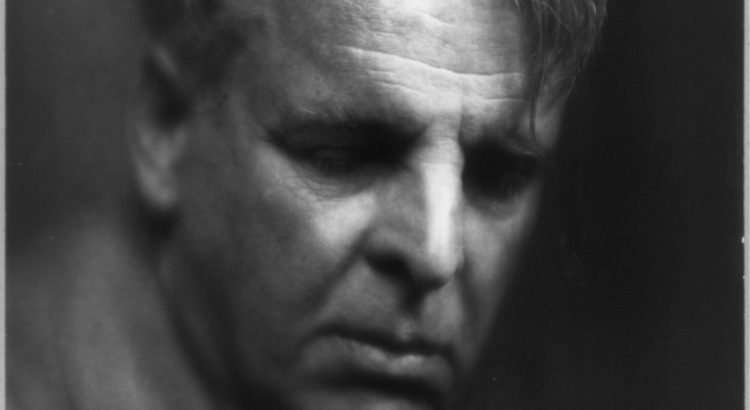
There is another world, but it is in this one.
– William Butler Yeats
Big Mind, how do you understand this?
It can be understood in different ways. He may have meant that when we perceive with an open heart – with receptivity, awe, humility, gratitude, curiosity – the world becomes another place.
Also, each being is its own world. Each being perceives the world differently. An ant has a different experience than a tiger, a human in one culture a different experience than one from another culture, and so on.
The world of each being also always changing. There is another world for you and all beings each moment.
When you discover me, the world is different. (When I discover myself through and as you.) For you, the world was turned inside-out and upside-down and you have been in awe of it since. It has been a source of endless fascination.
If you intuit me, the world is different too. You may have a sense of the divine in all or as all, of consciousness in nature and things, of something – a tree – looking back at you. This is me – the consciousness you are – sensing and intuiting itself before it’s more fully revealed.
MORE ACCURATELY…
This is written using more of an everyday language so it’s not very precise.
To be more precise, we could say:
It appears that there is a world with many beings. If so, it’s likely that each conscious being IS consciousness to themselves, and that the world, to them, happens within and as that consciousness they are. We are each our own world. There are as many worlds as there are beings.
The world we are is always changing, and the only way we get a sense of that change is by comparing mental representations. We have mental representations we call past, future, and present. In this case, we compare mental representations of what we call the present (the mental representations are always one step behind so the present, at best, reflects what’s just gone) and the immediate past, we see they are different, so we call it change over time. Quite a lot of mental gymnastics is required to create a sense of change and time.
In one sense, I am this human self in the world. In my first-person experience, I find I am what the world, to me, happens within and as. I am what a thought may call consciousness, and the world to me happens within and as that consciousness. In my case, when this shift happened, it turned everything upside-down and inside-out. The world is the same with people, trees, sky, and so on. And yet, it’s completely different because it’s all recognized as happening within and as the consciousness I am, and I am not fundamentally anything within the content of experience. This human self is here, roles and identities are here, a sense of a doer or observer may be here, and it’s not what I more fundamentally am. All of this, like any content of experience, comes and goes.
The consciousness we are can be strongly identified with and as this human self and its identities. It can recognize itself as consciousness as described above. And it can also be somewhere in between those two states. It can intuit itself as consciousness, it can have a sense of it, it can have glimpses of it. When that happens, it can have a sense of the sacred or Spirit in the world, or of the world as sacred and Spirit, or of objects looking back at itself, and so on. This too is another way to experience the world.