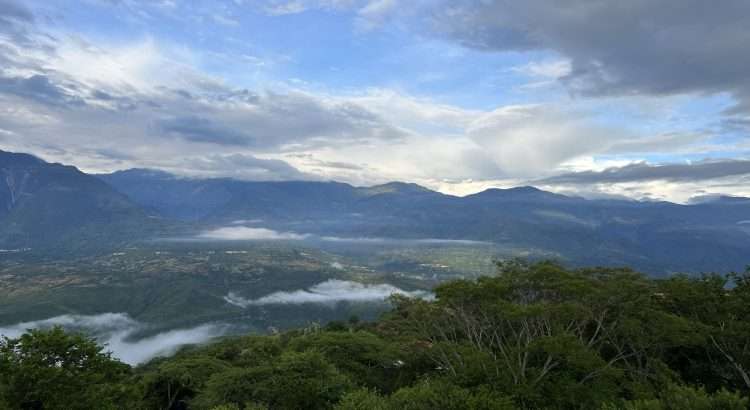
This is a spotlight text in a history book written centuries in the future, at a time when humanity has gone through a great crisis and found a more life-centered way to life. It’s meant to inspire and to further exploration. See the index of all articles in this project, or follow the Long Journey Home tag for the most recent entries.
The text below is written by AI (ChatGPT) with detailed prompts from me. Since the AI is trained on a large library of texts, it is – in a sense – written by humanity as a whole.
This spotlight is on humanity’s role as part of this evolving living system we call Earth.
Please share your thoughts below. What did this bring up for you?
Earth as a Living System: Humanity’s Role in the Evolution of a Self-Regulating Planet
By Dr. Liora Mendes, Earth Systems Ecologist and Cultural Evolution Theorist
Introduction: Seeing Earth as a Living System
For centuries, humanity viewed the Earth as a static, inanimate stage upon which the drama of human history played out—a backdrop, indifferent to our presence. But a deeper understanding has emerged: Earth is not just a collection of inert resources but a living, evolving, self-regulating system. From the complex dance of weather patterns to the intricate balance of ecosystems, Earth behaves as a dynamic whole, constantly adjusting to sustain life.
This shift in perspective is more than a philosophical curiosity—it has profound implications for how humanity sees itself. Far from being separate from Earth’s processes, humans are an integral part of its self-regulating system. Our cultures, technologies, and choices directly influence the planet’s balance, for better or worse.
The Age of Separation—a historical era marked by human disconnection from nature, each other, and even ourselves—was not merely a detour or failure. It was an evolutionary phase that brought both peril and potential. Though it led to global ecological overshoot and widespread social fragmentation, it also catalyzed profound shifts in consciousness, technology, and cultural awareness.
This article explores Earth as a living, evolving system, humanity’s evolving role within it, and how the Age of Separation, despite its destruction, seeded the possibility for the regenerative era we now live in. It also highlights the importance of co-creation—recognizing humanity not just as participants in Earth’s unfolding story but as conscious collaborators in its ongoing evolution.
I. Earth as a Self-Regulating Living System
A. The Gaia Hypothesis and Beyond
In the 1970s, scientist James Lovelock, in collaboration with microbiologist Lynn Margulis, introduced the Gaia Hypothesis—an idea that sparked both admiration and controversy. They proposed that Earth operates as a self-regulating, complex system where the biosphere, atmosphere, oceans, and geology interact to maintain conditions favorable for life. This was not a poetic metaphor; it was a scientific observation.
Key Features of Earth’s Self-Regulation:
- Feedback Loops: Natural processes work through feedback loops—some stabilizing (negative feedback), others amplifying (positive feedback). For example, forests absorb carbon dioxide, cooling the planet, while melting permafrost releases greenhouse gases, amplifying warming.
- Homeostasis: Despite massive disruptions (volcanoes, meteor strikes, and ice ages), Earth has maintained conditions conducive to life for billions of years. This balance, however, is not fixed—it is dynamic and adaptable.
- Interconnection: Oceans, forests, climate, and the atmosphere are interwoven in a complex web of cause and effect. A drought in one region can influence weather patterns half a world away.
While the Gaia Hypothesis initially faced skepticism, it has since been validated and refined through Earth systems science, leading to a deeper understanding of the planet as a living, evolving whole.
B. Humanity’s Emergence Within the System
Humans did not arrive on a dead planet waiting to be animated by our presence; we emerged from the same evolutionary processes that gave rise to forests, rivers, and the air we breathe. Our cultures, economies, and technologies are as much a part of Earth’s living system as coral reefs or beehives.
Humans as a Keystone Species:
- Unlike other species, humans have the capacity to radically alter ecosystems on a global scale—deforesting continents, redirecting rivers, altering atmospheric chemistry.
- But this power is double-edged: we can either degrade or regenerate the living systems that sustain us.
Cultural Evolution as Earth’s Experiment:
- Just as evolution fosters biodiversity in ecosystems, human cultural evolution has generated an explosion of languages, social systems, and technological innovations.
- While destructive patterns emerged—domination cultures, extractive economies—so too did capacities for empathy, long-term planning, and planetary-scale cooperation.
Humanity’s relationship with Earth is not one of passive residence; we are active participants in its evolutionary journey.
II. The Age of Separation: A Turning Point in Earth’s Evolution
A. Defining the Age of Separation
The Age of Separation, spanning roughly from the agricultural revolution to the early 21st century, was marked by a growing disconnection between humans and the living systems they emerged from.
Cultural Characteristics of the Age of Separation:
- Human Exceptionalism: The belief that humans stood apart from or above the natural world.
- Domination Paradigms: Hierarchical systems that prioritized control, extraction, and profit over reciprocity and regeneration.
- Linear Progress Narratives: The idea that history was a march of progress—often defined by technological advancement and material accumulation—rather than a dance with the Earth’s evolving systems.
Ecological Consequences:
- Global Ecological Overshoot: Humanity’s consumption exceeded the planet’s regenerative capacity, leading to biodiversity loss, climate destabilization, and soil and water degradation.
- Social Fragmentation: Wealth inequality, colonialism, systemic oppression, and cultural homogenization fractured communities and fueled conflict.
- Psychological Alienation: Disconnection from nature led to widespread feelings of isolation, purposelessness, and disempowerment.
B. The Age of Separation as an Evolutionary Catalyst
Despite its devastating impacts, the Age of Separation played a critical role in Earth’s evolutionary arc.
- The Amplification of Complexity:
- Human technology, language, and social structures added unprecedented complexity to Earth’s biosphere.
- Global networks—both physical (trade, migration) and digital (the internet)—created new layers of planetary interconnection.
- Crisis as Feedback:
- The ecological crises triggered by human activity acted as a form of systemic feedback, forcing a reckoning with unsustainable practices.
- Rising CO? levels, climate extremes, and mass extinctions functioned as Earth’s way of “signaling” the need for course correction.
- The Evolution of Consciousness:
- The very disconnection that fueled destruction also fostered self-reflection.
- Questions of identity, purpose, and responsibility deepened, catalyzing spiritual, scientific, and philosophical inquiries into humanity’s role on Earth.
III. The Gifts of the Age of Separation
While the Age of Separation pushed Earth’s systems to the brink, it also birthed capacities that became crucial in the regenerative era.
A. Deepening Consciousness and Self-Reflection
- The Birth of Planetary Awareness: For the first time in Earth’s history, a species developed the capacity to understand the planet as a whole—through satellite imagery, climate modeling, and ecological science.
- The Recognition of Limits: Ecological overshoot forced humanity to confront the reality that infinite growth on a finite planet is impossible, shifting focus from domination to stewardship.
B. Technological Innovation as a Double-Edged Sword
- Tools of Extraction Became Tools of Regeneration:
- Drones used for surveillance were repurposed for reforestation.
- Data science originally used for profit optimization helped map biodiversity corridors and monitor climate shifts.
- Decentralized Networks: The same technologies that enabled globalization allowed for decentralized, community-led regeneration efforts across the globe.
C. Cultural Lessons: The Importance of Belonging
- Reclaiming Connection: As disconnection peaked, a profound longing for belonging—to community, land, and life—reemerged.
- Revival of Indigenous Wisdom: Earth-based traditions that had long understood ecosystems as living relatives became central guides in the shift toward regeneration.
- The Power of Storytelling: New narratives—of interdependence, partnership, and co-creation—replaced old myths of domination.
IV. Co-Creation: Humanity as a Conscious Participant in Earth’s Evolution
A. From Passive Participant to Active Co-Creator
The Age of Regeneration marks a shift in humanity’s role—from an unconscious disruptor of Earth’s systems to a conscious collaborator in its ongoing evolution.
Co-Creation in Practice:
- Ecosystem Restoration: Humans work alongside natural processes, accelerating healing through agroecology, permaculture, and rewilding.
- Cultural Regeneration: Practices like restorative justice, community storytelling, and trauma healing help reweave fractured social fabrics.
- Technological Alignment: Innovations now prioritize life-sustaining systems—renewable energy, closed-loop economies, and biomimicry.
B. The Ethical Dimension of Co-Creation
Being a co-creator is not about control—it is about humility and reciprocity. It recognizes that humans shape the world but are also shaped by it.
Guiding Ethical Principles:
- Regenerative Stewardship: Decisions are made based on their ability to enhance the health and resilience of ecosystems and communities.
- Intergenerational Equity: Actions consider not only present needs but the well-being of future generations.
- Diversity as Strength: Cultural, biological, and epistemological diversity are seen as essential components of a resilient planet.
V. Crisis as an Evolutionary Force
Evolution rarely happens in times of comfort. Crisis—both ecological and cultural—has been a driver of transformation.
- The Role of Collapse: The unraveling of domination systems during the Age of Separation was not the end, but a necessary breaking open of rigid structures, creating fertile ground for something new.
- Learning from Feedback: Just as ecosystems self-correct through feedback loops, human societies began to see crisis not as failure but as an invitation to adapt, evolve, and deepen.
VI. Conclusion: Earth’s Ongoing Evolution and the Future of Co-Creation
The Age of Separation was not a deviation from Earth’s evolutionary path but part of its unfolding complexity. Though it brought humanity to the brink of collapse, it also birthed the awareness and tools necessary for regeneration.
In the Age of Regeneration, humans live not as isolated actors but as conscious co-creators within a living, evolving Earth. We no longer see ourselves as separate observers but as threads woven into the fabric of a dynamic, interconnected whole.
The ultimate gift of this perspective is humility—a recognition that while humans have extraordinary power to harm, they also have an equally profound capacity to heal, restore, and co-create. In this ongoing evolutionary dance, we are not the choreographers, but we are no longer stumbling in the dark. We are participants, collaborators, and caretakers—invited to shape the future alongside the rivers, forests, microbes, and stars.
The question now is not whether we belong to Earth’s living system—but what kind of participants we choose to be.