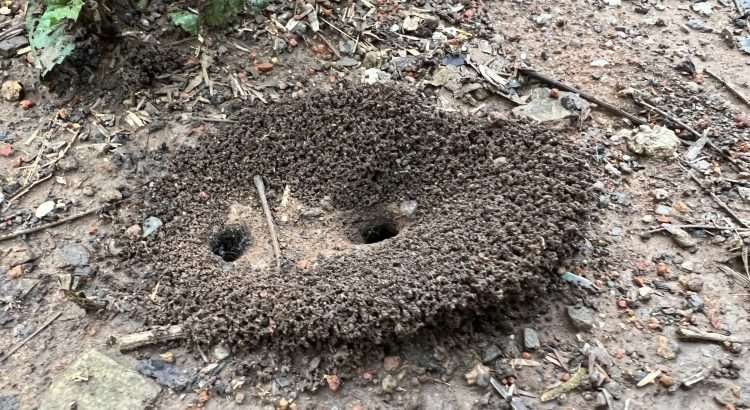
We just heard that several neighbors are coming to Finca Milagros to harvest big-bottomed ants (Atta laevigata). These are called hormigas culonas, are a local delicacy, and can fetch €40 to €80 per kilo.
We contacted one of our neighbors to make it clear this is not acceptable, and will work on identifying and doing the same with the others.
These big-bottomed ants come out at the beginning of the rain season, and every single one of them are queen ants. They are vital for the ecosystem, both as food for the wildlife and so they can start new colonies.
This is not so much about the ants as a general principle. We can’t have neighbors come and do what they want on our land. They are free to pass through, and they are welcome to take some fruits for own use, but nothing else – at least not without asking first.
We are stewards of this land and part of our role is to protect it against just this kind of harmful activities.
More About Big-Bottomed Ants
AI generated text.
Leafcutter ants like Atta laevigata—locally known as hormigas culonas—play a vital ecological role in the ecosystems of dry tropical forests such as those around Barichara. As fungus farmers, they gather plant material not to eat directly, but to cultivate a special fungus within their underground nests. This ancient symbiosis has shaped both the ants and the landscapes they inhabit for tens of millions of years. Through this farming, they become essential agents of nutrient cycling, transforming plant material into organic matter that enriches the soil.
Their activity also aerates and structures the soil, much like earthworms, helping water infiltration and root growth. By selectively pruning vegetation, they can influence plant species composition over time, favoring certain types of regrowth and contributing to the dynamic regeneration of the forest. Their massive underground nests create habitat complexity, which can benefit other organisms, from microbes to reptiles.
However, the ecological contributions of Atta laevigata can only continue if the species is allowed to maintain healthy population levels. Overharvesting, especially of the reproductive queens, poses a serious risk. The ants with the large bellies—the ones collected and eaten—are all fertile queen ants. Every single one plays a critical role in founding new colonies and ensuring the continuation of the species. Removing too many of them during their brief nuptial flight not only interrupts their life cycle but can dramatically reduce future generations and may even lead to local extinctions.
Avoiding overharvesting means respecting their role as ecosystem engineers and the limits of what the land can provide. By letting them multiply naturally you help preserve a native species that contributes profoundly to the health of the land. Responsible stewardship ensures that they continue to play their ecological roles and remain available as a sustainable cultural food in the future.