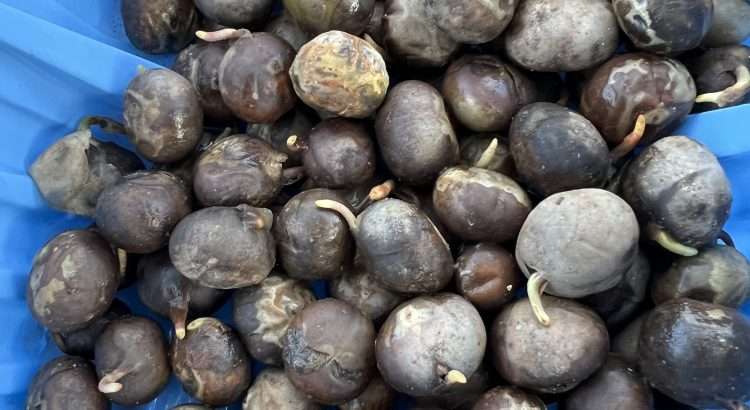

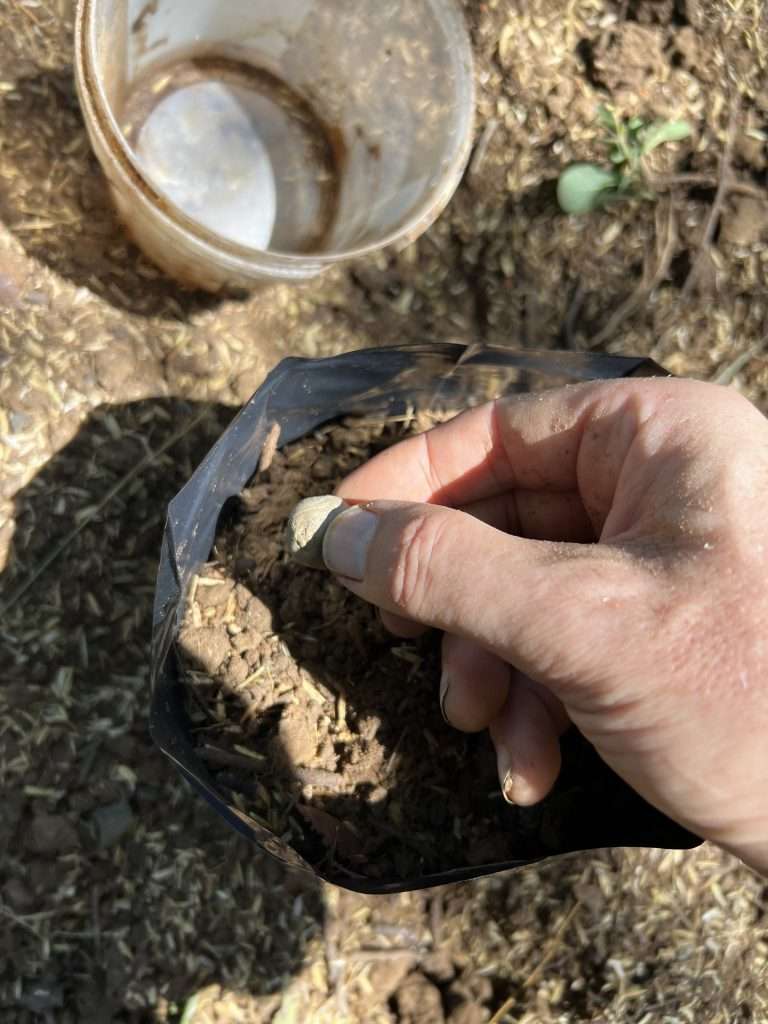
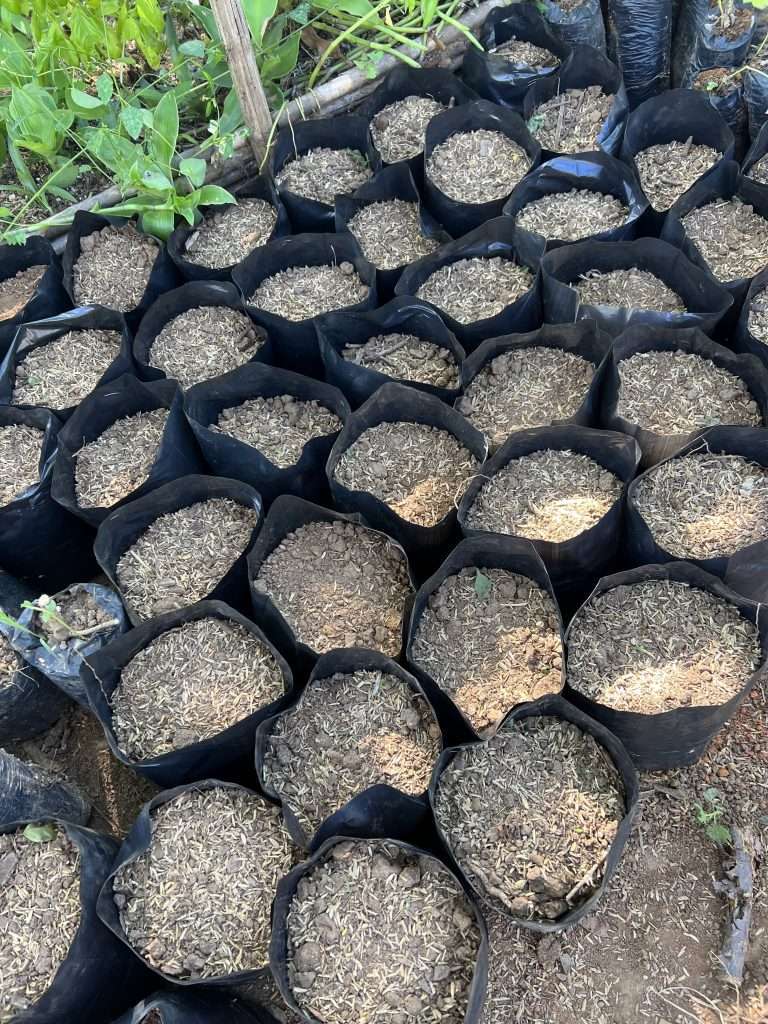
We have a regeneration and food forest project in the Andes, and one of the trees I wish to grow – for biodiversity, food for animals and humans, and income – is the traditional Maya nut tree (Guáimaros as they are called locally).
Last November, I was lucky enough to find two sources of Maya nuts in our neighborhood, so we now have about 100 Maya nut trees growing – some in the ground and a few still in large growing bags. This is just the start, and I hope to plant a few hundred more trees over the coming years.
I have been in contact with someone advising people on growing Maya nut trees, and we were recommended to plant them four meters apart, in full sun, and remove nearby plants since they compete for resources (water, nutrients, sun, etc.).
I understand where those guidelines come from, and I know it’s meant well. At the same time, we are doing something quite different. We wish to work in a deeper partnership with nature, natural processes, and the local ecosystem.
WHAT WE ARE DOING
We are creating a food forest that’s as wildly diverse as possible. We create terraces, swales, and porous dams to slow down the rain water so it is absorbed by the ground. We work actively on building soil, which for now includes bringing in compost and soil materials. We use mulch to protect and build the soil, and retain moisture longer.
This plant diversity creates a more healthy and resilient ecosystem. It helps build soil, encourages healthy and diverse soil life (including microbes and fungal networks), create shade to retain moisture, reduce the chance of an explosion of one types of insects, supports the insect life and wildlife, and produces a variety of foods for us and wildlife, and so on.
This diversity means the Maya nut trees will be about 10-15 meters apart from each other, which is fine since we will rely on a wide diversity of food plants, not just Maya nut trees.
WIN-WIN VS ZERO-SUM FOOD GROWING
As I see it, what we were recommended reflect a zero-sum approach to food growing, and what we are doing reflect more of a win-win approach.
In zero-sum food growing, we see plants – and life in general – as primarily competing for resources, so what doesn’t produce food needs to go. We may use artificial fertilizers and pesticides, which destroys the soil and the web of life supporting all life. We may rely on just one or a few crops, which creates vulnerabilities. We create ecological deserts that lead to habitat loss and extinctions.
We are, in essence, gradually destroying the web of life we and all life depend on.
In a win-win orientation, we support the web of life that supports all life – including ourselves, what we eat, and all we love. We seek diversity since a diverse system is more resilient. We seek to build soil and create healthy soil, since soil is the foundation for all plant and animal life. We seek to make maximum use of rainwater by slowing it down, allowing it time to infiltrate, and retaining moisture.
We help regenerate the web of life which we all depend on.
WHY IS THE MAINSTREAM APPROACH STILL MAINSTREAM?
This mainstream zero-sum approach is relatively new. It has happened over just the last one to three generations. It’s a blip in human history.
The modern conventional approach seems successful on the surface. We have dramatically increased the world’s food production over the last few decades, which seems desirable.
And it comes at a high cost. It’s part of the unraveling of the web of life supporting us all. It’s extractive food growing that’s destructive to soil, ecosystems, and ourselves. We borrow against the future. It cannot last.
It comes from a zero-sum orientation, and what loses is not only the others – what we call weeds and pests, and wildlife – but eventually ourselves. We are all in it together.
So why do many still use this approach? Because it does produce a lot of food. It’s a profitable business for those selling machinery, pesticides, fertilizers, and so on. Our whole system is now set up to support it. It has become the norm. It’s what’s expected. It’s what farmers now know and understand. It’s what they learn and pass on.
HOW DO WE SHIFT OUT OF IT?
What does it take to shift out of it?
That’s obviously a big and complex question.
Some answers are: Knowledge and education. Pointing out who benefits and who loses from each system. (In our current mainstream food system, we eventually all lose.) Good examples of alternatives, including some that work at larger scales. Systems change to encourage win-win systems, which includes putting the real cost into the finances of food systems.
We are doing our small part by developing and living a more life-centered alternative.