There is a reason we have rules, and that reason is more important than the rules

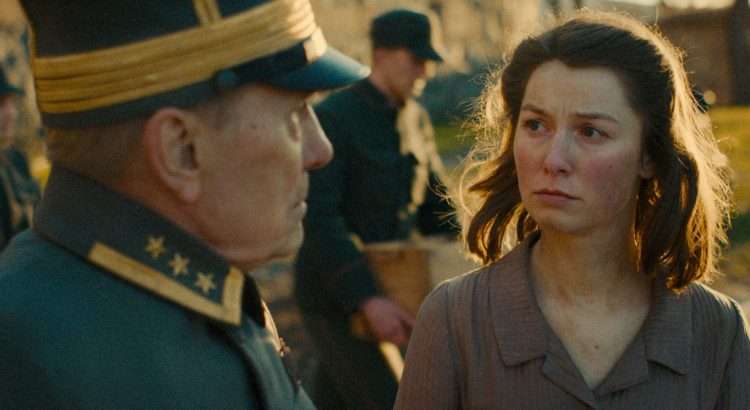
I saw Blücher a couple of weeks ago, a Norwegian film about the commander at Oscarsborg fortress in April 1940 when German warships entered the Oslo Fjord. He acted in the absence of orders and decided to attack the ships, which gave the government and royal family time to escape Norway. After the war, he was (shockingly to us today) reprimanded for having acted against, or in the absence of, orders.

For me, this is a reminder that the reason for rules is more important than the rules themselves.

There is a reason we have rules, and it’s usually to support individuals and society. Ideally, rules come from a life-centered intention, and they often do here in Norway. (Although they are anthropocentric and outdated in that sense.)

Sometimes, we find ourselves in situations where following the rules would go against the intention behind the rules, and other actions – the ones that break rules – are more aligned with the original intention. The commander of Oscarsborg knew this. He chose to follow the intention behind the rules, which is to protect Norway and the Norwegian people, and break rules which would have allowed the warships to reach Oslo and likely would have led to the arrest of the government and the royal family.

The movie was also about appeasement and how it often doesn’t work with bullies. If someone doesn’t play by the rules and is intent on taking other countries, appeasement doesn’t work. That is, of course, relevant today with Putin’s ambition to (re)create the Russian Empire. I am mainly a pacifist, although I also know that sometimes having strong boundaries, metaphorically and literally, and having good allies, prevents something far worse. These days, Norway seems complacent in several ways, including by allowing Russian fishing vessels (many of which are likely spies) in Norwegian harbors, not having solid drone defense, and not being prepared for the kind of messy drone-centric warfare we see in Ukraine.

Fascism eats its own

Tony Gilroy, the writer and producer for Star Wars: Andor, here mentions that fascism eats its own.

That’s very clear from history, from any authoritarian regime, which is why it’s so puzzling to me that people vote for authoritarianism/fascism, and why people chose to get involved in an even more direct and intimate way.

More to the point these days: Why did people vote for Trump, when his policies will likely harm them? Why do people chose to get involved with Trump more directly, when they’ll likely get chewed up and spit out?

There is no one simple answer, of course.

Some may have voted for him because they are fed misinformation from Fox News and social media. They may not know much about project 2025 and what it means for them. They think bad things will happen to others, not them. They don’t know much about history and similar projects in the past and how it played itself out.

Some may choose to get involved because it seems the safest at the moment. It just requires yielding to pressure and do what the strong man says. They think they’ll somehow be protected and get away with it. (Which may happen, but it’s equally likely they’ll get eaten by the dynamics of fascism.) Maybe they like the gamble. Maybe they felt safer on the side of the strong man in childhood, or wanted a strong man in their life to protect them.

Note: I use “strong man” in invisible quotation marks here. Trump and similar authoritarians try to develop the image of a strong man which reveals a deep insecurity. Someone with real confidence don’t need to do it. Many see through this, but not all.

The right side of history: What is it? What will future generations see as the right side of history?

When I hear the phrase the right side of history, it brings up a few questions.

What we see as the right side of history obviously depends on who, where, and when we are.

We tend to use the phrase about anything that contributes to creating a world that works better for all of us. Anything that moves in the direction of widening circles of inclusivity, widening circle of “us”, and so on.

Why? Mainly, because it aligns with the values of the ones who tend to use the phrase – Western educated liberal people.

I see it that way too, so considering that inevitable bias…

What may future generations see as the right side of history when they look back to our time? And why?

GLOBAL ECOLOGICAL OVERSHOOT & CREATING A REGENERATIVE CIVILIZATION

I imagine they will see one issue – global ecological overshoot – as the primary one.

We live in a civilization with an assumption of separation at its center.

We assume that humans are separate from the web of life. That we can externalize cost to other people, the rest of the web of life, and future generations, and that it won’t come back to bite us. That Earth’s resources are infinite and has infinite capacity to regenerate. That humans somehow, intrinsically, are more valuable than the rest of the web of life. And so on.

This has led to a global human civilization that has an ecological footprint larger than Earth and lives in global ecological overshoot. This is similar to living on a savings account. It looks fine until we reach the bottom and our lifestyle comes crashing down. In our case, globally, we are in the bottom layer and it’s our civilization that will come crashing down.

Actions that (a) tries to stop the destruction, (b) works on creating and living from a more life-centered worldview, or (c) creates and lives life-centered alternatives tend to be on the right side of history.

Future generations will very likely see this as being on the right side of history. (Assuming there will be more future generations, which is not a given.)

The ones most clearly on the right side of history are the ones who (a) go to the essence of the problem which is a civilization and system built around the assumption of separation, (b) recognize that the remedy is a thorough and profound transformation of our civilization, and (c) actively work on this and live the alternatives.

Why will future generations likely see this as being on the right side of history? Because this is not only sane, it’s what creates a better life – or the possibility for life – for those future generations.

This is an example of an issue that most today will agree with in a general way, and yet few realize the gravity of the situation, how profound the changes need to be, and are actually doing it in their own life.

When later generations look back and sees something as on the “right side of history”, that’s how it often seems to be. A good number of people may have sympathized with it in a general way, and a much smaller number actively lived it and brought it into society.

OTHER EXAMPLES

What can be more important than preserving the web of life that we are part of and depend on for our life?

That said, I imagine future generations may see some of the following as being on the right side of history…

Rights of ecosystems, non-human beings, and future generations

Considering the interests of future generations, I imagine they will see any promotion of the rights of ecosystems, non-human beings, and future generations as being on the right side of history.

In our civilization, built on the idea of separation, the rights of individuals and corporations are at the center. Individuals are seen as the default legal unit, and corporations as almost sacred in an economy that assumes unlimited natural resources, the rights of humans to use everything in the commons of life for themselves, and that we can get away with destroying the web of life we are part of.

In reality, if we are to preserve what’s most precious to us – our lives, the lives of future generations, and what’s valuable in our civilization (science, art, etc.) – we need to give the rest of the web of life equal rights. We need to give legal rights to rivers, mountains, the ocean, ecosystems, species, and future generations.

That’s the only way we can protect what’s most valuable to us. That’s the only way we can protect the web of life we are part of, depend on, and that gives life to everyone and everything valuable to us.

Regeneration & growing non-toxic food

One of the things we can do to slow or reverse our global ecological overshoot is regeneration – of ecosystems, oceans, forests, meadows, agricultural fields, and our parks and gardens.

For this to happen at a global scale, we need a global and thorough transformation of our civilization and the basic assumptions of our civilization. That’s a tall order, and although it needs to happen soon if we are to avoid an even more massive ecological (and civilizational) crash than we already are in, it’s unlikely to happen. It’s not something we can wait for.

So what can we do – as individuals, families, communities, and organizations?

One of the most powerful and rewarding things we can do is regeneration. We can engage in regeneration of our veranda, garden, local parks, rural land, or whatever we have to work with.

If it’s our own land, we can do it on our own, and if it’s communal land, we’ll need to find partners. Coalition building is vital, and it’s also good to start small and do it in small steps – for learning, to create something of better quality, and to gain more support.

Staying close to science

Science is a method for learning about the world, and it is, in a very real way, organized common sense.

What’s produced by this method, the content of science, is always changing, up for revision, and reflects our civilization and general worldview.

The way science is used is yet another thing, and depends on our civilization and society. In our case, with our civilization built on the idea of separation, it’s often used in ways that harm society and life.

That’s not the fault of science, it’s the fault of our civilization.

I imagine future generations will see those who stay close to science, especially in their approach to learning about the world, as on the right side of history. They will likely also see those who criticize the way science is often used in our society as on the right side of history.

Not falling for conspiracy theories

Conspiracy theories are sometimes, at least partially and indirectly, rooted in reality.

Whether they are or not, they are often a distraction from what we know is happening and what’s far more serious than the topic of the vast majority of conspiracy theories.

What we know is happening is global ecological overshoot. We live in a civilization organized around the idea of separation. This system externalizes cost to the wider web of life and future generations, creates vast inequality among humans, allows huge numbers of people to die from preventable and treatable diseases, and so on. And it’s far more serious – for us, the web of life, and future generations – than the topic of most if not nearly all conspiracy theories.

We know from history that conspiracy theories flourish in times of uncertainty, like today. They are a way for people to feel they understand what’s going on, to feel smart, to have a place to put their fear and anger, and so on.

I imagine future generations will see most if not all the conspiracy theories flourishing today as a distraction from far more serious and immediate issues.

Empires

The US, Russia, and China are all empires, and they all share many of the same (unsavory) characteristics and power-over dynamics that harm their own citizens, their neighbors and/or people in other places in the world, and the web of life.

The US has historically damaged both their own citizens (lack of social safety nets, huge wealth inequality, etc.) and people around the world (toppling democracies, wars). Russia has damaged their own citizens (repressive) and their neighbors, including through their invasion of Ukraine. China is damaging their own citizens (repressive), and especially ethnic minorities. One is not very much better than another. They are all empires – or want to be empires – and do what empires do.

I imagine future generations will see those who focus on the harmful characteristics of all empires as on the right side of history. (Not those who take sides, for one and against another.)

Israel & Palestine

It’s similar with Israel and Palestine. I imagine future generations won’t see those who automatically take sides as on the right side of history.

The situation is far more complex. Israel acts on trauma. Palestinians fight for their survival. And as the UN and innumerable aid and human rights organizations say, what has happened in Gaza for decades are systematic human rights violations. It has been a slow genocide for decades, and it has dramatically intensified over recent months.

Israel is doing to others what was previously done to them. They are acting on, continuing, and passing on the trauma to new generations. Hurt people hurt people.

I imagine future generations will understand both sides.

I imagine they will also find it baffling that the international society didn’t take a stance against Israel in their human rights violations and genocide. How could they witness perpetuation of pain, suffering, and trauma without doing anything?
It’s never the good guys who ban books

As many point out: You don’t need to be a historian to know that the ones who ban books are never the good guys.

IT’S NEVER THE GOOD GUYS WHO…

It’s never the good guys who speak and act on xenophobia, misogyny, racism, and bigotry.

It’s never the good guys who scapegoat vulnerable minorities for social and systemic troubles.

It’s never the good guys who want to impose their religion on others and marginalize other religions.

It’s never the good guys who feel threatened by science and deny or marginalize it.

BOOKS BANS DON’T WORK

Book bans are not about banning books or preventing people from reading them. That doesn’t work.

Books bans only instill curiosity about the books and the thoughts and lives represented within them.

There are plenty of lists of banned books out there, and people reading these books mainly because they are banned somewhere, and that is a very good thing.

If someone doesn’t want to you read a book, that, in itself, is a good reason to read it. There is something there they don’t want you to know. There is a perspective there that’s threatening to them.

I suspect book bans are really about something else.

WHAT ARE BOOK BANS ABOUT?

At one level, book bans are about marginalizing and trying to eliminate other people’s lives, experiences, and the world they live within.

Most of the books banned by schools, libraries, and so on in the US today are books representing minorities, and banning these is an attempt to marginalize and silence these groups of people.

In a more immediate sense, book bans is a message to the community: If you belong to these groups, don’t speak up. We don’t want to hear it. You and your experience are not welcome here. We will do what we can to silence you.

WHY THE DESIRE TO SILENCE?

Why this desire to silence? Why don’t they want to hear from people living other and different lives?

I am not sure, apart from that it likely has to do with discomfort. Having these books around – and the lives and lived experiences represented in these books – is uncomfortable for them.

It may upset their worldview. They have the world neatly figured out, and these minorities disrupt their world. They show them that they try to live in a fantasy, in a world that doesn’t exist, and that the real world is different.

It may show them that they and their ancestors are not (only) the good guys they imagine they are. Their ancestors were racists, supported slavery, committed genocide, stole land from people already living on it, and so on.

It may show them that being LGBT+ is completely fine. These are normal people just like you and live ordinary lives just like you and everyone you know.

It’s an attempt by the privileged to keep their privilege, whether that privilege comes from being male, white, Christian, or something else. They don’t want to share the stage with other groups.

DIVERSITY

They likely come from a zero-sum view of the world and imagine that if the lives of the marginalized are improved, theirs have to get worse. Reality is different.

The reality is that diversity is a part of the human experience, and it enriches us all.

There is a reason for this diversity. We need this diversity of lived experiences, views, insights, and knowledge. We need it to understand ourselves and the world. We need it for resiliency. We may need it in ways we don’t fully understand.

Nature creates diversity and we know that more diverse ecosystems are more resilient, adapt better to change, and recover faster after a crisis.

When it comes to us humans, evolution has brought about this diversity because it has a survival function for humanity as a whole. We may not understand all of the mechanisms (we certainly do not), but it’s likely that this diversity still plays an important role in helping us survive, adapt, deal with crises, and thrive.

When it comes to intolerance, the only intolerance we need, applied with self-reflection and caution, is a degree of intolerance for intolerance.

THE CULTURE WAR AS A DISTRACTION

The culture war in the US is absurd on its surface and serves as a distraction from far more important, serious, and systemic issues.

Mainly, it distracts attention from the growing wealth gap in the US and the (neoliberal) systems and policies in place to maintain and increase that gap.

The culture war is a remarkably convenient distraction from these issues. It divides those who otherwise could unite in creating a real change that would benefit everyone.

GOOD GUYS?

When I use the words “good guys” it’s because it’s succinct, it takes a position, it’s familiar in this context, and it’s also a bit tongue-in-cheek.

Most of us think we are the good guys. Even most of the ones banning books probably see themselves as the good guys. They are protecting innocents from the evils of the world. They are trying to uphold some idea of morality.

From our modern Western worldview, book banning is clearly wrong, and the ones who have engaged in it in the past – Nazis, Soviets, and dictators everywhere – are wrong in what they did. They are on the wrong side of history.

By referencing history and using the phrase “not the good guys”, we invite reflection. Maybe there is even a hope that we are inviting those engaging in book banning to reflect on what they are doing, how it looks to others, and how it looks in the context of history. Do you really want to be on the side of those guys?

I have a long list of reasons why book banning is not a good idea and does not create the kind of society I want to live in. At the same time, I am very aware that my view reflects my own background.

FINDING IT ALL IN MYSELF

As usual, this all reflects me. Whatever I see in others and the world is something I can find in myself.

What’s the essential dynamic in book banning? For me, it’s to silence and eliminate what’s uncomfortable.

Something makes me uncomfortable, so I want that thing gone.

Said more accurately: I make myself uncomfortable about something, don’t like the discomfort, and want it – whatever in the world I tell myself creates the discomfort – to go away.

As so often, I find this is playing itself out in me at the moment I am judging people for banning books. Their views and actions bring up discomfort in me. I make myself uncomfortable because of the stories I tell myself about it. And I want them to be gone. I don’t want those kinds of people in the world.

What I really want gone is the discomfort I create in myself.

It’s good to notice this.

I create the discomfort in myself.

I want that discomfort (not them) gone.

At the moment I am judging them, I am living out exactly the same dynamic as I see in them.

FINDING IT IN ME & ACTING IN THE WORLD

This process helps me see what’s here and find myself in the other. It gives a little more understanding of them and me and the universal dynamics in us, and there is less of a sense of I and other or we and them.

It does not in any way excuse book banning. If anything, it helps me do something about it – to speak up and do something about it if I am ever in that situation – from a little more clarity.

Read More

My grandfather the Nazi

My grandfather was a Nazi.

I learned that only a few years ago, and what happened with him and his family sheds light on several of the dynamics I grew up with in my own family.

WHY DID ORDINARY CITIZENS SUPPORT THE NAZIS?

Why did he sympathize with the Nazis and even join the Norwegian Nazi party?

I don’t know. My parents never talked about this, and I have only had conversations about it with my cousins who know as little as I do.

What I know is that he loved nature and everything Norwegian, so that may be part of it. I also got the impression that he was quite authoritarian, as were many at that time.

There could be any number of other reasons as well: Perhaps a good friend was a Nazi. Being a Nazi could keep him out of trouble during the war. He may have thought the Nazis would win and that he and his family would be in a good position after the war. He may have been afraid of the communists.

EXPLANATIONS ARE NOT EXCUSES

Those are possible explanations, although they are no excuses. There are no excuses. We always make our own choices. We know what we know. We know what we prioritize. We know what we pretend to not know.

He knew that the Nazis did away with democracy in Germany and the countries they occupied. He knew that the Nazis invaded and occupied Norway and other countries. He knew they were fascists with everything that comes with that. He knew what they did to anyone opposing them, or anyone they saw as a threat or degenerate. He likely also knew quite a bit about what happened with the Jews and other marginalized groups in Germany.

Still, he chose to support them. That says a lot about him.

HOW IT IMPACTED MY FAMILY

He was a member of the Nazi party, and once helped search for an escaped prisoner, but otherwise was not actively engaged with the Nazis or the occupation. After the war, he was convicted and sentenced to several months of prison and hard labor, ironically at the same prison camp (Grini) used by the Nazis. As far as I know, the family had to sell their home and move to another place where people didn’t know them. My uncle was also a member of the Nazi party, but my father was not.

As I mentioned, it sheds light on some family dynamics. My uncle always seemed very authoritarian and didn’t tolerate people disagreeing with him. My father seemed intent on living the life of a good citizen who couldn’t be criticized for anything. (He did it. He got a good education. Had his own respectable business. Raised a family. Kept his house and garden in good condition. And so on.) There were a lot of taboos in my family growing up, and this was one of them.

I didn’t know about this until about ten years ago when a cousin of mine discovered and shared it. I also received information from the National Archive in Norway about the court case and sentencing.

HOW HAS IT IMPACTED ME?

How has this impacted me? It certainly seems to be a part of some of the family dynamics I grew up in.

My trauma reaction of wanting to be invisible makes sense in this context. As does my desire to explore and bring things to the surface.

My grandfather was a forester, although the old-fashioned type that likely maximized the forest for timber production and not so much else. He loved nature, wildlife, and being in nature, as does my father. I likely inherited my love of nature and wildlife from them.

These days, I work with forests too, although in a different way. I am in the Andes and we have a regeneration, reforestation, and food forest project here.

WHY DOES THIS COME UP NOW?

Why does this come up for me these days?

It’s been in the back of my mind since I learned about it, and the parallel between me and my grandfather when it comes to our love for nature – and our work with forests – is unavoidable.

It’s also in my mind because of what’s happening in the US these days. There too, people who see themselves as good people and good citizens support and vote for a fascist. They see it as supporting and upholding tradition and what’s good about their country. They turn a blind eye to the horrors they know come with it because they think it won’t impact them.

It’s a week until the next US presidential election, where the choice is between someone who fits all the characteristics of a fascist and someone who – at least – will continue democracy.

Read More

Fascism in the US

The Trump movement is a fascist movement. It fits most if not all of the hallmarks of historical fascism.

Even his former chief of staff, John Kelly, who knows him better than most, says he is a fascist, someone fascinated by, admiring of, and wanting to emulate Hitler.

Some say that Trump is the Great Disruptor, the one who will shake things up. If you are unhappy with some of the systemic problems in the world today, he offers an opportunity to change all that.

Compare that with reality: He scapegoats the weakest groups in society (immigrants), wants to cut taxes for the super-wealthy and put the burden on the rest, plans to persecute his political opponents, will increase the power of the president, wants to replace civil servants with loyalists, is itching to use the military against protesters, and so on. (See, for instance, If Trump Wins from the New York Times.)

To me, it seems incredibly naive to see him as someone who will bring about any kind of desired change. You would have to know very little about history to assume that.

We know what he wants to do, and few of us would enjoy living in the dystopian world he wants to create.

Yes, we need a profound transformation of our civilization. No, it will not happen because of Trump.

If anything, the mindset of Trump and his supporters is an example of what needs to go. They represent the mindset of colonialism, patriarchy, strict social hierarchies, sexism, racism, and so on. The white supremacist in him and the ones who support him is scared of the changes happening in the US now. They are scared of being in the minority, and they assume they will be treated as they historically have treated minorities. That seems to be the essence of the Trump movement and the Trump Republicans.

Of course, people support him for a range of reasons. Some are cynical and think they may personally benefit from his policies. Some want a strong leader, or at least someone who fits their distorted image of what strength is. Some want to find scapegoats. Some want to ban abortion and don’t care about the rest of him and his policies. I would assume many don’t know much about history. (Republicans generally try to reduce the quality of the educational system in the US, partly or mainly because they know that uneducated people are more likely to be seduced by their rhetoric.) Some want to disrupt the system and see him as the person to do that, without considering history and the likely outcome of his particular brand of disruption.

It’s unfortunately unsurprising that we see the rise of fascism in the US now. They never had real fascism on their soil, and the generations that saw how it unfolded in Europe and the horrors it brought are mostly gone now. Also, both parties in the US have largely failed the working class so they are turning to something different in desperation.

I see much of the support behind Trump as a trauma reaction. For many, it may come out of financial insecurity, lack of good social safety nets, and feeling let down by the “elite” – regular politicians and policymakers. I completely agree. Politicians in the US, whether Democrats or Republicans, are largely in the pocket of Big Money, and the policies are often aimed at lining the pockets of those who already have much at the expense of everyone else. Although Trump sells himself as something different, he is more of the same only to an even more extreme degree.

Some may feel let down by mainstream politicians in other ways, see Trump as the Great Disruptor, and hope something desirable will come out of his chaos. That too seems like a trauma reaction to me. It looks like someone hurt, and acting in extreme ways to deal with – and distract themselves from – that hurt.

Harris and the Democrats don’t have the real solutions to the challenges that face us today. They don’t want to deal with the profound systemic changes required for us to transition into a more ecologically sound civilization (a less ecocidal and suicidal one). But they are a step in that direction compared with Trump and the Republicans.

If Harris wins, it will not be the end of Trump and his supporters. They will do whatever they can to disrupt. Some of them even want some kind of civil war and may start waging it on their own, in whatever form that takes. Most likely violence against election officials, minorities, and political opponents.

There is another side to this, and that is finding all this in myself. How am I like Trump and his supporters? What stories do I have about them? What do I find when I turn these stories to myself? Can I find genuine and specific examples of how it’s true?

What happens when I do tonglen with Trump and his supporters, and with myself distressed by it?

Also, all of it is happening within and as the consciousness I am. To me, the consciousness I am forms itself into all of it.

Also, this living system we call Earth has formed itself into all of it – our civilization, Democrats, Republicans, and so on. These dynamics all happen within and as this living system. It’s a temporary and local expression of the dynamics of this living system. This doesn’t change what we need to do to try to steer society in a better direction, but it does provide a different context for understanding it.

UPDATE OCTOBER 29, 2024

It’s now a few days later, and I thought I would add this video that outlines reasons from a purely legal perspective to keep Trump out of office. This election is, as many point out, an election between maintaining or eroding the democracy in the US. (Which is, of course, already flawed and eroded.) It’s a simple choice.

I also see that Trump said, “I am not a Nazi“. This is a rare true statement from him. Nobody said he was a Nazi. He is not a member of the National Socialist German Workers’ Party (NSDAP) in Germany in the 1920s-1945. He fits the characteristics of a fascist, which is a broader and more general term.

It’s tempting to make excuses for the people supporting Trump: They are bamboozled by his lies. They have watched too much Fox News. They don’t believe he will do what he says he will do. They think someone will stop him from engaging in the worst atrocities. They assume fascism and the end of democracy can’t happen in the US. They don’t realize that his words and actions fit closely the definition of fascist. They don’t know enough history to know what happens in countries that elect leaders that bring them into fascism. They are good people who support just a few of his policies. They are traumatized and choose a leader who feeds into their trauma

That may all be true, and those are also no excuses. If they wanted to know, they would know.

Also, they very likely know several things, even if they get their info from Fox News: They know how he scapegoats the already marginalized. They know that his policies will amplify the suffering of groups that already suffer immensely. They know he wants to remove fundamental rights from women. They know he will cut the taxes of the already super-wealthy at the cost of everyone else. They know he wants to erode democracy in innumerable ways. They know he wants to persecute his political opponents. They know he wants to use the military against US citizens. They know he mocks those in the military. They know that many of those who worked with him when he was president have distanced themselves from him and say he is dangerous, unhinged, and even a fascist.

The people who support him and vote for him support those policies or are OK with it, and that says a lot about them.

I’ll include this too about Trump’s fascist language, sometimes lifted directly from Mussolini and others.

Read More

Hilma af Klint: Turning modern art history on its head and the artificial boundary between figurative and abstract art

I am watching Beyond the Visible: Hilma af Klint, and am reminded of a few things.

HILMA AF KLINT

First, I love Hilma af Klint’s art. It’s like nothing else.

I remember talking about her with fellow art students in my late teens and was fascinated by her art and approach. Much later, in October 2018, I was fortunate enough to see Hilma af Klint: Paintings for the Future at the Guggenheim and got the full experience.

I love that her art was channeled and/or guided by spirits, in her experience. I love that the rediscovery of her art turns modern art history on its head, which should happen now and then and is very healthy.

EUROCENTRIC AND MALE-CENTRIC ART HISTORY

The documentary highlights the Eurocentrism and male-centrism of mainstream Western art history. When I was about to study art history at the University of Oslo (one year full time) in 1990, I was excited to learn about art from all over the world and throughout time – especially art from Asia, Africa, and prehistoric art. I was shocked to discover that “art history” at the University of Oslo meant relatively recent European art (last two thousand years), and not even European art but mostly Western European art, and not only Western European art but mostly male Western European art. I understand they need to limit the scope of a study, but at the very least call it “Western European male art history” and not “art history”. Label it honestly, and offer the rest in other classes instead of leaving it out completely.

It seems that some in the art world – like MOMA in New York – prefer to still live in this kind of outdated world. They have left Hilma af Klint’s work out of their presentations on the history of abstract art and prefer to start with Kandinsky, who did his abstract work years after Hilma af Klint. (One of their stated reasons is that she didn’t show her art at the time, which seems a weird argument.)

A WORLDWIDE AND DEEPER TIME PERSPECTIVE

If it was up to me, I would include abstract art from all over the world and throughout time, including both complete abstractions and figurative art that’s heavily abstracted. I would start with prehistoric art, then go on to early historic abstract art from around the world, Islamic abstract art, and more modern abstract art from all over the world. European abstract art, including Klint and Kadinsky, would just be a small part of this much larger, and far more rich and fascinating picture.

ERASING THE ARTIFICIAL DIVISION BETWEEN REPRESENTATIVE AND ABSTRACT ART

Also, I would highlight how the division between figurative and abstract art is, in many ways, artificial.

There are many abstract elements in figurative art. All of it is, in a sense, inevitably abstractions. And there are figurative and representative elements in abstract art. We can find an endless amount of patterns in nature that inspire and are mirrored in abstract art, and abstract art often represents ideas and feelings.

As with any division, it tends to break down when we look at it more closely. All art involves abstractions. All art is, one way or another, inspired by the patterns in nature. Abstract art is often, or inevitably, representative of ideas, feelings, and patterns in nature.

HILMA AF KLINT AND REPRESENTATIVE ABSTRACTIONS

Hilma af Klint’s art is an art of representative abstractions.

Her art is influenced by nature – the geometric shapes of minerals and the organic shapes of plants.

Her art is an expression of her ideas, feelings, and states.

And as she would say, her art is an expression of the realities of the spirit realm. For her, her art was representative.

EXISTENCE IS THE ARTIST

There are still bigger pictures that give important contexts for understanding and enjoying art.

In a sense, all human art is inspired by nature. We mimic and use elements from what nature has provided for us.

We can also say that nature is a far more skilled, innovative, and amazing artist than any human. The art inherent in all the amazing forms of nature goes far beyond human-created art. We humans are a piece of art far beyond what we are capable of producing.

Even more essentially, nature is always the artist.

As Carl Sagan said: We are the local eyes, ears, thoughts, and feelings of the universe. We are the universe bringing itself into consciousness.

What we think of as human art is the local and temporary expressions of the universe. It’s life itself expressing, exploring, and experiencing itself through and as human art. That’s not a metaphor or poetic expression, it’s literally and inevitably so.

Existence is the only artist. This universe and all the different forms it takes is existence expressing, exploring, and – through and as us and other conscious beings – experiencing itself in always new ways.

HAPPENING WITHIN AND AS THE CONSCIOUSNESS I AM

Since I have included some larger contexts for abstract art and art in general, I can include a more essential side to it as well.

To myself, I inevitably am consciousness, and the world to me happens within and as the consciousness I am.

That’s what I find when i look in my own first-person experience, and I assume it’s that way for all “conscious beings”. We are all fundamentally consciousness in our own experience, and the world to us happens within and as the consciousness we are.

Waking life and dreams and art – whatever we call it or see it – happens within and as the consciousness I am. It’s all an expression of the infinite creativity of this consciousness and it’s infinite capacity to take on and show itself as always new and different forms.

NONE OF THIS IS NEW

Of course, none of this is new.

For decades, many have pointed out the narrowness of mainstream art history from Western Europe, and many highlight the art of women and non-European art.

It’s a common observation that abstract art is often representative and inspired by nature, and that figurative art inevitably involves abstractions.

I assume many speak about how existence is really the only artist, at least in the world of the Universe Story, the Epic of Evolution, and Big History.

And lots of people notice what I notice – that they are consciousness, and the world, as it appears to them, happens within and as that consciousness.

See more on these topics below.

Read More

Why I love Pride Month

I love Pride Month. I love that it exists in our society and is celebrated in many different ways.

Why? There are several reasons.

IT’S A RARE BIRD

Although there are examples of cultures that have been tolerant and inclusive, it’s rare in a global and historical context. Even today, it’s rare. Many cultures and countries are far less inclusive, and in several countries, it’s dangerous to be openly gay. It’s dangerous to be who you are. It’s dangerous for you to be authentic about something that nature has given you. It can get you imprisoned or killed. (As someone said, you will find homosexuality in hundreds if not thousands of species, and anti-gay attitudes in only one. So which one is unnatural?)

It’s a rare example of humanity, tolerance, and acceptance. It’s a rare bird. And just like a rare bird, it’s something to support and protect.

INCLUSIVITY MEANS INCLUSIVITY FOR ME

An inclusive society is better for all of us. We are all weird and outsiders in our own way, whether we notice or not, and whether it’s part of our conscious identity or not. We can all easily find ourselves as part of a minority group we previously didn’t belong to and never imagined we would.

We may find ourselves with a disability, we may become a refuge for any number of reasons, we may find ourselves in poverty, and so on. These things have happened to innumerable people who thought it would never happen to them, so it can happen to me too.

We all know that, whether we acknowledge it or not. So it feels viscerally safer to live in a more inclusive society. It means that I too am more likely to be included now and in the future.

MEDICINE FOR CENTURIES OF MARGINALIZATION

We live in a society that has a history of excluding and oppressing minorities of many different kinds, including gays and ethnic minorities.

Pride Month is the least we can do to swing the pendulum slightly over to the other side. It’s medicine for centuries of oppression and inhumane treatment of minorities. It’s medicine for gays who feel or fear they are wrong or excluded.

Equally or more important, it’s medicine for the old unhealthy attitudes that remain in all of us, gay or not, just because we grew up and live in this culture.

THE WORLD IS MY MIRROR

The way I treat others is the way I treat corresponding parts of myself. I exclude parts of me, just like our society has excluded minorities for centuries and millennia. Pride month is a reminder of this, and an opportunity for me to intentionally embrace more parts of me. To welcome them, as I wish to be welcomed.

There is a golden opportunity here: What do I react to about Pride Month? What stories do I have about it? What stories do I have about gays? What stories do I have about other minority groups? What do I find when I turn these stories to myself? Can I find genuine and specific examples of how it is as or more true?

RESILIENCE

There are also reasons that – at first glance – may seem more distant, while they – in reality – are equally immediate and personal.

An ecosystem thrives when it’s diverse. Compared to monocultures, a diverse ecosystem is far more adaptable to changing circumstances and disasters. It’s infinitely better able to adapt to and recover from wildfires, floods, and droughts, and it’s far more resistant to pests and diseases.

That’s how it is with our society as well. The more diverse, and the more inclusive of minority groups, the more rich and resilient it is. It provides us with more views and tools to deal with a rapidly changing world. Our toolbox is bigger.

We can easily find ourselves in collective emergencies where the solutions come from minority groups. (I would argue that we are in exactly that situation now: One essential solution to our global ecological crisis is found in the worldviews and attitudes of many indigenous cultures. Another set of solutions comes from hippies and treehuggers who have historically been marginalized and mocked. We won’t find all our solutions in these marginalized groups, but we find some of the essential ones there.)

IT SAVES LIVES

If all of that is not enough, it comes down to something very simple. As the meme above says: Pride is important because someone tonight still thinks they are better off dead than gay. It literally saves lives.

For me, that’s more than enough reason to celebrate Pride Month.

THIS IS WHAT YOU CHOOSE TO SPEND YOUR ENERGY ON?

If I see someone criticizing or opposing pride, my first thought is usually:

This is what you choose to spend your precious time and energy on?

Of course, we are all allowed to have our opinions and views, but there seem to be infinite other issues in the world that are more important than a society – in a brief moment in time – choosing to value and support a minority that has suffered from bigotry and injustice for centuries.

Just to mention a few: Our global ecological overshoot, which is a disaster far worse than most imagine. Massive poverty around the world. Lack of access to clean water. Hunger. People who suffer and die from treatable diseases. Massive inequality between the few wealthy and the many poor. Lack of real democracy in many countries. And so on. The list goes on.

PRIVILEGE

In our current Western culture, it’s generally not acceptable to have open anti-gay or gay-skeptical attitudes. That means that those attitudes take other forms. It may take the form of: They are making too much out of it. It’s too much with all these flags on public buildings. Why is it a whole month?

These are often the views of people who have not (yet) experienced how it is to be marginalized because of their gender, ethnicity, or sexual orientation. They represent the most privileged groups in our society, and since they are unfamiliar with the pain of being marginalized, they are less able – or less motivated – to imagine into the situation of these groups. That, in turn, means less empathy and understanding.

What they may not notice is that those attitudes hurt them too. It reflects how they relate to marginalized parts of themselves.

Some may also feel threatened by seeing previously marginalized groups elevated. They may feel that their privilege is threatened. They see the world as a zero-sum game where they lose if someone else wins. Their worldview does not include the many ways it benefits all of us.

See also Why I love Woke and Language, woke, pandemics & ecology: Snapshots vs the long view.

Read More

Language, woke, pandemics & ecology: Snapshots vs the long view

Even if our culture often invites a snapshot view of things, a longer view can be far more informative.

LANGUAGE AND THE LONG VIEW

I remember my uncle would complain about changes to the language at family dinners.

Even as a teenager, it didn’t make sense to me. Language changes. It changes with each generation, and even decade by decade and year by year.

He has a snapshot view of language based on what he learned and was used to when he grew up. The generations that came before him would see his language as different and perhaps judge it as bad and wrong. And the generations after him will likely view his language as old-fashioned. That’s just how it is.

Our language today is the product of a language that has changed for not only centuries and millennia but over hundreds of thousands of years. I imagine even the ones who first used what we would think of as language were judged by the older generations. Why do they use these weird cryptic sounds instead of grunts and body language?

So when my uncle judged the language of young people today, and incremental changes to sounds and grammar, what would he use as a standard? What was, in his view, the correct language? Was it the one he grew up with, just because he happened to grow up with it? Does the world revolve around him and his generation? Or was it ten generations ago? A hundred? Did he want to return to a time before verbal language, when we used body language and other kinds of sounds?

For me, a long view makes more sense. It helps me be a little more informed, see things in perspective, and realize that language is supposed to change. People younger than me use a different language than me. Some would even pronounce my last name differently from how I do it. And that’s OK. It’s more than OK. That’s the nature of language. That’s how we have the language we have today. That’s how we have language in the first place.

WOKE AND THE LONG VIEW

I love woke. Why?

Because the intention behind woke – the wish for kindness and inclusivity – is remarkable in a historical context.

Many if not most cultures have not been that inclusive. Often, certain people are excluded or oppressed for things they cannot change: their ethnicity, color of skin, sexual orientation, caste or socioeconomic status, and so on. Woke seeks inclusivity and that’s remarkable and something to be applauded.

Of course, woke can take somewhat immature forms. That’s the same with everything and it doesn’t disqualify it as something remarkable and something to applaud and support.

So why do I love woke?

It’s not because of the more immature expressions of woke. I am happy to speak up against those and encourage more balanced approaches.

It’s because I take a long view. I know how unusual and remarkable woke is. Strong forces want to suppress it, now and historically. Many with privilege, including white privilege, feel threatened by such inclusivity.

It’s because I know that inclusivity helps all of us. It creates a more vibrant society and culture. It allows me to be more who I am, since I too am outside the norm in different ways. (As we all are.) It helps me be more myself and embrace more of myself.

Also, it’s because I know that the anti-woke attitudes and orientation originate on the far right, even if it’s sometimes adopted – somewhat naively and misguidedly in my view – by some of the left. Why do some on the left adopt those views? Is it because they don’t have a long perspective?

PANDEMICS AND THE LONG VIEW

When the pandemic happened, I was not surprised. I knew that another pandemic was due any time since they tend to come about once a century. (That may change now with continued human incursion into previously mostly intact ecosystems and changing climate. The first brings more human exposure to diseases previously limited to other species. A warming climate spreads previously tropical diseases to new areas.)

I was also not surprised by the pandemic measures implemented by governments around the world. Since I am familiar with epidemiology, I know what’s considered best practices in a pandemic: quarantine, limiting contact and exposure, vaccines, and so on. These are measures that have been shown to work historically. (Some went a little too far, like the Chinese government, and some didn’t do quite enough, like Trump and Bolsonaro.)

I was not surprised by the backlash to these from some. There will always be a backlash when the government implements restrictions, even if these are temporary and based on epidemiology. There are innumerable restrictions in our society that most people accept. (Laws against theft, killing, driving too fast, and so on.) Why do we accept these restrictions? Because most of them make sense and help society function better. When some reacted to the pandemic restrictions, I suspect it was largely because the restrictions were new. Many also seemed unfamiliar with epidemiology and common and effective responses to pandemics. They didn’t have the long view.

I was not surprised by the conspiracy theories that flourished in some subcultures. History shows that conspiracy theories flourish during any pandemic in just about any time and culture. That’s how people work. I assume it’s a way to deal with fear. Through conspiracy theories, some feel they have some kind of control, if only imaginary. (In reality, conspiracy theories distract from far more serious and urgent big-picture issues that we all know are happening, including global ecological overshoot.)

When it comes to vaccines, I also take a big picture and long view. We know from history and epidemiology that vaccines have had a huge and beneficial impact on our collective health in general. We also know that at an individual level, they occasionally lead to serious health problems and even death. That’s the case with all modern pharmaceutical medications. In rare cases, some individuals experience a strong reaction to a certain vaccine or medication. That’s to be expected and it’s widely known. That’s why I support vaccines in general, and why I am very selective in which ones I personally take and (often) don’t take. (Some anti-vaxxers seem to think – or pretend? – that this information is somehow hidden or not included in the equation when health authorities decide to approve or recommend certain vaccines or medications.)

ECOLOGY AND THE LONG VIEW

With nature, we also often operate on snapshots. This is called the shifting baseline syndrome.

We grow up with our ecosystem looking and functioning a certain way, and that becomes the baseline for us. We may not be aware of how much this ecosystem has changed due to human impact, and how far it is from a state not impacted by human activity.

For instance, as a kid I loved being in the forest near our house. To me, it was nature, it was wild. Later, I realized that it’s cut down regularly and the trees are replanted. That’s why the trees are all the same size. That’s why there is not more diversity and life there. This forest, like most forests in the world today, is very different from a more untouched old-growth forest. It’s close to a monoculture.

I remember the garden from childhood full of insects of all types. Badgers and hedgehogs. Swallows and many types of birds. Today, it’s very different. They’re is almost no life here. I imagine many young people don’t realize the change that happened over two or three decades. They see the absence of life as normal.

This is why it’s important to learn about how nature has changed over time, where we are, and in other places. Visualizing how it used to be and comparing it to how it is now can be a shock, and it’s a useful shock. It can encourage us to support or work on regeneration and rewilding, which benefits not only the wider ecosystem but also humanity and ourselves as individuals.

I make a practice out of imagining how nature used to be where I am (approximately), and also visualizing how it can be with some efforts into regeneration and rewilding. I do this in nature and rural areas, and also in towns and cities.

BENEFITS OF THE LONG VIEW

In all of these cases and many more, the long view helps me find a more sober, informed, and kind view.

In addition to the examples above, there is one that’s even closer to home. When I look at my own behavior, trauma, and so on, it helps to see it in terms of culture and evolution.

My trauma is not (just) mine. It comes from my parents. Much of it has likely been passed on through generations, in variations of the same essence. It’s shared, not just in my family but likely among many in my culture. The essence of it is likely shared by many around the world.

When I look at behavior patterns I may not be completely happy about, for instance the tendency for comfort eating, that’s not just from culture and family. The stage was set by evolution. I am biologically predisposed to like fatty and sweet food. In an environment where that was scarce, the ones who craved it were a little more likely to survive and have surviving offspring.

“Read more” to see what ChatGPT has to say about some of these topics.

Read More

Israel & Palestine: Hurt people hurt people

The drama in the Middle East keeps unfolding. These days, with the horrific attack by Hamas on civilians in Israel, and the response by Israel inflicting larger-scale horrors on the Palestinian population in Gaza.

Why is this happening? It’s obviously very complicated.

And yet, the essence may not be that complicated.

THE ESSENCE

The essence is that hurt people hurt people.

The Jewish people have undergone a lot of traumatic experiences throughout history, including the unimaginable horrors of the holocaust.

The creation of Israel displaced or made a minority out of the non-Jewish people living there. (Of course, the Jewish people deserve and need their own country, but it still has consequences. Nobody likes to be displaced from their own country or be made into a minority.)

Since then, Israel has engaged in ongoing human rights violations and violations of international law. They got away with it because the US and large portions of the international community largely have turned a blind eye to it.

The Palestinians have been hurt for decades by this treatment. They respond to this hurt and mistreatment in different ways, often through silent suffering. And some of them respond with violence. What Hamas did is not surprising. And the equally horrific response by Israel is equally predictable.

Many have hurt the Jewish people throughout history. The international community hurt Arab people by creating Israel. Hurt Israeli people continued to hurt Palestinian people over the decades. Some hurt Palestinian people hurt some Israeli people. Hurt Israeli people respond by hurting Palestinian people even more severely. This hurts new generations of Palestinian people who, likely, will continue to hurt Israeli people. The cycle of violence continues.

TRAUMA / FEAR / ANGER / REACTIVITY

Trauma creates fear and this fear is often expressed as anger and reactivity, and sometimes by hurting ourselves and others. (We cannot hurt others without hurting ourselves, and the way we treat others is a mirror of how we treat ourselves.)

This happens everywhere in human life – in ourselves, in families and other small groups, and in large groups and politics.

THE LAYERS

How do I know about this? It’s not just because it’s been part of my training and work. It’s because these dynamics play themselves out in me and my life as well. The world, as it appears to me, is a mirror of me. I am a mirror of the world.

And how do I respond?

A part of me wants to speak up for the Palestinians – especially the civilians living in Gaza in a horrific situation – since they are the underdogs in this situation.

More essentially, I see traumatized and scared people hurting others and themselves and responding in confused and very understandable ways.

More essentially, I see myself in what’s unfolding.

Even more essentially, I tap into love for all of us and all life, as confused and hurting and amazing as we all are.

Image by me and Midjourney.

Note: When I hint at the history here, I know reality is far more complex. For instance, the creation of Israel was messy and complicated, as is the history of Gaza.

Read More

Reflections on society, politics and nature – vol. 63

This is one in a series of posts with brief notes on society, politics, and nature. I sometimes include short personal notes as well. Click “read more” to see all the entries.

A FEW IMPRESSIONS FROM RETURNING TO NORWAY

I am just back in Norway, and a few things strike me.

I love being here. It’s quiet, safe, and civilized. The nature is beautiful, as is spring. The public transportation is great, at least where I am. (Oslo area.) I am looking forward to spending time at some of my favorite areas here. (The forest near where I am. The harbor in Oslo, Frognerparken, the botanical garden, the museums, Hovedøya and other islands, Bygdøy, and to go swimming in the ocean.) I am also very much looking forward to going to spend time at the cabin which is at a lake southeast of Oslo. (Østmarka.)

I also notice…

The abundance of insects, birds, and wildflower fields from my childhood is gone, along with the wild edges that used to be in people’s gardens. Now, people have lawns, few flowers, no wild edges, and they seem to love a manicured desert. I rarely see any insects, apart from a few bumblebees. The flowers I see have very few insects on them. And the swallows and many other birds are gone. There are probably many reasons for the dramatic loss of insects over the last couple of decades: industrial agriculture and insecticides, loss of nature, loss of meadows and flowers, and more.

This loss of insects is hugely concerning. It’s part of a continued and increasingly dramatic unraveling of our ecosystems and our own life-support system. So it’s baffling to me that so many seem oblivious to it, that there is not more focus on it in the media, and that it’s not one of the main priorities in politics and for the voters. (I have written about this in other articles.)

The food is noticeably more expensive, as I knew it would be. Also, there is still very little organic food in the grocery stores, and it’s more expensive than chemically produced food. Considering the dramatic loss of insects, and that insecticide use in agriculture likely plays a big role, it would make sense for the government to subsidize organic food and organic food production. Why are they not doing it? I am not sure.

As an aside, I also took a look at some popular history magazines read by a couple of family members. Ironically, these magazines seem out of touch with history. They largely focus on the history of Western Europe, war, technology, and famous men. And they leave out just about everything in history I find important and interesting: The history of ordinary people and the marginalized. The “green” history of the world and human interactions with ecosystems. The history of worldviews and orientations. The history of other cultures. And so on.

Of course, these magazines reflect and are aimed at more folks with a conservative mindset, and I am coming from a more progressive mindset, so it’s predictable that I would have that reaction. And it’s still a bit surprising to me that they take such an old-fashioned approach to history.

Read More

The Lost King – following your passion, trusting your guidance, and don’t judge a book by its cover

About a decade ago, Philippa Langley found the grave of Richard III. And there is a lot to this story I find fascinating.

She has CFS/ME, like me. And she found a way to still do what she loved and was guided to do.

She followed her passion, which – when done with some discernment – can lead to a deeply fulfilling life.

She followed, trusted, and followed up on her inner guidance. (She sensed where his grave was. Trusted it because it fitted what she knew from history and guidance from sympathetic historians. Followed through by raising money and asking the archaeologists to dig out a skeleton they found there. And found Richard III.)

She wanted to redeem someone vilified by history, and she went against the agreed-upon view of most historians. (Richard III was vilified by the following Tudors, and most historians took their presentation of him as accurate, even if it goes against contemporary accounts of him.) She showed kindness, even if it was for someone who lived several hundred years ago, and she had the courage to stand for what made sense to her.

The story is a reminder of an unfortunate tendency in our culture (or humanity), and that is to judge a book by its cover. Many stories, including the Tudor and Shakespearian story of Richard III, equates a physical distortion or unattractiveness with psychological distortion or unattractiveness. That’s obviously not how life is. And it’s unfortunate that some contemporary movies and books still use this lazy and outdated association. Why is this seen as OK when sexism and bigotry are not? They all fall into the same category. They are false equivalences that hurt people.

I saw The Lost King a few days ago, which is a fiction movie based on this story, and I thought it was an enjoyable watch.

Read More

The pandemic, epidemiology, and the importance of historical knowledge

I have written about this several times and thought I would revisit it briefly.

MY FASCINATION WITH EPIDEMIOLOGY

Since childhood, I have been fascinated by epidemiology. I read articles and books about it growing up, I learned about it in school, and it’s one of the topics I studied at university.

I found the history of it fascinating: How people have understood diseases throughout history and in different cultures. How people have tried to prevent or lessen the impact of spreading diseases. How ships were quarantined, even centuries before we had an understanding of germs. The early modern investigations into the spread of diseases, for instance, the infected well in London spreading cholera. The initial treatment of Semmelweis and others who argued for hygiene. How simple things like clean water, hygiene, and a better diet are responsible for most of the improvements in health we have seen over the last century.

And when it comes to pandemics: What has historically worked and not worked in times of pandemics. (Limiting travel and contact, quarantine, and good hygiene.) And how people tend to react in times of pandemics. (Some groups will react by fueling blame, scapegoating, and conspiracy theories.)

EXPECTED PANDEMIC AND RESPONSES

When the pandemic came a few years ago, I was not surprised. Pandemics typically come once a century, and this came just on schedule. (About one hundred years after the last major one, the Spanish Flu.)

I was also not surprised by the measures put in place by governments around the world. These are the typical measures put in place in times of pandemics, and the ones we know work based on what we have learned from history. Most governments followed established best practices. (WIth China and Brazil as notable exceptions.)

And I was not really surprised by the surge in conspiracy theories. That’s how some people react in times of pandemics. They want to find a scapegoat. They distrust the government. They oppose common-sense measures to prevent the impact of the pandemic. Even if these are temporary, protect vulnerable groups, and we know from history that these measures work. (I wasn’t surprised, but I was disappointed when people I personally know chose this way of reacting to the pandemic.) (1)

WHY DO SOME GO INTO CONSPIRACY THEORIES?

I also have some guesses about why some went into conspiracy theories.

They may not know much about the history of pandemics or of epidemiology. They may not know or understand – or want to understand – how and why the standard pandemic measures work.

They may not understand science and scientific methods very well. They may not know how to evaluate scientific articles and research. They may not know much about valid reasoning or how to avoid logical fallacies. (Most of the conspiracy folks I have seen use both bad data and bad logic.) (2)

Some may prioritize other things over being intellectually honest.

They may have a pre-existing distrust in governments, authority, and possibly science. (Even if just about everything that works in their lives is made possible by governments and science.)

They may want to reinforce an existing identity as an outsider and rebel. They may want to boost their self-esteem by telling themselves they know something most others don’t.

They may just have discovered something disturbing about how society works and draw exaggerated and hasty conclusions because they are not very familiar with the topic.

They may be naturally gullible. They may have heard things from people they think they should trust, and believe it.

Because of the pandemic, some found time to go into internet rabbit holes and spend time in virtual echo chambers.

Some intentionally took on the roles of trolls and fueled conspiracy theories they personally saw as ludicrous. (Some were paid to do this, others did it for more personal reasons.)

And most probably saw themselves as being on the side of truth and the good. (Even if it, in most cases, was misguided.)

WHEN WE DON’T KNOW MUCH ABOUT HISTORY

This is an example of why knowledge of history is important. It’s important for the decisions we make today.

These situations – that have to do with science and public policy – tend to look very different depending on how familiar we are with history and science. Knowing a bit about history and science vaccinates us against being misled by paranoia, weak data, and weak logic.

THE VALIDITY IN THE CRITICISM

There is, of course, a grain of truth to a lot of the criticism and the essence of some of the conspiracy theories.

Most governments winged it, with some guidance from doctors and epidemiologists. They made mistakes. They over-reacted and under-reacted at different times and in different situations. They would have done some things differently if they had more time to prepare or had known more than they did at the time. That’s to be expected. We live in an imperfect world. We all wing it, to some extent.

The medical industry is in it for the money. Medical research is often funded by big pharma. Multi-national corporations own a wide range of companies, including medical and media companies. There is a lot of money influence in politics. That’s also to be expected. It’s not news.

And, at the same time, it doesn’t mean that the measures put in place by most governments did not make sense. They did, based on history and what we know works in times of pandemics.

(1) Why did some resist taking simple common-sense measures to slow down the spread of the virus? To me, this didn’t make sense. The main purpose was to prevent hospitals from being overloaded and we saw the consequence of overloaded hospitals in certain areas of the world. Did they want hospitals to get to the point where they had to turn people away? (Including, possibly you or your close family.) Did they assume the measures didn’t work? (Even if they obviously do. None of them are perfect, but they are not meant to the perfect. They are just meant to reduce the rate of transmission. And to reduce the viral load when someone gets infected, which is one of the main predictors of how serious the illness will get.) Did they act out of ignorance, reactivity, and lack of compassion for their fellow humans? Did they allow their reactivity to override their compassion?

(2) For instance, some refer to articles published on less-than-reputable websites, often written by people with no training or expertise in the field, and present it as if it’s solid science. Or they refer to an outlier article that goes against the mainstream view and presents it as if it means something. (Outlier articles and views are found in all fields of science. They need to be backed up with a lot more research to have any real weight or meaning.)

Some set up a false dichotomy and pretended that the measures had to be perfect or rejected. None of the measures are perfect. They are not meant to be. As I mentioned above, they were meant to slow down the spread of the virus so the hospitals wouldn’t get overloaded and had to turn people away. (Including people ill for other reasons.) And they were meant to reduce the viral load when we get infected, which is one of the main predictors of how sick someone gets. (Masks, for instance, hold back the spit that naturally comes out when we talk, this reduces the viral load when someone gets infected, and that can make all the difference for some people.)

Or they pretended that common temporary measures in a pandemic were going to be permanent. Or they presented themselves as victims just because they were asked to take a few common-sense measures to help prevent the hospitals from being overloaded. (This reaction was especially weird to me since we all already take a lot of measures to help society as a whole, including paying taxes, wearing a seat belt, driving on the correct side of the road, washing our hands, and so on.)

Some talk about “rights” when they seem to conveniently forget that we also have duties. In a time of crisis, duty comes into the foreground. In this case, our duty is to be responsible citizens and do our small part in keeping the hospitals functional and reducing the risk of serious illness for other people.

The conspiracy theory crowd seemed naive to me for several reasons. Not the least because they actively fueled distractions from the major and real crisis we are in: our ecological crisis. This is the one we need to focus on and do something about. So why allow yourself to get distracted in that way?

Read More

Reflections on society, politics and nature – vol. 60

This is one in a series of posts with brief notes on society, politics, and nature. I sometimes include short personal notes as well. Click “read more” to see all the entries.

JUSTIFYING INJUSTICE WITH SPIRITUALITY

Religion and spirituality have always been used to justify injustice.

The most recent one I heard was from a wealthy woman in a country with many living in poverty. She justified her wealth, and her inaction and support of conservative politicians that wants to keep people in poverty, with karma. The poor are just reaping what they sowed in past lives. And she also added that they chose that life to learn something. So she doesn’t have to do anything to help or to righten the injustice.

To me, it’s very different. Yes, it’s possible there is something like karma that continues across lives, but it’s more about mind patterns, and if there is some kind of karma as she talked about, it would mean we all have infinite amounts of an infinite variety of karma.

And what it comes down it is how I relate to the lives of others. I don’t justify my own relative wealth and I certainly don’t justify poverty. I know it all comes from what we happen to be born into in an unjust system. And I do what I can to change that system, including by supporting policies and politicians working for that change.

ADOPTING THE MINDSET OF THE COLONIZERS

Some modern societies pat themselves on the back for giving indigenous people some autonomy and for honoring, to some degree, their culture.

That is, of course, a step in the right direction. But it’s good to keep the larger picture in mind.

The larger picture is that colonizers and the mainstream Western culture have oppressed the indigenous culture for centuries – through genocide and violence, and by banning their religion, forcing Christianity on them, separating children from parents, and so on.

Now, they have lost so much of their original culture that the little that’s left is not a threat anymore. So it costs almost nothing to allow them some autonomy and allow them to have the little that’s left of their culture.

The oppressed have adopted the mindset of the oppressor. They have internalized the Western culture sufficiently to no longer be a threat.

DISTRACTIONS AT A CRUCIAL TIME IN HUMAN HISTORY

We are in the middle of a huge ecological crisis that will – and already is – impacting the whole of humanity, and especially the ones with the least resources. This crisis is created by human systems that don’t take ecological realities into account, and this especially applies to our economic and related (production, transportation, etc.) systems. And the solution is either a profound systems change brought about by a collective realization of what’s going on and a will to change, or a massive die-off of humans along with many other species.

This is undeniable. We have know for decades that this would happen. We know this is without comparison the major issue of our time.

And yet, it’s not prioritized. Media have occasional stories on this topic, but don’t weave it into just about every single story as they should considering its importance. People still vote for politicians and policies that don’t prioritize this shift. Most continue to live their life as if nothing is happening. (Partly because they may now know what to do.)

And some actively chose distractions and try to get others involved in the same distractions. One of these meaningless distractions is conspiracy theories and anti-science views. Why on Earth spend time and energy on this what we KNOW is happening is far worse and more dramatic than any conspiracy theory? Why spend time on it when we know that the major challenges in our time – ecology, poverty, and so on – are systemic and the consequences of systems that made sense, to some extent, when they were created and now absolutely don’t anymore.

When I see this lack of action, and the active distractions by some, I have to admit I feel less encouraged. Will enough of us come to our senses in time? Will we identify the systemic causes and what needs to be done? Will we take the actions needed?

CONSPIRACY THEORIES AND LACK OF INTELLECTUAL HONESTY

It’s no surprise that the conspiracy world is riddled with a lack of intellectual honesty.

For instance, when it comes to the covid vaccine some take the inevitable examples of a few who have a serious reaction to the vaccine and use that to discredit the vaccine in general. We know some bodies react to certain vaccines strongly, that’s not a secret. This is about the bigger picture.

They pretend that vaccines should prevent illness and say they don’t work since they don’t, and dismiss the real reason for taking the vaccine which is to prevent serious illness and death. (Which it does well.)

They talk as if vaccines are mandatory while they obviously are not. You are perfectly free to not take them.

They pretend that since masks don’t work 100% it means we shouldn’t use them. And I am sure they too know perfectly well that here too, life is imperfect. Nobody says masks should work 100%. That’s not their purpose. Their purpose is to reduce viral load, which they do well and which is crucial for how severe the illness becomes. Also, they obviously reduce transmission from the inevitable spit that comes out of our mouths when we talk. And the good ones do prevent transmission well. (I use the best ones from 3M.)

They pretend that the common-sense pandemic measures taken by many democratic countries not only unduly restrict their freedom, but is a step in some conspiracy to keep restricting their freedom. To me, this seems childish to the point that I am baffled that adults would want to appear so stupid. We already live with a large number of restrictions and responsibilities that helps society function, and most people are happy with it because we are used to it and we know it works. And there is absolutely no reason to assume that this is a step in keeping restricting freedom. When it comes to pandemics, we know what works and what doesn’t from history and epidemiology. And the vast majority of the measures we see in democratic countries follow what we know works. And to me, responsibility is as or more important, especially in these types of situations. I am happy to change my life if that means the more vulnerable among us are more protected. This is not about me, it’s about the more vulnerable.

We know that harebrained conspiracy theories flourish in pandemics. So why repeat history? The conspiracy theorists in pandemics in the past now look pretty stupid to us. Or, rather, uninformed and scared and reacting to their fears by trying to find safety through conspiracy theories. (By going into these conspiracy theories, they feel they know, they have human scapegoats instead of living with the inherent unpredictability of life, they have something to distract themselves from their discomfort, and so on.) So why do these people willingly mimic the people of the past? Probably because their need to escape into a sense of knowing and having someone to blame is greater than their interest in intellectual honesty.

Reflections on society, politics and nature – vol. 59

This is one in a series of posts with brief notes on society, politics, and nature. I sometimes include short personal notes as well. Click “read more” to see all the entries.

THE ZEAL AND IMMATURITY OF THE NEWLY CONVERTED I: CONSPIRACY THEORIES

When I see conspiracy theorists, I often see the zeal and immaturity of the newly converted.

Often, these are people who may have discovered some grains of truth that are public knowledge but they were not aware of before. And they go overboard with it without understanding much of the history, context, or how to use this information in a more nuanced and reasoned manner.

And then they want to educate others about it. They become self-appointed missionaries.

This is the zeal and immaturity of the newly converted.

It’s not wrong or bad. It’s understandable and most of us have done it at some point with something we discovered that was amazing or shocking to us. But it is good to have some perspective on it and know that it is the zeal of the newly converted, and there is a more mature way to relate to it.

THE ZEAL AND IMMATURITY OF THE NEWLY CONVERTED II: HEALING & SPIRITUAL PRACTICES

This can obviously also happen when we find healing modalities and approaches to spirituality that works for us.

In my case, I tend to not do it since I know there are lots of approaches out there and what works is often individual. But I do fall into this pattern in the reverse: I tend to not talk about things that are relevant, interesting, or even useful just because I don’t want to proselytize. (This also ties into a pattern of wanting to hide, even if what I hide could be interesting or useful to others.)

STORY ARCS

Stories, at least in our European-influenced world, have a certain format. We have a beginning, middle, and end. We get to know the characters and setting, there is struggle and conflict in some form, and then resolution. And so on.

Most stories in our mainstream culture follow this format.

And I understand why. These types of stories feel satisfying. They feel complete. And they mirror inner processes when they reach a kind of completion. (Which is always temporary and part of larger processes.)

At the same time, it gets boring when most stories have to tie up loose ends and reach a kind of resolution and completion. Why not leave some mystery? Why not leave it more open-ended?

This comes to mind since we are in the next-to-final season of Stranger Things. (Which I love.) I suspect the story is reaching a kind of resolution with more and more loose ends tied up. That’s fine. But I suspect I would have enjoyed it even more if they left more unresolved.

When they want to give the readers or audience a neat ending, the resolution is often a bit disappointing. Leaving it open leaves more room for imagination. And it’s also closer to real life where a lot is not tied up in this way.

CIVILIZED AND BARBARIANS

This is an old classic and sometimes worth repeating.

If we see ourselves as civilized and others as barbarians, it’s often so we can dehumanize them and do terrible things to them – rape, pillaging, genocide, theft of land and natural resources, and so on.

In that case, who are the real barbarians?

Calling someone a barbarian is clearly a projection. We call others barbarians to dehumanize them and justify injustice, and we are the ones acting in barbaric ways.

There are many synonyms for barbarians in this context: uncivilized, brutes, heathens, non-Christians, poor, foreigners, and so on.

Today, this is especially relevant to how we treat non-human beings. We call them animals, make a strong mental division between humans and animals, and justify treating them terribly through that mental division and by seeing them as less than us.

JUDGING A SYSTEM BASED ON THE LEAST FORTUNATE

This is another classic that is sometimes worth repeating.

How do we judge a society or political system?

I judge it based on how the least fortunate are treated and live.

If a system mainly works to the benefit of those who already have what they need, and leaves the rest to live in poverty and struggle, it has already failed.

And if it provides good safety nets and real opportunities for the least fortunate, then it has some merit.

LONG COVID

Like many others in the CFS world, I thought one of the worst consequences of the covid pandemic would be post-viral syndromes, now known as long covid.

I assume this will keep getting attention as we are more aware of its prevalence and seriousness.

There are several reasons to be cautious here. For instance, it seems that even with vaccines and having had covid and recovered, it’s still possible to get long covid from a new infection. And there is always a chance of new mutations that increases this risk.

Personally, I have been relatively lucky. I had covid in February (four months ago), and still have Covid brain – especially when it comes to memory. Of course, most recover fine. And I also know a couple who still struggle with relatively serious and debilitating after-effects of their covid infection at the beginning of the pandemic (almost two-and-a-half years ago).

BROTHARIAN?

I find that when I have bone broth regularly, I feel deeply nourished and my cravings in general are diminished or fall away. I have a much-reduced craving for sugar and often feel a slight aversion to it. And the same for meat.

It seems that my ideal diet may be bone broth with otherwise mostly vegetarian food.

What should I call this? Maybe brotharian?

JUNE 18, 2022

VOTING ON BEHALF OF THE NON-HUMAN SPECIES

There was just a presidential election where I am, and the one elected has the interest of the less privileged at heart.

For me, when I vote, I vote on behalf of the less privileged. (Who often vote against their own interests based on identity.) And I especially vote on behalf of non-human species and future generations.

Reflections on society, politics and nature – vol. 58

This is one in a series of posts with brief notes on society, politics, and nature. I sometimes include short personal notes as well. Click “read more” to see all the entries.

REGENERATION AND CULTURE

My wife and I became stewards of some beautiful land in the Andes mountains. It’s been heavily grazed in some areas, so we wish to help the land return to a flourishing and vibrant state. And that includes allowing a natural succession of native plants until – over some decades – the ecosystem reaches more maturity.

We hired some locals to clear paths through the land and gave them very clear instructions of only clear walking paths, wide enough for one person to pass. What they instead did was to clear-cut one large area, leaving only the more mature trees. This is apparently what the locals do, and our instructions probably didn’t make much sense to them.

Although it was a painful lesson, we also learned that we need to be present to oversee these kinds of projects. And we need to find local people to work with who understand what we wish to do with the land. (This happened back in February or March this year.)

PUTIN AS VICTIM AND SAVIOR

Since Putin is in the public eye these days, he is a good mirror for all of us.

Putin seems to identify with two particular archetypes: victim and savior.

He sees himself – and Russia – as a victim of historical events (e.g. the dissolution of the Soviet Union), of the West and NATO, and a possible victim of just about anyone around him.

He also sees himself as a kind of savior, as the new great leader of Russia and a new Russian empire.

Victims can be reactive and violent. And saviors can be ruthless. (Including through invading and occupying neighbors.) In his case, it’s a dangerous combination.

And the question here is: How does this mirror me? If I take my stories about Putin and turn them to myself, what do I find? How am I a victim in how I see him? (I see myself, Ukraine, the people in Russia, and the world as a victim of Putin’s actions.) How am I a savior in how I see him? (I see myself as taking a more sane and sober approach, which is better than his.) How does this play itself out in other situations in my life? It may not look as extreme or obvious as with Putin, but it’s likely here.

Read More

Reflections on society, politics and nature – vol. 57

This is one in a series of posts with brief notes on society, politics, and nature. I sometimes include short personal notes as well. Click “read more” to see all the entries.

SURVIVOR BIAS 

I listened to an old interview with a Norwegian saboteur from WW2 and his story was of one amazing lucky escape after another. I have heard similar stories from other surviving saboteurs from WW2.

Why this apparently amazing series of lucky turns?

It’s an example of survivor bias. The ones who survived did so because they were lucky in all the situations that mattered, and they told their stories. Those who died were not so lucky when it mattered, and cannot tell their stories.

Read More

Pandemic-related conspiracy theories: Why do we repeat history?

From history, we know that pandemics and times of crises, in general, tend to fuel a lot of conspiracy theories. And from the many pandemics in the past, we know some of how this played itself out and what type of conspiracy theories flourished.

In general, it seems that people get scared, don’t trust authorities, and make up their own stories about what’s going on – which often involves blaming certain people or groups. And the people who get into these conspiracy theories are often the ones who already have an outsider identity, feel left out from the mainstream and/or the elite, and feel generally powerless.

In hindsight, these conspiracy theories seem a bit silly and misguided. It’s clearly something scared people engaged in to make sense of a confusing situation.

Knowing this, why do some repeat history? Why do they engage in the same types of conspiracy theories that some did during past pandemics?

Why do they, knowing that their views will likely seem equally silly and misguided?

One answer is that this is a natural expression of some dynamics in the collective and individual psychology.

Another answer is that these people likely don’t know much history. If they did, I imagine they would hesitate to engage in the same type of conspiracy theories we know from history.

Read More

Reflections on society, politics and nature – vol. 50

This is one in a series of posts with brief notes on society, politics, and nature. I sometimes include short personal notes as well. Click “read more” to see all the entries.

ART HISTORY

In the early ’90s, I studied art history for a year (full time) at the University of Oslo. Since they called it “art history”, and since I was young and naive, I was looking forward to WORLD art history. The history of art from the earliest times and across all cultures. That was what I expected, hoped for, and wanted.

To my surprise and disappointment, the course turned out to be the history of WESTERN art, and really just the art of Western Europe and the European culture in North America.

I was left with several puzzling questions:

Why didn’t they have a course for WORLD art?

Why did they call a course that had such a limited scope “art history” without any qualifiers?

Why didn’t they address or acknowledge this obvious discrepancy?

The answer is probably a kind of ethnocentrism. They – consciously or not – may have seen “real” art as the art of western Europe and the European culture in North America.

I imagine that now, 30 years later, they are a little less provincial and more conscious of this. Hopefully, they include the art of the world and not just a small section of the world. Or, at the very least, they label the course accurately.

Read More

The right side of history & the need for deep systemic changes

This is perhaps obvious, but worth mentioning.

First they ignore you, then they laugh at you, then they fight you, then you win.

The early suffragettes were ignored, ridiculed, attacked, and then won. At least, they won women the right to vote, even if the overall process of equality between the sexes is still ongoing.

WHAT ARE WE IGNORING, RIDICULING, OR ATTACKING TODAY?

So what are people ignoring, ridiculing, or attacking today?

The most obvious is people like Greta Thunberg. She is admired by many, but she also belittled, ridiculed, and attacked by people who don’t see or care about the big picture, and don’t want our civilization to shift and become more ecologically sustainable.

She is smart, her message is sober and grounded in reality (listen to the scientists), and she is getting attention, so of course she will be ridiculed and attacked.

We also see that the very real need for thorough systemic changes is ignored by the media, politicians, many scientists, and most people in general. In order to survive, we need our systems – economic, production, energy, transportation, and so on – to be aligned with ecological realities. It seems obvious, but it requires deep and profound changes in almost all areas of our lives, so most people seem to prefer to ignore it. They pretend this need is not here. They engage in the fantasy that small changes here and there will be sufficient.

It’s likely that as this need for profound systemic changes gains more traction, as it will, then this too will be ridiculed and attacked, until it’s eventually implemented.

What else is ignored, ridiculed, or attacked by the mainstream?

The rights of ecosystems and non-human species are largely ignored, with a few exceptions. There are some laws in place, although many of these are anthropocentric in nature and we use anthropocentric arguments to gain support.

As the idea of the rights of nature gains traction and we see more real-life examples, this too will be ridiculed and attacked. To the extent ecosystems and non-human species get legal rights and real political and legal representation, it will be seen as threatening to some, and they will use this familiar strategy to try to sideline it.

These are some of the large issues that involve Earth as a whole and all life.

There are also some smaller issues. For instance, ESP, reincarnation, and UFOs have been ignored and ridiculed for a while now by mainstream media, science, and much of the general public. As there is more solid research into these phenomena, and to the extent we find that there is something to these phenomena, it’s likely that this too will become more accepted and move into the mainstream.

WHY DO WE IGNORE, RIDICULE, AND ATTACK?

Why do we ignore, ridicule, and attack these ideas and social movements?

It’s easy to ignore. We may not know what’s happening. We may see it as insignificant. We may not think it will amount to anything.

We may ridicule for a few different reasons. It may be an intentional strategy to belittle, shame, and sideline an idea or movement. If we ridicule it, we don’t have to address the substance of the issue, and we may hope that others will hesitate in agreeing and joining.

It can also be a more unconscious reaction. We see something that’s unfamiliar and fringe, so ridiculing it makes us feel more normal and mainstream. The ideas may threaten our own familiar views and habits, and ridiculing allows us to not take a closer look.

The reason we may attack these movements is similar. Some feel that their interests or identities are threatened by the movement, and they see that they are gaining traction, so they attack it.

It’s good to be aware of these dynamics. If we are part of a social change movement, it helps us predict these responses, deal with them, and not be discouraged by it. If we are prone to react in these ways – ignoring, ridiculing, and attacking – it may give us pause and find another way to deal with it.

SOME CAVEATS

When we talk about these topics, it’s good to take a look at some underlying assumptions that may color how we see and approach them.

For a while, we had an idea of inevitable social progress in our culture, and it’s clearly not that simple.

Our ideas about what constitutes “progress” differ between people, eras, and cultures. And no long-term historical trend continues indefinitely.

Also, some social movements are ignored, ridiculed, attacked, and then accepted, and they are not exactly what we want to see if we value human rights, democracy, social justice, sustainability, and so on. The Nazi movement in the 1920s and ’30s Germany one example.

When we talk about the right side of history, we usually mean according to how we see it today. Suffragettes and abolitionists were on the right side of history since we today have voting rights for both sexes, we have abolished slavery, and both conform to our current values. So although I sometimes use the phrase myself, I am also aware it’s a slippery concept.

Is religion & spirituality opium of the people?

Yes, it certainly can be, if it’s used that way.

When Karl Marx called religion opium of the people, he talked mostly about organized religion. It’s true that organized religion often has been used to pacify people and make them accept unjust social structures. This is a well-trodden territory so I will only mention a few things about it, and then explore how it may apply to our own life.

The distracting and numbing function of religion and spirituality

In Christianity, people are taught to accept second-hand views as true even if they can’t verify it for themselves and it may not make much sense. Traditionally, people have also been taught to not question authority, to accept hierarchies, and to wait for their reward in the next life. Many religions have a similar history, and this is one of the ways religion is used to control people and protect those who benefit from the system.

This is often “invisible” to those within the culture because it’s so familiar, and that’s why contrasting traditions and outside views are valuable – and sometimes perceived as a threat.

This happens in society and culture in general, not just connected to religion. Why do we accept royalty? Because of tradition. Why do we accept that some accumulate wealth that’s taken from the commons and goes far beyond what any person would ever need? Because we are taught it’s OK and even admirable. Why do we have a fascination with celebrities? Because celebrities and media benefit from it, not because there is anything particularly fascinating about these people.

The comforting function of religion and spirituality

There are some benefits to the comforting function of religion and spirituality. At a personal level, we sometimes want – or need – comfort more than shaking things up. That’s natural and even healthy, although it’s good to be aware of what we are doing.

At a social level, this comforting function of religion can be used to justify injustice and protect those in power, and this is the opium Marx referred to.

Traditions can also shake us

There is another side to this, and that is that religion and spirituality can intentionally shake and wake us up. They can help us find and reprioritize our values. (Although the prioritization may be colored by the values of the tradition.) Some segments of traditional religions invite us to actively work for social change to benefit those in the weakest position in society. (Liberation theology and more.) Some traditions – like Buddhism, Taoism, Sufism – actively invite us to discover what we are behind our assumptions.

Religions and spirituality can also unintentionally shake and wake us up, and especially if we use them that way. They can inadvertently bring us to question the underlying assumptions behind the tradition, and by extension the assumption of other subcultures we are part of and the general culture. That’s what happened to me and some of my friends when we were required to take Christianity classes in elementary school.

In our own life

The world is our mirror, and these dynamics also play themselves out in our own life.

In a practical sense, that’s as or more important since it’s right here and something we can do something about.

Do I identify and question underlying assumptions in religion and spirituality? Do I use pointers from religion and spirituality to explore deeper?

Do I use religion or spirituality as opium? As something comforting? Do I use something from it to tell myself I’ll get my reward later? Or that a comforting idea is true even if I cannot verify it? Or that I don’t have to be a good steward of my life here and now?

In a broader sense, what do I make into my religion? What beliefs and identities do I feel I need to defend? How do I use these to feel safe or comfort myself?

Any thought I hold as true – whether it’s conscious or a part of my system holds it as true – becomes my religion. I identify with it, defend it, and hold onto it for safety.

A note about Marx

This is perhaps obvious but worth mentioning.

Marx had many very valuable insights. And he got an undeservedly bad reputation in the West – and especially the US – during the cold war since he was associated with the horrors of the Soviet Union. The Soviet Union may have been communist in name, but not so much in reality. The atrocities of the Soviet Union had more to do with authoritarianism and dictatorship than communism.

Rammstein: Deutschland

In the mind apart
In the heart united

– from Deutschland by Rammstein

This is another epic song and music video, similar to This Is America by Donald Glover (Childish Gambino). Both highlight issues of conflict, division, violence, and dehumanization in their countries, and bring these uncomfortable and often politely ignored issues right in front of us.

The music video for Deutschland follows these themes through German history, and I won’t go into the specific references since it’s easily found online. (Red thread, Germania, high technology co-existing with primitive cruelty, etc.)

In the lyrics, I am especially struck by the phrase…

Im Geist getrennt / In the mind apart
Im Herz vereint / In the heart united

That’s the human condition in a nutshell. We often find ourselves divided in the mind while united in the heart.

Just by being human, and being part of existence, we are united in the heart and our being. And as soon as our mind believes its own ideas about the world, we are often divided in the mind, and this is what’s behind (most of) the violence, conflict, and division.

And then…

Du / you
Ich / I
Wir / we
Ihr / you (plural)

…. which I take to mean that this applies to all of us. We are all in the same boat. We cannot blame some of us and pretend we are not part of it.

Rammstein are masters at the occasional epic and unforgettable lyrics, music, and music videos, and also of marketing. They know how to upset some people just enough so they get more attention. In this case, it’s the hanging scene that’s controversial, although they cast themselves as the jews (again, the theme that this is about all of us) and the lyrics and video are obviously critical of the themes of cruelty and dehumanization running through German history. And not only German history, but the history of humanity.

Read More

Second sleep

I find myself naturally going to bed early (often 8 or 9pm), awake for one or two hours around 1 or 2pm, and then waking up early (5-6am). It feels very natural and comfortable. And after I noticed this pattern for myself, I realized it may have been a very common sleep pattern for some of our ancestors. It’s often called segmented or biphasic sleep.

In my early twenties, I did experiment with sleeping four times one hour daily, and it worked very well – apart from socially, and that’s why I didn’t continue. I found myself needing my hour of sleep, but couldn’t or wouldn’t for work or social reasons. This is called polyphasic sleep.

Historical perspectives: Including nonhuman species, ecosystems, and future generations

I just listened to the Revisionist History episode of Stuff You Should Know.

As they suggest, all history is by nature revisionist. We always change how we see and interpret the past, based on what’s important to us now (and sometimes just new information).

For a while now, historians have looked more at economy and class, gender, ethnicity, religion, and more. They have used these as filters, and looked at history from the perspective of groups previously left out such as women, children, non-European ethnic groups, the working class and poor, and religious minorities.

Two things were not mentioned in the podcast:

First, the difference between focusing on “ordinary” people vs. extraordinary people in history. Both has it’s value, and more historians are now focusing on the history of the ordinary people. How was their life and conditions? (This was a big part of my history classes in school.)

The other is looking at history through the filter of nonhuman species, ecosystems, and future generations. If history is, at least partly, about giving voice to the voiceless, and giving focus to the previously invisible, then this has to be included. How has our actions through history impacted nonhuman species and ecosystems, and also future generations? How have we treated these? How have they been ignored, or included and valued, in our decision process? 

A Green History of the World by Clive Pointing is an example from the 90s, and many people in the Deep Ecology and ecopsychology world have addressed the topic, but it’s still not included in mainstream history. It will, most likely, and perhaps sooner rather than later as ecological and sustainability issues become more and more obviously important to us.

Some green history questions that come to mind:

How have we (humans, at different places and times through history) treated the nonhuman world? How have we treated nonhuman species, nature, ecosystems? How have we treated future generations? (Both human and nonhuman.)

Have they been ignored? Included in our decision making? Respected? Have we been blind to them? Have we justified mistreatment of them, and how?

And why? How has our world view, values, fears, survival needs and more influenced this?

What can we learn from this? How does it apply to our current situation? What are the lessons?

Read More

Did Jesus exist?

Did Jesus exist?

The reality is that we don’t know. There are hardly any historical sources suggesting that he did exist, apart from Christian sources.

Looking at the data, it seems that it’s very possible that he didn’t exist.

And yet, most historians and theologians seem to gloss over this question. They don’t mention it, or perhaps say of course he existed, don’t be silly. (As one theologian did when I asked.)

Why this lack of intellectual honesty and courage? It’s perhaps because aspects of Christian theology, as it was created in the centuries after Jesus may have lived, depends on Jesus having existed as a historical person.

And yet, maybe there is another way. A way where we can be intellectually honest about the historical question, and still benefit as much if not more from the Jesus story, and Jesus’ teachings.

The Jesus story is, as many have realized and pointed out, a metaphor for the awakening process we all may go through. Adyashanti’s Resurrecting Jesus is a clear and insightful book on this topic.

Jesus’ teachings applies to us whatever label we put on ourselves – Christian, Muslim, Buddhist, atheist or whatever else it may be. As any good wisdom teachings, they are pointers. Questions. Experiments.

And, it seems, we can connect with the Christ energy whether or not we know if Jesus existed as a historical person. The Christ presence responds, as it seems to have done for centuries or millennia, to prayer and Christ meditation. (I experience it quite strongly, and know that many others do too.)

Note: Was Jesus a Pagan God, by Freke and Gandi, is an interesting exploration on this topic.

Note 2: Some say that the mutual disagreements between the texts in the New Testament is an indication that Jesus didn’t exist, but that seems a weak argument. Disagreement between historical sources is expected and inevitable, even if they refer to something that did happen.

Also, some point to the striking similarities between the Jesus story and stories from religions and mythologies in the middle east prior to Christianity. It almost seems that someone did a cut & paste job when they created they Jesus story. Again, that doesn’t seem that this is a good argument for the non-historical Jesus.

Finally, there is the Shroud of Turin. From what we know about it today, it’s possible that it’s real. Science can only determine if it’s a fake, and haven’t been able to conclusively do so yet. In any case, it’s an interesting question.

Read More

Internet

As usual when there is a new form of information technology, some see it as unfortunate, as something that will damage the young people.

It’s very predictable, and it has happened throughout history….. when we went from a oral tradition to writing, when radio and cinema arrived, when we got TV, when we went from black-and-white TV to color (here in Norway, there was even a heated discussion in parlament concerning how color TV would damage people), and now it’s the same with the internet.

It’s good to take a sober look at this.

First, we see that some – perhaps those with a fear of the new – will have these opinions. It’s very predictable. It has happened thorughout history.

We also know that, in most cases, it won’t be as bad as some say, and it won’t be as good as some others say.

Also, it’s a tool. It all depends on how it’s used. A hammer can be very useful, and it can also be harmful. It just depends on how we use it.

We are adaptable. Our use of it changes, and the technology itself evolves. We see what works and doesn’t work, and we make adjustments.

And there is always a heightened facination with the new technology at first. I see that for myself. The use of and fascination with it reaches a saturation point, and the use becomes more moderate and appropriate to long term use.

Note: Yes, I know about “digital dementia” and that discussion. And I still find it helpful to see the bigger picture, and keep a sober view. There is an advantage and a drawback to any information technology. For instance, books allows us to be absorbed into a different world, and use our imagination to (re)create this world in our minds. At the same time, they are ridiculously linear, and makes us a slave of what the author wants us to imagine and feel. Books, movies and radio are forms of information technology where the recipient is expected to be quite passive in this sense. They are quite linear and authoritarian forms of information technology, and the information typically only goes one way – from the author to the recipient.

Even if it has its own drawbacks, the internet allows the user to be more active and intentional, and often create, share and participate more actively. That is a dramatic advantage of the internet over previous technologies. It levels the playing field for those with access to the internet, and dramatically lowers the threshold for contributing. Few could and can publish books, and even fewer can have their own traditional radio program. But anyone with access to the internet can have their own website, or blog, or podcast, or YouTube channel. Of course, many in the world do not have this access.

Read More

Basic images about nature, animals, our body, gender, future generations etc.

In our western culture, we have tended to see parts of our world as inferior – nature, animals, our bodies, women, children, future generations – and treated it accordingly. We split the world in our minds, take this imagined split as reality, see one part as less valuable than the other, and then take this imagination as true as well.

There are historical, cultural, philosophical and religious reasons for this.

More immediately, it’s about the images we have in our own minds. Images transmitted from our culture, and that are there whether we consciously agree with them or not.

So it can be very helpful – and illuminating – to explore these images, for instance through the Living Inquiries.

When I bring my body to mind, what images do I see? What words? What sensations are connected to these images and words?

What do I find when I bring animals to mind? Animals vs. humans? Women? Women vs. men? Children? Children vs. adults? Future generations? Future generations vs. our current generation?

I see this as an important part of illuminating the stereotypes we all carry with us, and – at least somewhat – live our lives from, whether we are aware of it or not.

Note: In our western culture, influenced by a certain version of Christianity, we tend to split the world into good and bad, less valuable and more valuable. And the dividing line has been drawn between body and mind, women and men, children and adults, nature and humans, future generations and the current generation, with the former of each of these pairs seen as less valuable, less important, less respectable. And that’s behind many of the troubles we see today. For instance, we couldn’t have developed such a deeply unsustainable way of doing business, economics and production if it wasn’t for images in our minds telling us that (a) there is a split between humans and nature, and (b) humans are more important than nature. This is what has allowed us to pretend, for a while, that we operate separate from (the rest of) nature, and that we can mistreat nature without mistreating ourselves in the same way.

Read More

Exploring the origin and history of concepts

I notice I explore the origin and history of concepts in at least three areas:

Historically. For instance, what’s the origin and history of the idea of a split between humans and spirit? The different ideas of God or Spirit in the different traditions? Good and evil? Even good and bad? What we see as right and wrong in our culture? A particular custom? (This is explored through history, archaeology, anthropology, history of religion, history of science, history of philosophy etc.)

In my own life. When did I first have the idea of perfection? Of something being wrong? Of illness and health? (This often goes back to parents, school, friends and/or media, and sometimes I cannot remember and it’s more a matter of guessing.)

Here and now. The two previous ones are conceptual explorations, explored within the world of ideas – of history, time, origins etc. This one is here and now, and a direct looking. How is my experience of my world created? How does [anything] appear in my sense fields? In sensations, images and words, sight, sound, smell, taste? When it appears real, what gives it that sense of reality?

All three forms of explorations have their value.

The historical exploration helps me see that what we sometimes takes as a given in my culture is not really a given. The idea has its history, development, and – if we go far enough back – its origin. Someone – a human being just like me and anyone I know – made it up. And then other people took it on, developed it, perhaps took it as true and real, and passed it on.

The individual exploration helps me see when I took on certain ideas, from whom, and perhaps even why. I see that it was innocent, and from confused love. It was well intentioned, and perhaps somewhat misguided.

And exploring how my world is created here & now is even more valuable to me. It helps whatever stickiness is here soften and eventually release. What appeared solid, real and unquestionable is revealed as created by a combination of words and images, sensations, and images of these sensations.

Read More

Hess

I listened to The Psychiatrist and Rudolph Hess, a BBC Witness podcast, and it seems the British psychiatrist evaluating Hess was quite eager to label him insane and even weak. I wonder if this comes from a desire to see him as much as possible as “other”? It seems that some try to do something similar with Breivik.

It’s understandable, and yet, the drawback is that the normalcy of it may be overlooked. Their actions makes a great deal of sense from within their worldview. It’s quite logical, as it is for most of us. And both of them mirror each of us. When I turn around each of my beliefs about them, I’ll find examples of how I do the same. (Of course expressed, on the surface, in a different form.)

Journey of Man

I gave my parents each a genetics test for their birthdays, which revealed – not surprisingly – that our maternal ancestors on either side came out of Africa, through the Middle-East, and then respectively journeyed through Central Europe and Eastern Europe, and eventually into Scandinavia.

I also recently joined Geni, a social media/family tree site, mostly to help my father with his genealogy research.

In either case, whether it is historical or genetic genealogy, it reveals how hugely interconnected we are as soon as we go back just a few generations. It is our collective history that is revealed. Going back a few hundred thousand, or one or two million of years, it gets even more collective, including other species and eventually all of earth’s life. And going back some billion of years, it includes stars, galaxies, and all of the universe.

It’s funny how something that is traditionally viewed as a personal and family matter – genealogy – turns out to be that which reveals how interconnected we are, and that our history is shared and collective.

Honesty and the historical Jesus

Do we know whether Jesus was a historical person? If we are honest, we would have to say that we don’t know. We cannot know. The historical data is far too sparse. There is hardly any mention of Jesus as a historical person outside of the Christian sources, and whatever support is found within these Christian sources is indirect at best.

There is also  a plethora of earlier non-Christian mythologies that are closely aligned with the Jesus story. So the Jesus story may be just another in a line of similar mythological stories, all reflecting important inner truths. Or if such a person as Jesus existed, it is likely that the version we have now is highly mythologized and influenced by these earlier stories.

The evidence for Jesus as a historical person would not hold up in a court of law, nor would it be close to convincing in the “hard” sciences.

Yet, most Christians, theologians and historians seem to assume that Jesus was a historical person. Few bring it up even as a topic. Why is it so? Why does it seem to be almost a taboo? A non-topic? Why do some even try to brush it away by calling the possibility of Jesus as a non-historical person a “thoroughly dead thesis” when the historical data is so sparse?

Are they concerned about the implications for Christianity? Are they concerned about questioning assumptions that are shaky in the first place? If so, the solution seems a simple one: Develop – or find – an approach to Christianity that does not depend on Jesus being a historical person. The Jesus story is a powerful story in itself, as a basis for religion, a source for ethical guidelines, and a reflection of an inner process we each may go through in different ways. None of that is dependent on a historical Jesus.

If religion is about truth and honesty, this seems to be one of the first places we need to be honest and truthful.

Read More

Living our past

Again, simple on the surface but it has profound implications the more clearly it is seen – and lived.

We are all living our past.

This personality, with all its likes and dislikes, is a product of its history. It is a product of my personal history, that which is more or less unique to this individual. And it is a product of culture, evolution, and how this universe happens to be put together. There is really nothing personal about it. It all comes from somewhere. Anything this human self does has infinite causes, stretching back to the beginning of the universe and out to its widest reaches.

Also, all my stories are based on my past, and these guide how I orient and act in the world now. They are about the past, whether they appear to be about the future, past or present, and I live from them – whether I believe in them or take them as guides only.

There is a great liberation in seeing this, to the extent it is investigated in daily life and in more and more areas of my life.

Read More

2012

strieber_2012_100407a

What will happen in 2012?

Will the mysterious planet Nibiru enter the local solar system and wreak havoc with Earth?

Will the sun rise in conjunction with the milky way and strange things happen?

Will the completion of the thirteenth B’ak’tun cycle in the Long Count of the Maya calendar coincide with a major shift in collective human consciousness?

Will nothing special happen, proving the folks holding those beliefs as kooks?

2012 – like UFOs and other good projection objects – is fertile ground for exploration.

First, what are the practical effects of taking certain stories about 2012 as true or as guidelines for actions? Do I relate to others and myself differently? Do I become more or less engaged? Do I become more receptive or more entrenched in holding certain perspectives and identities? These stories are just tools anyway, so what type of tools are they and what are the effects of using them?

Then, whatever stories I hold about 2012 or others’ beliefs about 2012, I can find it all right here.

I can notice that it all happens within my own world of images. My own stories about it and what I see in others, the wider world and in 2012 is all happening within my own world of images.

I can find the characteristics and dynamics I see in others, the wider world and in 2012 right here as well. How do they happen right here, as I hold onto these stories? How do they happen in my life otherwise?

I can notice all as happening within and as awakeness.

Another way to explore this is to identify and inquire into my beliefs around 2012 and others holding certain ideas about 2012.

2012 is doomsday. 2012 means a major shift in human consciousness. People who think 2012 is doomsday or means a shift in consciousness are flaky kooks, with little or no grasp on reality and science. I know what will happen. My views are right. I am right, they are wrong.

When 2012 arrives, I can notice what happens whether my expectations are met or not. If my expectations are met, do I take it as proof that I was right all along? That I am better than others? If my expectations are not met, do I try to explain it away? Do I take it as an opportunity for inquiry?

Read More

Norwegian resistance and two thoughts in the head at the same time

Since the movie about Max Manus is coming to the theaters in Norway these days, there is a resurgence of interest in the Norwegian resistance during WWII. A couple of things has puzzled me about it. One is why the communist resistance continues to largely be ignored, even after the fall of the Soviet Union and so many years after the war. The other has to do with how the Norwegian resistance is sometimes talked about, as if it had more – or different – impact than it really did. (Not that I am a historian.)

A recent essay in Aftenposten addressed the last issue and led to some controversy.

But it seems that this too doesn’t have to be so complicated.

The Norwegian resistance acted in genuinely heroic ways, giving everything – including often their lives – for a free Norway. Their existence lifted the morale and gave a sense of purpose and hope to many in Norway. And their actions did have an impact, although often local and limited.

It is also pretty clear that their activities were often no more than a nuisance to the occupying forces. Mosquito bites. Not contributing significantly to the outcome of the war. And quite often, the Nazi retaliation against civilians (executions) was predictable and maybe not justified by what the resistance achieved.

As they say in Norway, it is possible to keep two thoughts in the head at the same time. We can greatly appreciate and value their efforts and sacrifices. (If I had lived then, I hope I would have joined them.) And we can also acknowledge that their actions led to needless loss of civilians, and didn’t contribute significantly to the outcome of the war.

Read More