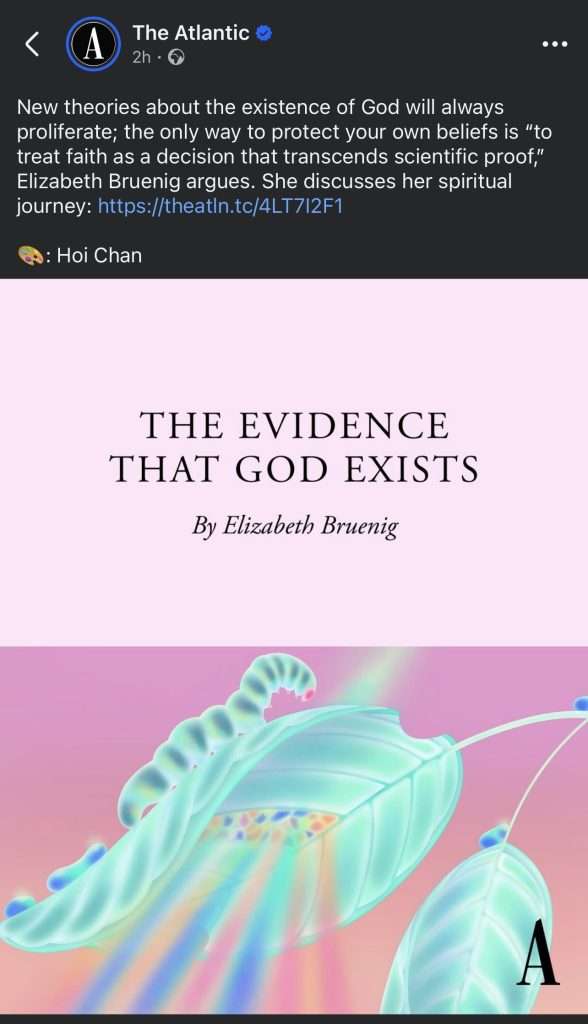
I see these kinds of articles and comments now and then.
THE MANY IMAGES OF GOD
Often, they seem to assume that everyone has the same image of God as they do, which seems odd. Even within the same religion, there are many different images of God. Sometimes, they are radically different.
THE GIFTS IN EACH IMAGE OF GOD
All images of God are images, and they each have gifts and shortcomings.
They reflect a culture, a time, a worldview. They give us a focus, sense of belonging (if they are shared with others), a sense of coherence, maybe even a sense of knowing – whether justified or not.
THE DILEMMAS INHERENT IN PARTICULAR IMAGES OF GOD
I also notice that the dilemmas many experience in relation to God often come from their particular image of God.
That’s why it makes sense to…
- Make that image explicit and conscious
- Look at the consequences of having that particular image, and the dilemmas that stem from it
- Acknowledge that others have other images of God, even people within the same religion as you
- And perhaps explore those images and see whether one or some of them make more sense to you
I notice that many of the classic dilemmas within Christianity stem from the sky-god image of God. Of God as somehow separate from this world, with a few interactions here and there. For instance, it then becomes something you have to believe in. You have to take someone’s word for it. And that, in itself, creates a lot of problems.
Of course, other images of God come with their own limitations and dilemmas. That’s fine. And it’s good for us to acknowledge and explore all of that.
REALITY IS ALWAYS MORE THAN OUR IDEAS ABOUT IT
Reality is always more than and different from our ideas about it. Our ideas are maps – imaginations – that help us orient and live in the world. They do not hold any final or absolute truth. That’s not their function.
And that’s the case with our images of God as well. Our ideas are imaginations. They help us orient and function in certain ways. They have certain effects. They are maps, not the terrain.
So why not choose one – or a set – that makes sense to us? That guide us to live as we would like to live? That are in integrity for us? (For instance, that don’t require us to pretend that something is true when we know we cannot know for certain? Or even are aligned with science and scientific methods?)
GOD = EXISTENCE AS A WHOLE
Personally, I prefer to define God as reality, as existence as a whole.
I don’t know what that entails, of course, but it means that I see this world – the world I am familiar with and my experiences – as part of the divine. It’s all God expressing, exploring, and experiencing itself in always new ways, including as what’s here right now. I am one of innumerable local and temporary organs for the divine. And that goes for all beings.
That makes sense to me. There is nothing to believe in. It’s right here now. And it keeps everything else open – the possibility of life before and after this life, reincarnation, angels, effects of prayers, and so on. Those are all possible with that image, and not required. They become something to explore.
THE ORIGINAL ARTICLE
Link to the original article: The Evidence that God Exists by Elizabeth Bruenig.
I am not a subscriber to The Atlantic so I haven’t read the full article, But it does seem to be an example of what I am talking about here.
She starts with a particular image of God, which has problems and limitations inherent in it, and then tries to find solutions to those problems. If I were in her situation, I would question my image first, before trying to find ad hoc solutions to the problems that stem from that particular image.