Outline of a Holistic Worldview: Ecospirituality, Sustainability, Ecopsychology & Deep Ecology (1997)

This was originally written in 1997 and published on my first website. I retrieved it from the archived site on the Internet Archive. The original wording, spelling, and punctuation are preserved. The only changes are the merging of the original linked pages into one article and the addition of heading structure for navigation.

Ecopsychology, Ecospirituality, Deep Ecology, and Health is a shorter companion piece from the same year.

A BRIEF NOTE

It’s interesting to look at these articles now. I remember my enthusiasm at the time, my wish to continue writing about these things, and maybe eventually teach at a college or university. That did not happen, partly because of going against my clear inner guidance that same year (going to Wisconsin and abandoning just about everything important in my life) and partly because of my health.

I also see an interesting dynamic. After the oneness shift, my mental aspect tried to make sense of it. It sought out worldviews that matched the immediate noticing of oneness and all as a seamless whole. That’s mainly what these articles are about – making sense of oneness. Re-educating the mental field so it is on board with what’s noticed in immediacy.

These days, that’s less of an interest. Maybe those years did the trick, at least enough for now.

Welcome

Welcome to this outline of a holistic worldview.

Feel free to read this collection of thoughts and text fragments in a non-linear fashion. Each fragment should to some degree reflect the whole of the worldview they are born from, and at the same time flesh out and give substance to a part of this whole.

Note that this is only one of an endless number of possible and equally valid and useful worldviews – each fitting nicely in with one or more of the multitude of possible world experiences. It does not reflect any “absolute truth”.

Feel free to let it inspire and challenge to own reflection.

Introduction

This Text

This “Outline of a Holistic Worldview” is a collection of texts meant to be for inspiration and challenge. We all need challenges to our habitual ways of experiencing our world – to stay flexible, open to new experiences, and open to new and more appropiate ways of organizing our experiences. This is one contribution in that direction.

These texts are by no means representative for all ecospiritual views, and barely so for a minority of them. If there is anything here that seems to be of value, it can be attributed to the wisdom of the universe being expressed through people I have shamelessly stolen from. It can also be attributed to direct experiences of the Universe – as it has arisen within and without of myself. All that is obscure, loopsided, muddled and not grounded, can be attributed to my own obscurations.

As diversity appears to be of immense value both in ecological and social systems, I do sincerely not wish these views to be adopted by all or even a majority. What I do hope is that it will inspire each one that take time to read some of this to reflection, to modification and formation of own views. Even, or maybe especially, if they are very different from those expressed here.

A Note

Please note that some texts are written from a traditional human perspective, and some from the so far more unusual perspective of the larger whole. Some are written in two versions, giving examples of both perspectives.

This will hopefully give a feel for the difference between the two, and a sense of the value of them both.

The content is often the same, but the perspective, and thus the experience of its meaning, differ.

This Perspective

The perspective outlined above is only one of an endless variety of possible world views, models or maps of existence.

As any other map, it is wrong.

It is based on an incomplete experience of the world, and in addition is an incomplete reflection of this experience. The world is always more and different from our experiences and maps of it.

At best, this perspective can be a guide for how to perceive and act in the world. It can be an aid of preliminary value until new experiences and new situations demands a different map, more appropriate for the new situation.

Read More
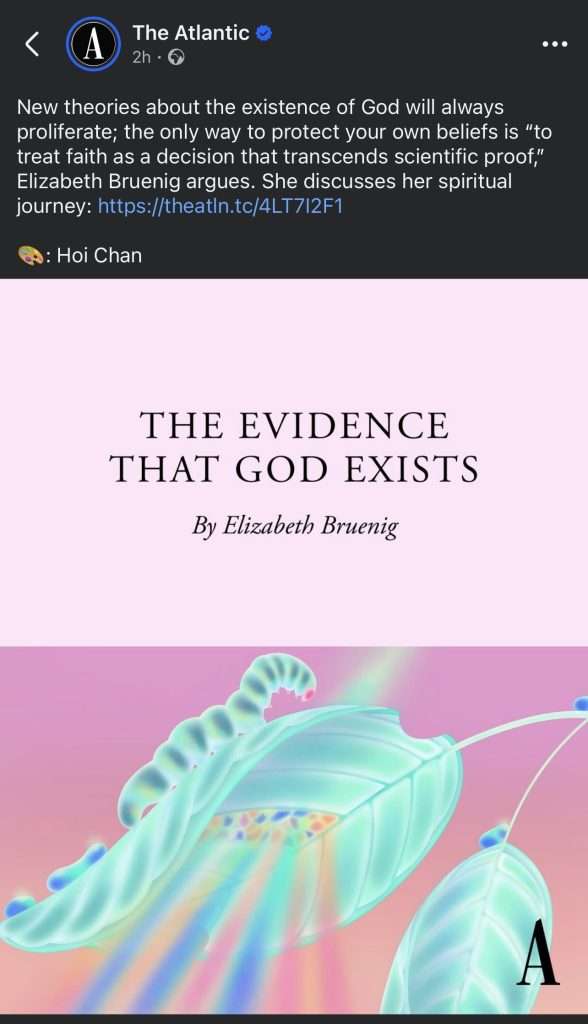
What do we mean by “God”?

I see these kinds of articles and comments now and then.

THE MANY IMAGES OF GOD

Often, they seem to assume that everyone has the same image of God as they do, which seems odd. Even within the same religion, there are many different images of God. Sometimes, they are radically different.

THE GIFTS IN EACH IMAGE OF GOD

All images of God are images, and they each have gifts and shortcomings.

They reflect a culture, a time, a worldview. They give us a focus, sense of belonging (if they are shared with others), a sense of coherence, maybe even a sense of knowing – whether justified or not.

THE DILEMMAS INHERENT IN PARTICULAR IMAGES OF GOD

I also notice that the dilemmas many experience in relation to God often come from their particular image of God.

That’s why it makes sense to…

  • Make that image explicit and conscious
  • Look at the consequences of having that particular image, and the dilemmas that stem from it
  • Acknowledge that others have other images of God, even people within the same religion as you
  • And perhaps explore those images and see whether one or some of them make more sense to you

I notice that many of the classic dilemmas within Christianity stem from the sky-god image of God. Of God as somehow separate from this world, with a few interactions here and there. For instance, it then becomes something you have to believe in. You have to take someone’s word for it. And that, in itself, creates a lot of problems.

Of course, other images of God come with their own limitations and dilemmas. That’s fine. And it’s good for us to acknowledge and explore all of that.

REALITY IS ALWAYS MORE THAN OUR IDEAS ABOUT IT

Reality is always more than and different from our ideas about it. Our ideas are maps – imaginations – that help us orient and live in the world. They do not hold any final or absolute truth. That’s not their function.

And that’s the case with our images of God as well. Our ideas are imaginations. They help us orient and function in certain ways. They have certain effects. They are maps, not the terrain.

So why not choose one – or a set – that makes sense to us? That guide us to live as we would like to live? That are in integrity for us? (For instance, that don’t require us to pretend that something is true when we know we cannot know for certain? Or even are aligned with science and scientific methods?)

GOD = EXISTENCE AS A WHOLE

Personally, I prefer to define God as reality, as existence as a whole.

I don’t know what that entails, of course, but it means that I see this world – the world I am familiar with and my experiences – as part of the divine. It’s all God expressing, exploring, and experiencing itself in always new ways, including as what’s here right now. I am one of innumerable local and temporary organs for the divine. And that goes for all beings.

That makes sense to me. There is nothing to believe in. It’s right here now. And it keeps everything else open – the possibility of life before and after this life, reincarnation, angels, effects of prayers, and so on. Those are all possible with that image, and not required. They become something to explore.

THE ORIGINAL ARTICLE

Link to the original article: The Evidence that God Exists by Elizabeth Bruenig.

I am not a subscriber to The Atlantic so I haven’t read the full article, But it does seem to be an example of what I am talking about here.

She starts with a particular image of God, which has problems and limitations inherent in it, and then tries to find solutions to those problems. If I were in her situation, I would question my image first, before trying to find ad hoc solutions to the problems that stem from that particular image.

The simplest view

There is a view that explains nearly all of the big questions humans have, and does so in a simple, logical, and elegant way.

That view is that all is Spirit, all is God, the divine, Brahman, Allah1.

The world and all of existence is the divine expressing, exploring, and experiencing itself in always new ways. What we take ourselves to be is a local expression of the divine expressing, exploring, and experiencing itself.

It explains just about all the big questions and does so in a satisfying way.

As a bonus, it also happens to fit our own immediate noticing when we find our more fundamental nature2.

It explains the question of evil, our relationship with the divine, what the meaning of life is, and much more3.

The main question it doesn’t explain is how there is something rather than nothing4. To me, that’s completely baffling. It stops my mind and I cannot find even the beginning of an answer.

It also doesn’t really explain what happens after the death of this human self. To myself, I am the timeless that time happens within, I am what the appearance of birth and death happens within and as. And yet, that doesn’t mean that the consciousenss I am continues after the death of this human self. It may continue and it may disappear with the body. I cannot know for certain. It’s tempting to say that consciousness continues but if I am honest, I have to admit I don’t know and cannot know.

It leaves some things open, which is how it should be. It leaves the things I don’t need to know now open. It leaves it to be discovered at another time, or not.

And, as any view, it’s a question about the world. It’s something for us to explore.

(1) To some with a Western materialistic mindset, it may seem fantastical and unnecessary. And yet, is it any more amazing that all is God than that all is matter? To me, they seem about equally improbable and fantastical, and the former is – in many ways – more logical. (This also has to do with what we mean by God and what images we have of God. I am not talking about the standard Christian or theistic God here.)

(2) I find I am what my field of experience happens within and as. I am the consciousness that forms itself into any and all experiences that happen here. To me, the world is the play of consciousness. It’s lila.

(3) Evil = part of the play of the divine. Our relationship with the divine = we are a part of the larger divine whole. The meaning of life = for the divine to experience itself as and through us and everything.

(4) Some say it’s because of God, but that’s not an answer since God is something rather than nothing. Some also say that it is all nothing, which is technically true in that all appears as consciousness and not a “thing”. That too is missing the point since there are still appearances. When I say “something” I include appearances, anything that’s not a complete absence.

Image by me and Midjourney

Read More

Rumi: Things are such

Things are such, that someone lifting a cup,
Or watching the rain, petting a dog,
Or singing, just singing — could be doing as
Much for this universe as anyone.

– Rumi in The Purity of Desire: 100 Poems of Rumi, reinterpreted by Daniel Ladinsky

This question sometimes comes up for me as a kind of life-koan. For health reasons, I am doing far less in the world than I used to and imagined I would, so this comes up for me. Does my life have meaning and value even if I am not doing the things I imagined I would do in the world?

What do I find when I look into this?

The essence – taking it literally

We can take the poem literally and look at what our activities do for the universe.

If we are engagest in the simplest of activities, and perhaps appear to be doing very little, how can that be doing as much for the universe as anything? Does our existence, in itself, do as much for the universe as anything?

What first comes to mind is that I cannot know. I cannot know if not laughing, or petting a dog, or singing isn’t doing as much for the universe as anything. Perhaps just existing and experiencing what I am currently experiencing does as much for existence as anything.

We can also look at this from a systems view. We can see the universe as a seamless evolving system, and we and all beings are parts of this system. We are the local eyes, ears, thoughts, and feelings of the universe. In this sense, any activity or experience may do as much for the universe as anything.

And if we see the universe as the divine itself, then our experiences and activities are the experiences and activities of the divine. Here too, the simplest of activities and simply existing may do as much for existence as anything.

We can also bring it home. Here, I find that my current experience does as much for me as anything. In other words, it does as much for my universe as anything, and it does as much for this local part of the universe I call “me” as anything. Right here, I find how it’s true.

The essence – bringing it home

Often, these apparently metaphysical questions are about something more immediate and simple.

Does my life have meaning and value? Even if I don’t do what I had imagined? Or as much as I imagined?

This is where it makes sense to talk about meaning and value. My life as it is, even in the simplest of moments, is of immense value to me and to those who love me.

For our personal lives, this is perhaps the most important and the essence of the question.

Our sense of meaning and value is often colored by less-than-helpful assumptions we have adopted from our culture, perhaps telling us that our value is tied up with what we do, so it’s helpful to notice these, examine one at a time, and find what’s genuinely more true for us.

Some painful beliefs worth examining may be: My life doesn’t have value. If I don’t do X, my life doesn’t have value. I need to do X to be loved. And so on. What this really is about is often something universal, vulnerable, simple, innocent, childlike, and essential for us as human beings.

IN A BROADER CONTEXT

I’ll go into a few related topics and angles since it has direct consequences for how we live our lives, and the choices and priorities we make individually and collectively.

There are a few related but distinct questions here: What does an activity or our existence do for the universe? What does the activity or existence of anything do for the universe? What’s the value we assign to these things and how does that influence our perception, choices, and life?

Protestant work ethic and value through productivity

Coming from northern Europe, I am familiar with the protestant and capitalist work ethic suggesting that we have our value from what we do in the world. Productivity equals value.

Is that really true? What about a baby? A baby isn’t productive and still considered valuable. Is it just because we expect it to become productive later? Is someone with a handicap not valuable? Someone in a coma? Does nature only have value for what it produces for itself and us?

It all depends on how we look at it. People with a disability are loved by someone, and that makes them valuable to that person – and others who value love. And the same for a baby, and even someone in a coma.

Cannot find value outside of what the mind assigns to it

Of course, the idea of value is an idea created by the mind. It’s not inherent in reality.

We – collectively and individually – decide what’s valuable, and it’s good to remember that this is, quite literally, imagination and fantasy. At a collective level, it does help with coordination and cohesion, and it’s also something we can question. We can recognize it as imagination.

This also means that we can, as individuals and even collectively, assign value to what we find useful to us. For me, it seems useful to assume that all living beings, all ecosystems, and all life has value just from existing. Beyond that, I would assign value to all parts of Earth since the non-living parts of Earth – water, air, rocks – are as integral and essential to this living planet as anything else. All life, including ourselves, depends on it for our life.

Assigning value to all life and Earth as a whole allows us to live in a way that honors the living systems we are part of, and even ourselves independent of productivity or anything else. It’s practically useful since it opens up for some reverence for all life and makes us consider if we can meet our needs in a different way. Perhaps one that minimizes harm to life, and may benefit life overall.

A systems view

If we see the universe as a seamless system, then we see all things as part of this evolving system. All parts of the system have value as parts of this larger dynamic system.

We can also see all beings as the universe locally bringing itself into consciousness. In the words of Carl Sagan said, we are the local eyes, ears, thoughts, and feelings of the universe. All life is, in its own way.

If we see it this way, it’s natural to also see all life as having value and all things having value in themselves.

Divine creation or the divine itself

We can see all of existence as divine creation, and as such, it has meaning and value in itself.

We can also see all of existence as the divine. We may see the physical body as the divine taking physical form. And this opens up for even a deeper sense of reverence for all of life and all of existence.

Capacity for the world

When I find myself as capacity for the world, and that which anything I think, feel, see, hear, and so on happens within and as, this all looks a bit different. Here, everything has value. Everything is what I am. Everything happens within and as the one. We can also say that everything is the divine.

Here, the reverence for life and all of existence comes from direct perception.

Values and a pragmatic approach

We can choose to assign value to all life, and that doesn’t mean we won’t prioritize and make difficult choices. For instance, we can choose ecosystems over individual life, and we may choose our own life over that of plants we eat to survive. We always make these kinds of choices, and it’s good to be conscious of it.

Life is a mix of destruction and giving life. We eat life to stay alive. We ourselves are eventually consumed by other life. That’s how things work here.

As mentioned earlier, by assigning value to all life, we may live with more reverence for life and find different strategies that minimizes harm to life and perhaps even benefits life overall.

And as Albert Schweitzer said, by living we put ourselves in debt to life, and we can do our best to repay that debt through how we live our life.

Read More

The gifts of atheism

Being from a country where most are atheists or agnostics, I am familiar with the gifts of those views.

The different main -isms reflect aspects of reality. There is some truth to each of them.

Here are some examples.

Atheism. Our images of God are not it. Reality is more than and different from our ideas, images, maps, and theories.

Agnosticism. We don’t know. We cannot know anything for certain.

Non-theism. Spirit is all there is. Everything happens within and as Spirit. The divine is not a separate being.

Panentheism. The universe is Spirit, and Spirit is more than that.

Of course, this is very simplistic. But it can be interesting – and fun – to explore the grain of truth in any views, as it appears to us.

What other gifts may there be in, for instance, atheism? This is what comes up for me. It reminds me to not automatically believe something just because someone told me it’s true. It reminds me to have a healthy skepticism towards religions. It reminds me of the downsides of religions. (Their main purpose is, almost inevitably, to maintain themselves. They can get mired in dogma. They are sometimes used for a few to gain and maintain power. And so on.) It reminds me, as mentioned above, that me images of something are images and not reality itself. And militant atheists remind me that any idea or ideology can be made into a religion, and that I don’t know anything for certain.

For me, these reminders are not so much about religions since I have never really been drawn to them, but other areas of life. Which areas of life do each of these reminders apply to for me? Where can they be a healthy reminder and correction? Where do I tend to believe something someone else said? Or make something, any idea at all, into a religion for myself? What are my own most cherished beliefs or ideas? Where do I get defensive? (As if I am trying to protect an idea or identity.)

Read More

Atheist?

This is something that was more important to me in my teens and early twenties, but it came back to me after seeing an article about atheism in the US. (The article was about how atheists is the one group left in the US that’s often seen as fair play for intolerance.)

In some ways, I see that the atheist label fits me.

I don’t subscribe to the idea of God as a person, or entity. Unless we see all of existence – capacity, formless, form – as an “entity”.

I am a-religious, in many ways. I am mildly curious about religion, as a social, psychological and mythological phenomenon. I appreciate the value of what they offer (community, guidance), and sometimes enjoy going to ceremonies etc. I also see the drawbacks of religion, especially how it’s sometimes used as a tool for social control and power, and limits how people see themselves and life. But there isn’t so much more there for me.

I am science oriented in terms of methods and also in appreciating and making use of the content of contemporary science.

I grew up in a religionless family and culture (in Norway), so atheism is natural for me. I became a self-described atheist in elementary school, and even back then criticized religion for often misleading people and being based in having to take what someone else says as gospel.

Also, the Buddhist label fits me, since I have found the pointers there helpful and accurate. And the Christian label fits me, since I do have a strong connection with Christ and the Christ presence. Aspects of many other labels – including panentheism – also fit.

And really, none fit very well. Reality cannot be captured by any label of set of images and ideas. And I find pointers from just about any religion and spiritual tradition, and also many pointers from outside of religion and spirituality, helpful.

Read More