I have been in a dark night for about 25 years, depending on how you count it, and perhaps there has been a thread of a dark night through my life from the beginning.
WHAT IS A DARK NIGHT?
What do I mean with a dark night? There are many different types, and I am not an expert so I can only share how it appears to me.
The essence of a dark night seems to be that parts of me, or my conscious view, holds onto a view, and life rubs up against that view.
Life invites me to see that I am holding onto a view that’s not entirely accurate, at least not in the way I take it. I hold onto it to for safety, and something else is possible.
At a visceral level, which is as or more important, there seems to be a wearing off of this (often less conscious) clinging to views for safety. Life wears it off in us through challenging experiences.
A THREAD OF A DARK NIGHT
Maybe the way I wrote about it in the intro is most accurate.
There is a thread of a dark night through my life, and sometimes it’s stronger and more in the foreground and other times more mild and in the background.
FORMS OF DARK NIGHT
For me, the dark night has taken especially two forms.
One is distress from leaving a clear inner guidance on a major life decision, and continuing to leave my guidance by staying in a situation that went counter to my inner guidance. This started in my late twenties, went through my thirties, was resolved in my outer life in my early fourties, and I am still recovering from it.
The other is a massive amount of primal fear and trauma surfacing, to a degree that felt completely overwhelming to my human self and brought me to my knees. This started when the CFS came back strongly in my late thirties, peaked in my early fourties, and is taking a milder form now.
It has been mixed in with a lot of losses – of health, house, most of what I owned, marriage, friends, opportunities, and so on.
There is also the everyday one where parts of me holds onto a view, life goes counter to it, and there is discomfort and distress. (For instance, a part of me wants silence and rest, and life brings up noise and movement.)
In a sense, my chronic illness has been a thread of a dark night for me.
Some have an experience of the divine that goes away and it seems that the divine has left them. (They may have associated the divine with an experience, and are invited to find it independent of the changing content of experience.)
Some go through “dry” periods with a loss of motivation. (The personal motivation is gone and something else, less personal, has not yet entered.)
I have experienced those too, but they seem mild compared with the first two I mentioned…!
I know there are many other forms of dark night and I may add these to the list as they come to me.
HOW I NAVIGATED MY DARK NIGHT
How do we navigate a dark night?
It obviously depends on the type of dark night, where we are in the process, and the situation in general.
Here are some thing that seemed to help me.
The first phase of the dark night, triggered by going against my inner guidance, was resolved by finally following my guidance again on that major life decision.
The second phase has been different. When it came, and especially as it got more intense and overwhelming, it felt like something had gone terribly wrong.
It was immensely helpful to read the dark night chapter in Mysticism by Evelyn Underhill and see that others have gone through something similar. I read contemporary books on spiritual emergencies. I listened to interviews on the dark night (some helpful and some less so).
I eventually found others who had been going through it themselves, or were in the middle of it. Having conversations with them was very helpful. It made me feel more “normal” and helped me see that nothing had gone wrong in the way a part of me thought it had.
It helped me to go for long walks in nature. I was fortunate to live close to a forest (my childhood forest) at the time, and I walked for hours there, either in silence or listening to talks by Adyashanti.
My system was going haywire from all the trauma and primal fear coming up. I found that Five Element Acupuncture helped it balance, at least for a day or two.
Talking with friends helped, to some extent, especially those who are more on the receptive and understanding end.
Breema bodywork, and other forms of mindful movement, nourished and supported me a lot, although I had moved from my Breema community so there was less of this in my life at the time.
Since I had (and have) a chronic illness, and I felt overwhelmed in general, I had to find approaches that required minimum effort. For instance, I got deeper into the noticing aspect of basic meditation – to notice that what’s here in the field of experience is already allowed and noticed.
I did a lot of inquiry, especially The Work of Byron Katie and later the Kiloby Inquiries. For instance, I had the thought that “it’s too much, I can’t take it”, and discovered it wasn’t true. It wasn’t too much. I obviously could take it.
I did a lot of heart-centered practices, especially ho’oponopno.
I did an all-inclusive gratitude practice in periods, with partners online. This is where you write “I am grateful for…” and include anything and everything, also what you don’t necessarily feel grateful for. It opens the mind and heart and something shifts.
I learned to meet my experience with kindness. I have explored it since my teens, but this was a new level of challenge. What was coming up was far more difficult to meet that way, at least at first.
It helped (and helps) to notice that all of it happens within and as the consciousness I am. In that context, nothing has gone wrong or can go wrong. There is no path that can be left.
It helped to see that this is a process of unprocessed materials surfacing. It can feel overwhelming and immensely painful and difficult, and yet it’s part of a larger healing process.
For me, since I can see energies, it also helped to notice the energy around everything and everyone. It was a reminder that all is Spirit and the divine, even the (apparently) terrible things I was going through.
MY EXPERIENCE
I have written about my process before so will only revisit it briefly for context.
In elementary and middle school, I was an atheist with nothing but disdain for religions and spirituality. (Although I was interested in parapsychology.)
At age fifteen, there was a dramatic shift where the world – including everything connected with this human self – seemed very far away. I think it was during this time I got into The Turning Point by Fritjof Capra. I am pretty sure this is also when I started seeing energies, first around leaves set against the blue sky.
At age sixteen, there was another dramatic shift. I walked along the gravel road to the house at night with a big wind going through the landscape and the sky full of stars. Suddenly, all was God. All was the divine without exception. This human self and anything else was revealed as the temporary and local expressions of the divine, as part of the play of the divine.
This shift didn’t go away, although it was followed by years of intense energies running through my system and a flood of insights and inspirations. (The insights are essentially the same as what I write about in these posts.)
There was a kind of honeymoon period for about ten years where things seemed to fall into place in amazing ways. I did a lot of work with projections, shadow work, basic meditation, Zen practice, and so on during this time.
Towards the end of my twenties, I got married and moved to another location. I left my graduate studies, the Zen center, my friends, and the place where I felt deeply at home. I left my path. And I did so by going through a very clear inner guidance telling me not to do it. This was the beginning of the first phase of the dark night. It brought up a great amount of constant distress in me and I felt profoundly off track.
In my thirties, I got back into meditation and inquiry, and there was a shift into a very clear no-self state. The no-self aspect of my nature came into the foreground. This lasted for about six months. (There were also many other things happening during this time. I suspect I wrote about some of them on this blog at the time.)
In my late thirties, after this shift, my health (CFS) worsened dramatically. (Likely triggered by weeks of pneumonia my doctor wouldn’t treat, possibly combined with mold and general life stress.) This was the beginning of the second and stronger phase of the dark night. At first, it was most my health problems, and then it shifted into primal fear surfacing along with early traumas and a series of losses in my life in the world. I lost my health, house, marriage (which was a good thing to lose), property, opportunities, and so on.
Some years into this, Adyashanti told me that “life will squeeze out what’s left in you” and that’s how it’s been. I have felt in an unbearable squeeze for long periods, and even now at times. I get put into situations that seem impossible to resolve.
The shift out of this most intense phase of the dark night happened around the time that I found Vortex Healing. Vortex Healing help my system stabilize, it (apparently) helped remove a latent virus in my body, and it has helped with energy boosts.
I am still in the dark night, although it’s milder now than it was. I feel I have one leg in it and one leg outside.
A WORD ABOUT TERMINOLOGY
Why is it called a dark night? As far as I know, it comes from a poem by St. John of the Cross.
Western culture tends to see things in terms of polarities where one end of the polarity is good and the other is less good, bad, or even evil.
One of these polarities is light and dark, where light is seen as good and dark as bad. I guess that makes some evolutionary sense too since we are day mammals and the night can be dangerous for us. (Also because we don’t see where we are going.)
I don’t see it that way. For me, a dark night is not dark because it’s bad or even undesirable.
It’s dark in the sense of a dark night that allows for contemplation, rest, and being with what’s here. It turns attention inwards.
BOOK RECOMMENDATION
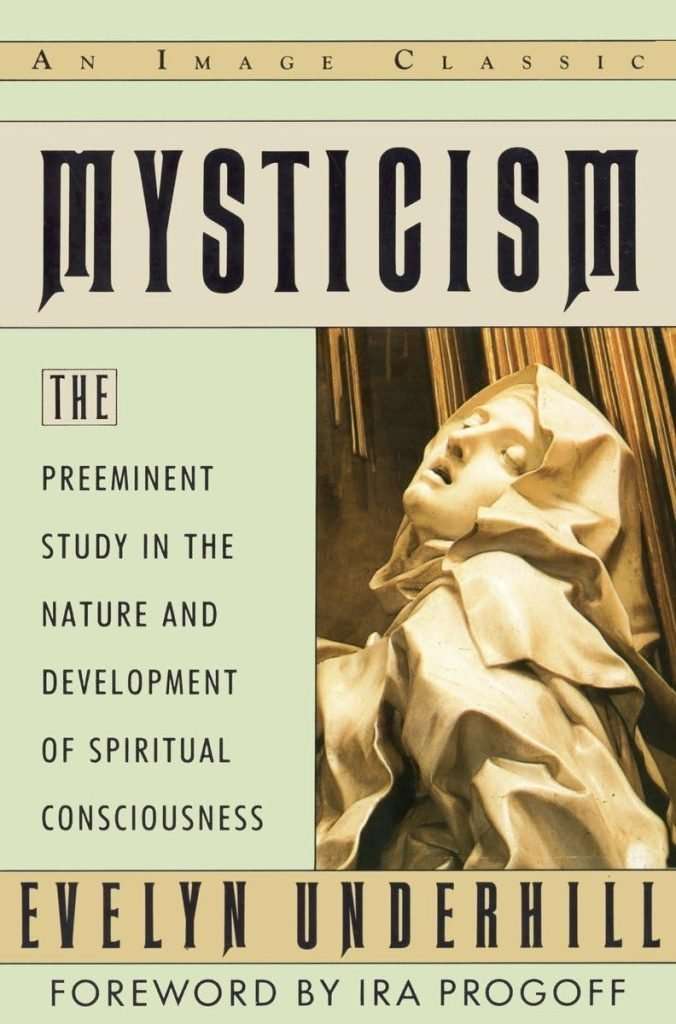
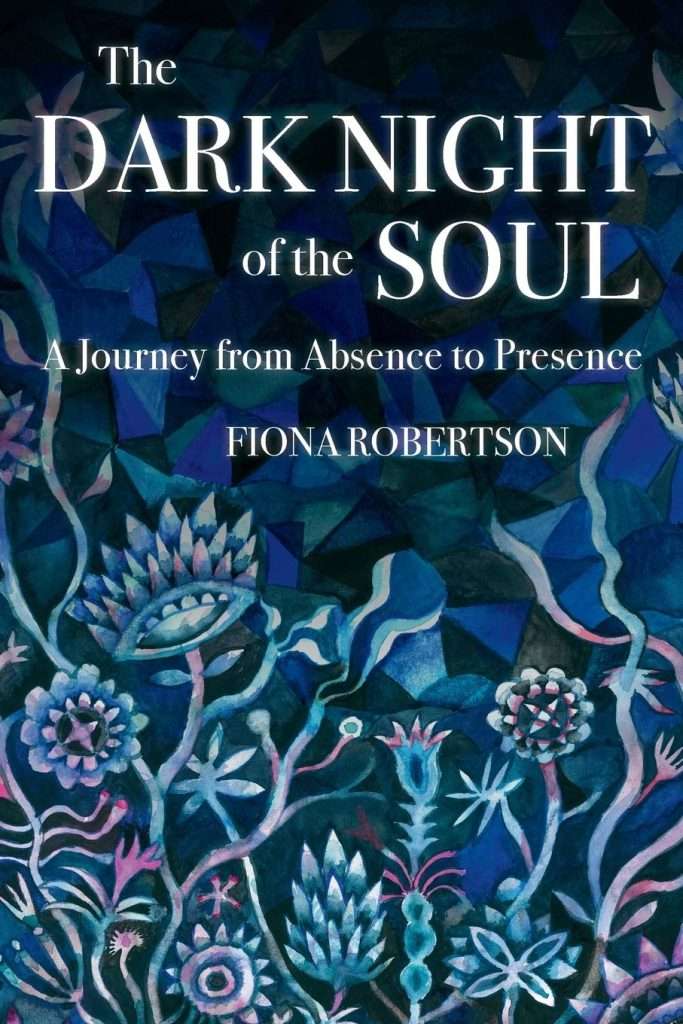
I have already mentioned how much Evelyn Underhill’s Mysticism helped me, and I want to recommend another book, this one written by a friend of mine (I am one of the people interviewed for the book):
The Dark Night of the Soul: A Journey from Absence to Presence by Fiona Robertson.
MORE INFO
After writing this, I asked ChatGPT 4o about this topic. See below.
The Dark Night of the Soul: A Journey of Transformation and Spiritual Awakening
The “dark night of the soul” is a term from Christian mysticism that refers to a period of intense spiritual struggle, confusion, or desolation, often accompanied by a sense of being disconnected from one’s faith, beliefs, or even one’s own sense of self. Although rooted in Christian mysticism, particularly in the writings of St. John of the Cross, similar experiences are found across spiritual traditions and have been explored by mystics, sages, and seekers throughout history.
Essence of the Dark Night
At its core, a dark night is a profound period of inner transformation. It is an invitation to confront the depths of one’s identity, beliefs, and attachments. This experience is typically marked by a loss of old certainties and a feeling of emptiness, as if the foundation of one’s life is slipping away. It challenges deeply held assumptions about reality, self, and spirituality, often dismantling the ego’s firm grasp on identity and control.
Dark nights can feel deeply isolating because they strip away comforting spiritual experiences, leaving the seeker in a state of “unknowing.” Yet, they often lead to a deeper connection with reality, beyond personal projections and beliefs. Mystics describe it as a process of purification, where attachments, illusions, and limited ideas about oneself and life are burned away, revealing something more expansive and liberating.
Different Forms of the Dark Night
- Spiritual or Existential Desolation: This is the classic dark night described by St. John of the Cross. Here, one feels as if divine presence or meaning has vanished, leading to a sense of being lost or adrift.
- Psychological Dark Night: Some dark nights are more psychological, touching on unresolved inner wounds, traumas, or shadow material. Carl Jung, for example, saw such periods as vital for individuation, where the individual integrates hidden or neglected aspects of themselves.
- Physical or Life Crisis Dark Night: Sometimes dark nights manifest through life challenges — illness, loss, relationship breakdowns, or other external disruptions that force a deep inner reckoning. These experiences can serve as catalysts for spiritual awakening and transformation.
- Loss of Faith or Identity Crisis: This is a breakdown in one’s worldview, where former beliefs, identities, and values dissolve, leaving a void. It may be a loss of faith in one’s religion or spiritual path, or an identity crisis where old roles and self-concepts no longer hold meaning.
- Dark Night of Awakening: This unique form occurs after an initial spiritual awakening, as one begins to integrate awakened insights. Awakening brings clarity, joy, and freedom, but often is followed by a dark night where deeper layers of ego and conditioning are faced, allowing for a more profound embodiment of awakening.
Role in the Awakening Process
The dark night plays a significant role in spiritual awakening. It serves as a “death and rebirth” process, where the old self (or aspects of the ego) dissolves to make way for a more authentic way of being. This process strips away false identifications, beliefs, and attachments that obstruct one’s deeper essence. In this sense, dark nights are a purging process, freeing one from limitations, fears, and illusions.
In many traditions, the dark night is seen as essential for fully realizing enlightenment or awakening, as it prevents the ego from clinging to the insights and experiences of awakening for its own gain. Through the dark night, one learns surrender, humility, and trust in something beyond the grasp of the personal self.
How Mystics Have Described It
Mystics across cultures have provided deeply resonant descriptions of the dark night, each in their unique context:
- St. John of the Cross: The originator of the term “dark night of the soul,” St. John described it as a time when the seeker feels abandoned by God, experiencing both the “night of the senses” (where worldly desires and pleasures are purged) and the “night of the spirit” (where deeper attachments and subtle aspects of the ego are dissolved). He saw it as an essential part of union with the divine.
- Mother Teresa: In her letters, Mother Teresa described years of feeling that God was absent. Her dark night lasted much of her life, though she found purpose in serving others despite this absence of divine consolation. Her writings reveal that dark nights can coexist with a life of service and devotion, even without feelings of spiritual fulfillment.
- Rumi: The Sufi poet Rumi often spoke of longing and loss as pathways to divine love. For Rumi, separation from God was an illusion that must be experienced and transcended. His poetry is filled with the language of longing, emptiness, and surrender, echoing the essence of the dark night.
- Meister Eckhart: The Christian mystic Meister Eckhart described the need to “detach” from all things, even one’s concept of God. He saw surrendering all attachments as essential for knowing the divine directly, and he emphasized that this path was not easy or comfortable.
- Buddhist Perspectives: In Buddhism, particularly in Zen, such periods are seen as “Great Doubt” or “Great Death,” where the individual faces the emptiness of all concepts, including self. It is often said that “Great Doubt leads to Great Enlightenment,” emphasizing the transformative power of confronting the unknown directly.
- Contemporary Spiritual Teachers: Modern teachers like Adyashanti and Eckhart Tolle describe dark nights as a kind of death of the self. Adyashanti calls it “the purification process,” where everything not aligned with truth must come to the surface, and Tolle speaks of it as a necessary dissolution of the ego.
Integration and Transformation
The ultimate aim of the dark night is to bring about a radical transformation in consciousness. By confronting inner darkness, one emerges with a newfound sense of humility, resilience, and compassion. The experience reshapes priorities, detaching one from the superficial aspects of life and deepening the connection to what truly matters. When integration happens, a deeper peace and sense of presence become available, no longer dependent on external conditions or fleeting experiences.
Practical Approaches for Navigating the Dark Night
- Acceptance and Surrender: Resisting the dark night often intensifies the struggle. Learning to embrace the discomfort as a transformative process can lessen the suffering.
- Patience and Self-Compassion: The process can be long and challenging, so self-compassion is essential. It’s a time to be gentle with oneself, letting go of the need to “fix” things and allowing the process to unfold.
- Community and Support: While the dark night feels isolating, connecting with understanding friends, mentors, or spiritual communities can provide reassurance.
- Meditation and Reflection: Practices like tonglen or contemplative prayer can help one stay present with difficult emotions, integrating them rather than pushing them away.
- Trust in the Process: Mystics remind us that dark nights are temporary and purposeful. Trusting the wisdom of the process, even when it’s unclear, can be a guiding light through the darkness.
In the end, the dark night of the soul often catalyzes a shift from reliance on external sources of fulfillment to a deeper, unshakable sense of inner wholeness. It leads one beyond spiritual concepts, revealing a way of being that is authentic, connected, and free. The transformation that arises from dark nights is a testament to the resilient and profound nature of the human spirit.