What happens after we die?

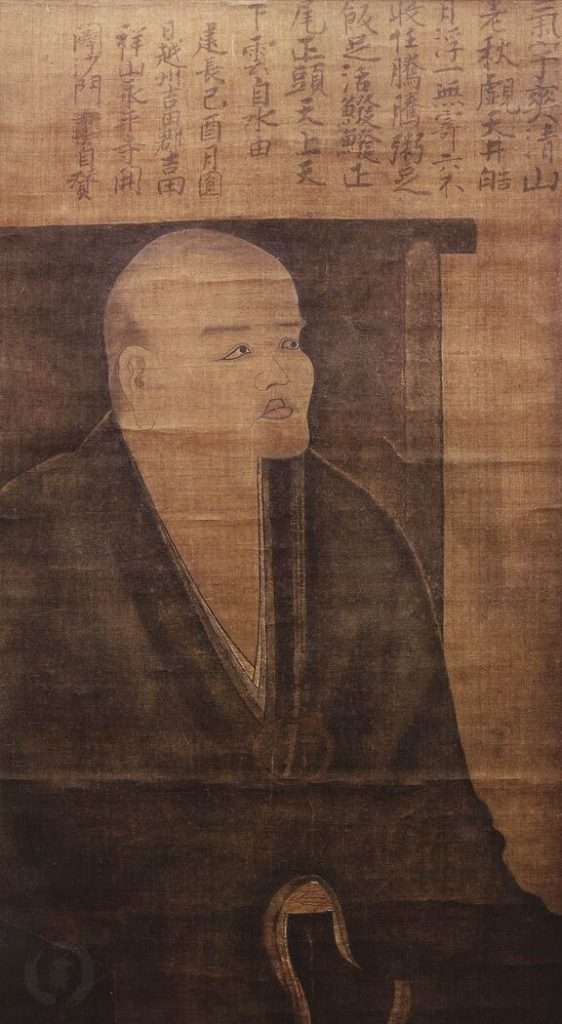
A student asked a Zen master what happens after we die. The master said: I don’t know. The student replied: Aren’t you a Zen master? The Master: Yes, but not a dead one

– paraphrased and with uncertain source, maybe Zen Flesh, Zen Bones?

In a social media group for Vortex Healing, someone asked what happens after we die.

According to several traditions, we – or something – reincarnates. And according to the main Vortex Healing teacher, after a certain number of classes, we don’t need to incarnate anymore. The pull towards a new incarnation in our system has lessened sufficiently.

A few things come up for me around this:

It’s an interesting topic for science, and some scientists are exploring it. Surviving Death by Leslie Kean is a nice overview of some of this research. It’s also notoriously difficult to research, and whatever we find can typically be explained in several ways.

I don’t know. I cannot know for certain. Also, I don’t need to know. Any story about what happens after death is a story about the future.

If something is reborn or reincarnated, it’s something within the content of experience. It’s likely a set of patterns within the content of experience. It’s not what I more fundamentally am.

If there is a cycle of incarnations, I doubt that this is the last incarnation for this particular content. In my case, there is so much more work to do in terms of healing, maturing, clarifying the awakening, living from oneness, and so on. It feels like I am just scratching the surface so far. I am a baby. It would be a shame if there are no more incarnated lifetimes to continue to explore and deepen into it.

In a practical sense, if I felt a need or compulsion to know, that would point to something here and now. Where does that need or compulsion come from? How is it to meet that part of me with kindness? Do I have stressful stories driving that compulsion? How is it to identify and inquire into those stressful stories?

If I felt a compulsion to not incarnate again, it would be the same. Where in me does that compulsion or need come from? What painful stories are behind it? How is it to meet that part of me with kindness? What do I find when I identify and examine those painful stories? How is it to find healing for any wounds in me behind that desire to not incarnate again? How would it be to find more peace with this life, as it is?

Personally, I find this life endlessly fascinating and – as mentioned above – there is so much more to explore, discover, clarify, and live. And I also have understanding that for some, it may feel easier to wish for an end to a potential cycle of incarnations. (Which for me, here and now, is imaginary whether it points to something real or not. It’s something I can only find in my imagination.)

Read More
Dream: A Zen center is now at the place where I grew up

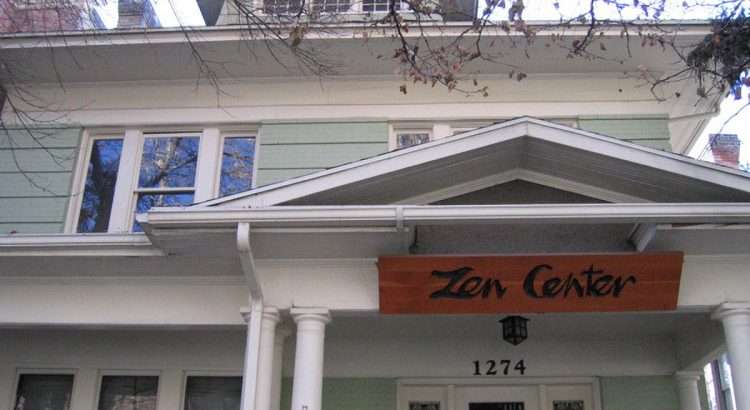
I am briefly back where I grew up, and visit the location where my childhood home was. It has recently been sold and demolished. I am vaguely aware that there is a Zen center there, with people I know from Kanzeon in Salt Lake City. A couple of them sees me, give me a big hug, and show me around and invite me to join the evening sitting. I agree. I am reminded of how much I love the community and the practice. I see and buy a house that’s a part of the community. Along with this, I am also, somehow, adopted as a son by an older man, along with a close female friend of mine. It’s a way to formalize the connection we have, appreciate, and value. Another woman and I start a romantic relationship. I knew her slightly from the past.

This is an interesting and rich dream.

WAKING LIFE

There are many waking-life elements in this dream.

The house I grew up in was recently sold and handed over to the new owners two weeks ago. It is being demolished, or has already been demolished, like in the dream. I was back in that town two days ago, for an appointment. Later that day, I joined a small meditation group organized by another Norwegian who lived at Kanzeon Zen Center in Salt Lake City some time after I was there.

This winter, I am considering spending time at a Zen center in the Netherlands that’s run by one who was a junior teacher in SLC. And I am looking for that kind of community.

Last week, I saw My life as a Zucchini, where an orphaned buy and a girl are adopted by a man.

I don’t know any of the people in the dream in waking life, apart from a couple who greeted me and showed me around. They were two women from Kanzeon (Felicity and someone else).

THE DREAM

In the dream, I came home in two different ways. I returned home to where I grew up. And I found another home there, a Zen center with several people I already knew and with a community and practices I like. It fitted like a hand in glove.

I found a female friend, and also a possible romantic partner.

My friend and I were adopted by the older man, to formally acknowledge our connection and importance in each others lives. He is wise, kind, mature, and on an awakening path.

I bought a house that was part of the center, and either on or very close to the site where my childhood home had been.

I knew about the center for a while, but had not visited since I was busy getting my childhood home ready for sale (reflecting waking life).

REPLACING

A central theme of this dream is replacement.

My childhood home is replaced by a Zen center. My father, and parents (?), are replaced with the older man I have a deep connection with. My brother in waking life is replaced by a close female friend. Even my wife is replaced by someone else…!

That makes sense. I am in a major transition with the demolition of my childhood home and base in Norway, my mother who died in August, and my father who has trouble seeing, hearing, and moving.

In the dream, all of this is replaced by something that feels far more right for me: A community and center aimed at awakening and living from awakening. A sister on a similar path. A father who is mature in a different way and on the awakening path. Even a new romantic partner.

ENCOURAGEMENT

I can see the dream as a reflection of my wishes and orientation, and also as an encouragement to find it in my waking life. I see and feel it as an encouragement for me to visit the Zen center in the Netherlands. To find a community. To find a shared structure for awakening explorations.

ALL IN ME

This is also all in me. All the dream elements and dynamics reflect what’s already here.

I have an inner community engaged in conscious living and awakening explorations.

It is familiar to me, just like my childhood home.

An older, wiser part of me may have adopted me. He is there, taking care of me.

I can find a new inner romantic partner, a female part I am only slightly familiar with, and am fascinated by and want to get to know better.

Read More

Dream: a Zen center in Barichara

I am in the village of Barichara, and there is a Zen center at the edge of town. I am there early, and talk to a senior student who is also there early. After a while, the teacher and the rest of the students come. The teacher is very experienced. I am slightly disoriented and concerned I am out of shape for sitting long periods at a time. I am impressed by the teacher, the students, and the place. More than twenty came for what was just a regular meditation session.

In waking life, I live near Barichara, and in the dream, I was in town, as I often am. The Zen center is at the edge of town, in the area I like the most (Northeast) where the buildings are in good condition, there is more nature, and it’s on the edge of a forest with wildlife.

The Zen community was impressive, with a very experienced teacher and dedicated students. I think they had meditation sessions several times a day.

As I woke up, I also noticed that just about everyone – from the teacher to the students – were women of different ages. I hadn’t really noticed during the dream, since I am used to settings where most are women. I am drawn to what I associate with the feminine qualities of practice – receptivity, nourishing, kindness, embodiment, community and connections with others. That’s what my system seem to need now.

They were also mostly from the US, which makes sense since my Zen experiences have mostly been from the US. I associate Zen in the US with a combination of tradition and innovation, and using the best from both.

I am there early. The initial oneness shift happened early in my life.

I have been strongly drawn to being in such a setting again, although I have some of the concerns I had in the dream. I am not used to sitting for longer periods of time. I don’t know how it will work with my health, as it is now. Also, as I mentioned earlier, my system is drawn to a more feminine approach to practice, and Zen is often more masculine and can be rigid and harsh.

At one level, the dream reflects my waking life wishes and concerns.

In another sense, it’s all me. The consciousness I am forms itself into all of it in the dream, and everything and everyone in the dream reflect parts of my human self.

I am Barichara, the Zen center, the edge of wilderness, the teacher, the students, the dedication, and the concern. What stories I have about them, I can turn to be about me, and find genuine and specific examples of how it’s here.

Read More

Dream: OK with being scared, and expressing my gratitude to my old Zen teacher

It’s first day of school, either high school or university. I notice I feel a bit scared and disoriented, and also that I am OK with it. Genpo Roshi is there and I go to see him in his office. He has long hair. I tell him I feel scared, and that I notice I am OK with it. It’s not at all a problem to share it with others, and it’s fine that it’s here. We both realize and acknowledge how big a shift that is from when I was a teenager.

I say I need to tell him something, and that I realize I will regret if I don’t. I need to tell him how much he has meant to me. He says, “it changed your life” just as I was about to say the same. He changed my life, with Kanzeon, with his teachings and the Big Mind process, and so on. We have a heartfelt connection, and we are both recognizing the same things. We share in the recognition. It’s beautiful.

I am back in school, either high school or university. I am both a young adult and me now, later in life. The feeling is similar to the old first-day-of-school feeling, especially in a new place and with many new people. I feel scared and disoriented, and notice I am OK with it. It’s understandable and the others experience the same in their own way.

Genpo Roshi has an office in the heart of the building. He has a central role there. When I enter his office, I notice he has long blondish hair. He seems more relaxed, comfortable with himself, free of traditions. I share what’s going on with me, and that I notice I am OK with it. It’s fine. It’s understandable, and it’s also completely fine to share and be open about it.

We both recognize how big of a shift that is for me, especially from school but also from later.

I say I need to share something with him, and I know I will regret it (slightly) if I don’t. I tell him how much he has meant to me, and he interjects what I was about to say: It changed my life. Kanzeon, his formal and lived teachings, the Big Mind process, that part of my life changed my life. I am deeply grateful for it. I love it.

We have a heartfelt connection and we are both sharing a recognition of the same things. It’s beautiful.

WAKING LIFE

Two days ago, I was sorting, organizing, and packing some of my old books with my wife. I showed her a book by Genpo Roshi with his picture on it, and noticed how much he has meant to me and how deeply grateful I am. With all his humanness, I love him.

I have also reflected on friends who have died, including a good friend from Kanzeon, and that it doesn’t make any sense to take anything for granted, including people and friends. If you appreciate them, tell them. If you want to spend more time with them, do.

The connection I have with Genpo Roshi in the dream is what I love in waking life. Meeting with a teacher and having the sense of both exploring the same terrain together. Sometimes, in shared recognition. Sometimes, by pointing out something the other (me) don’t fully recognize or live.

In the background, there is also some regret that I didn’t continue my deep involvement with Kanzeon, Zen, and that lineage, as I had wanted to and felt a calling to.

I got sidetracked from that too, as I did with just about everything important to me, because I went against a clear inner guidance on a major life decision, and I continued doing so for years – out of fear. (Unloved fear, unquestioned painful beliefs.)

Of course, I explored the terrain in many other ways, by going deeply into…. The Work of Byron Katie. Headless experiments. Breema. Sense field explorations (Kiloby Inquiries). Vortex Healing. And so on.

And it’s not too late. I have a calling – an inner draw – to spend time at a Zen center in Spain, in the same lineage.

IN ME

This is all in me too.

The school building is me. The first day of school is here, always. Genpo Roshio and his office in the heart of the building is here. My gratitude is here. My regrets are here, and what they point me to.

What I can do here and now is here.

The awake space it’s all happening within and as is here.

Dream: Seeing my old Zen friends

I am back in Salt Lake City for a kind of big sprawling conference or celebration. I don’t know anyone but talk with some of the people I meet. After a while, I see a procession with my old friends from the Zen center. They are all in robes and laughing. I wonder: Why am I not with them? Why am I here?

This dream reflects a conscious noticing. At a deep level, I miss a Zen community and doing daily practice with others. The big sprawling event may reflect how my life has unfolded, lacking the focus I had envisioned and used to have. Salt Lake City is where the Zen center was where I lived. The friends in the procession are friends who – in waking life – continued their Zen practice in a more focused way, as I thought I would.

In terms of my life in the world, I suspect this dream partly reflects my conscious yearning for living this life again, or at least have a taste of it again and see where it goes. My sense is that it also reflects a deep knowing in me that it’s what I need.

All dream elements also reflect me. In this case, it may point to a conscious orientation that’s out in the world and not attached to a more dedicated focused exploration. It gives freedom, although it’s also dissatisfying. A part of me yearns for a more dedicated exploration again. I have done it for years, starting in my teens, and with a different focus at different times. For the last few years, I haven’t done it so much. (I did go deeply into Vortex Healing, but have taken a break from it since receiving healing, or giving myself healing, tends to destabilize my system to an unusual degree and for a long time.) That may be why it’s coming up now. It’s time again.

I am interested in what Zen is about, not so much Zen itself

I notice a calling to spend a few months, at least, at a Zen center, likely in The Netherlands or Spain because of the connections I have with the lineage and the teachers there.

I imagine the calling is for the meditation itself, with the community and teachings as icing on the cake, and the inevitable friction as likely the real reason for going there although it’s the least favorite part for my personality.

I love Zen. I loved my time at Kanzeon Zen Center. At the time, I couldn’t imagine not continuing and perhaps even taking on the role of a teacher if life went in that direction and I thought I could do it reasonably well.

Life took another direction, and now it seems to call me back.

The title of this article is something I have often said to myself and others: I am interested in what Zen is about and not so much in Zen itself.

What do I mean by that?

I mean that I am interested in exploring my nature and living from and as it.

I am interested in the tradition of Zen since I like history, I love many aspects of the Japanese culture, and I am fascinated by how spiritual traditions go about training human beings, and sometimes invite the consciousness we are to notice itself.

What I am not so interested in is learning Zen to be someone passing it on to future generations. I am not even quite sure why. I love that people do it and I see it as very important. It just doesn’t feel like it’s for me. It feels like fitting a misshapen peg into a round hole. I don’t know if I can fit myself into the shape necessary.

I am much more interested in exploring my nature, exploring living from and as it, and inviting more of my human self on board with it, using any means and approaches that make sense independent of traditions.

Zen has two aspects. On the one hand, it’s a tradition with a very specific form, and as a Zen practitioner – and even more so in the role of a monk or teacher – you are expected to learn it well and pass it on to the next generations. On the other hand, it’s all about authenticity, checking it out for yourself, and finding your own way. Rebels like Ikkuy are held in high esteem in Zen.

The solution is that you eat the fish whole and then spit out the bones, as they often say.

Is it OK that I have explored this more freely? Yes, obviously. It’s one of the many ways life explores itself. Life seems to want to explore itself in as much diversity as possible. At the same time, I am sure I would have learned a lot by going through the Zen system, or a similar system. I would have learned a lot of the obvious things – about the tradition, the process, pointers, practices, and so on.

More importantly, as mentioned above, I would have learned a lot through the friction.

These are some of the things bubbling in me considering spending a while at a Zen center again.

Read More

Ikkyu Sojun: The emptiness of life is my only joy

I drank sake, but it was not enough to make me drunk. Now that I am old and near the end, the emptiness of life is my only joy.

– Ikkyu Sojun (1394-1481)

I assume this is not the emptiness of existentialism, it’s the emptiness inherent in all experience. 

To myself, I am consciousness and the world, as it appears to me, happens within and as consciousness. 

The world, to me, is inherently empty of substance. It’s dreamlike. It’s ephemeral. 

It’s also empty of anything in particular that I fundamentally am. 

Of course, in a conventional sense, I am this human self in the world. That’s how most others see me, what my passport says, and so on. But it’s not what I fundamentally am. 

I am not fundamentally more or less anything in particular within the field of experience. The consciousness I am forms itself into all of it. 

Recognizing that emptiness can give some joy to this human self. It does for me, and it seems it did for Ikkyu. 

More essentially, it seems that my nature noticing itself comes with an inherent quiet joy independent of states and changing experiences.

Dogen Zenji: The backward step

Cease from practice based on intellectual understanding, pursuing words, and following after speech, and learn the backward step that turns your light inward to illuminate your self. Body and mind of themselves will drop away, and your original face will be manifest.

– Dogen Zenji

This is one of the classic quotes from Dogen Zenji, and it’s one of the many quotes from mystics that may seem baffling if we haven’t noticed our nature and seem obvious and simple when we do.

To me, what I am is what my world happens within and as. I am consciousness and the world, as it appears to me, happens within and as that consciousenss.

That’s my original face. It’s all I have ever known.

Here, this body and this psyche drop away as what I imagined I fundamentally was.

My light is turned “inward” to illuminate what I am.

From being focused on mental representations to tell me what I am, I take the backward step and notice what I am. Attention is turned to the context of all of it rather than any particular content like words and mental images.

As Douglas Harding said, when we notice what we are, we don’t go to words to tell us what we are, we instead check to see how accurate they are and where they come from. Do they come from a consciousness that recognizes itself? In this case, the quote clearly does.

First, seventy-two labors brought us this food


First, seventy-two labors brought us this food shirt. We should know how it comes to us.

The video above shows one of many fun and creative ways we can make the profound interconnectedness of life and society more visible and tangible.

I was reminded of the oryoki meal gatha I am familiar with from Zen retreats / sesshins:

First, seventy-two labors brought us this food; we should know how it comes to us. Second, as we receive this offering, we should consider whether our virtue and practice deserve it. Third, as we desire the natural order of mind to be free from clinging we must be free from greed.

I have always thought that seventy-two labors seems like an understatement, although it likely looks at only the human and immediate labor.

Most of the products I use in daily life have been brought to me through the immediate work of a great number of people. People with lives, hopes, fears, just like me. All of this has been made possible by the work of innumerable people living before us, going back to the earliest human ancestors and really the first living cells billions of years ago. Our lives and products are made possible by the living and dynamic systems of Earth, and the billions of beings living now and in the past. All of this is made possible by the dynamic evolution of the universe itself, forming itself into all of it.

As Carl Sagan said: If you wish to make an apple pie from scratch, you must first invent the universe.

If I hold an apple in my hand or put on a shirt, it’s because of the work and lives of innumerable beings – human and non-human, living now and in the past. It’s because of this amazing living system we call Earth that we are all part of. It’s because of the evolution of this universe, which all of it is part of. It’s because of existence as a whole.

Neither the apple, the shirt, nor I would be here if it wasn’t for all of it.

Dogen Zenji: When buddhas are truly buddhas, they are not necessarily aware of themselves as buddhas

When buddhas are truly buddhas, they are not necessarily aware of themselves as buddhas.

– Dogen Zenji in Genjo Koan

In some cases, the oneness we are recognizes itself and lives its life through and as a human being, and there is no awareness of it being unusual or having a name. It may not ever have heard about it, or it has heard about it but doesn’t apply it to itself. It’s just a natural and uncontrived living from and as itself as oneness.

In some cases, the oneness we are recognizes itself and there is an awareness of it as having a name, but it’s not a focus, and it’s mostly forgotten. The metaphorical center of gravity is mostly in oneness, it knows full well about labels and perhaps maps of the process, and labels are not important in daily life.

It’s mostly when the oneness we are has a tenuous conscious grasp on its own nature that it feels a need to hold onto labels and to remind itself about those labels. And that’s not wrong. It’s natural and innocent and a part of the process.

Read More

Big Mind process & awakening

What’s the relationship between the Big Mind process and awakening?

And what is the Big Mind process?

THE BIG MIND PROCESS

The Big Mind process was developed by Zen teacher Genpo Roshi based on Voice Dialog and his experience as a Zen student and teacher.

In the Big Mind process, we take on the role of different perspectives and these are typically personal (parts of our human psyche) or transpersonal (Big Mind, Big Heart, etc.).

It’s a therapeutic process, and it can also help us shift into the “view” of Big Mind, of our nature, of what the world to us happens within and as. A skilled facilitator can help most people find their nature within minutes and speak from this, which means novices can sound like traditional Zen masters or mystics in a very short while.

WHAT’S THE RELATIONSHIP BETWEEN THE BIG MIND PROCESS AND AWAKENING?

Is this awakening?

Yes and no.

The noticing itself is a noticing of our nature, and that is awakening. It’s typically a noticing free of bells and whistles and big experiences. It helps us get a sense of what it’s about and, equally important, what it’s not about. (It’s not anything distant, it’s not for special people, it’s not about mystical powers, etc.)

At the same time, for this to transform us, we need to keep noticing and exploring how to live from it.

It’s not enough to notice it once or when we do the Big Mind process. We need to keep noticing, clarify, deepen, and continue to explore how to live from it.

We need to allow it to transform us and our perception, life in the world, and the different parts of our human self and psyche.

SUPPORTED BY PRACTICE

This process is supported by different forms of practice.

The noticing itself is a form of practice and can be supported by the Big Mind process and similar forms of inquiry (e.g. Headless experiments.)

Living from it is also a form of practice and can be supported by therapeutic work. The more healed we are as a human being the more able we are to live from a conscious noticing of our nature in more situations and areas of life.

And traditional forms of spiritual practice also support us in this process.

Basic meditation helps us notice that all our content comes and goes, and find ourselves as what it all happens within and as.

Heart-centered practice helps us shift our relationship with ourselves, others, the world, and all content of experience. It helps us have a relationship with it that’s more aligned with oneness.

Training a more stable attention supports all of this and just about anything else in our life.

And so on.

MY BACKGROUND

I was at Kanzen Zen Center when Genpo Roshi developed the Big Mind process, I took part in several Big Mind workshops, and I have used it for myself since then and occasionally facilitated others. And that’s about it.

I remember some conversations about this at Kanzeon Zen Center at the time. People off the street would get koans almost immediately, even if they had no experience with Zen or meditation. Some old-timers seemed miffed that newbies, within minutes, would “get” – at some level – what they themselves had spent years on. (Which was entertaining to me.) And Genpro Roshi likened the process to bringing water down the mountain to people and emphasized that we still need practice to clarify, deepen, and learn to live from it.

As with so much else, I have been out of the loop for more than a decade due to my health so I am not sure how others see it or what the “official” take on it is these days.

Read More

Real Zen is not about Zen

Real Zen is not about Zen.

WHEN ZEN IS ABOUT ZEN

When Zen is about Zen, it’s about the identity of Zen. It’s about the tradition, rituals, specific practices, and so on. There is nothing wrong in this but it’s good to be honest about it. There is a lot of value in Zen, and when Zen is about Zen, this can be passed on to new generations.

WHEN ZEN IS NOT ABOUT ZEN

Real Zen is not about Zen. It’s about the exploration. It’s about finding what we are and exploring how to live from it. The essence of this is inherent in who and what we are, and in reality, and it’s not dependent on any traditions.

Many traditions have insights and pointers for exploring this, and no tradition has any monopoly on it. And if we are too identified with a particular tradition and its particular approach, we may miss out on practices and pointers that could be very valuable to us.

SPIRITUAL TRADITIONS IN GENERAL

The seed of this article came from a brief comment I made about Zen on a friend’s social media post, so I wrote it about Zen. But this is far more universal. This is about spiritual or awakening traditions in general.

They each contain valuable pointers, practices, guidelines, and insights.

Since they are traditions, their main priority is inevitably to maintain themselves. In practice, this means that for many within a trdtiion, they will set their tradition on part with or sometimes above what the tradition is explicitly about or initially was about.

And it means that if we are sincere about finding what we are and living from it, we lose out on valuable pointers, guidelines, and practices if we stay too rigidly within the tradition for too long.

Read More

Hakuin: What is true meditation?

What is this true meditation?
It is to make everything:
coughing, swallowing, waving the arms,
motion, stillness, words, action,
the evil and the good, prosperity and shame,
gain and loss, right and wrong,
into one single koan.

– Hakuin Ekaku

When I look, I find that in my first-person experience, I am capacity for the world as it appears to me. I am what my world happens within and as. I am what any experience – including the list in the quote – happens within and as.

To myself, I am oneness and the world happens within and as this oneness.

This is already happening, whether I notice it or not. And when I notice, I find it’s all happening within and as the oneness I am. It’s all one single koan.

ACTIVE AND RECEPTIVE

This noticing has an active and receptive aspect.

It’s active in that there is intention in the noticing, and a bit of (relaxed) effort. And it may be guided by pointers and/or an experienced guide. Also, there is some effort in keeping noticing.

And noticing also has a receptive aspect. I notice what’s already here. Nothing needs to be created or fabricated. My nature is here independent of states and any content of experience. All that’s needed is noticing and finding receptivity to what’s already here.

TRUE MEDITATION & BASIC MEDITATION

This form of true meditation can happen anywhere and at any time. It can happen within any spiritual practice. It can happen through situations in daily life.

Basic meditation is similar. It’s to notice and allow what’s here. And then to notice that what’s here is already noticed and allowed. The first is more effortful and ultimately impossible. And the second a bit more relaxed, essential, and possible, and something we can notice anywhere and at any time.

A KOAN

Hakuin calls it a koan, so in what sense it is a koan? Perhaps because it’s all inherently a mystery? And how I live my life with all of this – with all of the richness of experience and life – is an ongoing exploration. There is no final answer. There is no finishing line.

Drawing: Ink on paper by Hakuin Ekaku

Read More

Imperfect practice and noticing what’s already here

Maezumi Roshi, and I am sure many others, pointed out that we can only do approximate shikantaza. We can only imperfectly do the basic meditation of noticing and allowing.

It’s that way with many practices. We can only do it imperfectly.

And there is a great blessing in this, in more than one way. It keeps us humble, and it invites us to find the nature of what we already are.

BASIC MEDITATION

Basic meditation is to notice and allow what’s already here in our experience. As a human being, this is something we can do only imperfectly.

Why can we only do it imperfectly?

The simple answer is that it’s not humanly possible. We’ll get distracted. We cannot intentionally notice everything happening in our field of experience. We cannot fully allow it all, or do so all the time. And we are always one step behind what’s already happened.

And the more real answer is that the premise is already out of alignment with reality. There is ultimately nobody doing it, and basic meditation cannot be “done” or manifactured.

So what’s the solution?

We can practice more. We can get more familiar with and fine-tune our practice. That is part of the answer and very valuable.

And the more real solution is to notice that basic meditation is already happening. What’s here in my experience is already allowed – by life, space, mind. I can notice it’s already allowed. And I can notice that what’s here in experience is already, in a sense, already noticed. It’s already happening within and as this (ordinary) awakeness.

Both of these perspectives have validity. In a sense, there is a human being here engaging in this practice, and perhaps fine-tuning it through experience. And ultimately, there is nobody doing it and the practice cannot be successfully done or manifactured. All we can do is notice it’s already happening. It’s our natural state.

The nature of what we are is to allow and notice what’s here, and it happens no matter what this human self is doing or distracted by.

When we do basic meditation, we mimic what our nature already does and is.

At first, it may seem unfortunate that we can only do approximate basic meditation. And, in reality, it’s a blessing since the only real solution is to notice the nature of what we already are.

FINDING WHAT WE ARE

Finding more directly what we are, through pointers and noticing, is similar. As someone doing it, we can only do it imperfectly.

When I find myself as capacity for the world, or oneness, or stillness & silence, do I actually notice this? Or do I notice my mental representations of being capacity, or oneness, or stillness & silence? Or is there a combination?

Also, when I find myself as this, is there some part of my sense field that’s not included in my noticing, and that there is still some identification with?

In my case, there is likely a yes to all of these questions. There is some actual noticing. There is some noticing of the mental representations, and these are partly mistaken for what they refer to, and they are partly used as pointers to notice what they refer to. And there is sometimes a part of the sense field that is identified with, and especially some sensations and mental images in the area where the head is.

For these reasons, and because my attention is not always stable or fully on, this noticing is imperfect.

Of course, practice helps, especially when combined with honesty and sincerity.

And what really helps is to go beyond what’s done and manifactured.

Can I notice the capacity that’s already here, and that allows all this doing and noticing?

Can I notice the stillness & silence that’s inherent in this field of experience, independent of any noticing and doing?

THE GIFTS IN THE IMPERFECTION

As I mentioned, there are real gifts in this imperfect practice.

One is that it keeps us humble at a human level. I cannot really do any of these practices. I can only do it imperfectly, and – in a sense – fake it.

And the other is that the only real solution to this is to notice what’s already here. To notice the allowing & noticing inherent in this field of experience. And notice the capacity, stillness & silence, and oneness inherent in this field of experience.

At first, we may assume that the practice is to do it and manufacture something. And after a while, we may find that it’s noticing what’s already here.

As so much, it seems obvious. And yet, for a mind used to complexify things, it’s so simple and natural that it’s easy to overlook.

Read More

Dogen: Enlightenment is intimacy with all things

Enlightenment is intimacy with all things.

– Dogen Zenji

This is a classic in Zen, and the meaning is immediately clear when we notice what we are.

When we find ourselves as capacity for the world, and what our field of experience happens within and as, we find intimacy with all things. We are what all things – to us – happen within and as.

In a conventional sense, there is distance and boundaries. And in reality, whether we notice or not, all our experiences happen within and as us. There is no distance, and boundaries only come from an overlay of mental images and representations.

It’s already that way. There is already more than intimacy with all things. We just need to notice.

Ikkyu: At the peak we all gaze at the single bright moon

Many paths lead from the foot of the mountain, but at the peak we all gaze at the single bright moon.

– Ikkyu, 1394-1481

If we seek to find our true nature, then there are many paths from the foot of the mountain, and in each case, when we get to the “peak” we gaze at the single bright moon.

Some of these paths are within a tradition and some may be outside, that doesn’t matter so much. And we can emphasize heart-centered practices, inquiry, basic meditation, or some other practice, or a combination of several.

What we find – our true nature – is the same in each case.

There is also some that’s slightly different… The way we talk about it. Exactly how we live it in our life. The challenges we encounter and apply it to. Some of the insights that are more specific to the particular practices we are familiar with. Anything that has to do with our human self and our life in the world is colored by who we are as a human being with our own unique history, inclinations, and experiences.

In general, the “peak” may be noticing our true nature, or also living from it, or also bring most of our human self onboard with it. Only noticing our true nature is the “single bright moon”, and the two others will be colored by our uniqueness as a human being in the world.

Bankei: Who will teach him if I do not? I am going to keep him here even if all the rest of you leave

When Bankei held his seclusion-weeks of meditation, pupils from many parts of Japan came to attend. During one of these gatherings, a pupil was caught stealing. The matter was reported to Bankei with the request that the culprit be expelled. Bankei ignored the case. Later the pupil was caught in a similar act, and again Bankei disregarded the matter. This angered the other pupils, who drew up a petition asking for the dismissal of the thief, stating that otherwise, they would leave in a body. When Bankei had read the petition he called everyone before him. “You are wise brothers,” he told them. “You know what is right and what is not right. You may go somewhere else to study if you wish, but this poor brother does not even know right from wrong. Who will teach him if I do not? I am going to keep him here even if all the rest of you leave.” A torrent of tears cleansed the face of the brother who had stolen. All desire to steal had vanished.

– from Zen Flesh, Zen Bones: A Collection of Zen and Pre-Zen Writings

Intellectual honesty in spirituality: Zen and not dead yet

The Emperor asked Master Gudo, “What happens to a man of enlightenment after death?”

“How should I know?” replied Gudo.

“Because you are a master,” answered the Emperor.

“Yes sir,” said Gudo, “but not a dead one.”

– I heard this story almost 30 years ago but can’t find an original source right now. It seems to be quoted a lot without a source.

This is honesty. There is a huge amount of bs in spirituality, and it consists mostly of people pretending that stories are reality.

Do we know that reincarnation exists? Or the soul? Or any afterlife? Or karma? Isn’t this just what someone else has told us?

Is it something we can check for ourselves? And if not, why repeat it or pretend we know it’s true?

Why not instead be honest? Why not admit we don’t know?

There are other ways to use these concepts and ideas that seem more helpful. For instance, why not explore these concepts and ideas as projections? Why not use them as something we can explore here and now? How can I find where they fit my experience?

For instance, I can find a kind of reincarnation here and now. I notice that each moment is fresh and new and something is kind of recreated. I notice that any ideas I have of a me or I are recreated here and now. In that way, “I” am reborn. (Any ideas of continuity are just that, ideas. I cannot find it outside of my ideas. This means that reborn even in this sense is also based on an idea on not something actual I can put my finger on.)

I can find karma in that something that happens has consequences. Actions has consequences. Through how I think, feel, and act, I create habits and grooves that it’s easier to follow in the future. When I act in the world, the world responds. This is the karma I can find in my own life and check out for myself. Beyond that, I don’t really know. (Even here, I cannot really find karma, cause and effect, and so on outside of my ideas.)

What about the afterlife? I can find it in my ideas, but not outside of my ideas. I can find timelessness here, and that all my experiences happen within and as this timelessness. I notice that this human self – and the idea of time itself – happens within and as that timelessness. But I still don’t know if there is anything after this human self dies.

Of course, I know that not everyone are interested in or inclined to explore in this way. For many, holding onto ideas is comforting and sufficient. It’s that way for me too, sometimes and in some areas of life, and probably in ways I am not even aware of. That’s completely fine. But I prefer to be honest about it, at least as much as I can.

Silence or not during group meditation?

Having a Zen background (I lived for a few years at Kanzeon Zen Center in Salt Like City), I am used to silence during the sitting periods. If someone makes repeated sounds, it wouldn’t be unusual for the monitor – the senior monk monitoring the Zendo – to shout “sit still!!!”.

Silence allows for easier centering, inner silence, and focus, at least in my experience. And having to sit still also requires me to find a way to allow and give space to my own restlessness and discomfort instead of distracting myself through sounds or movement. That’s perhaps the greatest benefit and one of the reasons the silence-norm is in place.

When I first took a Vortex Healing class, I was surprised by the sound level. People seemed to move around and make quite a bit of sound (breathing, sighing, coughing, pulling in snot, moving, opening bottles, even reading through notebooks!) during the transmissions or meditations. It’s distracting, but the benefit is that I get to see my own reactivity to it, and it triggers some emotional issues (rooted in trauma), so I can then work on and clear those. In fact, due to my own discomfort from the noise level in the group, I am motivated to work on and clear those issues. I want to get a good portion done before next class…..!

So there are benefits to each approach. I also guess Vortex Healing has more of an Indian and Hinduism connection with it’s higher tolerance for noise (and chaos!), so that’s why they do it differently.

Read More

Backward step

In Zen, they sometimes talk about taking the backward step.

And as so often, it is a metaphor, and it’s also the description that’s close to the immediate experience of it – at least for me.

The forward step is going into familiar stories and images, fueled by familiar emotions and identities. It’s a very familiar territory, and it feels like tightening a knot. It’s an escape from uncomfortable sensations, emotions, images and thoughts. It’s a distraction. It’s an attempt to run away.

And the backward step is to open to what’s here, meet the discomfort that’s here, notice it’s already opened to, welcome it, find what it’s deepest wish is for, invite it to notice what it really is. And it is to notice the images and thoughts that’s here, and inquire into these to find what’s more true for me.

The first is experienced as a forward step because it’s often very familiar, it’s what I have learned to do from our families, friends and culture. It’s also a forward step because it takes me “away” from what’s really going on for me.

The second is experienced as a backward step because it’s – at least at first – more unfamiliar to me, and it brings me towards what’s here – the contraction, the sensations, the images and thoughts as images and thoughts.

Gateless gate

Something very simple about the gateless gate:

When I am caught up in thoughts about time and space, confusion and awakening, a me and I, there appears to be an I that is now confused, in the past was more awake, in the future can awake, and is not as awake as some others out there. It all seems and feels very real and true. The gate leading from confusion to clarity seems real and true.

When there is more clarity – when images of time and space, confusion and awake, a me and I, an inner and outer world, a gate from confusion to clarity are recognized as images, happening within and as awareness, it all looks a bit different. It’s all appearances and experiences within and as awareness, including a me and I that is confused or clear, confusion and clarity, and a gate leading from confusion to clarity.

So being caught up in and taking these thoughts as real and true, there is certainly the appearance of time, a me and I, confusion and clarity, and a gate to pass through. It all feels very real and substantial. Passing through this gate, it’s all revealed as happening within and as awareness. It’s all the play of awareness. Spirit taking on all these different forms, and temporarily identifying as a me and I, and taking thoughts of confusion and clarity etc. as real and true, making it all appear real and true to itself. It’s the infinite temporarily experiencing itself as finite, from the “inside” of all of these ideas, and then again noticing itself as infinite.

So there is a gate since it’s experienced as real and true. And there is not a gate, since it’s all happening within and as awareness. And as capacity for all of this – awareness and it’s infinite forms and appearances.

It’s a gateless gate.

Read More

The Backward Step

Take the backward step that turns your light inwardly to illuminate your self.
– Dogen Zenji in Fukanzazengi

Dogen mentions taking the backward step.

It seems that I just wrote about one of these backward steps: Noticing and connecting with the fear that’s here, behind unease, tension, discomfort etc.

The forward step, the habitual step for many of us, is the recoil from the fear, and instead go into reactive emotions, tension, seeking comfort, over-thinking and so on. And the backward step is to instead notice and connect with this fear.

Another backwards step is The Work. Here, the forward step – the habitual one for many of us – is to take the belief and run with it, fuel it as it leads to more thoughts, emotions, a life in the world. The backward step is to notice the belief, write it down, and take it to inquiry to see what’s there.

Yet another is sense field inquiry. Or even, in a sense, ho’oponopono. Or one of the many other practices which invites us to look at what’s really here, or reverse a process of going into and fueling beliefs.

Of course, what Dogen talked about was zazen.

Structured training

I just spent three weeks at a Zen center and am reminded of what I already knew from experience: There is no substitute for structured training with a competent teacher.

Since I have written about the dark night more lately, I can add that I suspect that the processes inherent in a dark night (switches into the opposite end of polarities, disowned voices surfacing, disidentifying with familiar identities and viewpoints) happens in such a setting as well, but often in a more stable and slightly easier way. The setting provide support and stability through the schedule, community and teacher, and the sitting provide space for it all to unfold and pass through. Without such a structure, it can go a bit haywire – loss of health, friends, ability to function etc. – as I know from own experience. Of course, there are unique and valuable lessons available within and outside of a traditional structure.

Live up to your attainment with care III

Live up to your attainment with care.
– Sixth Patriarch

Here is yet another way to appreciate this quote….

When I inquire into a belief and find what is more true for me, can I live up to those insights with care?

Can I notice the symptoms of again attaching to the story as true? What did I find when I inquired into it intially, and how would it be to live from those insights here and now? What happens if I live one or more of the turnarounds in this situation? What do I find if I explore it again, here now, in a fresh way?

Read More

Live up to your attainment with care II

Live up to your attainment with care.
– Sixth Patriarch

A few more things about this….

I can use a more yang or yin approach to live up to my attainment with care. A yang approach may be: don’t not allow yourself to fall into old patterns. (Don’t think you are absolutely right, protect a viewpoint etc.) While a yin approach may be to simply notice the symptoms of identifying with a viewpoint, and then find what is more true for me. Can I find the freedom to use one or the other, or both, depending on what seems most helpful in the situation?

Also, living up to your attainment means to live with integrity, to live from absolute and relative truths. When I live from relative truths, I live in ways that seem the most sane, mature, wise and kind, even in a conventional sense. And living from absolute truth is to remind myself of what I really am, and that there is no absolute truth inherent in any story or viewpoint. I use stories as practical guidelines for attention and action, chose the stories that seem the most helpful and appropriate in the situation, in the context of don’t know.

Read More

Live up to your attainment with care

Live up to your attainment with care.
– Sixth Patriarch

In this koan (see the full text below), Myo awakened. (Reality awakened to itself, awakened from temporarily taking itself to be Myo.)

And after awakening, there is the process of living from it with care. It can easily be obscured, and that happens as soon as we take any story as true or identify with any viewpoint.

As Byron Katie says, we are awakened – or not – to a thought. The thought that is here now.

Read More

The backward step

teahouse

Hence, you should stop searching for phrases and chasing after words. Take the backward step and turn the light inward. Your body-mind of itself will drop off and your original face will appear.
– Dogen from Enlightenment Unfolds (1999)

What does it mean to take the backward step?

Sitting in the tea house in a Chinese garden yesterday, the words backward step became very much alive for me.

I noticed the symptoms of solidifying a story, taking it as real. I noticed a solidified sense of a separate I, a center located in space, boundaries appearing as real, slight unease, tension, sense of precariousness, a viewpoint to defend, and so on. It was just the beginning movements, but still quite noticeable.

I could see that one option is to enhance, elaborate, support and defend the story, making it appear even more true. This is the forward step and it solidifies the story, and the sense of a separate I, even more.

Read More

When the mouth opens, all are wrong

observasjon_sydpolen-790049

Two monks were arguing about a flag. One said: “The flag is moving.”
The other said: “The wind is moving.”
The sixth patriarch happened to be passing by. He told them: “Not the wind, not the flag; mind is moving.”
– The Gateless Gate #29

The wind and flag are moving in my own world of images. There are perceptions and then an overlay of images telling me it is a flag moving in, or being moved by, the wind. It is all happening within my own world of images. When I recognize that, there is the possibility of not taking my own world of images as substantial and real. It is very helpful to use an imagined overlay, but also good to notice it is all happening within my own world of images.

Read More

Tail of the ox

An ox passes through a window. Its head, horns, and four legs all pass through. Why can’t it’s tail pass through?

This is a koan that has come up for me now since it reflects immediate experience.

The ox passes through the window. The world and this human self is recognized, in immediacy, as awakeness itself. As no thing appearing as something.

Yet the tail does not pass through. There is still identification with the doer and observer. Even as the doer and observer is recognized as awakeness itself, even as it is recognized as a gestalt made up of sensations and images, there is still some remaining identification there.

Read More

What is Buddha?

Buddhist teachers like to give surprising answers to the question what is Buddha?

Three pounds of flax seed. A shit covered stick.

And sometimes, just twirling a flower.

It may sound clever. Or cute. Or confusing. Or even deep.

But it can be very simple.

Each of these – flax seed, shit, twirling a flower – is awakeness itself.

The question is, what is Buddha? And the answer is literal, pointing directly to the Buddha. To a form that is awakeness itself.

It is the simplest, most direct answer possible.

Read More

Shikantaza as practice, and not

It is common in Zen to say that shikantaza – just sitting, choiceless awareness – is not practice.

We are not practicing in preparation for anything, or to get somewhere. Shikantaza itself is the real thing. It is what we are noticing itself.

It is awakeness noticing itself. This timeless now within, to and as which everything happens.

In that sense, shikantaza is not a practice.

Yet there is also a practice element in shikantaza, which shows up in two ways.

First, it is the practice of shifting into what we are noticing itself.

Attention is absorbed on the inside of thoughts, it is noticed, and there is a shift back into just sitting. This practice happens on the cushion, often several times during a sitting period.

And this practice on the cushion is also a practice for daily life. We practice shifting into what we are noticing itself on the cushion, and then bring it into daily life.

Finding myself on the other side

For a few years in my life, there was what I came to call “instant karma”. I would go into judgment about someone, fueling a sense of being right and a separate I, and then, days, hours or often minutes later, I would find myself in the same position as the one I had judged, sometimes in a quite literal way. It was a great way of learning, and very humbling.

It is always true that I am what I see in others, but it is not always so easy to notice. It may happen in a quite different form and area of life. So when it happens in a more literal way, it is harder to overlook. (That more literal form can be experienced as another flavor of synchronicity.)

Over the last year or so, I have had some stories going about people making noise during sitting practice, especially since I am used to the relative quietness of the Zen zendo, and have been going to more adveita type groups who tend to be less strict in their meditation instructions. (In Zen, sitting still and not making a sound is a pretty standard guideline, and the monitor will often remind folks if they don’t follow it, sometimes by a loud shout.)

So yesterday, when I finally did a mini sesshin (Zen retreat), I found myself as the by far most noisy one. I have brewed on a germ for several days, and the main symptom is a persistent and unstoppable dry cough. I coughed and swallowed incessantly, and on top of it all had a very growly stomach at times. (The swallowing and talkative stomach from sucking on Fisherman’s Friends to alleviate the couching.)

I found myself in the exact role I had judged others for being in, and was helpless in changing it. All I could do was to find some peace with it, and allow it to work on me. To wear down old habits, soften me, to wear down and expand my identity as someone who is quiet and follows strict zendo guidelines. To feel it, take it in.

It also helped me take another look at noisy folks in the zendo. For seasoned practitioners, it either doesn’t matter or is actually a benefit. Any sound just become part of what is happening, and I also find that sharp sounds, such as a cough, helps me stay alert and awake. And if it is annoying, that too becomes part of the practice. It is just part of what is arising.

Or we can take a closer look at it. What happens when there is an experience of being annoyed? What happens if I resist the experience, try to push it away? What happens if I fully allow it, as it is? And what is annoyance? Where do I find it? Do I find it outside of a sensation and a story about that sensation? If annoyance is part of the content of experience, coming and going as any other content of experience, what it is that does not come and go? And what am I?

But for beginners, it may be different. For them, it may just be distracting.

Misunderstanding is sometimes more interesting

boxbrushartistpg4.jpg


Kazuaki Tanahashi is in town, and I had the opportunity to go to an excellent presentation yesterday on Dogen, and an ink brush presentation today at the art museum.

One of the stories he told today was about John Cage who apparently was influenced by a D. T. Suzuki comment about Zen being complete freedom. Cage had taken it in a more western sense, as a freedom from any rules and traditions, and went on to create some amazing and innovative music.

It was a misunderstanding on his part, of course, as the Zen form of freedom is quite different (although can include the form it took for Cage). Tanahashi commented that misunderstandings are sometimes more interesting.

I can see how that is true in a few different ways.

It is true in that it can lead to some quite different and refreshing perspectives that can lead to new insights for everyone.

It is true in that it gives the person an opportunity to project, notice and get familiar with and explore something alive for them. (John Cage obviously had that form of freedom brewing in him, and took the D.T. Suzuki quote as an opportunity to support it and bring it out in his life.)

It is true in that it is an invitation to notice it as a projection, especially when we realize it is a misunderstanding.

And it is true in that it still leaves the conventional/intended understanding to be discovered. This is interesting in itself, and the process of discovering it can be interesting as well.

Leave no trace

In Zen and other traditions, they talk about leaving no trace, or the man that casts no shadow or leaves no footprints in the snow.

This can be understood in several ways, and I am probably aware of only a few.

In a worldly sense, it means leaving no trace ecologically and socially. To leave our ecosystems and society to our children and decedents in no worse condition than it was for us. This is the ecological and generational sense of leaving no trace.

It can also mean leaving no trace as a guest, or in one’s own home, in terms of cleaning up after oneself, and here also leave the house in no worse condition than when we entered. This is the politeness sense of leaving no trace.

In a different sense, it can mean leaving no trace in terms of the dynamics and processes of this human self, or those this human self participate in. Instead of resisting these processes, we can allow them fully and even amplify them, seeing where they lead and what they ask of us and have to show us. We could say that this is the Process Work meaning of leaving no trace.

And finally, it can mean leaving no trace in terms of not being caught up in identification with content of awareness, or as Byron Katie says, to not be at war with what is. Identification is released from stories, so also with resistance, which allows the struggle and drama to go out of it. This human self is allowed to live its own life, as it does anyway. This is the nondual sense of leaving no trace.

What is the truth in the reversal of this statement? In what way is leave traces true?

In our human life, we do leave traces. Whatever we do has social and ecological ripple effects, and we are aware of only a very few of them. So by bringing more awareness, information and experience to this, we can aim at producing ripple effects that are more likely – in our best guess – to support life rather than harm it. We leave traces anyway, so why not bring as much attention to it as possible. Why not be a little more consciously engaged.

There is another way of playing with the initial sentence: don’t leave traces of no traces. When I make a big deal out of leaving no trace, then that in itself is leaving a trace. Again, just something to notice.

Koan: withered tree

In ancient days an old woman made offering to a hermit over a period of twenty years, and one day she sent her sixteen-year-old niece to take food to the hermit, telling her to make advances to him and to see what he would do. So the girl lay her head on the hermits lap and said, how is this?

The hermit said: The withered tree is rooted in an ancient rock in bitter cold during winter months. There is no warmth, no life.

The girl reported this to her aunt, and the old woman said: That vulgarian! How outrageous! To think that I have made offerings to him for twenty years!

So she drove the hermit away and burnt down his cottage.

Zen, in my limited experience, is of course about awakening in the traditional sense, the realization of no I with an Other. But it is equally much about becoming more fully human, and how the practice before awakening, and the awakening itself, allows us to be more fully, deeply and richly human.

In the beginning, and depending on what teachings we are exposed to and practices we engage in, it can appear as the two are somehow in conflict. But after a while, and even right away with the right teachings and practices, we can see very clearly how they are not only aligned, but support each other. When we deepen into one, we can deepen further into the other.

Including both not only makes the path much more enjoyable, and allows us to get something out of it even if there is not a stable awakening of Big Mind, but it also allows Big Mind – however clearly it has awakened to itself – to express itself more fully, richly and fluidly through our human self.

It helps who we take ourselves to be, before awakening. And it helps what we find ourselves to always be to express itself more fully and richly, following awakening. (Big Mind always expresses itself fully and perfectly, whether it is awake to itself or not, and no matter what shape the human self is in, but there is still a difference in how maturely, richly and fluidly it is expressed through our human self.)

To use God language, we can say that all is God, no matter what, and it is all God expressing and exploring itself. But there is a difference in whether it is awake to itself or not. And there is a difference in how healed, mature and developed the human self is that it is awake (or not) to itself through. Why focus on just one?

In this case, the test was not only how attached the monk still was to beliefs and identities, which is the awakening aspect, but also how fluidly any awakening and release from beliefs and identities was expressed. The monk failed in both respects.

As with any koan, this one must be resolved by living it. It is never resolved by insight alone, however clever, even if it comes from a clear and stable awakening.

Ikkyu, that crazy monk, knew this:

The old woman was bighearted enough
To elevate the pure monk with a girl to wed.
Tonight if a beauty were to embrace me
My withered old willow branch would sprout a new shoot!

Buddhism is not about becoming good, yet is

A good topic over at Thoughts Chase Thoughts: Buddhism is not about becoming a good person, but becoming a human being.

And really, it is about both. It is about deepening into our humanity, as it is, and as it reveals itself and matures when not resisted. And it is about living from ethical guidelines, from the empathy that naturally emerges from embracing the fullness of our own humanity, and from the inherent goodness revealed behind narrow beliefs and identities.

By deepening in our embrace of the fullness of who we are, as human beings, there is a release of resistance to any of it and also a release of beliefs and identities. This opens for a recognition of our shared humanity, and of ourselves and others, which in turn tends to lead to a natural empathy which spills over into our lives. And this release of beliefs and identities also invites us to notice what we are.

Exploring what we are, untouched by stories, there is a fuller allowing and a wider embrace of who we are, as human beings. And there is also an uncovering of the inherent compassion and wisdom in what we are, this awake void and form, noticing itself, even while operating through this one particular human self.

And by following ethical guidelines throughout this process, we are more likely to stay out of trouble and be less of a nuisance to others in a conventional way, and it also helps us deepen into who and what we are. Ethical guidelines helps us notice what is happening, what comes up in us and how we relate to it. They serve as a pointer for recognizing our shared humanity and ourselves in others. And they mimic how we naturally live our lives within the context of Big Mind/Big Heart awake to itself.

Read More