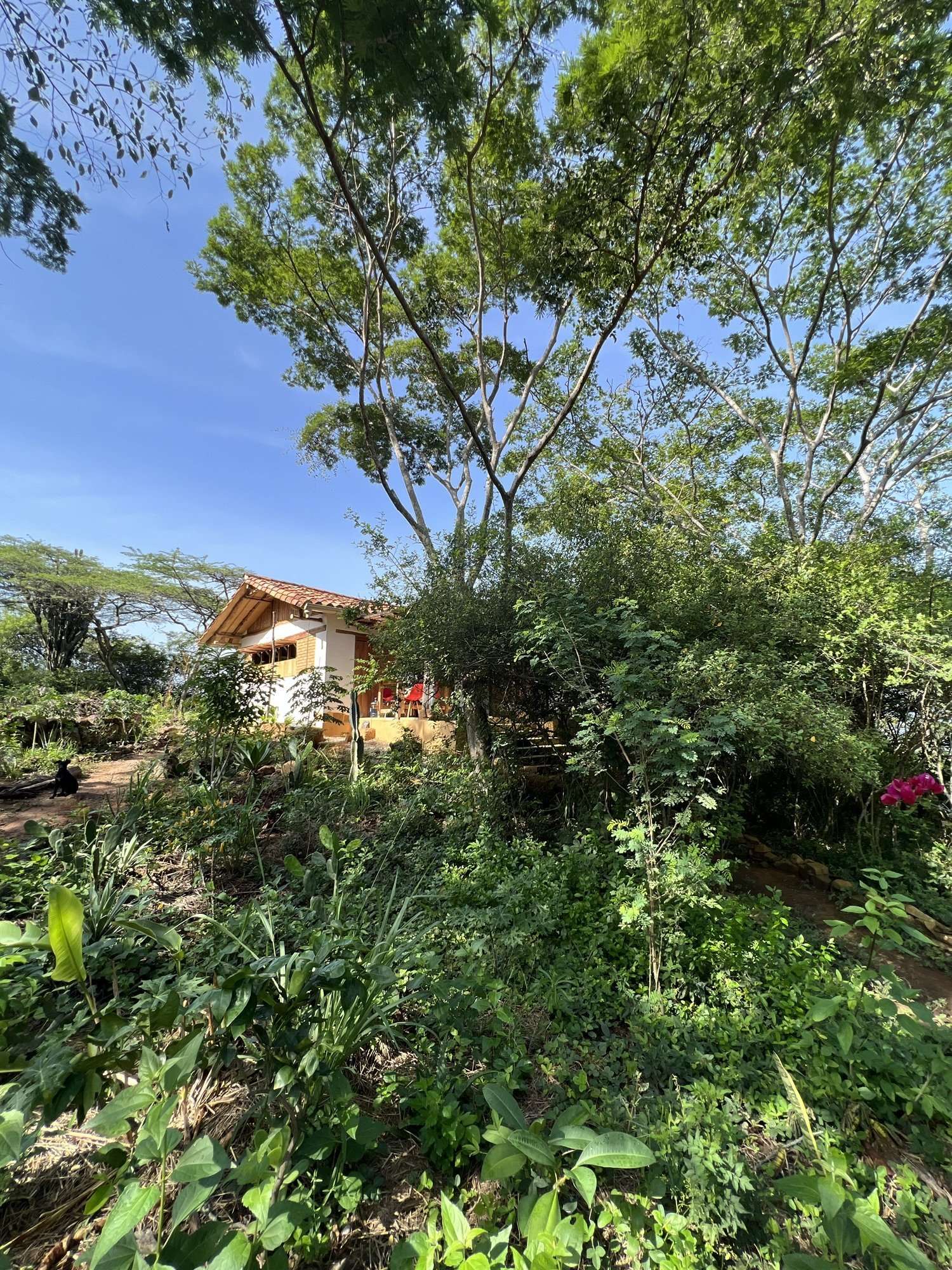
Milagros – the land we are stewards of in the Andes – has been used for grazing and small-scale food growing for generations. Around the big pond, we have a relatively healthy and mature ecosystem, and the rest is in various recovery stages. Some areas, especially along the ridge and the peak, are heavily eroded with just a few pioneer species.
We are in an early phase of the regeneration of Milagros, so we mostly focus on the area around the two houses. And since the soil is degraded, we are focusing on building soil.
The topsoil is mostly gone here and the soil is compacted. When it’s dry it’s like concrete. Rainwater runs off without being absorbed, and only the native pioneers thrive in this soil as it is.
HOW WE BUILD SOIL
How do we build soil? We are using a combination of approaches.
We plant as wide a diversity of plants as possible, mostly natives and food plants that work well in this climate.
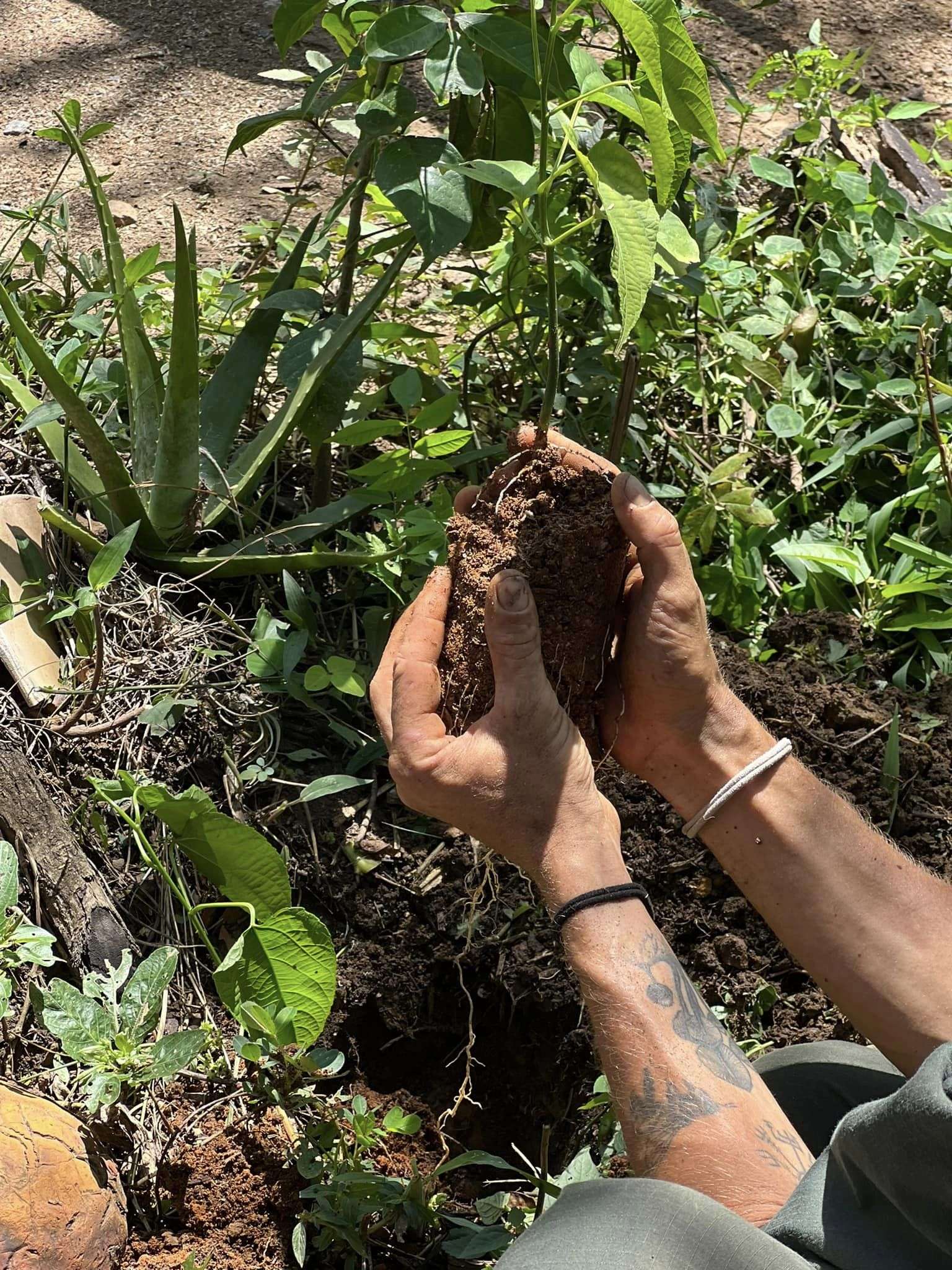
When we plant, we use deep holes and add compost and some goat manure to improve the soil. This helps absorb the water, prevents water logging, and gives nutrients to the plants.
We plant densely, in as many layers as possible: ground cover, herbs, shrubs, bushes, small trees, and big trees.
We use a thick layer of mulch around the plants. This helps retain moisture, gives nutrients to the soil and plants, and improves microbial life. Most of this compost comes from pruning, and we buy some wood chips from local carpenters.
We make our own compost and we are also buying vermicompost from a friend with a permaculture farm in the area.
We add Korean microbes to the soil. This is on the recommendation of others doing similar work here, although I am a little hesitant to add foreign microbes. I would prefer native ones.
We build swales to help the rainwater drain into the soil.
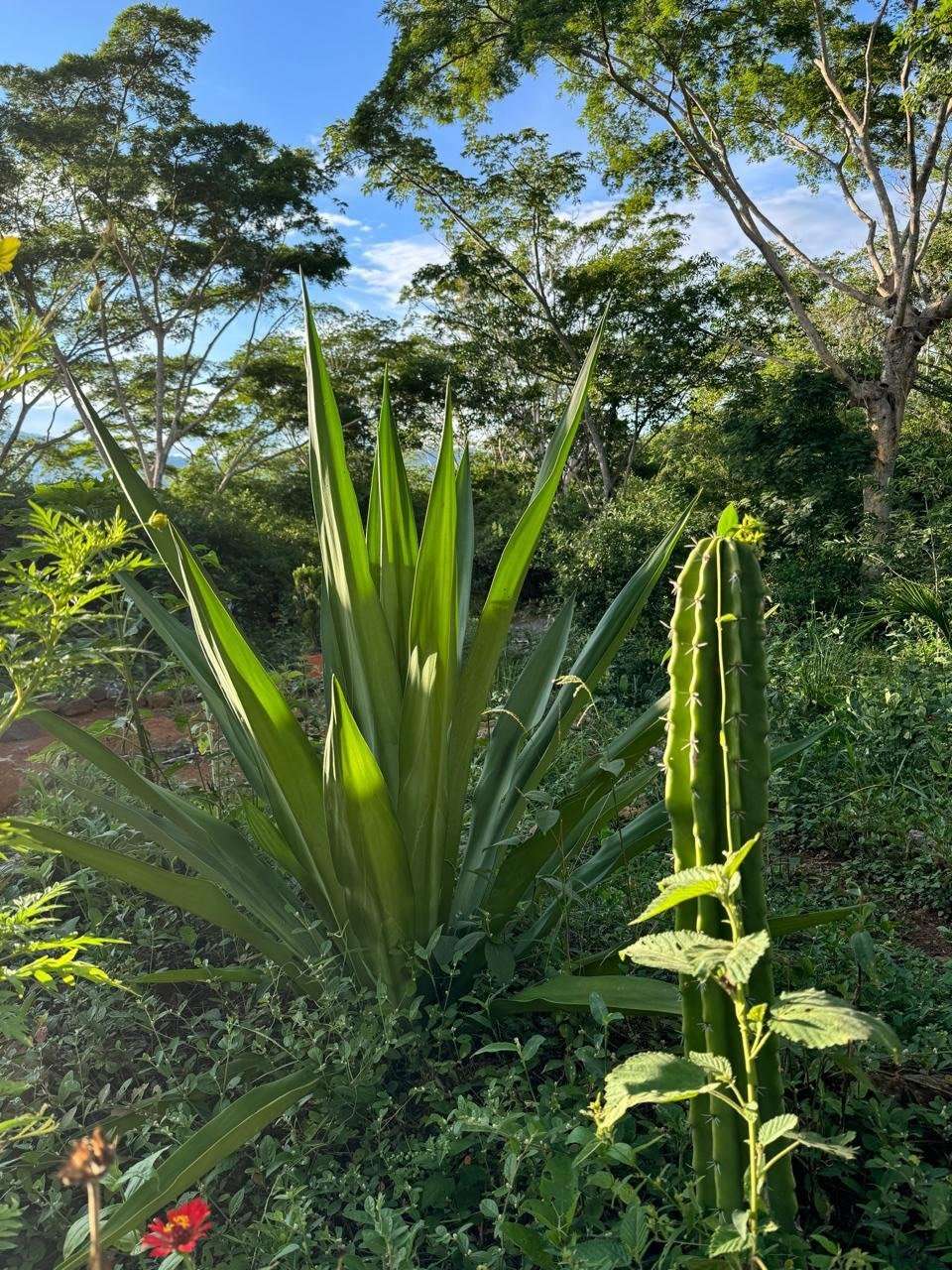
We work on preventing erosion by planting plants with extensive root systems (agave, vetiver, etc.), slowing down the flow of water (stones, swales, mulch), and terracing in some areas.
We use green mulch from the existing trees and some of what we have planted.
We add ashes to the soil for some plants to provide certain nutrients and improve soil structure.
We avoid compacting the soil around the plants. We have paths and will install stepping stones in areas where there won’t be a regular path.
We may include animals in the future, perhaps starting with chickens. They will help provide fertilizer to the soil.
We use only organic materials and methods and avoid chemicals and pesticides. (Chemicals and pesticides harm soil health and the ecosystem in general.)
WHERE DOES THE MASS COME FROM?
When we build soil, the mass has to come from somewhere. About 90% of the dry mass of plants comes from CO2 in the air which is converted to carbon, with oxygen as a byproduct. Only 10% comes from nutrients in the soil. Of the wet mass, 70-95% is water.
Shade combined with water evaporation is a big reason why a forest is much cooler than bare ground.
REFORESTATION
As I have mentioned in other articles, we have partnered with an organization that helps us reforest the land. They plant a diversity of native trees without any cost to us and sell the carbon credits to multinational corporations. It benefits the land (reforestation), us (helps our project), them (make money), and the corporations (improve their image).
They are not doing anything to improve the soil while planting, but the growing forest will naturally improve the soil through increasing biomass, creating a mulch layer, and so on. It will also attract birds and wildlife which will help spread seeds and improve the soil.
EARLY DAYS
These are just a few of the things we are doing so far. We are still early in the process, and we are still – and will always be – learning. We are receiving immensely valuable advice and help from others doing the same in this area, especially Daniel P. who comes weekly.
These are all things we do because the land is degraded. By planting natives and a selection of non-invasive useful plants, we are giving the natural regeneration process a boost. We are doing our small part in helping this ecosystem again grow into a healthy, diverse, and vibrant ecosystem. Soil health is, quite literally, the foundation.
As the native forest regrows, and as the food forest grows near the houses and along the paths, the soil will naturally improve. Conversely, our efforts to improve the soil will help the food forest grow.
Soil health and ecosystem health are two sides of the health of the system as a whole.
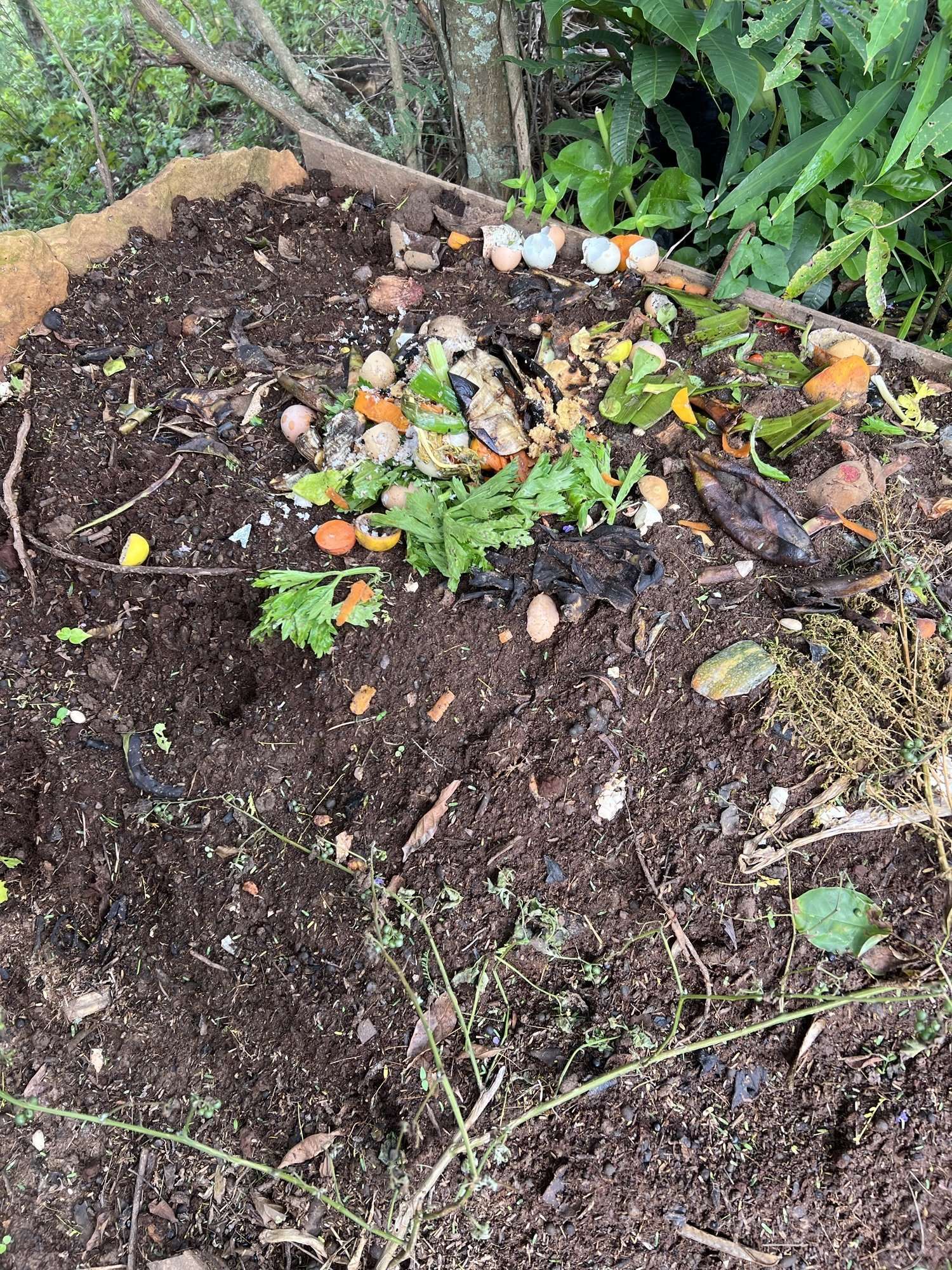
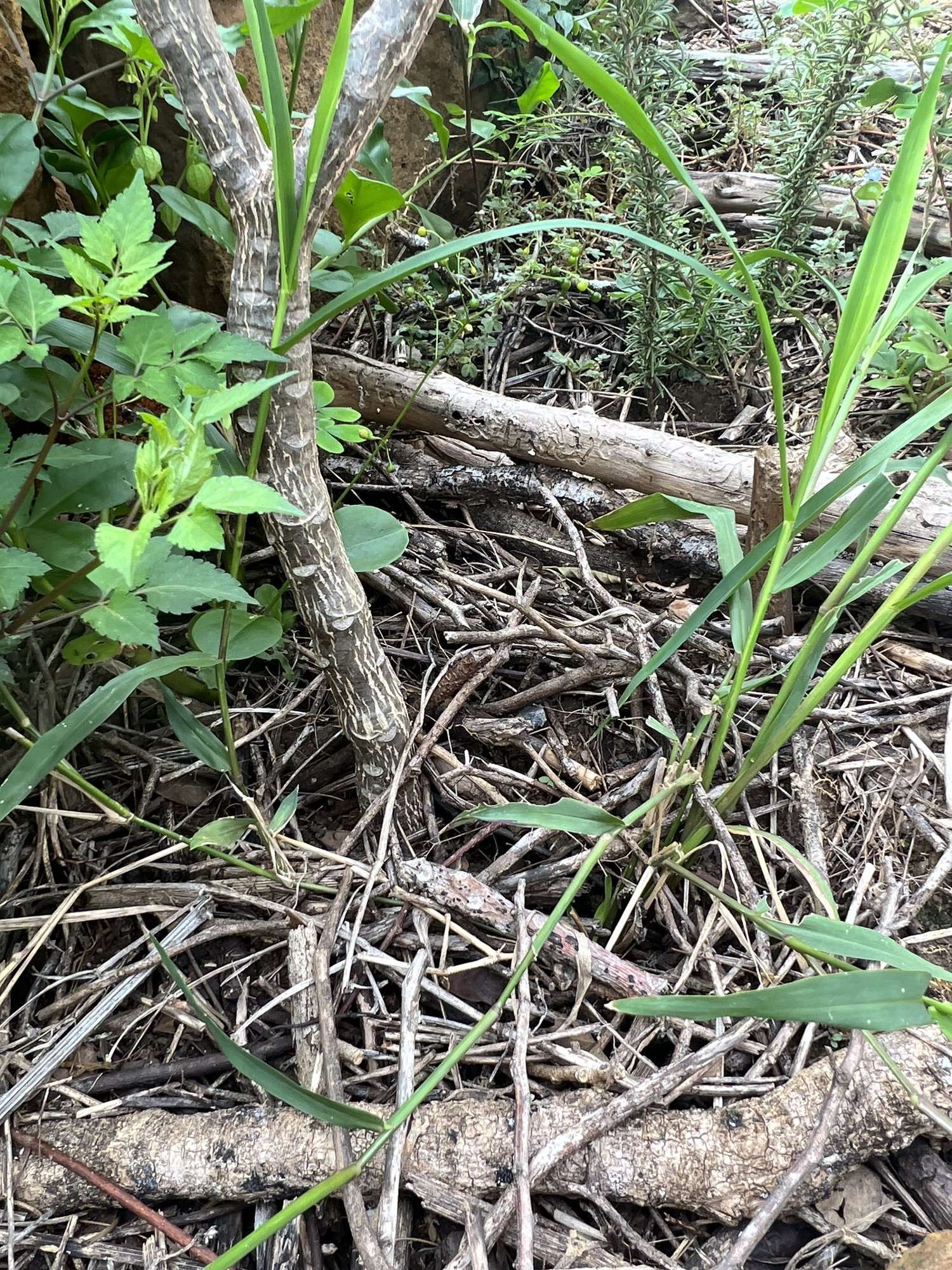
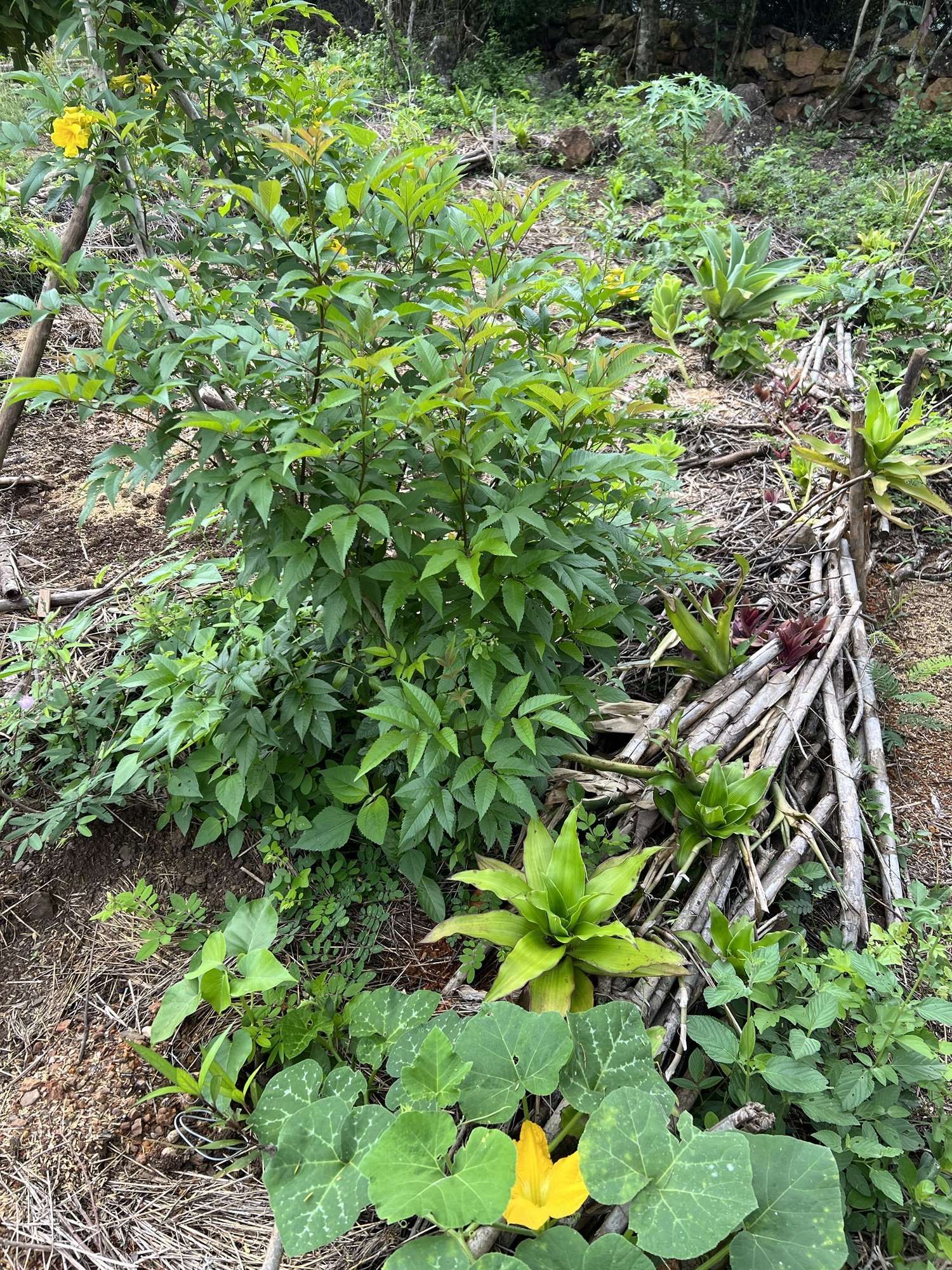
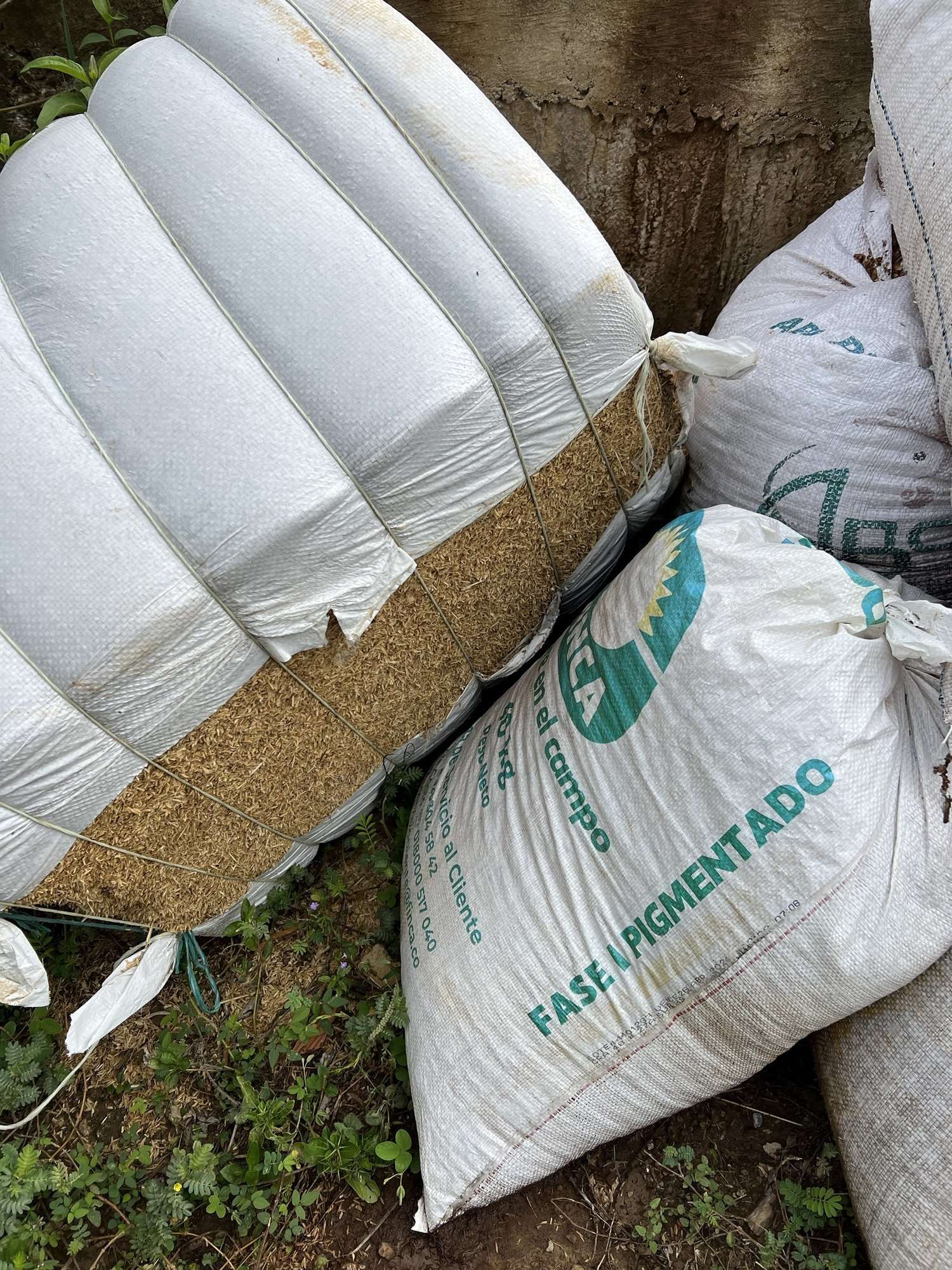
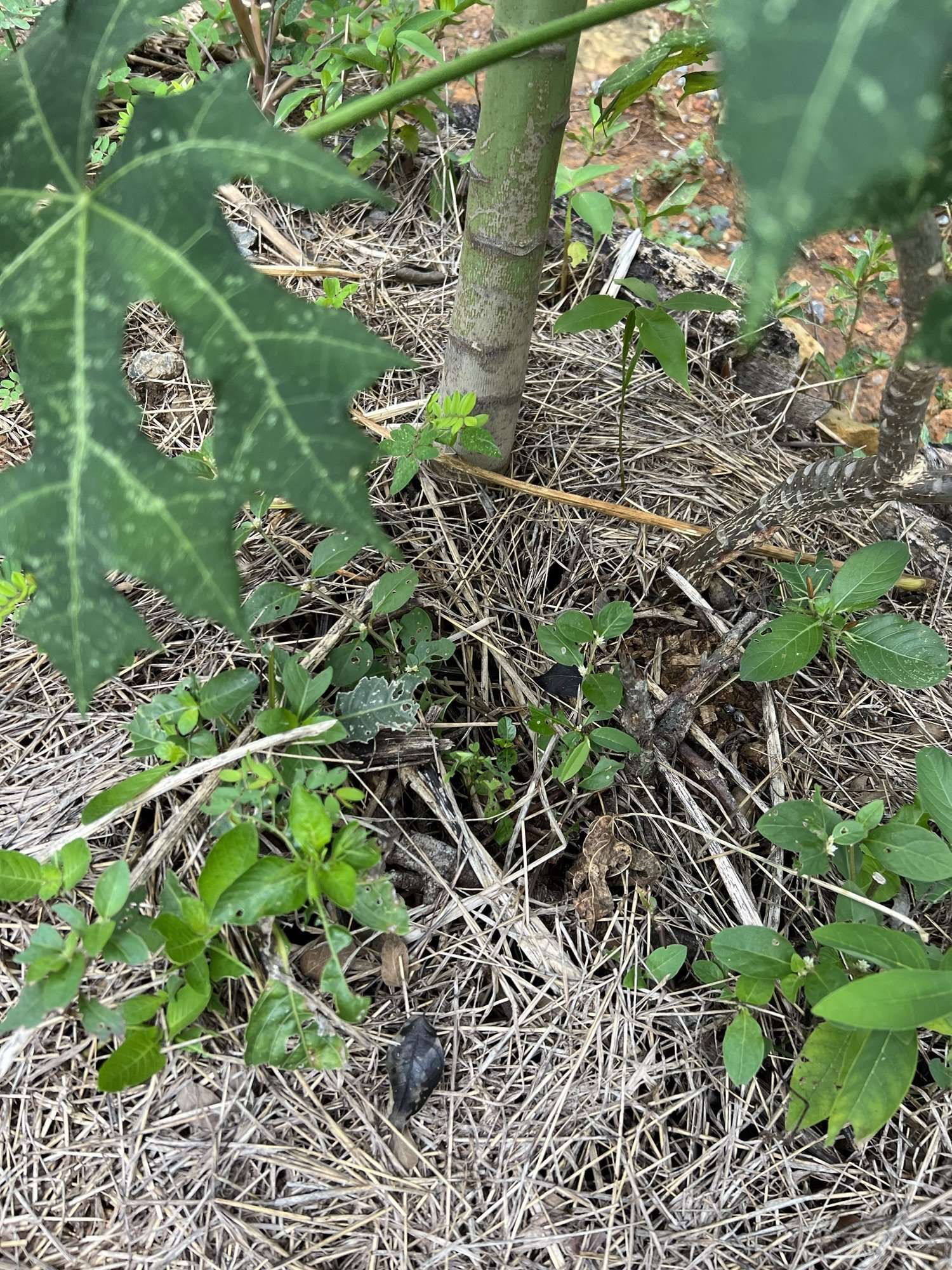
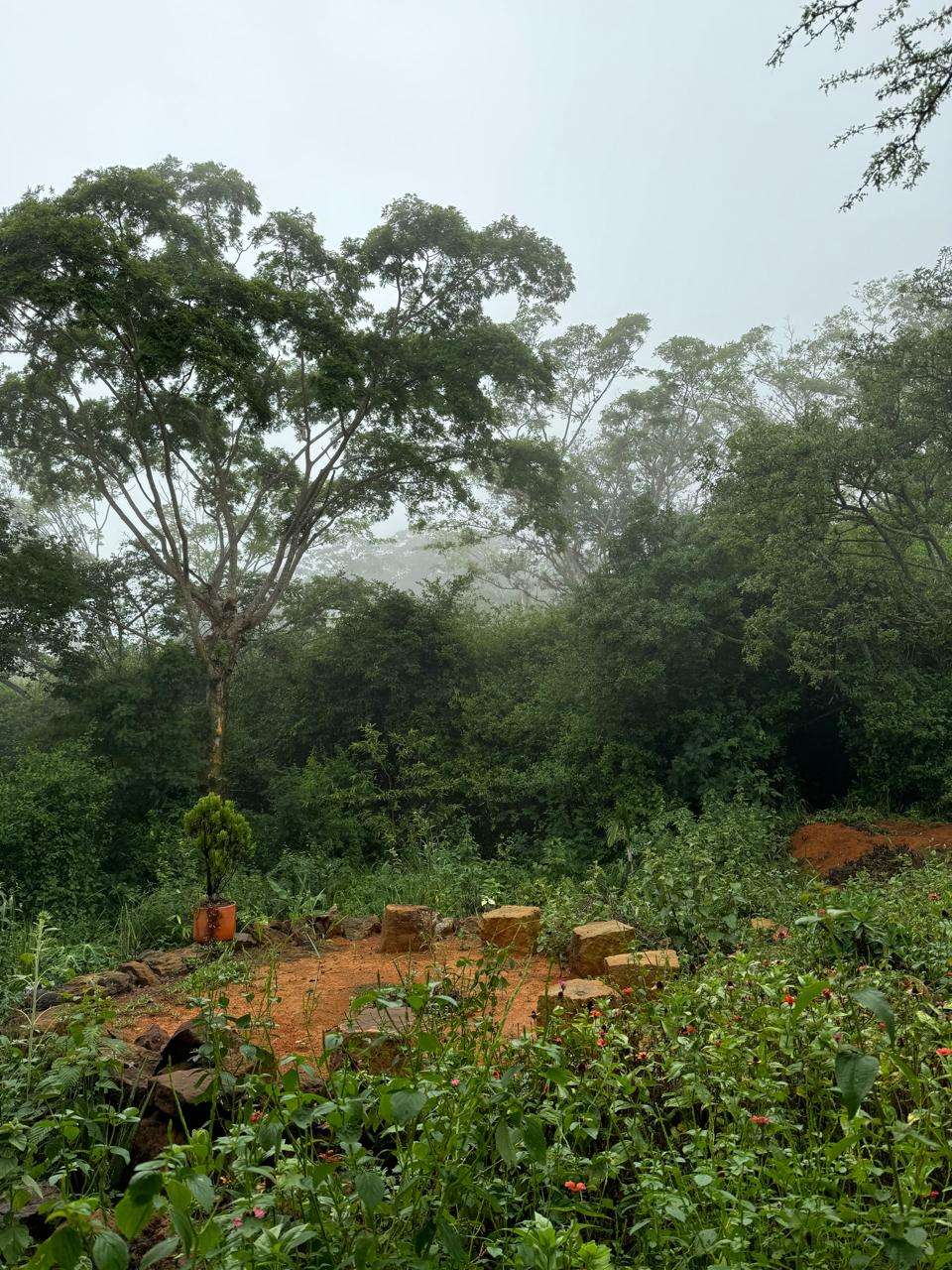
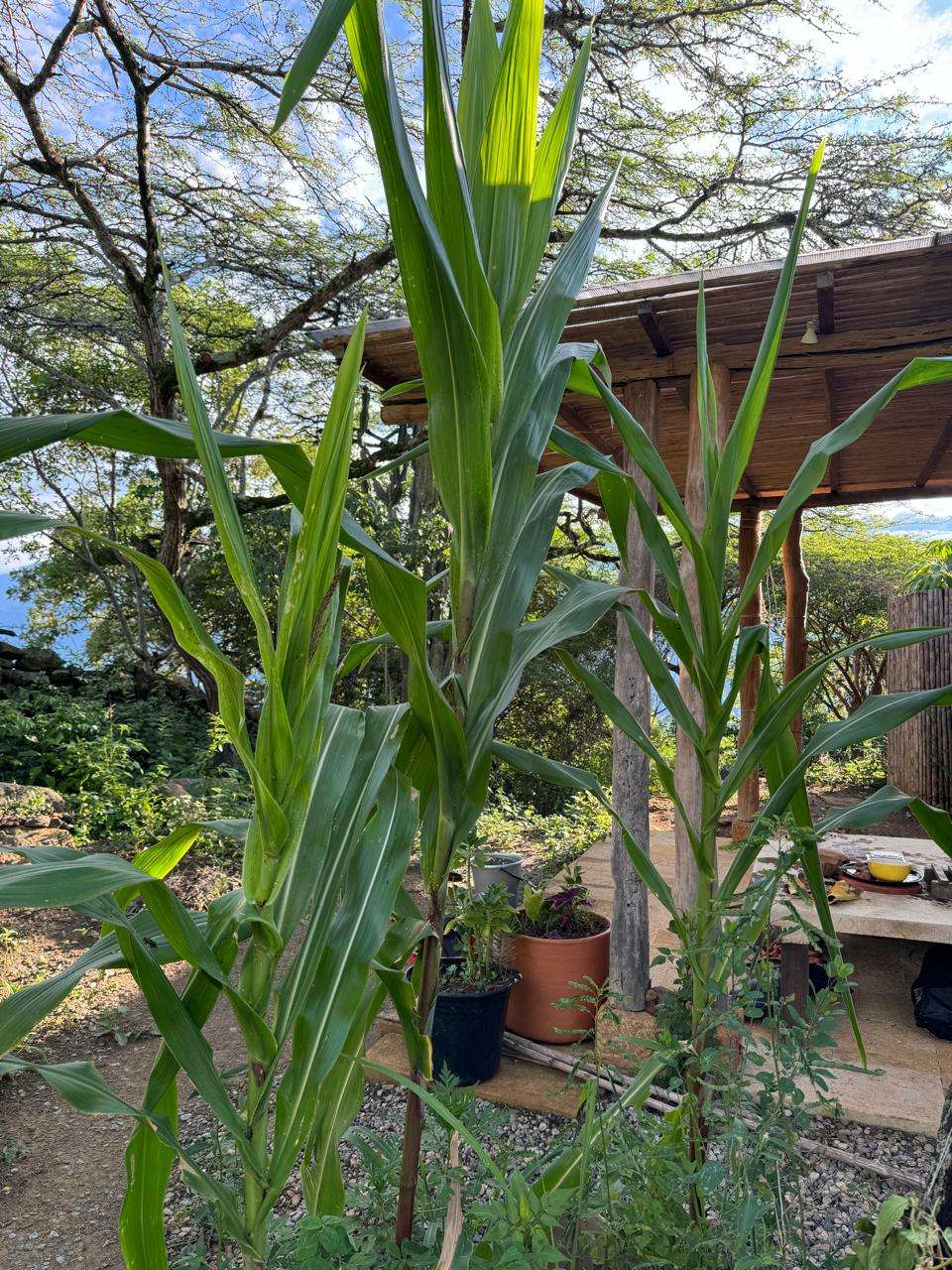
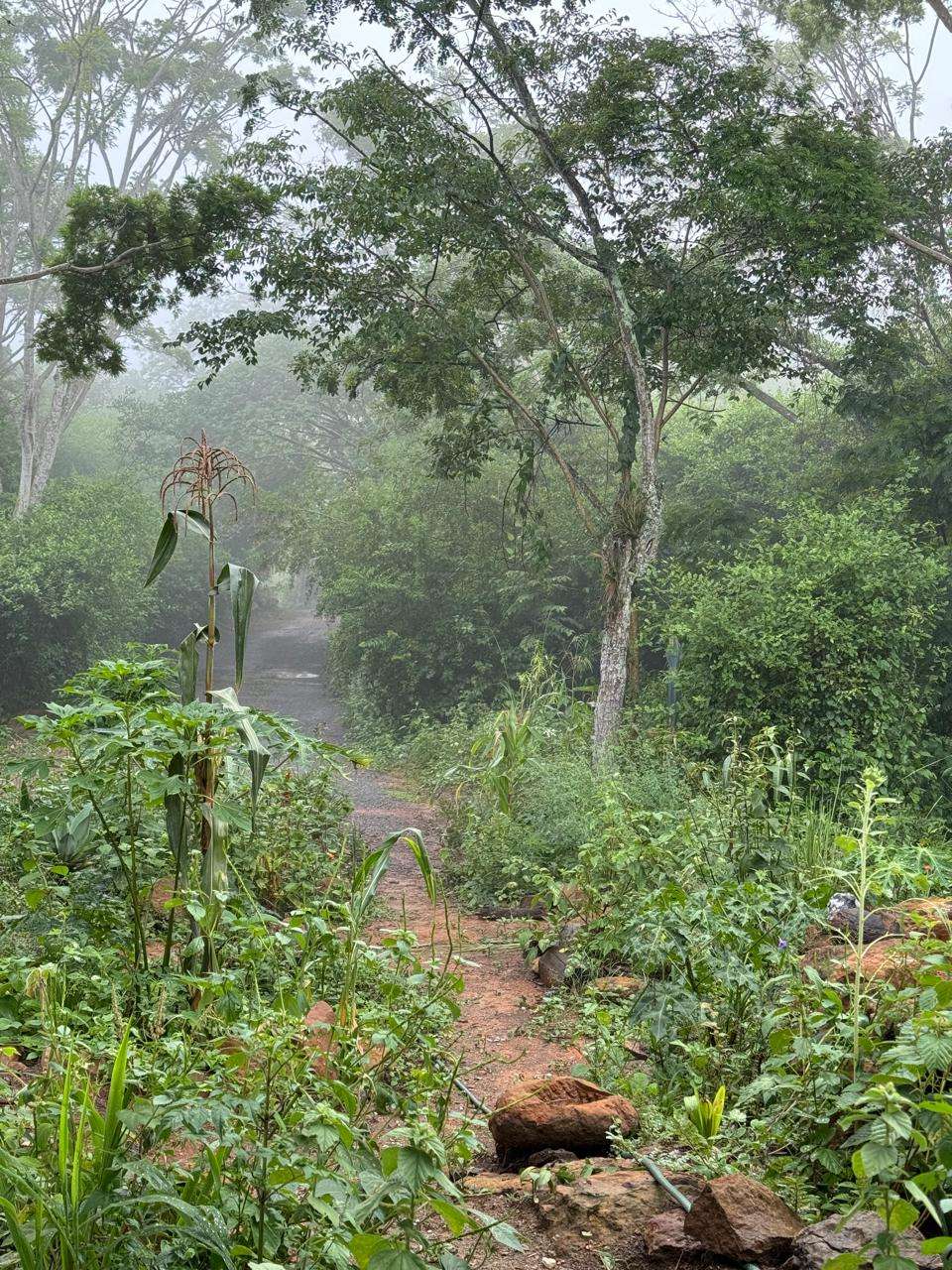
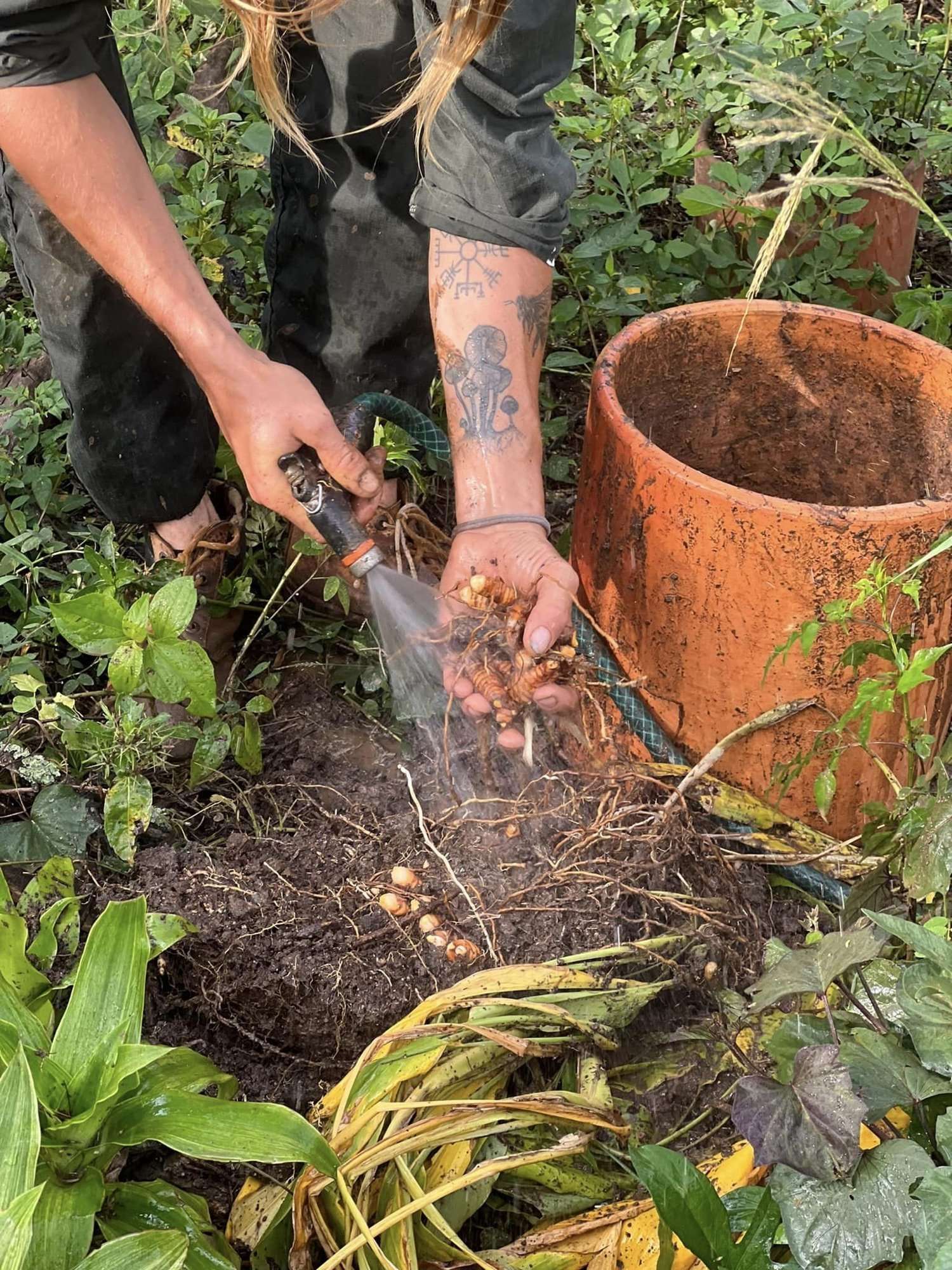
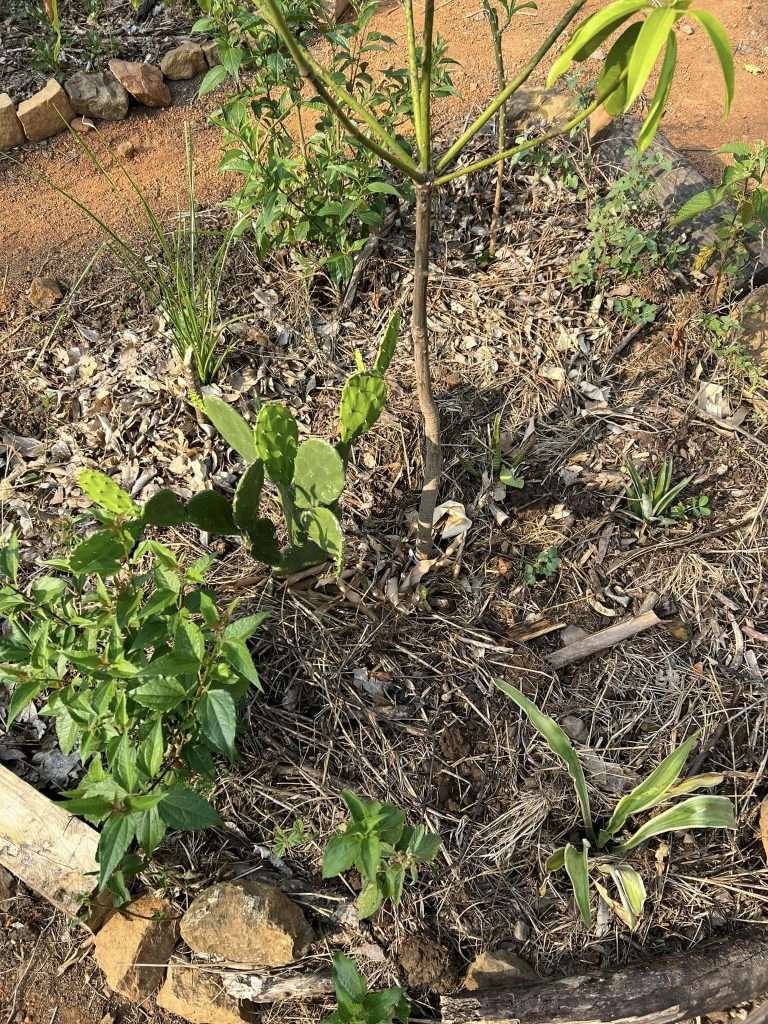
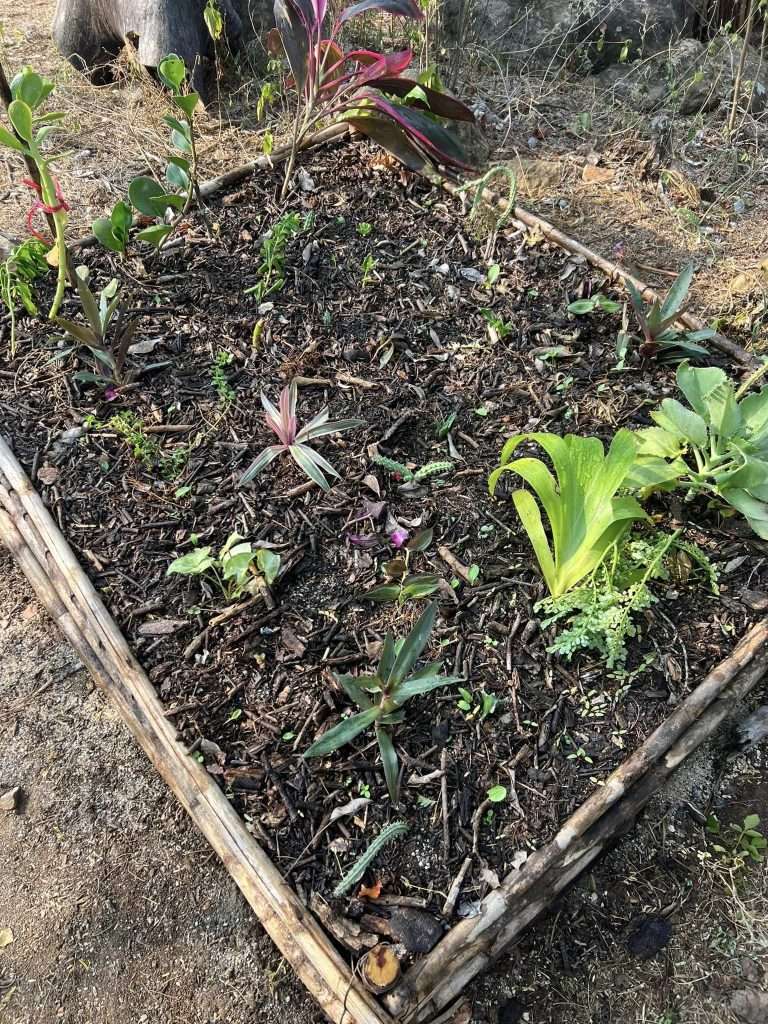
The images are from this morning from around the house. We have a very simple compost pile right now, but will build compost bins and start vermicomposting. We use stones to hold the soil in place and slow down rainwater. We use a thick layer of mulch and see that we need to replenish the mulch in several places. We buy wood chips from local carpenters and organic goat manure from a neighbor.
We have several types of ants here on Milagros, from tiny to medium to large.
Last year, after moving in, we had some problems with ants in the house and the garden. They would get into the kitchen and eat some of the plants we planted.
This year, we have close to no problems with ants.
Why? Because we work with nature.
Indoors, we make sure to keep all food in closed containers and keep the surfaces clean. That removes 99% of the ants except for a few unproblematic scouts.
Outdoors, we have created a far more diverse ecosystem and we use better soil (compost, organic goat manure) and more mulch when we plant new plants. We rarely have problems with ants eating new plants these days.
Ants are a crucial part of the ecosystem. They aerate the soil and bring nutrients into the soil. They help spread seeds. They eat insects that need to be kept in check. They are food for animals, insects, and birds.
An apparent ant problem is not a problem with ants, it’s a problem with the ecosystem and our approach.
The more healthy the soil, the more healthy and diverse the ecosystem, and the more healthy and strong the plants are because of better soil, the less likely ants are to be a problem.
There are also seasonal variations in their behavior, which we are still learning more about.
Ants are a blessing. They are an important part of the ecosystem. They encourage us to keep the house and kitchen clean. They showed us that the new plants were not healthy, and encouraged us to emphasize building healthy soil and use healthy soil when planting new plants.
The image is of ants on a path near the house rebuilding their nest after a night of rain.
We have tiny ticks on Milagros, likely amplified by the cows on the neighbors’ land.
WHAT WE ARE ALREADY DOING
I know that a healthy and diverse ecosystem naturally regulates potentially disease-bearing animals like ticks and mosquitos, and that’s what we are supporting here. We are building healthy soil. We are planting a diversity of native plants, food plants that work well here, and a few other non-natives that we are told can serve important functions (building, erosion prevention, food for pollinators). I keep dense vegetation in some areas around the house.
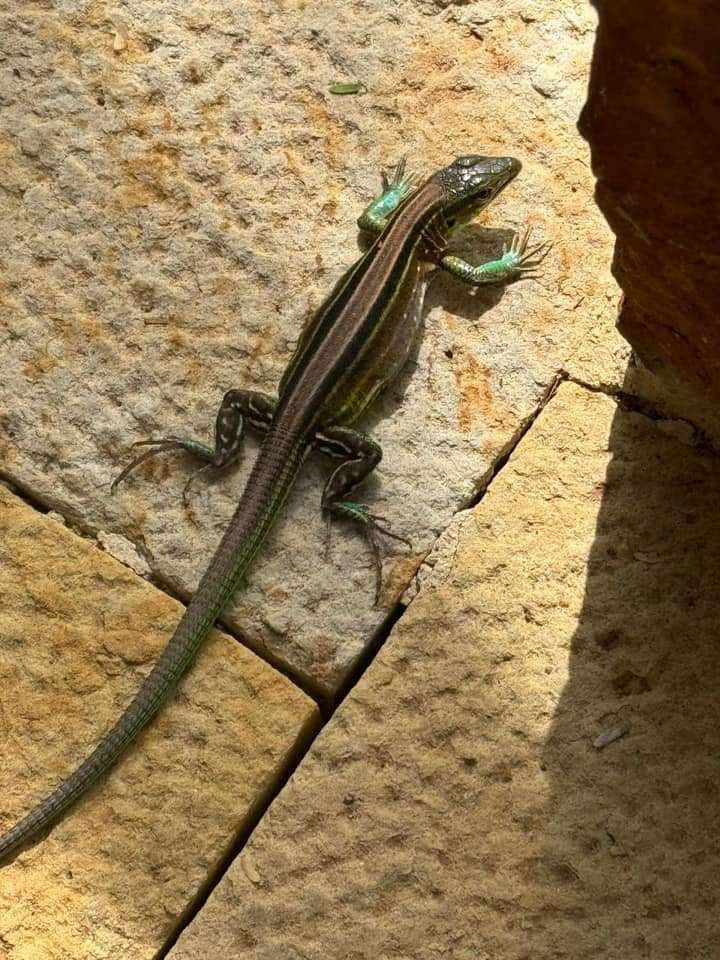
More specifically, I know that lizards and possums eat ticks, and I know that lizards like rock piles in the sun and possums like dense vegetation and trees for protection and travel. We have stone fences here, and a fire pit area built up with stones in apron to some stone piles. We have many trees, and I have been careful to protect some areas of dense vegetation made up of pioneer species.
We also have lizards in the house, which we are very happy to co-exist with. They eat both ticks and mosquitos.
I keep the lights off outside at night since I know that artificial lights can be very disruptive to wildlife, including bats.
We also keep the paths clear of vegetation.
When we go outside the house, we take a few precautions. We put non-toxic insect repellent on our legs. If we go further into the land, we use boots and long pants, and I put the socks over the pants. We also check ourselves if we have been in areas where we suspect there are more ticks.
We don’t find many ticks around the house, fortunately, but there are around and it’s always good to do more for prevention.
WHAT WE WANT TO DO
I have read a bit more about what we can do, and have some plans for what we may do next:
We can plant herbs along the stone fences and around the house, including lavender, rosemary, and lemongrass. We already have these in the garden and they grow well here, and we can add sage and a few more kinds. (It seems that sage, garlic, rose geranium, and chrysanthemum are all shade and drought-tolerant and can repel ticks, along with lemongrass and citronella.)
We continue to plant native and a few non-native food-producing plants. The fruit trees are intentionally to feed the wildlife here and also us.
We are feeding the birds here, although we want to set up more spots to feed them. We want to create one or more bird baths.
We use a lot of mulch around the house, although we also plant densely so I that may cancel it out. In any case, mulch helps build soil and a healthy ecosystem.
We may put a small amount of apple cider vinegar in Mila’s water andpossibly spray it very diluted on her fur. It’s worth a try, although we are also giving her medication to prevent ticks and fleas.
WHAT WE WON’T DO
A couple of things we’ll likely not do:
I don’t think we’ll use tick traps since they may trap other insects as well, although I’ll look into it.
We won’t use permethrin since it can harm other animals besides ticks.
NORWAY & WOLVES
Since I live part-time in Norway, that ecosystem is in the back of my mind too. Although it’s a different situation, the main guideline of supporting a healthy and diverse ecosystem is the same. There, one of the most important things we can do is to support large predators like wolves since they help keep the population of deer down.
The video is of a possum from the birdfeeder last night. They come most nights to eat leftovers.
We had a good rain last night, at least 3cm. (I got the rain measuring device out a while after it started.) I love that it mostly rains at night here, and I love falling asleep to the sound of the rain and the thunder rolling through the canyon.
I am also aware of some of the ways the rain impacts Milagros. In general, it impacts the land in two different ways.
DEGRADED AND COMPACTED SOIL
Milagros has been used for grazing and small-scale agriculture for centuries. Although it could be far worse, they have not always followed ecologically sound practices.
In many areas, and especially along the ridge, the soil is severely eroded and compacted. Here, rainwater runs off and creates further erosion. In other areas, there is grass which is not ideal but better than naked soil.
Poor land management has led to a vicious cycle where the rain only continues the erosion.
HEALTHY SOIL
In contrast, healthy soil is porous and absorbs rainwater. The water nourishes the ecosystem and recharges the groundwater, which is hugely important. It nourishes and replenishes instead of causing erosion and flooding.
Healthy soil reflects a healthy ecosystem and is the literal foundation for a healthy ecosystem.
WHAT WE ARE DOING IN THE MORE DEGRADED AREAS
The more degraded areas are along the ridge in the 14 hectares or so that is set aside as a wilderness area.
We have planted native succulents and very hardy native trees in the areas closer to the houses, although it’s just a start.
We are also partnering with an organization that has planted close to two thousand trees in the largest of these more eroded areas, close to the peak. These are native trees well adapted to this ecosystem, and they have planted twenty different types. Again, it’s just a start. We wish for far more diversity than this, so plan to interplant more species in the future. The shade created by this growing forest will eliminate the grass over time.
This is the beginning of building better soil in these areas. Over time, the bushes and trees will slowly create a natural layer of mulch and start feeding the soil. The roots will penetrate the hard soil and make it more porous and able to absorb water. All of this will also increase the healthy microbial life in the soil which is crucial for plant life and the ecosystem.
It will allow the rainwater to be absorbed into the ground instead of running off, which will feed the ecosystem and recharge the groundwater, and it reduces and eventually prevents further erosion.
CLOSE TO THE HOUSES
We have worked on building soil around the small house for a little over a year now, with a more focused effort for the last half year. Daniel P. is coming once a week and is helping us greatly.
We mulch heavily. We plant the plants very close together. We dig relatively deep holes for the new trees so we can fill the holes with good soil. We are bringing in some mulch, worm compost (from a nearby permaculture farm), goat manure (from a neighbor who uses organic methods), and microbes (the Korean type).
We use swales to slow down and hold the rainwater and allow it time to absorb into the ground. Below the house, we are building terraces for the same reason.
We love all the ants here. They are crucial to the ecosystem and bring nutrients into the soil, help make the soil more porous, and help clean up dead plants and animals. They are essential for a healthy ecosystem. (In the beginning, before we got more diversity here, they did eat some of the new plants, which is fine. We used them as an indicator of which plants needed help since they often go for unhealthy and struggling plants.)
We channel some of the rainwater into a pond near the house. To slow down the water and reduce erosion, we have put larger stones in the channels. We may also dig deeper holes and plant some trees there. This too is very much a work in progress.
We are also collecting rainwater, although need to install pumps so we can actually make use of the water! (We don’t need that water right now since we are in the wet season.) From our 100m2 roof, we will get 100 liters of water for each millimeter of rain. Last night’s rain gave us 300 liters of rainwater. (1mm rainwater x 1m2 x 100 = 100 liters of water.)
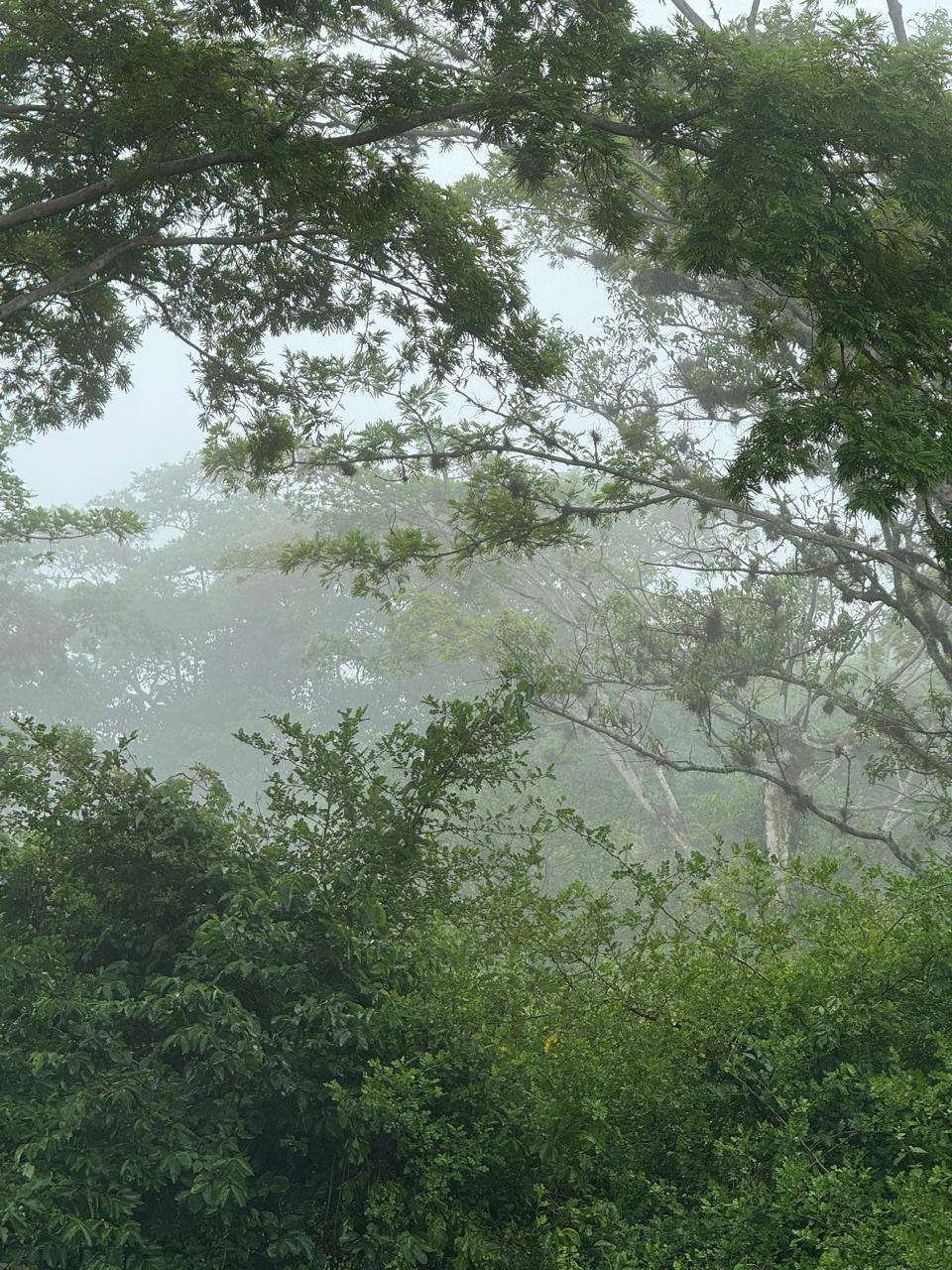
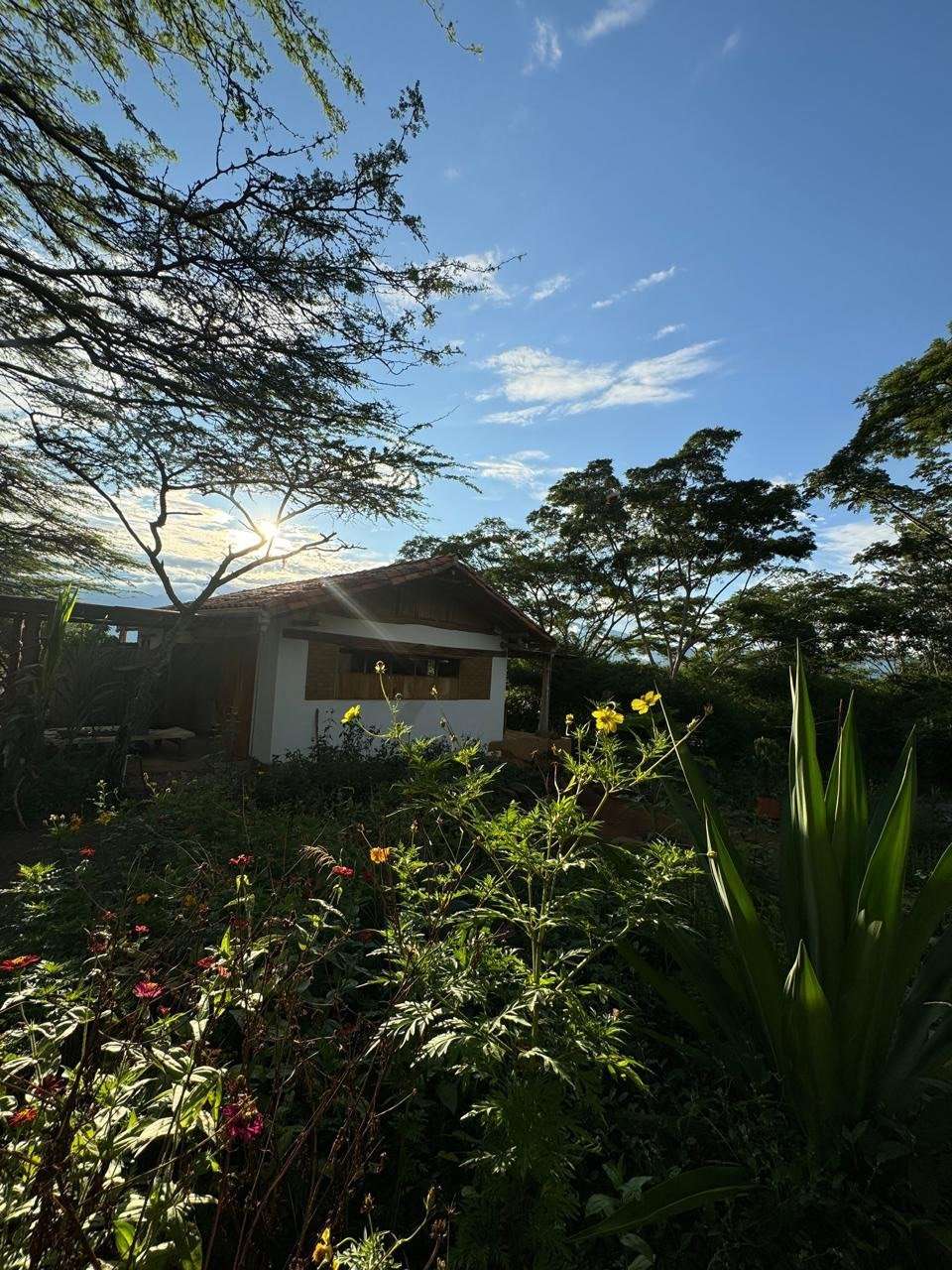
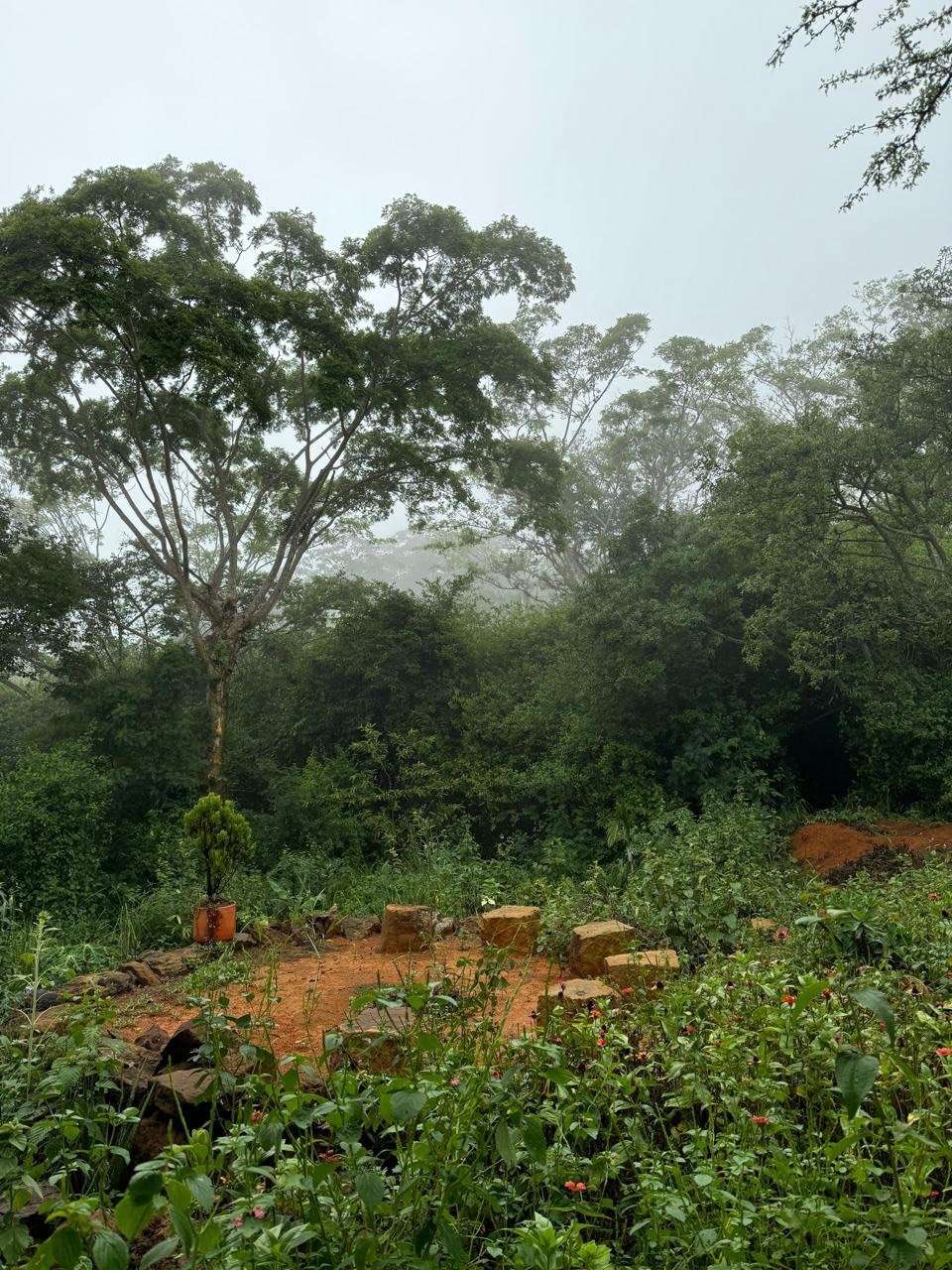
The photo is from close to the house at dawn after rain a couple of days ago.
There is a dengue epidemic in the tropics and also here in Barichara. We know people who have had a strong case of dengue and have been in hospital.
So how do we reduce the chances of contracting dengue? How do we reduce mosquito bites?
TWO GENERAL WAYS TO DEAL WITH MOSQUITOS
There are two general ways to deal with mosquitoes, and they reflect two general worldviews.
One is to work against nature: drain wetlands and ponds, use pesticides, use toxic insect repellants, and so on. This is severely destructive to ecosystems and life, and it’s the way of our civilization.
The other is to work with nature and support life.
WORKING WITH NATURE TO REDUCE THE MOSQUITO POPULATION
What are some examples of working with nature to reduce the mosquito population?
What we do, in general, is to support the local ecosystem and encourage as much diversity as possible. We are nourishing the soil. Around the house, we plant anything that works well in this climate and ecosystem with an emphasis on food-producing plants and plants good for pollinators. In the rest of Finca Milagros, we plant native trees, bushes, and shrubs, with the inclusion of non-invasive food-producing plants that work well here. (We are just starting on that phase.) We also have a pond and make sure it has a continuous supply of fresh water from a spring higher up the canyon.
This brings more insects, birds, bats, frogs, and others that eat mosquitos and/or their larvae.
SPECIFIC EXAMPLES
Here are some specific examples.
We use mosquito netting around the bed.
We use a ceiling fan at night which creates air currents that discourage the mosquitos.
We use natural and non-toxic insect repellants, which also happen to be locally produced.
We have small lizards in the house, which I assume eat mosquitos when they land on the walls.
I like to go to bed early, which reduces the time I am out at the same time as the mosquitos. (They are mostly dormant during the day.)
We have some standing water around the house, for the insects and smaller animals, although make sure the water is replaced as best we can.
We will install pumps to circulate the water in the rainwater storage tanks.
We keep the main pond filled with water. This helps dragonflies, frogs, insects, birds, and animals. We may install a solar-powered pump here to keep the water circulating better.
We have made Milagros into a nature preserve to support as much wildlife as possible. This will, hopefully, invite more insect-eating birds, bats, dragonflies, frogs, spiders, and so on.
We are adding different forms of mulch to the ground around the house to help the soil, and this also helps beneficial wildlife like frogs, lizards, spiders, and ants.
At least right now, we don’t have too many mosquitos here even if it’s the wet season, and I want to continue to support nature to reduce the mosquito population.
A MORE COMPREHENSIVE LIST OF NATURAL METHODS
I asked ChatGPT 4o for a list of natural methods. The list looks good, and it reminds me that I have wanted to get the BTI bacteria.
From ChatGPT 4o:
Here is a comprehensive list of natural, non-toxic methods you can implement at Milagros to reduce the mosquito population and minimize the chances of being bitten:
1. Encourage Natural Predators
Bats: Install bat houses around Milagros to attract bats, which can consume hundreds of mosquitoes per night.
Birds: Attract mosquito-eating birds like purple martins, swifts, and swallows by installing birdhouses and planting native trees and shrubs.
Dragonflies: Encourage dragonflies by maintaining small water features and adding native plants that attract them.
Frogs and Toads: Create small ponds to attract amphibians, which eat mosquito larvae and adults.
Fish: Introduce mosquito-eating fish like Gambusia (mosquitofish) or guppies in ponds and water features.
Spiders: Support natural spider habitats around the finca by maintaining leaf litter, tall grasses, and rock piles to attract web-building spiders that catch mosquitoes.
2. Mosquito-Repelling Plants
Citronella (Lemongrass): Plant citronella around seating areas and high-traffic spots.
Marigolds: Use marigolds to deter mosquitoes with their strong scent.
Lavender: Plant lavender around the house to act as a mosquito deterrent.
Catnip: Catnip is highly effective in repelling mosquitoes.
Peppermint: Grow peppermint around your outdoor spaces for its mosquito-repelling properties.
3. Habitat Management
Remove Stagnant Water: Regularly check and eliminate any stagnant water (in buckets, plant saucers, tarps) where mosquitoes can breed.
Install Water Pumps: Ensure that water features like ponds have moving water through solar-powered pumps to prevent mosquitoes from breeding.
Add Floating Plants: Introduce plants like water lettuce or water hyacinth in ponds to create habitat for mosquito predators and reduce open water surfaces.
Reduce Dense Vegetation: Clear out dense vegetation where mosquitoes may rest, especially near sitting areas.
4. Introduce Beneficial Insects
Predatory Beetles and Nematodes: Release beneficial insects like predatory beetles and nematodes that feed on mosquito larvae in the soil.
Parasitic Wasps: Encourage parasitic wasps by planting nectar-rich plants (fennel, dill, yarrow) that attract them, as they can help control mosquito larvae.
5. Use Natural Mosquito Larvicides
Bacillus thuringiensis israelensis (BTI): Apply BTI in stagnant water sources. BTI is a natural bacterium that specifically targets mosquito larvae without harming other wildlife. Use mosquito dunks or granules in ponds or rainwater catchments.
6. Install Mosquito Traps
CO2 Traps: Use solar-powered mosquito traps that mimic human breath by emitting CO2 to lure and trap mosquitoes without chemicals.
Light Traps: Install UV mosquito traps in outdoor areas where people congregate.
7. Create a Thriving Ecosystem
Plant a variety of native plants to encourage a diverse ecosystem of insect predators like dragonflies, spiders, and birds that keep mosquito populations in check.
Promote Ant Colonies: Support ant populations, especially ground-dwelling ants, which can help reduce mosquito larvae in soil and stagnant water.
8. Natural Repellent Methods
Essential Oil Sprays: Create homemade repellent sprays using citronella, eucalyptus, tea tree, lavender, or lemongrass oils. Spray on skin or around outdoor areas.
Diffusers: Use essential oil diffusers with natural mosquito-repelling oils in outdoor sitting areas.
Garlic Sprays: Apply a garlic-based spray on plants or areas where mosquitoes rest; mosquitoes avoid the scent of garlic.
9. Promote Airflow
Fans: Mosquitoes are weak fliers, so use outdoor fans in seating areas to create airflow that will reduce mosquito activity.
10. Install Physical Barriers
Mosquito Nets: Use mosquito nets around beds and outdoor seating areas to prevent bites while resting or relaxing.
Screen Doors and Windows: Ensure that all doors and windows have tight screens to keep mosquitoes from entering the house.
11. Encourage Ground-Dwelling Predators
Chickens and Ducks: Free-range chickens or ducks (especially Muscovy ducks) can patrol grassy areas and eat mosquitoes, their larvae, and other insects.
12. Personal Protective Measures
Wear Light-Colored Clothing: Mosquitoes are attracted to dark colors, so wearing light-colored clothing when working outdoors can help reduce bites.
Long Sleeves and Pants: Opt for long sleeves and pants in the early morning or late afternoon when mosquitoes are most active.
13. Use of Mud and Natural Coverings
Apply a thin layer of mud to the skin as a natural mosquito deterrent when working outdoors in highly infested areas. Mosquitoes are less likely to bite through mud.
By using a combination of these strategies at Milagros, you can naturally reduce mosquito populations while protecting yourself and preserving the ecological balance on your land.
We are legal stewards, as humans think about it, of beautiful land in the Andes, at the western slope of Chicamocha Canyon.
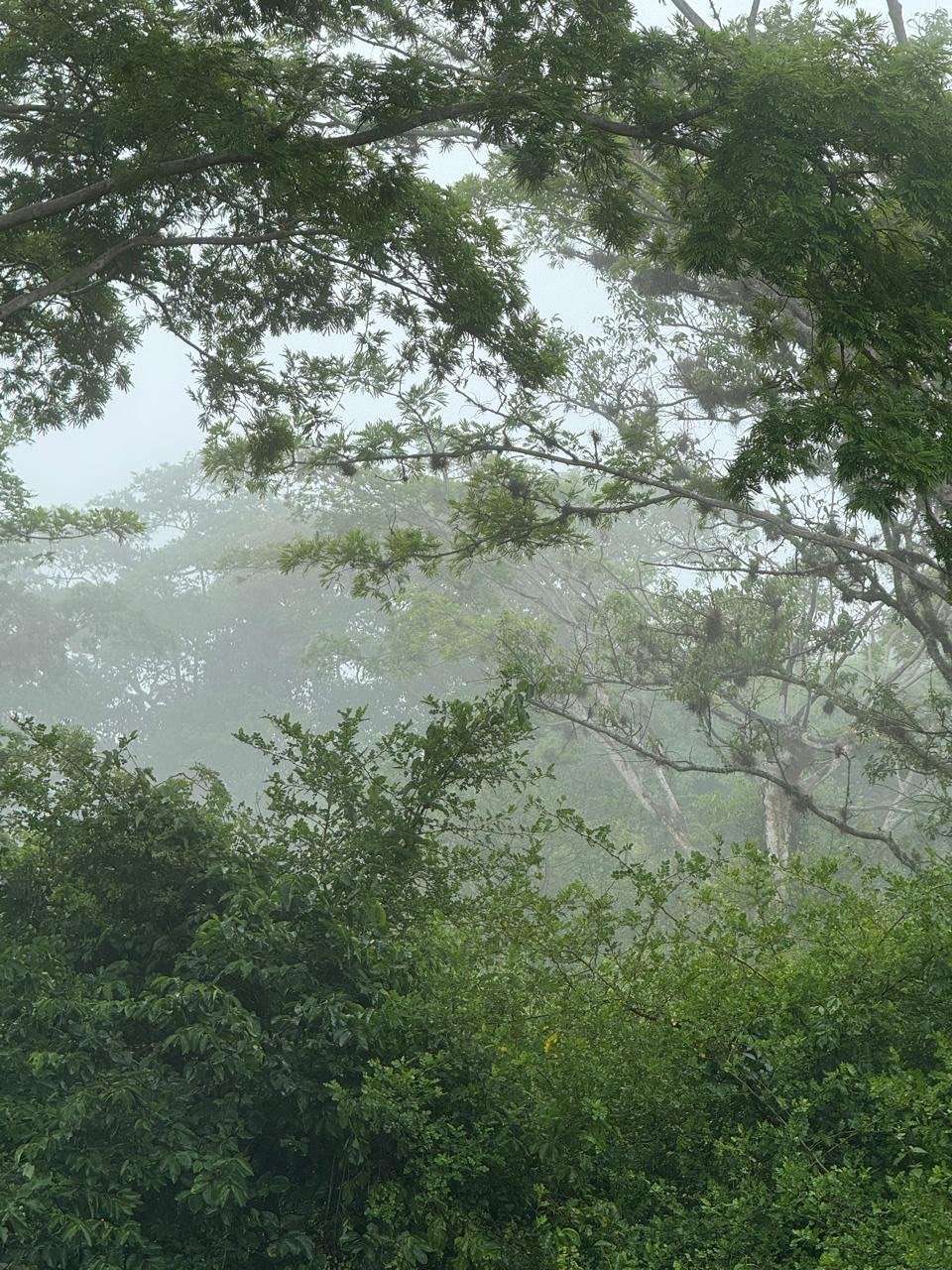
I walked in the forest at early dawn, after a heavy rain, and it reminded me of something difficult to escape these days.
PARADISE OR HELL OR BOTH
This land is paradise or hell or both.
It’s a paradise for us now. It’s in a beautiful area, and although the land is degraded by centuries of grazing, it’s still very beautiful. Right now, at dawn, it’s quiet. There is only birdsong.
It can easily be hell as well. When the neighbors blast out their music, it’s a kind of hell. When the extremely noisy motorcycles go by, it’s similar. More importantly, a huge hotel and shopping center project is being built across the road, as one of our closest neighbors. If that actually comes into existence, it can very well be hell with constant noise, music, increased traffic, and more.
For the ecosystem and wildlife here, this place is also heaven and hell. For the ones currently living here and doing well here, it’s paradise. They are left alone. For the ones impacted by centuries of grazing and chopping down trees for wood, it has been hell. For all the new life that’s coming after the grazing was stopped, it’s paradise.
A REFLECTION OF OUR ECOLOGICAL CRISIS
All of this is a reflection of our ecological crisis, and of our civilization that’s profoundly out of step with ecological realities.
Our ecological crisis has been going on for centuries, and the previous use of this land is an example.
The local farmers mostly have cows and goats, so for them, grass is wonderful and anything else – apart from a few trees for shade – is a waste of land. They even call pioneer species that help recreate a more mature and rich ecosystem “malezas”, bad plants.
They have cut down the forests and made it into mostly grassland and savannah, with predictable consequences: The wildlife has been severely impacted. The rivers and springs are dry. And the climate in the region is likely changing, and probably already has.
The hotel project is another example. How can the local authorities allow a hotel project they know will be immensely destructive for the land and the community? (It wouldn’t be allowed in most well-regulated industrial countries, but this is not and they do things differently here.)
AN ECOCIDAL AND SUICIDAL CIVILIZATION
This all points back to our civilization. It’s a civilization built on several principles that lead to this kind of destruction: A power-over mindset instead of a power-with mindset. The sacred as “out there” and not in here in the land, life, and us. Nature as “out there” instead of seeing us as nature and part of the web of life. And so on.
Mainly, we have an economic system that assumes that nature is infinite in its ability to provide resources and absorb the waste of civilization. It evolved that way because it could at the time. We were few enough and had a simple enough technology so for most practical reasons, it was true.
These days, our numbers are many times higher and our technology is many times more powerful, so it’s an assumption that is, quite literally, suicidal. We have a civilization that’s ecocidal and suicidal. And many still don’t realize it.
Many do still not realize the profound systemic changes needed for our civilization to continue.
GLOBAL ECOLOGICAL OVERSHOOT
The simplest way to frame this may be in terms of our ecological footprint.
Our collective ecological footprint is far larger than the Earth. We will need two or more Earthts to support our current civilization, and we don’t have it. If everyone had the lifestyle of industrialized countries, we would need closer to ten Earths. That’s clearly not sustainable.
This global ecological overshoot is similar to living off the money in our savings account. It looks fine for a while until we reach the bottom and our lifestyle comes crashing down.
In our case, it means that our civilization comes crashing down.
This is not hyperbole. This is a simple reality. Even a child can understand it.
WHAT WE CAN DO
So what can we do? Do we have time to change?
I don’t know if we have time to change. If we all suddenly found the collective will to make the needed changes, we could do it, of course. But that seems very unlikely. Most people continue as if nothing is happening.
What can the ones of us who realize the urgency do?
I vote for the Green Party in Norway.
I bought this land and is making it into a nature preserve. We have partnered with an organization that will plant thousands of native trees here, with some diversity (around twenty different species). We are making a food forest around the houses and the main paths.
I eat mostly local, organic, and seasonal food when I can. I eat low on the food chain, with only occasional fish and meat.
I find like-minded people and join, to some extent, communities of like-minded people.
I learn. I learn about ways to partner with this land in terms of regeneration, reforestation, and making food forests.
I actively explore and immerse myself in different worldviews. Worldviews that are more life-centered and aligned with our ecological realities. (Universe Story, Epic of Evolution, Deep Ecology, systems views, integral models.)
I actively work with my distress and grief over what’s happening with this land and neighborhood, with Earth, and with humanity.
I cannot save humanity or our current global ecosystems. But I can save myself and this land, as best I can. I can do what I can for our civilization to turn around. (The Great Turning.) And that’s more than worth it, no matter what happens with us collectively.
I am using AI as an assistant to create a food forest.
OUR PROJECT
We have fifteen hectares in the Andes mountains near Barichara. Much of the land is degraded from grazing and is at different stages of recovery, and there is a dry riverbed going through it that used to have water some decades ago. We plan to reforest the land with native species and as much diversity as possible. We will integrate a food forest into this forest, mostly using native food-producing trees, bushes, and wines, and also some non-natives that work well in this ecosystem. It’s still early in the process and we are in the first year of both.
We are working with an organization that is helping us reforest with a variety of native species, and they planted close to 2000 trees a few weeks ago in the more barren and eroded areas of the land. We are also working with a local expert (Daniel P.) helping us create a food forest in the areas closer to the houses. Around our initial small house, we have planted relatively densely in a 10-30 meter circle so far and we are expanding out with more drought-tolerant species. We have also just started planting around the big house since it’s close to being finished.
USING AI FOR OUR PROJECT
Although most of the planning and work is done in the old-fashioned way, I am using AI as an assistant with this project and find it very helpful.
When we have potential plants for our project, I use ChatGPT 4o for information about the plants: their geographic origin, their climate of origin, their ideal microclimate, how drought tolerant they are, how suitable they are to the Barichara climate, how tall they get, how much sun they require, how much shade they cast, their root system, plant identification, how much they benefit pollinators, how long it takes before they are mature, how much annual yield if they are food-producing, medicinal use in traditional medicine and whether this is supported by research, how to propagate them, and much more.
A few days ago, I took a list of food-producing plants from a local nursery, asked the AI to sort according to drought tolerance, and asked it to sort out the plants with the highest yield among the most drought-tolerant ones. We plan to plant quite a few of these in the zone between the immediate surroundings of the houses and the wilderness areas. I double-checked the info with our local expert and he agreed that these were all good for our project.
Most of the plants have been suggested to us by locals and local experts, some are from local nurseries, and quite a few have been suggested by the AI as appropriate to our climate and project.
I love the information I am able to get, and it seems accurate.
I also use AI to develop a plant database for our project. I have created a Google sheet with about 250 plants so far, and maybe 30 columns of information. The info includes a general overview of about eight sentences, the Latin name, Spanish names, English names, etymology, origin and climate of origin, cultural history, natural history, degree of nativeness, suitability to the Barichara climate, drought tolerance, watering needs after maturity, succession stages, agroforestry layers, years to maturity, typical height and width, root system, typical annual food yield, plant identification, scent degree, pollinator value, medicinal use, and more.
I have also created a web interface for this info, using Google Apps Script and programming help with the AI. This includes a script that automatically collects image URLs from Wikipedia for each plant, and an interface to select the main photo and unselect the ones that don’t seem needed. Several fields in the database are numerical so the user can sort the plants according to drought tolerance, sun requirement, shade coverage, nativeness, food yield, pollinator value, scent, and more.
A FEW MORE THOUGHTS ABOUT USING AI AS AN ASSISTANT
In short, I find that using ChatGPT 4o is like having a good assistant. I can ask it for info, categorization, ranking, ideas and suggestions, help with programming, and much more.
Before we implement anything, I always double-check the info and check with our local experts and the info seems to be pretty reliable so far.
Why do I use AI? Right now, it’s because I am not there so this is something I can do and still feel involved. It helps me make decisions and get more ideas. Also, the info available for many of the naive plants is in Spanish, so this is a way to access it and get it presented to me in English. (My Spanish is not at that level yet.) Finally, I need localized info. Our climate is unique and some plants that work at even just a few hundred meters higher or lower altitudes, or in neighboring areas, won’t work in our location. I need to localize the info for our use.
As someone who loves nature and finds technology fascinating, this intersection of the two feels natural.
And just to mention it, I am very aware of some of the drawbacks of using AI, including the huge amount of energy used to train AI models. Still, the genie won’t be put back into the bottle, and I find this a good use of AI. It doesn’t take the work from anyone, it just helps improve the project.
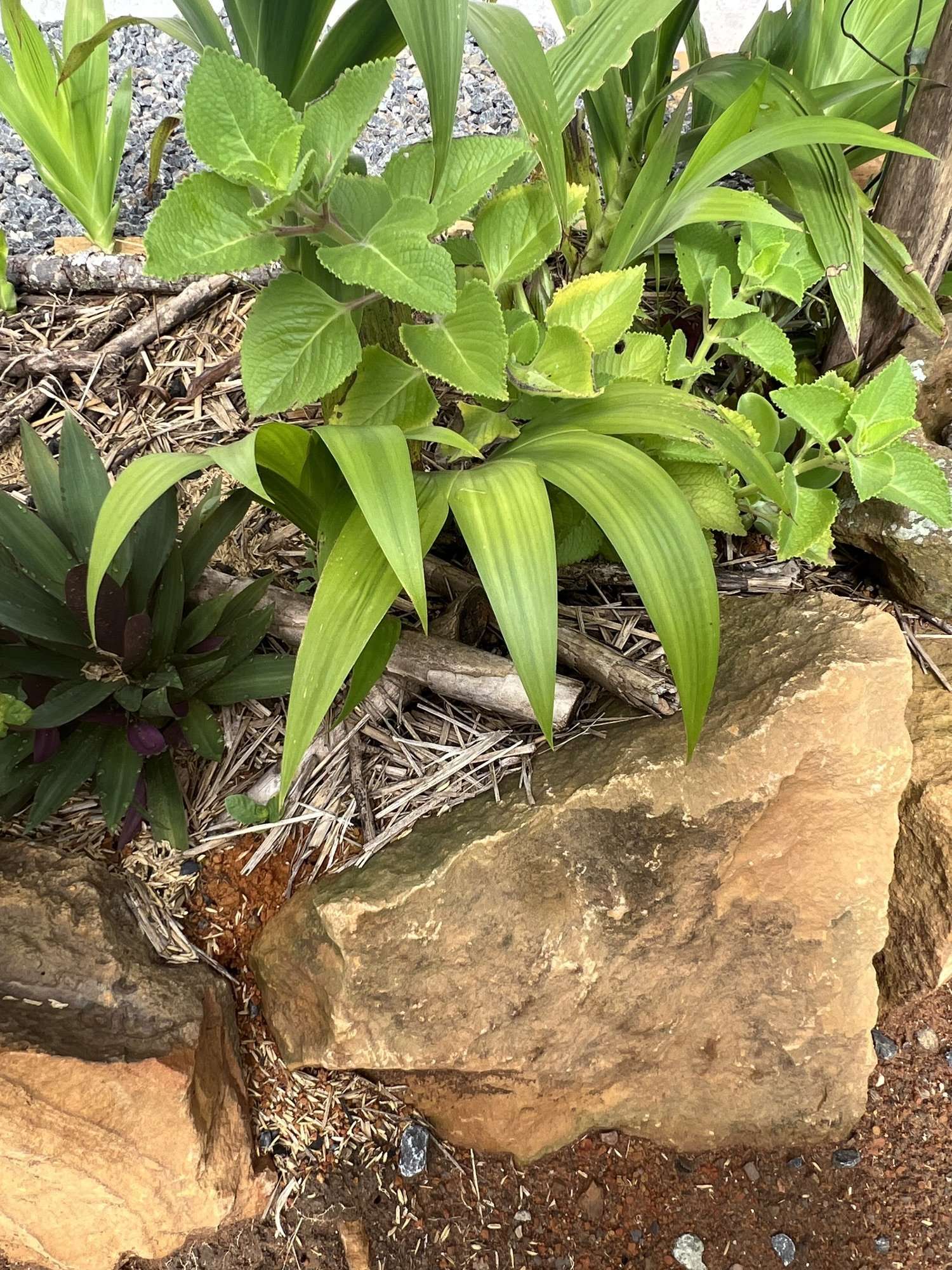
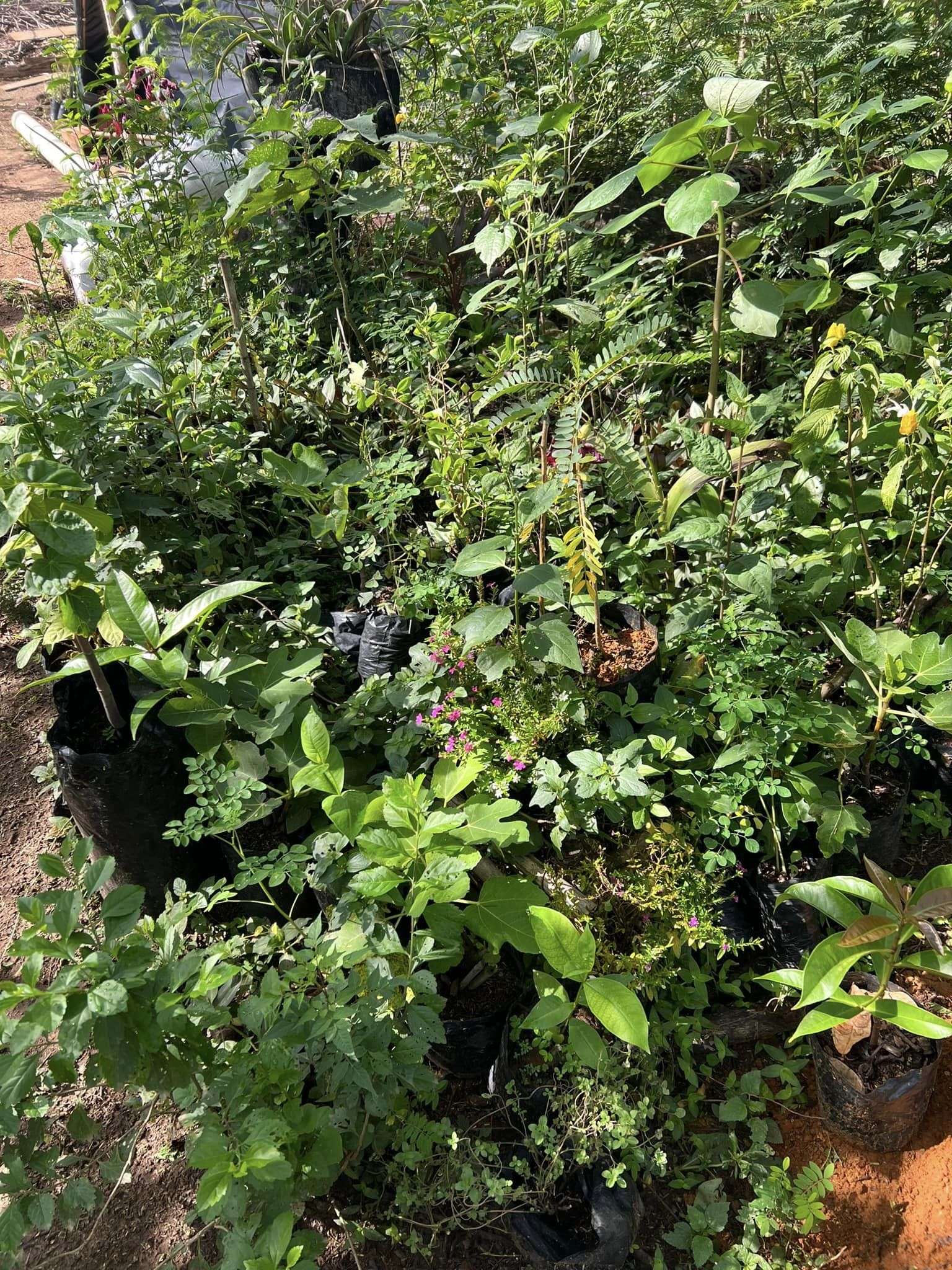
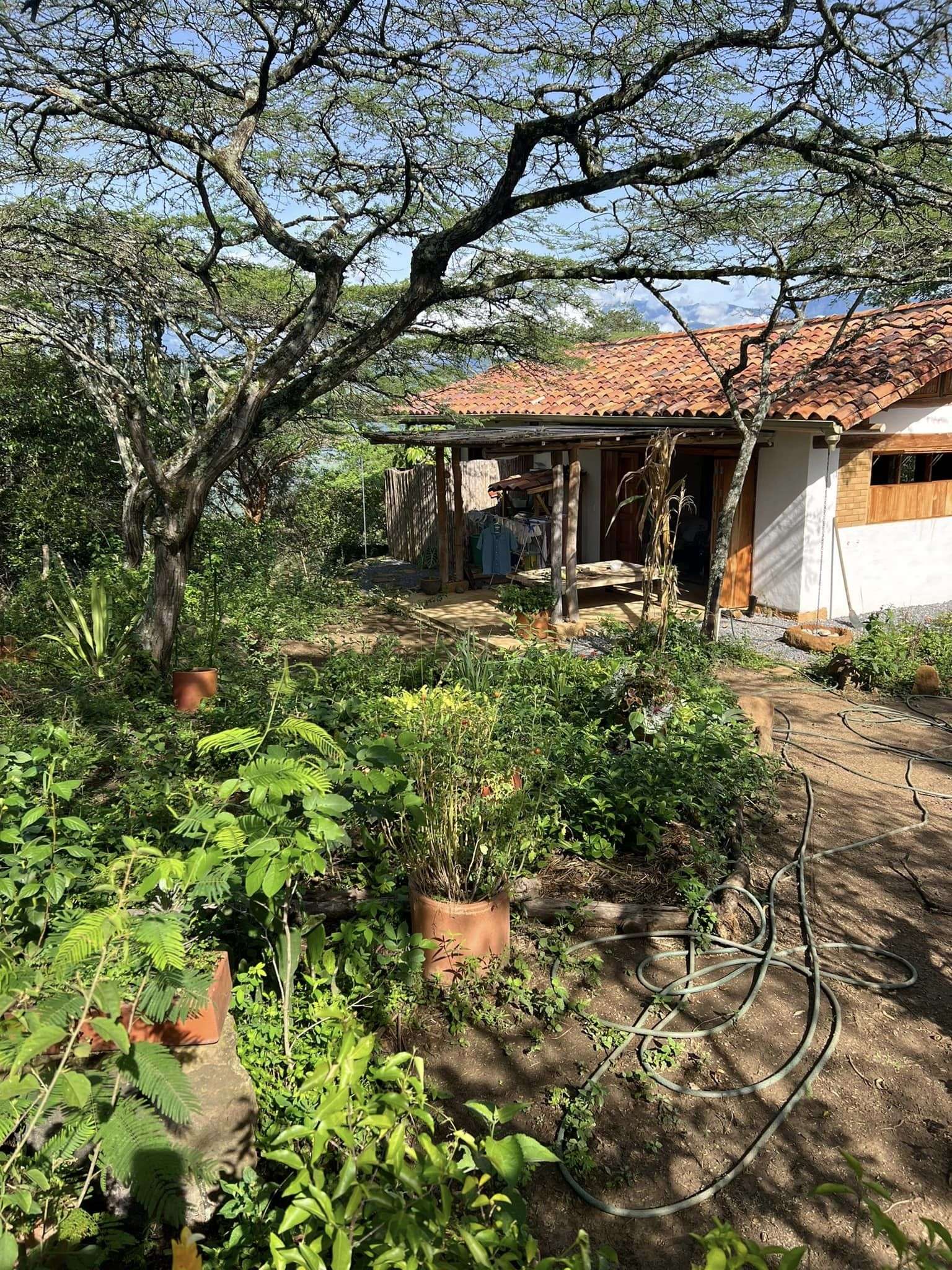
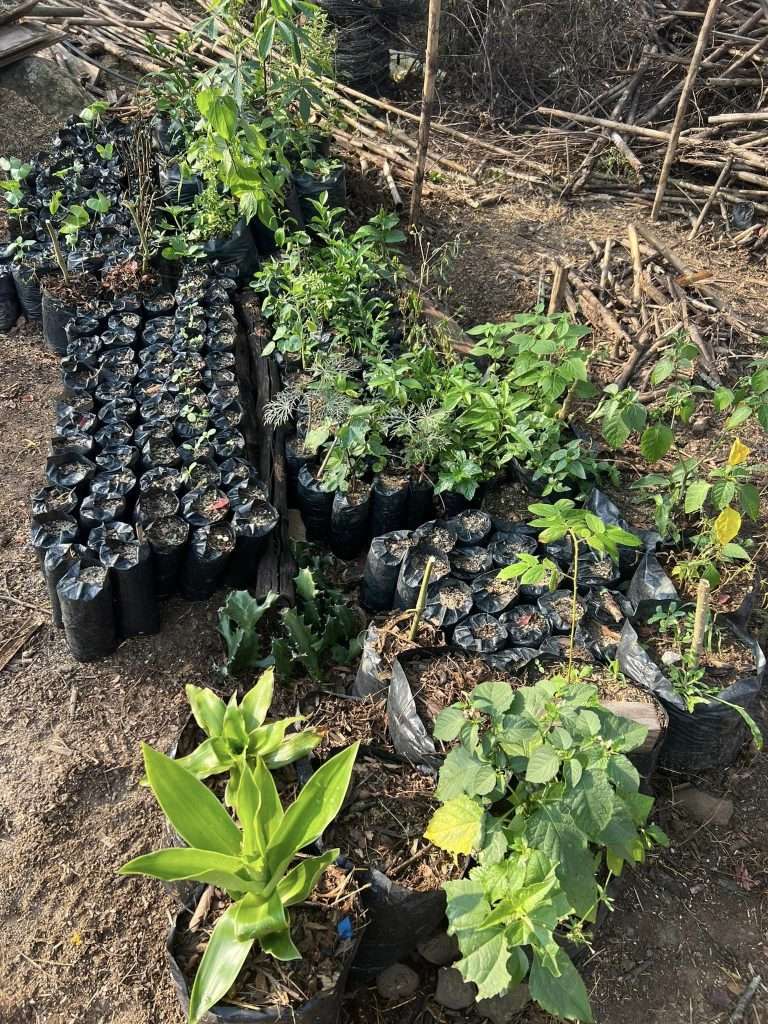
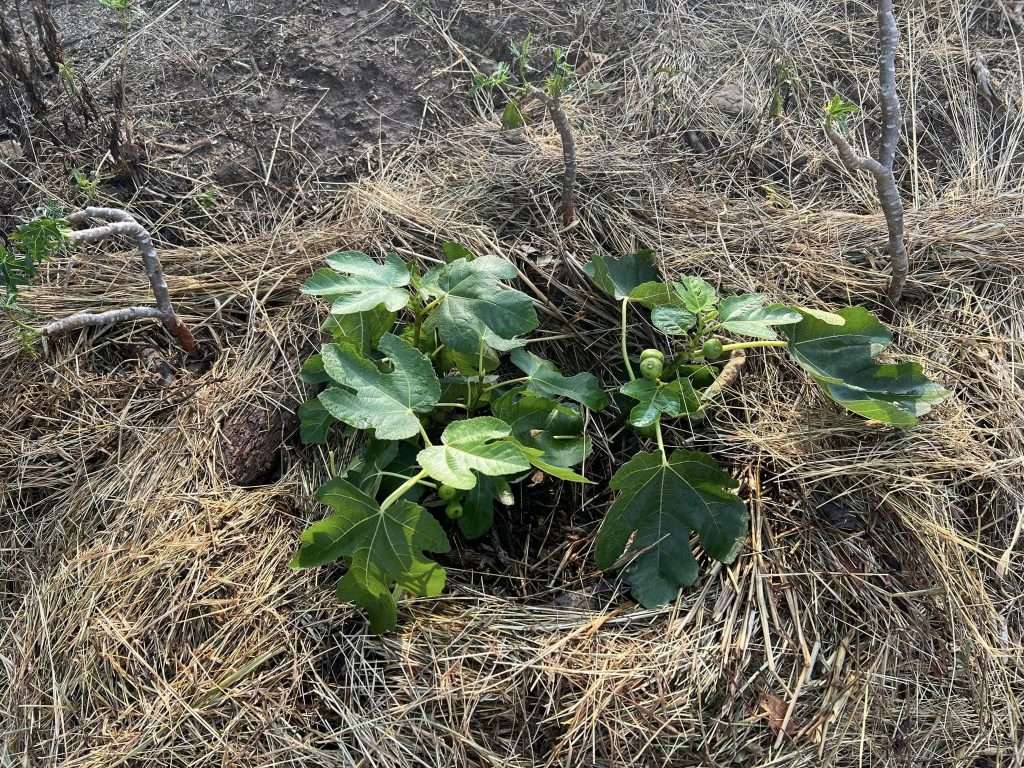
The images above are from the area around the first small house and from our first year of creating a food forest there. One photo is from our nursery area where we propagate trees. When we came, the area was mostly barren with a few pioneer species and some medium to tall trees.
How do I navigate meaning and purpose in my own life?
In general, I follow what’s fascinating to me, what sparks something in me, and what makes me come a little more alive. It may be something small or expressed in a small way, and then I see where it leads.
I take my surface wants and needs and trace them back to more essential, and often universal, wants and needs.
And I examine my stressful thoughts related to meaning and purpose to find more freedom around them.
EARLY IN LIFE
As a child, I was fascinated by just about everything. I loved nature programs on TV, I loved Cosmos by Carl Sagan, I loved reading science magazines, I loved reading in general, I loved exploring, I loved nature and the night sky.
When I was sixteen, there was a shift where the oneness and consciousness aspects of my nature came strongly into the foreground. The consciousness I am showeditss nature to itself very clearly.
This threw me in at the deep end in exploring my nature – as consciousness and consciousness taking the form of this human self and the world.
At a human level, I had been fascinated by parapsychology before this, but I was a self-proclaimed atheist and regarded religion and spirituality with disdain.
Now, I found myself fascinated by what spirituality is about, and in the process wanting to learn more about what others have found in their own explorations and how they talk about it.
I followed this fascination through my own explorations, reading, and also – to the extent I found it there – university studies.
I also followed my passion for art and expressing what I was exploring in art. Not by telling, but by allowing it to be expressed naturally and inevitably in what I created.
FOLLOWING THE VOICE OF WOUNDS
I also followed the voice of my wounds at a crucial point in my twenties, which dampened my spark and passion. I got married, she wanted to move to another state, and I decided to abandon my own life and the path that felt deeply right for me and instead support her.
I felt profoundly off track, and although I followed my fascination in my sustainability work, I also dampened my passion and spark for what was even more juicy for me including meditation, prayer, body-centered practices, and art. It was too painful to engage in it because as soon as I did, my inner guidance would tell me clearly to get out of the situation and back on track in life.
As I followed my unexamined fears, I knew what I was doing, although I was unable to get out of it for many years. Life had tapped into deep traumas in me that made me make life choices different from those I would have made if they were not there.
EXPLORING MEANING AND PURPOSE
How do I explore meaning and purpose?
As I mentioned above, I mainly explore it by noticing and following what sparks something in me, what makes me come a little more alive. Often, it’s small things and I see where it leads me. It can be going for a walk in nature, feeding the birds, eating ice cream by the ocean in the summer, the explorations I write about here, writing here, talking about something in an authentic and real way, finding plants for our food forest project, and so on. It can be anything.
There is an essence to whatever sparks something in me. One way to find it is to take any surface wants or needs and trace them back to their essence. What do I hope to get out of it? What do I hope to get out of that? And keep asking that question and notice what comes up, until I find a simple essence, usually something universal and very innocent. (This is from Adyashanti.) How can I bring this essence more into my life? Can I give it to myself here and now?
I identify and examine stressful thoughts I have about meaning and purpose and find what’s more true for me. I find The Work of Byron Katie very helpful here. For instance, years ago, I spent a good amount of time investigating stressful thoughts related to being off track and having abandoned myself.
I explore how all of this shows up in my sense fields. How does my mind associate sensations, mental images and words with each other to create an experience of meaning, purpose, being off track, and so on? Here, the Kiloby Inquiries are very helpful, or a simplified and more natural version of it.
FINDING FREEDOM FROM IT
The two inquires above – The Work of Byron Katie and the Kiloby Inquiries – are ways to find freedom from meaning and purpose, or rather from our ideas about meaning and purpose.
A related way is to notice my nature. The most effective ways to explore this that I have found, so far, are the Big Mind process and the Headless experiments.
At one level, I am this human self in the world. Everything about that comes and goes, so can it be what I more fundamentally am? When I look, I find I more fundamentally am what it all comes and goes within, what forms itself into the experience of all of it.
More fundamentally, I am what a thought may call consciousness, and this consciousness that I am forms itself into the experience of this human self, the wider world, and any ideas and sense of being an I or me, and of anything related to a sense of meaning or purpose.
Here, there is freedom from meaning and purpose.
FINDING FREEDOM TO FOLLOW IT
There is another freedom I should mention, which is to find the freedom to FOLLOW my spark, what fascinates me, what gives a sense of meaning and purpose at a human level.
Here, it’s more about finding healing. To identify and examine stressful thoughts saying I can’t or shouldn’t do it, or that say it needs to look a certain way. To meet and find love for the wounds in me holding me back from following my spark. To find a safe way to begin exploring and living it, and then allow it to blossom.
EXPLORING BEING OFF AND ON TRACK
A big theme in my adult life has been to be on or off track. I felt profoundly ON track in my late teens and especially early and mid-twenties – with art, university studies, meditation, prayer, body-centered practices, living at the Zen center, and so on. I then felt profoundly OFF track after I abandoned a clear inner guidance, moved to another location, and left much of what was most important to me.
What I am exploring has a couple of different aspects…
It’s not possible to be off track in any real and fundamental sense. The idea of being off and on track, and how it looks and feels, is created by my own mind. It’s a human idea and not inherent in reality.
In a human and everyday sense, it is possible to be off or on track. When I follow my inner guidance and what’s juicy for me, I felt and feel very much on track. When I abandon myself – my inner guidance and what’s juicy and important to me – I feel off track, and sometimes profoundly off track.
These two are both valid and important.
CURRENTLY
How is all of this for me now?
I still follow the juiceness and spark to explore what I rapport from in these articles.
I have found an outlet for my passion for sustainability and life in the regeneration, reforestation, and food forest project in the Andes.
The passion I have for art is still somewhat unexpressed in me, although I wish to bring it out more. There is still a deep pain there from abandoning it earlier in life.
In general, I am recovering from going off track – from leaving my guidance – in my twenties. It’s a long process. I am asking life – the divine, my psyche – to guide me to feel more deeply on track again, to live a life that feels deeply right and on track.
I feel halfway on track now, and I am very aware that I don’t know how it would look and even feel to be more deeply and profoundly on track again. It’s a mystery, which I love.
It’s part of the adventure.
NON-DUAL FOLKS AND MEANING & PURPOSE
I have heard some non-dual folks talk about meaning and purpose with disdain. (At the same time, it does seem that living a meaningful life seems important to them.)
I understand where they are coming from: Meaning and purpose are mind-created ideas, not inherent in reality.
At the same time, it seems quite one-sided to take the position they are taking. It’s a position. It’s not fluid.
It does not really reflect life and the fullness and richness of who and what we are.
The drawing is one I made when I was sixteen, in the middle of the initial oneness shift and when I found a deep passion for art. I would draw for hours a day and often long into the night, and did so for years.
Where we are in the Andes, most of the original forest is gone. It has been cut down for timber and firewoood and to make space for grass and grazing animals.
We are doing the opposite. We bought degraded land and are reforesting it.
Why? It’s not just because we love nature and it seemed the right thing to do. It’s because it’s also profitable.
MAYA NUTS
Right now, we are seeking out local maya nut (guáimaro) seeds and hope to plant as many as possible over the next year.
One mature Maya Nut tree can produce 100-300 kg of nuts every two years on average and can remain productive for a century. This may give USD 50-200 in annual income for each tree, and perhaps half of that in profit. We can easily fit a few hundred guaímaros into our forest. This may give an annual income of a few tens of thousands of dollars.
There is some initial work in collecting and planting the seeds and planting out the saplings. After that, the work is to collect the fruits on the ground, remove and clean the seeds, dry the seeds, and either sell the seeds or roast/grind to make a finished product. Since they are native, the trees mostly take care of themselves. (Apart from a heavy pruning when they are a couple of years old.)
Here is my rough calculation based on my current understanding:
-> DENSITY & NUMBERS
With free seeds, may cost about 1000 USD in labor (ChatGPT) to plant
Can fit 750-1000 guáimaros into a native forest on 15 hectares, 12.5m apart which is quite dense
500 trees may be realistic for 15 hectares, for a diverse dry tropical forest
-> INCOME POTENTIAL
2.5 USD / kg nuts
100-350 kg each 1-3 years = 50-175 kg gross annually
1 tree -> 2.5 USD x 50-175 kg = 125-438 USD gross / 62-219 USD profit annually
(1 tree x (125+438)/2) / 2 = 140 USD profit annually
500 trees x 140 USD = 70,000 USD profit annually / 5,800 USD monthly
FOOD FOREST
This is just one potential income of several from a food forest.
We are planting a wide variety of food-producing plants around the houses. Some of these require some watering during the dry periods but mostly manage on their own. At first, most of this food will be for ourselves and the wildlife, alhough as we produce more, we will sell to local markets. If we eventually have a decent production of something more specialized, we may also sell internationally.
The rest of the land is mostly native forest at different stages of regrowing. With the help of an organization, we are in the process of planting a variety of native trees to make it more diverse. We plan on including a variety of food-producing trees and bushes along the main paths and in the areas closer to the houses. Many of these will be native to the area or the region, like the maya nut tree.
Combined, these trees will produce quite a lot of food for the wildlife and us, and also for sale.
CACAO AND COFFEE
The climate in our neighborhood is slightly too dry and hot for cacao and coffee, although many in this area – at a slightly higher altitude – grow them.
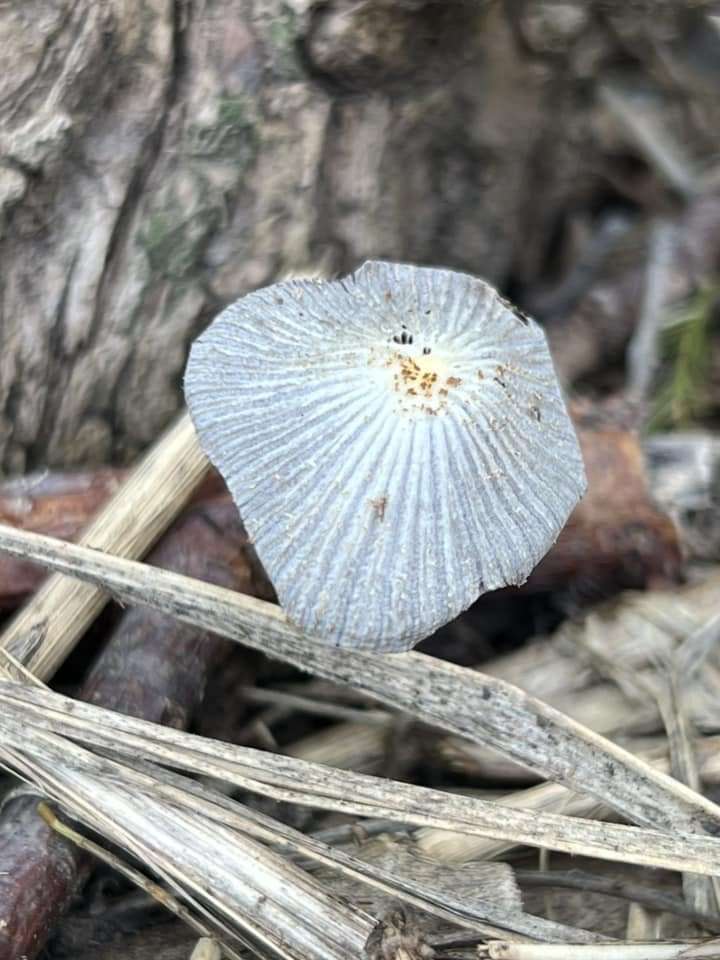
We already notice a change in the microclimate around the house. Where it was hot and dry, it’s now cooler and more humid, and we even have mushrooms growing. That means that we may be in a position to grow cacao and coffee. We plan on planting both soon to test it out.
As the native forest and food forest grows, it will only continue to make this microclimate cooler and more humid, which allows us to grow different plants. In this climate, those changes are very welcome for us too.
NURSERY
We have a small nursery with a few dozen plants. These are for our own use since we are still in the initial establishing phase of the food forest.
In the future, it’s likely that we will sell seeds and seedlings of native and/or food-producing plants. It’s possible we may also create a kind of cooperative where several people grow plants and sell it at a central location, perhaps once or twice a month to start with.
Local nurseries have a very limited selection of food-producing plants, and very few native plants, so there is a market for these kinds of nurseries.
ECO-TOURISM
In the future, it’s possible we can include eco-tourism in our activities. The main path through the land has beautiful views, and we are planning to plant food-producing trees and a wide variety of flowering natives along that path.
Within the end of the year, we will likely have three houses here, including a guest house. We may rent out one or more of these. We may also build one house specifically for renting out. I imagine that renting a house in a reforestation project with a food forest will be attractive to some.
TRAINING & WORKSHOPS
We may offer trainings and give workshops on the land in the future, either led by others or even ourselves as we gain more experience.
ANIMALS
We may include some animals in the future as well, possibly starting with a few chickens for eggs and fertilizer. This can also contribute to the overall income from the land.
In theory, we could do silvopasture – graze animals among the trees – although that’s less likely. We prefer to have a forest.
CARBON CREDITS
We are working with an organization that will plant some thousands of native trees here. This summer, they planted two thousand in the most arid areas. It’s free for us, and they sell the carbon credits to multinational corporations.
There are ways for us to plant trees and sell the carbon credits, although it does require a solid verification process. It could be done through a local cooperative of land owners planting trees, going through the certification and verification process, and selling the carbon credits.
INCREASED VALUE
We don’t plan on selling Milagros. It will hopefully remain a nature preseve long after we are gone.
Still, the value of the land is significantly increasing as the forest is returning and we are creating a healthy and mature food forest.
FOR THE WILDLIFE & ECOSYSTEM
For the millions of beings living on Milagros, this forest is obviously more worth standing. It’s their home. They depend on it. It’s their world and their life.
As human beings – individually and collectively – we depend on a healthy local, regional, and global ecosystem. We depend on it for our life, and for our own health and well-being.
THE ESSENCE APART FROM PROFITS
Mainly, we love living in a forest and it just feels right to help this land return to a more vibrant and alive state. That’s worth more than money.
We will soon plant our first three maya nut (guáimaro) trees on Milagros. We will plant one in the small forest between the houses, one as shade for the big house, and one by the entrance to the land.
OUR SHORT-TERM PLAN
I am in contact with the Maya Nut Institute for information and guidance, and we hope to receive seeds from neighbors within the next few months. I hope to plant a few hundred trees next year. If we receive the seeds this fall, we can plant them in our nursery at the beginning of the dry season in December, water them through the dry season, and plant them out at the beginning of the wet season in April or May next year. Most will be planted along the road up to the houses and along the two main paths going through Milagros. I assume we’ll plant quite a few in the other areas as well.
MAYA NUT NAMES
The Maya Nut has many names: Brosimum alicastrum in Latin. Guáimaro in Colombia and other countries, Ramón in Mexico and Central America, Ojoche in Costa Rica and Nicaragua, Ojite in some regions of Mexico, and Capomo also in Mexico. Indigenous people calls it Sak’a’ (Maya) and Uxpan (indigenous communities in Mexico). In English, it’s called Maya Nut, Breadnut, or Ramon Nut.
CHARACTERISTICS
They are typically 35-50 meters tall, although can grow up to 50 meters tall. Their root system is deep, suitable to a climate with dry seasons and they are an important part of the tropical dry forest in many areas of Latin America. They were used and likely grown by the Mayan people and many other indigenous people as part of their food forests. They take 5 to 7 years to produce nuts, and 10 to 15 years to give a full yield. A mature tree can produce 100-300 kilos of nuts at a time, sometimes up to 350kg. They produce fruits/nuts at irregular intervals, every 1 to 3 years, so the annual average is half of that. It also means having several trees for a more stable production is best. The nuts can be eaten whole and the roasted flour can be used for baking or a hot drink. They are highly nutritious and rich in protein, fiber, and essential vitamins and minerals.
INCOME POTENTIAL
What I have found so far suggests an income of roughly 100-400 USD a year from each mature tree, with roughly half going to expenses and taxes. (2.5 USD per kg x 50-175 kg annually on average = 125-438 USD). This obviously depends on a lot of factors, including the market value. It’s not too much for each tree, but it adds up when you have a small forest.
It will take 10-15 years to have a good income. In the meantime, we can prune the trees for green mulch or sell it as fodder for cows and goats.
A FOREST CAN BE MORE VALUABLE STANDING
With the loss of dry tropical forests in Latin America, the Maya Nut trees have become rare, although they seem to have a renaissance these days with several organizations promoting them and more people planting them as part of a reforestation project or food forest.
Over the previous decades and centuries, many landowners have cut down the forest to sell the timber and grow grass for cattle. These days, many realize that it can be as or more profitable to keep the forest and grow valuable food in the forest or use it as part of a silvopasture system (trees combined with grazing).
As mentioned above, we are regrowing the native forest on our land, and we are creating a food forest near the houses and along the main paths through the land. We will also plant several food-producing trees in the more wild areas to benefit the wildlife there.
My guideline is to create a forest that’s too valuable to cut down. If it has 500 to 1000 maya nut trees, the annual income is high enough so anyone would think twice about selling it or cutting down the forest.
RESOURCES
Above is a good video from Deutsche Welle in Spanish with English subtitles. They interview someone from Tamadúa who produces the roasted guáimaro I use as a hot drink, the chef at Mini-Mal which is my favorite restaurant in Bogotá, and a researcher at the Humbolt Institute in Villa de Leyva.
The Maya Nut Institute educates on the benefits and growing of the maya nut trees and provides seeds and certification. To be a certified grower, you need to follow certain guidelines including sustainable and organic practices, ecological diversity, paying the workers well, and that 70% of the people involved in the production need to be women or younger than 30 years old. That suits us well.
The new plants at the land then came to mind. An organization planted almost 2000 individuals of 20 different types of native trees on Milagros last week, in the most dry and barren areas. I connected with them and was with them for a while.
You are welcome here. Welcome to this land.
You are loved.
I spend time with them from and as emptiness and emptiness taking the form of these new plants on the land.
I see the lush diverse native forest they can and hopefully will become part of.
I notice how they go from being anonymous plants doing their thing to becoming alive and full of presence. (At the very least here for me, and something may happen there too.)
This planting is the first of hopefully many phases of plantings over the coming years. They will provide the framework for a forest that will hopefully be far more diverse and vibrant, with birds coming to plant more seeds and with us adding to it as well. There is a main path going through the land, and we plan to have many food-producing trees and bushes in the forest along it, and also many flowering trees and bushes. The rest will be a wilderness area with little to no human visitors.
Here is a list of the types of trees planted in this first phase:
Saman / Rain Tree (Samanea saman): An excellent shade tree, not native but widely naturalized in tropical regions.
Cedro / Spanish Cedar (Cedrela odorata): Native, valuable timber tree.
Ceiba bonga / Kapok Tree (Ceiba pentandra): Native, important for its ecological role.
Ceiba santera / Pochote (Pachira quinata): Native, valuable for reforestation and soil improvement.
Nauno / False Saman (Pseudosamanea guachapele): Native, useful for nitrogen fixation.
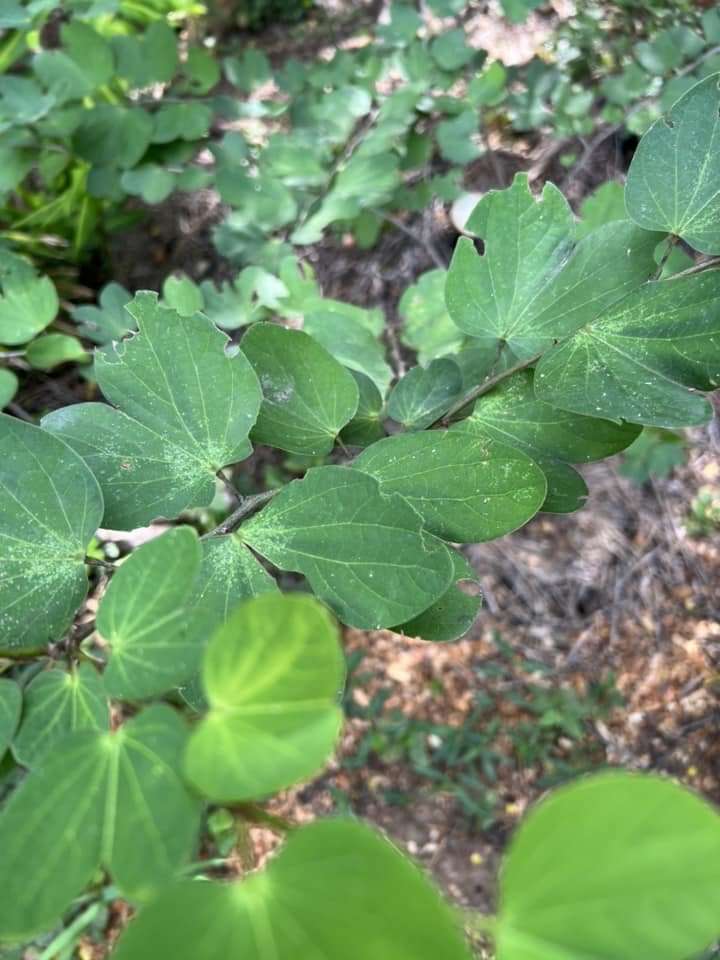
Pata de vaca / Orchid Tree (Bauhinia sp): Likely native, used for ornamental purposes.
Gaque / Clusia (Clusia multiflora): Native, good for soil stabilization.
Guayacán amarillo / Golden Trumpet Tree (Tabebuia chrysantha): Native, ornamental and timber tree.
Carbon credit is a hot topic these days, and a lot of businesses are buying carbon credits to make up for some of the damage they are doing to our ecosystems.
These carbon credit projects typically involve reforestation, with the idea that trees will absorb and store greenhouse gasses from the atmosphere. There is a great deal of difference between these projects. Some use sound ecological principles, use native plants, focus on creating biodiversity and good wildlife habitat, and so on.
Other projects plant whatever wherever without much consideration for the native ecosystem. (It may be faster and more convenient since nurseries typically don’t have many native plants.) In an ecological context, these may do more harm than good.
CURRENT CARBON CREDIT REFORESTATION ORGANIZATION IN THE ANDES
Where I live in the Andes, there is such a carbon credit organization. They provide reforestation for free to the landowners and sell the carbon credits to corporations.
They seem to do good work. They have a good understanding of ecology. They use a variety of native species. They develop the design in close cooperation with the landowners, and they adapt it depending on the wishes and needs of the landowners. For us, they include food-producing trees along the main path to help create a food forest, and they plant more flowering plants along the same paths for scent and pollinators. For others, they plant trees that work well with grazing animals (silvopasture), or they design and plant to provide good conditions for growing cacao, and so on.
I am in full support of what they are doing. We have joined their project, are very grateful for their help, and actively encourage others to join.
EMPTY NICHES
Not all landowners want to join their particular project, so there are some empty niches and space for another entity to fill these.
Most of the people who join the current project are people who have moved into the area over the last one or two decades. They tend to be well educated and all for regeneration. In contrast, many of the locals are generally skeptical about these types of projects. They are concerned, likely based on past experience, that they will be taken advantage of, that they will lose control over their land and what’s done with it, and so on. This is a classic dividing line between newcomers and locals in rural areas.
Several people have their own reforestation projects, so joining this one makes less sense to them.
Also, while the current group is planting mostly native plants, they are using a relatively traditional approach. They are not using methods developed within permaculture, syntropic agriculture, and so on.
So why not create a new organization to fill the empty niches of (a) locals skeptical to joining a project run by outsiders, (b) people who already have their own reforestation project, and (c) people who want to use a slightly different approach, informed by permaculture, syntropics, and so on.
A REFORESTATION & CARBON CREDIT COOPERATIVE
It could be a cooperative, and the members would be local landowners who want to reforest parts of their land in exchange for carbon credits.
We will need a strong certification and monitoring process, likely overseen by an independent third party.
We will need full transparency about all parts of the process – to the members, the certification entities, the carbon credit buyers, and the public.
We would need clear guidelines and rules for the members.
MEMBER COMMITMENTS
The commitment for the members would likely include:
Timespan. Likely a commitment to allow the trees to grow for 20-30 years minimum.
Planting guidelines. Following certain design patterns, use a minimum percentage of native trees, use a minimum variety of trees and plants, and plant at the beginning of the rainy season.
Maintenance guideline.
Sustainability. Chemical-free, possibly other sustainability practices.
Focus on biodiversity and wildlife habitat.
Monitoring, reporting, and audits.
Membership fees. An initial membership fee and an annual percentage of their carbon credit income.
Legal agreements.
Agreement to a code of conduction.
Community support. Attend meetings, share knowledge and best practices, etc.
Transparency. Records, audits.
Accountability. Consequences of breaking agreements.
A NURSERY
With our own small regeneration/food forest project, we are seeing that the main challenge is finding enough seeds and saplings for native plants. The cooperative could have its own nursery, either in a central location or distributed on the land of several members. The people in charge of the nurseries would be paid by the co-op.
A WIN-WIN-WIN SOLUTION?
To me, this seems a win-win-win solution.
Corporations have one more place to buy carbon credits, and some would likely prefer to buy carbon credits from a cooperative using sound ecological practices.
The landowners benefit from the extra income.
One or more people may be hired by and work full-time for the co-op.
The co-op and/or individual landowners will hire people to do the planting, initial maintenance, audits, and so on.
The land and wildlife benefits.
It would be a good model for others. A part of the commitment for the co-op would be to share and train others in creating their own cooperative.
I also suspect it may not interfere much with what the current organization is doing. There is plenty of land in the area ready for reforestation. The ones joining their project will likely be a different set of landowners than would join the co-op.
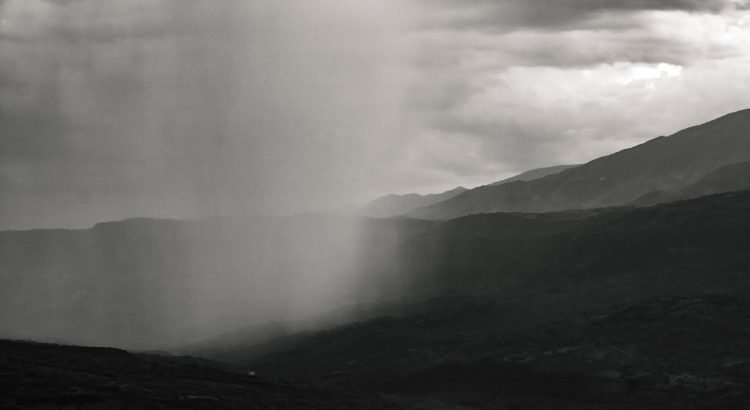
The photo shows the canyon during a rainstorm, I took it when we first came to the area a couple of years ago.
My father is an architect and artist, and I remember he once told me his main guideline for architecture: It should feel good. It should feel good to be in and around the building.
I am trained in architecture (MA program at the University of Oregon), and have also learned a lot about it through my own studies of vernacular architecture, and it’s always stayed with me. For me too, it’s a guideline for good architecture, along with a few other essentials like building with the landscape, sun, wind, and water, building for the climate, using local and natural materials as much as possible, and so on.
I designed the big house on our land in the Andes, which is now close to being finished. Another architect took over and did the details and has overseen the building of the house.
In general, I am very happy with the work she is doing and we agree on almost all.
And yet, there is one thing that is bugging me. I wanted a solid stone or metal foundation for the wood poles outside of the building. (These poles support the roof of the veranda that wraps around two sides of each of the two buildings.) Ideally, I would have liked a strong metal ring to serve as a base. She wanted a very light and almost invisible metal support to make it look like the poles are hovering. Unfortunately, as I see it, her approach won out.
Her approach is a typical modernist approach. With modern materials, we can do things that wouldn’t be possible with traditional materials, and it’s often done just because it’s possible and unusual.
For me, it doesn’t feel good. The animal in me feels that it’s precarious and doesn’t feel safe. Viscerally, it feels precarious, unsafe, and uncomfortable.
Here, as with so much in life, it’s not about what we consciously know or how we consciously see it, it’s about how it viscerally feels to the animal in us.
So why do some prefer it? Why is this type of design so common in modern architecture? I assume it is because so many lead with their conscious thoughts, not how it viscerally feels to the animal in them.
It’s a symptom of a civilization that’s not aligned with nature and with us as animals and nature. (It also doesn’t feel good with unnecessarily tall stone walls around the outdoor shower area since they make it feel like a prison, but I think that may be changed.)
A part of me is annoyed by this, it’s a reminder of this aspect of our culture, it’s a reminder that I tend to put stones in my own shoes if life appears to not go my way, and I know it can be changed in the future.
Often with this Andes project, I have put forward my view and recommendation (usually based on a good deal of experience and knowledge), the others have ignored or dismissed it (as often happens in my life), and they later realize that my approach was a good one, and we try to remedy the situation as best we can.
The photos are from the last few weeks of the building project. The buildings are made with local and natural materials, mostly in the traditional style, with rammed earth (tapia pisada) which is a traditional building technique in the area, and they are mostly built by hand. The “hovering” poles can be seen in a couple of the photos.
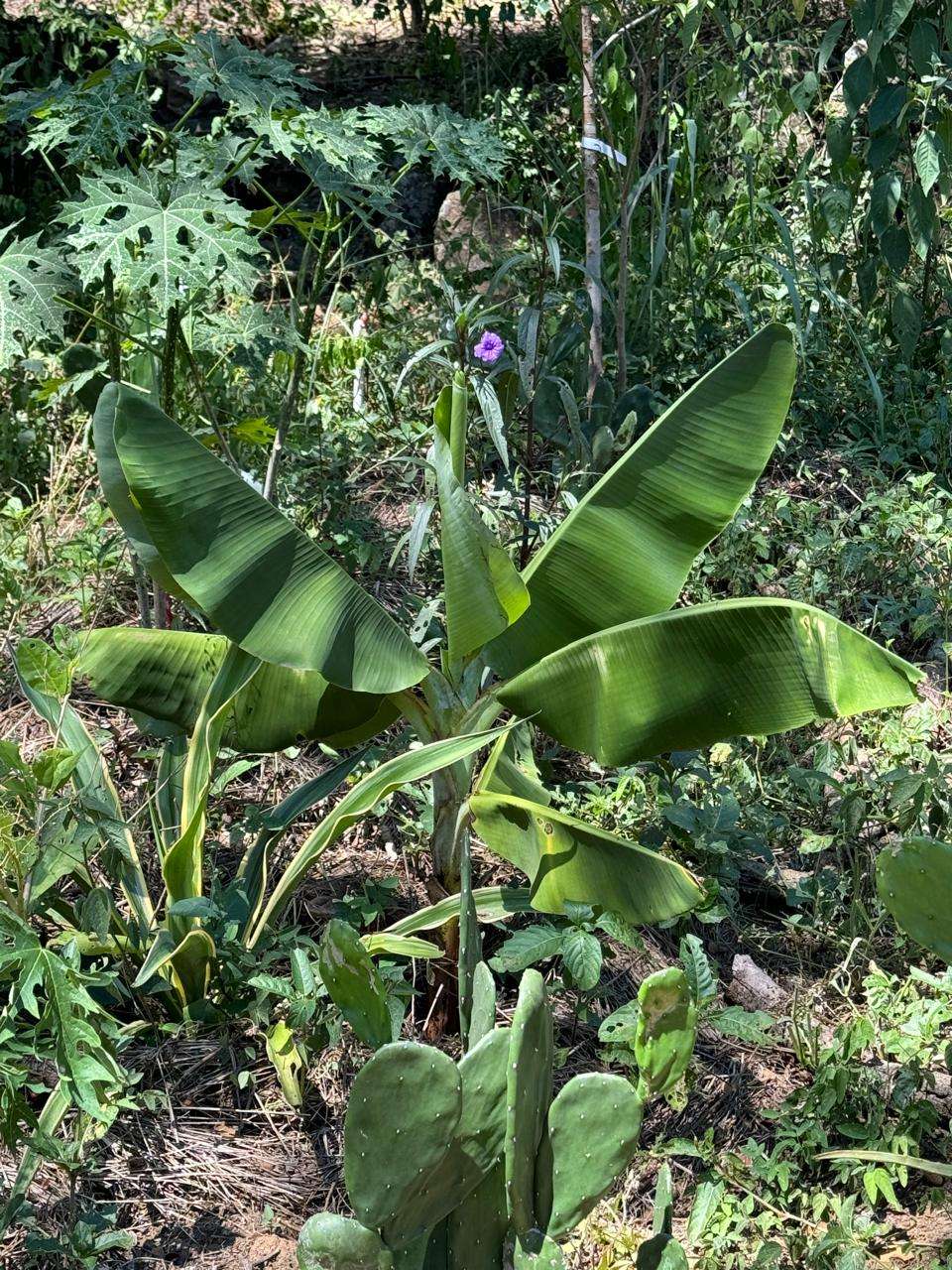
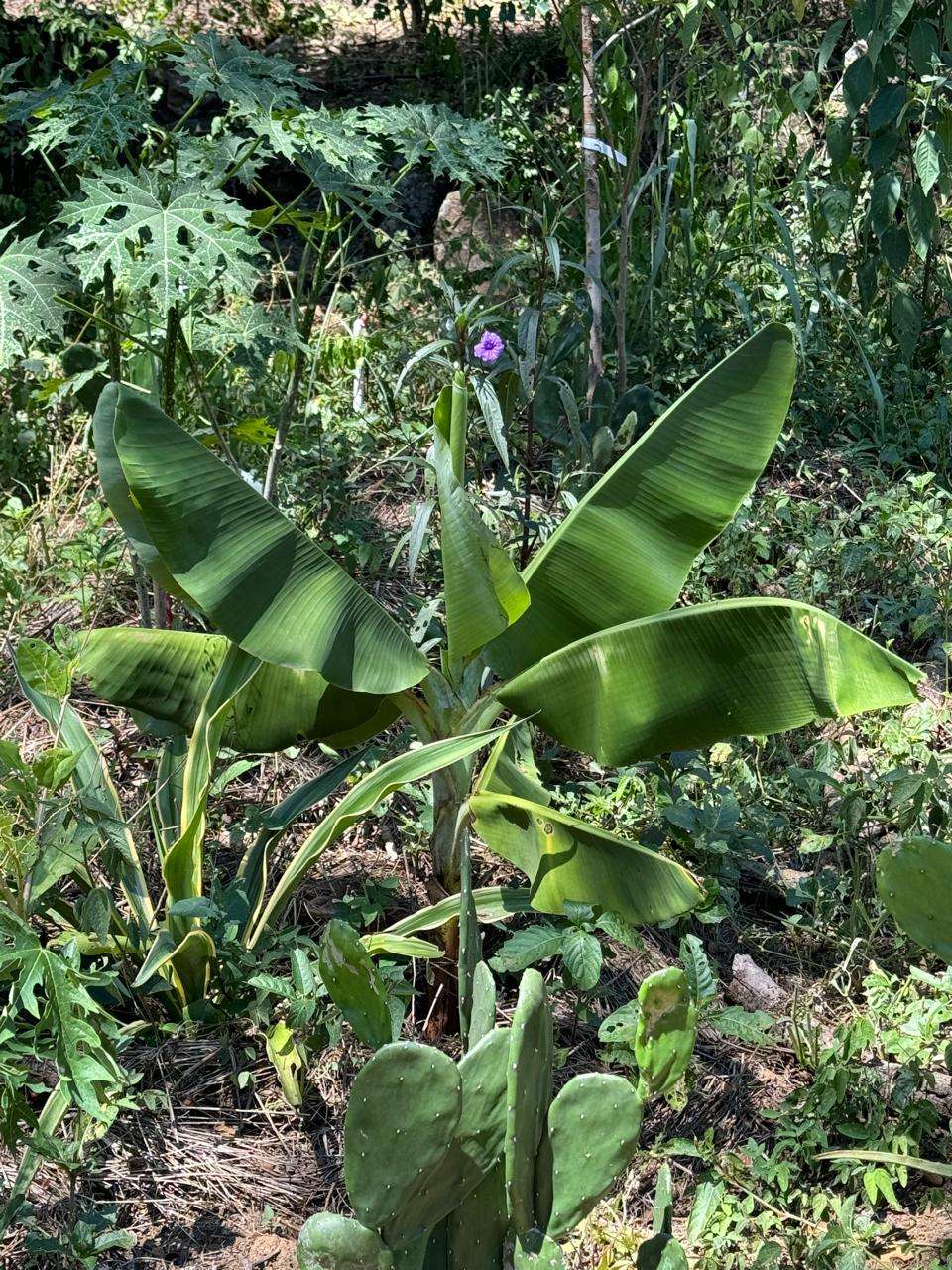
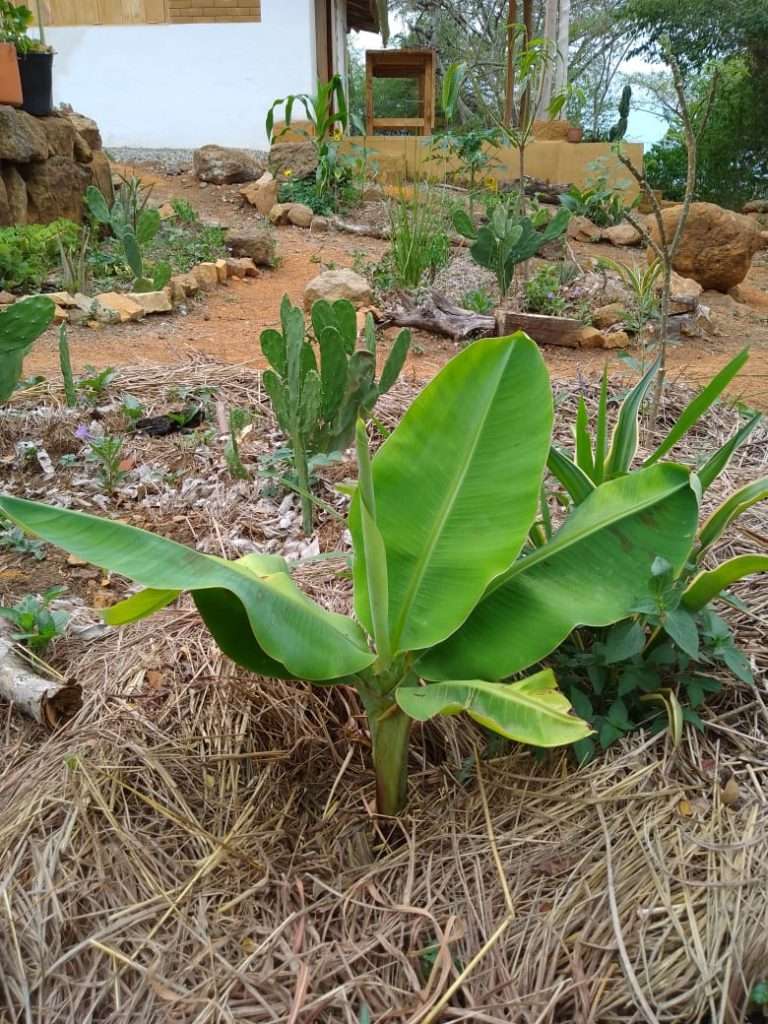
A mango tree and friendsOur small nurseryThe first fig treeA second nurseryA dwarf banana plant that produces regular bananas but stays small so it’s easier to harvest
Over the last few months, we have been working to establish a food forest on our land in the Andes mountains. So far, it’s mostly close to the house, and it will likely expand in time and as we get more experience.
To me, food forests make a lot of sense. If I have a piece of land, I cannot see any reason not to establish a food forest. I would do the same even if I lived in another climate. (It would be different, of course, but it’s still fully possible to establish a nature garden that produces a good amount of food.)
THE HISTORY OF THE LAND
The land was owned by the same family for several generations and was used mainly for grazing (cows and goats) and small-scale food production (tobacco, yucca, etc.). Only the area close to the main pond has a relatively mature and healthy forest. The rest is eroded, has a young forest of pioneer trees, and/or has grass.
Before then, in pre-Columbian times, it was part of the land of the indigenous people in the area, the Guane. I am not exactly sure how they used it, but I assume they may have had a kind of food forest there. They may have cultivated food plants, likely mostly perennials, inside of the existing native forest.
THE TWO MAIN ZONES
The plan is to have a food forest in the area close to the houses, starting next to the houses and expanding out, and also to have a food forest along the main path through the land. This food forest will consist of native trees, bushes, and flowers to support the local ecosystem, and a variety of food-producing trees and plants to feed insects, birds, animals, and us, and to provide income in the future.
The rest of the land will be a kind of nature preserve, and an organization will plant a mix of native trees throughout the land over the next several months and years. (They sell the carbon credits to big international corporations, and our land gets to be reforested.)
OTHER THINGS WE ARE DOING
We are also doing other things to minimize our impact on the land and our life-support systems in general.
We are building using traditional techniques and local materials. These are rammed-earth buildings that stay cooler during the day and can last for centuries with a little maintenance.
We are in the process of setting up rainwater collection systems for watering the plants. We can get 1 liter for each millimeter of rain for each square meter of roof surface, so that adds up quickly.
We will install a solar power system. Since we are close to the equator, there is a lot of solar radiation, and it’s not more expensive than buying and installing a transformer which would be the alternative.
The big house that’s being built now will have a vermicomposting system. Inside the house is a regular flush toilet, the water goes to a worm composting bin where the solids stays and is eaten happily by worms, and the water continues and is deposited underground to nourish parts of the food forest. It’s a simple and low-maintenance system with a lot of benefits.
I will most likely replace the conventional flush toilet in the current small house with a compost toilet 10-15 meters away.
In addition, we are getting to know and create connections with neighbors and like-minded people in the region with similar projects. That’s crucial for several reasons, including sharing of knowledge and some material resources. For instance, we are right now buying high-quality compost from permaculture friends in the area. (After a while, we will have our own.)
WHY A FOOD FOREST?
For me, the question is more: Why not a food forest?
It just makes sense all around. It’s fun and rewarding. It provides habitat and food for insects, birds, and animals. It helps revitalize and feed the soil. It will provide food for us as well as income in the future. It takes a little effort in the beginning, but when it’s established, there is much less effort required and mostly just harvesting the rewards. It’s an example to others and may motivate others in the area to do the same.
PLANTING & HELPING THE SOIL
The area around the first small house has poor and compacted soil, so we are using a lot of mulch – combined with compost and some organic goat manure – to help it. The mulch helps retain moisture, and it also provides nutrients and microbes to the soil.
Since the soil is so compacted, it’s important to dig relatively large and deep holes for the trees and mix the soil with a good amount of compost and a little bit of manure. That helps retain moisture in the soil, it provides better drainage for the rainwater, it makes it easier for the roots to spread out, and it gives nutrients for the plants.
We also plant a lot of different things around these trees: peanuts, peas, flowers, vegetables, and so on. These provide more variety which helps keep pests and diseases at bay, the plants support each other, they help the soil, and the variety and liveliness is fun and enjoyable.
As you can see from the photos, we are just getting started, and the photos were taken well into the dry season so it’s not nearly as lush as it will be now that the rain has returned.
We are trying to plant as much as possible now at the beginning of the rain season, so they can get a good foothold while the rain is here. Some will likely need some watering during the dry season, but we are focusing on plants that will survive a period of drought once they are established and have deeper roots.
RAINWATER COLLECTION AND EROSION CONTROL
We are in an area that gets a lot of rain most of the year and has a dry period over a few months during the northern hemisphere winter.
Because of deforestation, rainwater runs off quickly and brings the soil with it. The erosion is worse along the ridge that goes across the land.
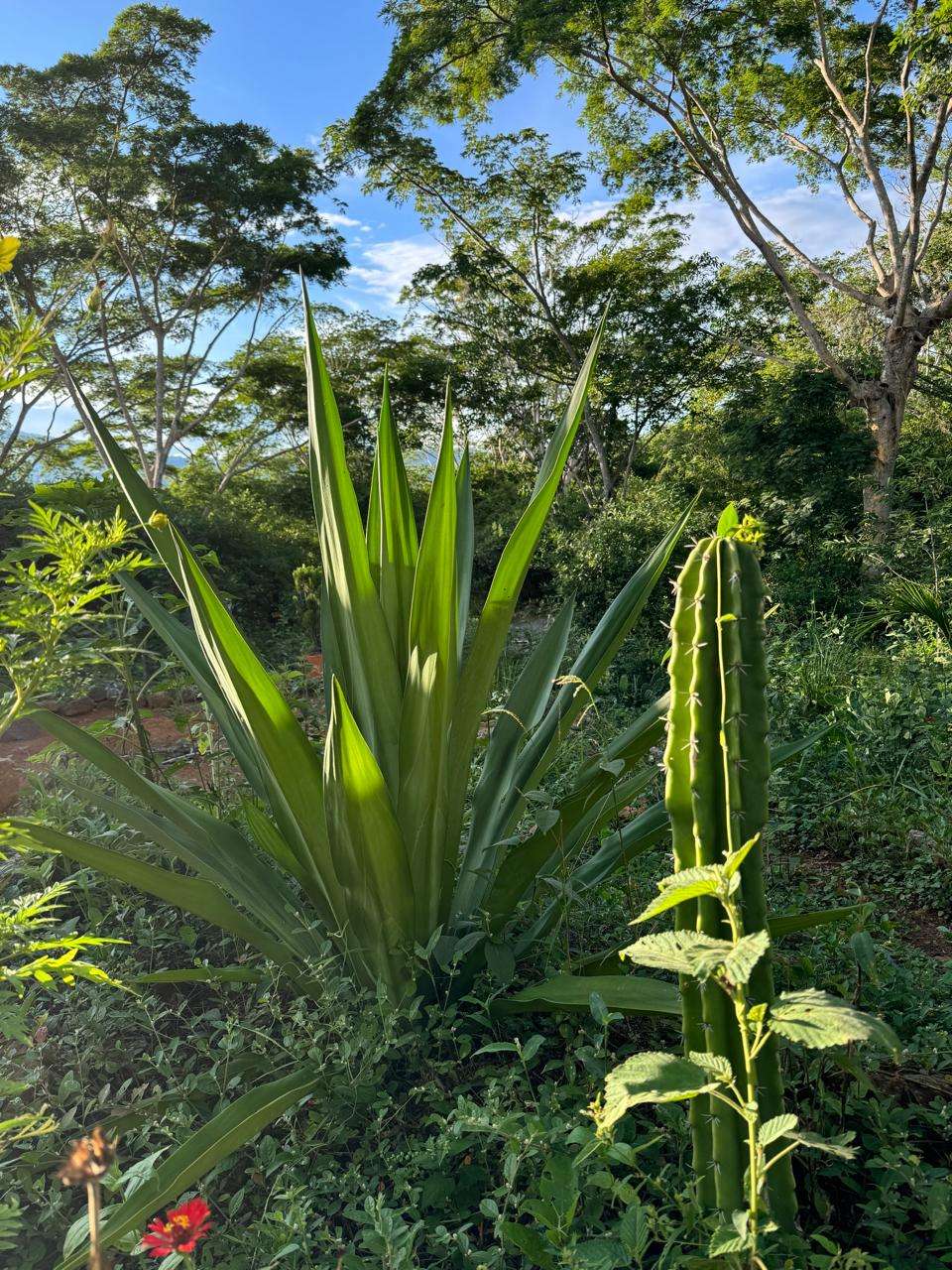
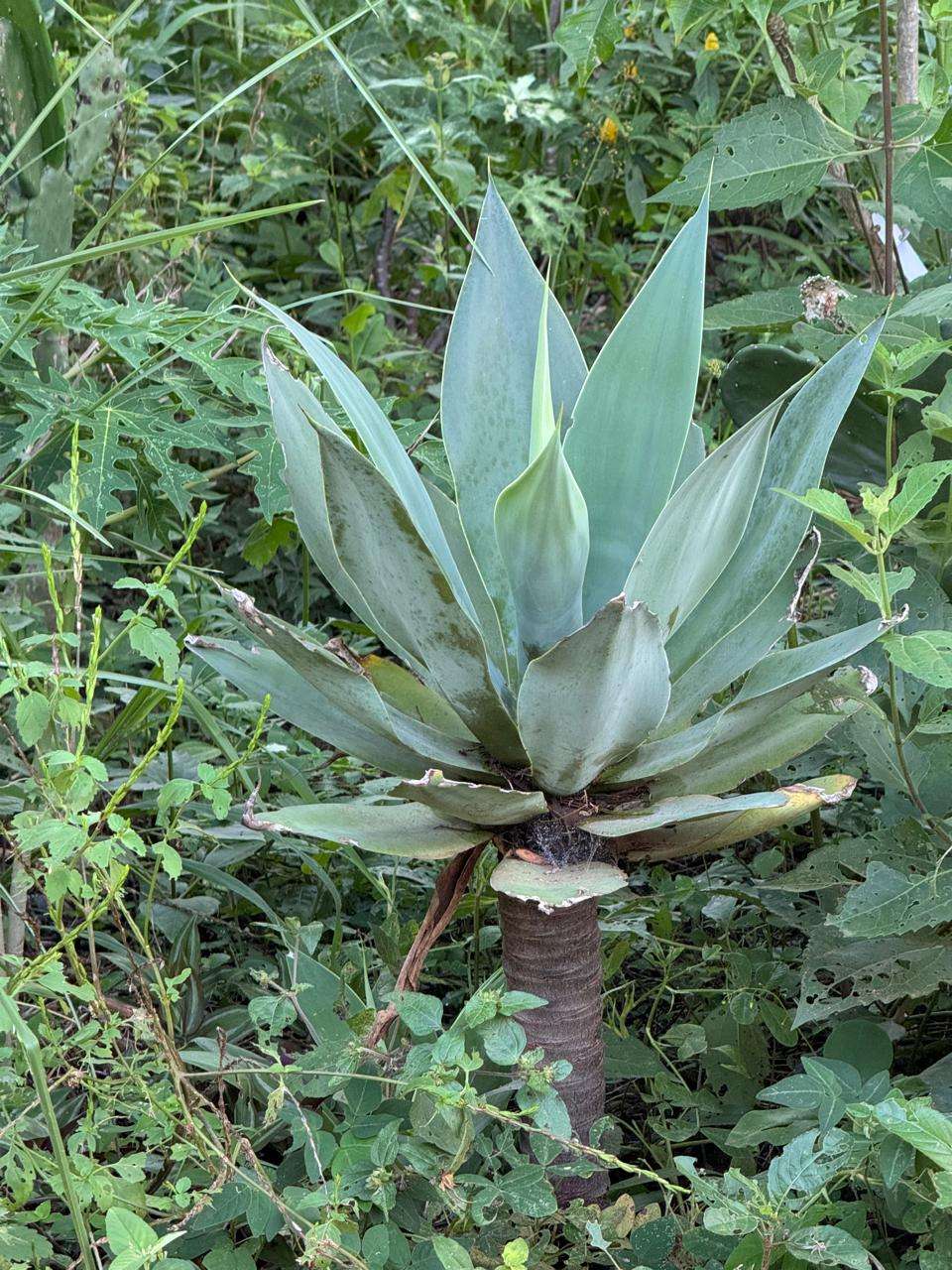
We are doing several things to slow down the water and help it absorb into the ground. The main project is to plant a large variety of native trees, bushes, and flowers. That takes time, so in the meantime, and in especially exposed areas, we are building dams using rocks found on the surface, and we are planting agave, mata ratón, and other plants that help keep the soil in place.
We are also channeling rainwater into a pond, and will – as mentioned above – collect rainwater from the roofs of the houses.
There is a dry river going through the land. With reforestation on our land, and hopefully also on the land higher up the side of the canyon, we may bring water back to this river.
THE LAYERS OF A FOOD FOREST
A food forest has several layers, just like a mature natural forest.
It has everything from tall to medium to small trees, bushes, flowers, and vines. This helps us make full use of the vertical space.
All of this vegetation and water – in the soil and the plants – also helps regulate the temperature. It changes the microclimate significantly, and this allows other species to grow and makes it more comfortable for us.
INDIGENOUS PEOPLE & FOOD FORESTS
Many or most of the indigenous people in the Americas created food forests.
They planted food-producing plants in the forests to have better and more regular access to food.
When I am doing the same here, I feel a kind of kinship across times and cultures. We want much of the same. We want to work with nature. We want to support the native forest and our four-legged, winged and crawling relatives and friends. We want to provide for our own needs in a way that also enhances the life around us.
THE MANY BENEFITS OF A FOREST GARDEN
So there are many benefits to a food forest, or a forest garden as it’s also called.
It requires some work in the beginning – in terms of planning, gaining knowledge and experience, and planting and maintenance. As soon as it’s established, it’s largely self-maintaining and we can reap the rewards without much input.
It provides habitat – shelter & food – for a wide range of insects, birds, and animals, especially when native trees, bushes, and flowers are included.
It’s densely planted, and it makes use of horizontal and vertical space. It works in 3D.
The diversity reduces problems with insects and diseases.
It helps nourish and build healthy soil.
It’s a project that will provide enjoyment, food, and possibly income for decades and even centuries into the future.
It will provide income in the future. We can sell food, compost, seeds and seedlings, knowledge and experience, and so on.
It’s profoundly alive, lush, and productive.
It’s fun and deeply rewarding and meaningful, at least for me.
It nourishes the soil and the soul. What can be better than that?
It creates connections with like-minded people working on similar projects. It creates a community.
THE PROBLEMS WITH MONOCULTURES
This is in contrast to the many problems with conventional monocultures.
They are deserts. They don’t provide much of a habitat for insects, birds, or animals.
They rely on chemicals: Pesticides and fertilizers. Pesticides are designed to kill insects, so that’s what they do, and it has led to a dramatic general loss of insects even far away from the growing areas. It’s ecocidal and suicidal. Chemical fertilizers require a lot of energy to produce.
They set the stage for pests and diseases. Having a big area of one plant allows pests and diseases to flourish, which then requires pesticides. Monocultures create a big problem and create another big problem by trying to fix it.
They require a lot of work each year. They often start from scratch each year.
They don’t build soil. Often, through disturbing the soil, laying the soil bare, and using a lot of space between each plant, there is a loss of valuable topsoil. (Which eventually goes into and pollutes the oceans.)
They are inefficient. They often use a big space between each plant, and they only make use of horizontal space.
They are boring. They don’t nourish the soil or the soul.
REVOLUTION DISGUISED AS GARDENING
Permaculture is sometimes called revolution disguised as gardening.
That’s how I feel about this project.
It’s profoundly subversive in the best possible way. It goes against so much of the destructiveness of our civilization (monocultures, pesticides, soil depletion, destruction of ecosystems) and provides an attractive and productive alternative.
Here in Cañon del Chicamocha, the rain tends to come up the valley from the south. Quite often, we can see the lightning, hear the thunder in the distance, and see it further down the valley.
If there is lightning, thunder, and the visuals, it doesn’t always come all the way here. But if I smell it, it seems more likely to arrive. I guess it’s because the smell means that the wind is towards us and stronger.
Last night, I smelled the rain in the evening and it arrived around 3 am.
I love that I can smell the rain before it comes. I love the smell of rain (petrichor). I love learning about and experiencing these patterns in nature.
The photo is of the rain further down the valley seen from this area, taken a couple of years ago when we stayed at the house of friends.
Barichara has wet and dry seasons. The dry season is usually December-April, with two or three good rains within that period. Some years, it rains a lot through the year. In other years, the dry seasons last longer.
We are in the dry season and just had a very welcome early morning rain here. I measured it, and it was around 5cm. I imagine many beings are very happy for it – people, animals, birds, insects, and plants.
The roof of our small house is about 100m2. 1mm of rain on one square meter gives 1 liter of water. 1mm of rain on this roof is 100 liters. This rain gave 5,000 liters of water from the roof. That’s quite a lot.
There is no lack of water here, and it is important to manage it well.
FINCA MILAGROS
We collect water from town in one large and one smaller tank. That means we have water for a while even if the water from town doesn’t flow.
We will install a several-step water filtration system (from sand filter through eventually UV light) for clean drinking water. The alternative is water from large plastic bottles, which is terrible due to all the microplastic particles in the water (200,000 in small plastic water bottles from a recent study).
We will soon start collecting rainwater from the roofs here. I am not sure how big the tanks will be, and we may expand. For now, we are thinking of 2×15,000 liters for the larger house that’s being built (220m2 roof surface) and one 15,000-liter tank for our small house. These tanks will be filled up quickly with some good rains, and we will use the water to water plants. (Perhaps also for showering etc., not sure yet.)
Finca Milagros has one large pond and 3-4 smaller ones. We want to channel rainwater better into these ponds, and make them deeper, so they can hold more water. This is important for the birds, animals, and insects relying on that water, it helps the vegetation and life in the areas around the ponds, and it also helps to replenish the groundwater.
The land here has been grazed so only the area around the big pond has a more mature forest. The rest is various degrees of young forest and arid land. Vegetation helps slow down the flow of water and helps the water absorb into the ground, so that’s one of many reasons we are planning to reforest the area with native trees and bushes.
Bare soil is eroded when it rains. That’s why we are planting cactus and succulents there, mostly native. We are also planting hardy native trees there, mostly boca ratón right now. And we are doing some simple landscaping, mostly with rocks, to reduce erosion.
There is a dry river going through Milagros. It’s dry because of deforestation. Forests bring water into the ground (slows the water flow and makes the ground more porous) and reduce evaporation, both of which give water to the river. With reforestation, there is a chance we can bring the water back into the river, especially if we are also able to help reforest the land higher up.
BARICHARA
As far as I know, there are no groundwater regulations here. That’s enormously important. We need to prevent too much use and contamination of groundwater. (Many houses here use septic fields that leach blackwater into the groundwater.) Depleting the groundwater reserves has a huge impact on the ecosystem. Both depleting and contaminating it has serious and devastating consequences for the very long term. Protecting the groundwater is hugely important.
The water that comes from the municipality (aqueduct) is contaminated. That’s another important thing to work on since not everyone can afford good purification systems or to buy drinking water separately. It’s a vital public health issue.
Reforestation is also hugely important. Forests hold humidity and create rain. The other side of Cañon del Chicamocha has more forests and there are always clouds there. I assume they also receive more rain. They (partially) create rain for themselves.
The photo is of the other side of Cañon del Chicamocha at sunset
agua, barichara, santander, agua subterránea, protección del agua
This is a record of a relatively typical day at Finca Milagros:
I slept in the hammock under the trees and the stars, woke up at sunrise, and had breakfast. (Hot chocolate and oatmeal with fruits and local jam.)
Two people who have a rain gutter business came around 6:30am, looked at the roof, talked with us, and we made an agreement for what type of gutter and the price. They’ll have it ready by mid-February.
We will also install one or two tanks to collect the rainwater. The roof is a little less than 100m2 which means that each millimeter of rain will give us 100 liters of water. A good rain may give us 5cm which means 5,000 liters of water1. We may have at least one 15,000-liter tank to collect the water, maybe more.
Just after 7am, José brought Spanish plum trees from his farm and planted them here for us. (Arbol de cocotas / jocota / Spanish plum / Jamaican plum / spondias purpurea.) He showed us how to plant them at an angle so they shade themselves from the sun. He is one of the workers on Roberto’s house up the hill (the father of my wife) and has helped us with a few other projects.
At 9am, Moncho the carpenter came. (Who we already know since this is a small community.) He looked at the doors and windows, and we made a list of several things for him to fix and improve. He’ll come next week to do the work.
Later in the morning, we planted a diversity of seeds and seedlings in a couple of areas close to the house. We added a lot of mulch to help keep the moisture in the ground. I also put some spiny branches on the stone fence so the neighbor’s cows won’t get to a papaya plant growing too close to the fence.
I contacted several neighbors for advice about the size of the rainwater tanks. I also contacted several people about sources for native flowering bushes and trees since we want more of those close to the house. (The local nurseries don’t have many native plants.)
I was in conversation with the architect about the rainwater collection for Roberto’s house (Ale’s father). We’ll likely use two tanks and place them close to the swimming pool. The roof area is a little over 200m2 which means that 1mm of rain gives 200 liters of water. That also means that a couple of days of good rain will give at least 20,000 liters of water. We may use two tanks of at least 15,000 liters each to collect the water. I am thinking that we actually need more since we need to store water for the dry season.
We also talked about the possible swimming pool, and especially the size. We decided on 11×2.5 meters for now, although it may change. (I wonder if we just need a cooling pool and can use the local public swimming pool for actual swimming. It seems a better use of resources, but I don’t know and I am not the only one making the decisions here.)
I called a friend of mine for her birthday. I know her from Oregon and she is now in Sweden at a weawing school.
I took a nap (siesta) in the afternoon with Merlina, who also takes a nap in the early afternoon.
At 5pm, my wife’s uncle and aunt came to visit. They went for a short walk to look at Roberto’s house that’s being built up the hill and see the sunset over the canyon. We then had a delicious dinner with wine outside.
I should mention that it sounds like I am doing a lot here. That’s not the case. I had all the info ready for the rain gutter people and the carpenter so they knew the situation and what to do. The online communications were brief and to the point. The seed planting took only a few minutes. I left the sunset walk to my wife and her uncle and aunt. I rested throughout and most of the day. I would love to do a lot more and have a long list of things I want to do, but I have to limit my activities to the essentials and rest most of the time for health reasons.
(1) I updated the calculations a few days later based on a good rain that gave us 5cm of water. I initially used a lower estimate.
The image is the view from the hammock during the day. At night, the sky is filled with stars.
Just a few photos of a visiting vermilion flycatcher (red) and a scrub tanager, both in bushes and trees next to the house. We hope that the number and diversity of birds and other beings here will increase as the regeneration project progresses over the years. (We are still in a very early phase.)
It’s wonderful. There are several different species of different sizes, from big to tiny, and they are a very important part of this ecosystem. They clean up dead animals and dead and dying plant parts. They bring nutrients into the soil. They are essential to clean-up and soil health, which is vital for the whole ecosystem.
When we first moved in here, we had ants in the house. They loved to clean up every little crumb or tiny piece of food they could find. We aimed to keep everything clean and put all food away in sealed containers, but they still found enough to stay interested. (To mention a couple of recent examples of what they discover: an delicious bar of lotion wrapped in paper, and a caramel in the wallet in my mochilla.)
This lasted until I communicated with them. I tuned into them and told them they had plenty of food outside the house, and that the whole outside area is completely available to them. Our area is inside the house, and they need to stay out. If not, it would not be good for them. We can easily and happily co-exist if we only have that agreement.
Almost immediately, they vanished from inside the house and they stayed outside.
This summer and fall, we were away for several months and someone else stayed in the house. When we returned a few weeks ago, the house was overrun with ants, far worse than it had ever been. Again, we did the common-sense things. We kept everything clean. We sprayed with citronella. And it didn’t work that well.
Four days ago, I sat down to communicate with them again. I proposed the same deal as before, and I could sense it was sinking in. Since then, we have hardly seen any ants inside the house. We’ll see how it goes.
This is not anything I would normally mention here or to anyone in person, but something has shifted. If I cannot feel free to write about what’s happening in my life, what’s the point? It feels better to just put it out there. Some will resonate with it. To some, it may be important and support their own process. Others will think it’s weird. And all of that is OK.
On the topic of ants, I should mention that we had some problems in the beginning with ants eating what we planted outside. They like new and weak plants. As soon as these plants got stronger, we didn’t have any problems anymore.
Note: My wife mentioned this to some friends here, and they said: “Yes, of course. We have a local man talking with the ants for us and it works.” (Paraphrased)
We are starting to develop a garden with native trees, bushes, and flowers, food plants for us and the animals and birds, and a few non-native plants that serve a function.
I have intentionally left paths to develop on their own. We walk through the garden where it’s natural to walk, and that creates the paths.
It’s not until today, several months after we moved in here, that we are solidifying these paths created naturally by us walking where it makes sense to walk.
This is something I aim to do in life in general. I would rather support and guide what’s here and what naturally happens than try to work against it.
It makes sense to work against something sometimes if it seems destructive. But most of the time, it makes more sense to join and guide.
Instead of fighting with impulses or needs that seem a bit immature, I prefer to explore what’s really going on. What’s the essential need behind it? I find it’s something essential and universal like love, safety, being seen, and so on. Is there another way I can find that? Can I give it to myself? Can I find it in the world in another way?
To take another gardening and regeneration example: We have invasive grass in some areas, and we could remove it. It would require a lot of work, it opens up for erosion, and it’s futile since the grass grows back. The alternative is to plant and support native trees which, in a few years, creates an environment that’s too shady for the grass. That way, the grass holds the soil in place for a while and then goes away when the forest starts to regrow.
Of course, it’s not always straightforward in real life. Sometimes, it’s difficult to know what to do. In those cases, I prefer to slow down and wait and let life guide me if I can. (This often involves gathering more information and talking with more people, exploring options, and also connecting with my inner knowing and guidance.) Sometimes, a scared and wounded part of me is triggered and it wants a quick solution that lacks nuance. In that case, I prefer to slow down and wait until the storm has passed.
Yesterday was a more-or-less typical day these days, and slightly crazy in mostly a good way. We have these days and then fortunately more quiet days mixed in.
In the morning, we discovered that our car had a flat tire. We got it replaced with the emergency tire and got the original tire fixed this morning.
The guacharaca resting in the brush outside the house
We also discovered a guacharaca outside that seemed tame and followed my wife around. We realized it was likely the guacharaca from our neighbor to the west. They adopted her last year as a young orphan and she has lived with them since. A phone call confirmed that theirs was missing. She had gone on an adventure with some hens, got lost, and had been missing for a couple of days.
I gave her pieces of a ripe banana to eat. Our cat was very interested and started stalking her, so I had to keep an eye on both of them to make sure they didn’t get into trouble. The guacharaca spent the morning variously in a tree next to the house and eating small pieces of banana.
At this point, my wife got bitten twice by an (invisible) insect. The bites were strong and she developed a strong allergic reaction.
I received an email from Anthony, one of the Vortex Healing teachers. He responded to a question I had about my lungs and what I can do to make it easier for me to do pranic breathing, which is necessary for some things in Vortex Healing. My system tends to react strongly to that type of breathing – it may release trauma – so I have minimized it. (I also don’t need to do it for regular healing sessions, I need it mostly for future EarthWorks classes.) What he said makes a lot of sense to me, including the need for extra integration and catch-ups after the sessions.
I communicated briefly on Whatsapp about visiting a regeneration project on the other side of town (postponed because of the flat tire) and a meeting here on Saturday for garden design. The garden design will focus on supporting a vibrant and diverse native ecosystem which will provide a habitat for the local fauna. We will also focus on soil regeneration and long-term planning for where to plant larger native trees.)
A few of the sample photos from Maria, the architect, showing options for the house. Personally, I like a balance between the refined and the rustic, and I would like it to be slightly more rustic than these photos since this is a house in rugged nature and for a bull of a man who is both refined and rustic. The second photo shows the stone walls that will be used in some areas, the third a door detail, the fourth shows how the wood columns can be cone-shaped at the bottom with a metal casing, and the fifth is a lighting option for the outside walls. Everything is traditional except the columns ending in a metal cone, which I love since it’s good to include one or two unusual and slightly eccentric things.
At 9am, we had a Zoom meeting with the architect to decide on materials for my wife’s father’s house that will be built soon. The materials and techniques are all local and traditional. (Rammed earth, reclaimed wood, locally made tiles, and so on.) We had the usual connection problems but were able to get through it to the satisfaction (mostly) of everyone. This meeting lasted at least three hours, including interruptions for technical reasons.
During the meeting, I had to keep an eye on our visitor and cat and prevent possible trouble. We also noticed that our cat seemed jealous and complained if we paid attention to or fed the guaracha.
We made a delicious lunch together. This consisted of sausages, scrambled eggs, and a salad. The sausages are made by a woman in town and are possibly the best either of us has ever tasted. The eggs are fresh and local. The salad was made of greens and herbs from our garden mixed with olive oil, local organic cherry tomatoes, pieces of oranges from our neighbor Francisco, and more. I cooked the sausages in water in a cast iron pan and then let them brown after the water evaporated, and also made the scrambled eggs. She made the salad.
One of the filtration engineers with the guacharaca
As we finished the lunch, two young engineers arrived. We talked about the different options for water purification systems, both for our small house and for the coming two or three houses here. The guacharaca fell in love with one of them and spent the meeting with him. It seemed that she wanted company and affection. This meeting lasted a couple of hours.
The guacharaca making herself at home
As they left, the guacharaca was flying around, knocking over a few things and breaking a plate. (Which is fine, it was just a generic plate and we can get handmade local ones that we like more.) She then followed my wife around for a bit, flew up in a tree, and then sat on the roof for a while. Eventually, she ended up in the storage room. I tried to help her out of that room but she seemed happy to be there.
Our neighbors came at dusk to get her. I assume they were all happy to be reunited, as we were on their behalf. It was fun to have her here, but also a bit challenging.
At this point, my wife’s insect bites had gotten hot, big, and inflamed. She had fear come up since her body sometimes has strong allergic reactions to these types of bites. We debated whether we should take her to the hospital, and we probably would if the car didn’t have a flat tire. We called a local taxi but they didn’t answer. We decided to wait and see how things unfolded. This morning, the red area was bigger but less inflamed. I encouraged her to see an allergy specialist so she can be better prepared for the next time something like this happens, including with medications and possibly an Epipen. These types of strong allergic reactions can suddenly get worse, and it’s best to be prepared.
After being away for some months, the house has a lot of ants exploring and looking for food. There seem to be three types of ants – a tiny one (1mm), a big one (7-10mm), and a medium (3-4mm). I sprayed some non-toxic locally made mosquito repellent in these areas to discourage them. It doesn’t hurt them but they don’t like it, and they are mostly gone this morning. We love ants. They have a very important function in this ecosystem and are valuable partners in regenerating the soil and land. We just don’t need them in the house, and they don’t need to be here either. They have plenty of food outside.
In the evening, I felt fried and cooked. Some of that may be the healing Anthony had done for me earlier in the day. It had that feeling.
The sunset yesterday seen from the terrace
I fell asleep quickly and briefly woke up a few times, noticing some old trauma surfacing in my system. (Survival fear, sadness, grief, and so on.) Because of a long day yesterday, I slept longer than usual and didn’t wake up for real until 6 or 7am.
Merlina sleeping next to me in the early morning a couple of days ago
Our cat is often very loving in the mornings and was especially so this morning. She slept close to me and on top of me most of the early morning.
We live in a warm climate (dry tropical forest) where day temperatures typically are between 25 and 30 degrees.
So what do we do to stay comfortable?
We built using rammed earth (tapia pisada) construction, which is traditional here. The thick walls evens out the temperatures and cools down the house during the day.
We built among trees which provide shade. We are also planting a lot around the house and in layers to lower the temperature further.
We have ceiling fans.
We can open up large sections of the wall (AKA large doors) on both sides of the house to create an easy flow of air and wind through the house if we wish.
We have an outdoor shower so we can cool down that way if necessary. (We may also construct a small swimming pool in the future.)
I drink a lot of liquids. During the day, it’s mostly water with hydration salts (electrolytes). In the morning and evening, often herbal teas.
I also find that I take on more of a crepuscular lifestyle here. I typically get up around dawn and am active for a few hours. During the hot time of day, from around mid-day to mid-afternoon, I rest. In the late afternoon, I am more active again until I go to bed early. If we have meetings or activities, we usually schedule them for early morning or late afternoon. It’s not uncommon for me to go to bed around 8pm and get up at 4 or 5am, and then rest from 11am or noon to 3 or 4pm.
None of this is new or something I came up with. The house construction is traditional here because it works well in this climate. The stores close from noon to 3pm because that’s the hot time of day and it makes sense to rest during that time. The locals get up at dawn just like me.
The image shows the thickness of the rammed earth wall (about 50cm), and also how we have used reclaimed and natural wood.
A few days ago, I saw a dead dove near our house on Finca Milagros. It had been there for some hours and the vultures likely wouldn’t touch since it was too close to people. I moved the dove up the hill and put up a wildlife camera, and the vultures came after half an hour for their meal.
WHY DO VULTURES (SOMETIMES) HAVE A BAD REPUTATION?
Why do vultures have a bad reputation in some cultures?
I suspect it serves a function. Vultures are connected with dead animals and rotting meat. We are built differently and rotting meat tends to make us sick. So it makes sense, to some extent, for cultures to instill a revulsion against scavengers in general, including vultures.
The downside is that it can make us blind to their right to life just like us and how they serve us and nature in general.
I LOVE VULTURES
Why do I love vultures?
Vultures serve important functions in the ecosystem. They clean up rotting meat which benefits us, other animals, and the ecosystem as a whole.
As mentioned above, they sometimes have a bad reputation. Where we are in the Andes mountains, farmers sometimes put out poisoned meat to kill them. (This seems oddly self-defeating. It puts poison into the food chain which is bad for all of us, and the presence of vultures in our ecosystem directly helps us. Vultures are on our side.) I have a personality that tends to support and defend underdogs. I want to stand up for them and give them a voice.
They are likely consciousness like me. To themselves, they are very likely consciousness, and just like me, they function through a body. The only difference is the type of body. (They are pure consciousness, and the form it takes depends on the bodymind, the particular senses, the nervous system, and so on.)
They are living beings like me. Like me, they wish to avoid suffering and find (their form of) happiness.
They are expressions of this living planet, just like me. They are part of the same seamless living planet.
They are expressions of the universe, just like me. They too are the local eyes, ears, thoughts, and feelings of the universe. They are the universe bringing itself into consciousness.
VULTURES ARE NOT SACRED?
I posted a vulture video from my wildlife camera on social media, and received this story:
The Parsis of India depend on vultures to dispose of the dead. Soil is sacred so they can’t defile it by burying a corpse. Fire is sacred so they don’t cremate. Water is sacred so they don’t put bodies in water. Air is sacred so they don’t leave bodies to rot. The vultures are the ultimate recyclers.
Of course, this likely has a practical function as well. It obviously makes sense to not put dead bodies in water. As for the rest, I am not sure. Perhaps they didn’t want to use valuable food-producing land for cemeteries. Perhaps they wanted to use valuable firewood for the living. Offering dead bodies to vultures makes sense, it’s a good practical solution.
At the same time, the traditional explanation above doesn’t quite make sense. Is a dead body not sacred? Are vultures not sacred? I imagine there are annoying people in their culture pointing that out.
The video is from the wildlife camera I set up with a view to the dead dove
This is one in a series of posts with brief notes on healing, awakening, and personal things. These are more spontaneous and less comprehensive than the regular articles. Some may be made into a regular article in time.
COMMUNICATING WITH NATURE SPIRITS
When we first saw Finca Milagros (then Santa Lucia), we were both stunned by the magic and beauty of the place, and we felt deeply that this land wanted us here to protect and support it. It was as if the divine and the nature spirit(s) of this land clearly communicated with us. I have not had that experience anywhere else before or since.
I felt strongly that we were meant to be here, but it seemed impossible to buy the land for a few different reasons. It seemed too big for us and it had no car access. We were able to find more financial help, and we were able to buy access with the help of a friend. All of it seemed like a miracle.
I have never experienced this particular connection with a land before, and I experience it all the time when I am here.
This morning, I sprinkled water on the land around the house to energetically clear the ground. (We channel into the water, and then sprinkle it.) This too felt like a clear guidance from the divine and the nature spirit(s) here, and when I walked around with the water, I was guided as to where to sprinkle and if some areas needed more. It feels like the divine and the nature spirit(s) here wanted me to do it so they could do their work through the water. My wife senses the same.
I also communicate with the nature spirit(s) here. I tell it our intention and plans. I ask for support and guidance. And there is a clear sense of two-way communication.
I know all of this can seem a bit weird, especially in our culture, and perhaps also for a well-educated science-oriented guy like me. For me, it’s so clear that I cannot ignore it.
Also, it fits with a more general sensing and communication. I can sense, to some extent, what’s going on in the system of others at a distance, and when I check, it’s accurate. I can see energies around people, animals, plants, and inanimate objects. I can see the level of awakening in someone’s system. I can invite in healing at a distance, and it often works well. And so on. Communicating with nature spirits is just a part of this general experience.
Why do I write nature spirit(s)? It’s because I sense the spirit of this land as one and many. It’s both at the same time, and it’s connected to the spirit of the larger region and of this living planet as a whole. It’s also an expression of the divine as anything else.
This is one of the things I don’t talk much about unless I meet someone else who also lives it.
WHEN IT BECOMES VISCERAL
It’s not uncommon for something to start as a mental understanding or a glimpse or taste, and then become more visceral as we get more familiar with it.
So also with our nature recognizing itself. Sometimes, it takes time. It takes time for it to explore itself and especially to explore how to have this human self live from and as it.
For instance, my world is happening within and as what I am. My world is created by my mind. It’s processing and interpreting everything and creating a more-or-less coherent world out of it. That’s a view aligned with mainstream psychology and neuroscience. (And common sense.)
In a more phenomenological sense, I can say that to myself, I am consciousness and the world to me happens within and as consciousness. It’s happening within the consciousness I am. The consciousness I am forms itself into any and all experience, into the world as it appears to me. In a very real way, it is me.
We can get this in different ways. We can get the idea of it, through mental representations. We can notice it when we look and things are not too triggered in us. And we can get it more viscerally and in more areas of life and daily life situations, even when something is triggered in us. There is a deepening here over time and with noticing and experience.
Also, at times, our system can shift into a state where this is strongly in the foreground and everything else is in the background, which helps us recognize it and become familiar with it. When these states fade, we may need to work more intentionally to notice and live from it, and deepen into it.
In this example, the noticing doesn’t necessarily change the experience itself. It changes the context of the experience. That can change how our human self relates to it, and the more viscerally we get it at a human level, the more it influences how our human self responds and relates.
We have started a regeneration partnership with Fundación Guayacanal. They are doing amazing work and seem to have a very good approach to regeneration – pragmatic, informed, grounded, and effective. Milagros is part of a larger initiative in the area that involves several properties.
It’s a ten-year project where they will be responsible for the planting and maintenance of the plants. Each tree will need three years of follow-up. As I write this, we are in the design and planning phase and they will do the first plantings in a couple of weeks. This first phase is in the most degraded areas and will consist of nearly one thousand (!) trees. The second phase will be adding diversity to less degraded areas.
The main focus is on planting a native forest, with a couple of additions. We have a main path going through the land – from the big pond along the ridge to the peak and down to Camino Real. That may be made into a kind of food forest corridor, and we will plant flowering bushes along it as well. It may eventually be part of an ecotourism experience, for instance, a self-guided tour along different ecosystems at different levels of regeneration with information and viewpoints along the way.
Receiving this kind of expert help feels like amiracle. It will transform the land over the coming years. As mentioned above, their focus is on naive tree planting, with some food-producing trees and flowering perennials. That will provide an amazing context for us to add plants here and there. I would love to add to the food forest with nut-producing bushes and more, and add more flowering plants.
We obviously won’t recreate the original natural ecosystem here (1). That’s gone. But we will help the land back to a diverse and vibrant state, and it will hopefully become an even better habitat for a large number of insects, birds, and animals. The second phase of plantings will include currently grassy areas, and as the trees grow and create shade, the grass will hopefully mostly go away.
I have used the terms regeneration and rewilding to talk about this before and I’ll probably differentiate a bit more going forward. What we are doing now is regeneration, helping bring the land back to a more vibrant and healthy state. That includes a natural rewilding since it will bring back more insects, birds, and animals. I also love the term rewilding to refer to our own internal rewilding. And, who knows, perhaps we’ll do some actual rewilding in the future and bring back some animals. For now, I’ll probably use regeneration mostly when talking about this project.
I am very aware that this neighborhood will change over the coming years. Already, they are building a large hotel down the hillside and on the other side of the main road. I suspect many more people will move here, gradually displacing the local farmers who have lived here for generations. (This is sad and has its own problems and downsides, and we very much are part of that dynamic – we bought from a family that had owned the land for generations.) Hopefully, we’ll also see more neighbors engaging in regeneration projects.
Images: [1-3] The three first are from a survey of the more degraded areas. The people from FG geolocated the boundaries of these areas and calculated how many trees to plant there in the first phase. [4] Then a view of Cañon del Chicamocha from one of the viewpoints. [5] A large tree by the main pond, and [6] a giant cactus close to the house. [7-8] Two examples of erosion from the more degraded areas. [9] A hat. And [10] silvery leaves found on the ground. Nature made these, maybe through some kind of chemical reaction? Click on any image for a larger version.
(1) There are many reasons for that. It would be difficult to know what time period we are trying to recreate, and even how it looked back then. What was is gone, always. It would also be very difficult to try to recreate something from the past and impossible to actually do. So it’s much better to focus on supporting a vibrant ecosystem that includes mostly native plants and some non-natives already here that fit well into the ecosystem.
How do we live a life that we experience as rich, fulfilling, and meaningful?
I often go to evolution for clues to these kinds of questions.
CHECKING IN WITH OUR EVOLUTIONARY PAST
How did we evolve? It obviously depends on the time and location, but in general… We evolved in small communities with close ties between the members. We evolved mostly in nature, with all our senses naturally engaged. We evolved interacting with nature in different ways, including foraging, planting, and tending to animals. We evolved working with our hands: Climbing, digging, throwing, planting, weeding, cooking, sowing, making simple pottery, and so on. We evolved being relatively active physically, doing daily tasks. We evolved helping others and our community. (And receiving help from them.)
We are made for that type of life. So it’s a good guess that something similar is what we will experience as natural, fulfilling, and even meaningful.
MY EXPERIENCE WITH A RICH LIFE
That’s how it is for me. During times when I am in nature and doing these kinds of tasks and activities, I feel naturally fulfilled and connected. This happens when I am at the cabin, which is in a forest and by a lake, without (much) electricity, where the heat comes from a fireplace, and where I need to chop wood and carry water. (If I am there by myself, I start missing people after one or two weeks.) It also happened when I lived in the countryside in Wisconsin (Mt Horeb), in an old farmhouse with a vegetable garden, where I got much of our food from working at a neighboring CSA farm one morning a week, and where just about all the food (vegetables, fruits, eggs, meat) came from neighbors I personally knew. (During this time, I was also involved in many meaningful community projects.)
Now, at Finca Milagros, this is even deeper in some ways. The house is mostly open to the elements. (The climate allows and encourages it.) We are planting a lot of food plants and other plants. We get more of our food from the local community and people we know. (And will get more as we make more connections.) We are engaging with the land and the local ecosystem in an even deeper way: we are supporting it to regenerate and rewild. There is a deeper sense of partnership with the land and nature there. And it’s also deeply fulfilling to know that this work will, hopefully, create the conditions for a better life for literally millions of beings.
When I have this kind of life, I find I don’t need very much. I mostly need the basics: shelter, water, food, and connections with a few people. (And for the latter, I appreciate the internet which is a kind of essential these days, even if I obviously could get by without it.)
When I don’t, during the times when I feel more disconnected from nature and people, I don’t feel very fulfilled. And that’s when things like compulsions, distractions, and consumerism come in.
THERE IS MORE GOING ON
Of course, this is very simplified. A sense of deficiency and lack also has a belief, identity, and emotional component. And not everyone is drawn to this type of life. But I would guess that the essence of this applies to most or all of us. We feel more fulfilled the more we are connected – to ourselves, others, and nature. And many of us feel more fulfilled when we are physically active and do and make things with our hands. (Which could take the form of yoga practice or a pottery class Thursday nights.)
THE QUESTION
The question then is: How can I bring more of this into my life now? How would my ideal (connected, engaged, meaningful) life look? And can I make a change in that direction?
These can be small steps: Take up yoga or tai chi. Grow some plants in the kitchen or on the balcony. Do a form of gentle mindfulness to connect with the body. Go for walks. Start up a book club with your neighbors. Adopt a cat. (Which is huge for the cat.) Join a pottery class. Learn about native edibles and wild foraging.
I am at Finca Milagros with several people at different ages. We participate in a kind of challenge or game, and our task is to find eight types of minerals on the land. We will identify and collect a sample of each, and purify them through a chemical reaction. The process is slightly different for each mineral, and will bring out its essence. We can work individually or as a team, and we are initially somewhat disorganized. I take charge of the process to help us all work together and get it done in an easier and more efficient way.
I see a couple of themes here. One is to extract the essence, in this case of something from the land. Another is to support a group in getting organized and doing the task in a more easy and efficient way.
Why Finca Milagros? I am not sure. I experience a deep connection with this magical land, and from the first second I saw and stepped on it, I sensed (?) it wanted me there to protect it. (That’s something I have not experienced before or since.)
Why disorganized and then take charge? I assume this mirrors being internally slightly disorganized and finding some order by taking charge.
Why extract the essence? In the topics I explore here, I like finding the essence and simplifying. (While also knowing there is value in the complexity and in each of the different layers.)
Why minerals? I love the minerals at Finca Milagros. They are beautiful and diverse and include fossils and crystals. I have collected a few special ones.
Why eight? Again, I am not sure. When I return to the dream, what comes up is that there are four cardinal directions, and eight may be the cardinal directions plus the four in between. My sense is that it has to do with fullness.
I’ll stay with this dream and see what more comes up.
I am at Finca Milagros and have been here for a long time. (Playing my small role in supporting the land to become more vibrant and diverse.) As I pass a mirror, I see my face and am surprised. My face – and likely my whole body – is black and sinevy. I am surprised that people recognize me since I almost don’t recognize myself. The transformation is completely fine with me. It’s just what happens naturally by being here.
The sun in Finca Milagros is strong and regular, and it did recently go through my mind that I would get a lot darker by spending time here. I also sense that I will be thoroughly transformed by this land, just as I am supporting the land in transforming.
The dream may reflect this, and perhaps a knowing in me that it may or will happen. And it’s completely OK with me. A part of me is even enjoying it and wants it. It’s what happens by being here. The land transforms me.
I help the land regenerate and rewild, and the land may help me in a similar way. There is a mutuality here.
Due to erosion, a large cactus fell over on our land and broke into several pieces. This is one of those broken pieces, and we decide to plant it at the entrance to the house.
Why? Most people wouldn’t plant a broken piece of cactus in such a prominent place.
For me, the answer is simple.
There is beauty in the imperfect. And there is beauty in new life coming from what’s broken.
It may not be what you see in Home & Garden magazines, but this is something that has character, history, and a lived life, and I find that far more beautiful and interesting.
A couple of beautiful neighbors, captured from our tiny house.
I love vultures. They are majestic animals. They serve a very important function in the ecosystem. (Cleaning up and making use of carcasses.) And they likely wish to have a good life and avoid suffering, just like me.
I also know they sometimes have a bad reputation. (The locals here inexplicably poison them.)
Why? I am not sure.
Here is one guess: We have an instinctual aversion to anything rotten, put in place through natural selection. (The ones who didn’t have that aversion were more likely to not survive long enough to bring up children.) Maybe some associate vultures with something rotten, and transfer their aversion to the vultures? If so, it doesn’t make much logical sense. (Which is not unusual.) It would be more appropriate to thank and praise them for removing rotting flesh from the landscape.
When we moved to our tiny house about a month ago, our cat Merlina came with us. Our backyard is 15 hectares of semi-wilderness.
She has been in the countryside before and is always careful at first, but is more careful this time. Likely because there are smells and sounds of many wild animals here. These include Jaguarundis – cats related to cougars and cheetahs, porcupines, marsupials, and other species unfamiliar to her.
It makes sense to be cautious until she is more familiar with this place and its animals.
She spends a lot of time in the house sleeping, and also listening to and smelling what’s outside. When she goes out, she stays close to the house and expands out slowly in small widening circles. She also likes to go out with us since that makes her feel safer, and I like going out with her.
This is all very wise, and it’s a reminder of the wisdom we all have in us.
When in a new place, get to know the place. Take time. Don’t push yourself.
And when you go into scary places, or fear is triggered in you, take it easy. Here also, don’t push yourself. Go into it gently and for only short periods so it’s not overwhelming.
We humans, with our more complex mental constructions and tendency to make identities out of them, often do it differently. We may push aside the fear and pretend it’s not here. We may push ourselves into fear and feel overwhelmed and maybe even traumatized. Or we may get stuck in the safe zone without exploring and opening our world.
Animals remind us of our inherent wisdom, the wisdom that’s here when we are less distracted by our mental constructions.
This is very important in trauma work. If you are going to explore traumas, it makes sense to work with someone you trust, and someone who won’t push you. It makes sense to go slowly and gradually. It makes sense to go into it for short periods of time (seconds, minutes) and then retreat so you don’t get overwhelmed. It makes sense to work primarily with the body and not go into the stories around it so much. (At least, at first.)
A firefox (kitsune) from Japanese mythology, envisioned by me and Midjourney (AI-generated image). This one has cat-like features since that’s what Merlina transformed into in the dream.
I find myself in London and in the place my (waking life) partner and cat live. They have both transformed and live on their own. The cat is larger and fully orange, almost like a mythological fox-cat being. My parter has bright orange hair and is younger. My partner is angry at me. She has to do something, and I go for a walk. I realize I forgot to make a note of the address, and get somewhat lost in the streets of London. I receive help from a few men who feel like friends. I remember I have my phone and that my partner’s phone number and address may in the contacts.
This feels like an especially important dream.
Being lost and disoriented has been a theme in my dreams for a while now. It comes from the dark night I have been through and feeling shattered and disoriented as if hit by a bus. Further back, it has its roots in leaving my inner guidance on a major life decision (when I got married the first time). And it may go even further back, to my childhood and not feeling completely grounded in love and acceptance.
I was initially a bit confused about this dream, although found something through active imagination. (A technique from depth psychology where I go back into the visuals of the dream, interact with the different elements, and ask questions and listen for the answers.)
Using active imagination, Merlina (the cat) said she was my inner fire, my animal fire. Similarly, my partner said she was my feminine fire. And London, to me and in this context, represents creative passion and fire.
My fiery part is angry at me for having given up on it. I had a lot of passion and fire in my teens and twenties, and it served me and my life well. Then, when I got married for the first time, and abandoned my inner guidance on major life issues, I gradually started losing contact with that passion and fire. And it’s been difficult to refind and embrace it as fully as I know I can and to the extent that feels right to me.
Now, that I finally have my own house and land and an amazing project (rewilding 14 hectares), I feel I have the stability to refind my passion and fire.
I told my waking-life partner about the dream. And went back into the dream images to ask my partner why she is angry at me. She said it is because I have given up on the fire and abandoned it. I am identified with being lost. That identification keeps me separate from the fire and passion that’s here.
When I then asked my waking-life partner the same question, and she gave the same answer. She said the anger is because I am identified with the dark night and the characteristics of the dark night. (Which includes feeling lost.)
I now also realize that the mythological creature our cat transformed into is a firefox, Kitsune from Japanese mythology.
This theme of refining my connection with my inner fire feels like a major theme in my life, something I continue to explore, and something very much on the horizon.
My recent explorations into AI-imagery is a part of this, as is continuing work on the house and rewilding project. All of this has to do with my inner passion and fire.
And I want to keep exploring my identification with the “lost” identity. What does it tell me? How does it play out in my life? What are the reversals, and the truth in them? How would it be to be free of this particular identification?
The focus for the articles on this website has always centered on healing and awakening, with occasional articles on culture, society, sustainability, art, and other topics I find interesting.
From now on, I will also include more articles on rewilding and regeneration.
It’s not a new interest to me. I have been fascinated by and passionate about nature and sustainability since I was little, and that includes what’s covered by rewilding and regeneration.
On this winter solstice (2022), we moved into our tiny house with a large backyard on Finca Milagros. This backyard is fifteen hectares in Cañon del Chicamocha. And I wish to devote a good part of my life to supporting this land to become a more thriving and diverse habitat for plants, insects, birds, and animals.
That will, by necessity, be reflected here since I tend to write about what I am interested in and what I am currently exploring and living.
The rewilding posts will be a kind of chronicle of what we are doing here, and they may be interesting to or useful for others.
And, yes, I know that rewilding is a problematic term. It cannot be done in a literal and complete way, and it’s not possible (or even desirable) to bring this ecosystem back to how it was in precolonial times or even before humans came here. When I use the term rewilding, it’s in a much more loose sense. For me, it’s about supporting the ecosystem to thrive, become more diverse, and become a good habitat for the insects, birds, and animals that are here. I wish to support it in becoming wilder.
A small river goes through Finca Milagros but it’s mostly dry.
This may be because neighbors higher up divert the water. If so, then returning the water to the river is a longer-term project that involves finding better water solutions for the neighbors. If we can help them find sufficient water from other sources, they won’t need to divert the river and it can again flow. That small river will again provide water for innumerable beings and the local ecosystems.
And yes, I am aware that there are more factors. There may be other reasons for the dry river than uphill neighbors. And if they play a role, then their decisions are not always rational. Sometimes culture, resentment, neighbor feuds, and so on play a role.
Still, it’s a good start to get to know the neighbors and those upstream, identify the problem, and see if we can find solutions that benefit everyone.
I’ll occasionally write short updates about the Finca Milagros rewilding project here, partly as documentation and partly because some of it may be helpful to others.
In our very early rewilding project, there has been one big challenge so far: We have very different ideas about how to do things than the locals.
CLEARING A PATH VS A WHOLE AREA
Last year, we asked workers to clear a walking path through an area of the land just big enough for one person to walk through.
Without our knowing, they spent two days clearing a whole hectare of everything except the largest trees. They cut down all of the valuable pioneer species that bring nutrients into the soil, improve the soil structure, provide shade, give protection for other species to come in, and prevented the grass from taking over. Most of these plants were thorny bushes and trees that can grow relatively large and are very beautiful. They cut down trees with 10-20 cm diameter just because they had thorns.
When we complained, the response was: “These are just weeds, it’s good to get rid of them, they have no value, and they’ll grow back”. In reality, what has happened is just what I expected. The area is now completely overgrown with invasive grass. It went from an area with lots of shade and no grass to being covered in tall invasive grass that it’s very difficult to get rid of.
Why did this happen? We were naive and thought that our instructions were clear and understood: Make a path through here that one person can walk through, nothing more. What they heard was: Clear the whole area. Why? Because that’s what people here do. They clear huge areas of land of everything but the largest trees. Why? Because that’s what has made sense of them traditionally since they use the land for grazing. They remove the thorny bushes and trees so cows and goats can more easily graze, and they plant invasive grass that takes over whole areas to provide food for their animals.
What is the lesson? Make sure the instructions are well understood. Show them physically what to do and how to do it. Be there while they do the work, unless you know from experience that they understand.
EDUCATION IN ECOLOGICAL THINKING
We will work with locals helping us with the rewilding project, and it’s essential to educate them.
For instance, what they think of as “weeds” are often pioneer plants. They come into an area after it has been degraded by grazing, food growing, or erosion. They put nutrients into the soil, improve the structure of the soil, create the condition for other plants to come into the area, and many of them here have thorns that also help protect the land. They are pioneers and protectors of the land. They have immense value from an ecological perspective, and in the context of supporting the land having a thriving and diverse ecosystem.
Also, if we need to create a path or open up a view, it’s often more than sufficient to do a little pruning. There is no need to go nuclear.
PLANTING TREES VS ECOSYSTEM APPROACH
I have also noticed a peculiar mindset among many here interested in helping the land.
Some seem to think it’s mainly about reforesting and planting trees, and that planting trees is sufficient.
For me, that doesn’t make sense for a couple of reasons.
Just planting trees can easily become a monoculture just like any other monoculture. It can create a kind of desert. It doesn’t necessarily create an ecosystem full of life.
A vibrant and healthy ecosystem needs diversity. It needs a variety of plants and animals of all kinds. It needs layers.
And each degraded land needs specific help. For instance, we have areas with erosion. Trees won’t help much there. It’s far more effective to plant smaller native plants that keep the soil in place. When the soil is stabilized, we can start thinking about the next step which could include trees. But to start with trees don’t necessarily make much sense.
We had the first meeting today with one of the people (JL) who will help Finca Milagros rewild, and it makes me happy to finally take this step in helping the land return to a diverse and vibrant state. It feels good to talk with someone who is knowledgeable, pragmatic, and has both a vision and a grounded approach.
Here are some thoughts and plans so far:
We need to educate and closely follow up anyone doing work on the land. These are local people with a very different mindset from an ecological one. For instance, they see any thorny plants as a weed to remove, while they in reality are essential for helping the land recover. These pioneers provide the conditions for other plants to grow and thrive.
It’s much better to do some minimal pruning than to remove plants completely. Pruning can support the plants, in some cases.
We can use plants to clear up the water in a large pond on the land. For instance, these can be on a raft and can be removed when they have done their work. (These are non-native non-invasive plants.)
We need to prevent further erosion in some areas of land severely impacted by grazing. We can do this with rocks and plants.
A natural and healthy ecosystem is diverse. It is layered with large and smaller trees, bushes, and even smaller plants. These layers help keep the water in the local ecosystem. (If all trees are the same height, which they often are if planted, the water evaporates more quickly.)
Focusing only on tree planting, which many do here, is not enough and can be a bit misguided. A planted forest can be a monoculture just like any other monoculture. It’s important to focus on the diversity of the whole ecosystem which includes many other types plants, each serving important functions.
There are several engaged species here (we saw a red-light bird after a few minutes by the pond), so one priority is to protect their habitat and create more of the habitat they need.
We have a dry river going through the land. Neighbors higher up are likely taking the water. We need to identify the problem, and possible get to know the neighbors and see if we can find a solution that works for everyone. This is a longer term project.
I knew or suspected what’s listed above since I have been passionate about sustainability and ecology for decades. And it is a blessing to meet and be guided by someone far more knowledgeable than me, and someone who knows this particular ecosystem and has experience with rewilding and regeneration here.
The land is 15 hectares. One or two hectares are closer to the road and perfect for building and food production, and the rest will be wild and mostly left to itself with a few smaller interventions here and there. And we will move slowly and get to know the land, connect with more people in the area working on similar projects, and learn as we go.
Our first project was a tiny house where we will live while we get to know the land better. It’s good to go slowly, be informed, allow possibilities and visions to mature, and think through things thoroughly before doing anything more that impacts the land.
I wish to create wildlife gardens around this and future buildings. Gardens with native plants feeding and attractibg local wildlife, and especially insects and birds.
We all have priorities, whether we are aware of them or not.
And our life and actions show us our priorities, whether they match what we think they are or not.
OUR COLLECTIVE BEHAVIOR IN THE FACE OF OUR CURRENT ECOLOGICAL CRISIS
At a collective level, it’s clear that our priority is business as usual. We collectively behave as if nothing unusual is happening. We collectively behave as if we are not in the middle of a human-created ecological crisis of enormous consequences. We collectively behave as if the messages from scientists have little to no weight or importance.
Why is that? It may be for many reasons. Most people prioritize day-to-day activities and tasks. Most have a political identity and are reluctant to switch their vote to politicians that take ecological crisis more seriously. We see that others don’t prioritize it, so we assume the situation is not very serious and follow their example. Politicians typically operate within a timeframe of just a few years, not decades and centuries. Many people don’t take things very seriously unless they feel it in their own lives. Some may think we still have enough time, that we are adaptable and will manage. Some also go into denial, dismiss the collective warnings from scientists, and rationalize their dismissal.
WHAT MOTIVATES US TO CHANGE OUR PRIORITIES?
At both individual and collective levels, we continually clarify our priorities, reprioritize, and reorganize our life to align with these new priorities. It happens all the time and mostly in small and almost unnoticeable ways.
Major reprioritizing usually happens first when we viscerally get it as absolutely necessary. It may happen when faced with a serious crisis. When life shows us our situation has dramatically changed, or that we need to face a reality we previously ignored or downplayed.
It happens when life shakes us out of our habitual patterns and priorities.
A MORE REALISTIC SET OF COLLECTIVE PRIORITIES
If we would take our ecological situation seriously, how would that change our priorities? What would a more realistic set of collective priorities look like?
Here is just one example, as it comes to me:
Take a long view on our situation and in politics. Plan for decades and centuries ahead. Make policies where we take into account the interests of our children, grandchildren, great-grandchildren, and their children.
Include the interests of all beings when we make decisions. Our fate is intimately connected, so this is in our own interest. Implement policies that take the interest of all life into account.
Future generations and non-human life are voiceless, so we need to speak for them. Not only for their sake, but for our own. Their fate is intertwined with our own.
If these giving voice to the voiceless was our real priority, it would in itself change a lot and put us on our path to a more sustainable civilization. Taking the big picture in terms of time and ecosystems does a lot. It would ripple into all areas of society, including the economy, philosophy, education, production, transportation, and everything else.
For instance, it would likely lead to assigning advocates for those without a voice – future generations, non-human beings, and ecosystems. To give them real power in political and business decisions. To make the rights of future generations, non-human beings, and ecosystems law.
It would transform our economic system to take ecological realities into account. Our current economic thinking is a fantasyland where nature is seen as only a resource for humans and a place to put waste, and it assumes an unlimited capacity for both. That fantasy is reflected in our current economic system. These new priorities, if taken seriously, would transform our thinking about the economy and our economic systems to be more grounded in reality, which is something we all would benefit from.
WHAT I AM DOING IN MY LIFE
What I am doing in my own life about this?
I look at my life to see my actual priorities. How do I spend my time? What does that say about my priorities? I take a sober look at this and try to be kind with myself. Being realistic about my real priorities, as reflected in my life and how I spend my time, is the first step and can in itself lead to changes and reprioritization.
I am also in a fortunate situation. I was able to buy a sizeable piece of land in the Andes mountains, and. we are now exploring how to use a small part of it for buildings and food production, and support the rest to rewild and return to a more vibrant and diverse state benefitting innumerable beings.
We are also exploring ways to be a little more self-reliant with the essentials. We are looking into solar energy. We are taking steps to collect and store rainwater and use this for our own use and food production. We may gradually expand food production over time. (In a social crisis, which will likely come as a consequence of the ecological crisis, being more self-reliant will alleviate the burden on the local government and it may also be that they won’t be able to reliably provide basic services to everyone.)
Our local community is our greatest resource, so we are also connecting and creating ties with neighbors. And especially those who are like-minded and those who grow food and know how to make and fix things. Self-reliance and resilience mainly happen at a local and regional community level.
We are preparing for a future where our ecological crisis, and all the social consequences of it, is far more acute and severe. And we are learning and plan on sharing what we learn with anyone interested.
We are also considering creating a small eco-community on the land. We’ll see. We need to get to know the land better first.
Not everyone is fortunate enough to be able to take these kinds of steps, so we are also keeping in mind supporting those less fortunate, in whatever small ways we can.
And this is not because we are very noble. We are very flawed human beings.
This is because we are aware that this is in our own self-interest. It’s in our self-interest to live in a more sustainable way and create ties with our neighbors. It’s in our own interest to support those less fortunate, in the small ways we can, since we all live in the same society.
And in terms of ecology, we all – all beings – share the same collective fate. We are all impacted by the thriving or deterioration of our local, regional, and global ecosystems.
When I was four or five (?) years old, I had a strong dream. I was in the jungle with a black jaguar (black panther). We lived together, did everything together, communicated closely, and the black jaguar was my best friend, mentor, and guide.
In a Vortex Healing class some years ago, we did one session for shifting where we internally live in the sister realm – in the realm of nature. We were told that we all live in a particular location, and it may not be optimal for our health and life, so this session was a transmission to shift to a more optimal location and environment. In this session, I experienced a shift from the damp jungle and the jaguar to the drier and higher Andes mountains and the condors. I experienced – and still experience – a deep connection with the condor. (The hairs all over my body stand on end when I am reminded of them.)
At the time, I had no idea that this would not only mean an inner shift but also an outer one.
A couple of years after this, I met the woman who is now my wife. She is from Latin America, and we bought land in the Andes mountains – up the wall of one of the largest canyons in the world. This is the land I was shifted into in that VH class session, and it’s the land of the condors.
I experience a strong draw to bring the condors back to this land. Everything in me resonates with it.
As it turns out, my wife has close friends in Argentina working on bringing the condors back and protecting them, and we are invited to visit.
And who knows what will unfold. I would love if it includes playing a small part in bringing the condors back here. It would be the greatest honor for me.
During the initial awakening period in my teens, I had some strong dreams that seemed to show me scenes from my future.
OREGON
In one dream, I saw myself in the Pacific Northwest in the US, in nature and a community of people with a shared interest in healing and sustainability. When I woke up, I looked at the map and saw it was in western Oregon. At the time, I lived in Norway and had no interest in going to the US. I strongly disliked the US for political reasons and saw no reason to go there. The thought of living there seemed even further removed.
Forward six or seven years, and I am studying psychology at the University of Oslo. A friend of mine had discovered a scholarship we both qualified for that would allow us to study psychology in some countries abroad, and he happened to have connections in Salt Lake City. We had very little time to explore possibilities, and I saw that University of Utah had courses in environmental psychology, health psychology, and a systems orientations to psychology, which were all topics I were interested in.
We went there, I found Kanzeon Zen Center and moved in there, and later got married.
And even some years later, more than fifteen years after the Oregon dream, I found myself in Oregon in just the situation described in the dream. I didn’t plan to move there for its own sake. We moved there because the university there had the best program for the topic I wanted to study.
LATIN AMERICA
I had a similar dream during the same time in my teens.
In this dream, I saw myself in Northern South America, with a partner from there. I was at a small local school and had a role there. Not exactly as a teacher but as someone deeply involved and supporting the school and children. Here too, I saw the location on a map. When I woke up and looked in an atlas, it looked like Northern Brasil or somewhere in that general area.
Fast forward thirty years, and I meet a woman from Colombia. We get married, explore parts of Colombia, and buy land in the Andes Mountains. We accidentally meet a longtime friend of my wife who has a house in the same neighborhood in the countryside, and we end up living in that house for three months while they were away.
On the small road to that house, very close to our land, is a small school. And it’s the school from my dream. The hairs on my body stood up when I saw it, and do so again when I write this. It’s the same school.
The only difference is that in my dream, there were three buildings, and in reality – now – there is only one.
So we’ll see what happens. Maybe I’ll get involved with that school somehow. Maybe we’ll build two more buildings. It certainly needs help, and I cannot imagine anything better than helping children get a good education and more opportunities in life.
The nearly finished tiny houseThe workers’ lunch (tastes amazing!)A natural stone sculpture we found on the land
I thought I would write a brief update.
Although I have put down a lot of ideas for articles, I have only written and published a few. That’s mainly because I have been busy with traveling, classes, moving, the new land and house, and resting and taking care of my health.
CLASSES
I finished a Vortex Healing class (Awakening to Divinity) a couple of weeks ago. Combined with receiving a couple of healing sessions, it seems to have shifted things in me.
I mainly notice that I experience sensing and channeling differently.
When I sense into someone’s system, I sense space with just a few bits of ethereal pieces floating around here and there. I suspect I need to get used to this new way of sensing, and my sensing will likely keep unfolding and revealing more things. (Previously, I could sense the physicality more and I would also get more images providing information.)
My sense of channeling has also changed. I used to sense the energy in my own system quite clearly, maybe because it would run up against things in my own system. Now, there is mainly a sense of space. Perhaps my system has more capacity now? And I am no longer experiencing the friction?
When I do distance healing, there is also much more of a direct and visceral sense of it happening from void and oneness. It’s happening within and as whatever I am doing healing for. It seems to be happening from the inside-out of what I intend healing for.
And that’s not really the right language. It’s all happening within and as the divine. It’s the divine expressing, exploring, and experiencing itself as all of this and the way this process – and everything – is unfolding.
LAND
We are stewards of 15 hectares in the Andes mountains, and it’s one of the most beautiful places I have ever seen. I feel a deep connection with it and I am very grateful to have it in my life. It’s a lifelong dream I wasn’t even that conscious of coming alive, at least for now.
We finalized the payment for the big piece two weeks ago and will finalize the payment for the small piece in a few days. And the first tiny house is almost finished.