Spiritual practices 24/7 including in dreams

As I wake up at 3 a.m., I notice I am doing puja, and I have a sense I have been doing puja for a long while through sleep and dreams. (This kind of puja is from Vortex Healing. It’s aimed at straightening out life situations and done through intention.)

The other night, in another dream, the turnaround to a stressful thought was with me as I woke up. (“It’s safer to speak up” which is a turnaround for “It’s safer to be quiet”.) This is a part of The Work of Byron Katie which I did daily for many years, and which now lives in me.

This is not so new or unusual. When I got into spiritual practices in my teens, I noticed that they tended to become continuous through the day and night and even through sleep and dreams.

That’s how it is with anything we do for a while, it becomes a new habit and orientation. Whatever our attention is on for a while stays with us and follows us through sleep and dreams. It lives its own life in us.

I especially remember this when I got into the Jesus / Heart Prayer. It’s a simple phrase said with the breath and heartbeat. Lord Jesus Christ, have mercy on me. The first part is on the in-breath, the second on the out-breath. When I do it with my heartbeats, the comma is on one beat, “on me” is on one beat, and the dot at the end is on another beat so there are eight beats altogether. (I don’t know if this is the “official” way to do it, to be honest.)

What I noticed is that over time, this prayer lived its own life in me, including through the night and in my dreams and when I woke up.

It’s similar to just about any other exploration.

Basic meditation is to notice and allow whatever is here in the field of experience, and then notice it’s already and inherently noticed and allowed and rest in and as that noticing. Doing this for a while makes it much easier to notice the same in daily life, it becomes part of daily life.

The headless experiments help us notice our nature, that we are capacity for the world as Douglas Harding put it. This too is part of my daily life now. I find myself as that which allows and forms itself into any and all content of experience.

When I did koan practice, the koans stayed with me in a similar way. My being explored and processed them outside of the Zendo.

As I mentioned above, this is not special to spiritual explorations or practices. It’s what seems to happen with anything we put attention on for a while.

When it comes to spiritual explorations, it is quite beautiful when it starts living in us.

It makes it easier to dip into it more intentionally during waking time.

Even here, it does require some intention to keep it going, it requires engaging in it consciously and intentionally now and then during waking time.

When it lives its own life in this way, I also find that it’s easier to dip into it again later if I have been away from it for a while. It’s easier to pick it up again.

Non-dual Christianity?

I saw a podcast episode on non-dual Christianity in my feed yesterday. It’s an interesting topic but I am not sure if I will listen to it, unfortunately. Processing that kind of information often seems a bit too much because of my brain fog. But I can write a few words about what comes up from the title.

NON-DUALITY

First, a few words about non-duality.

I usually don’t use that term since it comes with a lot of ideas and baggage, although of course, all words do.

For me, it’s about what’s revealed when my nature notices itself. In my own first-person experience, I am what the world – any content of experience – happens within and as. I am what a thought may call consciousness, and the world as it appears to me happens within and as this consciousness.

The other side of this coin is recognizing the nature of thought. Thoughts are questions about the world, they each have some kind of limited validity and offer a valuable perspective (especially if they come from a sincere place), they have a practical function only to help orient and navigate in the world, they cannot hold any full, complete, or absolute truth, and reality is always different from and more than any thought or map.

To the extent this is viscerally recognized, there is a natural and effortless non-duality. Non-duality, as I see it, points to finding ourselves as what the world happens within and as, and finding the limited validity in a range of thoughts on any one topic.

JESUS & CHRIST

For me, it makes sense to differentiate between Jesus and Christ.

Jesus is the human depicted in the New Testament and other scriptures. Christ is the consciousness aspect that, in my experience, is still present and available.

The Jesus story is a teaching story. There is a lot to explore there at different levels, including as a dream, as reflecting different parts of myself. Whatever story I have about any of the characters and the situations and events from these texts, I can turn to myself and find specific and genuine examples of how it is true. (Adyashanti’s Resurrecting Jesus is an excellent introduction.)

Jesus Christ is a reminder of both the wholeness I can find as a human being (the self as Jung talks about) and my nature as consciousness (AKA Big Mind, Buddha Mind).

Through Christian practices, I have also since my teens experienced what seems to be the unique and specific characteristics of Christ and the Christ presence.

EXPLORATIONS

I find especially two Christian practices helpful.

The Jesus or Heart Prayer. Lord Jesus Christ, have mercy on me. I say the first part on the in-breath, and the second on the out-breath. If I sit or lie down and focus mostly on the prayer, I also put my hand on my heart and coordinate with the heartbeats. I do it throughout the day, and it becomes a continuous prayer after a while that goes in the background, even through sleep. (The intention or energy aspect of it continues.) Maybe I should mention that I say this prayer in Norwegian – Herre Jesus Kristus, forbarm deg over meg – since that is closer to me.

The Christ meditation is visualizing Christ – as a presence or light – in the six directions and in the heart, and resting with it over time. (The six directions are 1-1.5 meters in front and behind the heart area, on the left and right side of the body, and above and below the body, although the distance varies a bit.)

There are other contemplative Christian practices, although I am less familiar with those. I tend to use practices and explorations from other traditions: Basic meditation, training a stable attention, The Work of Byron Katie, the Big Mind process, Headless experiments, sense field explorations / Kiloby Inquiries, tonglen, ho’oponopno, Breema, tai chi, qigong, and so on.

THE CHRIST PRESENCE

Again, for me, the aim of these practices is to explore our nature, which is closer to us than anything, already more familiar to us than anything, and really all we have ever known.

That said, the Heart prayer and Christ meditation – and likely other Christian practices – also do something unique to them. They bring in the Christ presence, which is distinct from any other similar kind of presence. It’s more in the heart, it has a fiery aspect.

When I did these daily in my late teens and early twenties, I – to my surprise – saw a light on top of my head in the mirror. I can see energies but had not noticed it in the mirror before. This has also happened since then when I do these practices. The light has the shape of a flame, similar to what’s depicted in some traditional Christian art.

Without going too much into detail, from a continuous Heart Prayer, I also found things happening similar to what’s described in The Way of a Pilgrim. (It’s too long since I read it so I don’t remember the details, although I vaguely remember it has to do with seeing energies – and in my case seeing and sensing them more strongly, perceiving the world as consciousness and having the volume turned up on that greatly, a strong sense of the prayer continuing through sleep, and so on.)

When I engaged in these practices in my thirties in Oregon, I had the experience of a woman sitting in front of me on the bus turning around and asking: Are you Jesus? I was surprised, laughed, and joked it away, although I wish I had told her I was engaged in these practices. She had possibly or likely picked up on the Christ presence brought in by the practices, and I could have pointed her to the practices. (This is an example of my social anxiety and hangups sometimes getting in the way of sharing these things with others.)

WHAT IT BRINGS UP

If I am honest, I haven’t engaged in these practices too much over the last few years, although I dip into them sometimes.

Why? Mainly because they tend to bring up a lot in my system – a lot of unprocessed material and trauma. These days, I am exploring more stabilizing and being gentle with myself, mostly because I had a huge amount of trauma come up some years ago and my system feels fried from it and health challenges (CFS and a period with Lyme disease).

I still love Jesus, the Christ presence, and the practices, and highly recommend exploring it, and I hope to return to it more fully at some point.

HOW I RELATE TO ALL OF THIS

I don’t use the label Christian, or Buddhist, or atheist, or anything else. All of them have some validity, and for me, it’s more about the exploration and using pointers and practices from anywhere as long as they seem useful.

I come from a culture and family that don’t have a strong relationship with any of this, so that may partly be why that feels natural for me. Also, it just seems to make sense. This is about exploring the terrain and less about belonging to some tribe (although that can have some emotional, social, and practical benefits).

Also, as many point out, Jesus was not Christian, Buddha was not Buddhist.

WAS HE A HISTORICAL PERSON?

With this way of understanding Jesus and Christ, it doesn’t really matter whether Jesus was a historical person or not. It’s not the point and it doesn’t make any practical difference.

Although most Western historians and theologians quickly dismiss any idea that Jesus may not have existed, there isn’t much solid historical evidence that he did. I suspect the little evidence there is wouldn’t hold up in a dispassionate court of law. The reasonable doubt would be too strong.

The other side of this is that the Jesus story is full of elements from existing religions in the region at the time, as Tim Freke and Peter Gandi point out in The Jesus Mysteries. It’s a teaching story full of resonant and important archetypes.

THE GOSPEL OF THOMAS

Of the Christian scriptures, I resonate most with The Gospel of Thomas. It’s not in the official New Testament, but it may be a source for the four gospels there. I have commented on some verses in other articles.

Many years ago, I read a collection of apocryphal texts, hoping to find gold there. Most of it seemed pretty incoherent and/or focused on non-essentials so I understand why they were not included.

TRULY I TELL YOU… BEFORE THE ROOSTER CROWS YOU WILL DISOWN ME THREE TIMES

Jesus said to him, “Truly I tell you, this very night, before the rooster crows, you will disown me three times.”

– Matthew 26:34 (NIV)

Jesus said this to Peter, who happens to be my namesake.

In my teens and early twenties, I thought I would be more out in the world with all of this. I did talk about it with friends. I studied and practiced a lot in preparation for sharing more, and I saw myself sharing my experiences and talking and writing about these topics in public.

What happened was something different. In my mid-twenties, I left my inner guidance on a major life decision and felt – and in some sense got – seriously off track in life. (Although the new track is my track, of course). I have also had more health challenges than I expected. So I find myself mostly just sharing here.

Many in my life don’t know I have these interests. I rarely talk about it, apart from briefly with a couple of friends. I chose to stay anonymous here. If people ask me for guidance, I will typically refer to someone else. If some of these topics come up in a conversation with someone, especially in a group, I may not say anything. I sometimes say I am an atheist just so I don’t need to talk about it. I rarely mention my path and history to anyone. If I talk to someone who is in the role of a teacher, I usually take the role of a novice. If I talk to someone sharing their experiences, I usually mirror where they are at and share what fits their phase in the process.

In this way, I am Peter. I disown Jesus (my connection with Jesus) and Christ (awakening).

I put my light under a bushel.

Why? It may be a combination of things. I didn’t get to study and practice as much within traditions as I had expected, hoped, and planned, so I feel I fall short. A part of me feels ashamed I didn’t go more deeply into it, as I had planned. When I naively shared my experiences early in my process (after the oneness shift), I got burnt quite strongly. (People had a strong reaction to it, for whatever reason.) I had traumatizing experiences in school because I was passionate and freely spoke about my passions, and it wasn’t well received by my schoolmates. There is a family pattern of wanting to hide and appear “normal”. Being less active and social because of my health (CFS) has fueled my social anxiety. Since I am out of practice when it comes to sharing this, I often go silent in situations where it would be more than fine for me to share. (For instance, in Headless groups and meetings.)

There are many possible reasons, they are all understandable, and they are no excuse. I can share more, in my own way, as a fellow explorer, and contribute in other ways to this collective exploration. I benefit from the experiences of others, so why not return the favor? All voices have value, especially when it comes from sincerity.

My meditation history

I thought I would write a few words about my meditation history, and I’ll include a brief mention of other spiritual practices since they go hand-in-hand.

CHILDHOOD INTEREST

In my childhood, I was fascinated by yoga and meditation and wished to explore both but I couldn’t find anyone who could guide me. Not much was going on in my little town in Norway at the time. (These days, it’s easy to find.) The closest I came was doing yoga from a book I found in the library.

INITIAL EXPLORATIONS

During the observer-observed shift when I was fifteen, I remember trying some forms of meditation based on what I picked up from a movie I watched, but it didn’t make much sense and wasn’t very satisfying. (I think it had to do with focusing on a candle flame.)

TAOIST, CHRISTIAN, AND BUDDHIST PRACTICES

When I was sixteen, there was a shift into oneness that turned everything upside-down and inside-out. This sparked a more intentional exploration of my nature and the nature of existence. (And also of healing since my human self was still quite messy and with lots of trauma.)

It led to first engaging in the Taoist practices described by Mantak Chia, which felt natural to me and I could sense the energies moving. It led to getting involved with a local Tibetan Buddhist center in Oslo and the Ngöndro practices. It led to exploring Christian practices like the Heart/Jesus prayer and the Christ meditation (visualizing Christ in the six directions and the heart). And I also did Tai Chi and Chigong.

I had a passion for these practices and did them for at least two hours daily and often longer. Just like drawing and painting, it didn’t require discipline. Something in me wanted to do it more than anything else.

I should say that the Taoist and Christian practices felt very familiar and natural to me, and I loved them completely. I also loved the Tibetan practice of Tonglen and did it daily for long periods of time.

Some of the other Tibetan practices were more challenging since they seemed to encourage the energy and attention to go “up” and made me feel more ungrounded, and the teachers I talked with about this didn’t seem able to relate to it and didn’t give me helpful pointers.

During this time, I also discovered the books by Jes Bertelsen, which I deeply loved since they incorporated Depth Psychology, Taoism, Buddhism, and Christianity, and I did also explore and engage in the practices described in some of these books.

ZEN PRACTICE

When I was twenty-four, I went to Salt Lake City to study psychology, moved into the Zen center there (Kanzeon Zen Center, Genpo Roshi), and lived there for about three years. Here, I obviously engaged in basic Zen practice. (Training more stable attention, Shikantaza, Koan practice.) If I remember correctly, I think the official meditation practice was 3-4 hours a day during quiet periods and double or triple during more intensive periods. Although I loved my time there and the practice, the more formal practice did feel constricted and constricting compared to the previous Taoist and Christian practices. It felt less alive.

THE BIG MIND PROCESS

After a while, Genpo Roshi developed the Big Mind process which I also loved since it incorporated what had revealed itself during the initial oneness shift and my passion for psychology and parts/subpersonality work. (I was there when I first came upon it and started developing it.)

MORE FOCUSED ON COMMUNITY

After my marriage and moving to another state, it was difficult for me to engage in my inner exploration as I had before. Instead, I got far more involved in community projects – mostly related to sustainability. This lasted for about five years and was deeply rewarding in its own way. (We used a solution-focused and partnership-oriented approach, and I was the coordinator for the organization.)

RETURN TO PRACTICE

In my early- to mid-thirties, my passion for exploration returned.

I trained in Breema, practiced Breema daily for years, and also instructed.

I got back into training a more stable attention.

I found and loved the Headless experiments.

I continued exploring the Big Mind process for myself and with others.

After a few years (2-4?) of these explorations, there was another shift. This time, into a sense of complete absence of any separate self. It was all just existence experiencing and living itself, and this human self somehow living its own life as a small part of that. (The shift itself was triggered by doing one of the Headless experiments, likely supported by all the other practices.)

And this was followed by a collapse of my health and a dark night of the soul that has lasted years. (I have written about this in other articles so won’t go into it here.)

A NECESSARY SHIFT

After my health took a dramatic turn for the worse (Chronic Fatigue Syndrome later combined with Lyme disease), I had to shift how I engaged in these explorations.

Before this, I had relied on my passion and fire. And now, I had to find a more gentle and effortless way of exploring and noticing. (Which is a blessing.)

For instance, I had to use a distinction in basic meditation more intentionally. Basic meditation is to notice what’s here in my field of experience and allow it as it is. And really, it’s to notice it’s already allowed and already noticed. Noticing what’s already here is more effortless and easier, and it’s also a bit closer to reality.

I continued with The Work of Byron Katie, did two “Schools” for The Work, and did most of the certification process. I continued with Ho’oponopono. I got certified in Tension and Trauma Release Exercises (TRE) and the Living/Kiloby Inquiries. I did each of these daily or close to daily for some years, with some overlap. (The Work, Ho’o, and TRE during the same time, then Kiloby Inquiries and TRE.)

HUMBLING

I had taken some pride in my practice, ability to keep a stable focus almost indefinitely, and ability to meet my experiences with some intention and equanimity. All that went out the window when the dark night started several years ago. (It came following my health crash.)

My ability to meet my experiences with intention and equanimity went out the window, and a huge amount of unprocessed psychological material came to the surface. It was the most difficult period in my life, and it’s still here to some extent.

THESE DAYS

How do my exploration and noticing look these days?

It’s more a natural part of daily life. I rarely sit down with the intention to practice. I also know that sitting meditation has many benefits and wish and hope to get back into it.

I notice that what’s here in the field of experience is already allowed (by life, existence, mind) and that it’s already noticed (by mind and before consciously reflected upon).

I notice that the world, as it appears to me, happens within and as what I am.

I notice that my more fundamental nature is as capacity for any experience, for anything appearing in my sense fields.

When I notice it would be a helpful medicine, I engage in ho’oponopono, prayer, TRE, and similar practices.

WHAT’S THE EFFECT OF THESE PRACTICES?

I am honestly not sure.

I notice some are quick and eager to point to all the beneficial effects their practices have had in their life. As for me, I cannot say I know. I only have this one life. There is no control group or comparison. I don’t know how my life would be without it.

What I can say is that training more stable attention certainly seemed to have an effect. I had laser attention during the time I practiced this daily, and that supported many activities and my life in general. (The stable attention also came with the initial oneness shift and the transformations that followed.)

The heart-centered practices certainly seem to have an effect when I do them. My orientation shifts.

I have discovered a lot through the different forms of inquiry.

The essence of the Big Mind process and the Headless experiments, combined with the oneness shift in my teens, makes noticing my nature close at hand and effortless.

Have I somehow transformed through these explorations? I don’t know. With the dark night, my capacity to relate intentionally to what’s here was reduced and a lot of unprocessed material has come to the surface. It’s easy to think of this as a backward step, although it’s equally an invitation for deeper healing.

A FEW WORDS ON MEDITATION AND OTHER SPIRITUAL PRACTICES

WHAT IS MEDITATION?

The word is used to refer to several different explorations.

Basic meditation is to notice and allow what’s already here in the field of experience, notice it’s already noticed and allowed, and rest in and as that noticing and allow it to do whatever it does with us. Here, there are also some insights that tend to come over time. For instance, we may notice that attention tends to get distracted, and it does so whenever thoughts have “glue” on them and what they tell us seem real and important. And that any and all content of experience comes and goes, including who or what we think we are. If that too comes and goes, what are we more fundamentally? What are we in our own first-person experience?

Training a more stable attention is also often categorized as a meditation practice.

Inquiry is an exploration of what’s already here, and is often done as a meditation. As is several forms of body-oriented practices like Tai Chi and Breema.

WHAT’S THE PURPOSE OF MEDITATION AND OTHER SPIRITUAL PRACTICES?

That’s a good question. Mainly, it depends on the practice and the person.

Heart-centered practices help us shift our orientation and relationship with our experiences. (AKA ourselves, others, life, situations, and parts of ourselves.)

Training more stable attention supports a wide range of activities, our life in general, and also other spiritual or healing practices.

Inquiry helps us see how our mind creates its experience, and it can help us see through the misleading quality of many of our mental representations.

Some forms of inquiry can also help us notice our nature. (Headless experiments, Big Mind process.)

The purpose of basic meditation is especially interesting here. On the one hand, the purpose is to notice the changing nature of our experience, find ourselves as what it all happens within and as, and also allow that noticing to work on our human self and psychology. On the other hand, there is no purpose. It’s just resting in and as what we are.

WHY WRITE ABOUT THIS?

Why did I write about this here?

It’s partly because I may find helpful insights, pointers, or reminders for myself now.

And it’s partly because it may be helpful to others on a similar path. I have often learned a lot from others. (That includes reminders of what doesn’t resonate with me which clarifies my own path.)
How spiritual practices become ongoing

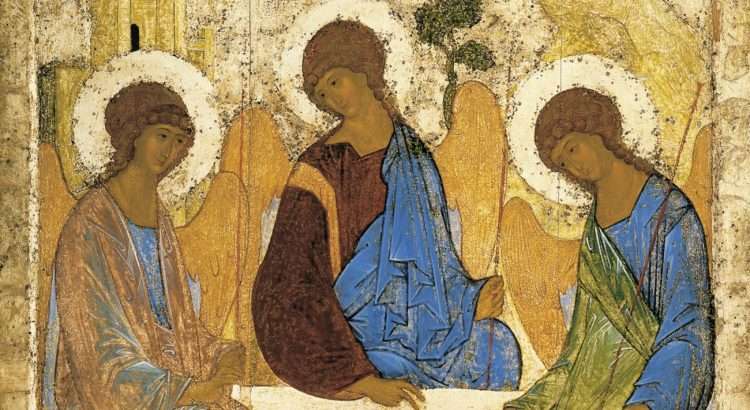
We can bring any prayer with us throughout the day. Prayers tend to become automatic over time and run in the background even if we are focused on daily life activities. They live their own life after a while. The Jesus or Heart prayer is an example, as is ho’oponopono and metta. The words may come and go, but the orientation and energy – for lack of a better word – continues. 

– from A tantric approach to spirituality

I thought I would say a few more words about this.

HOW DO PRACTICES BECOME ONGOING?

This is not a big secret. They become ongoing if they are conducive to become ongoing, and we do them enough so they become very familiar and a new habit. Our system creates and goes into a new groove.

Depending on the practice, they can become ongoing as a new habit, or as something in the background of our awareness, or they can become ongoing in that we can easily access them when needed.

HOW DOES IT LOOK WHEN THEY ARE ONGOING?

This depends on the practice. I’ll give some examples I am familiar with.

Basic meditation is to notice and allow our experience as it is. And to notice it’s already allowed, and even already noticed. This helps soften identification with what we notice, including our thoughts. And this, in turn, helps us notice what we are, which is what all our experiences happen within and as. As we get more familiar with this noticing and allowing, it become a new habit and easier to bring to daily life, and more situations in daily life.

Training a more stable attention is helpful for just about any activity. We can do this by bringing and keeping attention on something, for instance, the sensations of the breath at the nostrils, and bring attention back when we notice our attention got distracted. (The distraction is usually or always a thought with some charge to it, a thought that seems at least a bit true to us.) Over time, this becomes a new habit that benefits us through the day.

We can notice what we are, for instance, guided by some simple inquiries (Headless experiments, Big Mind process). We find ourselves as capacity for the world, as what all our experiences – the world as it appears to us – happens within and as. As we get more used to and familiar with this noticing, it’s easier to notice it through the day and in different situations.

We can examine our thoughts, for instance, guided by the structure and pointers in The Work of Byron Katie. We explore if we can know for certain it’s true, see what happens when we hold a thought as true, how it would be to not have the belief, and find the genuine validity in the reversals using examples from our own life and experience. As we get more familiar with this over time, this too becomes a new habit. We may find that our mind naturally starts examining thoughts this way in daily life. (Using the structure is still helpful, especially if we notice an especially ingrained and stressful belief. It helps us explore it more thoroughly.)

Exploring our sense fields is a traditional Buddhist form of inquiry. (Living Inquiries is a modern version.) Here, we get to see how our mind combines the sense fields – sight, sound, sensation, smell, taste, and thoughts – into our experience of the world, ourselves, and anything. We get to see that what may, at first, see very solid and real, is actually created by the mind through combining sense fields. It’s not as solid and real as it seemed. We also get to see how the mind associates certain sensations with certain thoughts, and that sensations lend a sense of solidity, substance, and truth to the thoughts, and the thoughts make the sensation appear to mean something. This helps us see that thoughts are thoughts, and sensations are sensations, which softens identification with these thoughts. As we become more familiar with this, this too becomes a habit and something we bring with us into daily life. We may not be able to do a thorough inquiry, but we notice how the sense fields combine, and we are more easily see a thought as a thought and a sensation as a sensation.

Heart-centered approaches help us shift how we relate to others, situations, the world, and ourselves. We learn to befriend the images of these in our own mind, which helps us shift how we relate to all of this in our daily life. (The ones I am most familiar with are tonglen, ho’oponopno, and a Christian version of metta.)

Prayer is a certain form of heart-centered practice. When we engage regularly in prayer – for instance, the Jesus or Heart prayer – it tends to become ongoing. It runs in the background as a kind of orientation and energy. (Sorry, don’t know how to better describe it.) It’s often a combination of periods of intentional prayer with words and noticing it running in the background – through the day and even night.

A COMBINATION: INTENTIONAL PRACTICE & ONGOING

In real life, there is often a combination of intentional practice, a new ongoing habit, and intentionally bringing in the practice as needed. We have periods of intentional practice, at set times or when we find time, and on our own or in groups. We notice how these practices become ongoing in daily life. And if we notice that we get caught in an old habit in a situation in daily life, we can bring in the practice to help shift into the new pattern.

If we don’t engage in a somewhat regular intentional practice, the habit created by the practice tends to fade over time. As we engage in intentional practice again, the habit comes back and often more easily than the first time. Our system remembers.

It can be especially helpful to notice when our old habitual patterns override a practice that has become more ongoing. This usually points to a belief, identification, emotional issue, hangup, or trauma. And we can explore this further.

OLD AND NEW HABITUAL PATTERNS

Why is all this important?

It’s because our old habitual patterns often come from separation consciousness. They may create unhappiness and discomfort for ourselves, messiness in our life, and may trigger discomfort and suffering in others.

Spiritual practices are typically designed to create new patterns for our mind and life that help us in a variety of ways. These patterns mimic awakening and how it is to live from awakening. And as we keep exploring these practices and we get more familiar with them, they become more and more a new habit.

This helps us in our life. It helps us notice where we still operate from separation consciousness (beliefs, identifications, emotional issues etc.). It makes it easier for us to notice what we are. And it helps us live from noticing what we are.

The same remedies for everything?

Why do I tend to suggest the same tools for a variety of hangups, issues, and identifications?

It’s because what I write about is a limited range of topics – mainly emotional healing and awakening.

It’s because I have limited experience and knowledge, from just a few decades of exploration.

It’s because the tools I write about tend to work universally within a certain category of things we may want to work on.

Also, it’s because the tools I write about tend to be helpful from the beginning to wherever we are on the path, whether we (in our own experience) move to or within Spirit.

Some of my favorite tools

The Work of Byron Katie can be very effective for working on beliefs, identifications, and all the issues that come from these – emotional issues, trauma, stress, and so on.

Living Inquiries can be used for the same, and also to get a better insight into how the mind creates its experience of anything. Living Inquiries is a modernized form of traditional Buddhist practice for noticing how the sense fields come together to create our experience of the world.

Headless experiments and the Big Mind process is an effective way for us to notice what we are.

Heart-centered practices (ho’o, tonglen, metta) are amazing for shifting how we relate to the world – to specific people, situations, and ourselves.

Practices to Reconnect work very well for deepening our connection with Earth and past and future generations.

Vortex Healing works better than just about anything I have found for physical and emotional issues, and also for supporting awakening and embodiment. (Although I would still use it with inquiry.)

Heart/Jesus prayer and Christ meditation help us open up to Spirit as everything, they tend to help us shift our relationship with the world and ourselves, they help us notice what we already are, and they help support embodiment.

Practicing a more stable attention (samatha) helps us in just about any area of life.

Noticing and allowing what’s here, and notice it’s already allowed, helps us notice what we are and soften identification with thoughts (shikantaza, basic meditation).

Remedies for certain conditions

The approaches mentioned above can be seen as tools for certain types of tasks, or remedies for certain conditions. If applied when appropriate, and with a bit of experience and skill, they work well.

We all have limited experience, insights, and knowledge. I am sure there are tools out there I would love if I only knew about them. And there is an infinite potential for developing new and equally or more effective tools than we humans currently know about.

Within my limited experience and knowledge, the tools above are the best ones I have found, and I am very open for finding new ones that are as or more effective.

Prayer to change my life vs change me

There are (at least!) two general forms of prayer.

One is prayer asking for my life to change.

The other is prayer inviting the divine to change me.

The first type of prayer is perhaps what many think of first. It’s the “dear God, please do this for me” type of prayer.

The second is a form of prayer that can be profoundly transformative. In its most explicit form, we find it in the Jesus or Heart Prayer, and also in the Christ meditation. Any form of spiritual practice, when done with heart and sincerity, is an invitation for the divine to work on and change us as a human and divine being. So any type of spiritual practice can become this prayer. (Including basic meditation.)

We can do it from the view of me as a human being inviting and allowing the divine to transform me – all of me, through and through. (Including what seems the most essential in me, and what “I” may hold onto and cherish the most.) And it can also, if it happens on its own, be a resting as the divine recognizing itself as all there is.

Note: I gave a couple of examples from the Christian tradition since that’s what I have the most experience with, but this goes for all traditions and non-traditions. If I use a more theistic language, I would say that there is one God and many religions and spiritual traditions, and all of them have some good pointers.

How it works: heart-centered practices

How do heart-centered practices work?

It depends on the particular practice, but here are some general things I have noticed.

They help me reorient. To shift from seeing something as a problem (an enemy, wrong, bad) or neutral, to befriending it, finding kindness towards it, and seeing it as a support. And this goes for anything from a situation, to another person, to myself and parts of myself, to life in general, and God.

My energy systems comes more alive and brightens.

It’s experienced as an opening of the heart. And with that comes an opening of the mind. There is more receptivity, sincerity, curiosity, and interest. (And less rigid, defensive, and fixed views.)

It helps me notice what in me is not quite on board. It helps me notice parts of me where there is still wounding, trauma, identifications, and unfelt feelings, unloved lovables, and unexamined beliefs. I can meet these, allow, rest with. Relate to them with respect, patience, and light curiosity. If it feels right, I can do the heart-centered practice for these scared and unloved parts of me. Or I can explore them through inquiry. Or invite in healing through whatever healing practices are available to me.

These shifts are naturally reflected in my life. I notice when and how this happens. And if it doesn’t, that’s OK and also an invitation to see what’s going on. Something in me may be triggered that temporarily clouds over a more clear and kind way of being.

What are some examples of heart-centered practices? The ones I am most familiar with are ho’oponopno (Hawaii), tonglen (Tibet), heart or Jesus prayer (Christianity), and perhaps also the Christ meditation. (See other articles for descriptions of these.) And there are many more from many different traditions. Heart-centered practices can be profoundly transformative, and that’s something people from all cultures and times have paid attention to.

And what’s the main reason heart-centered practices are so transformative, healing, and central to most spiritual traditions? It’s because they help us align with reality. If all is the divine, then holding onto enemy images brings us out of alignment with that reality. It creates discomfort, stress, and suffering at an individual level, and also social and even ecological problems. Reorienting helps us align with reality, which brings a sense of peace, clarity, kindness, aliveness, and a natural engagement.

Note: I have deliberately used a more conventional language some places here. For instance, everything described here is part of the divine play. It’s the divine temporarily and locally taking itself to be a separate being, and a being that sees parts of the world as an enemy (a problem, bad, wrong etc.). There is nothing inherently wrong in it, but it does create distress and suffering. And that’s the call back to a more conscious alignment with all as the divine.

Read More

Basic forms of meditation: attention, notice, insights, heart, body

Here are a few basic forms of meditation. All of them are reasonably universal and they are – in their essential form – found in several different traditions. As with any skill, it’s helpful to be guided by someone who are experienced, and our own skills and understanding will develop with experience.

Training a more stable attention. This is helpful for just about anything in life, whether it’s work, studying, hobbies, relationships, or any inner or spiritual practice. It helps us bring our attention to something in a more stable way and for as long as we wish. It makes our attention a more useful and pliable tool for us. As a bonus, a more stable attention tends to bring in a sense of well being and grounding.

The easiest way of training this is to bring attention to the sensations of the breath (chest, nose, tip of nose), notice when it goes to something else, and then gently bring it back to the sensations. We can also use other objects: sounds, imagined or visual imagery etc.

This practice also gives us some insights into how the mind works. We notice that attention tends to go somewhere else, almost always to thoughts that have a charge, and it seems to go there on its own. We can also notice which thoughts attention tends to go to, notice the charge and that there may be something unresolved around it, and then explore it through inquiry or a healing approach, perhaps allowing it to resolve and the charge goes out of it. In a small way, this may give a greater sense of well being, allow us to function better in life, and make it easier for attention to stably rest on whatever we intend.

Notice and allow. The basic form is to notice and allow. Notice what’s here in the sense fields (sight, sound, sensations, smell, taste, thoughts). Allow it to be as it is.

Again, this can give us some simple insights. We may notice that what’s here is already allowed – by life, mind, space – to be here as is, and that it’s more restful to notice this. As before, we may notice attention going to thoughts with a charge. We can also explore noticing the space it all happens within and as.

We may notice the effects of this noticing and allowing. We may notice that it creates a sense of space around whatever happens. Attention may not be immediately caught up and drawn into thoughts with a charge. And that this becomes easier and more of a habit the more we do it.

As with training a more stable attention, we may also find that this noticing and allowing helps us in everyday life and that it brings with it a sense of well-being and grounding. (When attention is less caught up in charged thoughts, there is often a sense of well being and grounding.)

Insights. Insights can come as a byproduct of any of these explorations. When we over time notice how we function, insights are almost inevitable. Insights can also come through inquiry, and especially through more structured forms of inquiry such as The Work, Living Inquiries, or just noticing what’s happening in the sense fields (including thoughts).

These structured forms of inquiry are like training wheels, and although we may never outgrow them (or wish to do so), becoming familiar with them tends to lead to more spontaneous helpful noticing and simple forms on inquiry in everyday situations.

The main insights we may get from these inquiries is how thoughts combine with sensations, so sensations lend a sense of solidity, reality, and truth to the thoughts, and the thoughts lend a sense of meaning to the sensations. This is how thoughts get a charge, and how beliefs, identifications, reactivity, compulsions, and more are created.

Heart-centered. Heart-centered practices help us change our relationship to ourselves, others, the world, life, situations, and parts of ourselves. They help us shift from seeing (some of) them as a problem, mistake, or something that needs to go away, to genuinely befriending them. As with the explorations above, this tends to bring in a greater sense of well-being, ease, and grounding. And as my old Zen teacher used to say, we tend to become less of a nuisance to others….!

Some of my favorites here are tonglen (from Tibetan Buddhism), ho’oponopono (Hawaii), and all-inclusive gratitude practices. (See other articles for more on these.)

Continuous prayer. I’ll add this since it’s found in many traditions and can be a powerful and transformative practice. Say a brief prayer along with the in- and out-breath and the heart beats. Do it as often as you remember, and set aside time to do this exclusively. Over time, this will become a continuous prayer. You will even have a sense of it happening while you sleep.

The Christian version is the Jesus prayer or heart prayer: Lord Jesus Christ (on in-breath), have mercy on me (on outbreath). And synchronize the words with the heart beat (for instance, one heart beat for the three first words, then another, then one on “have mercy”, another for “on”, and then one on “me”).

Body-centered. These are the familiar ones, including yoga, chi gong, tai chi, Breema, and many others. Ordinary forms of physical activity can also be included here, if we bring our noticing and allowing to the sensations and movements of the body.

I won’t say too much about these since they are reasonably well known in our society today. We bring our noticing to the sensations and movements of the body, and what’s described above under training attention and noticing applies here too. And these explorations too tend to bring in a deeper sense of well-being and grounding, and we may also experience ourselves – at a human level – more as a whole.

These are all practical approaches to exploring ourselves and our relationship with ourselves and the world. They tend to bring in a sense of well being, ease, and grounding, perhaps first as we engage in these and then more stably in our life in general. They tend to invite in healing and a noticing of what we really are.

An important aspect of any spiritual practice is what it may bring up in us that needs meeting, clarity, or healing.

At times, these practices may rub up against our beliefs, identifications, and habits. So we notice these, and can take them to inquiry, heart practices, or whatever healing work we are doing. This is an important aspect of any spiritual practice, at least if we wish to be thorough.

Healing work in general is an important complement to any of these practices. We will, inevitably, encounter parts of us that needs healing, so it’s helpful we are are familiar with effective forms of healing work, or can go to someone who are.

These practices may also bring up old wounds and trauma. Any good guide or coach will inform about this in advance, keep an eye on our practice to minimize the chances of it happening in a traumatic way, and offer guidance through it should it happen.

The last part is, unfortunately, often overlooked or not mentioned by people offering these practices to the public. I assume there will be a greater understanding of and transparency about it with time as it is an aspect of spiritual practice it’s important to be aware of.

Read More

Using spare attention for noticing, resting, healing

Through the day, there are many periods where I have spare attention. It may be after I wake up and am still in bed, before falling asleep, when I walk, shower or cook, when I use public transportation, when I rest, and so on.

During these periods, I often use my spare attention intentionally. I may notice what’s here – sensations, thoughts, sight, sound, taste, smell. I may intentionally rest with – or as – what’s here. Nowadays I often use Vortex Healing for myself or others. And in the past (going back to my teens), I have often used heart prayer (Jesus prayer), ho’oponopono, or tonglen.

Sometimes, I just let the mind do what it does in the moment and gently notice it.

Read More

Giving it over to God

For the first several years after the initial opening, my practices were simple and heartfelt. They consisted of resting with what’s here, notice all as awakeness (Spirit, the divine, intelligence, love), gratitude for whatever happened, prayer, Heart/Jesus prayer, Christ meditation, tonglen, and giving it all over to Spirit. All of these happened very naturally.

Then, I got “sidetracked” by traditions and teachers with ideas of how things should be done.

And now, I am hoping to find back to a more natural and simple approach. For instance, giving it all over to the divine.

Notice. Notice what’s here – emotions, stories, the fear or wounds behind them.

Rest with what’s here. Take time resting with and as it.

Give it all over to Spirit. To the divine.

There is a beautiful simplicity in this. It’s a reminder that all is Spirit. And it doesn’t exclude any other approach or exploration.

Read More

Ways through the dark night III

Another way of organizing some of what can be helpful in a dark night of the soul.

Head center. Inquiry into our stories about what’s happening, who we are, and the nature of reality. Seeing through these stories helps us find equanimity (no need for drama when we see they are stories), and helps us be a loving presence for what’s surfacing. Inquiring into stories about what’s surfacing (emotional and physical pain, discomfort) is a support in feeling sensations as sensations, without getting (too much) caught up in the associated stories.

Heart center. Heart center practices helps us recognize what’s here as love, and meet it as love. These include prayer (for guidance, support), giving it all over to the divine (our body, mind life, pain, pleasure), metta (to ourselves, the suffering self, and also friends, enemies, the world), tonglen (same), ho’oponopono (same), all-inclusive gratitude practice, Christ meditation, and more.

Belly center. Breathe, feel the sensations, allowing them to move through. Notice any images or words “stuck on” the sensations, and inquire into these. That makes it easier to feel sensations as sensations. Also, body-centered activities and practices can be helpful such as walking in nature, gardening, or Breema, yoga, tai chi and more.

Support. Find support from friends, family, people who are in the same process as yourself, and guides who have gone through it. Eat well. Rest. Get plenty of sleep. Drink plenty of water. Find a nurturing environment. Engage in nurturing activities. Learn about the process. (Spiritual emergencies, dark nights.) Give yourself a break, when you need to. See if you can find patience, and trust in the process.

Also, if you are drawn to it, notice what makes it difficult to do any of the things that seems supportive and helpful, and take it to inquiry.

This is obviously a very simplified outline, and a great deal more can be said about each point. I wrote this mostly because it’s interesting to see how the practices can be organized according to the three soul centers. I also see that Buddhist traditions tends to emphasize the head, while also including the heart and belly, and theistic traditions tend to emphasize the heart, with head and belly sometimes included. It seems that it may be possible to go through a dark night emphasizing practices from any one of the centers, perhaps with support from one or both of the two other.

Read More

Ways to work with the dark night

I am no expert on how to work with or relate to the dark nights, but here are some things that seem helpful to me….

First, all of the usual practices can be helpful, whatever they may be. Ethics. Work in the world. Relationships. Inquire into beliefs. (Including those about the dark night.) Allowing experience as it is, as if it would never change. Be with experience, in a wholehearted and heartfelt way, with kindness. Be with emotions, with heart and kindness, allowing them to unfold and change as they want. Tong len. Rejoicing in others happiness. Jesus prayer. And so on.

And one that is especially helpful for me now is to explore how the dark night appears in each sense field. How does it appear, whatever it may be? (Despair, aridity, grief etc.) Is it content of experience, as any other experience? And then also notice the doer and observer of this inquiry. How does the doer + observer appear in each sense field? Are they content of experience as any other content of experience?

Read More

Need a little help

Tank: Got him! He’s on the run.
Neo: Mr. Wizard, get me the hell out of here.
Tank: Got a patch on an old exit, Wabash and Lake.
Neo: Oh shit…. Help. Need a little help.
Tank: Door…. Door on your left. No, your other left…. Back door.
– The Matrix (transscript)

When I first watched The Matrix, I was touched by this moment of honesty and humanity. It is a little out of character for a hard-core action movie, but then The Matrix is more than that.

As always, it is a reminder and a question.

Read More

Verbal prayer

Some forms of verbal prayer that I find very helpful. Nurturing and opening of the heart.

  • Prayer for the well being and awakening of all beings (including myself), and also for specific beings. (Some version of “May all beings find well-being and awaken.”)
  • Dedication of practice to the benefit of all beings. (“May this benefit all beings.”)
  • Expressions of gratitude. (Including the mantra “thank you”.)
  • Heart/Jesus prayer. (“Lord Jesus Christ, have mercy upon me” said with the breath and heart beats.)
  • Songs and chants. (The traditional Christian hymnals work well here too, much good stuff there if taken a certain way.)
  • Reading poetry of well-wishing and gratitude. (Rumi, Hafiz and others.)

I do these verbal prayers in my native language, since it seems closer to my heart. And I also use each of these as a mantra, repeated in a heartfelt way over and over, often while bringing attention to the heart.

Jesus Christ

A simple way to look at Jesus Christ…

Jesus was the human being, reorganized within the context of a soul awakening (alive presence, oneness) and quite possibly a nondual awakening.

The soul and nondual awakening is the Christ part. The awakening to who/what we are at the soul level, as this alive presence, and what we are as awakeness and this field of awakeness and form inherently absent of an I with an Other.

When we engage in Christian practices, such as the heart/Jesus prayer (brief prayer with the breath/heartbeats) or the Jesus meditation (visualizing Christ in the six directions and the heart) we invite our human self to reorganize within this new context, we tap into the particular Christ flavor of soul level awakening (one that I experience as especially fiery in the heart and on top of the head), and we invite what we are to notice itself.

Heart Prayer

The Heart Prayer was very alive for me some years back, and is now coming back more.

The basic form is simple: Come to the breath and/or the heartbeat, and say a simple prayer in the rythm of the breath and/or the heart.

The words can be…

Thank you, thank you, thank you – to open for gratitude for life, allowing an atmosphere of gratitude to permeate our life, where all of life’s experiences are included.

Or more traditionally, Lord Jesus Christ (on the inbreath), have mercy on me (on the outbreath) – to open for a connection with the divine in the form of Christ and allow it to to work on our human self. The inbreath is the ascending, the inviting in. The outbreath is the decending, the surrender and letting go.

In any case, this invites an atmosphere…

of prayerfullness which awakens and enlivens the heart.

of receptivity to life, as it is.

of surrender to the divine and to life as it shows up in the present.

which – after just a few days – tends to continue throughout the day and even through sleep.

that works on our human life. Our human life soaks in it – realigns, knots unravel, we find a deepening peace with what is, and so on.