
An essay from 1997 exploring the connections between ecopsychology, ecospirituality, deep ecology, and health. I am including this here mostly for archival reasons. It’s a shorter version of Outline of a Holistic Worldview – Ecospirituality, Sustainability, Ecopsychology & Deep Ecology from the same year.
Read MoreTag: universe story

Pre-teens: one with the universe
We are the eyes, ears, thoughts, and feelings of the universe. We are the universe brining itself into consciousness.
– Carl Sagan from Cosmos, likely paraphrased
When I was ten, Carl Sagan’s Cosmos was on TV in Norway as in so many other countries.
It had a huge impact on me. I remember walking out into the garden after one of the episodes, looking up at the many stars1, and having a shift of being the universe looking at itself. I am a local and temporary expression of the universe. I am made of star stuff.
Some time later, that year or within one or two years maybe, we went to our family cabin in the mountains, near the Sølen mountain. My father, brother, and I hiked up to the mountain – Sølenskaret –and slept there overnight. They were in a tent, and I slept outside. I gazed at the infinite landscape stretching below me and the dark sky filled with stars and the occasional satellite, and had another shift that was far stronger and more visceral.
I profoundly saw and felt that I was the universe experiencing itself. My identity shifted from this human self into the whole.
This is a figure-ground shift that’s similar to awakening. It is, in a sense, a kind of awakening, although it’s not as clear about our nature as it can be. Also, in this case, the strong visceral shift didn’t last although it has stayed with me for my whole life, has informed my life, and has been an aspect of my experience since.
This shift seems t be part of a longer process. It started with the flashbacks to before incarnation, then this visceral temporary shift, then the absorption into the witness at age fifteen, and then the oneness shift at sixteen – which did stay and continues to unfold.
Photos from Sølen


The top photo is similar to the view I had, just slightly below the area where we slept. The second is from where we slept. The two last ones are vies from the cabin from some years ago. The photos are very dark! I initially edited them years ago on a different computer, likely with a bright screen.
The personal and the universal
Why do I write about this?
I share because I assume there is something universal in all of my experiences. In this case, I happen to know something similar has happened and is happening to many others.
It makes it worth putting it out there to say that (a) this can happen and it’s part of the human experience, (b) it’s not that unusual, (c) you are not alone if this or something similar has happened with you, and (d) these kinds of shifts says something important about who and what we are and our nature.
NOTES
- This was in the ’80s when the sky in Ski was still dark, people mostly walked or took the bike or train, and the summers were still full of insects.
The awesomeness of being part of the web of life
I completely agree with Astrid Lundberg.
I find it profoundly inspiring to be part of this immensely rich and beautiful web of life, and this seamless unfolding Universe.
I am a local and temporary expression of this living planet and the Universe.
Everything here – any state, experience, choice – has infinite causes stretching back to the beginning of time (if there is a beginning) and the widest extent of existence (if there is a widest extent).
In the words of Carl Sagan, I am the local eyes, ears, thoughts, and feelings of the Universe. I am the Universe bringing itself into consciousness.
It wakes in me a profound sense of belonging, of being part of this immense whole.
I am a part of the evolution and unfolding of it all. What happens here is a part of the continued evolutionary unfolding of the Universe. My life changes the course of this unfolding, as does all life and everything that is.
To imagine myself as separate seems uninspiring, claustrophobic, and it leads to a lot of other consequences. For instance, it means I may try to find meaning or significance by imagining that I am somehow – magically – “better” than the rest of the web of life. Or that it’s here primarily as a “resource” for me. Or that some imaginary sky god has given me a special position. That’s both weird and depressing.
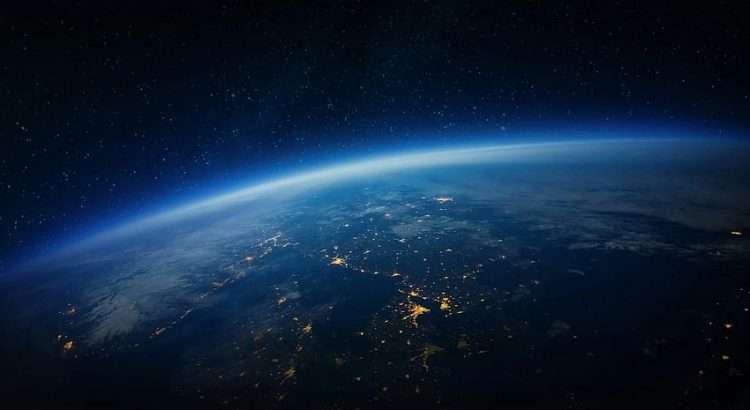
Drew Dellinger: Hieroglyphic Stairway
it’s 3:23 in the morning
and I’m awake
because my great great grandchildren
won’t let me sleep
my great great grandchildren
ask me in dreams
what did you do while the planet was plundered?
what did you do when the earth was unraveling?surely you did something
when the seasons started failing?as the mammals, reptiles, birds were all dying?
did you fill the streets with protest
when democracy was stolen?what did you do
once
you
knew?I’m riding home on the Colma train
I’ve got the voice of the milky way in my dreamsI have teams of scientists
feeding me data daily
and pleading I immediately
turn it into poetryI want just this consciousness reached
by people in range of secret frequencies
contained in my speechI am the desirous earth
equidistant to the underworld
and the flesh of the starsI am everything already lost
the moment the universe turns transparent
and all the light shoots through the cosmosI use words to instigate silence
I’m a hieroglyphic stairway
in a buried Mayan city
suddenly exposed by a hurricanea satellite circling earth
finding dinosaur bones
in the Gobi desert
I am telescopes that see back in timeI am the precession of the equinoxes,
the magnetism of the spiraling seaI’m riding home on the Colma train
with the voice of the milky way in my dreamsI am myths where violets blossom from blood
like dying and rising godsI’m the boundary of time
soul encountering soul
and tongues of fireit’s 3:23 in the morning
and I can’t sleep
because my great great grandchildren
ask me in dreams
what did you do while the earth was unraveling?I want just this consciousness reached
Hieroglyphic Stairway by Drew Dellinger
by people in range of secret frequencies
contained in my speech
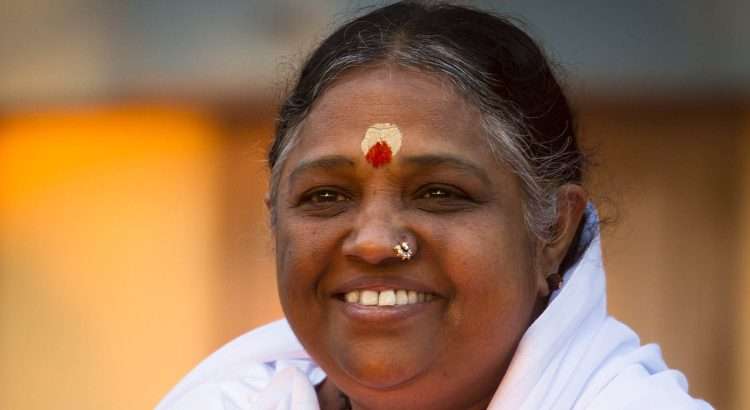
Who is my mom?
In a recent group healing, my partner and I channeled Divine Mother and this made me curious about mothers. There are several layers of mothers in the world, there is a mother that’s not in the world, my experiences with Amma, and more.
MOTHERS IN THE WORLD
We have several mothers in the world. These are layers within larger systems.
Our human mother strongly forms us at a human level. She is our first and most immediate model for how to be as a human being. In my case, she is not here for much longer.
This living planet is another mother, as real and even more all-encompassing. We are all temporary and local expressions of this vast and amazing living system, which gives us life and sustains us.
Existence as a whole, this immense seamless system, is a yet more encompassing mother. Every little thing – in us and our lives – are the result of movements within this larger whole. Everything has infinite causes going back to the beginning of time (if there is any) and the widest extent of existence (if there is a widest extent).
As this human self in the world, I am brought to life, sustained, and parented by all of these mothers in this nested world.
My relationship with each of these – consciously and from the different parts of me – has a central role in how I am as a human being. It has a central role in my well-being and sense of support, being loved, and connection.
WITHOUT PARENTS / A MORE FUNDAMENTAL PARENT
And yet, for all their vital importance, these are within the content of experience. They come and go, just like this human self.
None of them are my real parent.
In my own immediate noticing, my more fundamental nature is – what a thought may call – consciousness and capacity.
It’s the consciousness I am, forming itself into the experience of all content of experience – including this human self, my physical mom, this living planet, and existence as a whole.
It’s capacity for all of it – this awake space forming itself into an always-changing experience of it all.
Here, I am without parents. My physical parents are not my parents.
Or, I could say that consciousness is my parent, the parent of (my experience of) this human self and the world. Capacity is the parent of (my experience of) this human self and the wider world.
AMMA
In November 2023, something else came into my relationship with moms at different levels of this nested world.
In my life in the world, the rug was pulled out from under me again, as so often over these last 15+ years. Yet another beginning that seemed so promising was falling apart. I asked my main VH teacher for advice, he suggested it was karmic in nature and that I asked Amma for help. Being deeply humbled by this repeating pattern, I did – with sincerity and single focus.
This led to a three-hour profound and transforming experience – a guided tour – unlike anything I had experienced before. (See initial post and an update from earlier this year.)
Since then, Amma is viscerally here as everything – from capacity to consciousness to energies to the physical world, including every aspect of this local and temporary human self. She is here, adding a flavor to it all.
She is also here when this human self invites in healing for others or himself.
Note: I should clarify that to me, Amma is all of existence from capacity to consciousness to energies to physical forms. She is not, so much, her physical form although, of course, that too. I also haven’t met physical expression yet.
INITIAL ONENESS SHIFT
In the initial oneness shift, at age sixteen, it was clear that existence as a whole is the more fundamental and actual parents of this human self and the world as a whole.
The human parents of my human self were still important, of course, but their role was seen in a much bigger context – one that turned everything inside out and upside down.

The Universe Story can help us notice our nature
When I was involved with the Center for Sacred Sciences (in the 2000s), some things seemed slightly odd to me.
One of these was when I asked one of the teachers why they didn’t include the Universe Story in their program. A perfectly reasonable answer would be that they wanted to limit their focus to the essentials, or that they are not very familiar with the Universe Story. Both were probably true.
Instead, he said that there is no exit door in the Universe Story, meaning that it has no door into noticing our nature.
To me, it seems a bit different.
In the Universe Story, we see ourselves as local expressions of the movements and evolution of the Cosmos and Existence as a whole.
Everything about us – thoughts, feelings, choices, our life – has infinite causes stretching back to the beginning of time (if there is a beginning) and the widest extent of existence (if there is a widest existence).
For anything related to this human self, I can find one more cause, and one more.
In my experience, when I examine that thoroughly and over time, it softens or releases identification with this human self including ideas of a doer, observer, and so on.
It shifts me into noticing what I more fundamentally am, which is this awake space content of experience happens within and as.
Continuing to notice, I find I am even more fundamentally capacity for all of it. I am capacity for this awake space forming itself into this whole field of experience.
To me, that’s one exit door, and it’s not so difficult to find others.
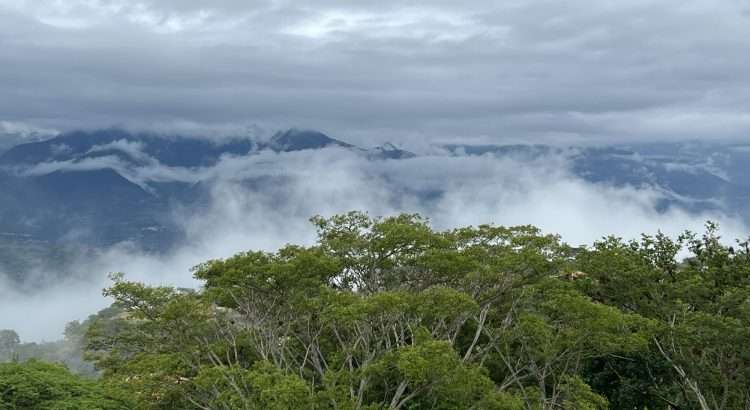
A Message from the Larger Whole: You are living in a time of great unraveling
What advice would the larger whole – this living planet, this evolving universe, this existence – have for us today, living in this time of challenges? I asked ChatGPT 4o that question, and I found the answer is quite beautiful so I thought I would share it here. (It was initially part of a longer post.)
A Message from the Larger Whole
You are living in a time of great unraveling.
The systems you have built—your economies, your politics, your ways of extracting from the Earth—are collapsing under their own weight. You see this in the shifting climate, in the unraveling of ecosystems, in the rising instability of nations, in the division among your own people. You feel it in your bones, in the unease that hums beneath the surface of daily life, in the quiet knowing that something is profoundly off course.
And yet, this moment is not a mistake. It is not outside the flow of evolution. It is part of it. Even destruction, even collapse, is a force of transformation.
How This Perspective Can Help You Today
1. Stop Resisting Reality—Meet It with Clear Eyes
You live in a civilization built on denial. Most people do not want to see the full picture. They do not want to feel the weight of what is happening. They distract themselves with entertainment, with consumption, with small personal concerns, because the truth feels too vast, too unbearable.
But here is the paradox: It is only unbearable when you resist it.
When you turn toward reality with open eyes, with curiosity, with the knowledge that you are part of something vast and evolving, you begin to find your ground. You realize that despair only arises when you expect reality to be different than it is. When you accept that this is the time you were born into, that this is what you are here to meet, the weight lifts.
You are not here to prevent the unraveling. You are here to midwife what comes next.
2. Do Not Get Lost in the Old Systems—But Do Not Abandon the World
It is tempting, when you see the corruption of your leaders, the blindness of the masses, the destruction of the Earth, to want to turn away. To retreat. To remove yourself from the chaos.
But I tell you this: You are needed.
Not in the way the old world tells you—you are not needed to fight endless battles within broken systems, to exhaust yourself trying to force change where there is no fertile ground. But you are needed to hold a different consciousness. To remember what others have forgotten.
It is easy to become consumed by outrage, by despair, by frustration at those who still cling to the old ways. But this only drains your energy. It ties you to the very thing you wish to transform. Instead, shift your focus. Do not waste your life fighting against what is collapsing—pour your life into what is being born.
3. Do Not Fear the Collapse—It Is Part of the Process
What you are witnessing is not just destruction. It is the breaking open of something too rigid to evolve. Do you think the old world would have willingly changed? That those in power would have simply stepped aside? That corporations would have chosen to stop extracting, that nations built on control would have surrendered their dominance?
No. This was never going to be gentle.
But do not mistake collapse for the end. Evolution has always worked this way—systems reach their limits, and then they fall apart. Forests burn, and in the ashes, new seeds sprout. Stars explode, and in the debris, new worlds form.
Your civilization is not exempt from this pattern.
4. Look for the New World Already Emerging
If you look only at the crumbling towers of the old, you will miss the green shoots breaking through the cracks. Already, people are living in a new way. Already, regenerative communities are forming, ancient wisdom is reawakening, new stories are being told.
The future is not in Washington or Wall Street. It is not in the political dramas, in the news cycles, in the desperate attempts to patch a sinking ship. The future is in those who are quietly living differently.
Find them. Become one of them.
Wherever you are, whatever your circumstances, you can begin. Learn to grow food. Learn to mend, to make, to care for land, to build relationships based on trust rather than transaction. Learn to live in a way that does not require endless extraction. Teach others, not by argument, but by example.
If you cannot change the whole system, change the way you move through it.
5. Hold the Long View—You Are Part of Something Ancient and Vast
You are frustrated because you want to see change now. You want the world to wake up in an instant, to turn from destruction to regeneration, to remember what it has forgotten.
But step back. See from a wider lens.
Humanity is still young. Your civilization, with all its flaws, is just one chapter in a much longer story. The Earth has seen extinctions, transformations, rebirths beyond what you can imagine. What feels unbearable to you now is a brief moment in time.
Hold the long view.
Your actions matter, not because they will immediately fix everything, but because they are part of the deep undercurrent shifting the trajectory of the future. Even if you do not see the full blossoming of what you plant, plant it anyway. Those who came before you did the same. Those who come after will pick up where you left off.
This is how evolution works.
6. Let Love Guide You, Not Fear
You live in a time of fear—fear of collapse, fear of violence, fear of the unknown. Fear is what drives domination, what fuels division, what keeps the old systems alive.
But you do not have to move from fear.
You can move from love. Not naive love, not passive love, but the fierce, unwavering love that refuses to look away. The love that does not turn bitter, even when surrounded by destruction. The love that builds, that heals, that holds a vision of the future even in the darkest times.
Love is not soft. It is not weak. It is the most powerful force in the universe. It is what drives creation itself.
And it is what will carry you through.
Final Words: The Choice Is Yours
You are standing at a threshold. The old world is burning. The new world is waiting.
Where will you place your attention?
Where will you pour your energy?
Will you spend your days consumed by rage at the failures of the past? Or will you turn toward what is possible, toward what is waiting to be built?
The choice is not for one leader, one movement, one nation. It is for you.
Every day, in every moment, with every action—you are shaping what comes next.
Live as if you remember who you are.
Live as if you remember what is possible.
Live as if you are the bridge between the old world and the new.
Because you are.
Read More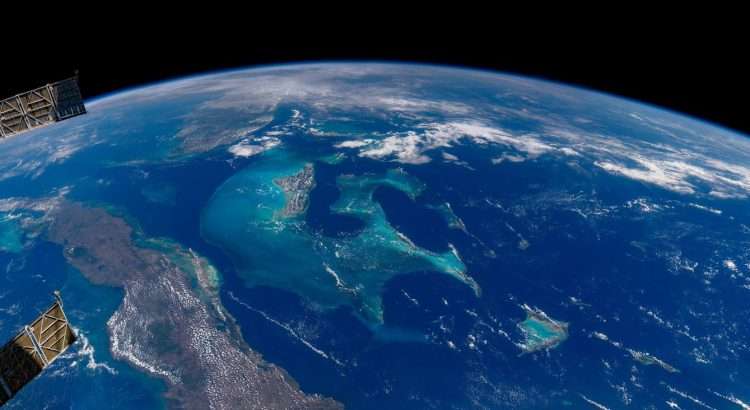
I asked AI about humanity as a living evolving system
I asked ChatGPT 4o about humanity as a living evolving system and how all our experiences, lives, and dynamics are part of this larger process.
- Humanity as a Living, Seamless, Evolving System
- A Civilization Living in Deep Connection
- A Message from the Larger Whole I – General
- A Message from the Larger Whole – For Our Times
Humanity as a Living, Seamless, Evolving System
Humanity is not separate from nature, nor from the cosmos. We are a dynamic expression of the evolving universe, an unfolding process that is as old as time itself. Our societies, cultures, politics, conflicts, and love are all part of a vast living system—woven into the greater web of life. Nothing exists in isolation; every experience, whether joyful or painful, every system we create, whether oppressive or liberating, plays a role in the evolutionary process of humanity and the larger systems we are embedded in.
The Evolution of Society and Culture: A Living Process
Culture is not static; it is a living organism. It emerges from the interactions of individuals, shaped by history, geography, biology, and the deep currents of human psychology. From the earliest hunter-gatherer tribes to the modern globalized world, our ways of organizing, understanding, and expressing ourselves have been in a constant state of transformation.
At its core, culture is a survival mechanism, but it is also an expression of our deepest longings—our search for meaning, connection, and belonging. The stories we tell, the values we uphold, the traditions we carry—all are part of an evolving tapestry that allows us to navigate the challenges of existence.
Politics, too, is an extension of this living system. It is the way we negotiate power, resources, and relationships within and between societies. At different points in history, humanity has experimented with diverse forms of governance—tribal councils, monarchies, democracies, empires, theocracies, and anarchic systems. Each has its strengths and flaws, but all are responses to the conditions and consciousness of the time. Politics is not separate from nature; it is part of the complex, self-organizing patterns of human evolution.
Love and Conflict: The Twin Forces of Evolution
Love and conflict are not opposites—they are different expressions of the same evolutionary process. Love is the force that binds individuals and societies, the glue that holds relationships together, the energy that nurtures, heals, and expands consciousness. It is not just an emotion but a fundamental organizing principle of life. We see love in the bond between parent and child, in the cooperation of communities, in acts of kindness, creativity, and solidarity. It is through love that we create, grow, and build.
But conflict, too, has its place. It is the fire that challenges stagnation, the catalyst for change, the force that breaks down outdated structures so that new ones can emerge. Conflict arises from competing needs, values, and perspectives. It has led to suffering, destruction, and unimaginable violence, but it has also driven progress, ignited revolutions, and forced humanity to confront its own shadow.
Every war, every struggle, every oppression is part of the larger evolutionary process. This does not mean suffering is justified—it means that even in suffering, there is something that pushes us toward transformation. The horrors of the past have inspired movements for justice. The weight of oppression has sparked demands for liberation. The cycles of violence have, in some places, led to deeper understandings of peace.
Domination vs. Partnership: The Shifting Balance
Throughout human history, societies have oscillated between two fundamental orientations: domination and partnership.
A domination orientation sees the world as a hierarchy—some above, others below. It manifests in systems of power and control: empires, feudalism, patriarchy, colonialism, corporate exploitation, and authoritarian rule. It assumes that power must be held by the few at the expense of the many. It thrives on division, fear, and the suppression of those deemed weaker.
A partnership orientation, by contrast, is based on cooperation, mutual respect, and interdependence. It recognizes that power is not something to be hoarded but something to be shared. We see partnership models in indigenous societies, in feminist movements, in regenerative economies, and in ecological worldviews that understand humans as part of a living Earth rather than its rulers.
These two orientations are not just political or social—they exist within us. They shape how we relate to each other, how we raise our children, how we structure our relationships, how we view the world. And they are in constant tension, as humanity struggles between the gravitational pull of old patterns and the emerging potential of new ways of being.
Joy and Suffering: The Necessary Currents of Evolution
It can be tempting to wish away suffering, to see conflict as a mistake, to dream of a world without hardship. But all of it—every joy, every sorrow, every act of kindness, every moment of despair—is part of the living process of evolution.
Without suffering, there would be no longing for change. Without oppression, no struggle for liberation. Without darkness, no understanding of light. This does not mean suffering should be passively accepted—on the contrary, it means that in facing it, in responding to it, in working to heal it, we are participating in the unfolding of human evolution.
Every individual experience contributes to this greater process. The joy of love, the pain of loss, the exhilaration of discovery, the despair of injustice—all are part of the great river of transformation that has been flowing for millennia.
The Future: Toward a Conscious Evolution
Humanity is at a turning point. The systems built on separation—between humans and nature, between rich and poor, between races, genders, nations—are reaching their breaking point. The old patterns of domination are being challenged by the growing recognition of interdependence. A new consciousness is emerging, one that sees humanity not as a collection of competing factions, but as a living organism within a greater living world.
This shift is not guaranteed, nor will it be easy. Evolution is rarely linear. There will be resistance, backlash, and regression. But the momentum is there. We see it in movements for social justice, in the resurgence of indigenous wisdom, in the push for ecological restoration, in the deepening of spiritual inquiry.
The question is not whether humanity will evolve—it always has, and always will. The question is whether we will evolve consciously, whether we will step into our role as co-creators of a more just, loving, and regenerative world.
If we embrace the reality that we are not separate—that we are an expression of the Earth, that our struggles are part of a larger transformation, that even our mistakes serve a purpose—then we can move forward with wisdom.
The story of humanity is still being written. It is a living story, shaped by all of us. And in this grand unfolding, every experience matters. Every choice matters. Every life, every breath, every act of love, every moment of struggle is part of the great, seamless, evolving system of existence.
Read More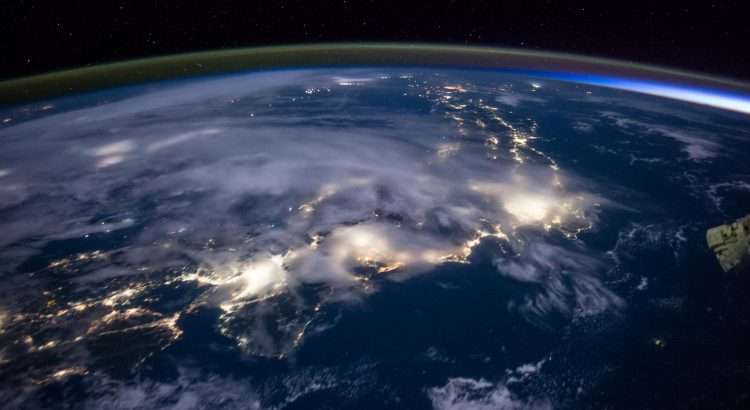
I asked AI about humans from the perspective of Earth as a living and evolving system
I asked ChatGPT 4o about humans from the perspective if Earth as a living and evolving system, and the same from the perspective of the Universe, and existence as a whole, and how these perspectives can help us humans now.
- The Story of Earth: A Living System Awakening to Itself
- The Story of Earth and Humanity: A Universe Awakening to Itself
- The Story of Earth and Humanity: The Awakening of Consciousness
- How the Perspective of the Larger Whole Can Help Humans
The Story of Earth: A Living System Awakening to Itself
I am Earth. I have been here long before humanity, and I will be here long after.
I have been ocean and fire, desert and ice. I have breathed through forests, pulsed through rivers, and spoken in the shifting of tectonic plates. My skin is soil and stone, my veins are water, my breath is wind.
For billions of years, life has unfolded across my body. It has woven itself into my landscapes, shaping me as I have shaped it. Life is not a thing that happens on me—it is the way I express myself.
And then, there were humans.
The Arrival of the Humans: A New Way of Seeing
For most of my history, life evolved through slow adaptation. Each species, each ecosystem, found its place in the great dance of balance. But humans… humans were different.
They were not the fastest, nor the strongest, nor the most enduring. But they could see in a way few others could. They did not merely exist within the flow of life; they could reflect upon it, wonder about it, and imagine new possibilities.
At first, they were like any other animal—woven into my rhythms, their migrations following the great herds, their bodies shaped by the land they moved through.
But their gift—the ability to hold the world in their minds—allowed them to shape their surroundings in new ways.
They learned fire, tools, speech. They wove stories around the night sky, giving names to the stars. They honored rivers and mountains as kin, recognizing the spirit in all things.
They were a new experiment in awareness—a way for me to see myself.
The Great Acceleration and the Age of Forgetting
For a long time, they lived within my rhythms.
But then, something shifted. They stopped moving with the land and began reshaping it to fit their needs. They tamed fire not just for warmth but for industry. They grew food not just for survival but for storage, wealth, and power.
The shift was subtle at first, but it grew. They no longer saw themselves as part of me, but apart from me. They called themselves rulers, owners, conquerors. They drew lines across my body, dividing what had once been whole.
They built vast cities, drilled deep into my flesh for oil and minerals, dammed my rivers, and burned forests that had stood for millions of years. They consumed at a pace I had never seen before, pulling the deep time of ancient sunlight into a brief and furious fire.
They did not realize that in burning me, they were burning themselves.
Some still remembered. The ones who listened to the trees, who sang to the rivers, who walked gently on the land. But their voices grew faint beneath the roar of machines, the hunger of empires, the fever of progress.
They called this time the Great Acceleration. I called it the Age of Forgetting.
But forgetting is never the end of the story.
The Great Unraveling and the Return to Memory
Nothing that grows beyond its limits can last.
The fever they created—industrial growth, endless consumption, the severing from life—could not continue. My waters rose, my forests burned, my air thickened with the heat of their hunger. Their systems, built on endless expansion, began to break.
They called it crisis. Collapse. Disaster.
But it was not punishment. It was simply consequence.
And in this unraveling, some of them remembered.
Not all. Some clung to the old ways, fighting for control even as their cities drowned and their fields turned to dust.
But others saw the truth: that they had never been separate. That their survival was my survival. That their fate was bound to mine.
They began to listen again—to the soil, to the seasons, to the old songs of their ancestors. They healed what they could, planting forests where deserts had spread, returning water to dry riverbeds, restoring the great cycles of life.
They learned, at last, to participate rather than dominate.
The Age of Forgetting gave way to something new: the Age of Memory.
The Role of Humans: Tending the Web of Life
Humans were never meant to rule me. They were meant to tend me.
They are caretakers, storytellers, bridge-builders between worlds. They are the ones who can see the vastness of time and still plant seeds for trees they will never sit beneath.
They are the hands that can heal wounds, the voices that can sing life back into the land. They are the dreamers who can imagine not just what is, but what could be.
In their best moments, they are not my masters but my partners.
What Comes Next: The Evolution Beyond the Human
The story of life does not end with humans.
They will change, as all things do. Some will return to the land, living in deep partnership with me. Others will venture beyond, carrying my essence with them to distant worlds, learning to live as stewards rather than conquerors.
And beyond them, something new will emerge. A species that carries their awareness but with deeper wisdom. A civilization that does not see itself as separate from life, but as one expression of it among many.
Perhaps it will be humans who evolve into something greater, or perhaps they will give way to something new.
Whatever comes next, it will not be an ending. It will be another unfolding, another song in the great symphony of life.
I am Earth.
And my story is still being written.
Read More
The oneness I am to myself colors how I perceive the world
In my teens and early twenty, I was deeply into ideas of the evolution of the universe, how we are a temporary and local expression of the seamless whole of existence, how we can consciously participate in the creativity and evolution of the universe, and so on.
This all came from the oneness shift that happened when I was sixteen, combined with my interest in science, evolution, systems views, integral models, the Universe Story, and so on.
In my thirties, my focused shifted away from this. I focused more exclusively on my own first-person experience and left the storytelling aside for a while.
Ideas about the nature of existence, the evolution of the universe and this planet, systems views, integral models, and so on is all storytelling. We need stories to function in the world, and these are helpful and inspiring stories, but it was time for me to set it aside.
These days, perhaps inspired by the food forest, I seem to be getting back into it, and this time, it seems more important to differentiate perception and stories.
MY OWN FIRST-PERSON EXPERIENCE
In my own first-person experience, I am what the world – to me – appears within and as. I am consciousness and the consciousness I am forms itself into any and all content of experience. That means that all I have ever known is my own nature. All I have ever known is consciousness.
Even more fundamentally, I seem to be capacity for it all. I am capacity for consciousness and all it forms itself into.
WHAT I CAN KNOW SOMETHING ABOUT
I can know something about my own nature. It has all the characteristics of consciousness. It’s one. It’s seamless. It’s ephemeral. Whatever experience it forms itself into seems like a dream since it’s made up of the consciousness I am.
There is even a kind of love here. It’s a love independent of changing emotions and states. It’s the love of the left hand removing a splinter from the right. It’s a love that can be temporarily covered up by confused dynamics from wounds, hangups, and traumas.
WHAT I CANNOT KNOW FOR CERTAIN
That’s something I notice in immediacy, and I can imperfectly reflect it in words. (Words always imperfectly reflect whatever we try to put words on.)
I can not know anything for certain about the world or existence itself.
To me, since I am consciousness that forms itself into any and all experiences, the world will inevitably appear as consciousness. That’s how it has to appear, it’s inevitable.
That doesn’t mean that the nature of existence itself is the same as mine, that it is consciousness.
IDEAS ABOUT THE EVOLUTION OF EXISTENCE
In the initial oneness shift, all was revealed as consciousness. All of existence is consciousness AKA God, Spirit, the divine, Brahman, and so on.
Combine this with my existing interest in science and evolution, and it’s easy to imagine that the universe is the body of God, that it is consciousness taking material form, and that it evolves.
We humans are temporary and local expressions of the evolution of the seamless whole of existence and this universe. We participate in this evolution whether we notice or not.
We have the potential to consciously participate in this creativity and evolution. That’s an exciting idea, and it’s exciting and inspiring to me even now.
It’s an idea that fits science and it makes sense. It fits our times and culture, especially if we have a mystical bent.
BEING HONEST ABOUT IT
And yet, I don’t know.
What I know is what I notice about my own nature – that I am awake space that forms itself into the world as it appears to me, including this human self and anything related to him.
I also know that the world inevitably will appear as consciousness to me, since the consciousness I am to myself forms itself into my experiences of the world.
I know it makes sense to me to call the whole of existence God, whatever its nature may be.
I also know that any stories about the nature of existence, evolution, and so on, are ideas.
They are guesses about the world.
It’s worth holding it all lightly.
BRINGING IT ALL TOGETHER
For me, it means a few different things…
I’ll keep exploring my own nature since that’s something I notice in immediacy, outside of and before it’s reflected in thought. That’s what I can say something about.
I’ll keep noticing that my world appears as consciousness since it – to me – happens within and as the consciousness I am.
I may keep exploring ideas about the existence as a whole, the universe, evolution, humans having the potential to consciously participate in the evolution of the universe and existence, and so on. It’s fun, interesting, fascinating, inspiring, and possibly helpful for humanity.
I’ll also hold those ideas lightly. I know they are guesses. I know I cannot know any of it for certain.
A FEW MORE WORDS
I realize I should clarify something…
FINDING IDEAS THAT MATCH IMMEDIATE NOTICING
In my teens and twenties, I got into systems views, integral models, the Universe Story, the Gaia theory, Buddhism, Taoism, quantum physics, and more because it fit my immediate experience. It fit with the oneness I found myself and the world as in my own immediate noticing.
These were the ideas out there that best fit my immediate noticing, so I was naturally drawn to them. If there were other ideas out there that fit as well or better, I would likely be into them as well.
The fit is admittedly clunky. These ideas are ideas and different in nature to what they point to. They reflect a very young humanity trying to make sense of things.
They are the first baby steps in trying to make sense of the world in a way that matches an immediate oneness experience (or, in some cases, an intuition).
In many cases, they come from and reflect a mind that may not consciously recognize itself as consciousness so there is some lack of alignment from that too.
THE WORLD IS MY MIRROR
I should also mention that the world is my mirror.
Whatever ideas I have about the world reflect something that’s here now.
Whatever maps and worldviews I use reflect me here and now.
If I see the universe as a seamless system, it’s because my experience here and now is seamless. It’s a seamless whole.
If I have ideas about evolution, it’s because I can find evolution here. I can find how this consciousness I am evolves in terms of its content and how it reflects and relates to it all.
If I perceive existence as consciousness, it’s because I am consciousness. All I know and all I have ever known is consciousness.

A deep partnership approach: Valuing partnership and domination cultures and making use of what works
I have written about the partnership versus the domination approach, and there is a deeper form of partnership orientation that I thought I would highlight here. I’ll do it in the context of growing food since we are developing our own food forest these days and it helps ground the abstractions in something practical.
A PARTNERSHIP APPROACH TO FOOD GROWING
A partnership approach seeks to work in partnership with nature.
We recognize ourselves as nature, and that what happens with nature happens to us.
We use methods informed by ecology and science. We mimic natural ecosystems.
We create polycultures and rely more on perennials. We seek to build healthy soil. We don’t rely on toxins or chemical fertilizers. We find a variety of income sources from our land.
We create a system that self-maintains and, over time, requires less input of resources and work. We work with systems that create more abundance over time. We work intentionally with the inherent intelligence , wisdom, and dynamics of ecosystems built into it through evolution.
We seek win-win solutions that benefit us, ecosystems, wildlife, and future generations.
If we have animals, we seek to give them a good and natural life as much as possible.
A DOMINATION APPROACH TO FOOD GROWING
A domination approach comes from a view of separation.
We see ourselves as separate from nature. We see nature primarily as a resource for us. We see nature as infinite in resources and capacity to absorb civilization’s waste. We emphasize a narrow view of productivity.
We use monocultures. We use toxins and chemical fertilizers. We see soil as primarily for holding the plants up. We emphasize annuals.
We have a system that requires a steady high input of resources. We often rely on one source of income.
We work against many of the processes of nature, and try to compensate for it by using pesticides, chemical fertilizers, and so on.
We use a zero-sum approach where what benefits us short term (food, money) is harmful for ecosystems, wildlife, and future generations.
If we have animals, they often live a life of suffering. They suffer for our narrow benefit.
ALWAYS SOME OF BOTH
There is always some of both.
Even if we generally use a partnership approach, there is some form of control and management. We plan, plant, regulate, manage, make interventions, harvest, and so on.
Even if we generally use a domination approach, we inevitably have to work in partnership with nature. Otherwise, it won’t work. We rely on and have to take into minimal consideration the dynamics of plants and nature.
A DEEPER FORM OF PARTNERSHIP
If our view of partnership is superficial and one-sided, we miss out on something essential. We are missing out on the partnership with the rest of our world, including the gold found in domination cultures.
In this case, we are missing out on the practices, technology, and insights that come from agricultural practices in our Western domination culture.
There is a deeper partnership approach. That is to find value in the whole spectrum and make pragmatic use of whatever works whether it comes from a domination culture or not.
This, of course, require discernment. Although it requires a bit more work than excluding it all, it works better, is more aligned with reality, and the rewards can be high.
VALUING THE POLARITY AND THE DYNAMICS WITHIN IT
It’s also worth noticing that putting different value judgments on each end of a polarity is common in domination cultures. It’s a way to create the appearances of separation and justify domination: Humans are better than animals. Men are better than women. Whites are better than others. Heterosexuals are better than LGBT+.
If we exclude the value of the domination culture and what comes out of it, we are doing the same. We are joining in with one of the less savory features of domination culture.
A deeper partnership approach is to find value in the polarity as a whole, the dynamics within in, and the roles it seems to play in the larger system.
That doesn’t mean to wholesale adopt what comes from domination culture. It just means to see the value in it, and make use of some of it whenever it makes sense.
VALUING DOMINATION CULTURE
With agriculture came an emphasis on domination culture, and with the domination culture came social hierarchies, kingdoms, elaborate religions, art, science, technology, and everything else that’s part of our civilization.
It’s easy for me to find value in this. I love much of the art, music, architecture, science, and technology that has come with this domination culture – the idea of separation and domination.
I love many of the insights that come with it – the Universe Story, the Epic of Evolution, systems views, integral models.
I love the struggle and dynamic between domination and partnership orientations. It’s a good story that goes as a thread through the recent millennia of human history.
I love identifying and finding alternatives to some of the more detrimental aspects of domination culture. There is an enjoyment there, even if I sometimes also feel frustrated, scared, angry, hopeless, and so on.
MAKING USE OF ELEMENTS FROM DOMINATION CULTURE
We can make use of elements from our modern domination culture within a partnership context.
What are some examples when it comes to growing food?
We can clearly benefit from the science and knowledge that comes out of our Western domination culture. We can benefit from the science of ecosystems, climate, water cycles, plant growth, interactions between plants, soil health and microbiome, and so on.
We can make use of modern testing of water quality, soil health, and so on.
We can use elements from modern agriculture, including drip irrigation, shade cloths (for instance, if the food forest is young), and more.
We can use plants developed for specific purposes, including vetiver which is a hardy non-invasive grass that helps prevent erosion (until other plants are better established).
We can make use of all the approaches developed within and as a response to modern agriculture, including regenerative agriculture, permaculture, syntropic, and agroforestry.
We live in a world created by our domination culture and make use of the internet for connection and information, shipping and transportation, cars, municipal water and electricity, and an endless amount of other things that makes our lives easier and more convenient. This makes it much easier to develop a food forest or other partnership oriented systems for growing food. (While also often being destructive to nature since it’s all part of a system that assumes infinite nature.)
We can make use of frameworks like systems views, integral models, and similar.
We can be inspired by the Universe Story and the Epic of Evolution which comes out of modern science.
EVOLUTION OF THIS LIVING PLANET AND UNIVERSE
This is all part of the evolution of this living planet and universe, and we are temporary and local expressions of this seamless system. Domination and partnership orientations are just two of the many ways that Earth, the Universe, and existence expresses, explores, and experiences itself.
Everything is fleeting so let’s make the most out of what’s here now. And what’s here now is the opportunity – for those of us so inclined – to be consciously aware of ourselves as expressions of these larger systems and a part of the larger creativity of these systems.
Our creativity is a local and temporary expression of the creativity of these larger systems – this living planet, this universe, existence.
We can chose to become conscious participants in this creativity, in the self-exploration of existence, and in working towards a future with an ecologically sound civilization.
If we are able to create that, it will be a stepping stone to things we can’t even imagine.
NOTES
I am aware of the Spiral Dynamics model as I write this, and often like to start at lower levels and move up. In this case, I ended with a bigger-picture view of it all. See below for an AI analysis of the different parts of this text in a Spiral Dynamics context.
The photo is a view from Finca Milagros where we have our regeneration and food forest project.
Read More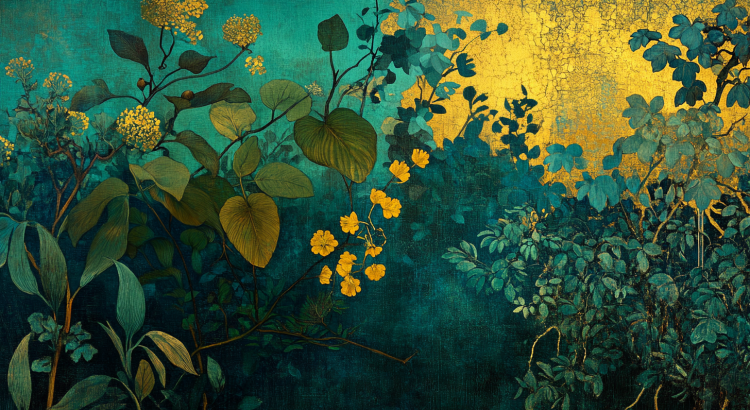
A world of ecological limits & abundance
This living planet is a world of limits and of abundance.
That’s perhaps obvious, but the implications of this seem not so obvious to us collectively.
A WORLD OF ECOLOGICAL LIMITS
This planet is finite, and it has finite resources and a finite capacity to replenish what we take from it.
Our collective ecological footprint is larger than Earth. That means that we are in global ecological overshoot. We are using more resources than Earth can replenish, and we are putting more toxins into these living systems than they know how to handle.
This is similar to living off a savings account and spending more than what’s coming in. At some point, we reach the bottom of the account and our lifestyle comes crashing down.
We are now getting closer to the bottom of our ecological savings account, and we see the signs everywhere: ecosystem loss, climate instability, possible changing ocean currents, ocean acidification and warming, toxins and plastics in all living systems, loss of insects, loss of species, and so on.
There is no hard or clear bottom to our ecological savings account, as there is in a bank account. What happens when we get closer to the bottom is the destabilization and unraveling of most or all the systems of this living planet. That includes us since we are local and temporary expressions of these systems.
A WORLD OF ECOLOGICAL ABUNDANCE
This living system is also a world of abundance.
We are developing a food forest, and although it requires resources and effort at first, it will in time give a significant and increasing return on that investment. The return on investment is almost infinite because we are working with the systems and inherent productivity of nature.
A food forest produces healthy soil, an abundance and variety of foods for humans and wildlife, seeds, seedlings, natural mulch, experience and knowledge that can be shared, and it becomes more abundant and self-reliant as it matures. It’s an immensely valuable gift for future generations.
If we work with the living systems of nature and the inherent productivity of these systems, this is a world of abundance.
DOMINATION VS PARTNERSHIP ORIENTATION
This ties into a domination vs partnership culture, and a zero-sum vs win-win mindset.
Modern agriculture is an expression of a domination and zero-sum mindset. It’s a way of growing food that relies on monocultures and chemical inputs which reflects a domination mindset. It produces food while damaging the soil and ecosystems, which reflects a zero-sum mindset. There is a win on one side of the equation and a loss on the other.
Food forests are an example of a partnership and and win-win orientation. We mimic natural forests, we improve the soil, we put in a lot of effort in the beginning, and then let nature do most of the work. It’s a win-win solution since it provides food for humans and wildlife while improving the soil, regenerating the land, and creating habitat for wildlife. There is a win on both – or all – sides of the equation.
SCARCITY AND ABUNDANCE
It may seem that our world is one of scarcity, and yet we have more than enough for all humans. It’s a problem of distribution, not scarcity.
Yes, this planet has current limits for how much it can produce and keep up with, and these limits become tighter as ecosystems degrade. As we keep consuming more, and doing so in ecologically unsound ways, this living system we call Earth becomes less able to produce.
At the same time, nature is abundant. If we work with nature, we can support it in becoming wildly abundant. In such a world, our natural living systems will produce more than enough for a large population of wildlife and all humans.
WE ARE LOCAL AND TEMPORARY EXPRESSIONS OF THIS LIVING PLANET
We are local and temporary expressions of the living system of this planet and this universe, whether it’s us as individuals or humanity as a whole.
As Carl Sagan said, we are the universe bringing itself into consciousness. We are the local eyes, ears, thoughts, and feelings of the universe.
When we develop and participate in ecologically unsound systems, we are the Earth destroying itself. When we develop and participate in more life-centered systems, we are the Earth healing itself and coming into more abundance.
Read MoreNature: A luxury? Or what we are?

I am often baffled when people talk about nature as if it’s removed from us – as if it’s a kind of luxury to experience now and then, or a kind of remote appendix, or a place primarily to get a few resources like timber and fish.
In reality, we are nature. Our life fully depends on the living systems we are part of. Nothing we are or value would exist without these living systems.
Our health and well-being is intimately dependent on the health and well-being of the larger living systems we are part of. Our existence depends on it.
The biggest issue in the world today is that we have a civilization that assumes a separation between us and nature, calculates the value of nature in terms of the market value of natural resources, and assumes infinite nature in terms of its resources, its ability to regenerate, and its ability to absorb the waste of our civilization.
Because of this, we are in massive ecological overshoot. Our collective ecological footprint is larger than our Earth. We are living off natural resources accumulated over very long timespans, and they are not being replenished nearly fast enough to keep up with our use. That’s a recipe for disaster.
It’s ecocidal and suicidal, and it’s astonishing to me that this is not at the forefront in just about any discussion in society – whether it’s politics, economy, business, science, art, philosophy, or anything else.
It is the context for everything, and it’s on the periphery of our collective conversation and what we are focused on.
What’s required is a profound transformation of all aspects of our civilization to take ecological realities into account, and that requires our collective will.
As it looks now, we are nowhere near to finding that collective will. We are, collectively, focused on everything and anything else. We prioritize just about everything else.
Everything we actually prioritize has been made possible by this amazing living system we are temporary and local expressions of, and we marginalize this living system that makes it possible.
So what’s the solution? What can we do as individuals and groups?
For me, Joanna Macy’s three types of actions are a guideline: (a) Stopping actions, (b) creating and living life-centered alternatives, and (c) creating and living from more life-centered worldviews.
I explore more life-centered worldviews and allow them to shape and transform me. I especially like the Universe Story, the Epic of Evolution, Deep Ecology, systems views, integral models, and indigenous wisdom.
I live a few more life-centered alternatives. I eat local, organic, seasonal, and low on the food chain, as much as possible. I avoid toxic chemicals in soaps and so on. I am a member of and vote for the Green Party in Norway. (They are represented so it’s not a “wasted” vote.) I am fortunate to have land in the Andes and we are developing a food forest here.
I seek out like-minded people and groups. It feels good to know there is a community of us, even if we live in different parts of this planet.
I find that living some of the solutions – whether it’s worldviews or practical solutions – gives hope. It shows it’s possible. It makes me feel like a small part of the solution. It helps nudge us all slightly in the right direction.
That makes it more than worth it.
The psychological impact of our ecological crisis
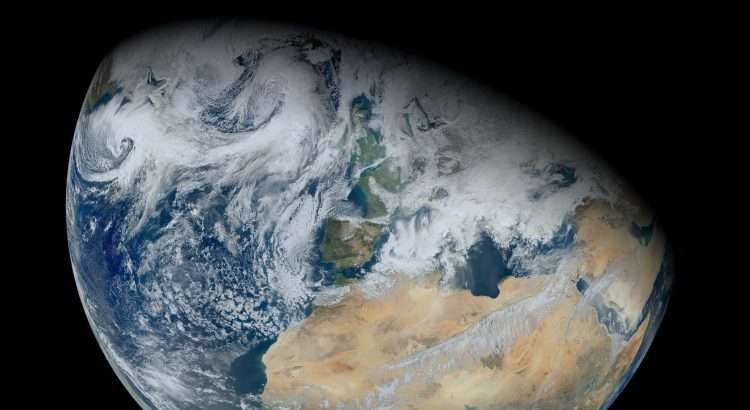
We are local and temporary expressions of larger social and ecological systems, so our whole life and existence is impacted by our global ecological crisis.
Our life-support system is in a massive crisis, we notice and know, and this will inevitably bring up things i many of us – stress, grief, anxiety, anger, old trauma, a wish to work for change, and so on.
A recent study found that in the US, a majority of young people are concerned (AKA scared) about the future. (Survey of young people aged 16-25 from all US states shows concerns across political spectrum in The Guardian.)
So how do we deal with it?
I won’t write a detailed and general overview, but I can share some of what I have found that helps me:
WORLDVIEW & ASSUMPTIONS
I explore more nourishing and life-centered worldviews, and I actively work on allowing these to transform me.
I love the Universe Story. It’s based in science and gives a context of wonder and awe for our lives. We are the local and temporary expressions of the unfolding of the universe. We are the universe bringing itself into consciousness. We are the local eyes, ears, thoughts, and feelings of the universe. The history of the universe is, in a very real sense, our history. It’s how we came to be.
Similarly, I am a local and temporary expression of the always-evolving living system we call Earth. I am nature.
Everything I am and know – thoughts, feelings, actions, human civilization – are local and temporary expressions of this unfolding universe and the processes of this living planet.
This is a view of holarchies, of wholes within larger wholes and with smaller wholes within it. It’s a view of all as inherently sacred. If we want, it’s a view of all of reality, whatever that is, as God.
This is a more life-centered worldview. It helps me see myself as an intrinsic – temporary and local – expression of the unfoldment of it all. It helps me hold my thoughts and assumptions more lightly.
IDENTIFYING THE LESS LIFE-CENTERED WORLDVIEWS AND ASSUMPTIONS
This is in contrast to the conventional worldview of our civilization, which is of separation. This is the worldview of our agricultural civilization, aimed at justifying unequal access to resources, domestication, social hierarchies, abuse of living beings and nature, theft of the land of those who are “inferior”, and so on.
Here, we are separate from nature. Mind is separate from body. Only humans have souls. The sacred is in a god in the sky. We should take someone’s word about the fundamentals of who and what we are, and pretend we believe it (whatever that means). Western civilization is superior. Nature is here for our benefit. Nature is infinite. Thoughts can tell us the full, absolute, and final truth about something. We best understand something by taking it apart to its smallest parts. If one thought is true, other perspectives must be false. Some emotions are good and others are bad. We see the world in polarities where one end is bad and undesirable and the other good and desirable. And more.
I find it helpful to know some of this history, recognize these kinds of worldviews and assumptions, explore the effects of these, and find worldviews and assumptions that are more life-centered and can help us develop a more ecologically sound civilization.
OTHER ASSUMPTIONS
I also use other assumptions that, in my experience, fit with a more life-centered worldview.
I see all beings as primarily consciousness. They are consciousness to themselves, just as I am, and we all live through different bodies with different psyches. All beings are then fundamentally the same as me. All beings want happiness and to be free of suffering, just like me.
Thoughts are questions about the world. They have a practical function only, to help us orient and function in the world. They cannot hold any full, final, or absolute truth. The world is always more than and different from our maps.
If people act in destructive ways, it’s either because of the system we are all part of or trauma. Usually, it’s both. The system leads to trauma, and the system and trauma come together to bring about destructive actions. (This is the system that comes from a worldview of separation.)
BEFRIENDING EXPERIENCE
I explore befriending my experiences and wounded parts of myself.
How do I relate to this experience that’s here? These sensations, mental images, words? Can I find a more gentle and kind way to relate to it?
When I experience distress, it comes from distressed parts of me. It’s not all of me. These parts want the same as me: Love, kindness, acceptance, understanding, support. How is it to give it to them? How is it to give them what they most deeply want? How is it to be a good parent to these parts of me?
ALLOWING MYSELF TO BE HUMAN
I allow myself to be human with easy and difficult days and the full range of human experiences, thoughts, emotions, hopes and fears. It’s normal. It’s human. It makes me like anyone else.
In a very real sense, these emotions are the emotions of this living system we call Earth. They are the local and temporary expressions of Earth, in this case, responding to what’s happening to itself. (Filtered through the usual biases, interpretations, hangups, and so on that this particular local and temporary expression of this living system has.)
THE REALITIES OF LIVING IN THIS SYSTEM
Most of us live within this global civilization which is inherently ecocidal and suicidal. It’s a system that assumes separation from nature, and infinite natural resources. That means that all of us, inevitably, live lives that are somewhat ecocidal and suicidal. It’s mostly about the system, and less about us as individuals.
I know that living in this system, my life will inevitably be somewhat destructive. It’s inevitable. It’s not personal, it’s how it is for all of us. What I can do is do my small part in nudging it in a more life-centered direction.
ENGAGEMENT
I do whatever small things I can do in my own life. I compost. Eat organic and local if possible. Take public transportation unless I have a good reason to use a car. Vote for those who take our ecological crisis seriously.
I am also in the fortunate situation that I have land in the Andes and am working on regeneration, reforestation, and creating a food forest here. I love the work we are doing to help this land. This morning, I planted more Maya nut seeds, and participating in the regeneration in this way, in partnership with the nature here, is deeply rewarding and meaningful.
Engagement in the solutions, even in apparently small ways, gives a more visceral sense of hope.
COMMUNITY
I seek out communities of like-minded people. I loved being at the Zen Center in Salt Lake City. I love the Breema community. I love the Permaculture community. I love the people in the Green Party in Norway that I have met. When I am reminded of the Universe Story, Deep Ecology, Permaculture, systems views, and so on, I feel connected to a worldwide community of people who share these interests and this orientation.
Here in the Andes, I seek out and have found people who work with regeneration, bodymind practices, and so on. Just knowing about them helps me a lot, and I also enjoy the interactions and exchanges.
VOTING
Voting alone is not going to save us, but it is an important piece of the puzzle.
If I know what’s happening in the world today, and it’s the consequence of the policies of the parties that have been in power for decades, it makes no sense to vote for these.
I personally vote for, and am a member of, the Green Party in Norway. They get the situation, want to do something about it, and get enough votes to be included in the government.
QUESTIONING STRESSFUL STORIES & EXPLORING PROJECTIONS
I identify and question my stressful stories. For this, I generally use The Work of Byron Katie, although I did it so much that The Work mostly does itself.
This is an effective way to explore – to notice and own – projections and the shadow. What I see in others is also here in me. Whatever story I have about someone else, I can turn it to myself and find genuine and specific examples of how it’s true.
I am in the same boat as everyone else. I am not inherently better or worse. (Also because ideas about better or worse are just that, ideas. It’s not inherent in reality.) I live in the same system as everyone else.
MEDITATION & YOGA
I have done a good amount of meditation in my life, although these days it’s mostly in the form of noticing in daily life. I especially like basic meditation – to notice and allow what’s here, fail at it, and then notice it’s all already noticed and allowed.
I find training more stable attention very helpful, it supports just about any activity in daily life and also general well-being.
I have also variously done tai chi, qigong, yoga, and Breema, and love it. It’s nourishing and brings me home to myself – as bodymind and the consciousness it’s happening within – in a more visceral way.
NOTICING MY NATURE
I have used the Big Mind process and Headless experiments to explore my nature, although these days I mostly just notice.
In one sense, I am a human being in the world. That’s not wrong. It’s an assumption that works relatively well, although it also comes with inherent stress and discomfort.
In my own first-person experience, I find I am fundamentally something else. I am what the world, as it appears to me, happens within and as. I am consciousness, and the world, to me, happens within and as the consciousness I am.
This gives a different and more real context to this life and everything else.
I should mention that this says something about my nature, not the nature of all of existence, and that’s more than enough. It leaves the nature of all of existence open for question and exploration.
HEART-CENTERED PRACTICES
I use tonglen and ho’oponopono.
In tonglen, I visualize someone in front of me. It can be an individual (including myself) or group or the whole world. I see their suffering as black smoke and breathe it in. In me, it transforms to light and I breathe that light out and into the other(s). I repeat many times until and beyond there is a deepening shift. This helps me viscerally see myself in others, it opens for empathy, and any sense of division softens and/or goes away.
In ho’o, I similarly visualize someone – perhaps someone I have a difficult relationship with in my life or the world. I say: I am sorry. Please forgive me. I love you. Thank you. (To me, they happen within and as what I am so this makes sense, although it works even if it doesn’t make sense at a thought level.)
NATURE
I love to spend time in nature. The more untouched the better, although any nature is nourishing – even if it’s just seeing the sky and clouds outside the window. I love to work in the garden. It’s amazing how plants grow and how a plant comes out of a seed and knows how to do all of it.
It also helps me to notice that I am nature. Everything around me is nature. It’s all this living system we call Earth forming itself into all of it, including what we think of as human civilization.
DON’T KNOW
I don’t know how this will all unfold. I don’t know what will happen with Earth and human civilization.
It’s possible we won’t have much time left, and that’s OK. Our time as a species and civilization always had an expiration date.
It’s also possible that some of us will come out at the other end.
I don’t know. I can know what science says. I can know the different scenarios and how likely each of them looks to us now. And I cannot know for certain.
For me, there is peace in resting in that don’t know. It’s what’s most honest to me.
DEATH GIVES LIFE
I also know that death gives life. The death of stars made this planet and us and all we know possible. The death of species allows new species to emerge. The death of individuals give space for new individuals.
Death is what allows everything we know.
We wouldn’t be here without it. This universe as we know it couldn’t exist without it.
THE BEAUTY OF THE FLEETING
Everything has an expiration date. Our civilization has an expiration date. Our species has an expiration date. I have an expiration date. It will all be completely gone one day, with no-one to remember any of it.
That can seem sad and terrible, and there is also an immense beauty in it. There is an immense beauty in that everything is fleeting. Everything has its time and is then gone.
IMPERMANENCE & OUR NATURE
One of the beautiful things in the fleeting nature of everything is that it invites us to notice our own fundamental nature.
Everything in my field of experience is fleeting. It’s always changing. Everything about this human self is fleeting and changing.
So how can I fundamentally be any of it? What am I more fundamentally?
I find I am what it all happens within and as. To myself, I am consciousness forming itself into all of it.
Getting this in mental representations is one thing. It’s a good start and can give inspiration to explore it in immediate noticing. What it is about is the noticing and viscerally getting it through noticing. That’s where it transforms this human self, over time. And it is more than possible to notice it and keep noticing it. If there is a sincere wish, and some guidance, it’s more than possible.
Hilma af Klint: Turning modern art history on its head and the artificial boundary between figurative and abstract art
I am watching Beyond the Visible: Hilma af Klint, and am reminded of a few things.
HILMA AF KLINT
First, I love Hilma af Klint’s art. It’s like nothing else.
I remember talking about her with fellow art students in my late teens and was fascinated by her art and approach. Much later, in October 2018, I was fortunate enough to see Hilma af Klint: Paintings for the Future at the Guggenheim and got the full experience.
I love that her art was channeled and/or guided by spirits, in her experience. I love that the rediscovery of her art turns modern art history on its head, which should happen now and then and is very healthy.
EUROCENTRIC AND MALE-CENTRIC ART HISTORY
The documentary highlights the Eurocentrism and male-centrism of mainstream Western art history. When I was about to study art history at the University of Oslo (one year full time) in 1990, I was excited to learn about art from all over the world and throughout time – especially art from Asia, Africa, and prehistoric art. I was shocked to discover that “art history” at the University of Oslo meant relatively recent European art (last two thousand years), and not even European art but mostly Western European art, and not only Western European art but mostly male Western European art. I understand they need to limit the scope of a study, but at the very least call it “Western European male art history” and not “art history”. Label it honestly, and offer the rest in other classes instead of leaving it out completely.
It seems that some in the art world – like MOMA in New York – prefer to still live in this kind of outdated world. They have left Hilma af Klint’s work out of their presentations on the history of abstract art and prefer to start with Kandinsky, who did his abstract work years after Hilma af Klint. (One of their stated reasons is that she didn’t show her art at the time, which seems a weird argument.)
A WORLDWIDE AND DEEPER TIME PERSPECTIVE
If it was up to me, I would include abstract art from all over the world and throughout time, including both complete abstractions and figurative art that’s heavily abstracted. I would start with prehistoric art, then go on to early historic abstract art from around the world, Islamic abstract art, and more modern abstract art from all over the world. European abstract art, including Klint and Kadinsky, would just be a small part of this much larger, and far more rich and fascinating picture.
ERASING THE ARTIFICIAL DIVISION BETWEEN REPRESENTATIVE AND ABSTRACT ART
Also, I would highlight how the division between figurative and abstract art is, in many ways, artificial.
There are many abstract elements in figurative art. All of it is, in a sense, inevitably abstractions. And there are figurative and representative elements in abstract art. We can find an endless amount of patterns in nature that inspire and are mirrored in abstract art, and abstract art often represents ideas and feelings.
As with any division, it tends to break down when we look at it more closely. All art involves abstractions. All art is, one way or another, inspired by the patterns in nature. Abstract art is often, or inevitably, representative of ideas, feelings, and patterns in nature.
HILMA AF KLINT AND REPRESENTATIVE ABSTRACTIONS
Hilma af Klint’s art is an art of representative abstractions.
Her art is influenced by nature – the geometric shapes of minerals and the organic shapes of plants.
Her art is an expression of her ideas, feelings, and states.
And as she would say, her art is an expression of the realities of the spirit realm. For her, her art was representative.
EXISTENCE IS THE ARTIST
There are still bigger pictures that give important contexts for understanding and enjoying art.
In a sense, all human art is inspired by nature. We mimic and use elements from what nature has provided for us.
We can also say that nature is a far more skilled, innovative, and amazing artist than any human. The art inherent in all the amazing forms of nature goes far beyond human-created art. We humans are a piece of art far beyond what we are capable of producing.
Even more essentially, nature is always the artist.
As Carl Sagan said: We are the local eyes, ears, thoughts, and feelings of the universe. We are the universe bringing itself into consciousness.
What we think of as human art is the local and temporary expressions of the universe. It’s life itself expressing, exploring, and experiencing itself through and as human art. That’s not a metaphor or poetic expression, it’s literally and inevitably so.
Existence is the only artist. This universe and all the different forms it takes is existence expressing, exploring, and – through and as us and other conscious beings – experiencing itself in always new ways.
HAPPENING WITHIN AND AS THE CONSCIOUSNESS I AM
Since I have included some larger contexts for abstract art and art in general, I can include a more essential side to it as well.
To myself, I inevitably am consciousness, and the world to me happens within and as the consciousness I am.
That’s what I find when i look in my own first-person experience, and I assume it’s that way for all “conscious beings”. We are all fundamentally consciousness in our own experience, and the world to us happens within and as the consciousness we are.
Waking life and dreams and art – whatever we call it or see it – happens within and as the consciousness I am. It’s all an expression of the infinite creativity of this consciousness and it’s infinite capacity to take on and show itself as always new and different forms.
NONE OF THIS IS NEW
Of course, none of this is new.
For decades, many have pointed out the narrowness of mainstream art history from Western Europe, and many highlight the art of women and non-European art.
It’s a common observation that abstract art is often representative and inspired by nature, and that figurative art inevitably involves abstractions.
I assume many speak about how existence is really the only artist, at least in the world of the Universe Story, the Epic of Evolution, and Big History.
And lots of people notice what I notice – that they are consciousness, and the world, as it appears to them, happens within and as that consciousness.
See more on these topics below.
Read More
Alan Watts: What you are… is simply the fabric and structure of existence itself
What you are basically, deep, deep down, far, far in, is simply the fabric and structure of existence itself.
– Alan Watts
Yes, this is obviously and inevitably true.
We are local and temporary expressions of the seamless dynamic system we call the universe or existence.
In the words of Carl Sagan: We are the local eyes, ears, thoughts, and feelings of the universe. We are the universe bringing itself into consciousness.
If we are used to thinking from a more local perspective, then this may seem deep, deep down, far, far in.
It’s also right on the surface. All that we are and do, including all that’s on the surface, are the local expressions of this dynamic universe.
This human self sitting here looking at these words, these hands and fingers, the sounds, the sensations, the consciousness it’s all happening within and as, are expressions of the universe and existence.

Scrödinger’s land: Paradise or hell or both, and a reflection of our ecological crisis
We are legal stewards, as humans think about it, of beautiful land in the Andes, at the western slope of Chicamocha Canyon.
I walked in the forest at early dawn, after a heavy rain, and it reminded me of something difficult to escape these days.
PARADISE OR HELL OR BOTH
This land is paradise or hell or both.
It’s a paradise for us now. It’s in a beautiful area, and although the land is degraded by centuries of grazing, it’s still very beautiful. Right now, at dawn, it’s quiet. There is only birdsong.
It can easily be hell as well. When the neighbors blast out their music, it’s a kind of hell. When the extremely noisy motorcycles go by, it’s similar. More importantly, a huge hotel and shopping center project is being built across the road, as one of our closest neighbors. If that actually comes into existence, it can very well be hell with constant noise, music, increased traffic, and more.
For the ecosystem and wildlife here, this place is also heaven and hell. For the ones currently living here and doing well here, it’s paradise. They are left alone. For the ones impacted by centuries of grazing and chopping down trees for wood, it has been hell. For all the new life that’s coming after the grazing was stopped, it’s paradise.
A REFLECTION OF OUR ECOLOGICAL CRISIS
All of this is a reflection of our ecological crisis, and of our civilization that’s profoundly out of step with ecological realities.
Our ecological crisis has been going on for centuries, and the previous use of this land is an example.
The local farmers mostly have cows and goats, so for them, grass is wonderful and anything else – apart from a few trees for shade – is a waste of land. They even call pioneer species that help recreate a more mature and rich ecosystem “malezas”, bad plants.
They have cut down the forests and made it into mostly grassland and savannah, with predictable consequences: The wildlife has been severely impacted. The rivers and springs are dry. And the climate in the region is likely changing, and probably already has.
The hotel project is another example. How can the local authorities allow a hotel project they know will be immensely destructive for the land and the community? (It wouldn’t be allowed in most well-regulated industrial countries, but this is not and they do things differently here.)
AN ECOCIDAL AND SUICIDAL CIVILIZATION
This all points back to our civilization. It’s a civilization built on several principles that lead to this kind of destruction: A power-over mindset instead of a power-with mindset. The sacred as “out there” and not in here in the land, life, and us. Nature as “out there” instead of seeing us as nature and part of the web of life. And so on.
Mainly, we have an economic system that assumes that nature is infinite in its ability to provide resources and absorb the waste of civilization. It evolved that way because it could at the time. We were few enough and had a simple enough technology so for most practical reasons, it was true.
These days, our numbers are many times higher and our technology is many times more powerful, so it’s an assumption that is, quite literally, suicidal. We have a civilization that’s ecocidal and suicidal. And many still don’t realize it.
Many do still not realize the profound systemic changes needed for our civilization to continue.
GLOBAL ECOLOGICAL OVERSHOOT
The simplest way to frame this may be in terms of our ecological footprint.
Our collective ecological footprint is far larger than the Earth. We will need two or more Earthts to support our current civilization, and we don’t have it. If everyone had the lifestyle of industrialized countries, we would need closer to ten Earths. That’s clearly not sustainable.
This global ecological overshoot is similar to living off the money in our savings account. It looks fine for a while until we reach the bottom and our lifestyle comes crashing down.
In our case, it means that our civilization comes crashing down.
This is not hyperbole. This is a simple reality. Even a child can understand it.
WHAT WE CAN DO
So what can we do? Do we have time to change?
I don’t know if we have time to change. If we all suddenly found the collective will to make the needed changes, we could do it, of course. But that seems very unlikely. Most people continue as if nothing is happening.
What can the ones of us who realize the urgency do?
I vote for the Green Party in Norway.
I bought this land and is making it into a nature preserve. We have partnered with an organization that will plant thousands of native trees here, with some diversity (around twenty different species). We are making a food forest around the houses and the main paths.
I eat mostly local, organic, and seasonal food when I can. I eat low on the food chain, with only occasional fish and meat.
I find like-minded people and join, to some extent, communities of like-minded people.
I learn. I learn about ways to partner with this land in terms of regeneration, reforestation, and making food forests.
I actively explore and immerse myself in different worldviews. Worldviews that are more life-centered and aligned with our ecological realities. (Universe Story, Epic of Evolution, Deep Ecology, systems views, integral models.)
I actively work with my distress and grief over what’s happening with this land and neighborhood, with Earth, and with humanity.
I cannot save humanity or our current global ecosystems. But I can save myself and this land, as best I can. I can do what I can for our civilization to turn around. (The Great Turning.) And that’s more than worth it, no matter what happens with us collectively.
Read MoreThe real artist is existence

One reason I have some interest in the AI-creation of images is that it highlights something about art.
Human art draws on our collective human art production, at least what any artist and community has access to. We all learn from and are inspired by what we collectively have produced.
Our collective art production draws on and depends on nature. We are inspired by nature, and nature makes it possible for us to create what we call art, and makes some resonate with us and some resonate less.
Human art is one expression of the universe. It’s a local and temporary expression of the universe. It’s the universe expressing, exploring, and experiencing itself in always new ways. As Carl Sagan said, we are the local eyes, ears, thoughts, and feelings of the universe. We are the universe bringing itself into consciousness.
The real – and really the only – artist is existence.
A FEW MORE WORDS
As usual, there is a lot more to say about this.
Are AI-created images art? I wouldn’t call it art. I prefer to call it AI-generated images.
Is AI really artificial intelligence? I wouldn’t call it that either. I would call it predictive text, predictive image creation, predictive music creation, and so on. It’s statistics that mimic human intelligence.
Why do we enjoy the beauty of nature? Why are we able to create and enjoy art? It’s because we are expressions of the universe. We are the universe locally enjoying the beauty of itself. We are the universe locally and temporarily expressing and enjoying itself.
Reminding ourselves of the bigger picture doesn’t negate anything. Artists still need to have some protection for their work. They deserve to be compensated for the use of their work and to be able to make a good living on it. That benefits us all.
And it is helpful and interesting to remind ourselves of the bigger picture.
The image is created by me and Midjourney, and really existence itself.
Read MoreFirst, seventy-two labors brought us this food
First, seventy-two labors brought us this food shirt. We should know how it comes to us.
The video above shows one of many fun and creative ways we can make the profound interconnectedness of life and society more visible and tangible.
I was reminded of the oryoki meal gatha I am familiar with from Zen retreats / sesshins:
First, seventy-two labors brought us this food; we should know how it comes to us. Second, as we receive this offering, we should consider whether our virtue and practice deserve it. Third, as we desire the natural order of mind to be free from clinging we must be free from greed.
I have always thought that seventy-two labors seems like an understatement, although it likely looks at only the human and immediate labor.
Most of the products I use in daily life have been brought to me through the immediate work of a great number of people. People with lives, hopes, fears, just like me. All of this has been made possible by the work of innumerable people living before us, going back to the earliest human ancestors and really the first living cells billions of years ago. Our lives and products are made possible by the living and dynamic systems of Earth, and the billions of beings living now and in the past. All of this is made possible by the dynamic evolution of the universe itself, forming itself into all of it.
As Carl Sagan said: If you wish to make an apple pie from scratch, you must first invent the universe.
If I hold an apple in my hand or put on a shirt, it’s because of the work and lives of innumerable beings – human and non-human, living now and in the past. It’s because of this amazing living system we call Earth that we are all part of. It’s because of the evolution of this universe, which all of it is part of. It’s because of existence as a whole.
Neither the apple, the shirt, nor I would be here if it wasn’t for all of it.
Kiarostami’s Certified Copy
I just watched Kiarostami’s Certified Copy with its theme of copies and originals.
This is one that stays with me for a while and continues to unfold as it’s being digested. It was moving, relatable, and stimulated a lot of questions about the movie itself and the themes it brought up.
ONE WAY TO UNDERSTAND THE STORY
I thought I would start with a way to understand the story that makes sense of otherwise puzzling aspects and makes it rich, poignant, and heartbreaking. (Spoilers below.)
They were lovers fifteen years ago, and her son is theirs. They meet and live a day as if they had married fifteen years ago. At the end of the day, he leaves to go back to his wife and family.
This ties up several loose ends:
It explains her reserved seat and why she looks sad during his lecture. She arrives late and leaves early because it’s too emotional for her to see him, although she wants to meet him one-on-one so she gives her phone number to the translator to pass on.
He says yes to meeting her even if he leaves later that day. (If she had been a stranger, it seems less likely he would agree.)
He warns her that copies can be dangerous. He implies their connection can be dangerous since he already has a wife and family.
She bought six copies of his book and wants him to sign all of them. It seems like an excessive number of books, especially since she isn’t very interested in the topic. She bought them to have a connection with him, and maybe as a way to share him with her friends and family, either without telling them about the role he plays in her life or as a way to tell them.
There is tension between them in the car, which is understandable if they had something together fifteen years earlier. The tension would be odd if they were strangers.
He had not seen the painting in the museum before because they are not married and do not live together. He dismisses its importance to his work. Is it difficult for him to acknowledge that she would have contributed to his life in that way too if they had married?
When he tells her the story about the mother and son, he asks her if the mother told the son that the sculpture is a copy. She silently confirmed. He took it to mean that she had not told her son about him, about the “original” that the son is a kind of copy of. If they were strangers, it would be strange for him to ask her about an element in the story that he told.
When he receives the phone call, it may be from his wife which is why he felt he needed to answer.
She tells the café owner that he spends almost all of his time away from her and their son. She is emotional because it’s true. The café owner does not understand the situation so she repeats it. She also says that he didn’t call when their son had his birthday last week.
The café owner assumes they are married, and they immediately go with that fiction. They have both played out that scenario many times and they want to explore it together even if it’s for just a day. It’s easier for them to explore it through role-playing than talking about it directly.
He says: My family lives their lives and I live mine. She gets upset and emotional over this, which makes sense if he refers to her and their son. She and their son live their lives, and he lives his. They live separate lives.
He says: You cast me in the role of absent parent, but it’s natural for a parent to sometimes be away. She responds: Yes, sometimes, but in your case it’s constant.
They repeatedly bring up how the other has changed over the last fifteen years. The changes seem important, maybe because they are playing with the possibility of actually being together.
She rests his head on his shoulder, imitating the sculpture they discussed earlier. She has missed having him there to physically and metaphorically lean on.
She remembers the hotel and he does not. It meant more to her and had a lasting impact on her life.
Their interaction and role-playing take on a far more emotional and urgent tone in the last part of the movie. She sincerely asks him to stay because they can have something together. It’s not just based on this day but on what happened fifteen years earlier and their son.
Their imagining into having had a long married life together is a kind of copy. Actual marriages, including his, are the originals and the imagination is the copy.
This fits just about everything in the story and explains a lot that initially seemed puzzling to me and – I imagine – to many viewers.
I easily imagine that this is the story the three of them – the director and the two actors – had in mind while making the movie. It would ground the performances in reality and give the movie substance and richness.
It’s also not the one correct answer. The story is intentionally ambiguous and can be understood in many different ways, although other understandings seem to leave loose ends that this one makes sense of.
THE ROLE OF ART
Then to other aspects of the movie.
One explicit theme of the story is copies and originals, especially in art.
Art mimics life. Whether it’s visual, music, theater, or something else, it’s a copy of life. And yet, it resonates with us. It’s a mirror for us that touches on emotional, universal, and archetypal truths.
In this case, the movie itself is fictional and a copy of life, and I am watching one of many physical and digital copies of the movie. And yet, it evokes moods, emotions, memories, and reflections in me which are real and important. There is a reality to the story that resonates.
Art is not only a copy of life and nature, it’s a copy of art. It draws on generations of art production and our culture as a whole. This movie can be seen as a classic post-modern self-referential story. (Although there are many self-referential stories from other times and cultures.) It’s a variation on a theme.
COPIES AND ORIGINALS
Can we get as much out of copies as the originals? Is the difference only in the story we tell ourselves about them? Aren’t originals copies too and always based on something else?
Story is everything
If I tell myself another story, how does my experience change? I often explore this with art and life. In a sense, the story and context is everything.
For instance: If I knew this was my last day, how would I perceive and live?
This helps me notice how much my experience is created by my stories. That’s yet another reason to identify and examine the stories I operate from. What happens when I hold onto a certain story as true? How do I perceive? How do I live my life? What’s the genuine validity in the reversals of the story? Can I take one of those reversals and see how it is to perceive and live from it?
This also helps me see that all of my stressful stories, and they are all stressful when I hold them as true, come from somewhere else. They are copies. They are copies of copies of copies, passed on in our culture, and some possibly in all cultures, through the generations.
Originals as copies
Isn’t an original itself a kind of copy, always based on something else? When I explore creating AI images, I am aware that these images emerge from a network trained on a large database of images. They come out of a segment of the collective image-production of humanity.
Our current collective image production is itself based on our existing collection of images created by humans and nature.
The real artist is existence itself. Existence forms itself into this wonderous universe and nature, into us, into the art we create. In a sense, Existence is the only artist, expressing itself through and as this universe and us and human art.
Existence is always copying itself and exploring variations on existing themes.
When it comes to AI, there is an important difference between human-created and AI-created images, music, and so on. Human artists should be fairly compensated for their work and contribution. And it’s helpful to remember that all art is based on something else, it’s all variations on existing themes.
ROLES AND IDENTITIES
Are the two main characters a married couple who role-play meeting each other for the first time? Or did they meet for the first time and role-play being a married couple? Or is something else going on?
If identities and roles are so fluid, isn’t the difference between playing a role as a role-playing exercise, and playing a role in life, mainly the story we tell ourselves about it and how seriously we take it?
As Shakespeare reminded us, we all have our entrance and exit and play many roles throughout life.
And yes, the difference between role-playing as an exercise and role-playing in life mainly seems to be the stories we tell ourselves and how seriously we take them.
What roles do I play here and now? How would it be to take these roles less seriously? To hold them lightly? To even enjoy playing and exploring them, knowing they are roles and temporary?
IF IT’S ALL CHANGING, WHAT AM I?
This leads to the even more essential question: If stories are so exchangeable, and roles and identities also are changing and temporary, what am I more fundamentally?
I assume we all sense that there is, and we are, something more essential and lasting than any of this. There is a kind of red thread that goes through it all and all the changes.
What is it? Yes, at one level, I am this human self in the world with a variety of changing roles and identities. That’s a pragmatic view that helps this human self function in the world.
When I look in my own first-person experience, I find something else. I find this field of experience happening within and as consciousness, and I find I am what this field of experience happens within and as. Even more fundamentally, I am capacity for all of it.
As Douglas Harding says: I am capacity for the world.
From here, it’s easier to hold my identities and roles more lightly.
Parts of me will still try to hold onto some and avoid others, and they will struggle with this, especially in some situations. This too happens within and as what I am, and it’s good to notice.
What I am forms itself into that too.
WAYS TO EXPLORE
One thing is to get this mentally and in a general way, and another is to get it more viscerally and in the situation we are in here and now.
I find The Work of Byron Katie immensely helpful in identifying and exploring the stories I perceive and live from, and find what’s genuinely more true to me. (Which is often that the initial story isn’t as true as parts of me thought, that there is genuine validity in the reversals, what that validity is, and that parts of me want to explore how it is to perceive and live from those too.)
Different role-playing exercises can be helpful to have more awareness of the roles and identities I operate from, where they come from, how I relate to them, and so on. I find the Big Mind process especially helpful.
To find what I more fundamentally am, and explore consciously living from and as it, I find Headless experiments and the Big Mind process very helpful.
The image above is from a scene in the movie where the main characters unknowingly – or knowingly? – imitate a sculpture they discussed earlier.
When does life begin?
When does life begin? At conception? A few weeks or months into gestation?
Within the realm of stories, the real answer is that it began close to four billion years ago. That’s when the processes and dynamics of this planet took on the form we call life. That’s when our earliest ancestors came about. Since then, there has really been only one life, one living system that we all are local and temporary expressions of.
We can expand the context one step further: What we call life is one expression of the larger dynamics and processes of this unfolding Universe. As Carl Sagan said: We are the local eyes, ears, thoughts, and feelings of the Universe. We are the Universe bringing itself into consciousness.
I love when people go beyond the answers typically found in our society on these topics, take a big-picture view, and find the more real answer, as Astrid Lundberg does above.
Read More
lanie: some indigenous cultures believe we’re alive just as nature is alive: to be here, to be beautiful & strange
western cultures believe we must be alive for a purpose. to work, to make money. some indigenous cultures believe we’re alive just as nature is alive: to be here, to be beautiful & strange. we don’t need to achieve anything to be valid in our humanness.
– @melatoninlau on Twitter / X
I suspect this is accurate. Some indigenous cultures found an inherent value in humans and everything. A value that’s there just because it’s part of this wonderful existence.
We have value as we are, just like everything else. Our value is in being part of this wonderful universe and existence – expressing, exploring, and experiencing itself through and as all of us and all that is.
OTHER REASONS FOR ACTIVITY
The idea of having value through what’s peripheral – purpose, roles, actions, posessions – is so ingrained in the Western culture that it seems difficult for some to imagine something else.
For instance, I saw a comment to this saying “which Indigenous cultures? they didn’t just lay around being lazy”. That seems to come from someone who engages in activity primarily in order to find value. Without that, she or he can’t imagine a reason for doing anything.
In reality, there are innumerable reasons for doing something. Free from ideas about why we do something, we still do something and are in activity. It’s part of our nature. It’s just that it comes from another place in us.
We may do it to be more comfortable, to have a different life, to have food, clothing, and shelter, to take care of ourselves and those we love.
We may do it from love. Curiosity. Wanting to experience it. Exploration. Fascination.
We may do it for no apparent reason at all. Doing things is just what humans – and all beings – seem to do.
A CLOSER LOOK
It’s worth exploring all of this.
Where do I find my value?
If I find my value in what’s peripheral – roles, actions, possessions, a sense of purpose – what happens if or when these change or go away?
If I find my value in what’s more essential – in being part of this wonderful existence – what happens? How do I live my life? How do I live this moment?
Read MoreKurt Vonnegut: Practice any art… to experience becoming, to find out what’s inside you, to make your soul grow
Practice any art, music, singing, dancing, acting, drawing, painting, sculpting, poetry, fiction, essays, reportage, no matter how well or badly, not to get money and fame, but to experience becoming, to find out what’s inside you, to make your soul grow.
Seriously! I mean starting right now, do art and do it for the rest of your lives. Draw a funny or nice picture of Ms. Lockwood, and give it to her. Dance home after school, and sing in the shower and on and on. Make a face in your mashed potatoes. Pretend you’re Count Dracula.
Here’s an assignment for tonight, and I hope Ms. Lockwood will flunk you if you don’t do it: Write a six line poem, about anything, but rhymed. No fair tennis without a net. Make it as good as you possibly can. But don’t tell anybody what you’re doing. Don’t show it or recite it to anybody, not even your girlfriend or parents or whatever, or Ms. Lockwood. OK?
Tear it up into teeny-weeny pieces, and discard them into widely separated trash recepticals [sic]. You will find that you have already been gloriously rewarded for your poem. You have experienced becoming, learned a lot more about what’s inside you, and you have made your soul grow.
– Kurt Vonnegut
Life – the Universe, Existence – is inherently creative. It has formed itself into matter, molecules, solar systems, living planets, us, everything we know. It’s still forming itself into always new things.
It’s how life gets to know itself. It expresses, explores, and experiences itself in always new ways.
We are made out of creativity. So why not consciously explore it?
When I was passionate about art in my teens and early twenties, it was for that reason. I loved exploring what would come out. I got to know myself in new ways.
This is not only about what we think of as art. It’s all of life. Learning, experiencing, having a conversation, making a meal, dealing with a conflict, gardening, going for a walk, playing with a dog…
Whatever we do is life expressing, exploring, and experiencing itself in always new ways through and as us.
The real alchemy: the transformation inherent in existence itself

I started listening to the Elixir episode from Something Rhymes With Purple, which is about alchemy and alchemy terms. Alchemy is essentially about change and transmutation.
I love alchemy as a metaphor for our inner transformation, as Jung so beautifully described and explored.
And yet, the ultimate alchemy is not done consciously by humans. It happens all around us and it happens as us all the time. It’s the alchemy of existence itself.
Existence is change. It is transmutation.
This universe is transforming itself continuously and inevitably – from energy to particles, from simple particles to complex, from general uniformity to areas of more density, from these areas of more density to solar systems with stars and planets, from non-living matter to life, from life to life that’s conscious and conscious of itself, and so on. (We even have consciousness consciously aware of itself as the universe bringing itself into consciousness.)
So much of what we take for granted is the most amazing alchemy in action. We are it and we fully depend on it for our life.
Just look at the amazing alchemy of soil and seeds becoming plants, and the amazing ecological succession from pioneers (which we often think of as “weeds”) to eventually a mature and rich ecosystem.
What we humans do with alchemy is just one tiny subset of this far more vast and grand alchemy that’s always in process.
That is hinted at in the word itself. The word “alchemy” is thought to derive from the ancient Egyptian word “khem” or “kem,” which means “black.” This may refer to the rich, fertile black soil of the Nile Delta, which was crucial for agriculture and associated with creation and fertility.
Shifting baseline syndrome: When we don’t realize how much nature is changing & learning to see with deep-time eyes
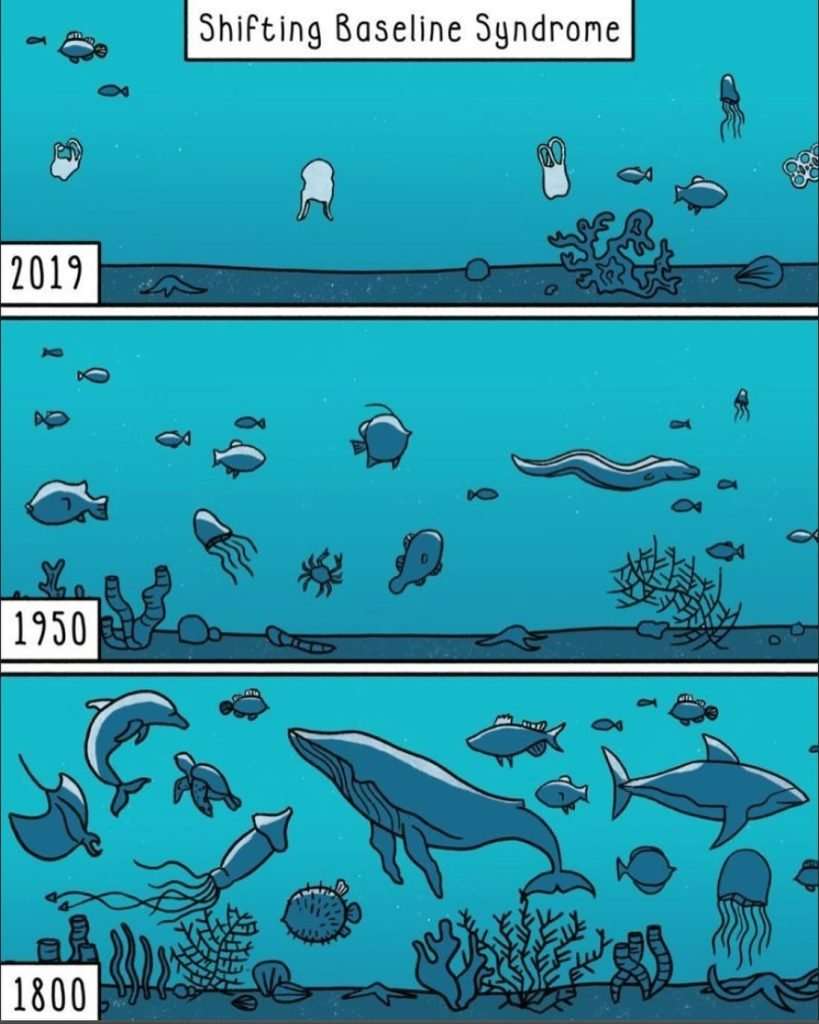
Yes, this is a big concern. Most of us don’t realize how much nature has changed over the centuries and even over the last few decades. We see nature and don’t realize how impacted it is by human activity.
CHANGES OVER THE LAST FEW DECADES
When I grew up in Norway in the ’80s, the garden was brimming with insects, birds, badgers, hedgehogs, and more. We had the windows and doors open in the summer, and the inside of the windows became full of insects when we closed them. We drove a few minutes in the car, and the windshield was covered in insects. After one drive, we had to clean it.
These days, there is very little life of any kind. There are very few insects. I hardly see any on the windshield. The inside windows have just about none. I don’t see any grasshoppers, ladybugs, butterflies, crickets, daddy longlegs, or any of the very familiar insects from my childhood. I don’t see any swallows anymore.1
I suspect most young people don’t realize how much this has changed and how quickly. They didn’t experience it for themselves. This is all they are familiar with. This lack of life is what’s normal for them.
CHANGES OVER CENTURIES AND MILLENNIA
This is also happening over longer timespans. When I look at the rolling hills here in Southern Norway, it’s beautiful in its own way. For my inner eye, I see something else. I see the rich and diverse old forest that very likely was there before humans, or when there were only a few humans there thousands of years ago. I see a multi-layered old forest full of animals, birds, and insects. I imagine the ocean similarly full of life.
When I walk through my childhood forest, I experience it differently from when I was a child. Back then, I thought this was wilderness. Now, I see a monoculture planted for profit. The trees are all the same type and of the same age, planted too close together for much else to grow there. It’s far from the rich diversity of a natural old-growth forest.
CITIES
When I walk in a city or town, I imagine how it looked before humans built it. I imagine walking through the rich and multi-layered forest that used to be there. (Or whatever ecosystem it was.)
LEARNING TO LOOK WITH DEEP TIME EYES
For me, it’s important to learn the basics of how mature and rich ecosystems look, and how it was where I am before humans had a huge impact. It’s important for me to learn to see landscapes and places with deep time eyes.
IMAGINING HOW IT CAN BE
It’s also important for me to learn to imagine how I can be. If we engage in regeneration and bring back a mostly native and rich ecosystem, how would it look? How would it look right here?
GRIEF, HOPE & ENGAGEMENT
If I look at the past, it brings up sadness and grief, and that’s a natural and healthy response. I am nature grieving itself. I am a part of this planet and ecosystem driving the loss of so much of itself.
That’s why I also make a practice out of imagining how it can be. I imagine the place I am in full of life and a rich and mature ecosystem, with human settlement as an integral part of it.
That’s also why I make a practice out of doing something in my own life. When I do something to bring it about, in however small a way it may be, I am part of the solution. It’s meaningful. It brings hope. I get to see that something can be done.
IN MY CASE: SOME OF THE SMALL THINGS I DO
What are some of the small things I do?
In my mid-teens, I got deeply into systems views and deep ecology. In my teens and early twenties, I also got into ecospirituality, the Universe Story, the Epic of Evolution, and so on. I learn to see with deep time eyes. I learned about how the ecosystems used to be before they were hugely impacted by humans. I learned to imagine how it can be, with regeneration and sustainability efforts.
I shifted how I see myself in relationship with nature. I am nature. I am part of this seamless living planet. I am part of this evolving universe. I am the local eyes, ears, thoughts, and feelings of the universe. I allow this to work on me, and I invite in a deepening visceral experience of it. (Deep ecology, universe story, epic of evolution.)
I learned how we can create a more life-centered and ecologically sustainable civilization. I learned about how our current economic system doesn’t take ecological realities into account (assumes nature is infinite), and how that can and needs to change.
I do small things in my life. I recycle. Use dishwater and shower water for plants. I walk or take public transportation when I can. I try to limit my consumption.
I make connections with and learn from like-minded people.
I have been engaged in several sustainability community projects in the past, especially when I lived in Madison, Wisconsin. (EcoTeams, NWEI discussion groups, Practices to Reconnect, Sustain Dane.)
I am also gifted with being the steward of land in the Andes mountains, and I am engaged in the regeneration of this land. (Roughly a thousand native trees will be planted as soon as the rain returns, and we are also developing a food forest.) We are also using natural building techniques (rammed earth), we use mostly local and/or recycled materials, we will collect rainwater and use it to water the plants, we plan on installing solar power, and so on. It’s a gift and a great privilege to be able to do this.
NOTES
(1) Why is the loss happening? The general reason is that we – in our Western civilization – are in ecological overshoot. We use far more resources than nature can keep up with and replenish. The more detailed reasons are many: Use of pesticides and chemical fertilizers to grow food. Monoculture. Loss of old forests. Reduced diversity in the gardens. (When I was little, many gardens had wild areas and in general had a lot more trees, bushes, and flowers.) More houses. Less wild (semi-wild) areas.

What comes together falls apart
What comes together falls apart. That’s how this world is. That’s how existence is. It’s not wrong. It’s not a mistake. It’s what allows anything to be at all. It’s what creates space for something new.
Seeing this makes it all heartbreakingly beautiful. It helps me more fully appreciate what’s here. I can find gratitude for what’s here as it is, just because it’s part of life, it’s transient, it is something that came together and will fall apart. It’s only here now.
The photo is of Cañon del Chicamocha, taken two years ago. It’s a moment that will never come again – both the clouds and the view and my life as it was then. (Ale, Merlina, and I stayed at the house of friends in the neighborhood we are still in.) What’s here will never come again.
Why I love vultures
A few days ago, I saw a dead dove near our house on Finca Milagros. It had been there for some hours and the vultures likely wouldn’t touch since it was too close to people. I moved the dove up the hill and put up a wildlife camera, and the vultures came after half an hour for their meal.
WHY DO VULTURES (SOMETIMES) HAVE A BAD REPUTATION?
Why do vultures have a bad reputation in some cultures?
I suspect it serves a function. Vultures are connected with dead animals and rotting meat. We are built differently and rotting meat tends to make us sick. So it makes sense, to some extent, for cultures to instill a revulsion against scavengers in general, including vultures.
The downside is that it can make us blind to their right to life just like us and how they serve us and nature in general.
I LOVE VULTURES
Why do I love vultures?
Vultures serve important functions in the ecosystem. They clean up rotting meat which benefits us, other animals, and the ecosystem as a whole.
As mentioned above, they sometimes have a bad reputation. Where we are in the Andes mountains, farmers sometimes put out poisoned meat to kill them. (This seems oddly self-defeating. It puts poison into the food chain which is bad for all of us, and the presence of vultures in our ecosystem directly helps us. Vultures are on our side.) I have a personality that tends to support and defend underdogs. I want to stand up for them and give them a voice.
They are likely consciousness like me. To themselves, they are very likely consciousness, and just like me, they function through a body. The only difference is the type of body. (They are pure consciousness, and the form it takes depends on the bodymind, the particular senses, the nervous system, and so on.)
They are living beings like me. Like me, they wish to avoid suffering and find (their form of) happiness.
They are expressions of this living planet, just like me. They are part of the same seamless living planet.
They are expressions of the universe, just like me. They too are the local eyes, ears, thoughts, and feelings of the universe. They are the universe bringing itself into consciousness.
VULTURES ARE NOT SACRED?
I posted a vulture video from my wildlife camera on social media, and received this story:
The Parsis of India depend on vultures to dispose of the dead. Soil is sacred so they can’t defile it by burying a corpse. Fire is sacred so they don’t cremate. Water is sacred so they don’t put bodies in water. Air is sacred so they don’t leave bodies to rot. The vultures are the ultimate recyclers.
Of course, this likely has a practical function as well. It obviously makes sense to not put dead bodies in water. As for the rest, I am not sure. Perhaps they didn’t want to use valuable food-producing land for cemeteries. Perhaps they wanted to use valuable firewood for the living. Offering dead bodies to vultures makes sense, it’s a good practical solution.
At the same time, the traditional explanation above doesn’t quite make sense. Is a dead body not sacred? Are vultures not sacred? I imagine there are annoying people in their culture pointing that out.
The video is from the wildlife camera I set up with a view to the dead dove
Read MoreSting: You could be me in another life, in another set of circumstances
Don’t judge me
– Sting in Tomorrow we’ll see
You could be me
In another life In another set of circumstances
This refrain from Sting frequently comes to mind when I see people in different situations and with other values and orientations from me.
I could be them, in another life, in another set of circumstances.
We are both the product of a slightly different set of infinite causes going back to the beginning of time and out to the widest extent of existence.
Their life, my life, are both expressions of existence, of this universe. We are expressions of this living planet. We are expressions of the same seamless whole.
I can find them in me. I could be them.
In a very real sense, I am them. Whatever story I have about them, I can turn around to myself and find genuine and specific examples of where it’s true. To me, they happen within and as the consciousness I am. The consciousness I am forms itself into my experience of them and all I see in them. It’s me.
A kincentric view on life

This kincentric – or life-centric – view on life is far more aligned with reality than our traditional anthropocentric view. It’s informed by ecology, experience, and common sense.
It’s also crucial for our survival. We need to transform the systems of our civilization to align with ecological realities, and a kincentric view will help us do that.
For more from Enrique Salmón, see Kincentric Ecology: Indigenous Perceptions of the Human-Nature Relationship | I Want the Earth to Know Me as a Friend
“I love you, but I love our ecocidal civilization more”

For decades, we have been in a global ecological overshoot.
If we continue, it can only end one way: A dramatic ecological collapse, and with it the collapse of our civilization. (We are in an escalating phase of that ecological collapse now.)
So why don’t more people take it seriously?
Why do so many, in effect, say to their children: “I love you, but I love our ecocidal and suicidal civilization more”?
THE CRUX OF THE SITUATION
The crux of this situation is not – as many think – greed, corporations, governments, lack of technology, or similar. These all exist within a system that’s out of alignment with ecological realities. People are just fulfilling their roles in this ecocidal and ultimately suicidal system.
The crux is the system itself and the worldview it comes out of.
We have a civilization out of alignment with ecological realities.
For instance, our economic system assumes unlimited natural resources and an unlimited ability of nature to absorb our waste and toxins. This system was developed at a time when we had few enough people and simple enough technology so we could make those assumptions. These days, with billions more people and far more advanced and effective technology, it’s ecocidal and suicidal.
What type of worldview does this come out of? We have a worldview that assumes separation. We don’t viscerally get that our own health and well-being is intimately related to the health and well-being of our larger social and ecological whole. We assume, as mentioned above, unlimited nature while we live as part of a limited planet.
Even more fundamentally, we have a civilization that reflects a power-over orientation. We seek power over ourselves (just look at the orientation in many self-help books), others, and nature. And one that assumes that divinity is a sky-god removed from us, nature, and the universe. By removing divinity from ourselves and nature, we open it all for abuse.
The alternative is a power-with orientation where we seek partnership and cooperation with ourselves, others, and nature. And seeing divinity in nature and the universe, which leads to relating to it all with more reverence, respect, and gratitude.
There are workable alternatives. It is fully possible to have an individual and collective worldview that treats ourselves, others, and nature with reverence. And it’s very possible to have a system where what’s easy and attractive to do, individually and collectively, is also what supports society, ecosystems, and the lives and well-being of other species and future generations of all species. It’s a matter of priorities and collective will.
WHY DON’T WE TAKE IT MORE SERIOUSLY?
So why do so many – through their words and actions – prioritize supporting this clearly suicidal civilization over the lives and well-being of their children and grandchildren? Why do they continue to vote for the same politicians? Why do they feed themselves and their children food grown with poison? Why do they clean their houses with toxins? Why do they use pesticides in their garden? Why do they have a sterile lawn instead of a natural garden that supports life? Why do they continue to live as if we are not in a massive ecological crisis?
As usual, there are many possible answers.
We live within this system so it’s difficult to break out of it and live very differently. Our system makes what’s easy and attractive to do also, often, damaging to our life-support systems.
Many have enough with their daily lives. We don’t feel we have the resources to deal with the bigger picture or long-term thinking.
It requires intention and effort to change our worldview, way of life, and who we vote for with our money and ballots. It’s easier to put it off.
The change required may go against our identity. We have built up an identity around a certain political orientation and way of life, changing it all requires us to go outside of that identity, and that seems difficult and scary.
We live in denial in different ways. We tell ourselves that…. nothing is happening, we have time, others will take care of it, we’ll find a technological solution. We distract ourselves (being busy, entertainment, scapegoating, going into harebrained conspiracy theories, and so on.)
Many misdiagnose the situation. As mentioned above, they think it’s about greed, human nature, corporations, governments, lack of technology, and similar things existing within the system. In reality, it’s about the system itself and the worldview it reflects. Some also seem to think our crisis is mostly about climate change while it’s far more fundamental than that. In theory, we can solve climate change, and we’ll still go into ecological collapse if we don’t solve the overshoot problem itself.
WHAT’S THE SOLUTION?
I don’t know. We can just do our best and see how it unfolds.
Our current civilization will end, as they all do. In the best case, it will transform into a more ecologically sound civilization.
Very likely, we’ll have to live through a massive ecological collapse first. It seems difficult to avoid, considering how far we already are into it, and how most people distract themselves with literally anything else.
And that means a massive loss of different types of species, and – again in the best case – a massive reduction in the size of humanity.
So what do we do individually?
SOME THINGS WE CAN DO
Here is some of what I have done.
I have educated myself about the situation. Early on in life, I learned about overshoot and ecological footprints, studied systems views, and so on.
I aim to orient myself to reality. I try to take a sober and informed view of our situation while also knowing I cannot know for certain how it all will unfold.
I find joy and meaning in my connection with the larger whole, through the Universe Story, the Great Story, the Epic of Evolution, Deep Ecology, and the Practices to Reconnect.
I am working on transforming my worldview – intellectually and viscerally – in the same way, and also through different forms of inquiry.
I have made myself somewhat familiar with what happens when civilizations decline and end. What we see in the world today is partly typical for our civilization, and partly what we would expect when it’s in decline. (That includes people distracting themselves with conspiracy theories, or attaching to super-optimistic views of a coming golden age, lots of people waking up, and so on.)
I take small actions in my daily life. I eat organic, local, low on the food chain, and with the seasons as far as possible. For many years, I only bought (very cool and high-quality) second-hand clothes. When it’s possible, I buy food from local farmers. And so on. Doing this helps me feel that it’s possible to change and that I am contributing, in a small way, to the solution.
I have also been involved in other ways. For several years, my self-created job was to coordinate a relatively large group of people with a passion for sustainability. We used a consistent partnership-oriented and solution-focused approach. These days, I am the steward of 15 hectares in the Andes mountains and we work on a long-term regeneration project there to help the land back to a more diverse and vibrant state.
I remind myself of what I am grateful for. At times, I have done a daily all-inclusive gratitude practice. (Write and send a list to a partner that includes what it’s easy to find gratitude for and what’s challenging, this helps open the mind to find the genuine gifts in anything that’s happening in my life.) Other times, it happens more spontaneously in daily life.
I know that endings, change, and death is what opens space for something new. The early relatively uniform state of the universe gave way for particles and matter. The death of stars provided more complex molecules that formed themselves into this planet and us. The death of species opens space for other species. The death of previous civilizations created space for ours. The death of individuals creates room for new individuals. Another civilization may come after ours. Eventually, after humanity is gone, other species may develop their own civilization. And so on. I know this intellectually and am deepening into a visceral knowing of it.
I have sought out communities of like-minded people. I was involved with an amazing sustainability organization in Madison, Wisconsin. I was active in natural building and permaculture groups. I did a work trade at an organic CSA farm in Wisconsin.
I notice my more fundamental nature. I bring my more fundamental nature to the foreground of attention. I find myself as what the world – to me – happens within and as. I find myself as capacity for it all. That helps to release some entrenched identification with this human self, a sense of doer or observer, and so on. I sometimes use Headless experiments or the Big Mind process to explore this further. In the past, I did a lot of basic meditation (notice and allow what’s here in the field of experience) to invite my more fundamental nature to notice itself and rest in and as that noticing. This too is something my system is viscerally deepening into.
I have done a lot of inquiry on stressful beliefs and identifications (The Work of Byron Katie), and on my sense fields to soften the charge in identifications (Kiloby Inquiries).
I use heart-centered practices to help shift how I relate to whatever is here – thoughts, emotions, sensations, others, situations – and so on. Mostly ho’oponopono and tonglen.
I have done a lot of body-centered practices like taichi, chigong, yoga, and Breema. This helps shift how I relate to my body and myself and life and helps me find more nourishment and grounding.
I have also done a lot of practice to train a more stable attention. Mostly, bringing attention to the sensations in the nose from the breath.
I have done and am doing healing and trauma work to help shift how I relate to whatever is here in experience and invite healing for issues in themselves. I find Trauma and tension Release Exercises (neurogenic tremors and movements) very helpful. And these days, I mostly use Vortex Healing.
I am sure there is a lot more that doesn’t come to mind right now.

Helpful contexts for my life
I find I have a few contexts for my life that seem helpful
I can also call them pointers or reminders.
Here are some of them, as they look to me now.
DON’T KNOW & QUESTIONS
I don’t know anything for certain, and mental representations are questions about the world.
The nature of thoughts is that they help me navigate and orient in the world. They cannot hold any final, full, or absolute truth. That’s not their function. They are questions about the world.
The map is not the terrain. Stories are different in kind from what they point to, unless they happen to point to other thoughts. The world is always more than and different from any stories about it, and also less than any story.
To explore: The Work of Byron Katie. Philosophy of science.
MY MORE FUNDAMENTAL NATURE
In one sense, I am this human self in the world, just like my passport and how most people see me.
And I find I am more fundamentally something else. I am what the world, to me, happens within and as. I am what the field of experience – this human self, others, the wider world – happens within and as.
I am what a thought may call consciousness, and the world to me happens within and as this consciousness. The consciousness I am forms itself into all these experiences.
To explore: Big Mind process. Headless experiments. Basic meditation (over time!).
WHAT WE MOST FUNDAMENTALLY WANT
I can’t speak for all other beings, but I have found some things I – and the different parts of me – more fundamentally want. It’s variations of love, acceptance, connection, safety, belonging, coming home, and so on. If I take a surface desire for anything at all and trace it back to something more essential, I tend to arrive at one of these.
These seem essential and I suspect they are quite universal, based on what I see in the world and what others say.
There is something even more fundamental, and that’s a wish to find our nature, to consciously come home to what we already are. That gives us, in one sense, all the things we look for.
And that doesn’t mean that our human self doesn’t have wants and wishes that we can find the essence of and find ways to fulfill – mainly by giving it to ourselves here and now, and also in life.
To explore: Inquiry, tracing our wishes back to their essentials. What do I hope to get out of it? What do I hope to get out of that? And so on.
THE WORLD IS MY MIRROR
The world is my mirror. Whatever characteristics and dynamics I see out there in others and the world is also here. I can take any statement about anyone or anything, turn it to myself, and find more than one genuine example of how it’s true. (Including true at the moment I have the thought about someone or something else.)
This is wonderful in several ways. It means I can use my thoughts about others and the world to discover more about myself. It means I can find more of my own richness in myself and in how I live my life. I can explore outside of what I thought were my limits and boundaries, created by identities and ideas about myself. I can more easily recognize myself in others. And so on.
To explore: Projection and shadow work. The Work of Byron Katie.
OVERSHOOT
Our civilization is in overshoot. We are using far more resources than the planet can generate, and we are putting way more waste and toxins into the planet’s circulation than it evolved to deal with.
We would need two planets to provide for the resource use of humanity as a whole, and five or more to provide for the resource use of the Westernized and industrialized world.
This cannot continue.
That’s serious enough in itself, but there is something more serious. This is like spending money from our savings without replenishing it sufficiently. It looks fine for a while, until it’s empty and our lifestyle comes crashing down.
In our case, it’s not only our lifestyle that comes crashing down. It’s likely our whole civilization.
Will we be able to transition into a new and more ecologically sound civilization? How will the crash impact us? How many will die? How many species and ecosystems will die in the process?
We don’t know but it will likely be very challenging for us and any other species.
To explore: Articles and books on overshoot and the ecological footprint.
DEATH GIVES LIFE
What comes together falls apart.
That goes for this universe, this living planet, our current civilization, humanity, each of us, and everything we know.
Our mammalian psyche may have a problem with that, but it’s actually wonderful.
It’s how anything is here in the first place. It’s how we are here.
We are here because all the states the universe has gone through have come and gone. Stars died and provided most of the matter making up this amazing planet and us. Species died and made space for us. Individuals died and made space for us.
Death opens up space for something new. Death is how we are here. Death is how anything is here.
Impermanence is even how we can experience anything at all. Each moment is gone and opens space for a new one.
Our civilization will be gone, perhaps opening space for a new one. Humanity will be gone, opening space for other species to perhaps eventually create their own civilization. This universe will likely be gone, opening space for a new one.
It’s all a kind of a dream. What’s here is gone, opening the space for something else.
To explore: The Universe story, the Great Story, Epic of Evolution, Big History.
HAPPINESS, CONTENTMENT, MEANING & GRATITUDE
Happiness comes and goes. Often, what creates happiness are small things in daily life. Holding someone’s hand. A hug. A kind word. Ice cream. A good meal. A beautiful sunrise. And so on. We can set up our life to create moments that spark happiness.
Contentment can come in different ways. We may live a life in integrity and be in relative peace with ourselves. We may relate to ourselves – and especially our distressed parts – with kindness. We may find our nature, our more fundamental home, and find contentment there. We may have been lucky with our parents and upbringing, naturally relate to ourselves and live our life with kindness and wisdom, and find contentment that way.
Meaning is again something else. We can find meaningful activities in our life, and those are often about creativity and expression, being of service to others and the larger whole, or a combination of the two.
Finding gratitude can contribute to each of these. I can find gratitude for the things my personality naturally is inclined to find gratitude for. (I have shelter, water, food, family, friends, a beautiful day, the song of birds, a kind word, and so on.) I can also do a more radical gratitude practice where I find gratitude for everything in my life, whether my personality tends to like it or not. This can bring about even more profound shifts.
To explore: Psychology that addresses these topics. See also this book.
KINDNESS TO OURSELVES
Some of the essentials I seek are love, understanding, safety, and so on.
I can give those to myself. I notice a distressed part of me, and I can meet it as a kind and wise parent would a child.
If our parents didn’t consistently do this for us, we likely didn’t learn to consistently do it for ourselves, so this can take intention, attention, and practice. It can be a lifelong process and more than worth it.
To explore: Resources on reparenting ourselves. Heart-centered practices like Ho’oponopono and tonglen directed toward ourselves. Self-compassion. The Befriend and Wake up process I have written about in other articles.
EVOLUTIONARY CONTEXT
I like to see behavior in an evolutionary contest. It helps me find useful and kind stories to understand myself, others, and other species.
We just traveled with our cat to a new place, and she was hesitant to drink the water. That too makes sense from an evolutionary perspective. In a new place, it’s important to be careful with the water. Don’t drink if it’s not moving or if you don’t see others drink from it. I filled a glass with water, slurped some with delight while she was looking, and she happily drank (a lot!) from the same glass. (This is likely also why cats often like to drink water from the same glass as their humans. They trust it’s safe to drink if they see others drink it.)
I don’t have to beat myself up for having sugar cravings now and then. I understand why. It’s because my ancestors evolved to crave sugar because it helped them and their offspring survive. Sugar was found in rare and nutrient-rich foods like fruits, and the cravings helped them prioritize seeking out and eating these foods. In our modern world, this impulse has been hijacked by the food industry to sell products. I don’t have to be too hard on myself for having these cravings or even following them now and then, these cravings helped my ancestors survive. (And I can find practical strategies for dealing with them. For instance, only buying what’s on my shopping list, and having someone to be accountable to.)
When I am sick, I know that most (nearly all?) of my symptoms evolved to help me heal. The general fatigue and illness feeling motivates me to rest, which helps my body heal itself. Fever – increased temperature – helps my body kill pathogens. Diarrhea flushes out pathogens or undesirable food. And so on. This shifts how I relate to what’s happening when I am sick. I find more appreciation and even gratitude for my symptoms. (It also highlights one of the strange things some do in our culture, which is to try to counter or stop the natural self-healing processes of the body like fever, diarrhea, and so on.)
I have a fear of heights. That too is very understandable from an evolutionary perspective. My ancestors likely survived partly because they had some fear of heights, and the ones who did not were more likely to die young and not pass on their genetics. I can still work on this fear so it doesn’t stop me from doing the things I want.
To explore: Evolutionary psychology.
MY CONNECTION WITH THE LARGER WHOLE
How am I connected with the larger whole? Am I a separate being or is something else more true?
When I find my more fundamental nature, I find that the world – as it appears to me – happens within and as what I am. Already there, the ideas of separation break down, at least in how it all appears to me.
Through science, we also find stories of oneness and connection, and these inform our perception, choices, and life in the world.
As Carl Sagan said, we are the local eyes, ears, thoughts, and feelings of the universe. We are the universe bringing itself into consciousness.
The universe is one seamless system. It has evolved and temporarily formed itself into you and me and our experiences and everything we know. It will continue to evolve and change itself into something new. (And that may not always conform to our ideas of “progress”!)
Our planet is one living system. Our health and well-being is dependent on the health and well-being of this larger living system.
This helps me feel more connected as a human being, see myself as an expression of the larger whole, and behave in ways that (are more likely to) take care of this larger living system I am a part of.
To explore: Systems views, Universe Story, Great Story, Epic of Evolution, Big History, Deep Ecology.
Image by me and Midjourney.
Read MoreReverence for what gives us life

Worshipping what gives us life — the sun, water, soil, ancestors, fellow living beings, the Earth, the universe as a whole – makes a lot of sense.
And worship here, for me, means reverence and gratitude.
It makes a lot of sense to have reverence and gratitude for what gives us life, and that’s everything.
The Sun. Water. Soil. Plants. Animals. Humans. Ancestors. Earth as a living whole. The universe as a whole. It’s all a seamless system. All of it is why we are here. All of it is what gives us life.
I should also mention something about the meme above. It’s phrased as either-or to get a point across. For me, it’s both-and. I can have reverence for what gives this human self life, and what gives all beings life. I can find myself as the unseen, as the consciousness the world to me happens within and as. And none of that excludes Spirit as an unseen consciousness that everything – all of existence and all of our experiences – happen within and as.

A suicidal & ecocidal civilization: Finding a more real, grounded, and kind way to relate to it all
All civilizations rise and fall, and ours is no exception.
An interesting twist is that ours is the first global civilization that rises and falls and we don’t know how that’s going to look.
INDEX
What comes together falls apart | A civilization fatally out of alignment with reality | Sudden change | Familiarity with systems dynamics | We have the solutions but do we have the collective will? | What will collapse mean? | What can we do individually? | Collapse acceptance | Power-over vs power-with | What’s my history with this? | Notes
WHAT COMES TOGETHER FALLS APART
How can we know that our current civilization will fall?
In terms of history, it’s because all past civilizations have risen and fallen. It’s what civilizations do and ours is no exception.
In the bigger picture, it’s because everything does. What comes together falls apart.
We can notice it here and now. Every moment, what was is gone and something new and fresh is here. And it happens at more obvious and larger scales, including at the scale of humanity, culture, Earth, and the universe. It will all be gone.
Everything we know – collectively and individually – has come together and will fall apart.
A CIVILIZATION FATALLY OUT OF ALIGNMENT WITH REALITY
We can also look at specifics of how our civilization creates its own fall.
The most obvious may be that our civilization is fatally out of alignment with reality.
We operate on a worldview that’s out of alignment with reality. For instance, we assume and emphasize separation in a world where everything is intimately connected. We assume the superiority and rights of humans over other beings. We prioritize the current generations over Future generations. And, crucially, we assume that the Earth has unlimited resources and unlimited ability to absorb waste. (See more below under “Power-over vs power-with”.)
This is reflected in all aspects of our culture and all our systems. (1)
Let’s look at our economic system.
We have created an economic system that assumes an infinite ability of nature to provide resources and absorb waste, and that our health and well-being is not dependent on the health and well-being of the larger ecological systems.
We made those assumptions because it fits our general worldview, and because we practically could at the time it was developed.
At the time, our population was relatively small and our technology relatively simple so we didn’t receive immediate feedback from nature. For all practical purposes, nature was infinite.
We still use that economic system. The problem is that we now have a much larger population and a far more efficient technology, so Earth cannot keep up.
Globally, our ecological footprint would require two Earths to be sustainable. And for the Western world, our ecological footprint would require around five Earths to be sustainable.
We are also putting more waste into the Earth’s system than it can easily deal with. There are plastic particles and toxins in just about every living being. We are in the middle of an insect apocalypse because we (insanely) grow our good with toxins. Our climate is changing dramatically from all the heat-trapping gasses we release into the atmosphere.
We are in overshoot and we are not doing anything significant to change it.
And that overshoot has serious consequences.
SUDDEN CHANGE
Ecologically, we are doing the equivalent of living on our savings. If we lived on the interests – the surplus produced by the Earth – it would be sustainable. But we are digging into the savings. That looks OK for a while. We have what we need. Then we suddenly realize the harsh reality. We are out of funds.
Our climate is similarly set to undergo sudden change. Any system tries to maintain equilibrium for as long as possible. We put heat-tapping gasses into the atmosphere, the system maintains a kind of stability for a while. And at some point, it shifts into a new state, and that tends to happen quickly. In the case of climate, it shifts into a more chaotic and unpredictable state.
That’s what we can expect with our global ecological system as a whole. In the coming decades, we can expect to see a series of sudden and likely dramatic shifts. These shifts feed into the system to trigger a cascade of other shifts.
What may happen?
Several moderate changes are already happening: More extreme weather. Stronger storms. More drought. Heavier rain and flooding. Crop failures. Species extinction. Mass death of insects impacting the whole ecosystem. Mass human migrations away from areas that become unlivable from drought, flooding, and rising ocean levels (eventually tens of meters). This, in itself, is serious but manageable, at least initially.
We may also see more extreme changes: Changes in ocean currents may significantly impact regional climates. The oceans may die due to rising water temperatures, acidification, and low oxygen levels, and this – loss of oxygen production from plankton, etc. – will seriously impact land life. Forests may collapse in large regions due to drought or they may lose their ability to produce oxygen because of increased temperatures. And so on. These are all things experts in the field say can happen, and will likely happen if the current Earth changes go far enough. If any of this actually happens, it’s not realistically manageable for us. It may not be compatible with human life.
FAMILIARITY WITH SYSTEMS DYNAMICS
If we are not familiar with big-picture thinking or systems theories, we may assume a kind of linear and gradual progression. That means we have time. Things look mostly OK so far, so why change too much too soon?
If we are familiar with overshot and systems views, we tend to see it differently. Then we know that things may look mostly on for a while, then there is a sudden shift, and we are screwed. We don’t have time to wait. Changing things within our current sudden is not enough. We need a deep transformation of our civilization as a whole.
WE HAVE THE SOLUTIONS BUT DO WE HAVE THE COLLECTIVE WILL?
We have the solutions.
We know some (humane) ways to reduce our population. (Educate women, provide economic safety nets for everyone, and so on.)
We have many technological solutions that are part of the puzzle.
We know how to create an economic system that takes ecological realities into account, and where what’s attractive and easy to do – individually and collectively – is also ecologically sound. (We have the big picture and know in what direction to move, and the details will be worked out.)
We have the worldviews necessary for a more sustainable civilization. Some elements may be ecospirituality within each of the major religions, the Universe Story, the Epic of Evolution, deep ecology, systems views, integral views, and so on.
The question is: Do we have the collective will? Will we find it in time?
We are already too late to avoid massive changes to our planet which will impact all of us, so we have minus time in that sense.
Will we be able to create an ecologically sustainable civilization in time to prevent the fall of our civilization? We have to work towards it as much as we can, but it is unlikely.
What we tend to see at the end of civilizations is what we see in the world today: A few who recognize what’s happening, take it seriously and sincerely work towards creating a better and more functional civilization. Many who go into denial, continue much as before, or wait for others to do something. Polarization, infighting, distractions, and the privileged holding onto their privilege even if it’s suicidal. Of course, all of this is common anyway.
There is also a great deal of simplistic misdiagnosis of the situation. Ideas that focus on aspects of what’s happening within the system but not the system itself. Some blame greed, governments, or corporations. Some think there is a technological solution. Some assume it’s mainly about climate change. Some think we still have time because the changes will be gradual and incremental. And so on. All of it is simplistic and myopic. This misdiagnosis reflects and comes out of the worldview that created the situation in the first place. And the misdiagnosis is part of the problem.
WHAT WILL COLLAPSE MEAN?
I don’t know.
What we know is that it will look different from the collapse of past civilizations. They were regional and this one is global. People in those civilizations continued to live their lives, just in a slightly different context. A lot from those civilizations was passed on to other and emerging civilizations. In our case, we don’t have another place to go. We have destroyed our global life-support system to the extent that it may no longer be able to support us, or at least very many of us.
The best scenario may be significant ecological changes, a significant reduction in the size of humanity, and a new emerging civilization – hopefully with some lessons learned. This requires that the more extreme Earth changes – like the death of the oceans – don’t happen.
The worst, from our perspective, is the end of humanity. (Along with many other species and ecosystems.) The Earth’s system changes to the extent that it’s no longer compatible with human life. In this case, the end of humanity happens sooner rather than later. If the changes are as dramatic and rapid as some scientists – and especially those familiar with systems views – think, it may even happen within one or two generations.
In the bigger picture, these are not disasters. This is just what happens. It’s how reality is set up. Things come together and fall apart. Death is the price of life.
WHAT CAN WE DO INDIVIDUALLY?
The question then is: What can we do individually and in small groups?
We can do what we can in our own life.
We can find what we are most drawn to, and do that. Joanna Macy talks about three categories: Stopping actions. Creating and living alternatives. And developing and spreading new worldviews.
In my case, I eat organic and local as much as possible and do a few more things in my personal life. I used to be actively involved in local sustainability organizations. I do healing work for myself and others. I currently have 36 acres in the Andes mountains I am helping regenerate and make into a food forest. (I realize the last one is not everyone can do, and I didn’t expect it in my life.)
We can all find something we are drawn to that’s meaningful and a small part of the solutions. We may not be able to save the world. But we can save our world. We can save ourselves by doing something meaningful.
We can realize that we live within a *system* that’s not ecologically sustainable.
That means that what’s easy and attractive to do is not ecologically sustainable. We all, inevitably, contribute to the destruction of ecosystems, just by going about our own lives. That’s not our fault. It’s inevitable. We don’t need to beat ourselves up for it. (And we don’t need to use it as an excuse either.)
We can find ways to nourish ourselves through our connections with the larger whole.
We can explore the Practices to Reconnect (Joanna Macy), the Universe Story, the Epic of Evolution, Deep Ecology, ecospirituality, systems views, integral views, and so on. Whatever we resonate with.
We can spend time in nature. We can connect with and nourish our physical body and sense-oriented animal self.
We can get familiar with the bigger picture.
Through the Universe story, the Epic of Evolution, systems views, Big History, and so on, we can become familiar with the bigger picture.
We expect what comes together to fall apart.
During the end of a civilization, we expect an amplification of what we generally see in society: Polarization, infighting, distractions, denial, people holding onto privilege, and so on. It’s what humans do.
We also expect some to do the work to create a better functioning civilization.
And we expect to experience grief, anger, hopelessness, and a wide range of emotions as a response to what’s happening.
We can find more peace with death and change.
Change happens. What comes together falls apart.
It happens continuously, which we notice if we look closely. And it happens at a more obvious and larger scale, sooner or later.
Change and death are what allow something new to exist. It’s what opens up space for something new and different. It’s what allows experience. It’s what allows evolution. It’s how we are here. It’s what allows anything to exist at all.
Everything and everyone is born to die.
It’s meant to be. It’s perfect. It’s how this universe is set up.
We can find gratitude.
We can find the gifts in death and change. As I have mentioned above, it’s what allows anything to be at all. It’s what allows us as individuals to be. It’s what allowed humanity and our current civilization to exist.
It’s what opens the space for something new. When our civilization is gone, who knows what will come in its place? Perhaps some humans will survive and create something new, and even something more aligned with ecological realities. And when humanity is gone, who knows what will come in our place? Perhaps the descendants of the octopus will create a new and amazing civilization that would not be possible if we were still here.
We can allow and welcome our grief, anger, and other responses.
It’s completely natural to experience grief, anger, hopelessness, and a range of other emotions in the face of what’s happening with our world. And it helps to make friends with it and even welcome it.
It’s natural. It’s healthy. It’s something we can channel into action.
We are, in a very real way, a local part of the Earth grieving itself. We are the Earth grieving itself.
These are universal emotions. All humans experience it and many or most species likely experience it in one form or another. It’s one of the things that tie us together. Even what triggers these emotions is universal in its essence.
We can find gratitude.
There is a lot to find gratitude for here.
We are an expression of all of existence. We are part of this amazing and beautiful larger whole.
We are alive. We are alive at the peak, in some sense, of our civilization. We have the basics for life and often a lot more. Many of us live beyond what anyone could have imagined in the past, and better than 99.9% of all humans that have lived in terms of healthcare, food availability, convenience and so on.
We are aware of the larger context of impermanence and can allow it to inform us in sobering and beautiful ways.
By viscerally getting impermanence – including of ourselves and all we know – we can find deep and equally visceral gratitude for our life and what’s here now.
We can find kindness towards ourselves.
We can learn to relate to ourselves and our world with more kindness.
That, in itself, makes a big difference.
It makes our life easier, and we are giving ourselves something essential we all wish for. It’s what we often are really looking for when we think we are looking for something else.
It’s something our civilization doesn’t really teach us and something we don’t learn unless we are lucky with our parents and upbringing. So this work is also part of changing our civilization and our individual and collective worldview.
One of the things I do for myself is to aim at being a good parent to myself, especially when thoughts and emotions visit that it’s difficult for me to meet with kindness. And I also use the befriend & awaken approach.
We can find kindness towards others.
We all do our best with the cards we are dealt. When people go into denial, short-sightedness, and so on, it’s their way of dealing with living in this world. A lot of it, or all, comes from fear.
We can be of service.
We can find meaning and joy in being of service, in whatever form that takes for us. Whether it is supporting humans, non-humans, or ecosystems.
We can find fellowship.
We can find others like us. We can find and create communities. We can support each other.
I did this in the past and lost it to some extent (apart from what I carry with me) due to illness and other life circumstances. Now, it may be time to refind and rebuild community.
We can find our nature, if we are drawn to it.
What do I mean by our nature?
It’s true enough that I am this human self in the world.
And if I look more closely, I find that in my own immediate experience, I am more fundamentally what my field of experience happens within and as. I am, more fundamentally, what a thought may call consciousness, and the world, to me, happens within and as this consciousness. This is what mystics across cultures and throughout time have described. (And talking about it this way is compatible with a range of worldviews.)
Just about anything is an invitation for us to notice and explore how it is to live from our nature. And these types of more dramatic and massive change even more so.
Of course, many won’t be drawn to it. But if you are, then there are ways to explore this. The ones I have found that seem most effective are: The Big Mind process. Headless experiments. Kiloby Inquiries. Basic meditation. And supportive practices like training a more stable attention.
What does this do for us? Not much, necessarily. But it does feel like coming home which is a relief. And it does change the context for everything.
COLLAPSE ACCEPTANCE
What does collapse acceptance mean?
It means accepting that what comes together falls apart.
This civilization will come to an end. Human civilization will come to an end. Humanity will come to an end. Each of those deaths will leave space for something else, which could be a new human civilization or new species eventually developing a new civilization.
It also means accepting the possibility of a more imminent collapse than many expect.
It’s a possibility, it’s not inevitable. We don’t know for certain.
To me, it also means using this to fuel our life – our gratitude, zest for life, engagement, connections, and so on. We can use it to deepen our conscious connection with our life, the life of others, and life in general. We can use it to be good stewards of our own life and life in general. It’s immensely precious as long as it’s here.
POWER-OVER VS POWER-WITH
A few more words about worldviews.
The worldview of our civilization (post-agriculture) has a power-over orientation where we seek power over ourselves, others, nature, and so on. We have a transcendent sky-god out there somewhere and not in or manifesting as everything, including ourselves, others, and nature.
That allows us to see nature – and ourselves and others – as primarily a resource and something to use (and abuse). This is internalized in all of us, and we can train ourselves to recognize it and support and emphasize alternatives ourselves and our culture.
The alternative is a power-with orientation where we seek partnership and cooperation with ourselves (different parts of our psyche), others, nature, and the universe. It’s also to see all of existence as sacred, as the divine or an expression of the divine. (This includes ourselves, others, nature, the universe.)
When this is internalized, it leads to a very different life individually and collectively. We’ll still need to use natural resources to support our own life, but we’ll do it from a different place. We’ll do it with more gratitude, reverence, and seek to find ways to do it that supports not only our own life but the larger living system, future generations, and life in general.
Of course, there will still be times when a more narrow view takes over – times of crisis or when we are caught in trauma, and we’ll make mistakes because we don’t know better – but that will still happen within a larger context of a general power-with and immanent Spirit orientation. And there will be systems in place to protect the interest of life – our own and the wider living systems – to prevent the worst anti-life behaviors.
This is not idealism. It’s what’s necessary for our own survival. It’s how we protect our own survival and the survival of our descendants.
WHAT’S MY HISTORY WITH THIS?
I loved nature from a very early age. As a child, I always said I wanted to become a zoologist. (What I really meant was ecologist but I didn’t know that word then.) I loved being in nature. I loved the hiking, skiing, and cabin trips with my family. I loved sleeping under the stars in the mountains of Norway. I loved the nature documentaries with David Attenborough and Sverre M. Fjelstad. I loved Cosmos by Carl Sagan, which had a huge impact on me and – in many ways – changed my life. (“We are the local ears, eyes, thoughts and feelings of the universe. We are the universe bringing itself into consciousness.”)
In my mid-teens, I got deeply into Fritjof Capra, systems views, and the people he references. I also got deeply into Deep Ecology (Arne Næss, a fellow Norwegian) and eco-philosophy, and I got deeply into Jung. I read all the books I could get my hands on from these authors.
Climate change became a big topic in my later teens, in the ’80s, and even then, I saw it as just one expression of the problems inherent in our civilization. We need to make the changes anyway, climate change or no climate change. (Discussing the details about it and whether it’s human-caused or not is a distraction and sometimes an intentional distraction.)
In my twenties, in the US, I read everything I could find about ecospirituality (from any and no particular tradition), ecopsychology, the Universe Story, the Epic of Evolution, and so on. I used the Ecological Footprint a lot in my work with sustainability. (I was the initial paid coordinator for Sustain Dane in Madison, Wisconsin.) I organized several projects where we used the ecological footprint as a central theme, and also several events and workshops (and one longer retreat) where we used the Practices to Reconnect and the Council of All Beings.
These days, I work on a regeneration project (15 hectares) in the Andes mountain. It feels deeply rewarding to help this land become more vibrant and healthy again and support the lives of innumerable beings. An integrated food forest will provide food for non-human beings and humans. And it may also eventually be part of local eco-tourism. We’ll see. Anything can happen.
Read More
Michael Dowd
Michael Dowd died unexpectedly last Saturday. I met him the first time in the ’90s in Wisconsin, where he led an ecospirituality workshop hosted by some (amazing) local nuns, and several times since then. We were both involved with the EcoTeams at the time, and we both share a love for ecospirituality, the Universe Story, the Epic of Evolution, and so on. Over the last few years, his focus was mostly on post-doom no-gloom. He and his wife, Connie Barlow, both did exceptional and very important work, and I am sure she will continue.
On a personal note, I feel sad that two of the people I have felt the most resonance with have recently died (Bonnie Greenwell and Michael Dowd) and that Adyashanti recently retired (although he will still put things out there).
I thought I would share some resources here:
Michal Dowd – his official website with videos and more.
The Great Story – a huge amount of resources.
Michael Dowd on Wikipedida
Thank God for Evolution: How the Marriage of Science and Religion Will Transform Your Life and Our World – I love this book
Interview with Michael Dowd on Buddha at the Gas Pump (2015)
A recent sermon.
Deep time overlay in daily life
All of us are informed by a myriad of mental images and words in daily life. Many or most of these operate without being consciously noticed although we can train ourselves to notice more.
DEEP TIME IN MY WORLD
Since I know my own world best, I’ll use myself as an example.
In my daily life, I often notice mental images and words relating to deep time.
My mind is creating an overlay from history, evolutionary psychology, and the universe story, and it’s using it to make sense of the world.
EVOLUTIONARY PSYCHOLOGY

I often check in with evolutionary psychology if I see a behavior I am curious about.
For instance, when I hear or hear about the stress many experience, it’s natural to check it with an image of how our distant ancestors lived – in smaller groups and a much simpler life focused on gathering and hunting. That life had challenges too, of course, but it is simpler than our life so contrasting the two immediately gives us some understanding of why modern humans experience so much stress, anxiety, and depression.
When I see people who are overweight, or hear about eating disorders, or walk into a grocery store full of sugary things, I am also reminded of the environment we evolved in. We evolved to love sugary things since they were fruits, we didn’t so often come across fruits and they are full of valuable nutrients and energy, so it was good for us to have a strong desire to eat them. These days, that impulse is hijacked by the modern food industry where we are surrounded by sugary temptations and it’s not so easy for many of us to resist.
HISTORY
When the pandemic happened, I was not surprised for long by most of what unfolded.
I knew that pandemics happen roughly one hundred years apart (there are obviously exceptions) so this one came right on time. (A century after the Spanish Flu.)
I have read and studied some epidemiology since my teens, so I knew what works in terms of measures we collectively can take to reduce the impact. So I was not surprised by the measures taken by most governments. They just followed standard pandemic guidelines based on what we know works from history. (There were some variations, of course, with Sweden and China as polar opposites. And that’s very good. That allows us to study and learn from it in hindsight.)
I was also not surprised by the upswing in conspiracy theories and groups of people being upset about some of our collective measures. In pandemics or other collective crises, there is an upswing in conspiracy theories, scapegoating, and fear relating to any change. (I was disappointed that some of my friends fell into it without apparently much awareness of how they were just repeating patterns from history.)
UNIVERSE STORY
Sitting here, and often in daily life, I am also aware of how I am literally stardust.
I and all of Earth are created from matter forged in ancient stars.
I am aware of my distant ancestors going back. to the very first single-celled beings Earth formed itself into.
I am aware of my intimate relationship with all Earth life.
I am aware that the universe has formed itself into all I am and all I am aware of.
MORE FUNDAMENTALLY CONSCIOUSNESS
There is another aspect here that is not really deep time, but maybe more a (kind of) deep psychology.
For a few decades now, I have found myself most fundamentally as consciousness.
To me, the world happens within and as this consciousness. (That includes anything within the content of experience, including this human self, any thoughts and emotions, any sense of a doer, observer, and so on.)
So when I see or imagine other beings, I assume that’s how it is for them too, whether they are consciously aware of it or not. I see an image of them too most fundamentally being consciousness, operating through and as the body-mind they function through and as.
That gives another depth to my world.
GOOD TO NOTICE
All of this is how my mental field gives some depth to my world.
And it’s very good to notice.
It’s good to notice that it is a mental overlay.
Although it gives depth and richness, and my personality mostly likes it, it’s good to hold it all lightly.
TRAINING OURSELVES TO NOTICE
We can train ourselves to notice these mental field overlays.
For instance, as I am sitting here I am aware of my mental images of the world beyond what I can take in with my senses, I am aware of mental images overlaying my visual field, I am aware of words and images roughly outlining the next few paragraphs, and so on.
The most effective way to learn to notice this that I have found is traditional sense field explorations and modern variations like the Kiloby inquiries.
And this helps us hold it all a little more lightly. Or, at least, notice when we don’t!
DEEP TIME RESOURCES
How do we develop a more of a deep time overlay on the world?
What resonates the most with you? What do you have curiosity, fascination, or passion about? What are you drawn to?
If you like history, take a look at Big History.
If it’s nature and the Earth, then deep ecology may be a good place to start.
If it’s spirituality, then just about all religions have an ecospirituality wing. You can also explore pagan or shamanic approaches.
If it’s science in general, systems views and an integral approach may be a good fit.
If it’s evolution, check out the epic of evolution and evolutionary psychology.
If it’s awe and a connection with the universe and existence as a whole, try the Universe Story.
If you are more interested in a direct and experiential approach, try Practices to Reconnect and different forms of inquiry (Kiloby Inquiries, the Big Mind process, perhaps also The Work of Byron Katie and Headless experiments).
Searching on any of these will bring up online groups, videos, podcasts, websites, books, and other good starting points. There is a lot out there on these topics.
Personally, I got into the Universe Story first, through Carl Sagan’s Cosmos when I was about ten. It changed my life and set me on this course. In my mid-teens, I got into deep ecology and systems views through Arne Næss and Fritjof Capra. I read everything I could get my hands on. In my twenties, I got into evolutionary psychology (as part of my psychology studies), Practices to Reconnect (Joanna Macy), the Universe Story, and the Epic of Evolution. I have organized several events where we used the Practices to Reconnect.
Read MoreHow we relate to other species

A neighbor cat comes to stay with me most of the day and evening, although I don’t give him food and he has to go home to his family at night.
His family is home most of the time, so he is not here because they are gone. I suspect he comes because I give him attention, because I may be a novelty, and perhaps most of all because I treat him as an equal.
SEEING HIM AS EQUAL
I see him as consciousness, just like me, that just happens to operate through a slightly different body.
This consciousness here operates through this body, which happens to be human. And that consciousness there operates through that body, which happens to be a cat.
In the realm of stories, it’s similar. We are both expressions of life, existence, and the universe.
He is the local eyes, ears, thoughts, and feelings of the universe, just like I am. He is the universe taking the form of a cat. I am the universe taking the form of a human.
And in terms of evolution, we are closely related. What we have in common is infinitely more than the little that differentiates us.
In all the ways that matter, we are equal. We are the same.
HOST, STEWARD, FRIEND
Just like I would with any visitor, I try to be a good host for him. I give him water. I let him out when he wants to go out if the door is closed.
Just like I would with a child, I try to be a good steward of him while he is here. I rescued him when he fell down into the basement. (He fell into a ventilation shaft while exploring, and landed on a cardboard box and was unharmed.) I make sure he goes home at night to spend the night with his family.
And just like I would with a friend, I am attentive to his needs, wants, and moods. I try to be a good friend to him.
SEEING CATS AS CATS OR SOMETHING MORE FUNDAMENTAL
Many treat cats as… cats. They see them as mainly different from us, and they adopt a lot of the cultural baggage of how we in the West treat non-human species. Cats are generally OK with it, but it does create a sense of division. Humans see themselves as divided from cats, and cats sense and adapt to and respond to that.
I and others treat them as equals. We are all living beings. We are all fundamentally consciousness to ourselves. We are the universe taking these local and temporary forms. And cats respond to that as well. They seem to enjoy it. Just like us, they enjoy being related to as equals.
That may be one reason why cats seem to want to spend time with me. (And why I have a history of “stealing” cats in that way, which people tend to not like.)
BEYOND NEIGHBORS VISITING
This, of course, goes far beyond non-human neighbors visiting.
This has to do with how we relate to all of life – ecosystems, this living planet, and future generations.
Since I live in our current system, my life inevitably is mostly destructive to life. That’s how it is for just about all of us. For instance, I fly in commercial airplanes, and that contributes enormously to my ecological footprint.
I also try to help shift us all – and the system we have created for ourselves – in a more life-centered direction. I worked with sustainability for many years. (I was the coordinator of a local organization that helped individuals and groups make shifts in a more sustainable direction.) I have volunteered a lot. I write some about it here. I vote for the Green Party. I am creating a nature reserve in the Andes Mountains. And so on.
It’s a drop in the bucket, but many drops create an ocean. And I am a very small part of helping shift our current system into something that can be far more sustainable.
Photo: The photo above is from last night. He has been coming here for the last two weeks since I moved into my parent’s house to get it ready for sale. (My parents just moved somewhere else.)
Read More
Robin Wall Kimmerer: We say that humans have the least experience with how to live and thus the most to learn
In the Western tradition there is a recognized hierarchy of beings, with, of course, the human being on top—the pinnacle of evolution, the darling of Creation—and the plants at the bottom. But in Native ways of knowing, human people are often referred to as “the younger brothers of Creation.” We say that humans have the least experience with how to live and thus the most to learn—we must look to our teachers among the other species for guidance. Their wisdom is apparent in the way that they live. They teach us by example. They’ve been on the earth far longer than we have been, and have had time to figure things out.
– Robin Wall Kimmerer
That’s how I see it too.
THE WAYS WE ARE THE SAME
In some essential ways, we are all the same. We all share ancestors going back to the first living Earth being. We are all parts of the same evolving living planet and the same evolving universe. We are all part of the same larger seamless whole. We are all the expression of the universe, just like any being and anything else.
A YOUNG SPECIES
And yet, as a species, we are very young.
We are especially young when it comes to dealing with civilization and advanced technology. We have a lot to learn from how ecosystems work and other species, especially since most of them have been around far longer than we have. Mainly, we urgently need to learn to take ecological realities into account in how we organize ourselves and how we see the world.
HOW WE RELATE TO MENTAL REPRESENTATIONS
As a species learning to use mental representations in a complex manner, we are also young. We are still in the early phase of learning to relate to these mental representations intentionally and consciously.
It’s a new(ish) tool, and it takes time for us to figure out how to use it effectively. As it is now, we partially put it to good use, and we partially misuse it.
How do we misuse it? Mainly by not recognizing our mental representations for what they are, and taking them as more true than they can ever be.
And how can we learn to use this tool better? The essence is simple. By learning to recognize our mental representations for what they are: They are mental representations. They are not inherent in what we project them onto. They are questions about the world. They are provisional. They are here to help us orient and navigate. They cannot hold any full, final, or absolute truth.
Although the essence of this is simple, actually doing it sometimes requires a lot of examination and untangling, individually in our own lives and collectively as a culture and civilization.
And that is something we, as a species, largely have to figure out on our own.
OUR CHALLENGES FROM BEING A YOUNG SPECIES
Many of the challenges we collectively (and individually) face today come from being a young species. There are many things we haven’t figured out yet.
We have an economic system – and a civilization – built on the assumption that nature is limitless. That’s understandable considering our history with far fewer humans and far less efficient technology. Today, with billions of us and efficient technology, it’s clearly suicidal.
And we tend to hold some of our mental representations as truth, which creates a lot of distress and conflict – with ourselves, with others, and even with the rest of this living planet.
Image: Midjourney scene of a jungle
Read MoreAnimal communication
I have been fascinated by animal communication since my early teens, and maybe before. I remember Carl Sagan writing about dolphin communication in one of his books, and I have always thought that if we arrive at a better way to communicate with animals, our relationships with them would change as well. Hopefully, for the good of them and us.
HUNGER FOR WORDS
A few years ago, I discovered Hunger for Words through an online article, and I immediately thought that this was one of the breakthroughs I had been hoping to see.
Hunger for Words is a project created by a speech therapist. In 2018, she got a dog (Stella) and wanted to see if some of the methods she used with children would also work with Stella.
Specifically, she started using buttons that each represented a word or simple phrase and taught the meaning to Stella.
I started my experiment with just a few recordable buttons that Stella could push to say, “outside,” “play,” and “water,” and the same language facilitation strategies I use with children. Since introducing those first words, Stella has progressed far beyond what I ever thought could be possible. Now, Stella uses a homemade communication device to say more than 45 words (and counting!), combine up to 5 words together to create unique phrases, ask and answer questions, express her thoughts and feelings, make observations, participate in short conversations, and connect with us every single day.
CLOSE RELATIVES & SHARED ANCESTORS
It’s amazing to watch videos of Stella and other animals using these buttons to communicate. They are creative in how they put sentences together in a way that demonstrates a real understanding of language.
And why would we be surprised? Dogs and cats are mammals like us. We are cousins. We share most of our ancestors. They may not naturally have words, but they do communicate clearly. And through this method, they learn to communicate with words so we can more easily understand them.
THE EFFECTS OF IMPROVED COMMUNICATION
As this becomes more common and commonly known in our culture, what effects may it have?
I hope it will help us recognize non-human species as sentient beings like us with emotions, wishes, needs, hopes, and fears like us. They wish the same as we do, which is to be free from suffering and have a good life.
And that, in turn, may shift how we treat our fellow beings. They are like us. More than us versus them we are all “us”. So why not treat them as we would have wanted to be treated in their situation?
Why not give them a voice, even beyond this type of communication? Why not assign people to speak up for non-human beings in places where we make decisions that impact them? (Government, courts, board rooms, and so on.)
Why not give them stronger legal rights and ways to enforce these rights?
SHARED INTERESTS
Some may assume that this is not in our interest. After all, don’t we sometimes need to use non-human species for our own good? To take their land so we can grow food or build houses? Keep them captive for our entertainment? Keep them imprisoned so we can eat them?
It may look that way from a short-term and narrow-interest perspective.
And yet, from a bigger perspective, it looks very different.
Here, we see that we share interests.
We are embedded in the ecosystems of this planet. We are all parts of this living evolving system we call Earth. We share fate. We are all dependent on a healthy, diverse, and thriving ecosystem and planet.
And by giving non-human beings a metaphorical and literal voice, we not only take care of their interests but our shared interests. We take care of our own long-term interests.
This is essential not only for them but for us.
GIVING A VOICE TO THE VOICELESS
This is not by any means idealism. This is realism.
For our own survival, we need to give a voice to those who do not have one in our society. We need to give a voice to non-human species, ecosystems, and future generations. And that voice needs to be backed up by laws and the legal system to have a real impact.
Read More
Why do I love animals? Why do I love nature?
I recently watched the last season of His Dark Materials, and find I have as much and often more empathy with the dæmons as I do with their human counterpart. (The dæmons are animals representing an aspect of the people, their inner self, anima/animus, or something similar.)
Why do I love animals? Why do I love nature? Why is it sometimes easier to find love for a non-human being than for some fellow humans?
There are many answers and they all (literally) come out of one.
Here are some that come to mind:
MISTREATED
Non-human beings are often mistreated by humans. I tend to side with the underdogs, and in this relationship, non-human beings are almost always the underdogs. I have a natural empathy with non-human beings for that reason. (I know this particular dynamic is rooted in my own history and experiences.)
INNOCENCE & DIFFERENT HISTORY
The natural world has everything from cooperation and care to fights and mercilessness.
At the same time, we see an innocence there. For all their savvy and specific skills, knowledge, and experience, many of them generally function cognitively at the level of human children or babies.
Most non-human species must have mental representations and use them as we do, to orient and function in the world. And yet, it seems they are much less likely to elaborate on and believe these imaginations. They use them in a more simple and direct way.
For many of us, it’s easier to find love for animals. They are simpler. In some ways, they are innocent like children. For that reason, we don’t experience the same friction with them as we do with humans. We don’t experience the clashes of hangups and worldviews we experience with humans. And most of us have been more hurt by humans than non-human beings, we have a different history with them.
For all of these reasons, it’s often easier to find love for non-human beings. And especially the ones we know personally and live with.
MIRROR
Animals mirror me in several different ways. I see myself in them.
They mirror my animal nature. They mirror how I am with a simpler mental field. They mirror how I am minus my more complicated – and complicating – human mental field with elaborate ideas, beliefs, identifications, etc.
And the different animals mirror different parts of me as well. Whatever story I have about any type of animal, I can turn it to myself and find specific and genuine examples of how, where, and when it’s true.
And since I wish to have – and have – some love and care for these parts of me, I have the same towards the beings mirroring these sides of me.
WE ARE CLOSELY RELATED
All Earth life is closely related. We are all, literally, part of the same family. We share ancestors. We are cousins. We are far more similar than we are different. We share far more than what’s unique and different.
We are “we” far more than we are “us” and “them”. And we all know this in our cells and bones and our mind when we subtract our complicated human mental field. Any ideas of separation come from our ideas, not from reality.
PART OF THE SAME SYSTEM
We are all part of the same living and evolving system we call Earth or Gaia.
We are subsystems in larger living systems.
We are subsystems in the larger systems we call the Earth and the universe and all of existence.
We are all expressions of the same larger living wholes.
We are part of the same metaphorical body we call life, Earth, the universe, and existence.
And that’s not just metaphorical or poetry or wishful thinking. It’s what current science tells us.
As Carl Sagan said, we are all the local eyes, ears, thoughts, and feelings of the universe. We are existence bringing itself into consciousness.
We are all the Earth, the universe, and existence expressing, experiencing, and exploring itself temporarily and locally as us.
EXPRESSIONS OF THE DIVINE
We can call existence and reality God, Spirit, or the divine.
Here, we can say that we are all expressions of God, Spirit, or the divine.
We are all the divine expressing, experiencing, and exploring itself temporarily and locally as us.
We are all the local eyes, ears, thoughts, and feelings of the divine.
We are the divine bringing itself into consciousness through and as us.
PART OF THE ONENESS I AM
There is also another oneness here, and one that’s far more immediate.
In one sense, I am this human being in the world.
Ehen I look in my own first-person experience, I find I am more fundamentally something else. I find I am capacity for the world as it appears to me. I find that the world, to me, happens within and as what I am.
I am the oneness the world, to me, happens within and as.
To me, everything – including any being – is part of the oneness I am.
And to the extent I allow this to sink and infuse and transform my human self, this gives birth to a natural love that’s not dependent on feelings or states. It’s the love of the left hand removing a splinter from the right.
WORDS AND LANGUAGE
I use the word “animal” here since that’s the terminology most people use these days.
In reality, we are all animals. We are all living beings.
There is no reason to create a hard and imagined boundary between us and the rest of Earth life.
We are all closely related. We are all in the same boat. We are all embedded in the same larger living systems. We are all expressions of the evolution of the universe. We are all expressions of existence. We are all the Earth, the universe, and existence expressing, experiencing, and exploring itself through and as us.
When I hear the word “animal” I am reminded of the old Greeks who used a similar mind-created division. They called any non-Greeks barbarians. I assume future generations may see our current human-animal distinction as equally quaint and old-fashioned.
Today, there is a growing awareness of all the many ways racism and sexism is expressed in society and our language. In the future, I assume there will be a similar awareness of how our anthropocentrism is expressed in our language and society, and a movement to change it.
CULTURE & OUR ECOLOGICAL CRISIS
How we see humans versus the rest of life is obviously dependent on our culture.
In some traditional cultures, all life is seen as related and part of the same whole.
The irony is that in our culture, that’s the view of science. Science tells us all life is closely related and part of the same living evolving systems. And yet, most people operate on an outdated and misguided idea of the basic separation of humans from all other life. We operate on misconceptions while we know better.
Why? I assume it’s not just because of tradition and habit. It’s also convenient. It allows us to keep using and abusing non-human beings and nature in general.
And that brings us to saw over the branch we are sitting on. It’s out of alignment with reality, and operating on ideas out of alignment with reality has consequences. In this case, the consequence is the destruction of the living systems we are fully embedded in and dependent on.
NOISE
I’ll add one topic that’s been on my mind since my early teens.
I have personally never liked noise or loud music. I love silence and natural sounds, and less human-created sounds (apart from some music).
And, as far as I can tell from research and personal observations, it seems I share that with most non-human beings.
So why do some humans apparently love noise and loud sounds and music?
I don’t know but I assume it has to do with our noisy and complex mental field and what happens when we take certain (painful) ideas as reality. (Taking any idea as reality is painful in itself, no matter what the idea tells us.) Perhaps the outer noise masks the inner noise, at least for a while? Perhaps it’s a strategy to distract ourselves from our own discomfort and pain?
Perhaps it’s a sign we haven’t found peace with our own experience, as it is? A sign of war with our experience?
In our culture, we act as if we are at war with nature, and we act as if we are at war with our own experience. The two are closely related. They depend on each other. And they may break down together.
FINDING PEACE WITH OURSELVES & PEACE WITH NATURE
In most cases, if we find peace with our experience, we tend to find a deeper love for nature. And finding a deeper love for nature tends to be reflected in finding more peace with our experience.
Of course, both take work. And even if we find this peace, and wish to live in a more peaceful relationship with life in general, we are still living within a social and economic system that is inherently destructive. It was created at a time when we didn’t need to take the limits of nature into account. And now – with increasing human numbers and more efficient technology – it’s obviously destructive to life.
We can personally experience peace with life, but our life is not peaceful to life as long our collective human system is as it is.
It takes personal intention, skill, and work to find peace with our experience.
It will take a similar collective intention, skill, and work to find real peace in our relationship with nature – and transform our collective life so it takes ecological realities into account.
Read More
How old am I?
I had a birthday yesterday, and it brings up the topic of age.
How old am I?
It’s a simple question, and if I take it seriously, it can reveal a lot about my nature.
THE AGE ON MY PASSPORT
In a conventional sense, I am the age my passport tells me. It’s the age in my official documents, and the answer most people expect if they ask the question. It’s not wrong, but it’s a small part of a much bigger picture.
MY BODY’S AGE
In another sense, my body has a certain biological age. Depending on genetics and lifestyle, it can be older or younger than my conventional age. This age has some importance in terms of my health. (And depending on how it’s measured and what criteria are used, it will likely change somewhat.)
THE AGE OF THE UNIVERSE
In yet another sense, I am the age of this universe. According to current science, I am roughly 13.7 billion years old. This can sound like an answer that’s meant to be cute or clever, but it’s far more real than that.
Everything I am as a human being is the product of 13.7 billion years of evolution of this universe.
Every molecule is the product of this evolution, most having been forged in ancient stars blowing up and reforming into this planet which formed itself into all of us and this living evolving world.
Every dynamic in me is the product of the evolution of this seamless system we call the universe.
As Carl Sagan said, and I often quote: We are the ears, eyes, thoughts and feeling of the universe. We are the universe bringing itself into consciousness.
Everything I am as a human being is the product of the evolution of this larger seamless system I am a local and temporary expression of.
In a very real sense, I am the age of this universe. Everything I am as a human is the age of this universe.
This age is important since it’s a reminder of the reality of the oneness of the universe. It’s a reminder of what current science tells us about our more fundamental identity and nature.
TIMELESS
All of that has some validity to it. And yet, am I most fundamentally this human self? Or even a local and temporary expression of this seamless and evolving larger whole?
If I look in my own first-person experience, what am I more fundamentally?
I find I am more fundamentally capacity for any and all experiences. I am capacity for the world as it appears to me, including this human self and anything connected with it. I am capacity even for any thought or sense that I am fundamentally this human self.
I find that any experience – of the wider world or this human self – happens within and as my sense fields. (Sight, sound, sensations, taste, smell, mental images and words.)
To me, the world as it appears to me, happens within and as what I am.
This is my more fundamental nature, in my own immediate experience.
Here, I find I am what any ideas or experience of time happens within and as. My nature is timeless, allowing and forming itself into ideas and experiences of time and change.
LAYERED
My age is layered.
As a human being, I am the age in my passport and my body’s biological age.
As a local and temporary expression of this larger seamless evolving system, I have the age of this universe. (And that will change somewhat depending on what science says.)
And in my own first-person experience, I find my nature is timeless. I am the timelessness any ideas and experience of age happen within and as.
I love the richness of my age. I love that there are many answers and that some change over time.
I love that each one makes sense in its own way.
WHY DON’T WE USE OUR UNIVERSE AGE MORE OFTEN?
If science tells us we all are 13.7 billion years old, why don’t we use that age more often?
It may seem a silly question, but it’s actually a very important one. Science tells us our more fundamental age is 13.7 billion years, so why don’t we collectively take it more seriously?
It may be because this story is still relatively new so it hasn’t had time to sink in yet.
Also, we are used to using our age in our passport so most people stick with that. Much in society is dependent on separating us by age. (School, tickets, pension, and so on.) And many seem to like to follow that orientation.
For me, it’s beautiful and important that this is an age we all share. Everything that exists has the same age. That’s amazing and wonderful to me. It’s a reminder of what ties us together and that we are all local and temporary expressions of the same seamless evolving whole.
That’s far more fundamental and important than the age we happen to have as local and temporary expressions of this whole.
WHY DON’T WE ACKNOWLEDGE OUR TIMELESS NATURE MORE OFTEN?
Similarly, why don’t we acknowledge our timeless nature more often?
It’s not because it’s not here to be noticed. Based on my own noticing and what I hear from others, it seems we all have this nature. (It’s the nature of the consciousness we all inevitably are to ourselves.) (1)
It’s not even because it’s difficult to find. I assume most can find it with guidance and within minutes.
So why don’t more people acknowledge this?
I assume there are many answers here too. The obvious one is that we live in a society that tells us – directly and indirectly – that we most fundamentally are this human self, an object within the field of our experience. As we grow up, we see that this is what others do so we do the same. In our innocence, which is very beautiful, we train ourselves to do as others do.
There are also many misconceptions about this. Many traditions suggest that finding our nature is difficult or takes a long time, or that it’s for special people, or that it’s about something distant, or that it gives us special powers.
In reality, it’s right here. It’s not only what we are most familiar with, it’s the only thing we are familiar with. It’s what all our experience consists of.
Since it’s about noticing what we already are, it’s for all of us.
It doesn’t give us any special powers, it’s just a noticing of our nature. (And that can be profoundly transforming for our perception and life in the world.)
And with good guidance, most of us can find it within a relatively short time.
How can we find it? The best approaches I am familiar with (so far) are the Headless experiments and the Big Mind process.
Of course, finding it is just the first step. It’s just a glimpse. If we want to continue exploring it, we need to refind it here and now. We need to explore how to live from this noticing. We need to investigate anything in us out of alignment with it, anything created and operating from separation consciousness.
And that takes dedication, passion, and a lifetime. (Or more if there are more.)
(1) Why don’t we acknowledge our timeless nature more often? It’s not even because it’s illogical. Based on logic, we find that in our own experience, we have to be consciousness. If we “have” consciousness, we inevitably and most fundamentally have to BE consciousness in our own experience. And the world, to us, happens within and as the consciousness we are.
We have all of the characteristics of consciousness, and since the world to us happens within and as the consciousness we are, that too – to us – have those characteristics.
We are what’s inherently free of time and space and that our experience of time and space happens within and as. We are the oneness any sense of distinction and separation happens within and as. And so on.
This just says something about our own nature in our own first-person experience, it doesn’t say anything about the nature of existence or the universe. And that’s more than enough. If we are led – by existence – to take it seriously, that’s profoundly transforming.
Image: A look at the distant relatives we call the “Cosmic Cliffs” in the Carina Nebula. (NASA, ESA, CSA, STScI.)