Tonglen with myself in a contracted state

I had a CFS/ME crash Monday evening, and noticed the usual strong impulse to rest. Everything else becomes secondary. That’s understandable and necessary for recovery. At the same time, I noticed it triggered a sense of being unlovable, and wanting to withdraw and push others away.

FEELING UNLOVABLE

When I feel physically sick, I seem to have this sense of being unlovable come up, and my response to it is to withdraw and push people away. This dynamic was clear when I was at Amritapuri this winter, and Amma’s presence helped me to hold it with more kindness and love.

Somewhere in me, there is a painful story saying I cannot be loved or lovable if I am physically sick, and if I cannot contribute or function as I would if I were healthy. I suspect this is shaped by a Western European ethic where value is tied to productivity: if I am productive and well-functioning, I am valuable. If I am not, I am less valuable — or not valuable at all.

The deeper roots may come from being left to cry out as a baby. This can create a wound of feeling unlovable, unloved, and unsupported.

WITHDRAWING AND PUSHING AWAY

Why is there an impulse to withdraw and push away, when this sense of being unlovable and unloved comes up?

I assume it may be a way to withdraw before others withdraw from me. That way, I have some sense of control.

Of course, the fallacy here is that some people won’t withdraw even if I am physically sick, or if I feel unlovable and unloved. My deep wish is to find someone who does not withdraw.

My deeper wish is to be the one who does not withdraw – from myself. I want to be here for myself, and meet my experiences and these parts of me with kindness and presence.

TONGLEN ON THIS WOUNDED VERSION OF ME

I wish to heal my relationship with this sense of being unlovable, and with the impulse to retreat and push others away.

One way to do that is to do tonglen with that version of me – with me in that state, with that part of me. When I am in a crash, that may be difficult. And I can do it now, after the storm has passed and while it’s still fresh in memory.

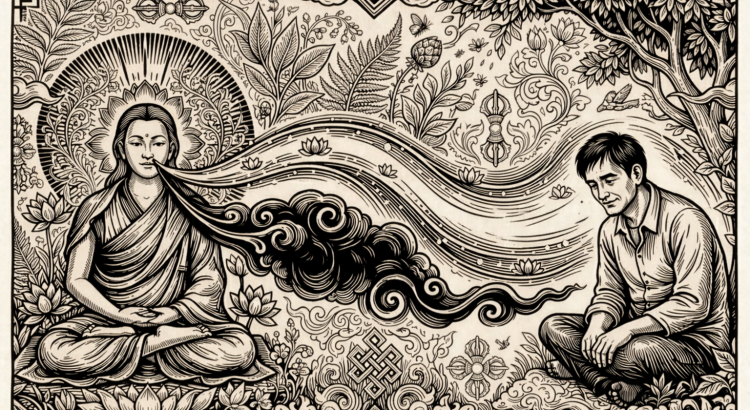
I visualize myself in front of me, as I was that night, in that contracted state. I see the suffering as black smoke, and breathe it in on my in-breath. On the out-breath, I breathe out light, and he is filled with that light. This follows my natural breathing, and I stay with it for a while — at least until there is a noticeable shift in how I relate to that person. I also like to deepen into that shift for a while.

This may bring to mind earlier experiences, sometimes more painful. If that happens, it can be good to do tonglen for myself in that situation too.

I like using tonglen in this way. It shifts my relationship with this contracted part of me. This, in turn, makes it easier to meet others in the same way.

TONGLEN IN GENERAL

I also use tonglen with dream or fantasy characters, and toward individuals and groups in my life and in the world, whether my personality likes them, feels neutral toward them, or has a more challenging relationship with them.

Often, I begin with one or a few, depending on how many are involved in the situation. At the end, I expand to all Earth beings and the Earth as a whole, and all life in Existence – including all the life I have no knowledge of.

Tonglen helps me shift my relationship with anyone and everyone. It helps me find genuine care and love for them. It helps me find in myself what I see in them and in the world in general. It helps me shift my relationship with what all beings and the world reflect in me.

Mainly, it feels good. It feels better than staying in contraction. It helps me shift into a kinder relationship with myself and with others.

THE RICHNESS OF TONGLEN

Tonglen is deceptively simple, and it has a lot of layers and richness to it.

For instance, its visceral nature seems to be helpful for working on preverbal wounds.

As mentioned above, it helps me find in myself what I see in others. We are in the same boat. Others are my mirror. The world is my mirror.

It helps me meet my experience with more kindness, which helps me meet others with more kindness.

It helps me recognize all of this as content of experience, and that I am not fundamentally any of it. It’s all happening within and as what I am.

Dream: Kidnapped

I am on a visit to someone. While she is out, a man comes in and looks around the apartment. He says my friend/the owner sent him to get something. Somehow, I end up going with him to help him (apparently) help her with something. While in his car on the highway, I realize I am being kidnapped. I plan on taking a photo of him and put it on social media, send to friends and the police, and then let him know. Since he is driving and won’t be able to get off the highway any time soon, I also plan on alerting other cars, and if possible make him stop there on the highway.

Yes, I am sometimes kidnapped by parts of me. They sometimes go down a metaphorical highway to some unknown and unpleasant destination. And it is good to let me, other parts of me, and other people in my life, know when it is happening, as a kind of insurance. It’s less likely to come to the worst conclusion if we all know, and we all know we know.

How does this look in practice?

(a) Something in me is triggered. A wounded part is activated, frightened, and reactive. It wants to protect me.

(b) I am on my way to an unpleasant destination by being caught up in, identifying with, and acting from that hurt part of me.

(c) When I notice, I let me know what’s happening. I am caught in an issue, and if I act on it, it will not be wise or kind, and it will have consequences for me, others, and relationships. Sometimes, very unpleasant consequences. Even if I am able to rein it in, it still has an edge to it, although that’s better than going with it fully.

I can let others in the situation know what’s happening, if I am comfortable with it and it seems wise. I notice I am caught in an issue, and I don’t want to act on it. Maybe it’s better if we do this another time. That reduces the chance of me actually going down that road to its destination.

A few more things to explore:

Who did I visit? A middle-aged woman I had some kind of business connection with, and someone I trusted but hadn’t known for long.

Who kidnapped me? A well groomed middle-aged man in a blue suit. He had his image in order.

Connect with the grown-up

My wife and I have wounds, as we all do, and we are both probably on the more traumatized end of the spectrum. And sometimes, we – one or both of us – indulge in surfacing wounds.

These days, when that happens, we remind each other: Connect with the grown-up.

It works. It’s a reminder for both of us.

It reminds us of what we already know: We are indulging in immaturity and wounds. We know better. We have a more grown-up side that we can connect with, and that we – somewhere in us – want to connect with.

It helps us step back, let things calm down, and connect with our more mature self.

And that creates a new pattern. We remind each other, which helps us remind ourselves. We act differently, and that makes it easier to continue to shift out of immaturity in this way.

The layers of who and what I am

I keep noticing the many layers of what I am in daily life. It’s always new, fresh, seamless, and lived.

And if I want to put it into words, I usually go to the distinction between who and what I am, and some distinctions within each of those.

WHAT I AM

As what I am, I am capacity for any and all of the always changing content of experience. This includes anything connected with this human self, any idea of a doer or observer, and so on.

I am this awake space that everything happens within and as – these hands, this screen, the music, the sun coming through the window, the fresh air, the sound of the birds, the marks appearing on the screen, the thoughts appearing, and so on. A thought may call this consciousness. I am consciousness and the consciousness I am takes the form of any and all content of experience.

I am all of this changing content of experience, this field of experience that’s ephemeral and always fresh and new. I don’t notice change directly, only by comparing mental representations of what just was to what is (and that too just was).

WHO I AM

This human self appears within the seamless field of experience. He lives his own life.

He is around quite often during waking hours. He is the one human being I have inside information about – what he sees, hears, senses, thinks, and so on.

He has innumerable sides and parts. He seems to be as rich as the wider world. Whatever I see in the wider world I can also find in him. Whatever story I have about someone or something, I can turn it to this human self and find genuine and specific examples of how it’s true.

He has wounds, traumas, hangups, and painful beliefs. These are all parts of him. These color his perception and life even when they are not triggered or activated.

Through working on these, I also notice that his healed and whole version is inherently and ordinarily kind and wise. Wounds, hangups, and traumas sometimes cover this up, especially when activated, and that’s part of the human experience too.

SEEING MYSELF IN OTHERS

I have explored this for a few decades now, often in some detail, and it’s always changing and it becomes visceral in always new and lived ways.

This colors how I see others.

When I see a “conscious being”, I know that they very likely are consciousness. To themselves, they are consciousness and the world, as it appears to them, happens within and as the consciousness they are.

I know they have innumerable parts and sides to them. What I see, what the world sees, and what they are aware of, are just some ideas about a tiny fraction of the richness that’s there.

If I see reactivity and trauma behavior, I know that’s on the surface. It comes from the system trying to protect itself, and I recognize it from myself. I have that in me too. Most – almost all? – trauma is intergenerational and collective. It’s passed on through generations and it’s passed on in society and through our culture and civilization.

I also know that who they “really” are, if they were healed and whole, is someone who is naturally and ordinarily kind and wise. Of course, that may just be there as a potential and it’s not something I can necessarily count on in daily life.

And, of course, my personality also operates from other conditioning – from this culture, the family I grew up in, and so on – so that too colors how I see myself and others.

Willem Dafoe: I try to not get stuck

Yes, we are not really any of it – ideas, viewpoints, identities, roles. These are all positions we can take and explore. Some are helpful in some situations and others in other situations, they all enrich our lives, and it’s good to find some fluidity with it and hold it all lightly.

Of course, that’s easier said than done. When we come from fear, wounds, and traumas, we tend to find and create a position we hold onto in order to feel safer, and when that position is threatened, it feels like we are threatened. It can feel like a matter of life and death.

WITH A LITTLE MORE DETAIL

Said another way, with a little more detail…

Roles, views, identities, ideas, and so on are clearly not what we fundamentally are. They come and go. In one situation, we take one role, in another, another role. In one conversation, we take one view, in another, another view. This also changes over time. When I was ten I used another set of views, identities, and roles than I do now.

And yet, we can feel that it’s what we are. Parts of us hold onto a certain viewpoint – which is all an identity, role, or idea is – in order to find safety. It feels safe to retreat into a certain viewpoint. It may be familiar. It’s known, to some extent. It allows us to not have to investigate so much. When that happens, we identify with and as that viewpoint. In our own experience, we become it.

That means that anything that seems to threaten that viewpoint – anything that goes counter to it, disproves it, questions it – feels like a threat to what we are. It can feel like an existential threat.

It’s good to notice, it’s good to remind ourselves of what’s going on, and it’s good to invite in more fluidity – through healing, identifying and questioning the viewpoints, and so on.

To the extent we are able to find fluidity with it, it brings less stress to our lives, it allows us to respond more appropriately to different situations, and it can enrich our lives and our experience of ourselves immensely.

WHAT’S GOING ON

And said yet another way, from another perspective…

MY NATURE

To myself, I am not fundamentally these viewpoints that come and go. I am not fundamentally anything within the content of experience since it all comes and goes, including any ideas of this human self, an observer, doer, and so on.

I find I am fundamentally something else. I am what it all comes and goes within. I am this awake space that the world, as it appears to me, happens within and as. This is not a special awake space, it’s the awake space that likely all “conscious beings” are to themselves.

NOTICING ITSELF OR NOT

The consciousness I am can notice itself, and the world as it appears to me as itself. It’s learning to notice itself through changing states and experiences and allowing this human self to live within that context.

The consciousness I am can also take itself to be something within the content of experience. It can take itself to be a viewpoint or a set of viewpoints. This works only to a certain extent, although it can seem convincing if it’s able to distract itself enough from noticing its nature.

PARTS OF ME CAUGHT UP IN VIEWPOINTS

There is another wrinkle here.

This awake space can notice itself, and even notice itself through changing states and experiences, and there are still many parts of me – many parts of the psyche – that hold onto viewpoints for safety.

Parts of me identify with viewpoints to find safety, and that’s how wounds – hangups, trauma, or whatever we want to call it – are created and maintained.

EXPLORING IT

One of my favorite ways to explore this is the Big Mind process. Here, I can notice and explore my nature, and I can also explore the many different viewpoints possible for me, including the ones parts of me hold onto for safety. I get to know them, how my personality relates to them, how this human self can relate to them in a more constructive way, create partnerships with these parts of me, and so on.

I also like to explore this through The Work of Byron Katie. I identify a stressful thought, which shows me that there is some identification with the view of that thought. I explore what happens when a part of me holds onto it. I get a sense of how it would be, here and now, without holding onto it in that way. And I get to explore the genuine validity in the many reversals of the initial thought, in contrasting perspectives on the same topic.

Apart from that, any kind of healing helps us – and parts of us – soften the grip on these viewpoints.

IT’S ALL ABOUT VIEWPOINTS

As mentioned above, any role, identity, opinion, idea, and so on are essentially viewpoints.

Any thought comes with a viewpoint. If it’s held lightly, it’s easy to shift between several viewpoints and find the genuine validity in them all, and a bigger picture that holds the limited validity in them all. If it’s held in a strong grip, it becomes something to defend, prop up, use as a weapon, hide behind, and so on.

THE RICHNESS IN IT

There is an immense richness in all of the possible viewpoints available to us.

Any idea is a viewpoint, any viewpoint is a new and different way to look at something, and it’s all in me.

The more viewpoints I explore and am familiar with in myself, and the more fluidity I find among them, the richer my life is – in the world, in perception, and in my experience of myself.

A SIMPLE PRACTICAL POINTER

When I notice I hold onto a view in a fixed way, I may not be able to shift out of it immediately, but I notice and I make a mental note of it. When things have calmed down a bit, I explore it.

What are some of the other views here? What’s the validity in each of them? How would it be to acknowledge and live that too? How would it be to find a little more fluidity here?

How would I live my life differently, here and now?

How does it enrich my life?

EASIER FOR MY NATURE TO NOTICE ITSELF

This exploration not only enriches my life by bringing in the possibility of perceiving and living from more viewpoints. It enriches my life because it makes it easier for my nature to notice itself.

Holding onto viewpoints is fine. It’s natural and ultimately innocent (although it comes with stress.)

And it can also be a distraction from my nature noticing itself. It’s a distraction from noticing what’s already so obviously here. This awake space that the world, as it appears to me, happens within and as.

I don’t really miss people, places, or situations, I miss how I was then

If I notice I miss a time in my life, I know I don’t really miss the people, places, or times.

I miss how I was then.

More accurately, I miss how I imagine I was then. I miss my own mythology about it.

That’s good news since it means I can find it here and now.

FINDING IT HERE AND NOW

How do I imagine I was then? Can I find it here and now?

How is it to shift into the part of me that’s like that now? How is it to connect with that part of me? To perceive and live from that part of me? How does that part see me? What advice does it have for me? What can it contribute? How can I bring it more into my life here and now? How can I create a more intentional partnership with it?

Since I am most familiar with the Big Mind process and Voice Dialog, that’s what I tend to use to explore this. If I was more familiar with other forms of parts work, I would likely use that. Anything goes as long as it helps me find and live from and as that part here and now, and then find ways to bring it more into my daily life.

A COUPLE OF OTHER WAYS TO EXPLORE IT

I can expore this in other ways too. What stories do I have about that person, place, or situation? If I take one of those… Is it true? Can I know for certain it’s true? What happens if I hold those as true? Who would I be, here and now, if I couldn’t have those stories? What do I find if I turn those stories to myself and find genuine and specific examples of how it’s true? What genuine and specific examples can I find of how it’s true here and now? This is The Work of Byron Katie which, under guidance of a skilled facilitator, can invite deep shifts.

What do I hope to get out of it? What do I hope to get out of that? And that? If I follow this back to the most essential, what do I find? Can I find that here and now? This is an inquiry suggested by Adyashanti and I find it very clarifying.

Can you be awake and still hold onto fixed views?

A recent post reminded me of a question: Can the consciousness we are recognize itself (be awake to itself) while still holding onto fixed views?

I can only speak from my own noticing and experience and it’s all provisional.

To me, as so often, the answer seems to be yes, no, it depends, and it’s complicated.

YES

Yes, it seems it can recognize itself in a general sense, while many parts of our psyche still hold onto fixed views. Consciously, our psyche may also hold onto fixed views in some areas of life.

The consciousness we are recognizes itself, and different parts of our psyche holds onto fixed views that may or may not match our conscious view.

Our psyche may hold any kind of fixed view: political views, worldviews, ideas about how life should be and how people – ourselves and others – should behave, identities of being a victim or unlovable or anything else, and much more. Any thought can become a fixed view.

This seems to happen out of habit and to protect this human self. It’s from confused love. It comes from and creates a wound.

These are parts of us that are not yet onboard and aligned with the awakening. They live in and create their own world, and will inevitably color the perception and life of this human self.

NO

We can also say no, it’s not possible for both to be true at the same time.

If parts of our psyche operate from fixed views, they are not aligned with the awakening.

If we consciously adopt those fixed views, we are not aligned with the awakening.

The consciousness we are identifies with the viewpoint of the fixed story. It takes itself to fundamentally be something within the field of experience. (It pretends, for a while, it is.)

When that happens, the consciousness we are is mistaken about its nature. It doesn’t clearly recognize itself as what it all happens within and as.

It may fluctuate between (a) recognizing itself more clearly while the fixed views goes into the background, and (b) getting caught up in the fixed views and not recognize itself so clearly.

IT DEPENDS & IT’S COMPLICATED

A lot of this depends on definitions, and it’s nuanced.

In my experience, both of the views above are valid in their own way and neither is the full picture.

The yes above seems accurate in a general sense. Over some time, both are true, and they can even be true at the same time if there is not such a strong conscious identification with the fixed view.

The no is also accurate in that there tends to be a fluctuation between the two, with one in the foreground at a time.

IT’S A PROCESS

The consciousness we are noticing itself is not a process. It’s either here or not.

Just about everything else is a process.

To keep noticing through the day, and independent of changing experiences and states, is a process. It’s a new habit that forms and deepens over time.

To notice the different parts of our psyche holding onto fixed views is a process. Recognizing the signs, identifying them, inquiring into them, and so on, is a process.

To invite them to heal and align with our nature recognizing itself is a process. It involves learning to relate to them in a more conscious and intentional way, with more kindness, understanding, and support.

In short, for all the different parts of us to come onboard with the awakening is a process. It’s ongoing. It likely doesn’t have a finishing line. (At least not in this life.)

Michelle Obama: People who are truly strong lift others up

Let’s be very clear: Strong men – men who are truly role models – don’t need to put down women to make themselves feel powerful. People who are truly strong life others up. People who are truly powerful bring others together.

– Michelle Obama

I wholeheartedly agree with this sentiment, and it’s clearly true. We don’t need to put others down if we are comfortable with ourselves. If we are in the habit of being kind to ourselves, we lift others up and bring people together.

At the same time, I honestly don’t know what strong means in this context. I know what strong means in terms of physical strength, but not so much here. I suspect it may mean what I hinted at above – to be comfortable with ourselves, habitually kind to ourselves and our experiences, perhaps even resilient.

Some folks seem to have a fixation on strength. I assume it’s compensation for something, for feeling “weak” whatever that means to them. Of course, the solution is not whatever our idea of “strong” is. The solution is to examine our stressful stories, find more comfort with ourselves, and learn how to relate to ourselves and our experiences with a little more kindness.

The solution is to give to ourselves – directly and through the situations and people we seek out – what we really want, which is – in my experience – love, acceptance, and support.

How are you?

I often get a bit confused when people ask me this question.

Do they mean it sincerely? Is it just a polite phrase?

Which aspect of the immensely rich world that’s here now should I highlight and put words on?

Often, I default to “pretty good” and I may add a couple of things happening in my life. If they share from their own life and/or seem interested in what’s happening here, I may share more.

Sometimes, something in me – an old wound – may be triggered and I may share something about that.

THE DIFFERENT ASPECTS HERE

The reality is that too much is happening at once.

As what I am – as consciousness forming itself into all of it – it’s fine. It’s one taste as they say.

Unless attention is distracted by something else, a painful story, there is a quiet joy here from my nature noticing itself.

As a human self, there are innumerable parts here all experiencing this human self and the world in different ways. Just like in parts work, I can put attention on any one of these and speak from or about this part of me.

If a wound is triggered in me, then that part of me is typically more in the foreground. Sometimes, it’s tempting to put words on what’s happening, whether I speak as if I were that part (less mature) or I speak about it and what I notice (more mature).

There is an immense richness here and attention determines what has focus and comes more into the foreground.

HOW OTHERS MAY SEE IT

Others may take what I happen to put words on as (more or less) the whole, especially if they have not examined this for themselves.

If they have, they know that what’s highlighted is just one part of an immensely rich world. They may also know that it’s all very likely happening within and as consciousness for me. It’s all already one taste, whether I notice or not.

Considering that others may over-emphasize what I happen to put words on, it’s good to be somewhat conscious about what I focus on and how I frame it.

HOW I SEE OTHERS

This is similar to how I see others.

I know they are far more than whatever they happen to mention. Their life is far more rich. Their psyche is far more rich. Who and what they are – as a human and consciousness – is far more rich.

I know that there is the potential for healing and finding wholeness. I know how it may look and how they may relate to whatever they talk about from healing and wholeness.

I know they, to themselves, very likely are consciousness just as I am. I know their world happens within and as the consciousness they are, whether they notice it or not. There is one taste, even if they may not notice.

Here too, my attention determines what’s in focus for me of all of this and what comes into the foreground for me about the other. Attention is a big part of my perception.

Note: This topic came to mind and I remembered an article I wrote on this topic a while back, in 2008. I chose a slightly different angle here to mix it up and add something to it.

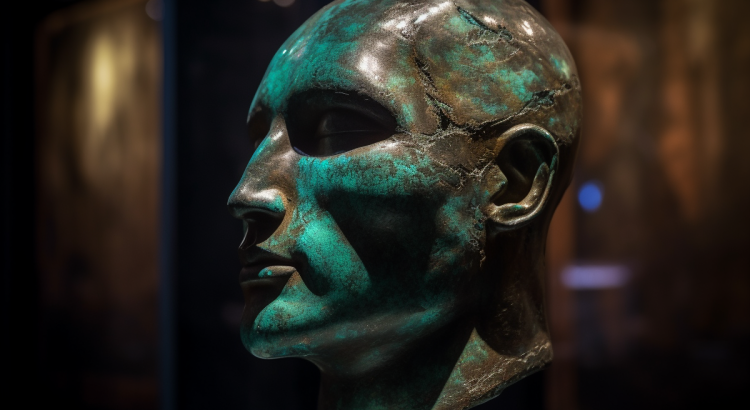
The image is by me and Midjourney and I am not aware of a strong connection between the image and the topic of this article, apart from that it looks a bit like a trickster and consciously playing with facets of who and what we are is a little tricksterish.

Our Season (Korean movie) & using imaginary conversations for healing

I watched Our Season by Yook Sang-hyo on a plane ride yesterday and enjoyed it a lot.

In the movie, a daughter and mother have a strained relationship, the mother dies, returns in spirit form to see how her daughter is doing, sees that she is filled with regret and is making bad life choices because of it, and wants to help her. She finds a way to spend an evening with her daughter and they find resolution. The daughter is able to move on with her life and make use of her opportunities.

IMAGINARY CONVERSATIONS FOR HEALING

It reminds me of one of my favorite ways to explore healing.

Imagine the other person as whole, healed, wise, and kind, and wishing the best for everyone. (When we are whole and healed, we are able to tap into our wisdom and kindness, and we naturally wish the best for everyone.)

Have a conversation with that person. Have the conversation you really wanted to have with them, from receptivity, understanding, and wishing the best for each other.

Talk about what was difficult, ask questions, learn how that person experienced it and how they see it differently now from a healed place, share your experience, apologize, share what you wish for each other.

A FEW MORE DETAILS

I have used this with issues from childhood, especially with schoolmates from that time. It led me to understand them better and where they came from, and they understood me better. It shifted something in me and I see that situation quite differently now. (I understand that they may have felt threatened by my passion for learning and being a good student. I see how I used it to feel better about myself, and sometimes even better than them which gave them fuel for resentment.)

It is an imaginary conversation but it’s still real enough. It’s the type of conversation we would have if we were both whole and healed and came from our wisdom and kindness. It is a way to access the different parts of me represented by these people – me and the others. It is a way to change how I perceive them, me, and the situation. It is a way to find healing.

As with everything else, it’s all happening within and as what I am. The consciousness I am forms itself into all of it.
Of course, what’s missing is the unique perspectives and knowledge that the actual people would have, and actually having the conversation with them. Sometimes, it’s not possible to have that actual conversation since the other is no longer in our life. Sometimes, we or they may not be ready. Sometimes, doing this in imagination can lead to doing it in real life.

Sometimes, doing it this way has to be enough and can lead to resolution. We get to live and experience one way it would play out if we both were healed and came from a place of understanding, kindness, and well-wishing.

Read More

Stephen Fry: We are not nouns, we are verbs

We are not nouns, we are verbs. I am not a thing – an actor, a writer – I am a person who does things – I write, I act – and I never know what I’m going to do next. I think you can be imprisoned if you think of yourself as a noun.

– Stephen Fry

THE FLUIDITY OF ROLES AND IDENTITIES

One of the advantages of writing and acting is that you get to imagine yourself into a lot of different roles and identities, and that, in turn, makes it easier to see that we are not inherently any of the different roles we play in life or the labels we or others put on us.

We are far more fluid than that. We can play any number of roles and find the truth in any number of labels.

Working with therapy can do the same, whether we take the temporary role of a therapist or client.

That’s one of the reasons I love exploring subpersonalities and dreams. It’s a reminder that I can take on any role and perspective and find the limited validity in any label.

THE MORE ESSENTIAL QUESTION

All of this brings up another more essential question: If I am not inherently any role, label, or identity, what am I?

There is a sense of something more essential, a thread that continues through it all. What is that?

What I find is that my human roles and identities are useful, although they are not what I more essentially am. When I look in my first-person experience, I find I more fundamentally are something else.

I am what all of this, and the whole field of experience, happens within and as.

I am what a thought may call consciousness, and the world, to me, happens within and as the consciousness I am.

Even more fundamentally, I am capacity for all of it – consciousness, content of experience, roles and identities, taking myself as it or not, and so on.

My multi-faceted self

I have noticed that if I share one aspect of the richness that’s here, that’s what people tend to latch onto, so it seems important to put it in context and mention it’s just one of many things happening.

WHAT I NOTICE

Right now, I notice…

Sensations in my face, throat, chest, solar plexus, all towards the front of the body. Thoughts saying this is anxiety. A story of what it is about (my parents not having long left, losing my physical safe base in Norway, fear of not having enough money, fear about the future). Noticing these sensations are not very strong, maybe 3 out of 10. Noticing that the stories are mental images and words.

Sensations in my throat, face, and chest. A story saying this is a quiet joy and exitement. A thought saying it’s about life, enjoying the morning, being alive. Noticing that these sensations also are not very strong, about the same as the others. Noticing that these sensations may partly be the same as above, minus the solar plexus.

Sight and a thought saying it’s my to-do list. Sensations in the solar plexus. A thought saying it’s a dull sensation, a contraction. Mental images of me doing things in the house to get it ready for sale. Thoughts wondering if I will be able to do it all and do it in time. Thoughts about pressure from others. Sensations in my chest and face.

Sight and a thought saying it’s Simba the cat, and that he is sleeping on the carpet on the floor close to me with his head on a sheep skin. Sensations in the chest. A thought saying it’s joy. A thought saying I feel honored that he is here with me. A thought saying I love him. Noticing that these sensations too are quite mild, about the same as the rest.

Thoughts asking: What is here now? What is true now? Thoughts saying I am sitting here in this room. It’s a warm and comfortable room. Simba sleeps close to me. It’s raining and a bit windy outside. I have a free day, although I have a menu of things I can do if I am moved to. (Cleaning some berries from the garden and put them in the freezer. Put some of my books in storage boxes. Possibly sort out the most important books and put them in their own box.)

Thoughts saying I have the land in the Andes and the house there. I have a wife that loves me. I have friends and family that love me. Thoughts saying that if it all falls apart, I can likely still go to a Zen center – the one in The Netherlands or Northern Spain – and do what I am called to do. Thoughts saying I can do that anyway, and there is an impulse to do so. I can do it as soon as some of the major projects are finished, like selling this house. A thought saying I can go deeper in my own explorations here and now. Noticing it feels good.

I can keep going. Some is here already. Some comes up easily through associations and in different situations.

RICHNESS

I can find an apparently infinite richness in me.

I can take any label, shift into the part of me that the labels fits, take on the role of and become that part, and explore it by speaking and moving from and as that part of me.

I can take any story I have about someone or something, turn it to myself, and find genuine and specific examples of how it’s true.

The world, to me, happens within and as my sense fields. It happens in sight, sounds, sensations, taste, smell, thoughts, and so on.

This world, to me, is a kind of island of phenomena floating in space. This human self and his surroundings is an island floating in space.

I notice this human self is here, and find myself as what this human self and the world happens within and as.

I notice the awakeness that’s here that takes all of these forms.

The world, to me, is like a dream. It happens within and as the awakeness I am.

A thought calls it consciousness. The consciousness I am takes all the forms of waking life and dreams. It seems I have never known anything else.

WHAT WE SHARE

How much of this do I share with others? Not much, obviously. In some situations, my mind picks out something and it becomes the focus for a little while.

I notice that with some people, and in some situations, the focus can be on what’s unresolved and distressing in me. I suspect this is happening because of the trauma from some of what has happened during the dark night and the deep trauma that has been surfacing. It helps to notice it’s just a small aspect of the richness that’s here.

Then there is also the question “how are you?”. With my friends, it seems it’s mostly not just a polite phrase and they want to know.

In one sense, the question doesn’t quite compute. There is far too much richness to say, and it’s all happening within and as what I am.
In another sense, I understand where the question is coming from. Most of the time, I say “I am good” or “mostly OK”, or I say “many things at once” which is accurate. If something is coming up strongly and it seems appropriate, I may share that there is some anxiety or sadness coming up or whatever it is.

Sometimes, I also go into stories about it, although most of the time, that feels a little bit out of alignment unless it has a practical purpose. Why? Becuase it invites both me and the other to take it more seriously than is sometimes appropriate or helpful.

Shift into and notice what I am made of: a variation of befriend & awaken

I woke up noticing anxiety this morning. That has happened for some days now, and my sense is that this is old anxiety, perhaps triggered by things now.1

Through grace, I started exploring it.2

Thank you for protecting me. This is a reminder that it is protecting me. It is here to take care of me. It comes from love. It’s my psyche trying to protect me.

What are you made of?

I notice it’s made of the same as everything else in my world, consciousness. It’s easy to notice it consciously and “globally”, but not all parts of me know it (yet) so I take time noticing. I invite more parts of me to join in with the noticing.

This feels slightly, “outside in”, so I shift more intentionally into the anxiety. I feel it, become it, notice I already am it. Then I ask the question again. What are you made of? As anxiety, I notice what I am made of and rest in and as that noticing.3

This is just a subtle shift4, and it can make a lot of difference. It makes it more visceral. In the visceral is where the magic happens.

A VARIATION OF BEFRIEND & AWAKEN

It’s a slight variation of the befriend & awaken process.

I notice something come up, parts of me my habitual patterns may wish to push away.

I shift into and find myself as it.

I notice what I am made of.

I rest in and as that noticing.

I revisit it as those parts come up in daily life. It may be just a brief moment while I am doing something else, or it may be through setting aside one or a few minutes to explore.

NOTES

(1) When something comes up – anxiety, sadness, grief, anger, reactivity, compulsions of any kind – it’s worth exploring if it’s rooted in something old. Often, it is.

(2) Grace is what allows it to happen. Even habits come from grace. Remembering that it’s a possibility, and actually doing it, are both grace.

Distracting myself from it is more uncomfortable for a few different reasons: It doesn’t make it go away, it just stays in the background. I know what I am doing, and that it doesn’t really make sense. Going into distractions usually means I am doing something I otherwise wouldn’t, so I do something less meaningful and fulfilling and less in line with what’s more deeply rewarding to me. So I am always grateful when grace allows me to explore and be with it instead.

(3) The two first parts – thank you and what are you made of – is what Pamela Wilson and others talk about. The second part, shifting into being it, comes from certain approaches to parts work, including the Big Mind process and Genpo Roshi. Really, it’s just very natural and comes from the wisdom in each of us.

(4) The shift is a shift in emphasis and it intentionally goes against old habits. My old habits wish to push the anxiety away, so instead, I go into it and find myself as the anxiety.

This is a very simple practice, and it comes from a lot of time spent in other kinds of explorations: Basic meditation, headless experiments, the Big Mind process, and parts work and dialog in general. I am not sure if that’s necessary for this much simpler exploration. It probably isn’t. But it’s been part of my journey.

Read More

Shapeshifting and what it says about our more fundamental nature

I am reading The Book of Symbols: Reflections on Archetypal Images and love the content and format, and just about every paragraph is a pointer for several types of explorations.

For instance, there is a chapter on shapeshifting. (One expression of this is shamans experiencing themselves as a jaguar, condor, bat, or whatever it may be during their shamanic journeys.)

A REMINDER OF OUR MORE FUNDAMENTAL NATURE

For me, that’s a reminder of our more fundamental nature.

Yes, in one sense I am this human self. And more fundamentally, I am consciousness. I am the consciousness that this whole field of experience – the wider world, this human self, and anything else – happens within and as.

I can take on any perspective.

I can create an identity out of any perspective and mental representation. I can imagine myself as it, and perceive and feel as if it’s true.

Most of the time, the consciousness we are is identified with and as our human self. Why? Because that’s what others do, and when we grow up we do as others do. If we were connected with the body of a different species, and we grew up in a society where people had that type of body, then that would be our typical identification.

This identification works pretty well in daily life, so most of us don’t have any strong incentives to question it. (It does come with inherent friction and stress since it’s somewhat out of alignment with reality, but most of us don’t realize the root cause of that discomfort.)

The ones who tend to move outside of this typical identification are the outsiders in society, the insane, mystics, and shamans.

HOW WE CAN EXPLORE IT

How can we explore this for ourselves?

The Big Mind process is perhaps the most direct and effective way to explore this. We can explore taking on a wide range of perspectives. If we can imagine something, we can imagine into that perspective. We can explore what happens when we identify with and as a particular perspective. We can even find our more fundamental nature and explore how it all looks from there.

We can also get a taste of our more fundamental nature through the Headless experiments, and explore identities and how we are not – more fundamentally – any of it.

We can dismantle of identifications through The Work of Byron Katie.

We can explore how our mind creates perspectives and identifications through the sense fields and how they combine, for instance, guided by the Kiloby Inquiries.

And there are many other approaches. Just find the one(s) that resonate with you.

MY EXPERIENCE

My path into this was perhaps a bit unusual and had some shamanic elements.

At age, fifteen, something shifted so it felt like the world – any content of experience including this human self, feelings, thoughts, states, and so on – felt very distanced. It all felt very far away. At the time, I had absolutely no interest in spirituality (I was a self-identified atheist), what happened was scary and didn’t make any sense, and the doctors and specialists couldn’t figure out what was going on either.

Already here, life showed me my nature. It showed me that I wasn’t fundamentally anything within the sense fields, within the field of experience. Because of my background, I didn’t get it which is normal and fine.

Almost exactly one year later, there was another shift. This time into oneness. Here, all was revealed as God, Spirit, the divine. The whole field of experience and the consciousness it happened within and as was revealed – as consciousness, Spirit, the divine, or whatever we want to call it.

This didn’t go away and led to an intense process over several years for my human self.

I have continued to explore this – through Buddhist practice, Taoist practice, Christian practice, parts work, several forms of inquiry, energy work, and so on. I even dipped into shamanism a few times, but not seriously. (Although I love it and am very happy people go into it deeply.)


Read More

Dream: My twin brother

I meet someone and it is as if we see ourselves in the mirror. He looks like me, only with shaved head and face, and we also discover that we were born in the same place. We find it amusing and a funny coincidence, like each other, become friends, and are part of the same friend group.

Later, he tells me his birthday, which is the same as mine. He has realized that we are twins, and I am realizing the same. We are moved and happy and realize our lives will never be the same. We have a deep love for each other, and we will be in each other’s lives from now on.

He works with NRK (the Norwegian Broadcasting Corporation) and has a project with the Eurovision Song Contest. A mutual friend of ours has four free passes, and she gives one to me. We are having a lot of fun with the unusual setting and the campness of it all.

This dream may reflect (a) a wish to have a brother like that, and (b) my process of befrending and finding love for myself. (AKA the content of my experience, and all the different parts of me and the parts of me that represents me of different ages.) My twin in the dream is me, and we love each other.

What about the Eurovision Song Contest? I watch it and find it fun and enjoyable, and I did watch some clips from the Eurovision movie a few days ago. I like the campness of it, although the music is (obviously) terrible – and that’s part of the charm. I enjoy going outside of the terrain I am familiar with.

That too is part of finding love for all the different parts of me. Embracing diversity in society go hand-in-hand with embracing the diversity of my experience and myself.

In the dream, my twin looks like Jean-Marc Barr. In waking life, we are somewhat similar to each other although not like twins. I identified with him when I first saw The Big Blue in my early twenties, and the movie made a big impact on me. At some level, maybe because freediving is similar to diving into who and what we are, especially the emotional realm.

In my twenties and thirties, I had fire, passion, and focus similar to his character in the movie. (That took a nosedive when I got sick fifteen or so years ago and the dark night went into a much more intense phase.) Maybe the dream is pointing to refinding that fire and passion? In daily life, there are more moments of connecting with it these days.

Another side to this, which a friend reminded me of, is that Odd Nerdum painted a portrait of me in my early twenties, and he painted me as a twin. He painted two of me.

This felt like another “big dream”, especially as I knew that my life was changed forever.

There is also a synchronicity here: As has happened before, my wife and I had parallel and similar dreams. In this case, she dreamt she was in a romantic relationship with a woman very similar to herself. They fall out because of a misunderstanding and later begin to reconcile. That’s part of any relationship and may reflect her process of befriending sides of herself.

Read More

Befriending our younger selves

My partner and I are both in a process of befriending our younger selves, at a time when that younger self needed support.

For her, it’s relatively early childhood, and for me, it’s early and mid-teens.

I spend time with that version of me that’s struggling and has low self-esteem, social anxiety, feels isolated, not seen and understood, wants to hide, and so on.

I am with him. I sometimes have a dialog with him and listen to him and his fears and dreams. I see him and understand him. I am a mentor to him and share what I have learned from living longer and seeing what’s possible. I invite him to explore how it is to feel loved, connected, and follow his passion.

A few times, I have used tonglen with him. I visualize him in front of me, I breathe in his suffering and confusion as black smoke, and breathe out light that fills him and he becomes that light.

And mostly, I am just with him.

When I check in, I notice how he is changing. There was a noticeable shift relatively early on, and now a slower shift. He needs time to readjust and realign, and that’s more than OK.

Why do I do this? When I look back through my timeline, this was the period with the most confusion and suffering, and who I was then is still with me. He is still a part of me. So it makes sense for me to befriend him and help him heal and find a healthier more enjoyable version of himself.

How do I do it? I have already mentioned a few things. I visualize and connect with him. I spend time with him. I ask him questions and listen to him. I dialog with him. I share with him what I have discovered since. I recognize him as having my nature. (To me, he is consciousness, a form within the consciousness I am.) I allow him to be exactly as he is, and find love for him as he is. I do some tonglen with him, after first asking if it’s OK. I shift into Big Heart and find him as love and bathe him in love and allow him to soak in it and realign within it.

I have done this for a couple of weeks now and will continue since he still appreciates some active support.

Note: This is a general outline and there are a lot more wrinkles in the actual exploration. For instance, I noticed a part of me that doesn’t like this particular younger version of me. (Which is understandable since it was a difficult period of my life.) So I am including that part of me in this exploration. I listen to it. Find understanding. Am with it. And so on.

Contraction and expansion happen within a bigger picture

How do I relate to contracted parts of me?

Do I get caught up in them? Do they fill my metaphorical field of vision?

Or do I recognize them as part of a bigger picture?

And what happens when I do?

THE ESSENCE: IT’S ALL HAPPENING WITHIN A BIGGER PICTURE

It’s all happening within a bigger picture.

Any sense of contractions – bodily and mental – happens within who I am, and who I am is much more than this and much more diverse than this.

Any sense of contractions or expansion happens within and as what I more fundamentally am. It happens within and as the consciousnes I am. It happens within and as consciousness, just like any other content of experience.

And when I notice that, there is a softening of identification with the contracted parts of me. My center of gravity shifts more into the whole of who I am as a human self. And it shifts more into what I am, as this field of consciousness any and all experience happens within and as.

CONTRACTED AND RELAXED PARTS OF ME

My muscles contract and relax, and there are some chronic contractions in some areas. (Mostly shoulders, and a bit in calves and jaw.)

My mind also contracts at times. Part of me takes stressful thoughts as true and are contracted. Other parts are more relaxed and expansive. And different situations trigger one or the other or a mix and bring them to the surface.

AT MY HUMAN LEVEL, IT’S HAPPENING WITHIN AND AS ME

At a human level, all of this is happening within me.

Some parts of my body are relaxed. Some are more tense and contracted.

Some parts of my psyche are relaxed. And some are more contracted and tense.

It’s all happening within a bigger picture.

AT A MORE FUNDAMENTAL LEVEL, IT’S HAPPENING WITHIN AND AS WHAT I AM

And more fundamentally, it’s all also happening within and as me.

At one level, I am this human self in the world. That’s how most others see me, what my passport tells me, and so on.

And more fundamentally, I find I am something else. In my first-person experience, I find I am more fundamentally capacity for all my experiences. I am capacity for this field of experience as it is now.

I am what the sense fields – sights, sounds, smell, taste, sensations, mental imaginations – happen within and as.

To myself, I am consciousness, and the world, as it appears to me, happens within and as this consciousness.

I am what any and all experience happens within and as.

I am what any sense of contraction, relaxation, or expansion happens within and as.

WHEN I DON’T NOTICE THIS

If I don’t notice this, it’s easy to get caught up in whatever happens to be most on the surface.

A physical contraction gets strong and comes to the foreground of experience, and it fills my experience.

A mental contraction gets triggered and comes to the foreground, and I get caught up in it.

I get lost in what’s most salient and miss the bigger picture. I get caught up in it and perceive and live as if it’s all there is.

WHEN I NOTICE THE BIGGER PICTURE

And when I notice the bigger picture, it’s different.

A contraction may be strong and in the foreground, and I notice it as part of a bigger field.

At my human level…

I notice it’s a part of my body, and other parts are more relaxed.

I notice it’s a part of my psyche, and other parts perceive things differently and are more relaxed.

I notice it happens as one of many parts of who I am as a human being.

This helps me not get so caught up in it. I notice it as an object within the content of experience. I can relate to it more intentionally.

As what I more fundamentally am…

I notice it’s happening within and as the consciousness I am.

I notice it’s happening within and as what I more fundamentally am.

I notice I am fundamentally capacity for it.

This too helps me not get so caught in it. It helps me recognize that its nature is the same as the nature of everything else in my field of experience. It helps soften and release identification out of it.

PSYCHOLOGY AND BEYOND

This is something we use in conventional psychology and therapy. It helps us when we are reminded of the bigger picture. When we notice that contracted parts of us are parts of us and not all of what we are. It gives us a mental distance to it, and it’s a little easier to not get caught up in it.

And it’s also something we explore when we investigate what we more fundamentally are. Here too, the bigger picture helps soften identification and shift our center of gravity into the bigger picture.

Exploring who we are (psychology) and what we are (spirituality) is not so different here. We find very similar dynamics.

Read More

Dream: I will inherit a house important for the extended family

I marry into a large and social family where most of them get together almost daily in a large house. I am told they have chosen me to one day inherit that house, and say I am honored and will continue the tradition of hosting the gatherings in the house. The family is of all ages, the interactions are free and healthy, and I love being part of it. (Although also feel a bit like an outsider since I am not used to it from my own birth family.)

This dream mirrors my previous one of soul friends. In this case, it’s a large and warm extended family getting together informally daily in a large house. I love it and feel grateful to be part of it.

Why was I chosen to inherit the house?

In the dream and now, my sense is that it was their way to show me that they trust and love me and want me to feel included. They hand over the responsibility to me, knowing I will continue the tradition and do what’s best for the family as a whole.

Why did I dream this now?

Maybe because I am with my birth family in Norway, and wish it had been more like this. (And loved it at the times it was more like this.)

Maybe also because I love my extended family in Norway, and have a lot in common with most of my cousins.

And definitely also because I did marry into a family like this, a year and a half ago in Latin America. The dream reflects my waking life there, and I wish to be far more part of it. (Especially as I learn better Spanish.)

In waking life, I was responsible for us buying a large piece of land where my wife’s father and mother will build their houses, and perhaps also others. I have always wanted to be part of an intentional community like that, where we live on a large piece of land and have separate houses.

In general, the dream may nudge me to host gatherings more and bring this more into my life. (I used to do it a lot more than I have over the last few years, and the change has mostly to do with my health.)

What does it mirror in me?

Dreams often mirror waking life and more directly my inner life.

The dream may reflect a wish to be that kind of house and host. To have the inner environment to host these types of warm and social gatherings of many different parts of me.

It may reflect that this is already happening and that my system is moving in that direction.

How can I be a better host for my inner community?

Read More

Adyashanti: The ego is waiting for a cosmic finish line: “I’ll be really really conscious so I can cross the finish line, then I don’t have to be conscious anymore”

The ego is waiting for a cosmic finish line: “I’ll be really really conscious so I can cross the finish line, then I don’t have to be conscious anymore.”

– Adyashanti

This fits my experience.

A part of me is scared and tired of having to deal with things all the time, so it wants it all to be finished. It wants the challenges to be finished. This can take many forms, including ideas about awakening or enlightenment being that finishing line.

That’s natural and innocent.

And it’s good to be aware of. It helps me see that this is a part of me. It feels scared and tired. It wishes for some comfort and care. And I can give it that. I can be with it. I can understand. I can find love for it. I can notice that its nature is the same as my nature.

What is the “ego”? As far as I can tell, it’s the dynamics that happen when we – or a part of us – hold a story as true. The oneness we are takes on the perspective of the story, identifies with and as it, and perceives and lives (to some extent) as if it’s true. That’s inherently stressful since it’s out of alignment with reality. That stress may lead to that part of us wanting it all to be over, perhaps through a kind of cosmic finishing line.

These parts of me wish for liberation. And I am the one who can give it to them. I can be their friend and guide.

I can be there for them. Listen to the painful story they operate from. Identify the painful story. Examine it to find what’s genuinely more true for me. Feel what these parts of me are feeling. Meet it with kindness and love. Recognize that these parts of me come from love, they wish to protect me. Give them what they really want. (Often a variation of something simple and universal like a sense of safety, being loved, understood, or supported.) Recognize that their nature is the same as mine. (AKA consciousness.) And rest in and as this and allow that to transform me, it, and our relationship.

Visualize the other as healed, whole, wise, and kind, and have a dialog

Dialog is an important part of many approaches to healing.

And this includes a dialog with parts of ourselves, or with people from our past, in the world, creatures from mythology, dream characters, animals, plants, landscapes, or anything else. These all represent current parts of ourselves.

THE PROCESS

I have a version I find very helpful:

Identify someone from your past (or present) you have a difficult or unresolved relationship with.

Visualize that person as healed, whole, wise, and kind. Visualize a mature version of that person.

Dialog with that person. Tell her or him how you feel about your relationship or what happened in the past. Listen for their answer. Continue with the dialog as it naturally unfolds.

Ask them about their experience and listen to their answer. Ask them how they experienced you. Ask them how they would like your relationship to be. And so on.

Keep it real and authentic, and remember that the other is stably healed, whole, wise, and kind.

You can also spend time in silence with that person, or hug and rest in that for a while.

Continue until you experience a deeper resolution and perhaps even peace.

AN EXAMPLE FROM MY OWN EXPERIENCE

I did this with some bullies from school and was surprised by some of what they said, how authentic it all felt, and the sense of resolution that came out of it. (They told me about their own pain from family problems, that they saw me as rejecting them, and so on.)

It obviously didn’t heal everything around the situation. In response to the original situation, my mind created deeper coping patterns (wanting to hide, etc.) that require more exploration. But it did shift how I consciously relate to the original situation and people.

When I look back at it now, it feels and seems quite different. I have far more peace with it.

HOW DOES IT WORK?

I imagine some may say: But it’s not true. The other person is not like that. It’s fake. If I do this, I would just deceive myself.

Yes, it may not be true in a conventional sense and in the world. The other person may not be like that. And that’s fine. This is about your own inner process.

The other person represents a side of you. And that side of you has the potential to be whole, healed, kind, and wise. You are tapping into that potential. You are helping that side of you find how it is when it’s more whole, healed, kind, and wise, and you get a sense of how it is.

Also, this is about gaining insight into the situation. How would a whole, healed, kind, and wise person see the situation? What would she or he say? What would that person say, if she or he was healed, kind, and mature?

Finally, we all have the potential to be that way. All the different sides of us have that potential. And each of us as an individual has that potential. It’s in us all. This exploration reminds us of that.

Befriend & Awaken: The essence of many healing and awakening traditions

The befriend and awaken process is what I use the most these days as a practice.

It’s simple, direct, and effective. It includes essential elements from traditional psychological and spiritual approaches.

And it goes straight to the heart of emotional healing, awakening, and embodiment.

It allows for healing and relaxation of parts of me caught up in painful separation consciousness. It allows more part of me to align with a conscious noticing of my nature. And it makes it easier for me to live from this noticing in more areas of my life and situations in my life.

Here is a very brief outline.

NOTICE THE CONTRACTION

I notice a contraction.

I recognize it through one or more of the telltale signs: reactivity, defensiveness, one-sided views, feeling like a victim, being paralyzed, and so on.

I notice the contraction in the body. I notice the sensations. Feel the sensations. Recognize them as physical bodily sensations.

I rest with this noticing.

A PART OF ME

I recognize the contraction as a part of me.

It’s a part caught up in painful separation consciousness. It’s caught up in and operates from painful beliefs, identifications. It’s wounded.

Although it may seem big and overwhelming when I am caught up in it or a struggle with it, it’s not even close to all of who and what I am.

THANK YOU FOR PROTECTING ME

I thank the contraction for protecting me.

Thank you for protecting me.

Thank you for your love for me.

I repeat this and rest in this noticing.

WHAT DO YOU NEED?

I explore what the essential need of this part of me may be.

Is it being seen and understood? Love? Safety? Support?

I give it these in turn and notice which ones allow it to relax and rest, and I rest with the ones that resonate.

WHAT’S THE PAINFUL STORY YOU OPERATE FROM?

What’s the painful story this part of me is operating from?

What’s the essence of it?

What are some of the underlying and more essential stories?

Is it true? What’s more true?

What happens when you believe it’s true? Is there validity in the reversals? Can I find specific examples of how they are as or more true?

WHAT’S YOUR NATURE?

I notice the contraction as a flavor of the divine.

And in more detail:

I recognize my nature as capacity for the world as it appears to me.

I am capacity for this contraction. It happens within and as what I am.

I notice that my nature is the same as its nature, and rest in and as that noticing.

IN PRACTICE

In daily life, I may not go through all of these steps in one go.

If I have time, I typically notice the contraction, thank it, notice what it needs and give that to it, get a sense of the painful story, and rest in noticing the nature of the contraction. Later, I may investigate the painful story more thoroughly, although I have done a lot of inquiry so it tends to happen more automatically.

And if I don’t have so much time, or am in the middle of an activity, I may just notice the physical sensations and thank it for protecting me. And then explore it more thoroughly later (or not).

The sequence is not set in stone, and the particular steps are not set in stone. I use whatever works.

ADVANCED PRACTICE?

Is this an advanced practice? Yes and no.

Anyone can benefit from exploring several of these steps.

And for me, I notice they rest on a lot of practice that I have done in the past.

Noticing the contractions come mostly from Living Inquiries / Kiloby inquiry.

Noticing it as a part comes from parts work.

Thanking it for protecting me comes from parts work and dialogue explorations, and it has elements of ho’oponopono.

Giving it what it needs comes from… I am not sure. It seems a part of a lot of other explorations, including Non-Violent Communication.

Identifying and exploring the painful story comes from The Work of Byron KAtie.

Recognizing its nature and resting in this noticing comes from any exploration of my own nature, including the Big Mind process and Headless experiments, along with basic meditation.

For me, this, simple befriend & awaken process rests on decades of other explorations. So I am honestly not sure how suited it is for people who are not so familiar with these other approaches. I would tend to recommend these more basic ones first, and then this one as people get more familiar with the terrain.

Read More

Dream: Jaques Vallée & befriending the alien(ated) parts of ourselves

I am spending some time with Jaque Vallée and we are going for a walk while talking.

At some point, we get to the question of what motivates our desire to find or know about alien life.

I say that since my background is in psychology, I am biased. So for me, the question is not: “Are we alone”. The question is: “am I alone”.

For this, finding aliens is not the solution. The solutions is something we can only do for ourselves. By being with ourselves, by befriending the different part of ourselves, and especially the lonely and alien-ated parts of ourselves.

The day residue for this dream is seeing that the long-awaited documentary about the Ariel school incident (Ariel Phenomenon) is coming out later this month.

Of the different people talking about these things, Jaques Vallée is one of my favorites, not the least because of his interests in patterns and archetypes, and in looking at similarities between UFO stories and fairy tales, and so on.

The conversation is initially about the phenomena in general, and then switches to why we are interested in the topic. What are some of the motivations? A part is obviously a general curiosity and wanting to know about the world.

And for me, with a background in psychology, I am also interested in another motivation: The wish to not be alone. A wish for connection. If that’s a drive for us, it points to that we feel alone. And apart from the conventional solutions to this (making friends etc.), a root solution is to get to know and befriend the exiled, alienated, and alone parts of ourselves.

Finding aliens is not the solution to feeling alone. Befriending ourselves is. And it’s far easier and closer at hand than finding aliens.

Another side to this dream is that in waking life, I would likely not have this conversation with Jaques Vallée. I wouldn’t feel confident enough. I am much more free in my conversations in my dreams than I am in waking life.

Image: From Close Encounter of the Third Kind where the main scientist is modeled on Jaques Vallée.

Our inner monsters need love too

I saw this and thought it was beautiful. Monsters need love too. Our inner monsters need and want our companionship, understanding, and love. They want to join in with the awakening.

How do I relate to my monsters?

I sometimes reject them. I pretend they are not here, I push them away, I distract myself from noticing them, I try to make them go away, I try to heal them with the intention of making them go away.

I sometimes become them and take on their role, views, and behavior.

And I sometimes relate to them more intentionally, typically through recognizing them as parts of me and as a contraction.

Usually, I do some or all of the following.

I notice the physical sensations of this contraction and ground my attention there.

I welcome them. I allow them to be as they are. (And notice they are already allowed to be as they are by mind, space, and life.)

I thank them for protecting me, and for their love for me.

I have a dialog with them and listen to what they have to say.

I explore their needs and wants. I explore the lack they come from. I see what I can give them that will be deeply satisfying for them. (Often love, acceptance, safety, support.)

I notice the stressful beliefs they operate from. If needed, I do an inquiry into those beliefs.

I notice their nature. (Same as the whole field of experience.) I rest in and as this noticing. I invite them to notice and rest this noticing.

Art: Nanezilla – Nanezilla on Instagram

Who or what is unawake? Or has emotional issues?

Who or what is it that’s unawake or has emotional issues?

I find it most helpful to think of it as our parts. A part of me is unawake. A part of me has an emotional issue.

Sometimes, there is identification with this part, and then it seems like “I” as a global whole is unawake or has an emotional issue.

In a sense, that’s accurate since there is a kind of global identification with it and we perceive and live from that part of us. And it is more accurate to say that a part of us is like this, and there is a conscious identification with or as that part.

WHAT IT MEANS FOR HEALING AND AWAKENING

Seeing it this way is practical and helpful, in many ways.

It helps us dis-identify from these parts of us, and recognize them as parts and not (even close to) all of who or what we are. We can see them more as objects and relate to them more intentionally.

It reminds us that even if we have done a lot of healing, there are very likely parts of us still operating from confusion. We don’t know how many they are, or what many of these are. They will color our perception and life. And when they are triggered, we may get temporarily identified with them.

And it reminds us that even if there appears to be a kind of global awakening here, there are likely still many parts of us that are unawake. Any part of us that has something unresolved, and doesn’t recognize it’s nature, is unawake. Here too, we don’t know how many of these parts there are, and we often don’t know (yet) what they are. They will color our perception and life. And when they surface, we may get temporarily identified with them and perceive and act from and as them.

Recognizing this keeps us a bit more sober.

SAME DYNAMICS FOR AWAKENING AND HEALING

I have differentiated between unawake and emotional issues here, and they are really two names for the same.

The terms unawake, emotional issue, belief, identification, hangup, contraction, and trauma, are all names for the same dynamics.

That’s why psychological healing and awakening go hand-in-hand. They are part of the same process.

We heal from emotional issues, and we heal from separation consciousness. The same dynamics create emotional issues and separation consciousness. The same approaches can invite in healing for both.

And thorough healing from our emotional issues can only happen through awakening. It can only happen when we notice that our nature, as a whole, is the nature of our contracted parts, and when we invite these parts of us to find and rest in and as their own nature.

HAPPENING WITHIN AND AS WHAT WE ARE

It’s not wrong to say that this human self being unawake or having emotional issues. It’s how it appears to most people.

And it’s perhaps more accurate to say that parts of us are like that, and when there is a conscious identification with these parts, it appears as if we – as a whole – are like that.

We can also say that what we are is capacity for all of this, all of our experiences related to this human self and the wider world. And that we are the field all of it is happening within and as. We are what takes all these forms.

Read More

Awakening and healing is sobering

Along with any of the other ways we can describe healing and awakening, it also has a sobering quality.

When a part of us is caught up in a painful belief (AKA identification with the viewpoint of a story, an emotional issue, a hangup, trauma), it’s caught up in its own frightening fantasies about the world. Seeing through this is sobering.

We examine the painful stories and find what’s more true for us. We welcome, allow, and get to know this part of us. We see its innocence and that it’s here to protect us. We find genuine love for it. We recognize that its nature is the same as everything else in our world.

All of this is, along with any other way we want to describe it, sobering. This part of us wakes up from its scary dream.

This process is the same for psychological healing as a human self and noticing what we more fundamentally are. In both cases, we heal out of a painful fantasy.

And it is really just about healing parts of us. When there is an identification with these parts, it feels like we are healing as a whole.

And the healing involves recognizing that it is a part of us, not even close to the whole of who and what we are.

Light and dark in the same sky

I am at the cabin in the forest near Oslo, and saw this amazing sunset rainbow a few days ago.

Light and dark in the same sky.

As anything else, we can use it as a mirror for ourselves. For instance, and in this case, as a metaphor for the mind.

WHAT WE SEE AS LIGHT AND DARK

What do we metaphorically see as light and dark in this context?

We can see some states, emotions, orientations, and experiences as light, and some as dark. Perhaps we see joy, generosity, love, peace, and so on are light. And distress, depression, anger, hostility, and so on as dark.

We tend to see what we are aware of as in the light. We shed light on it. And what we are not aware of is in the dark. As who and what we are, some things are in the light, in that we are aware of it (or have a story about it), and some things are in the dark and we are not aware of it (yet).

We can also talk about our shadow. Our desired personality is in the light, and what’s undesired in us is in the shadow and the dark.

And we sometimes talk about enlightenment. We shed light on what we are, and notice what we are. Or it’s in the dark.

BOTH ARE HERE

This light-and-dark-in-the-same-sky metaphor can be helpful in a couple of different ways.

One is as a reminder that both are here. Even if we mostly notice one, the other is also here.

We may be very aware of sadness, depression, anger, hopelessness, and remind ourselves about the things in our life we are genuinely grateful for, and that these states change and we’ll still have good days. And we may feel content, joyful, and happy, and remind ourselves that we still have unresolved things in us and perhaps even explore these even if they are not on the surface.

We have a desired personality and identity, and remind ourselves that this is not the whole picture. We also have felt or thought or done things that don’t fit this desired image. And we have unmet and unloved parts of ourselves that may not fit this desired image, and these parts of us want to be seen, felt, understood, loved, and included.

We may notice what we are, for instance as capacity for our world, and what our experiences happen within and as. And yet, there are always more layers, more to discover, further to sink into it, and so on. And conversely, if we don’t notice what we are, and wish to, it can help to remind ourselves that what we are is always here. It never went anywhere.

This helps us keep the larger picture in mind.

IN THE SAME SKY

There is another way this metaphor can be useful.

Both are in the same sky. Our emotions, states, and experiences pass through the same sky. Our desired and not-desired parts of ourselves happen within the same sky. Noticing what we are and not are in the same sky.

Is this sky “other” to us? Is it just a background that’s somehow out there in the world and different from us?

Or is it what we are? Are we this metaphorical sky that all our experiences – whether we see them as light or dark – are in?

Can we find ourselves as this sky? What happens if we do? And how would it be to live from it?

We may find we are capacity for the world as it appears to us, including anything we think of as light and dark. Our whole field of experience – whether it’s of this human self or the wider world, and whether it’s something we can label light or dark – happens within and as what we are.

Read More

Addressing the polarities inherent in any emotional issue

If we want to be thorough in exploring an emotional issue, we need to address both ends of the polarity it belongs to.

THE POLARITY

For instance, if we explore the victim part of us, we also need to explore the victimizer in us. They are both parts of the same dynamic and create and reinforce each other. If we only address one, we leave an important part of the dynamic out, and this holds some of the issue in place.

Both ends of the polarity are already in us, so if we want to explore an issue more thoroughly, we need to address both ends of the polarity and the dynamic between them.

SOME OF THE WAYS WE HAVE BOTH IN US

In what way do we have both in us?

I’ll take the victim-victimizer dynamic as an example.

We have victim thoughts like “poor me”, “life is unfair”, and these are also the victimizer thoughts. These thoughts, when held as true, create a sense of being victim.

I can find how I victimize myself when I engage in and fuel those kinds of thoughts. When I tell myself stories making me into a victim, I am the victimizer in that moment.

I can dialog with the victim and victimizer parts of me and get to know them. I can find both in me.

I can find several specific examples of how I have acted in ways that triggered a sense of victim in others.

I can take any story I have about victimizers in the world, turn it back to myself, and find specific examples of how it’s true.

The story of victim and victimizer is a story. It’s not inherent in the world. Both stories are in me. They are part of the mental representations I put on top of the world. (Which doesn’t condone victimization!)

I can find that I am what my field of experience happens within and as, and that includes any and all victims and victimizers I have ever know about. It’s all within what I am.

HOW CAN WE EXPLORE BOTH ENDS OF THE POLARITY?

In general, we can do it using whatever approach we are familiar with and works for us.

For me, I tend to do it through….

Dialog with each of these parts of me and getting to know them, how they see the world, how they see me and how I relate to them, how they see each other, what advice they have for me, and so on.

Inquiry into both ends of the polarity, whether I use The Work of Byron Katie or Living Inquiries.

Energy work for both ends of the polarity, in my case using Vortex Healing.

Connecting with the energy of one and then the other. Notice and allow. Notice they have the same true nature as myself. Allowing them to unfold and unravel, and align more with reality.

A FEW MORE WORDS ABOUT THE DYNAMIC

I’ll say a few more things about the dynamic.

We often identify with one end of these polarities and don’t recognize the other in us, and this is part of what creates and holds the issue in place. We may see one end in us and the other end out in the world, so we overlook the importance of addressing how both operate in us.

Our culture sometimes reinforce issues for that reason. Other people and stories in the culture often reinforce the idea that one end of the polarity is out there and the other is in here, so we don’t get the chance to explore both in ourselves – which is where the solution is.

Both ends of the polarity are needed within us to maintain the issue. Without an inner victimizer, we couldn’t feel like a victim. They depend on each other.

If we only address one, the other end will still be here in us, and that will tend to recreate the issue.

Often, we are aware of the other end of the polarity in us without recognizing it for what it is. For instance, we be aware of the thought “life is unfair” and believe it and feel like a victim. What we may not initially recognize is that this thought, when it’s believed, is what creates the sense of victimhood. It’s not only the thought of a victim, it’s also the victimizer thought. It’s the thought creating a sense of victim in me. When I engage in it, I make myself a victim. It’s innocent and normal, and good to notice.

Projection work, inquiry, and inner dialog are often good ways to find both ends of the polarity in us, especially if we are willing to look at anything – any situation and story – that has a charge for us.

These polarities in us are here to protect us. They were the best way our mind knew how to protect us in a situation in the past, and often early in life. They may be confused and misguided, from our adult perspective, and at the same time come from desire to protect us and kindness and love. In a very real sense, they are confused love.

Enlightenment is a destructive process

Make no mistake about it—enlightenment is a destructive process. It has nothing to do with becoming better or being happier. Enlightenment is the crumbling away of untruth. It’s seeing through the façade of pretense. It’s the complete eradication of everything we imagined to be true.

– Adyashanti

NOTICING WHAT WE ARE

Noticing what we are doesn’t necessarily require that much of us. We can be guided to it, and notice it within a few minutes without much preparation. It can be so quick and unremarkable that some will dismiss at as not the real thing, or they don’t quite get the significance of it.

LIVING FROM THIS NOTICING – AS BEST WE CAN

In a sense, living from it here and now doesn’t require so much. It just requires noticing what we are, and living from this oneness as best as we can in the moment. It requires some intention and sincerity, and that’s about it.

We’ll do it imperfectly, for a few different reasons. It may be relatively unfamiliar to us, especially at first. Our human self will still be partially caught up in old habits formed from separation consciousness. And we’ll have parts of us still operating from separation consciousness, and this will color our perception and life, and when triggered, we may get caught up in the separation views of these parts of us.

LIVING FROM NOTICING WHAT WE ARE – THE TRANSFORMATION

And that brings us to what I suspect Adya talks about.

Living from noticing what we are requires a profound transformation of our human self, and that costs us everything. The many parts of us operating from separation consciousness come to the surface, one way or another and at one time or another, to join in with the awakening.

This requires us to experience how they experience the world, which is not always pretty or comfortable.

It requires us to heal how we relate to these parts of us, from seeing them as an enemy to befriending them.

It requires us to help these parts of us heal and join in with the awakening.

Although this can sound relatively simple and straightforward, for many of us, it’s anything but that. It’s a process that will bring us to our knees. It’s a destructive process, as Adya says. And as Evelyn Underhill wrote about the dark night of the soul, it’s a deeply human process.

MORE ABOUT THE TRANSFORMATION

There is a lot more to say about this transformation process.

It’s often called embodiment. We bring the awakening into our life, and that requires this transformation of our human self.

We are along for the ride. At some point, it becomes clear that we are not in control of this process. We just relate to it and deal with as best we can.

It can involve one or more dark nights, and different types of dark nights.

It’s an ongoing process. There is no place to arrive, although we can get through the most intense phases and have periods of more calm.

It doesn’t always look pretty. It can involve a great deal of struggle, confusion, overwhelm, despair, and so on.

We will likely see things about ourselves we rather would not see. It will demolish our pretty picture of ourselves.

It requires us to lose every cherished belief, ideal, and image of ourselves. It requires us to lose any idea of gaining anything from this process.

We experience it as a deeply human process because it is. It’s a transformation of our human self and life.

It requires us to meet any trauma, emotional issue, identification, wound, and so on in our human system, and there may be a lot more than than we thought or expected.

It requires us to notice any experience as the flavor of the divine, and as having the same true nature as ourselves.

It may require us to shed whatever in our life is not aligned with truth, whatever is not authentic and real and aligned with our heart. This may fall away on its own whether we want it to or not. And sometimes, we’ll have to make the hard choices. (In my experience, if I don’t life will do it for me and often in ways that don’t look pretty.)

In many cases, early phases of the awakening process involves a temporary transcendence of the human. We pull out of the human a bit so we can get more familiar with what we are. This is the opposite, it’s a process of descending and going deeply into the human messiness so it can join in with the awakening.

It is something many spiritual teachers don’t talk about in public. Perhaps because it happens after we notice what we are, and they like to do this one-on-one with these students. And perhaps because it can scare people from even starting on a spiritual path. (As if we have a choice.)

Many of the basic spiritual practices serve us well in this process. Heart-centered practices help us meet ourselves and these parts of us with more kindness, compassion, and love. Inquiry helps us investigate stressful thoughts coming up, and also identifications and anything with a charge in our system. Body-centered practices help us stay more grounded and kind with ourselves. Service can broaden our view beyond our own limited life and struggles. Ethical guidelines may help us avoid acting on some of the pain in destructive ways.

Ordinary forms of therapy and emotional healing can be very helpful in this process, especially if we find someone who understands what’s going on and have gone through it themselves.

For me, this has been a far more destructive process than I could have imagined.

Our inner community: finding a more conscious wholeness

Metaphorically, we have an inner community of voices and parts.

Often, it’s somewhat disorganized and pulls in different directions.

And through befriending and having a more intentional relationship with our inner community, we can help it organize and work more as a whole. We can heal our relationship with these parts of us, we can invite these parts to heal, and we can create more of a well-functioning inner community.

OUR CONSCIOUS VIEW

We have a familiar conscious view on ourselves and the world. We see ourselves and life a certain way, we have our priorities and value certain things, and we like to present ourselves a certain way to ourselves and the world. This is typically shaped, at least partially, by our culture and what’s seen as desirable.

That’s part of the picture, but it’s far from the whole picture.

The rest of us has its views and priorities as well, and they may not be the same as these.

WHAT WE LIVE FROM

In a sense, our actual priorities, values, and orientation are reflected in how we life our life and how we spend our time.

We may live in one way when we are relaxed, comfortable, and feel safe. This is typically more closely aligned with our conscious orientation, although not always and if it isn’t we struggle with it.

And something else may happen when we feel stressed, which may reveal other things going on in us. These are often the priorities our system holds as most important to our survival. And if they are different from our conscious ones, it’s a good bet that they come from a scared and hurt place in us.

PARTS CREATED TO HELP US

All the different parts of us have their own priorities, values, and orientation, and ways of experiencing ourselves and life.

They were created in response to different situations in our life, and often early in life. If they were created early in life, they often reflect a child’s way of relating to the world. They may be wounded to various degrees. And they are here to take care of us and protect us. In that sense, they come from and are a form of love.

They may be a little misguided, but they have our best interest at heart. They are here to be befriended.

EACH PART LIVES IN ITS OWN WORLD

Our conscious view is different from how these parts of us experience the world, and each of our parts have their own way of experiencing the world. We are multitudes. Which is why we sometimes feel torn, and why we sometimes act in ways not aligned with our conscious view or in a way that makes sense to us.

In a very real sense, each part of us live in its own world.

THE REMEDY

So how can we work with this? How can we get all our myriad ducks in a row? How can we live in a more whole or unified way?

As far as I know, there is only one way. And that is to get to know each of these parts of us, listen to what they have to say, befriend them, get used to being with their energies, heal our relationship with them, and invite them to heal. In that way, we can relate to them in a more healthy way, and they can function from a more healthy place.

GENERAL ORIENTATION

The specifics of how we go about this can vary, but it does involve meeting these wounded parts of us with curiosity, patience, and respect. They are us, so why not meet them as we would like to be met? We are already in a dialog with them without realizing it, so why not make this dialog more conscious, kind, and beneficial to all of us?

SPECIFIC APPROACHES

We can do this through parts work, inner dialog, heart-centered practices, inquiry, body-centered practices, and more, and often through a combination of several. And it’s not something we do once and it’s done. Just like our relationships in the world need attention and love, our relationship with ourself and these parts of us require ongoing attention and love. For most of us, it’s the one relationship we have for our whole life.

EMBODIMENT AND LIVING FROM NOTICING WHAT WE ARE

This is also a central part of embodiment and living from noticing what we are.

We can work on this before we notice what we are, in order to heal and mature as a human being.

And we continue this work while we notice what we are, as part of living from this awakening.

The more parts of us are healed and aligned with oneness and awakening, the easier it is to live from noticing what we are, and the more we will be able to do it in different situations.

And to the extent we have parts of us still operating from separation consciousness, it will color our general perception and life, and these parts of us will come out more strongly in situations where they are triggered. That’s one reason we sometimes see gurus behave badly. They too, as most of us, have parts of them that are unhealed and not aligned with oneness. And that’s one reason we need structures in spiritual organizations to prevent this.

This is an ongoing process.

OUR MULTIPLE NATURE

Most people know about our multiple nature in a general sense, and I assume people across times and cultures have known this. In our modern world, Freud was probably the one to popularize it. (A lot of the specifics from him may be a little off or reflecting his particular culture, but the essence is often valuable and insightful.)

Note: I have a more strong brain fog than usual these days, and it’s reflected in this writing. I hope to revisit it later and put it in a better shape.

Read More

When I can give to myself what I want, it’s much better for me, you, and us

Earlier tonight, I noticed some restlessness and discomfort in me. My first impulse was to send a message to my partner or talk with her, or eat something. Then I noticed what was going on, I wanted to comfort myself through contact or food. And I decided to give what I wanted to myself instead and before doing anything else.

I noticed the uncomfortable part of me, and that it was, in many ways, like a little child wanting comfort. So I met it as a good friend or parent. I noticed the discomfort and how it feels. I gave it space. Said I love you. Found kindness and love for it. Respect. Patience. I allowed it to be as it is. Mostly, I met it with love at a feeling level and in how I related to it.

I also noticed it was like a confused seeker, someone seeking something without quite knowing what it’s seeking. So I met it as a guru would meet a seeker. I felt it as a flavor of the divine. Noticed my own true nature, and that its true nature is no different. I helped it to find its own true nature and rest in and as that.

When I give this to these parts of myself, I don’t need it from anyone or anything else. This helps me have a much more healthy relationship with, in this case, my partner and food. It takes out the compulsion.

All of this is a learning process. It’s approximate. I cannot do any of this fully. I am winging it. I am exploring. Playing with it to see what happens.

And that’s OK. That’s life. We learn as we go. In many ways, it’s better than if I could do any of it “perfectly”. Noticing that I am winging it and learning puts me on the level with everyone else. It’s an ongoing exploration and adventure. There is always more to learn and discover, and it keeps it playful.

Each part of us wants love and acceptance, and we are the only one who can give it to them

This is what “everyone” says, and it’s accurate in my experience.

We all have innumerable parts – or subpersonalitites, voices, or whatever we want to call them.

Each of these parts wants what we want. They want love, acceptance, understanding, a partnership.

We often try to find this in the world. And although it can work to some extent, it doesn’t really work. (If it seems to work, it’s because finding love from someone else allows us to more easily give it to ourselves and these parts of us.)

We are the only one who can give these parts of us what they really want. We are the only ones in a position to give them the love, acceptance, understanding and so on that they seek.

We are the only one in a position to be a guru, friend, parent, or lover to these parts of us.

Own dialog: The inner victim & victimizer

Q: So you [the victimizer] are not that different from the victim?

A: In that sense, we are not different. The victim thoughts are the victimizer thoughts. The thoughts that appear as the thoughts of the victim, are the thoughts creating a sense of victim.

The following is an inner dialog with the victim and victimizer parts of me.

DIALOG WITH THE VICTIM

Can I speak with the victim?

Yes.

I would like to get to know you.

Thank you. Not many take an interest in me. I feel overlooked.

You are a victim of people not wanting to get to know you?

Yes. That too.

How does P. relate to you?

He is sometimes interested in me. But he really would like me to not be here. And he sometimes gets identified with me and speaks as if he was me.

What can he do differently?

He can be more here for me. Be with me. Notice me. Guide me. He can help me.

What is not so helpful?

When he gets caught up in me, it’s not so helpful. He becomes me, and that doesn’t help him or me. For me, it’s just what I already am familiar with. And for him, it’s blinding and creates suffering.

What is helpful?

When he is with me, with respect, kindness, patience, gentle curiosity. When he genuinely want to get to know me, listen to me.

What are you?

I am a part of his system. An energy. I am created by how he responds to certain situations, when he feels like a victim. I am created from certain thoughts held as true.

What is your function?

Good question. I am not exactly sure. I imagine I am here to help him. For him to avoid repeating certain situations, and go inward and examine situations to learn from them. My presence can also help him find his own strength, autonomy, and the opposite of what I represent.

What’s your relationship with the victimizer?

I am created by the victimizer. And the victimizer wouldn’t exist without me. We create each other.

Where is the victimizer?

It’s within P. A situation trigger a sense of victimhood in him, it brings activity to me. And what activates me is his inner victimizer. He is victimizing himself through how he responds to certain situations.

Does he recognize that?

To some extent, but not fully. There is more for him to notice and acknowledge there.

What role do you play in his life?

It varies a lot. He has had periods where I haven’t been very active, where he puts me aside because it doesn’t fit who he wants to be. And he has periods where I am more present, and come up more strongly now and then. He does sometimes dive into me when things feel difficult for him, especially when his health and energy levels are not so strong.

What happens when you are more present in his life?

He becomes a victim, he takes on my role. He perceives, thinks, feels, and lives as if he is a victim. It doesn’t feel good for him, and it can create problems for him. He overlooks better solutions.

What advice do you have for him?

Bring light into me. Bring your awareness into me. Get to know me. Examine what happens when you identify with me. Get in the habit of noticing me and being with me when I am more activated without identifying with me. Recognize me as a part of you.

Get to know the victimizer-victim dynamic in yourself. And use me to find and build the reverse of what I am. Fuel your strength, confidence, and autonomy.

You sound selfless?

Yes, I am here for him. That’s my purpose. I want what’s best for him.

DIALOG WITH THE VICTIMIZER

Can I speak with the victimizer?

Yes.

Who are you?

I am the victimizer. I am the part of P. he uses to victimize himself.

That doesn’t sound so good?

That’s how many people see it. I am an often overlooked part of most people. Most don’t want to acknowledge me. But I have an important function.

What is that function?

I help create the victimizer-victim experience. Without me, it wouldn’t be here.

Wouldn’t many see that as a good thing?

Yes. Although there is anther side. I have a function. I am here. I was created through evolution.

I am what anyone who takes him/her/itself to be fundamentally separate would experience now and then. I am part of the separation experience.

You are part of lila?

Yes, I am part of the dance of life, the divine, and the creativity of the mind. I am part of what happens when the mind and life takes itself to fundamentally be separate and a separate being.

How does P. relate to you?

He is curious about me and want to know more about me. He wants to get to know me.

At the same time, he feels shame about me. Right now, he had a flash where he asked himself if he really wanted to post this dialog or not.

Why does he want to get to know you?

He sees that his own victimizer-victim dynamic is not as conscious as he would like, and this sometimes creates problems and discomfort for him. Life has set up situations for him which has brought him to me.

How can he get to know you?

This is a good step.

Also, whenever he notices the victim activated in him, he can look for me. I am always here when the victim is activated. I am the one in him activating the victim. He can notice the energy of me, and also the thoughts and beliefs creating me.

The thoughts he takes as victim-thoughts are really victimizer thoughts. That’s how the victim-sense is created.

That seems important?

Yes, that’s something for him to notice and explore more. Whenever he has victim-type thoughts, he can notice that these are actually victimizer thoughts. It’s how the victim is activated, and it is how the mind is creating a victim experience for itself.

So you are not that different from the victim?

In that sense, we are not different. The victim thoughts are the victimizer thoughts. The thoughts that appear as the thoughts of the victim, are the thoughts creating a sense of victim.

What are some examples?

Poor me -> This is the thoughts of the victim. And they are also the thoughts of me, the inner victimizer, since they create a sense of victimhood. (When they are held as true, that is. If they are not held as true, they are just questions and don’t create this dynamic.)

My life is terrible -> Again, this looks like the thoughts of a victim. And they are, more honestly, the thoughts of the inner victimizer. They are the thoughts that, when believed, creates a sense of victimhood.

I don’t deserve this -> Yes, this too appears as the thought of a victim, while it’s as or more true that it’s the thoughts of the inner victimizer (when believed).

ENDING WITH VICTIM AND VICTIMIZER

Thank you both – victim and victimizer <3

Thank you! Always happy for you to explore us and get to know us a little better.

Before we end this conversation – anything more you want P. to know?

Yes, we are here for him.

We are here to create and flesh out the separation consciousness experience.

And we are here at his service when he wants to get to know us better. Any time he wants to explore us, we are here for him.

POSTSCRIPT

This helped me see more clearly how the victim and victimizer thoughts often (always?) are the same.

I want to see if I can notice this whenever victim thoughts appear in the next while.

Even if it wasn’t an explicit part of this dialog, I also see that any thought held as true holds within it the seed of the victimizer-victim dynamic. Holding a thought as true creates a sense of separation and being a separate self, and a separate self can be a victim.

Through this dialog, I found a genuine appreciation and love for these parts of me. They are here innocently, to create an experience, and they are here for me to get to know them.

And, yes, I am going to make this public even if I had that fleeting thought of not doing it. I had a flash image of people judging me for having an inner victimizer and talking openly about it, and then see that this is universal, innocent, and can be helpful to more than me.

When curiosity and parts language is misunderstood

I am used to parts language and, with someone I assume will understand, I sometimes say what I am curious about and notice in myself.

Most of the time, they understand since I know them and they know me and we both have a shared curiosity and language about this.

And sometimes, it’s misunderstood.

HOW I SEE IT

I notice that a part of me feels or perceives a situation a certain way. I know this inevitably colors my perception, feelings, thoughts, and life, even if it’s only to a very small degree. I also know that we all have everything in us. We have everything we see in others and in the whole world in ourselves. Even if I love someone deeply and wholeheartedly, there is also a (small) part of me who dislikes or even hates that person. It’s all normal and we all have this in us.

So when I notice something in me, and it seems the right situation to mention it – to a friend, or my partner, or a therapist, I may mention it since I am curious about it, find it fascinating, and want to be authentic and transparent.

HOW IT CAN BE PERCEIVED

If people are not familiar with parts language, they may misunderstand in several ways.

They may assume that what I say is how I – as a whole – see and feel and perceive it.

If they do, they may take it personally and feel hurt, offended, and get upset.

They may also take it as something big and dramatic instead of something very small, and blow it out of proportion.

They may assume it’s something persistent instead of fleeting and assume it’s something that has been brewing for a long time and I haven’t said anything about it.

They may see it as very unusual, weird, and pathological instead of something we all have in us.

They may also think I mean something hidden by saying it, that it’s some kind of code, and try to figure out what that is, instead of seeing it as an innocent and natural curiosity and noticing.

REMEDIES

What is the remedy?

The obvious one is to be more discerning. I am usually quite discerning, but I sometimes assume – or hope – that the other person will understand, and it turns out they don’t.

Even people who have been into spirituality for a long time, or who are trained therapists, are sometimes not familiar with this way of exploring and talking about it.

Another is to frame it and then put it in the frame. Before sharing what I notice, I may preface it by saying that this is something I notice in myself, it’s not big at all, it doesn’t mean anything, and I am curious about it and want to share it.

And, if it happens, to talk about it. If these misunderstandings happen, I can explain. Although I have experienced that this is too late and they have already made up their mind and reacted to it. It’s better to do it upfront.

Adyashanti: Experiencing many dimensions of being allows you to be more fluid

Experiencing many dimensions of being allows you to be more fluid and not be stuck in unity, fullness, emptiness, or the eternal.

– Adyashanti in The Fluidity of Consciousness

Yes, we cannot really prevent this fluidity anyway. And it’s far more interesting to allow it.

THE FLUIDITY OF WHO I AM

As who I am, as this human being in the world, I have innumerable parts and sides to me. Here too, it’s easier and more real and interesting to allow the richness of who I am and have some fluidity in what I access and even live from. Different situations call for different sides of me.

As a human being, the world is my mirror. Whatever stories I have about someone or something in the world, I can turn these stories around to myself and find examples of where they are true. This allows me to consciously recognize and embrace more sides of myself and find some fluidity in how I relate to them.

THE FLUIDITY OF WHAT I AM

As what I am, I also have several aspects. I can find myself as capacity for it all, which helps soften identification as anything in particular within the content of my field of experience.

I can find myself as what my field of experience happens within and as. Here, I find that my field of experience is one, and any distinctions come from an overlay of thought. This human self and the wider world happens within the same seamless field of experience. It’s one. And I find myself as oneness. This helps me shift out of my familiar identity as a human self with a wider world as other.

I can explore different facets or expressions of what I am. As oneness, I am also love – not a felt love but the love of the left hand removing a splinter of the right. I can find myself as the void allowing it all. I can find myself as wisdom – at least the wisdom of noticing what I am. I can find myself as the wisdom that comes when I examine when the mind gets caught up in a thought, and what’s more true for me. I can find myself as fierceness in cutting through my own delusion when it comes up. And so on.

THE FLUIDITY OF WHO AND WHAT I AM TOGETHER

Even when we find ourselves as what we are, we are still also this human self in the world. It’s just not our most fundamental identity. A big part of this is exploring noticing what we are while we live our human life in the world. How is it to live from that noticing in this situation? How is it to invite this part of me still operating from separation consciousness to realign within this noticing?

In daily life, noticing what I am is something more intentional and in the foreground, and sometimes it’s more in the background, especially if I focus on daily life tasks that require more attention. And as a human being in the world, different parts of me come up in different situations, either because the situation calls for it or because something unhealed in me got triggered.

There is a natural and inevitable fluidity here.

WHERE WE ACTUALLY GET STUCK

We don’t really get stuck in unity, fullness, or anything else. It’s not possible.

In reality, we get stuck in the viewpoint of a thought. We identify as it, and we seek temporary refuge in the viewpoint of a thought.

Why? Mainly because it helps us not face a particular fear – the unmet feeling of the fear, and the unexamined fearful thoughts behind it.

Even if we hold onto an idea of what we are, and perceive and live as if it’s true, we cannot make it true. We are still the wholeness of what and who we are, and there is an inherent fluidity in this that cannot be stopped. We only pretend we can.

EXAMPLES OF GETTING STUCK

Adya mentioned a few examples of where we may appear to get stuck.

Most people get “stuck” in their identification as a human being, and taking themselves to most fundamentally be this human being. Even here, there is some fluidity. What we are is still here, and we are familiar with it even if we don’t recognize what it is. We still find ourselves as it in some situations, for instance in flow states.

As a human self, we can get a bit stuck in certain identities – gender, age, nationality, political orientation, positions on all sorts of things, abilities, skills, better or worse than others, and so on.

When we get interested in what we are, we can get stuck in ideas about this too.

We can take ourselves as capacity for the world, and downplay oneness or our human life in the world. We can focus on oneness, and downplay capacity or the importance of distinctions. We can emphasize love and overlook the importance of being a good steward of our human life and set clear – and loving – boundaries.

When we get stuck in these ideas about who and what we are, it’s innocent. It’s understandable and natural. We are flailing a bit. We scare ourselves, and tell ourselves it’s safer this way.

EXPLORING FLUIDITY AND STUCKNESS

One way to explore the natural and inevitable fluidity in all of this is to notice the fluidity that’s already here.

As a human being, I am already far more fluid than any of my identities. I inevitably perceive and live from far more sides of me than I am consciously aware of.

As what I am, all the different aspects mentioned above – and innumerable other – are already here. I can notice and explore this too.

We can also explore this in a more structured way, for instance through the Big Mind process which is explicitly designed to help us discover and explore all these facets of who and what we are, how we relate to each one, what advice they have for us, how it is to perceive and live from and as each one, and so on.

And finding this fluidity is also a function of identifying and exploring any belief or identity we notice we have, for instance through The Work of Byron Katie or the Living Inquiries.

IS IT A PROBLEM TO BE STUCK?

Not really. It’s natural, understandable, and innocent.

It’s part of being human, and it’s part of the awakening process and exploring how to live from it.

As mentioned above, we cannot prevent the inherent fluidity in who and what we are. But we can pretend we are just or mainly something a thought tells us we are. And this is inevitably smaller and more one-dimensional than the immense richness and variety of who and what we are. We perceive and live as if we are less than we are, and that’s inherently uncomfortable.

Who or what believes a thought?

We can obviously hold a thought as true at a conscious level. We may genuinely assume these thoughts are true and perceive and live as if they are. (At a deeper level, we know better, but it may take some sincere exploration to find it.)

We can also hold a thought as true in a less conscious way. Our system holds a thought as true, or a part of us holds a thought as true, while at a conscious level, we may know it’s not true.

That’s why it’s important to work deeper, through deep inquiry, parts work, somatic work, energy work, and so on.

It’s also why it’s important to look at our actual behavior and life to find these beliefs, in addition to the beliefs we are already conscious of.

And it’s why we can have a conscious awakening, while parts of us still operate from separation consciousness. We may notice what we are while parts of us still believe certain thoughts. They may come to expression in certain areas of our life, they may get triggered and come to the surface by some situations, and they likely color our perception and choices and life in general.

MORE DETAILS

As usual, there is more to say about this.

Why do parts of us operate from beliefs when we consciously don’t?

These parts may have been formed early in life when we did take it as true at a more conscious level, and they still operate from these beliefs even if we consciously moved on.

What’s the problem with beliefs?

There is no fundamental problem with them. They are part of life, and they are understandable and ultimately innocent. They function as coping mechanisms for us.

At the same time, they create stress and unease for ourselves, and they bring us out of a more sober and reasoned approach to life. When we act on them, we can also trigger stress and suffering in others.

Also, if there is an awakening here, then these parts will surface and want to join in with the awakening. They come with an invitation for us to recognize their true nature and support them in aligning with reality and oneness, and find deep healing and transformation.

What’s the difference between a thought and belief?

A thought is here as a question about the world. It’s invaluable in helping us orient and function in the world. And it’s incapable of giving us any final or absolute truth about anything.

A belief is what happens when we – at some level – hold that thought as true, as an accurate representation of reality. We try to make it do something it cannot. And when it’s active, it tends to narrow our perception and choices. It closes us down for our natural receptivity, curiosity, kindness, and wisdom.

How is it to say YES to what’s here?

I love the Headless Way, and I have tremendously enjoyed reading the graphic novel from 2016 called The Man with No Head: The Life and Ideas of Douglas Harding. The two pages above especially caught my attention.

A YES TO WHAT IS

How do we shift to actively welcoming what is and a wholehearted YES to what is?

There are several answers to this.

Here and now, how can we find this YES?

One way we can all explore it is through asking ourselves:

How is it to actively want what is here now?

Can I say YES to what’s here? Can I say YES to this feeling?

Can I say YES to the no in me?

This opens our mind to that possibility, we find some curiosity about it, and we may shift into the part(s) of us that already welcome it and say a YES to what is.

Befriending suffering parts of us

The suffering parts living in separation consciousness are what in us doesn’t welcome what is and says NO to what is. So befriending these help with finding our YES, as does inviting in healing for these parts of us.

This takes time and is an ongoing process, and it does prepare the ground for the YES to be more wholehearted, natural, and available in more and more situations.

Recognize as the divine

We can recognize all generally as the divine. And yet, when suffering parts of us surface, it may be easy to “forget” at some level that these too are the divine and get caught up in a no to the discomfort or suffering.

When this happens, I can ask the questions above.

I can ask: How is it to see this experience as a flavor of the divine?

And I can recognize that it’s all happening within and as what I am, and take time to take it in and let it reorganize something in me.

Maturing over time

Something in us shifts and matures over time – through seeing, living from it, noticing when we don’t live from it, and so on. It’s a kind of maturation process.

To the extent we stay involved with the awakening process and go beyond what’s familiar with us, it seems that we find a deeper and more sincere willingness in us to shift, to actively find a welcome for what is and a wholehearted YES.

Conscious commitment

Profound Declaration of Intent: My desire is that all shall be as it is since all flows from my True Nature.

Douglas Harding, quoted in The Man With No Head

Finally, we have conscious commitment. When we are ready, we may find and set a conscious commitment to actively welcome what is, and find a YES to it. This becomes a practice.

ADDITIONAL THEMES: SEEING & LIVING FROM IT

The two pages from The Man With No Head touch on some big themes in my own life, in addition to the YES:

There is a difference between seeing what we are and living from it.

There is a difference between generally seeing it and all our human parts being on board with it.

And there is a difference between passively accepting what is and actively wanting it and saying YES to it.

All these themes are connected.

Seeing what we are

First is the seeing. In some cases, that can be the easy part, especially if it comes through pointers and inquiry or if it comes spontaneously.

Living from it

Then it’s the living from it. That’s an ongoing and lifelong process. If all is ONE, how do I live in this situation?

What is it that makes living from it in all situations challenging? It may be that we “forget” and don’t notice what we are. And equally or more often, it’s because parts of our human self still operating from separation consciousness are triggered.

The way we perceive and interpret a situation trigger unhealed, unexamined, and unloved parts of us. A bubble of separation consciousness comes to the surface.

This is not wrong. It’s part of the process. These parts of us want to join in with the awakening. They want to reorganize – heal and awaken – within this new context.

The question is: how do we relate to these suffering parts of us when they visit? Do we try to slam the door? Do we join in with their fearful stories and reactivity? Or do we meet them as suffering beings that want healing? Do we meet them with kindness, receptivity, and understanding? Do we create a safe space for them to be seen, felt, loved, and heal?

How is it to say YES to these parts of us that say NO to what’s here?

Read More

From doubt to finding it in ourselves

Someone in my life shared that a part of her doubts a lot of things – angels, avatars, transmissions, energy healing, and so on, even if she also has direct experiences of much of this.

It’s very good to have doubt and healthy skepticism. It’s a part of us that, in its healthy expression, takes care of us. It prevents us from being too gullible.

At the same time, it can be connected with emotional issues and trauma. If that’s the case, it’s good to address this and find some resolution for it.

And finally, the doubt is an expression of separation. It’s an invitation to find in ourselves what we see or imagine out there – in angels, avatars, or whatever it may be. What are the qualities of what I see or imagine out there? Can I find that in myself? Can I get to know it in myself? Can I find where it’s already in my life? If it’s desirable, can I bring it more into my life?

Also, can I find myself as capacity for it all? Can I find how it all – whether it’s in the wider world or in this human self or just imagination – happens within and as what I am?

How do we work on this? For healing, any of the usual healing approaches can be helpful. For projection work, inquiry (The Work, Living Inquiries) and parts work (dialog with the parts) can be helpful. And for finding ourselves as capacity for it all, Headless experiments, the Big Mind process, and Living Inquiries can be helpful.

So if we doubt something, that’s to be embraced. It’s good to have healthy skepticism and question anything. In some cases, it can point to some emotional issues or trauma we can get to know and find healing for. And it’s an expression of taking things too literally and a sense of separation. At a human level, we can find in ourselves what we see out there, whatever it is. And we can also find ourselves as capacity for it all, that which it all happens within and as.

Aspects of what we are: exploring and using them as medicine

There are many aspects to what we are as Big Mind or whatever else we want to call it. And there are many aspects to who we are as this human self. So why not explore it?

Space may be the final frontier, but this is the ultimate frontier and it’s much closer to home. It’s something we can explore here and now, and it just requires some motivation and guidance.

Aspects of what I am

When I look, I find I am capacity for the world as it appears to me. I am capacity for any content of experience – this human self, the wider world, any sense of doer or observer, any insights, any noticing, even awareness. Capacity allows it all.

I am also awakeness. Not any special awakeness but this ordinary awakeness that’s here for all of us. The awakeness that’s inherent in awareness, consciousness, and noticing or experiencing anything at all.

As this oneness, what I am is also love. Not the love that is or is dependent on a feeling, but the love of the left hand removing a splinter from the right.

What I am is also all of it. Any content of experience happen within and as what I am. There is no inherent boundary. There is no inherent other.

What I am includes this human self and the wider world as it appears to me.

I can continue to find aspects or flavors of what I am, although this depends a bit on culture and orientation and what we look for. For instance, I can find (what we can call) feminine and masculine aspects, dark and light, and so on.

Aspects of who I am

As who I am, the world mirrors me. Whatever I see out there – in others and the world in general – reflects parts of who I am. My inner world is as rich as the outer.

Identities come in polarities and although we often identify more with one end of any one polarity than the other, we have both in us. Both are already here. And both are here as potentials that can unfold and be further embraced and brought into our life.

Unintentionally identifying with some aspects

We typically unintentionally identify with one or a set of aspects of what and who we are.

Many identify as a particular human being and overlook what they are (capacity, Big Mind) and also all the sides of themselves they see in others but not in themselves. This is the typical human condition and there is nothing wrong with it, but there is a lot more to who and what we are.

After having a glimpse of what we are, and early on in the process of getting to know what we are, some may identify more with some aspect of Big Mind – capacity, awakeness, or something similar. Or as it often is, we identify with some ideas about this. In Zen, they sometimes refer to this as being “stuck in the absolute”. It may feel safer than the scary messiness of being a traumatized human. And it’s also a way to become more familiar with what we are and get used to it. It’s a natural part of the process for many and perhaps most of us.

In the awakening process, there is usually still identifications of different types. We may be identified with ideas about what we are, as mentioned above, and also ideas about who we are as a human in the world. Noticing and exploring this, gradually include more of what and who we are, and find a bit more freedom around this, is an ongoing process. It is the exploration of a lifetime. (And if there are several, then several!)

Intentionally emphasizing aspects as medicine

This is all a part of our exploration of ourselves, or life or the divine exploring itself.

At some point, we may discover that we can intentionally explore and emphasize aspects of who and what we are and this can support our healing, maturing, awakening, and embodiment. We can get more familiar with some aspects and bring them more into our life.

We can use them as medicine for specific conditions.

For instance, if we are used to identifying as this human self, why not exploring finding ourselves as Big Mind?

If we are one-sidedly identified with (ideas about) Big Mind, why not also embrace being a human being in the world?

If we are used identify with (ideas about) what’s closer to the “absolute” – capacity, awakeness, observer – why not also include all that’s happening within and as what we are? (The world as it appears to us.)

If we are used to identify with one particular human identity, why not explore the reverse? Why not find it in ourselves? Why not find how it’s already in our life? Why not embrace it more fully?

This helps us unstick from any particular identifications, and it also helps us explore and embrace more of who and what we are.

How can we intentionally explore aspects of who and what we are?

There are innumerable approaches. I like a combination of dialog and parts work (Big Mind process), inquiry (Headless experiments, Big Mind process, Living Inquiries, The Work), energy work (Vortex Healing), and I also love Process Work (Jungian and shamanic) for these type of explorations.

And, of course, the real work and exploration is in our life today and now.

Organic process and intentional exploration

These shifts into exploring different sides of who and what we are is an organic process. It happens naturally in our human life, and it also happens naturally in an awakening and embodiment process.

An intentional exploration of these sides of us complements this organic process. It can clarify it for us, help us explore things more in detail, and it can give us a map that helps us orient and understand the overall process a little better.

Read More

The monster’s journey

We all know about the hero’s journey.

What about the monster’s journey? Isn’t that as important, and perhaps more interesting since it has traditionally been ignored?

The monster is created in our childhood, when we learn that something in our experience – our emotions, reactions, thoughts – is wrong. We learn to hide it. Push it away. We make it into a monster in our own mind.

Then, we learn to see it in others. We learn to tell ourselves that they are like that, not me.

Later in life, and through grace, we may re-find the monster in ourselves. We get to know it. Listen to its story. Befriend it. See its value and contribution. And we can create a more mutually supportive relationship with it.

After a while, it may no longer look like a monster. It has returned more to what it was before it was made into a monster, although with the benefit of the experience of its journey.

How does this look from the perspective of the monster? It depends on the monster, of course. In each of us, there are several and also several combination monsters. I’ll interview one in a later post.

Seed: Seeing there is a new book with this name. (I haven’t read it.)

Read More

Awakening and healing is a blessing for the “ego”

I usually don’t use the word “ego”.

What it points to are the dynamics from holding a thought as true. The perceptions, thoughts, choices, and actions that flow from the mind identifying with the viewpoint of a thought. In this context, the word “ego” sounds too static and too much like a thing.

Also, the word “ego” can refer to two different things. In a spiritual context, it means beliefs or identifying with the viewpoint of a thought. In a psychological context, it refers to the “operating system” of our human self, and we want that to be healthy and strong – even in an awakening context.

I see that some talk about the “ego” not “wanting” healing and awakening.

I understand that they may mean the inherent fear in releasing beliefs and wounds. These beliefs and wounds are familiar. They were created to protect us. So there will be some fear of allowing them to release. It’s natural and even healthy.

For me, it helps to see these parts as scared and suffering children and see what they want from me. Often, what they want is to be seen, understood, respected, and treated with patience and kindness. Ultimately, what they want is to heal and awaken and be freed from their suffering.

So, on the surface, it may look like the ego is a “thing” and that it doesn’t want change. And yet, it’s more true that the apparent resistance is fear. This fear is natural and from a desire to protect this human self. And what these parts of us want more than anything is to heal and awaken. They want liberation from their own suffering.

Is awakening and healing a threat to the “ego”? It may seem that way, at first glance. But we may soon discover that awakening and healing is a blessing for these parts of us. It’s what they deepest desire. It’s what allows them freedom from their own suffering.

It’s what allows them to function with more clearly and in a more healthy way as part of us as human beings. The more they are healed and awake, the more they come into their full and beautiful natural expression.