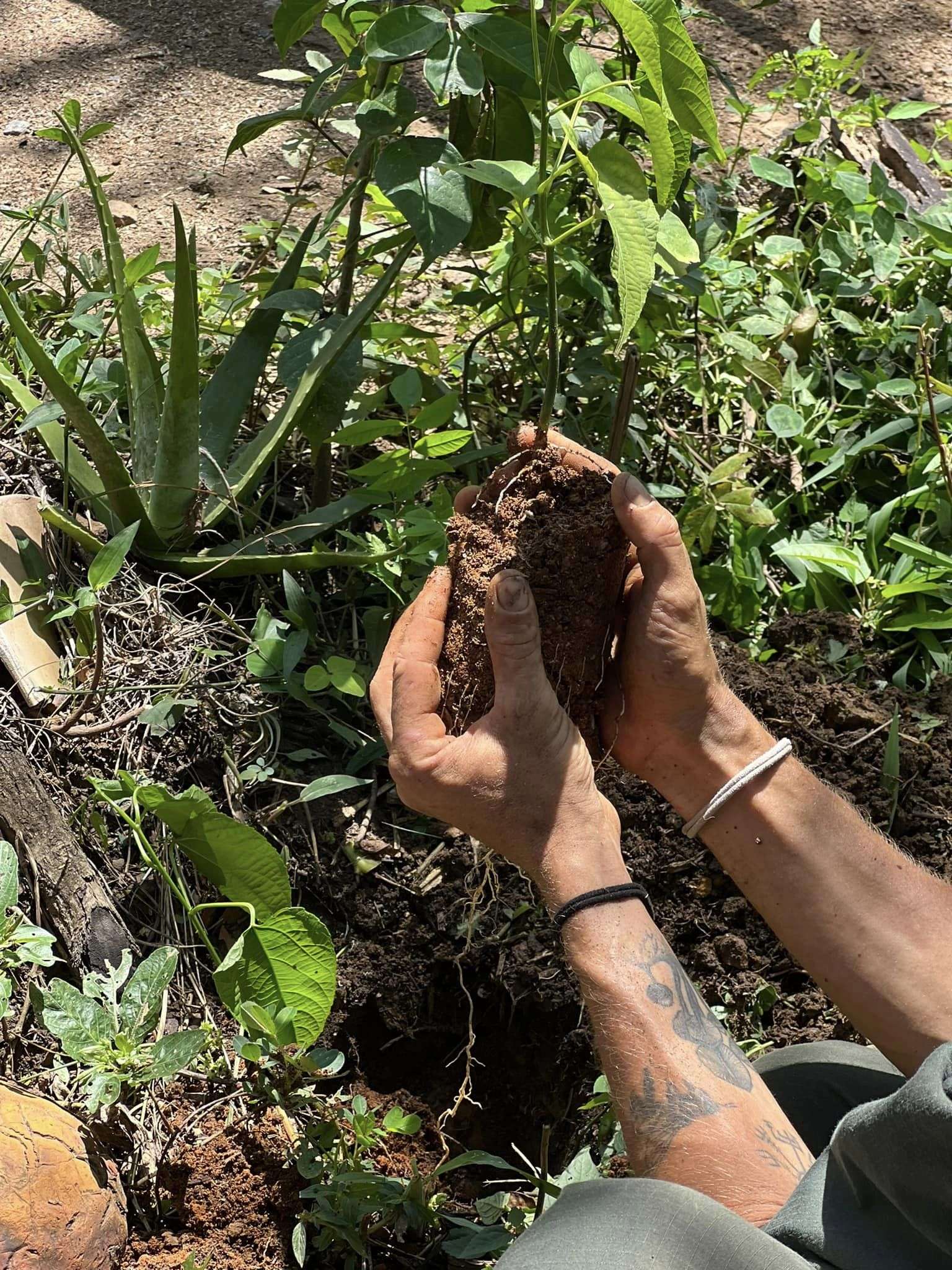
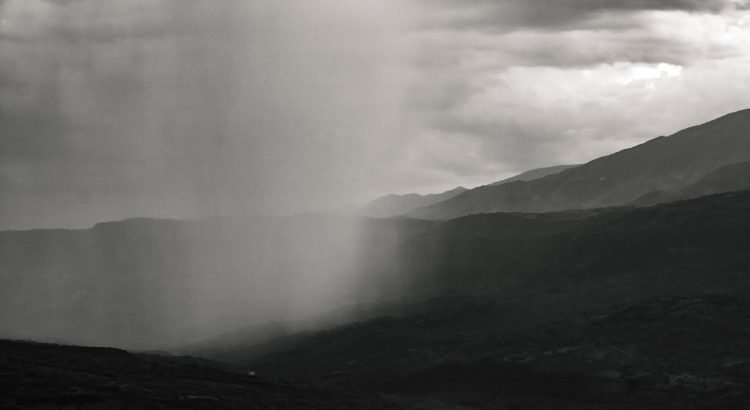
Spiritual practices 24/7 including in dreams

As I wake up at 3 a.m., I notice I am doing puja, and I have a sense I have been doing puja for a long while through sleep and dreams. (This kind of puja is from Vortex Healing. It’s aimed at straightening out life situations and done through intention.)

The other night, in another dream, the turnaround to a stressful thought was with me as I woke up. (“It’s safer to speak up” which is a turnaround for “It’s safer to be quiet”.) This is a part of The Work of Byron Katie which I did daily for many years, and which now lives in me.

This is not so new or unusual. When I got into spiritual practices in my teens, I noticed that they tended to become continuous through the day and night and even through sleep and dreams.

That’s how it is with anything we do for a while, it becomes a new habit and orientation. Whatever our attention is on for a while stays with us and follows us through sleep and dreams. It lives its own life in us.

I especially remember this when I got into the Jesus / Heart Prayer. It’s a simple phrase said with the breath and heartbeat. Lord Jesus Christ, have mercy on me. The first part is on the in-breath, the second on the out-breath. When I do it with my heartbeats, the comma is on one beat, “on me” is on one beat, and the dot at the end is on another beat so there are eight beats altogether. (I don’t know if this is the “official” way to do it, to be honest.)

What I noticed is that over time, this prayer lived its own life in me, including through the night and in my dreams and when I woke up.

It’s similar to just about any other exploration.

Basic meditation is to notice and allow whatever is here in the field of experience, and then notice it’s already and inherently noticed and allowed and rest in and as that noticing. Doing this for a while makes it much easier to notice the same in daily life, it becomes part of daily life.

The headless experiments help us notice our nature, that we are capacity for the world as Douglas Harding put it. This too is part of my daily life now. I find myself as that which allows and forms itself into any and all content of experience.

When I did koan practice, the koans stayed with me in a similar way. My being explored and processed them outside of the Zendo.

As I mentioned above, this is not special to spiritual explorations or practices. It’s what seems to happen with anything we put attention on for a while.

When it comes to spiritual explorations, it is quite beautiful when it starts living in us.

It makes it easier to dip into it more intentionally during waking time.

Even here, it does require some intention to keep it going, it requires engaging in it consciously and intentionally now and then during waking time.

When it lives its own life in this way, I also find that it’s easier to dip into it again later if I have been away from it for a while. It’s easier to pick it up again.

Feeling a million things at once

Last night, before falling asleep, I mentioned to my wife that I am feeling a million things at once, and she said she experiences the same. It’s like a field whispering in the distance.

It seems only natural.

We are as rich as the world. Everything โ€“ย every characteristic and dynamic โ€“ย I see in the world is also in me. It’s always here.

Mostly, it’s like a whisper in the distance. Sometimes, dynamics in the situation โ€“ย in me and the wider world โ€“ย bring some into the foreground. For instance, Whatever I actively look for comes to the foreground.

I notice a curiosity about all of this, and that it seems beautiful, which is part of the whisper too.

I don’t know how others experience this. I haven’t done a survey. I suspect it may have to do with the awakening process. As our systems are more awake and open, we may notice this more easily.

I remember this from the first oneness shift โ€“ย which is still here. There is a myriad of faint feelings in the distance. Right now, I notice โ€“ย when attention goes there and highlights something โ€“ย sadness, joy, contraction, dullness, space, receptivity, gratitude, awe, to hell with it all, and so on.

I also notice that it all, including contractions, happens within and as awake space. The consciousness I am forms itself into all of it.

After writing this, I notice that this is connected with a general bitter-sweet experience of life and existence. There is awe, gratitude, joy, a gentle bliss, and so on mixed with grief, sadness, and more.

If I were to differentiate, I would say that the awe and gratitude is here for this amazing existence and all it forms itself into. There is a gentle bliss inherent in all experience, it seems, like a thread through experience. And it’s mixed in with grief, sadness, and heartbreak over the fleeting nature of existence and the suffering of beings, including myself.

My most listened to songs in 2024

I think of this blog mostly as a journal for myself. A way to explore and process and possibly share if someone happens on it and finds something interesting, entertaining, or useful.

That’s why I thought I would share some of my most-played songs on Spotify from 2024. It’s an opportunity for reflection. It’s been a challenging and somewhat overwhelming time, which is reflected in this music. Most of this music is spirited and/or chill and/or atmospheric. Since I tend to listen to full albums, most artists have several songs on the playlist.

I made a curated version with a few favorites added in and minus some that didn’t fit the general feel of the playlist. The original is here.

What I listen to changes from year to year. Sometimes, it’s music from around the world. Sometimes, it’s “modern classical” music like Arvo Pรคrt, Philip Glass, John Adams, and others. Or ordinary classical music, usually early music and baroque, and especially anything performed by Jordi Savall.

  1. Khwaab โ€“ Niraj Chag, Swati Natekar
  2. New Dawn โ€“ Anoushka Shankar
  3. Kamakumba โ€“ Mop Mop
  4. From Gagarin’s Point of View โ€“ Esbjรถrn Svensson Trio
  5. Adhara โ€“ Mop Mop
  6. Tive Razรฃo โ€“ Seu Jorge
  7. Mu eadni โ€“ Mari Boine
  8. Easy to Love โ€“ Mari Boine, Hver gang vi mรธtes
  9. Solidaritรฉ โ€“ Matthieu Chedid, Toumani Diabatรฉ, Sidiki Diabatรฉ, Fatoumata Diawara
  10. Gambia โ€“ Sona Jobarteh
  11. Kind Of Latin Rhythm โ€“ The Juju Orchestra
  12. Manitoumani โ€“ Matthieu Chedid, Toumani Diabatรฉ, Sidiki Diabatรฉ, Fatoumata Diawara
  13. Bal de Bamako โ€“ Matthieu Chedid, Toumani Diabatรฉ, Sidiki Diabatรฉ, Fatoumata Diawara
  14. Mama รfrica โ€“ Chico Cรฉsar
  15. Mango – Club des Belugas Bossa Remix โ€“ Bahama Soul Club, Arema Arega, Club des Belugas
  16. The Beat Is Rhythm – Instrumental โ€“ Club des Belugas
  17. Run Around – Renegades Of Jazz Remix โ€“ Mop Mop, Anthony Joseph, Fred Wesley, Renegades Of Jazz
  18. Kanya โ€“ Niraj Chag, Gauri Tripathi
  19. Totem โ€“ Mop Mop, Anthony Joseph
  20. Manitoumani โ€“ Lamomali, -M-, Toumani Diabatรฉ, Sidiki Diabatรฉ, Fatoumata Diawara
  21. Moods โ€“ Jojo Effect
  22. Mondo Mas โ€“ Club des Belugas
  23. Cabriolet Tour โ€“ Club des Belugas
  24. A Quiet Moment โ€“ Club des Belugas, Lene Riebau
  25. Skies โ€“ Club des Belugas, Karlos Boes
  26. I Warned You Baby โ€“ The Bahama Soul Club, Spanky Wilson
  27. Charade โ€“ Nicola Conte
  28. Chega de Saudade โ€“ Club des Belugas, Maya Fadeeva
  29. Like A Gypsy โ€“ Kojato
  30. Yachts – A Man Called Adam mix โ€“ Coco Steel Lovebomb
  31. Ain’t Nobody’s Biz-Ness If I Do โ€“ The Bahama Soul Club
  32. Kothbiro โ€“ Ayub Ogada
  33. Zara Zara โ€“ Bombay Jayashri
  34. Nagumomo โ€“ Susheela Raman
  35. Muรฉvelo Papi โ€“ The Bahama Soul Club, Olvido Ruiz
  36. Feel Sexy โ€“ Kojato, Tina Lux
  37. Indian Summer โ€“ Chicha Libre
  38. In The Night โ€“ Childish Gambino, Jorja Smith, Amaarae
  39. Hustle Bump – Radio Mix โ€“ Club des Belugas
  40. Rose rouge โ€“ St Germain
  41. Three Times Bossa โ€“ Mop Mop
  42. Chiqui Tiqui โ€“ Club des Belugas
  43. Spaceship: Earth โ€“ Mop Mop, Anthony Joseph
  44. Plain Gold Ring (Mop Mop Rework) โ€“ Mop Mop
  45. Evanescent โ€“ Axiom Of Choice
  46. What the Butler Heard โ€“ Club des Belugas
  47. Supreme โ€“ Mop Mop, WAYNE SNOW
  48. Loa Chant feat. Sara Sayed โ€“ Mop Mop, Sara Sayed
  49. Nritya โ€“ Niraj Chag, Gauri Sharma Tripathi, Tarini Tripathi
  50. Feeling Good โ€“ The Mighty Bop
  51. Saya โ€“ Sona Jobarteh
  52. Bang Up To The Elephant โ€“ CINTA
  53. Parvaz (Flight) โ€“ Axiom Of Choice
  54. Locomotive โ€“ Mop Mop
  55. Broken Bridge โ€“ Armenian Navy Band, Arto Tunรงboyac?yan
  56. Ash โ€“ Mop Mop
  57. A Walk By The Lake โ€“ Axiom Of Choice
  58. Let I Go feat. Anthony Joseph โ€“ Mop Mop, Anthony Joseph
  59. Color Of Dreams โ€“ Axiom Of Choice
  60. Dreamers In The Field โ€“ Huun-Huur-Tu, Carmen Rizzo, Dhani Harrison
  61. Brass Des Belugas โ€“ Jojo Effect, K. Boes, P. Schug, L. Kuklinski
  62. Mystics And Fools โ€“ Axiom Of Choice
  63. Let I Go – Mop Mop Soundsystem Remix โ€“ Mop Mop, Anthony Joseph
  64. Where We Used to Live โ€“ Esbjรถrn Svensson Trio
  65. Everywhere You Go Now, Kuti โ€“ Kojato
  66. Boidus โ€“ Huun-Huur-Tu, Carmen Rizzo, Dhani Harrison
  67. Jazzdancer โ€“ Mop Mop
  68. Remembering Ulatay River โ€“ Huun-Huur-Tu, Carmen Rizzo, Dhani Harrison
  69. Summertime Magic โ€“ Childish Gambino
  70. No Words – Suonho Radio Edit โ€“ The Bahama Soul Club
  71. Mr. Know It All โ€“ Mop Mop
  72. Koop Island Blues โ€“ Koop, Ane Brun
  73. One โ€“ Sheila Chandra
  74. Habanera 80 โ€“ Mop Mop
  75. No Excuses (feat. Ludwig Gรถransson & Kamasi Washington) โ€“ Childish Gambino, Ludwig Gรถransson, Kamasi Washington
  76. Here Comes the Rain Again – Remastered Version โ€“ Eurythmics, Annie Lennox, Dave Stewart
  77. Wordplay โ€“ CINTA
  78. Song Of The Caravan Riders โ€“ Huun-Huur-Tu, Carmen Rizzo, Dhani Harrison
  79. Naked โ€“ Anoushka Shankar
  80. No Inspiration – Club des Belugas Remix โ€“ Maya Fadeeva, Club des Belugas
  81. Blue Soul โ€“ Mop Mop
  82. Feels Like Summer โ€“ Childish Gambino
  83. Afro Jojo Part One โ€“ Mop MopValeh โ€“ Axiom Of Choice, Ramin Torkian, Mamak Khadem, Pejman Hadadi, Shahram Hashemi
  84. Kaigal-ool prayer โ€“ Huun-Huur-Tu, Carmen Rizzo, Dhani Harrison
  85. Heritage – SoulParlor Remix โ€“ Mop Mop, Anthony Joseph, Soulparlor
  86. Prelude โ€“ Axiom Of Choice
  87. Heritage feat. Anthony Joseph โ€“ Mop Mop, Anthony Joseph
  88. Good to Go โ€“ Club des Belugas, Iain Mackenzie
  89. The Lowered Flag โ€“ Mop Mop
  90. Interl’Oud โ€“ Dhafer Youssef
  91. Zabou โ€“ Amine Bouhafa
  92. Living Beat โ€“ Mop Mop
  93. Pulse โ€“ Axiom Of Choice, Ramin Torkian, Pejman Hadadi
  94. Ain’t It Just โ€“ CINTA
  95. Mirando al Mar – Club Des Belugas Remix โ€“ Bahama Soul Club, Club des Belugas
  96. Rรฉquiem โ€“ Vicente Amigo, Niรฑa Pastori, Arcรกngel, Miguel Poveda, Rafael de Utrera, Pedro el Granaรญno
  97. Sowa โ€“ Fatoumata Diawara
  98. LETONDO โ€“ Pamela Badjogo
  99. Palea โ€“ Dobet Gnahorรฉ
  100. Guovssahasaid รกjagรกttis โ€“ Mari Boine
  101. Boadan nuppi bealde โ€“ Mari Boine
  102. Comme s’il en pleuvait โ€“ Mayra Andrade
  103. Bissa โ€“ Fatoumata Diawara
  104. Silence โ€“ CINTAA’rabti โ€“ Cheb Mami
  105. Afro Shigida โ€“ The Bahama Soul Club, Kojato
  106. Bossa Corcovado โ€“ The Bahama Soul Club, A. Secret
  107. Mercy Me โ€“ The Bahama Soul Club, Josephine Nightingale
  108. Mango (Club Des Belugas Bossa Remix) โ€“ The Bahama Soul Club, Arema Arega, Club des Belugas
  109. Boadan Nuppi Bealde โ€“ Mari Boine
  110. Adiรณs Morena โ€“ Rio Mira
  111. Jarabi โ€“ Sona Jobarteh
  112. Sowa โ€“ Fatoumata Diawara
  113. Santiago โ€“ Newen Afrobeat
  114. Bolero a Marcos (Canciรณn de Amor) โ€“ Vicente Amigo
  115. O Pato โ€“ Gilberto Gil
  116. Gwyra Mi โ€“ Ramiro Musotto
  117. Alone Again โ€“ Tok Tok Tok
  118. Bongo Bong โ€“ Manu Chao
  119. Mindjer dรดce mel โ€“ Eneida Marta
  120. Samba De Uma Nota So (One Note Samba) โ€“ Antรดnio Carlos Jobim
  121. La Seine โ€“ Vanessa Paradis, -M-
  122. Moaners โ€“ The Bahama Soul Club, Bessie Smith
  123. O Morro Nao Tem Vez โ€“ Antรดnio Carlos Jobim
  124. รguas De Marco โ€“ Elis Regina
  125. Redbone โ€“ Childish Gambino
  126. Nyandolo โ€“ Ayub Ogada
  127. Desafinado โ€“ Joรฃo Gilberto
  128. El Cuarto De Tula โ€“ Buena Vista Social Club
  129. Didn’t Cha Know โ€“ Erykah Badu
  130. Dis-lui oui โ€“ Bรฉnabar
  131. La vie en rose โ€“ Zaz
  132. Sous le ciel de Paris (feat. Pablo Alborรกn) โ€“ Zaz, Pablo Alborรกn
  133. Je veux โ€“ Zaz
  134. Siempre me quedarรก โ€“ Bebe
  135. Capoeira Vai โ€“ Sabrina Malheiros
  136. Bobeira โ€“ Sabrina Malheiros
Read More

Our greatest resource is our community

I remember what many wise people used to say when I worked with sustainability in Madison:

You can collect rainwater, grow your own food, and all those things, and what’s really going to help you in a crisis is the community.

Our greatest resource is our community.

I have been reminded of that today. We woke up at 4 am to a tremendous rumbling that seemed to last forever (likely just five or ten seconds). It felt like the house was coming down all around us. Luckily, it turned out it was just part of the roof that had come down, with support beams and tiles and everything, while we were safe โ€“ although scared to death โ€“ in our bed. (Several things from the roof fell next to the bed.)

Also luckily, my wife’s father’s house up the hill was finished three weeks ago, so we took our essentials and โ€“ as the very privileged refugees we are โ€“ went up to his house.

We are lucky to have several good connections in this community, so we immediately contacted a good lawyer, a good builder, and a good architect, all friends of ours. The builder and lawyer came shortly after dawn, and three architects will come this afternoon. They are all helping us with the assessment and guidance on how to proceed.

We are very privileged refugees in this situation. We lost our house but we have a place to live, we have support, and we have all the essentials for life. Millions who have lost their homes around the world are in a far more difficult situation. With our escalating global ecological crisis, far more will find themselves in that situation, and many if not most of them will be the ones who already have very little.

Of course, it takes some effort to develop good connections with the community. Here, for several reasons (language, health, travels), my wife has done most of that.

This is also a reminder that self-reliance happens at the community level. We collect rainwater, have our own septic systems, plan to grow a good portion of our own food, and so on, but it’s impossible to be entirely self-sufficient and we wouldn’t want it either. We need the diversity of the local and regional community to cover our basic needs.

NOTES

In case anyone wonders, the roof collapsed because of a construction mistake. We have found several mistakes made by the builder, and using weak horizontal support beams for the roof seems to be one of them. One of them broke like a matchstick. The builder came highly recommended by a friend, but we are discovering that he is not as good as we thought.

What happened this morning felt like a literal nightmare, and I had to check with myself whether it actually was a nightmare or waking life. It felt bizarre. The strangeness continued through the day and in the evening, including finding a big snake in my father-in-law’s bedroom. Fortunately, the snake went out with just a little encouragement and it was likely harmless.

A day on Milagros

How does a day on Finca Milagros look for me these days? It’s always quite different but I’ll use the last 24 hours as an example.

THIS MORNING

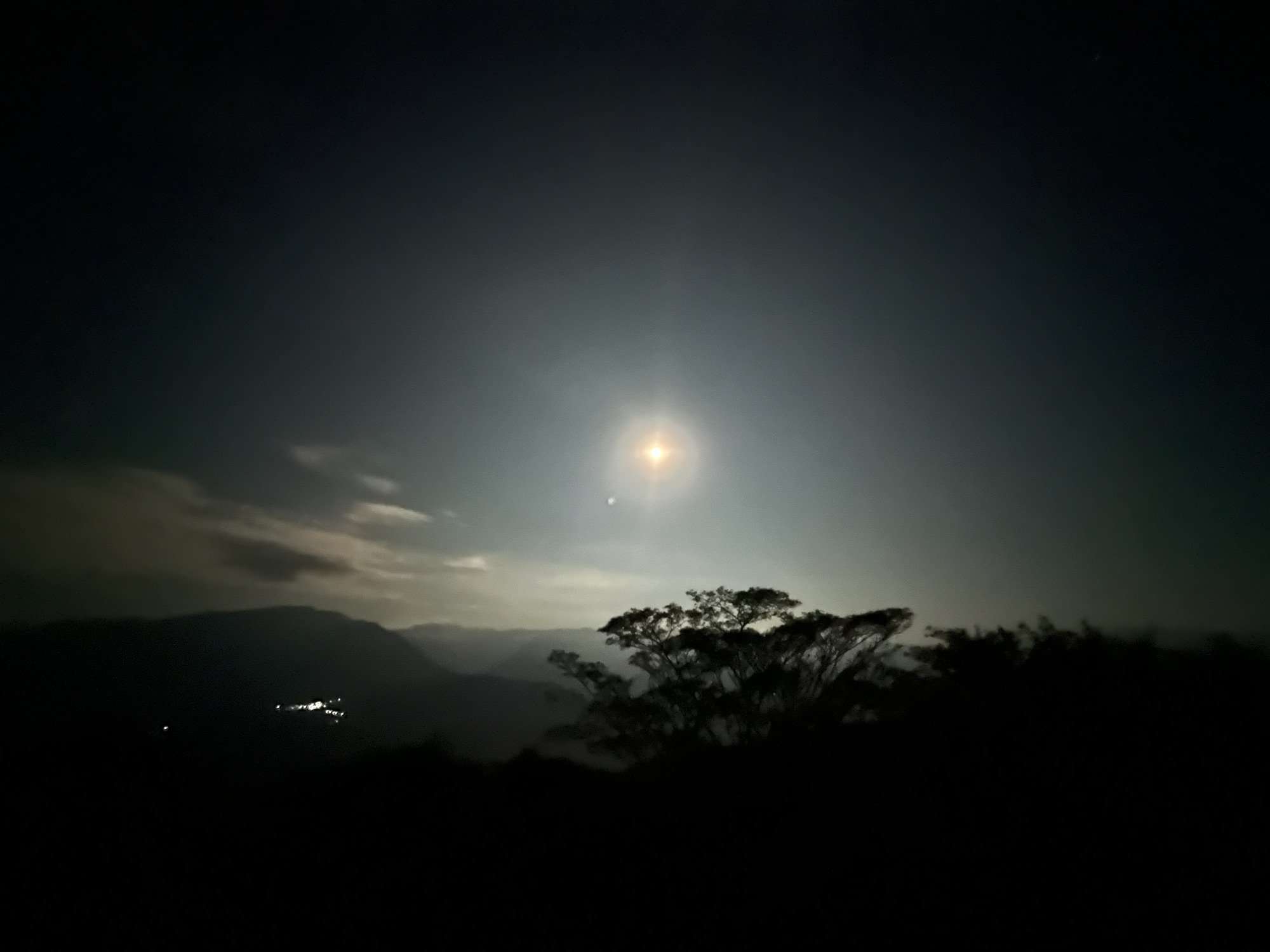
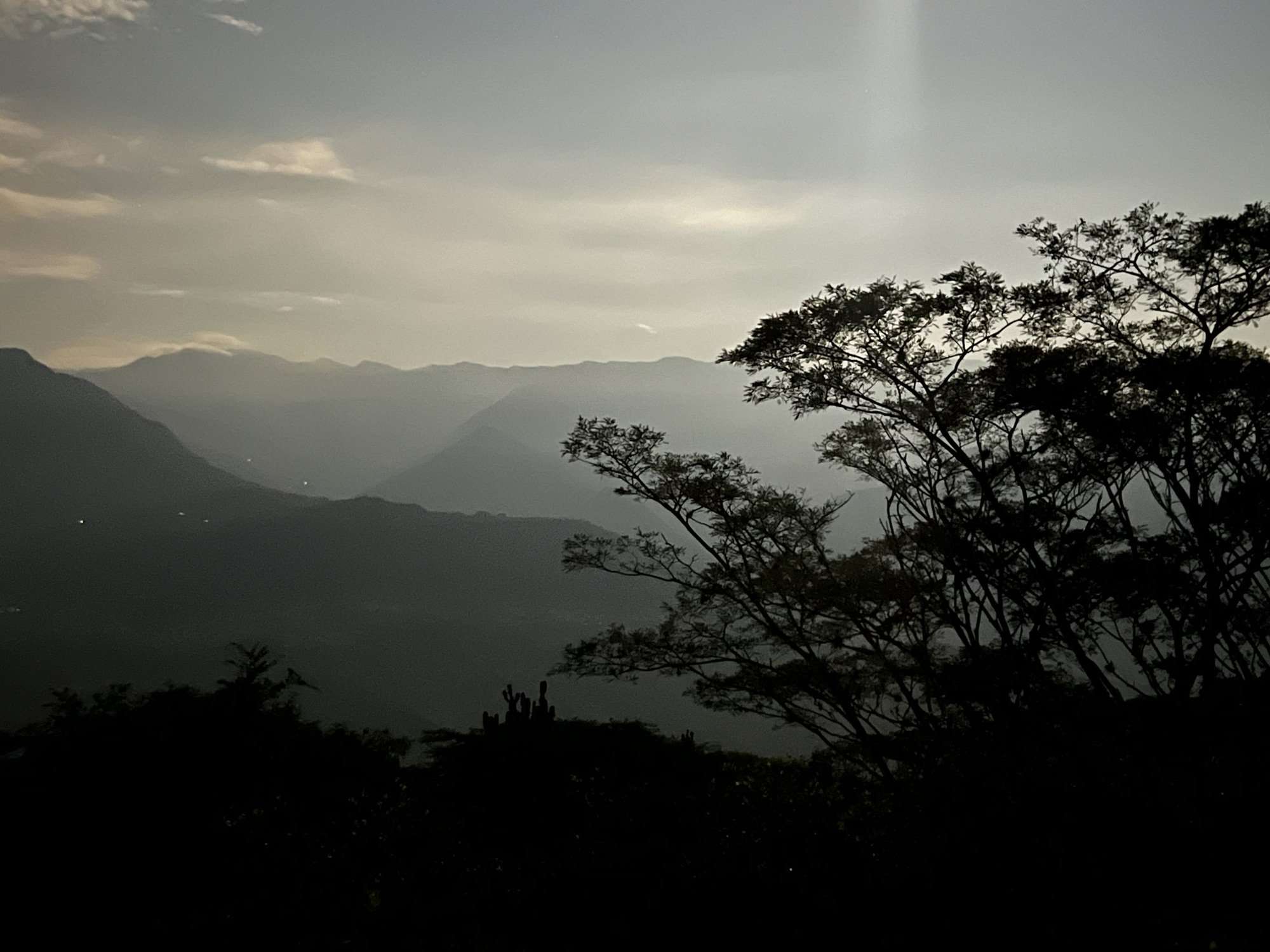
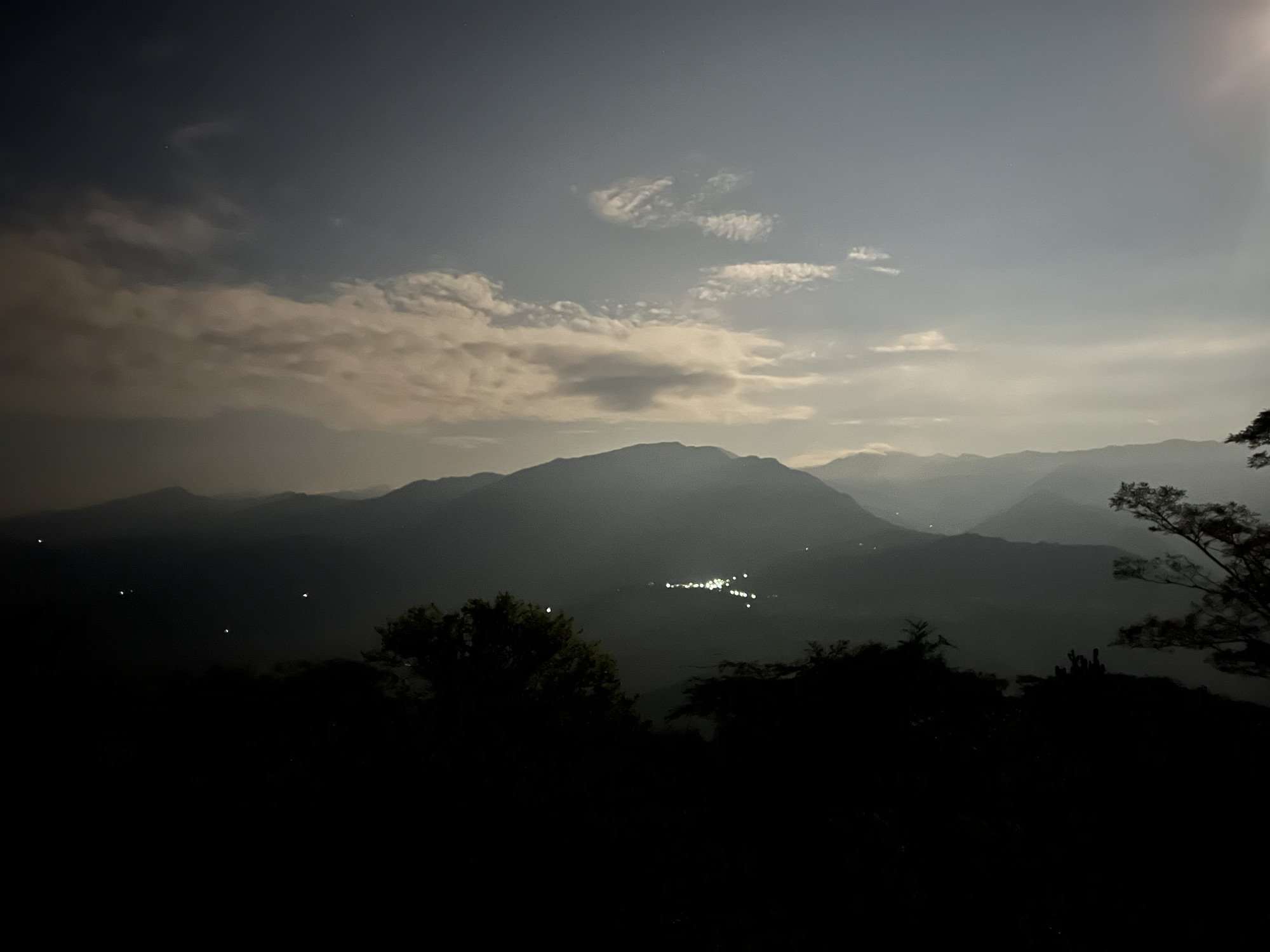
This morning, I woke up at 4 am and went outside to enjoy the full moon and the landscape bathed in the moonlight. Some birds were already singing and I could hear several roosters crowing in the distance.

I then had some water with lemon and wrote a few things here.

My wife woke up at about 5 am. We spent some time together in bed with Mila the dog. She is only about four months old and although she is generally not allowed in the bed, we are taking time with her in the morning. It’s likely very good for her, and we enjoy it too.

We got up some minutes before 6 am, as the sun was beginning to come up. I watered the plants in the nursery, some plants we planted yesterday, and a few that seemed to need it otherwise. It rained a bit two nights ago, it rained a lot some days before then, and we are using a lot of mulch, so most plants don’t need water now.

Daniel and Josรฉ Luis came around 7 am. I gave them each a couple of the many oranges we got from a neighbor earlier this week. They will work on the area between the two houses today, and also the garden around the big house. Daniel has helped us since April with the garden and food forest, and his help has been invaluable.

I am not able to do much physical work because of my chronic illness, and although I have been passionate about Permaculture and more for decades, I also don’t have expertise with this tropical ecosystem.

Diana came closer to 8 am to help get the big house ready. Roberto, my wife’s father, is coming later today. While they were talking and making breakfast, I went outside on the terrace facing the canyon to do qigong.

We then had breakfast โ€“ oatmeal porridge with papaya, sunflower seeds, bits of dates, some coconut oil, and more.

Just now, a few minutes after 8 am, my wife and Diana went to the big house to get it ready. I am staying back here to rest and do a few things, including in the house. As I write this, I listen to Mop Mop.

After Roberto arrives, we will go for lunch at รngel in the town of Barichara.

Since it’s not even 9 am yet, I’ll write a bit about what we did yesterday.

YESTERDAY

Yesterday, Daniel and Josรฉ Luis came at 7 am. I talked with Daniel about some of the plans for the terraces between the houses.

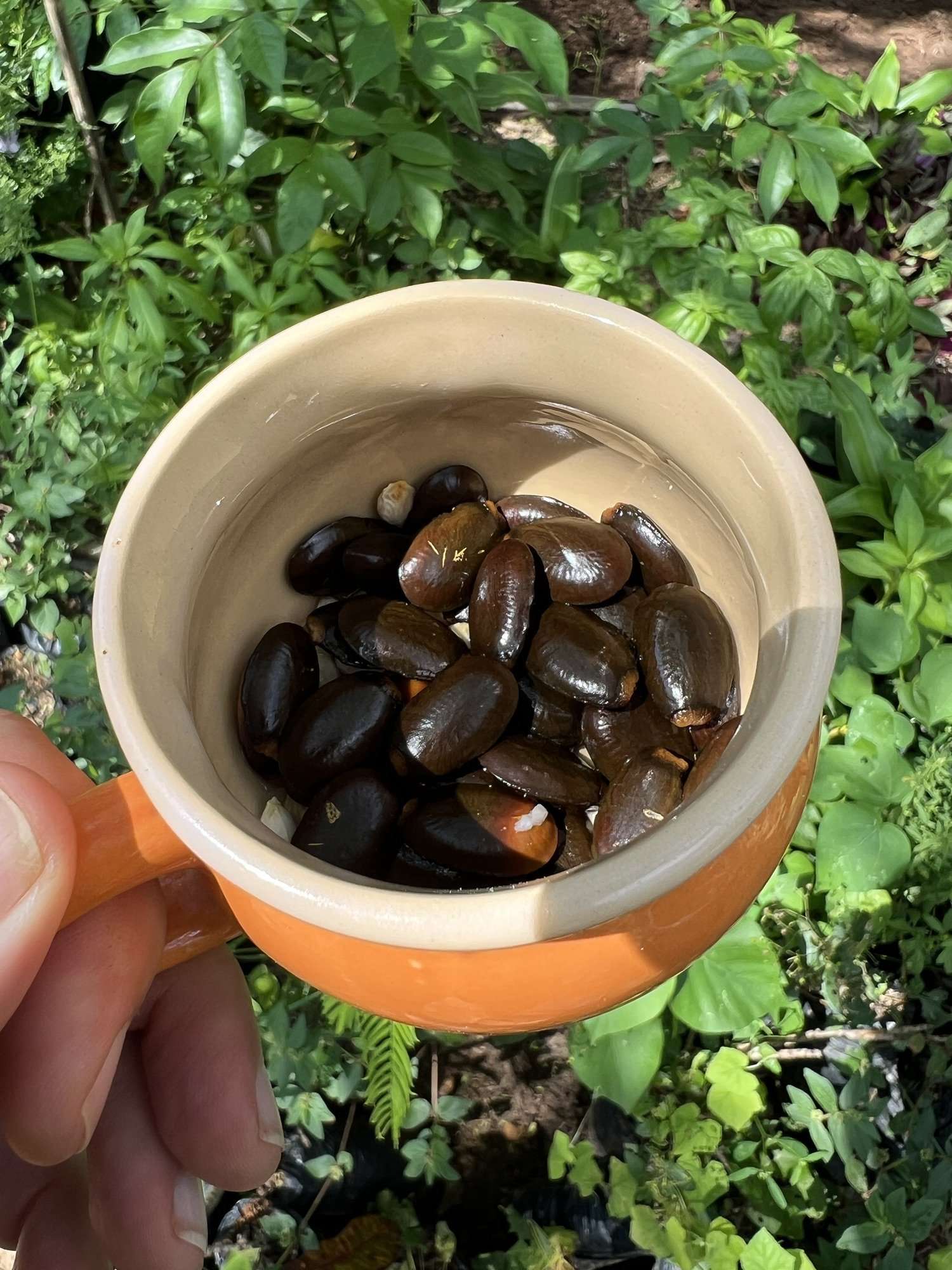
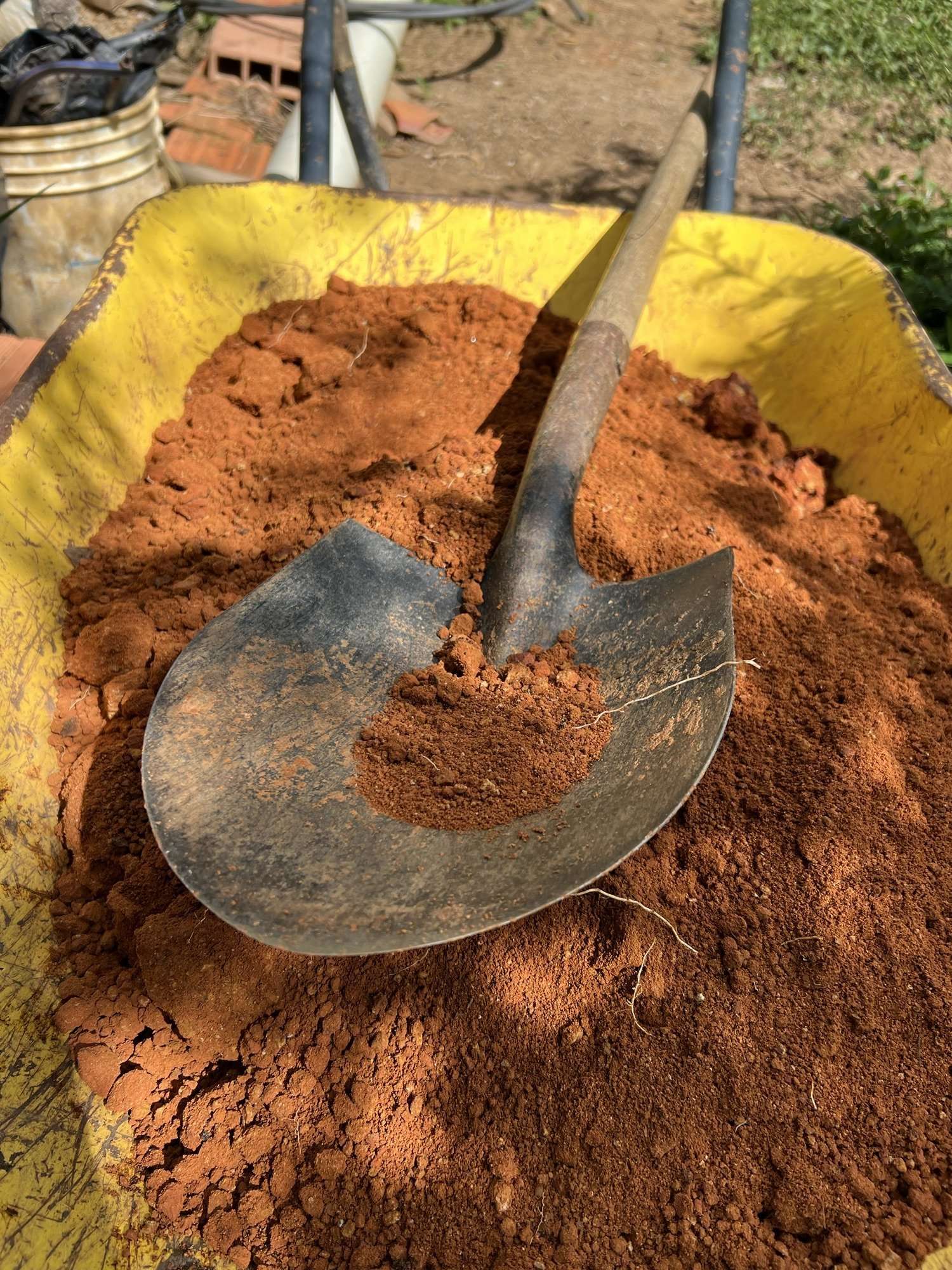
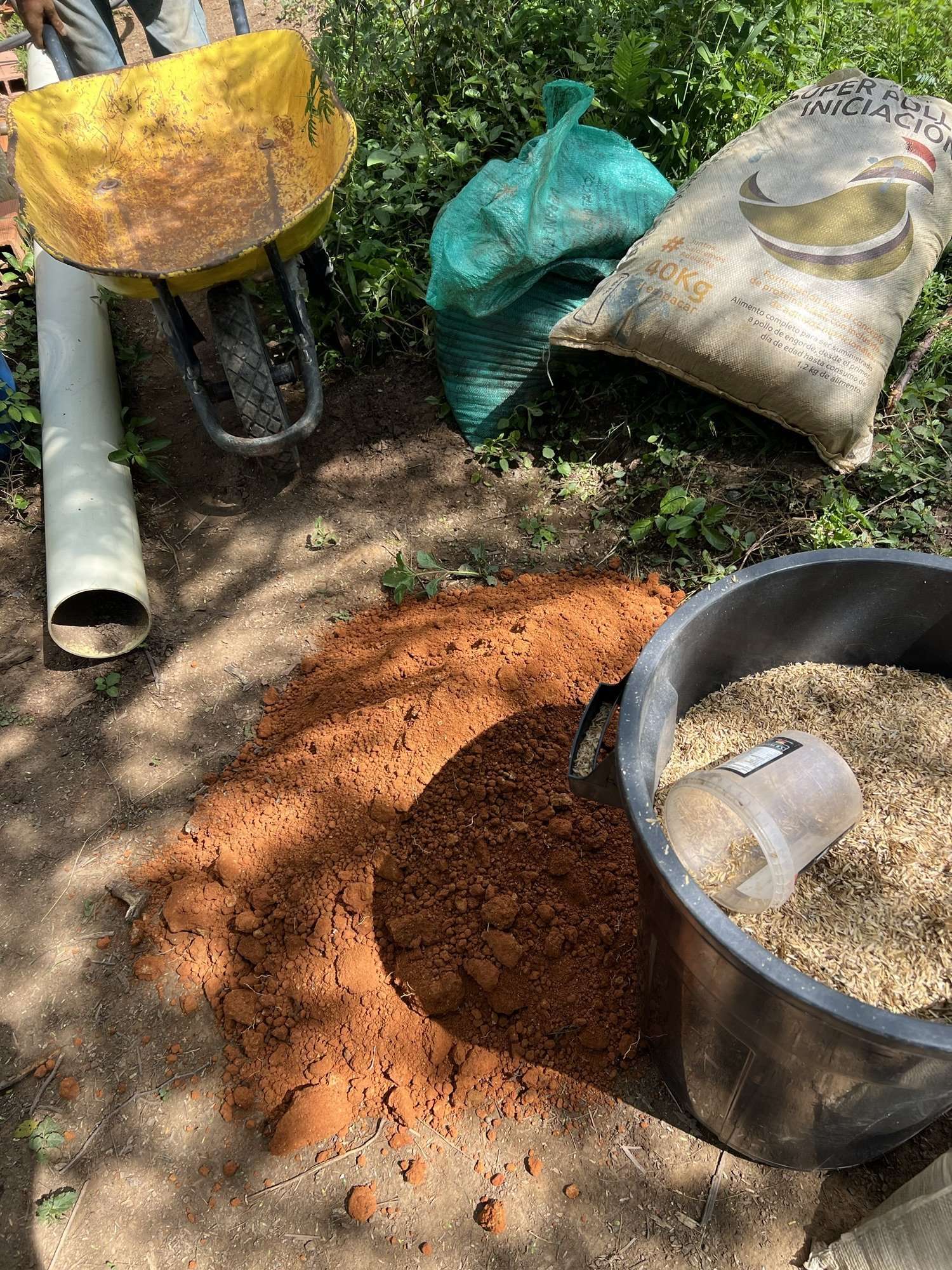
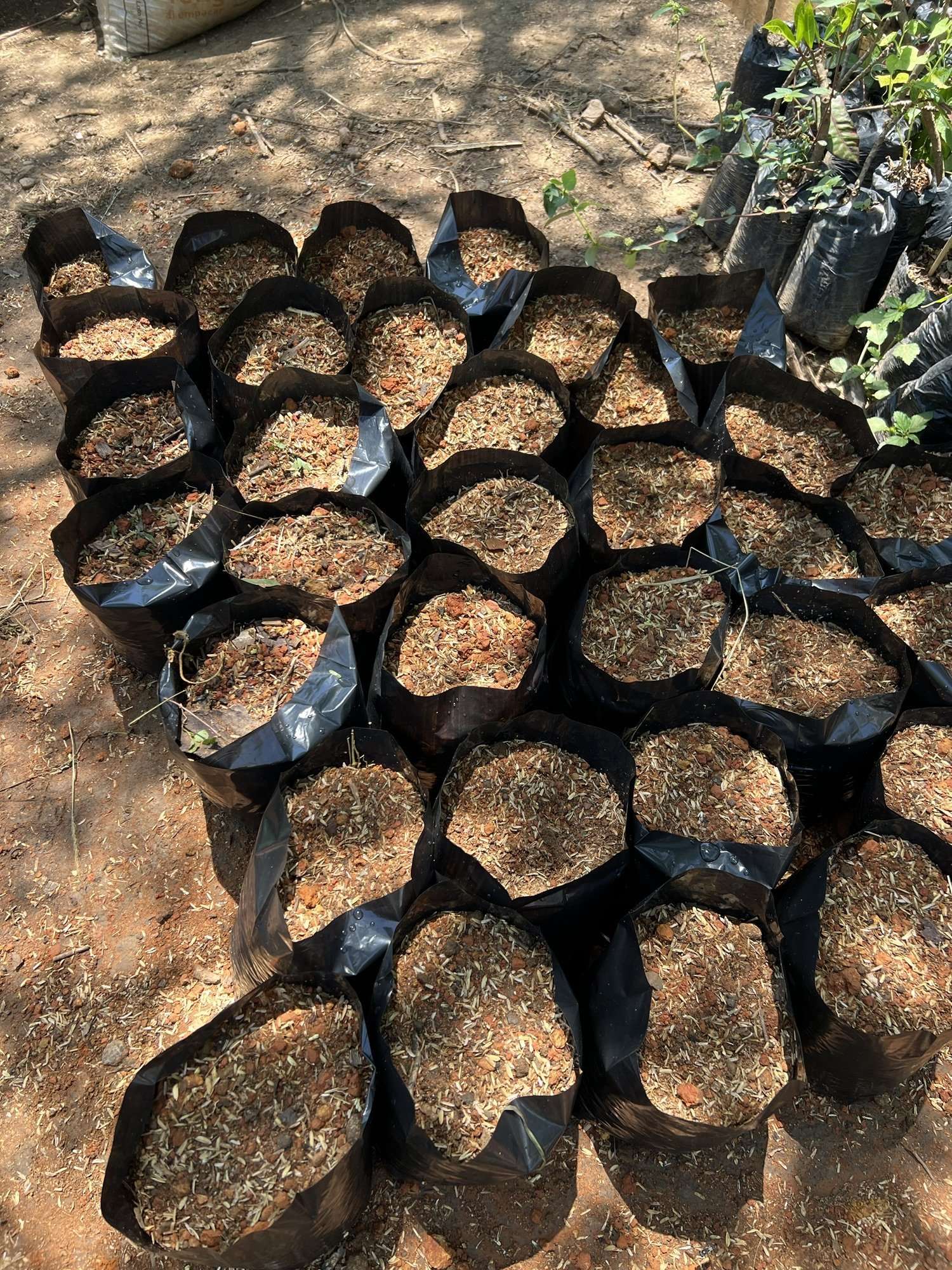
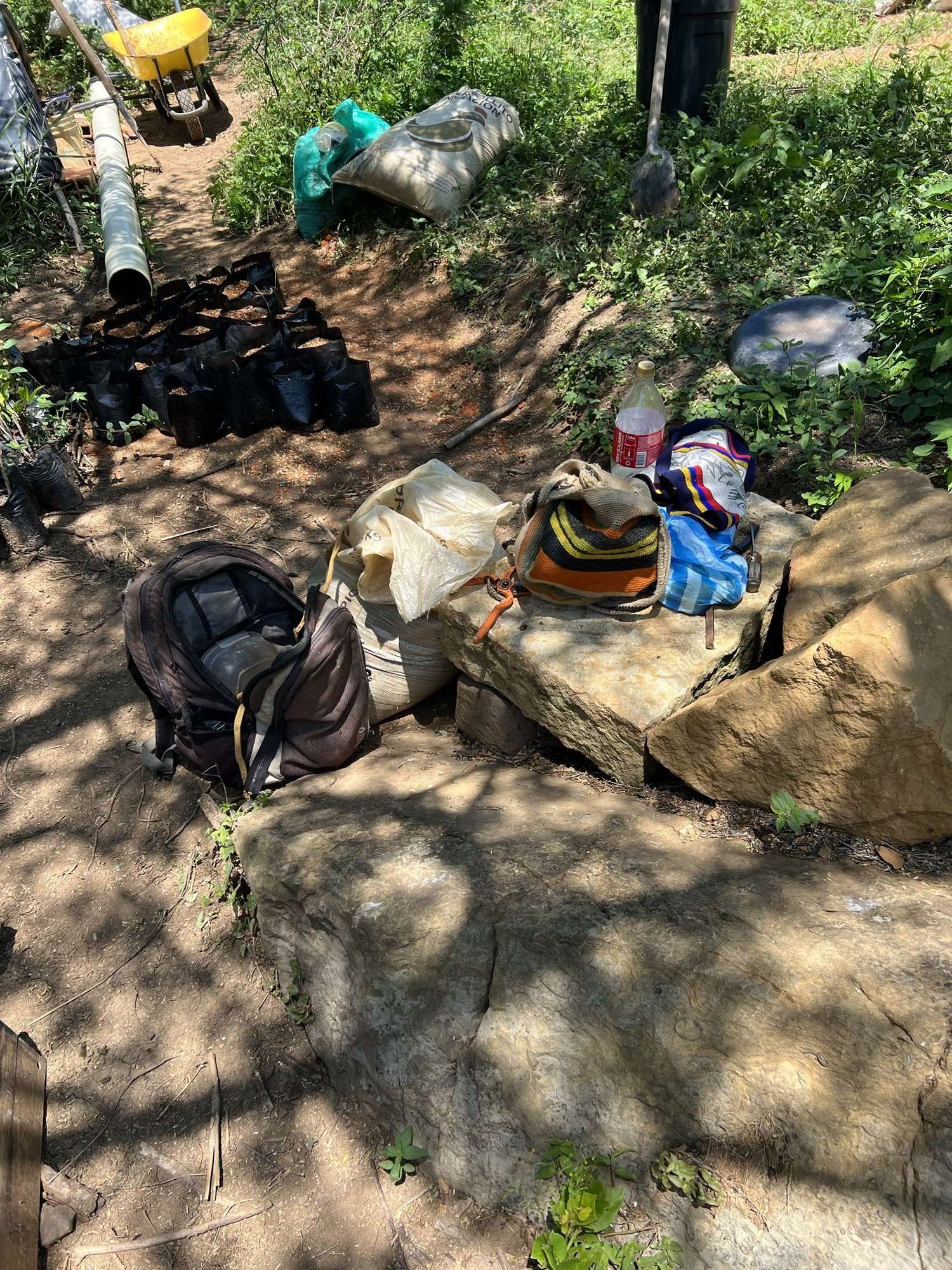
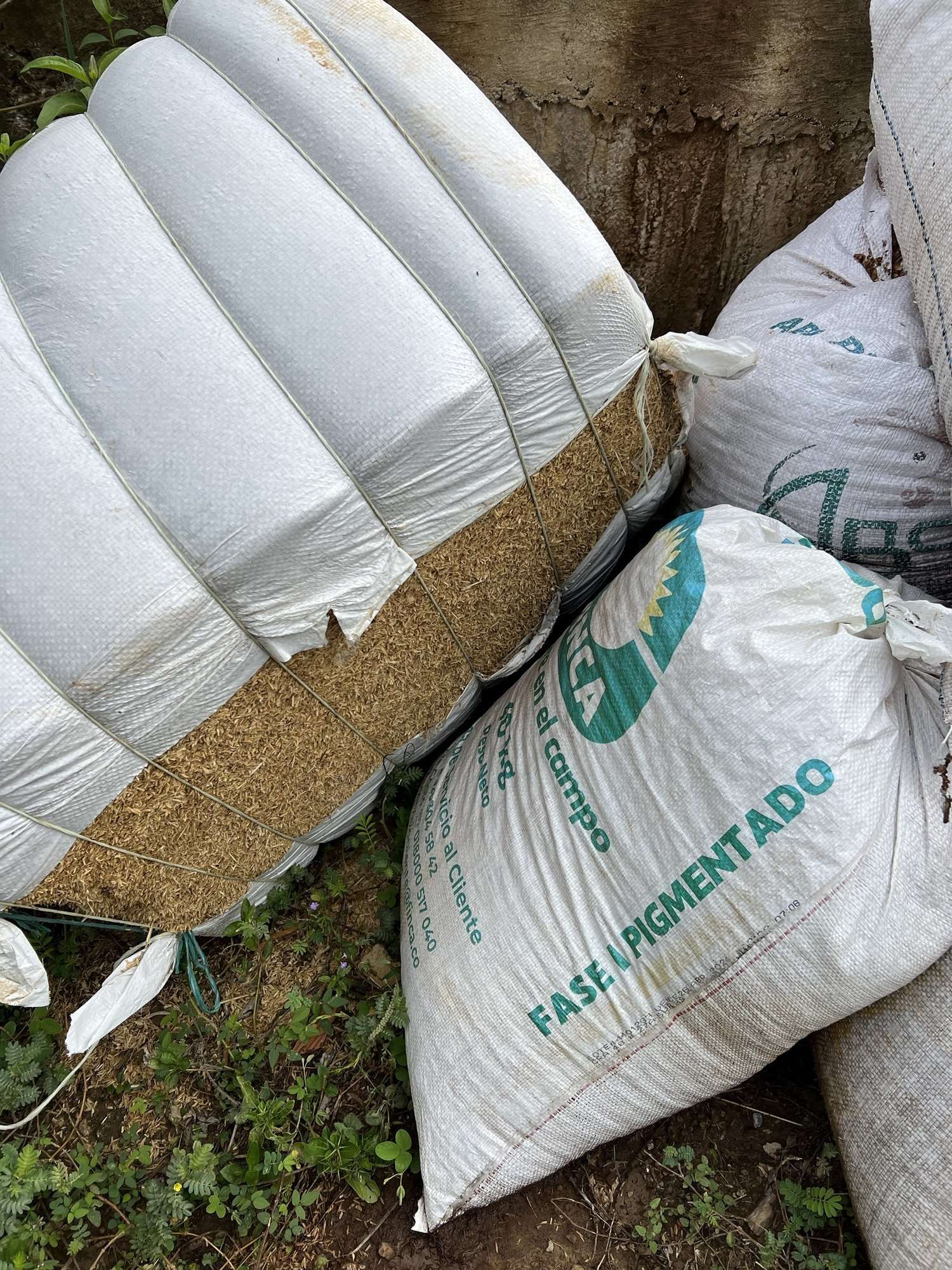
We had maybe 20 soursop seeds so Daniel and I mixed soil โ€“ 1/3 local soil, 1/3 compost, 1/3 rice husk, and a cup of microbe water. I and Josรฉ Luis put the soil in bags and planted the seeds while chatting with my imperfect Spanish and his slightly better English. The soursops will grow for a while in these relatively large bags until they are ready to be transplanted.

I also looked at the progress with the vermicompost flush toilet system, and especially the area where the water flows into the ground. We want to make sure there is little to no chance of contamination. The location is made so any overflow is unlikely to create problems, and we are using a deep mulch bed (1-1.5 meters deep).

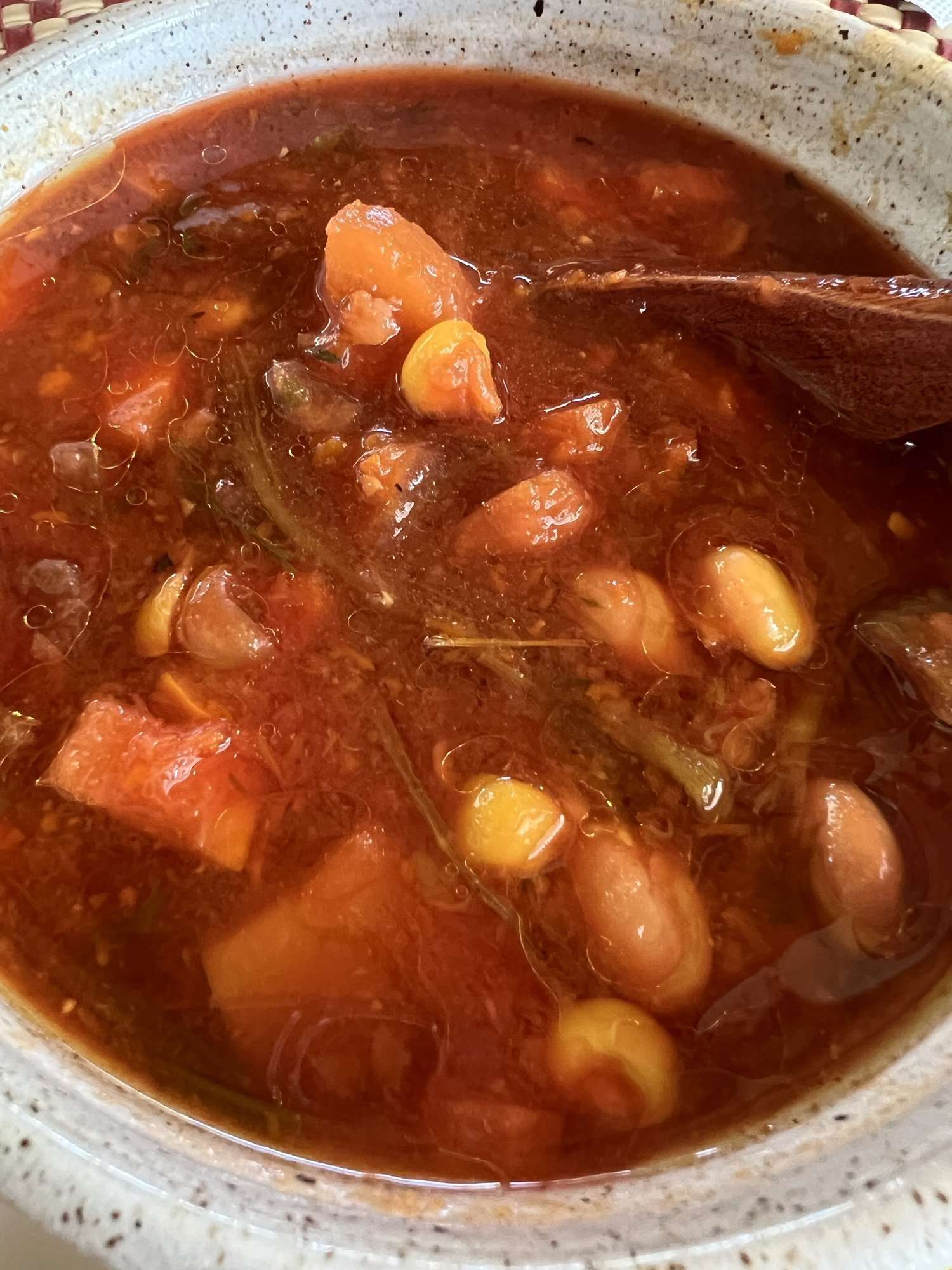
We did some other things in the garden and my wife cooked a delicious lunch for all of us โ€“ a soup/stew with beets, beans, squash, and much more.

After, we did several practical things and I watered some newly planted plants. If we need to water, we do it in the early morning just after sunrise, although in this case, I wanted to water them since they were just planted. I did it when the sun was close to the horizon.

I also looked at examples of the Japanese torii gates since I imagine one of those โ€“ a simple and rustic one โ€“ could look good at the entrance to the garden and house from the small road going here.

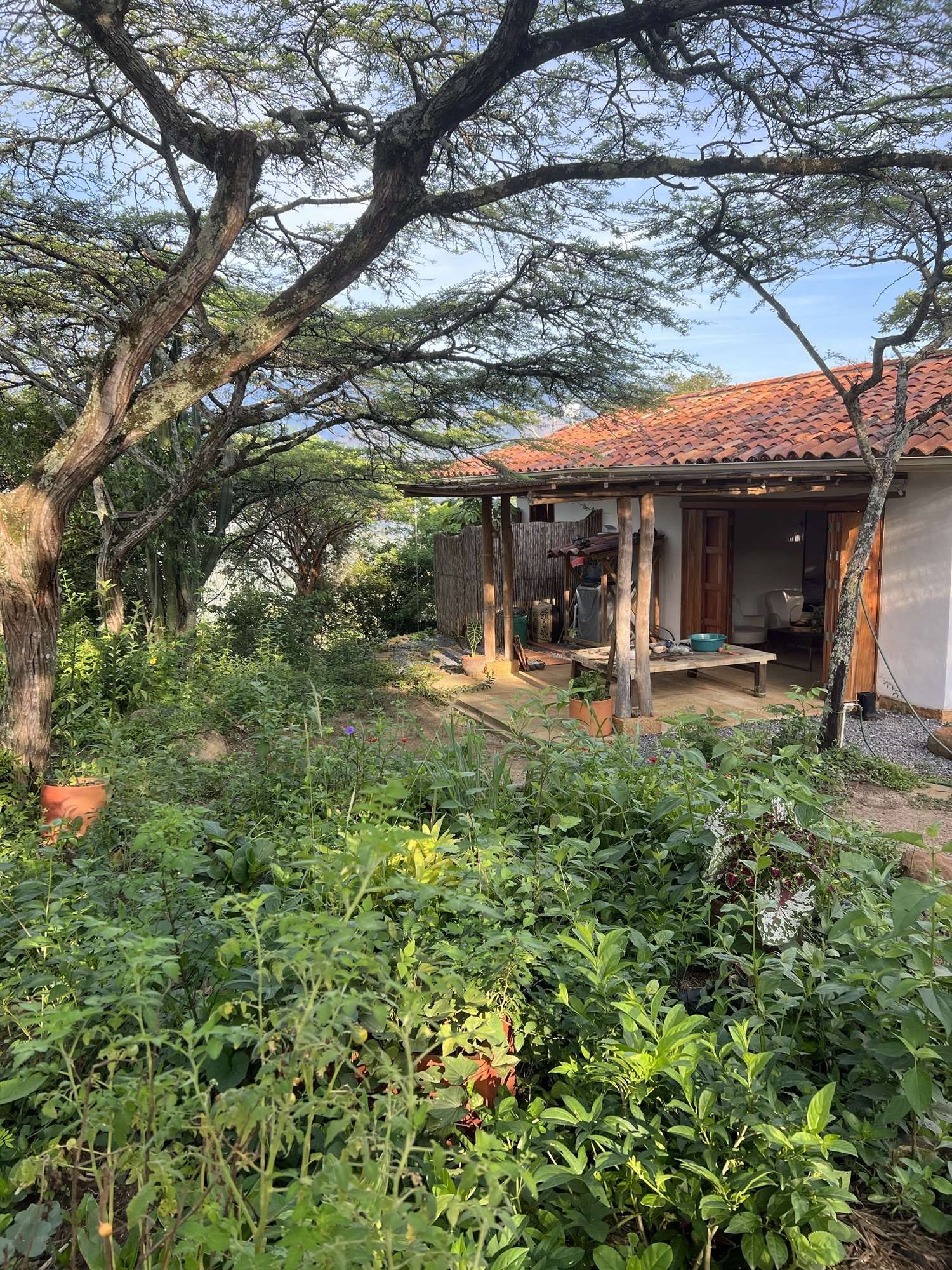
In the late afternoon, we walked up to the big house to look at the sunset from there. At the small house, where we are, we have the same view but we are in the middle of a forest so it’s less visible.

We then had a simple delicious meal with Felipe’s toasted bread, olive oil, avocado, and โ€“ for me โ€“ locally made goat cheese which is amazing and has a rich and complex taste. We had a good conversation.

We went to bed between 8 and 9 pm and fell asleep relatively quickly.

I realize all this sounds idyllic, and it is, although there are also plenty of challenges on some days.

All photos are from yesterday apart from the before-dawn moon photos from this morning.

All the beings on Milagros

In my teens, I envisioned myself in the future writing books, giving talks, holding workshops, working with people individually and maybe in groups, teaching meditation, perhaps having an academic career related to psychology or spirituality (ideally doing research on a topic related to awakening), and so on. It didn’t seem all that far-fetched. I had familiarity with the terrain, the passion and drive, a good enough brain, and I relatively easily got top grades.

A SHIFT IN COURSE

None of that happened, likely due to a combination of trauma (social anxiety, wanting to stay hidden as a trauma response) and my chronic illness.

Instead, I find myself now putting all of that into the reforestation and food forest project here on Finca Milagros. It’s deeply rewarding, I notice how I am transformed by it along with the land, and it doesn’t have some of the annoying downsides (!) of working with humans. (Of course, it instead has its own challenges.)

If I had followed the path I envisioned, and which seemed realistic in one form or another, I could perhaps help a few dozen people, maybe somewhere in the three digits. Instead, through where life put me, I can help millions if not billions of beings. Of course, it’s not all about numbers, but in a sense, it is all about numbers.

RESCUING THIS LAND

I find it immensely rewarding to know that millions and possibly billions of beings will live out their life fully or partially on this land.

If we hadn’t bought it, someone else would and they would likely have developed it into dozens of plots with houses or a big hotel. Both is happening right down the hill from us, in two different projects, and we know that an architect in town had similar plans for this land.

LOVE SPICED WITH DISAPPOINTMENT

As I sometimes tell friends, I channel my disappointment into this regeneration project. It’s said as a joke, but there is a grain of truth in it.

What’s more real, of course, is that it comes from love โ€“ love for nature, life, this amazing living planet we are all expressions of and how it appears locally here.

AN ESTIMATE OF THE NUMBER OF BEINGS ON MILAGROS

How many beings live here now? Maybe low three digits of birds, a half to a few million insects, some dozen mammals, three digits of reptiles and amphibians (maybe more), trillions of microbes, and hundreds of thousands if not millions of plants of a few hundred different types.

How many beings may live here at any one time in the future, when the ecosystems is more mature, rich, and vibrant? Maybe a thousand birds, billions of insects, three digits of mammals, several hundred reptiles and amphibians, trillions of microbes, and millions of plants of several hundred different types.

Of course, this depends on what’s happening in the larger local, regional, and global ecosystem, but this will be a sanctuary for millions if not trillions of beings.

It will be a sanctuary for millions and perhaps trillions of consciousnesses just like me and you and all of us, all living through and as different bodies.

WE ARE ALL ESSENTIALLY THE SAME

Some will say that it’s more important to help humans but I don’t see it that way. Of course, I value and love my human connections, but we are all consciousnesses no matter what type of body we live through and as. We are all essentially the same, it’s just the expression that varies.

Similarly, we are all local and temporary expressions of this living system we call Earth. We are all the local eyes, ears, thoughts, and feelings of the universe. We are the universe bringing itself into consciousness.

LIVING THE ESSENCE OF MY CHILDHOOD DREAM

As a child, I loved nature. I loved being in nature with my parents. I loved nature programs on TV (especially Richard Attenborough and Sverre M. Fjelstad.) I wanted to become a biologist, although what I meant was ecologist. Now, I live my childhood dream in many ways.

Read on for more info.

Read More

An update on our food forest and reforestation project

I thought I would give a brief overview and update on our food forest and reforestation project near Barichara, with a few dates so we can more easily keep track of the progress. Hopefully, this will be the first of many updates.

FINCA MILAGROS 2022

We bought the land in early 2022, started building the first small house, and moved in on Winter Solstice 2022. During this time, we didn’t do anything with the land apart from letting it start to recover after decades and maybe centuries of grazing.

FINCA MILAGROS 2023

We didn’t do very much with the garden or food forest the first year were here. There were too many other things to do: repair 1,500 meters of stone fence, get basic water and electricity, clean up barbed wire fence throughout the finca, set up a good fence towards a neighbor with cows, get familiar with the land and climate, and so on. Since we came here, we have been away for long periods as well.

We also had challenges finding someone to advise us on the regeneration and food forest and also help us with the work. (Most of the local workers only know grazing farming, see pioneers as “bad plants” to be removed, don’t know much if anything about mulch and building soil, and so on.)

We did connect with Fundaciรณn Guayacanal in the second half of 2023 and had conversations, a survey of the finca, and made a plan for reforesting Milagros. They use a mix of native trees, including food-producing trees, and seem to have a generally good understanding and approach. They sell the carbon credits and make money that way.

FINCA MILAGROS 2024

In May this year, Daniel started coming every week to advise and help us with the work. He is very knowledgeable and completely aligned with what we wish to do here, so it’s been a blessing. That’s really when the garden and food forest started, so it’s only been about five months of focused work.

In April, Fundaciรณn Guayacanal came and planted close to 2000 native trees of twenty different varieties in the more arid and degraded areas of the land. This is also a blessing and the first part of hopefully several more phases of plantings.

More recently, we installed a rainwater catchment system for the small house, and the big house is almost ready and will have its own rainwater catchment system.

THE NEAR FUTURE

As for the rest of the year, we plan on continuing to develop the food forest around the houses. We have a nursery with maybe a few hundred saplings ready to go out.

I assume Fundaciรณn Guayacanal will continue planting when the rain returns in April or May next year, and we will hopefully also have a variety of native food-producing saplings ready to go out further away from the houses, close enough so it’s easy to harvest and far enough away so we won’t water them.

PERMACULTURE ZONES

Here is how it looks in terms of Permaculture zones:

Zone 0: House. We may move the toilet and shower away from the house and install a dry toilet.

Zone 1: Kitchen garden. We have herbs interplanted with other plants and may dedicate one area for herbs.

Zone 2: Larger plants and orchards. This is where the main focus has been so far in developing the food forest around and between the houses.

Zone 3: Main crops that require less attention. We are moving into this zone and I suspect this will be a focus for the rest of the year and next year.

Zone 4: Semi-wild areas. I want to plant more native food-producing trees in this area. That may happen to some extent next year, but I suspect the focus here will happen in a couple of years.

Zone 5: This is where Fundaciรณn Guayacanal is planting their mix of natives, including food-producing trees.

A FEW PHOTOS

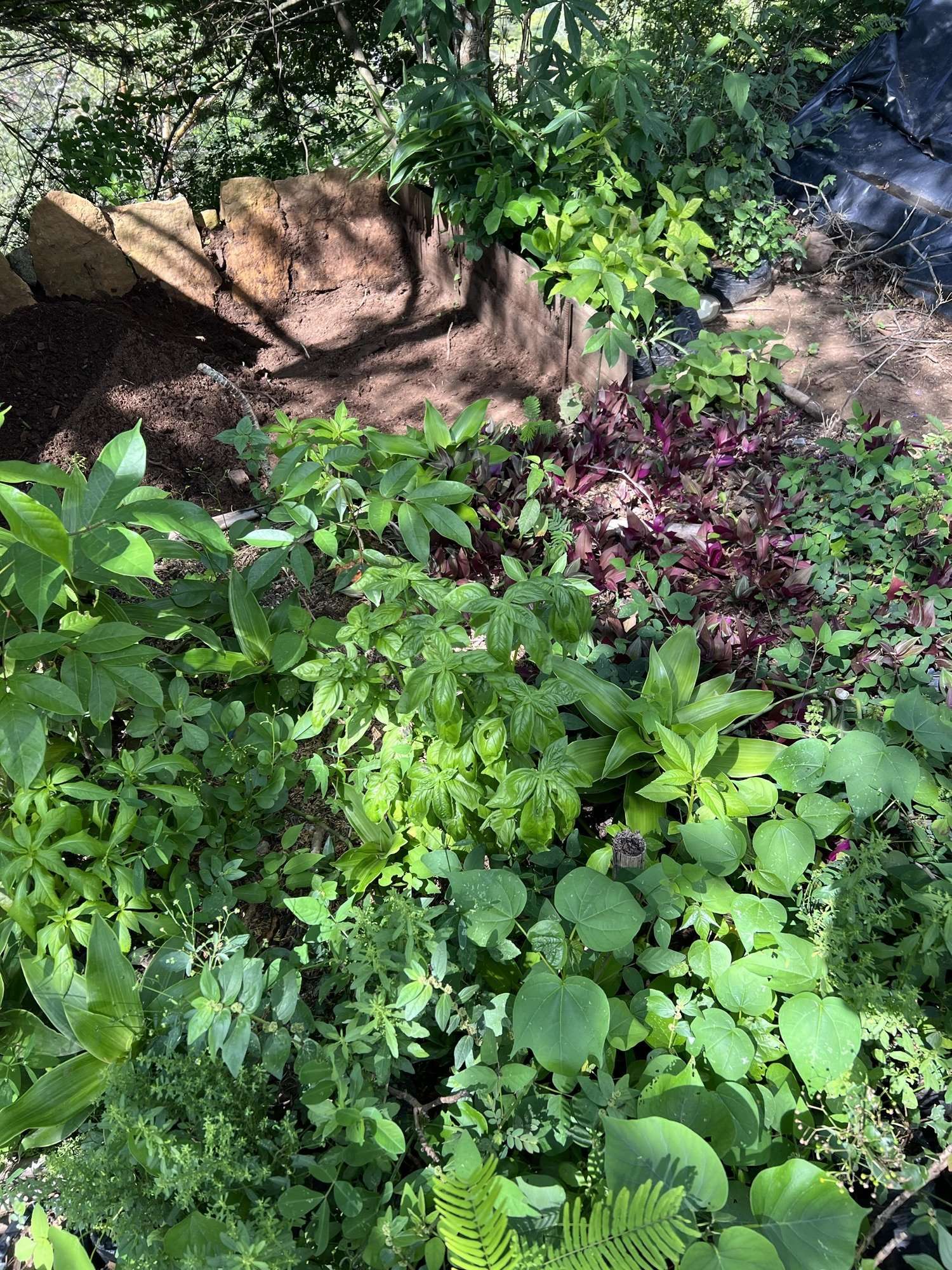
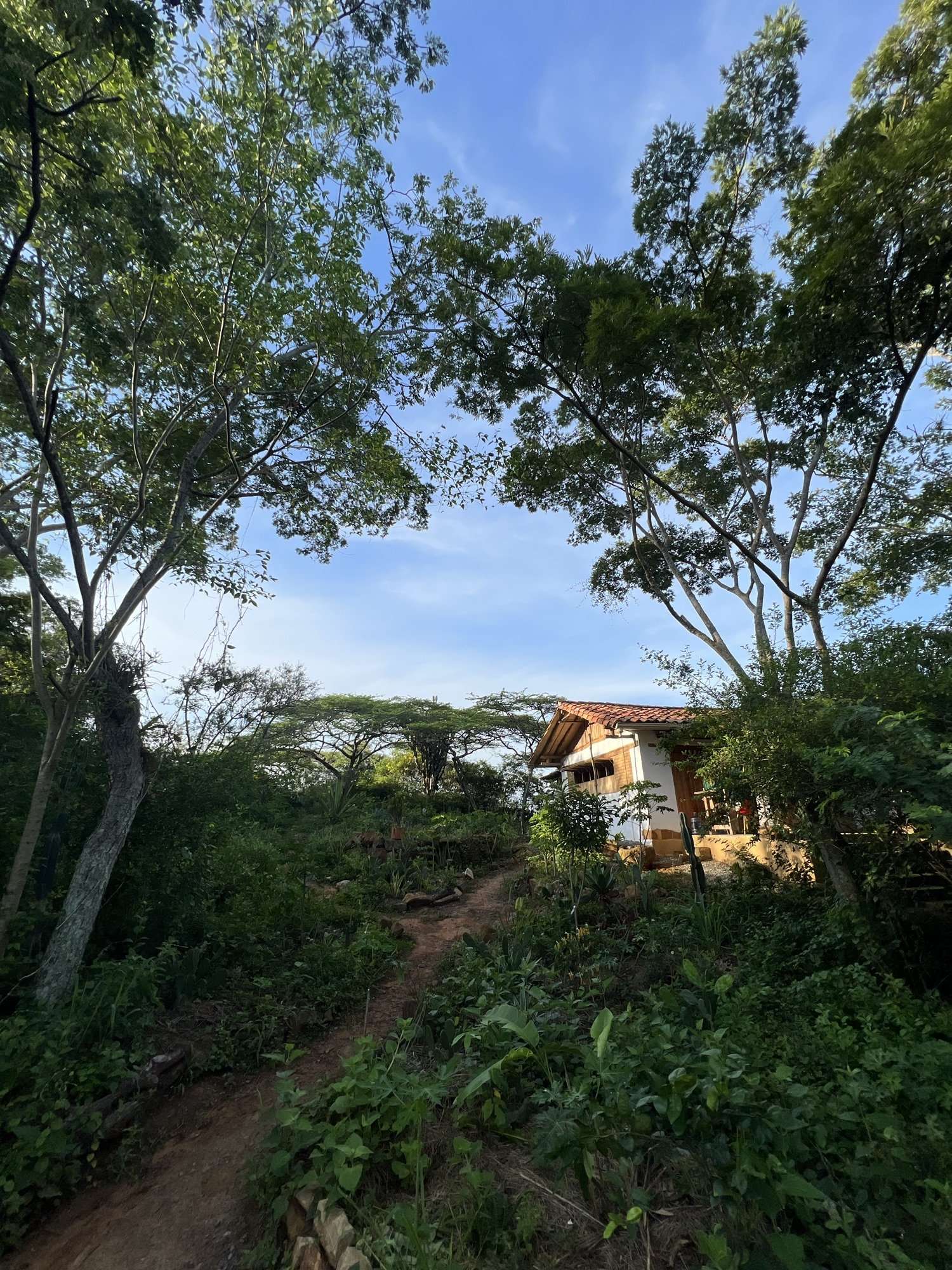
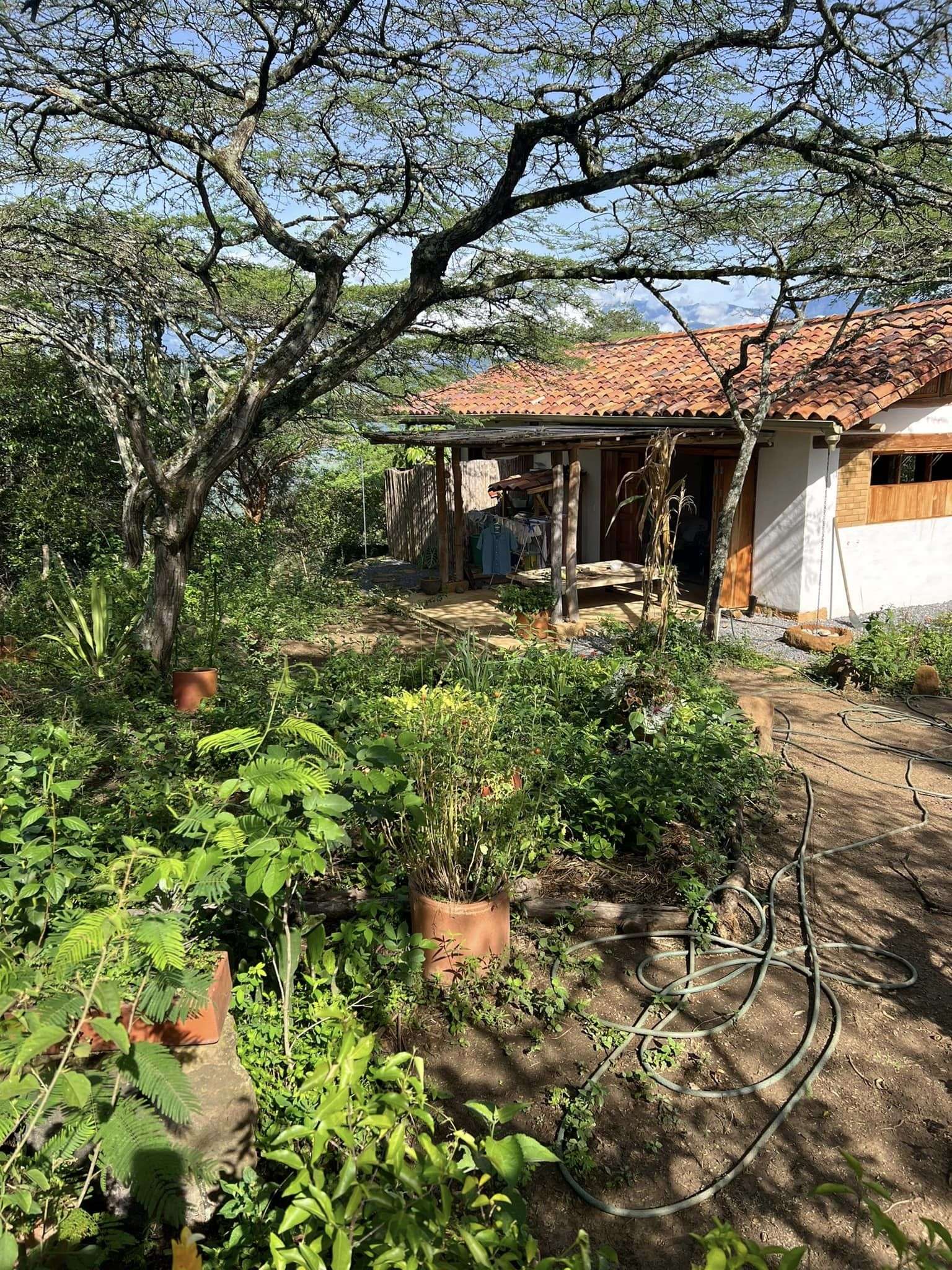
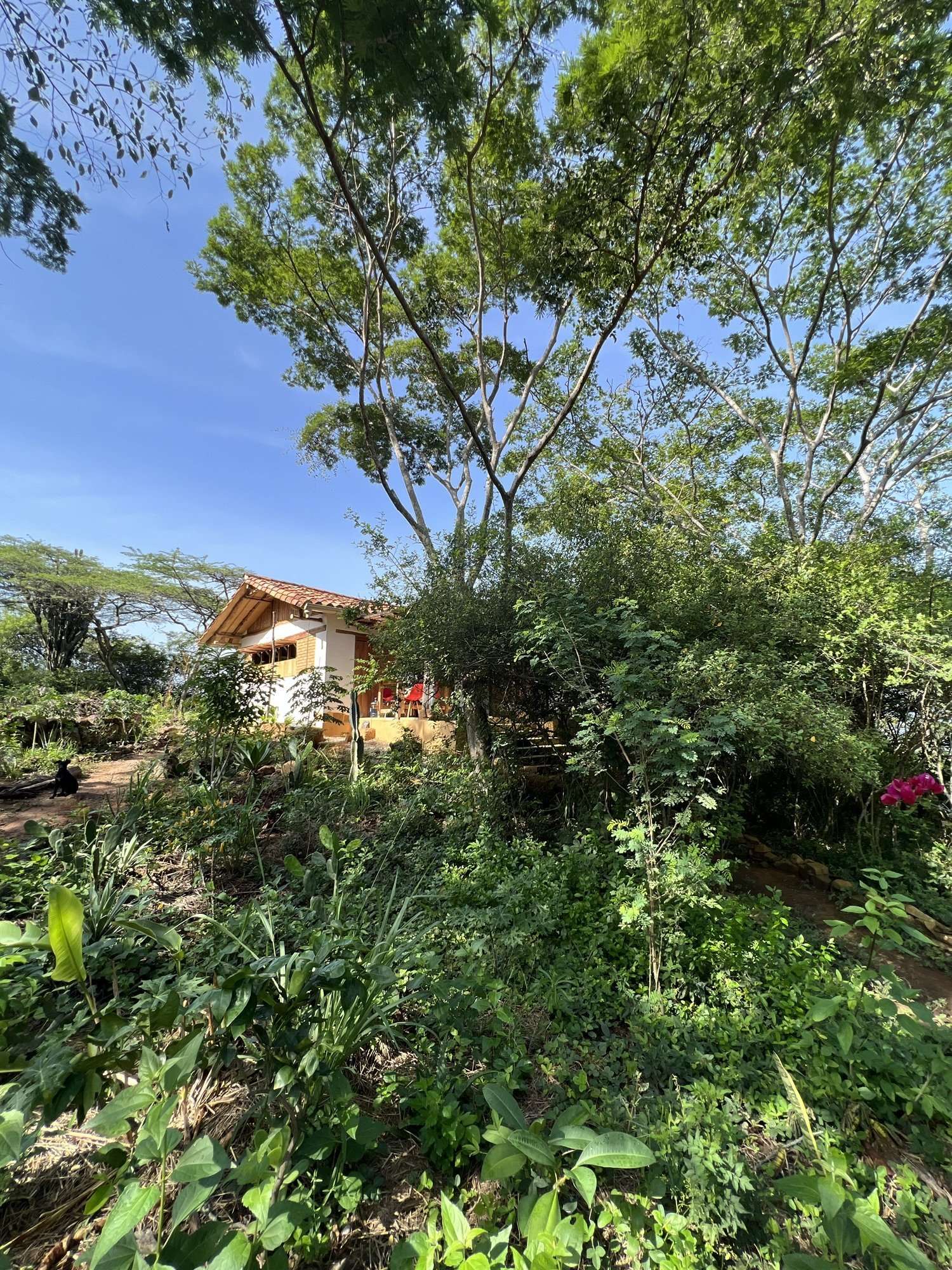
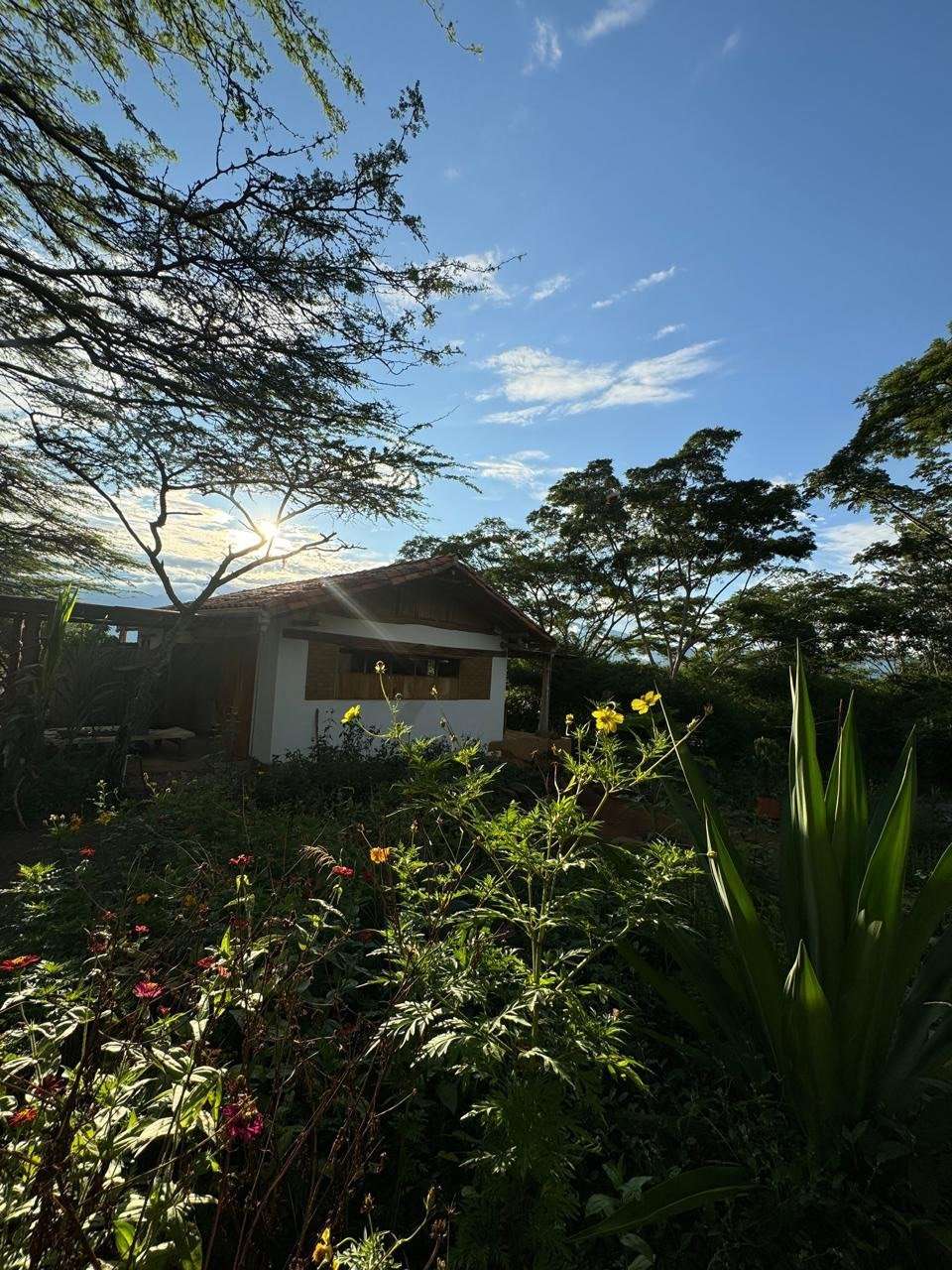
This is the area around the house in December 2022, just after the house was finished. There are some native trees here (acacia) and a few other pioneers (uรฑa de gato) but mostly bare and compacted soil with almost no organic content.

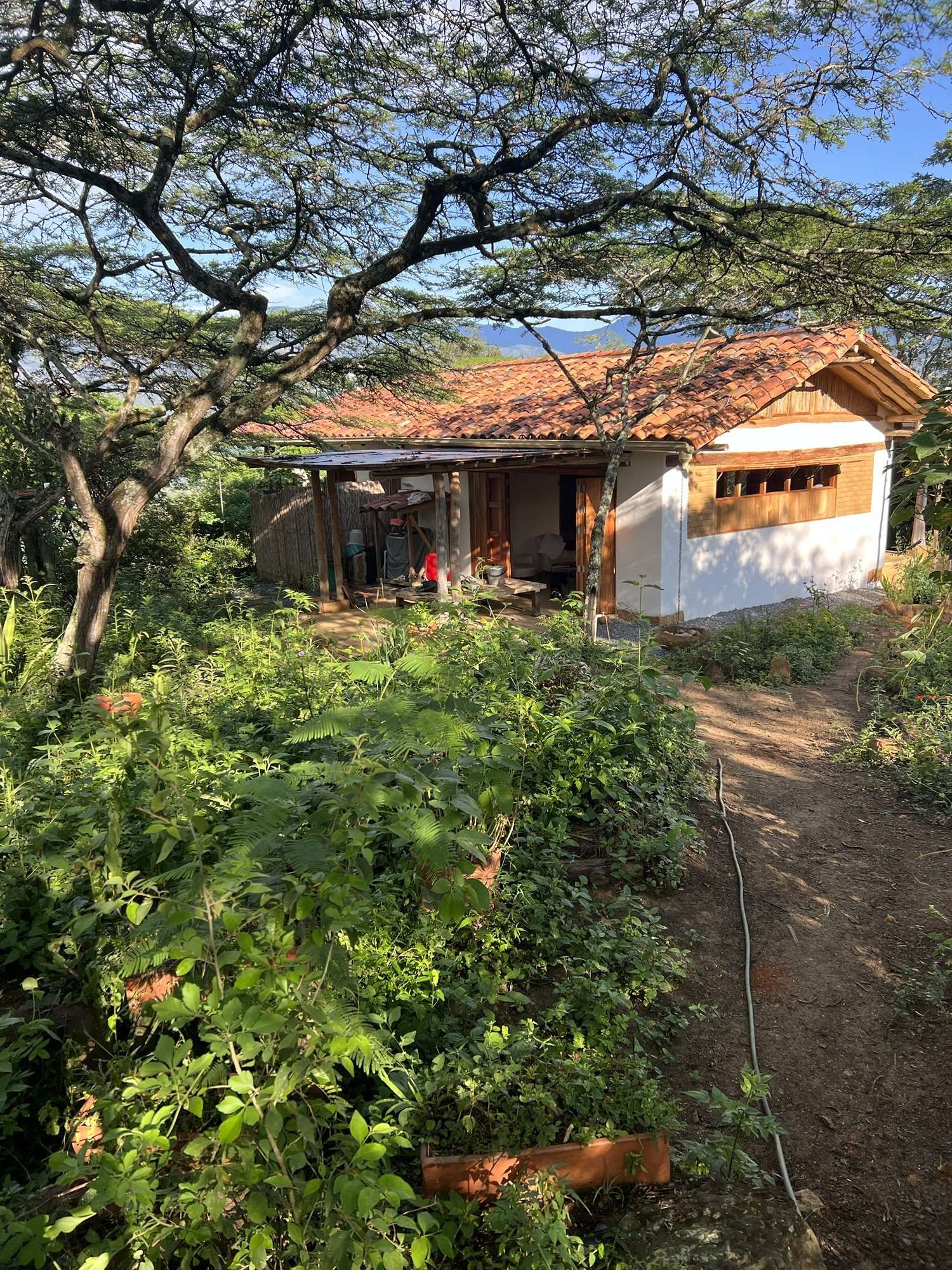
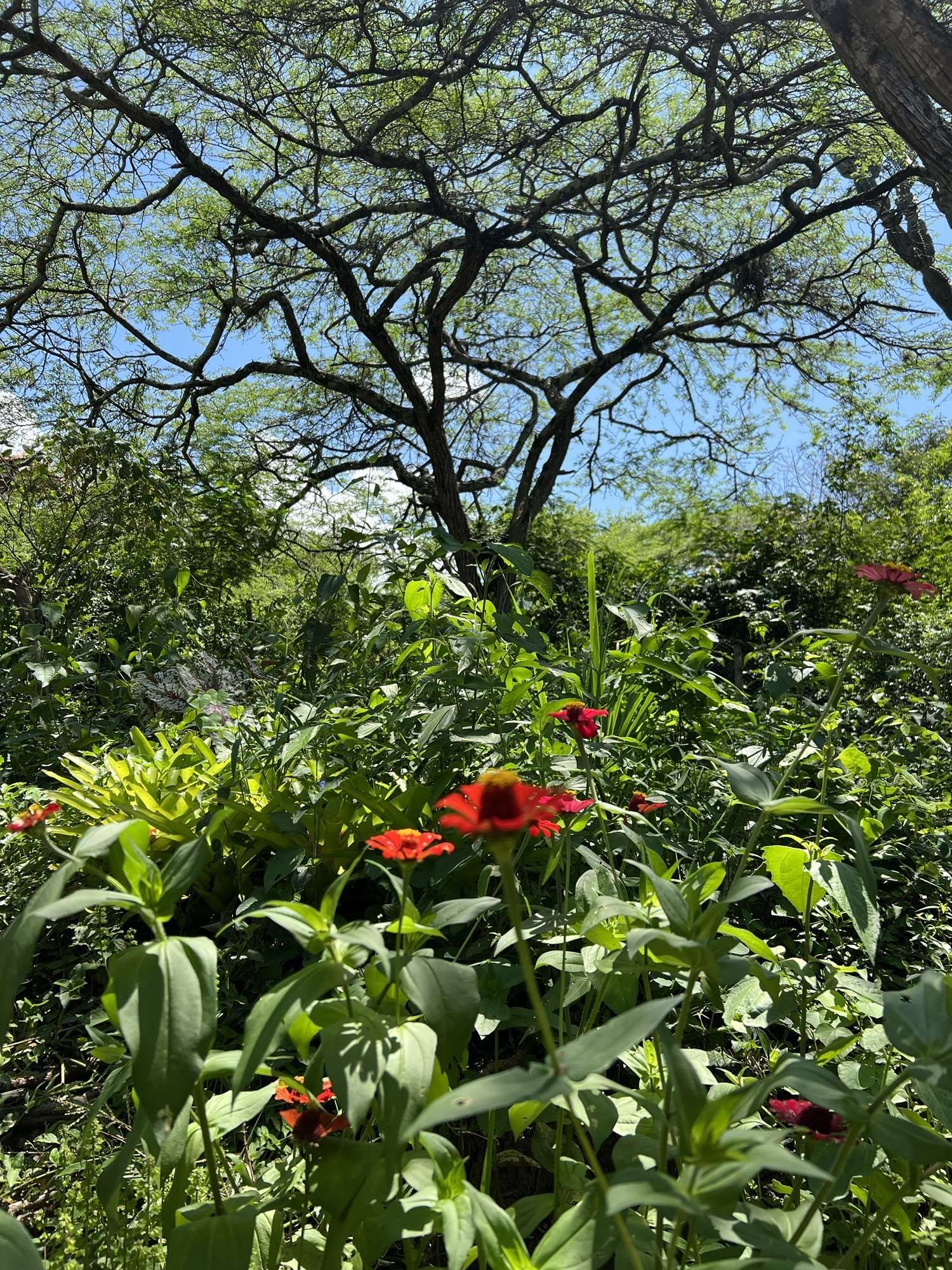
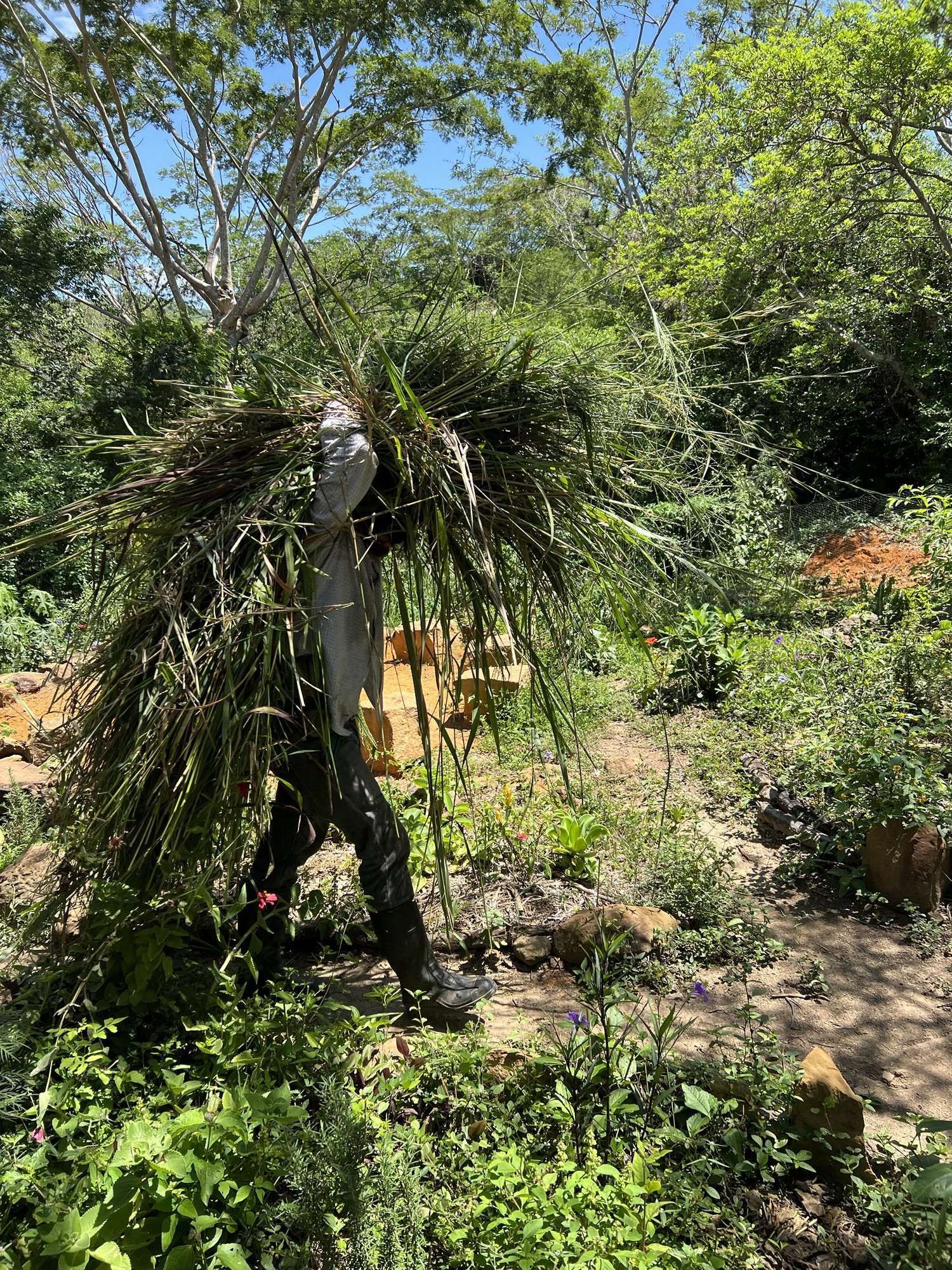
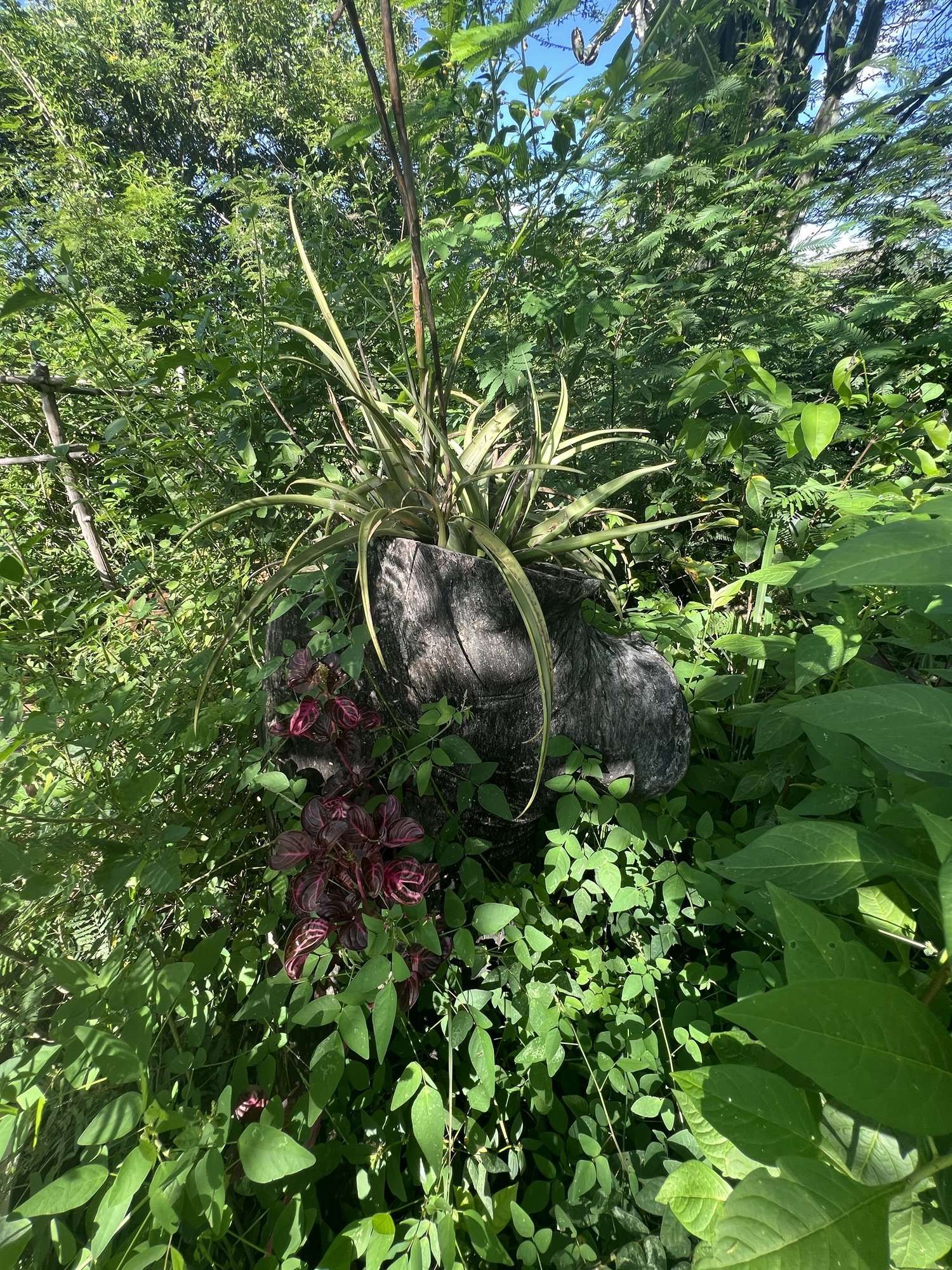
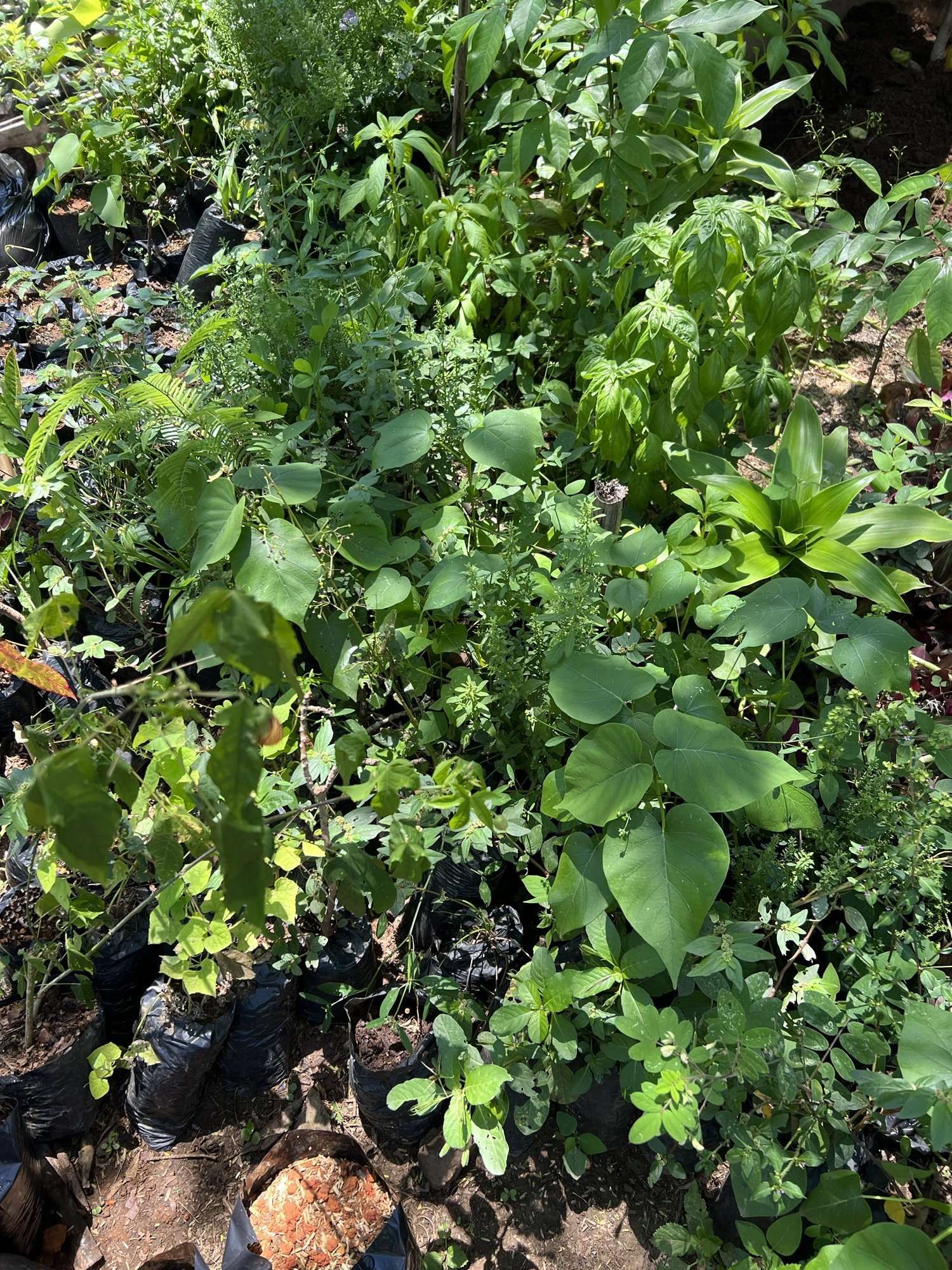
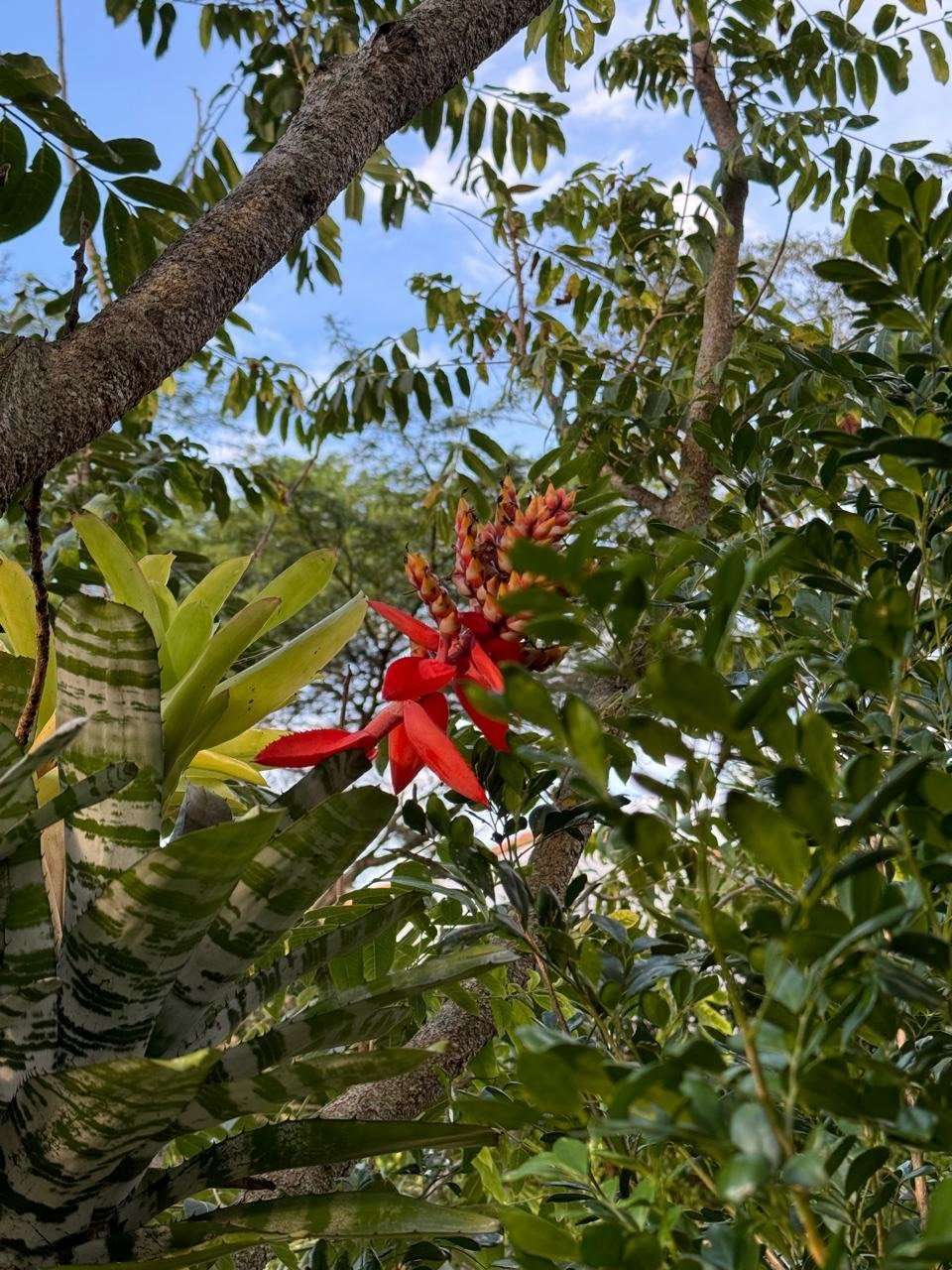
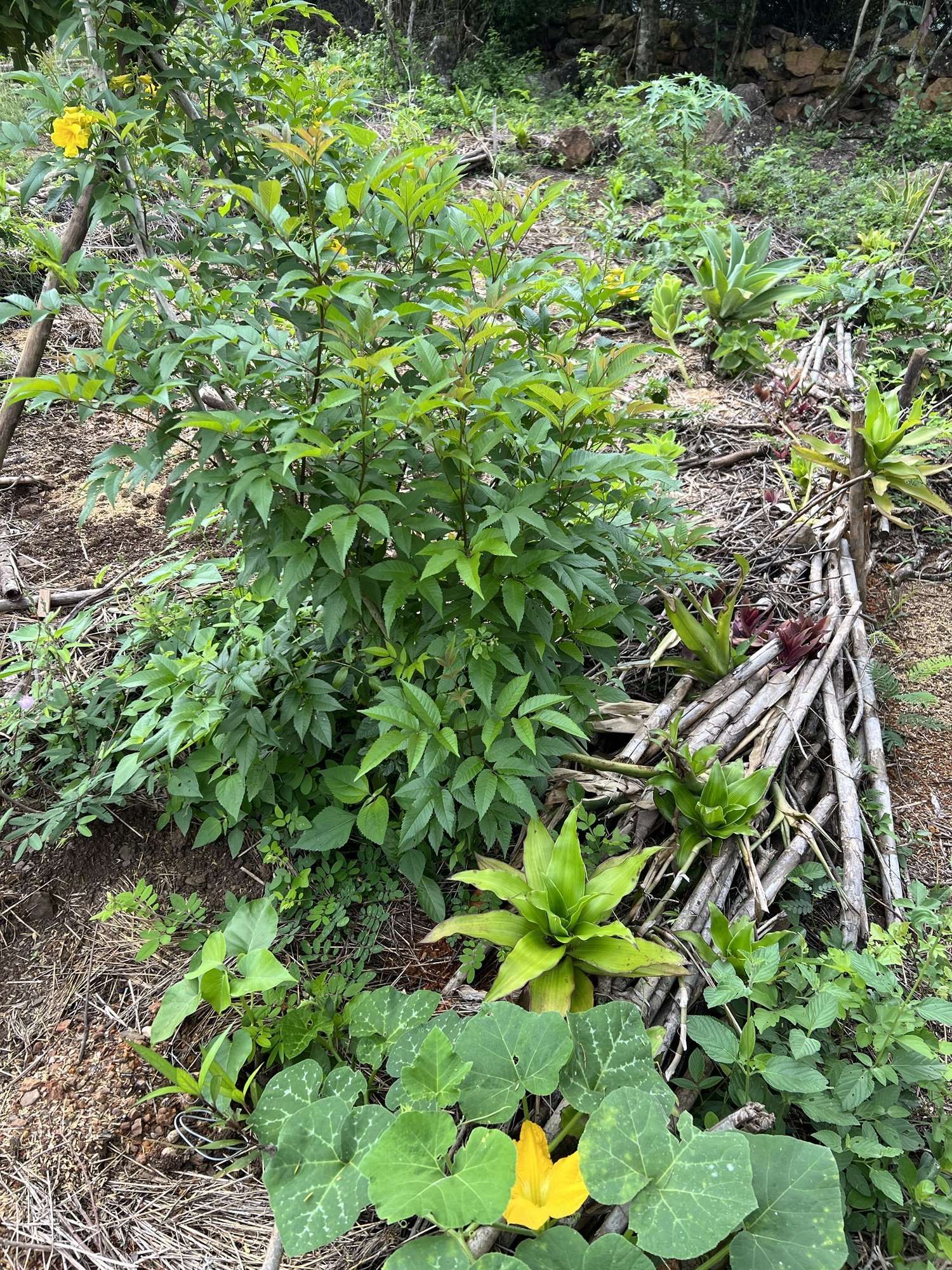
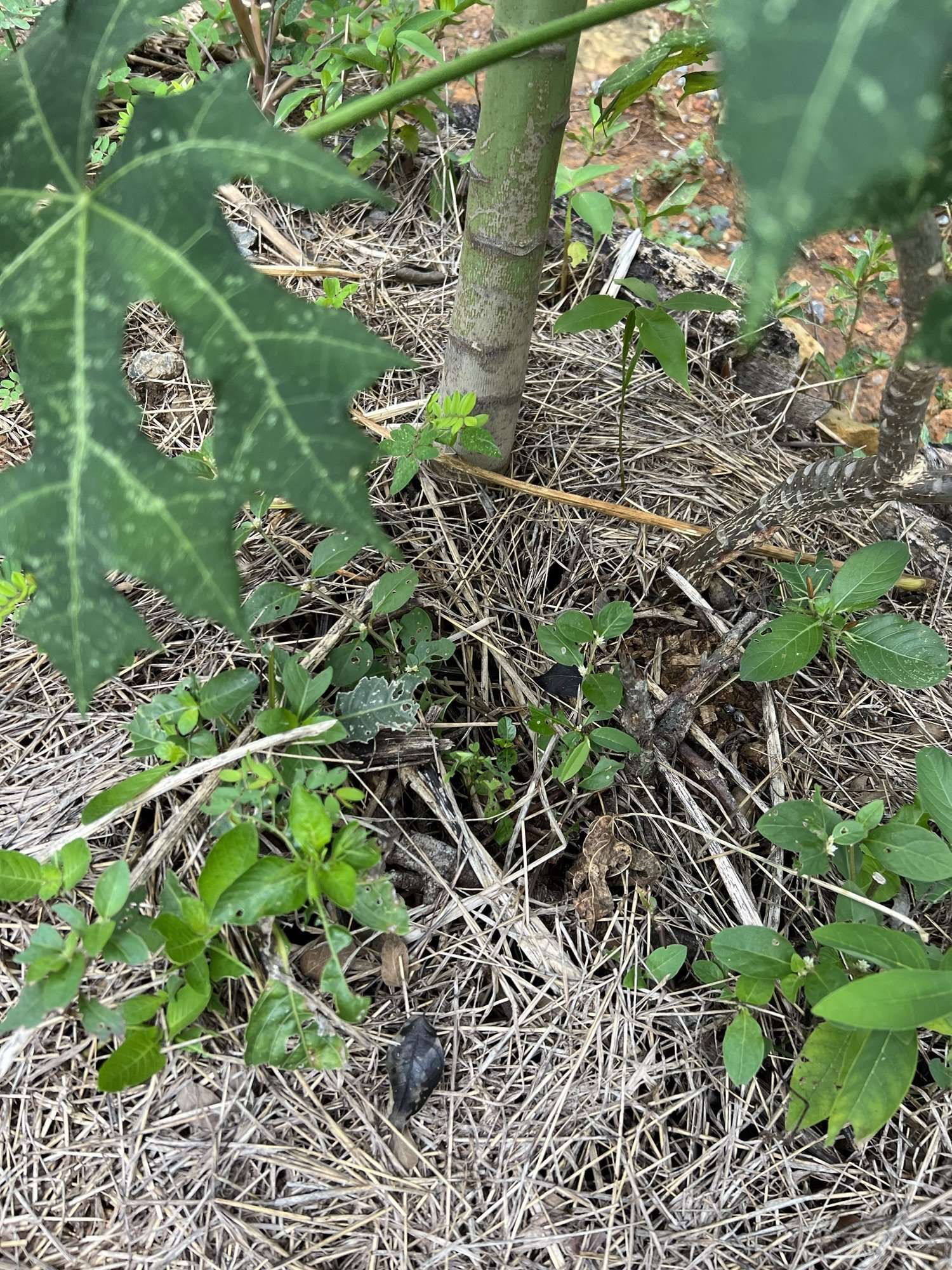
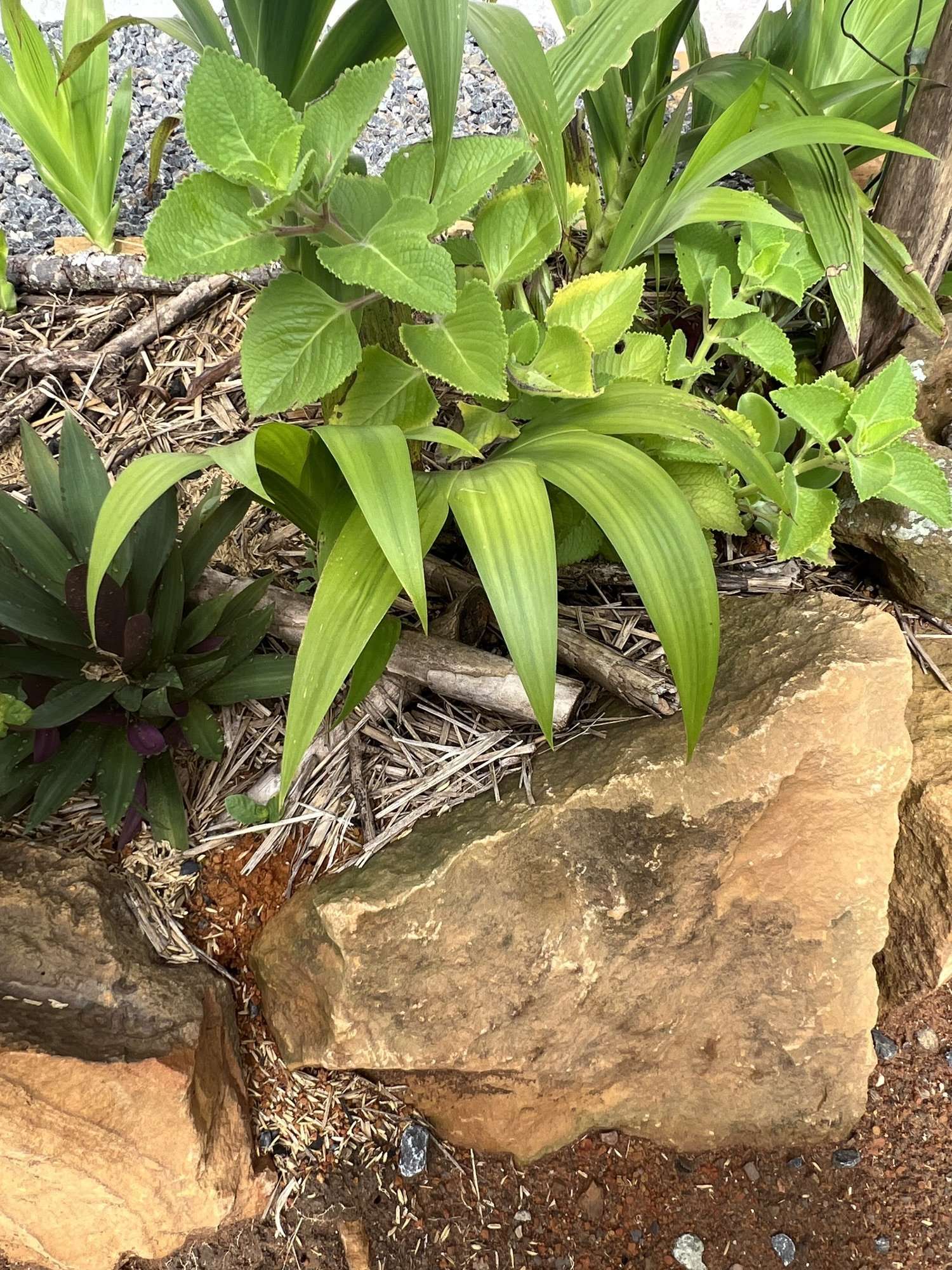
The photos at the beginning of this article are from these days, October 2024, almost two years later. As mentioned above, we did some of the work in 2023 although the vast majority is from the last six or so months.

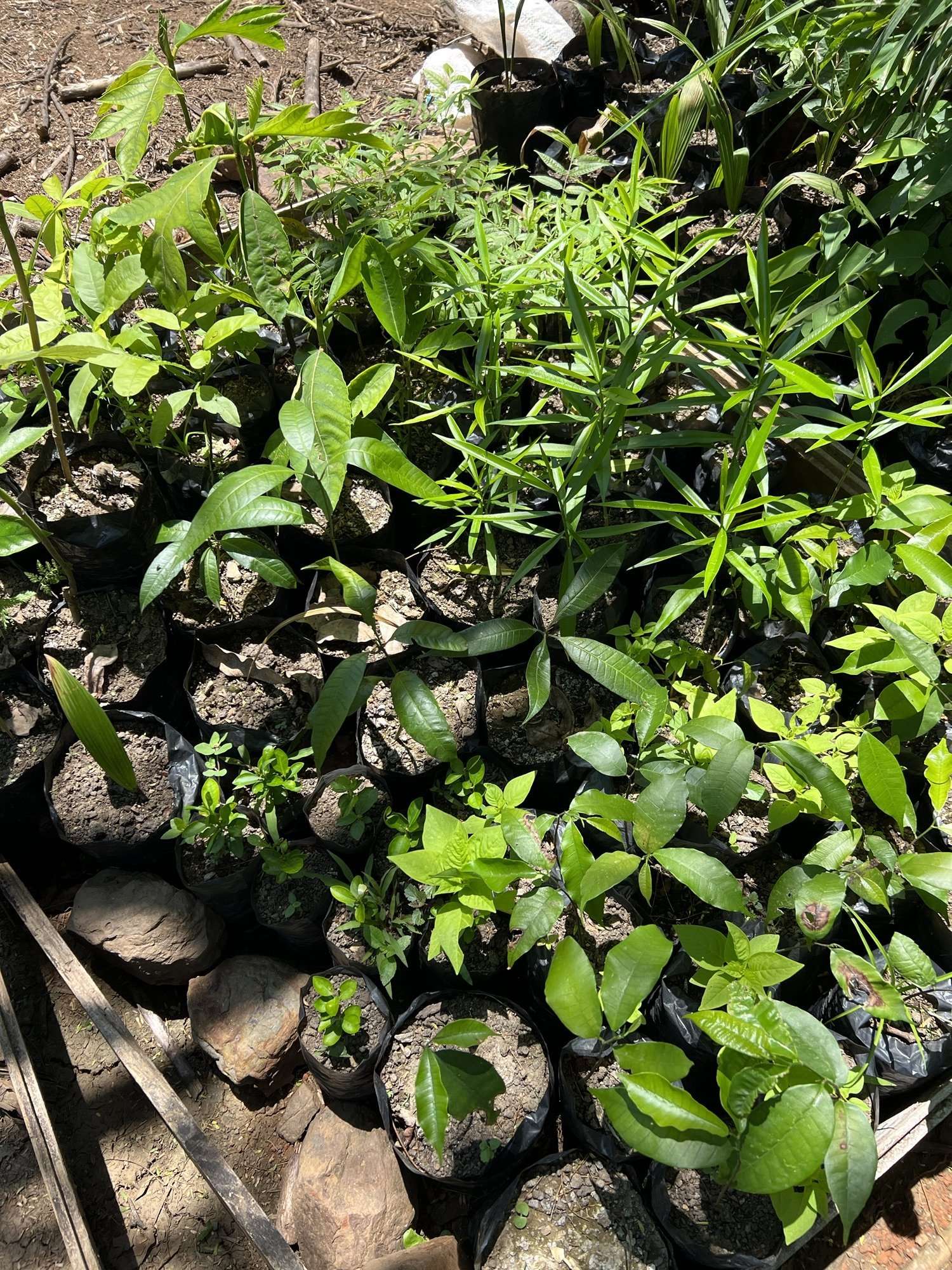
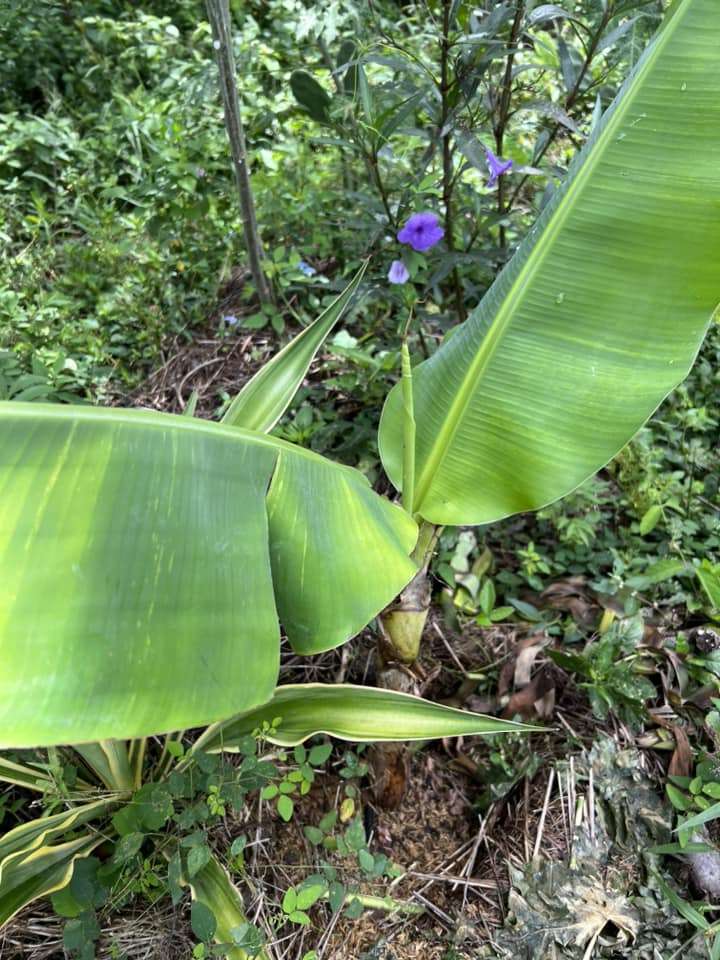
A few photos from our nursery and our most recent plant delivery (108 trees from Santi and his family). The nursery has a few hundred plants right now, some grown by us from seeds and some from other growers in the area. It’s a mix of native and non-native food-producing plants. The non-natives are non-invasive and generally well-suited to this climate.

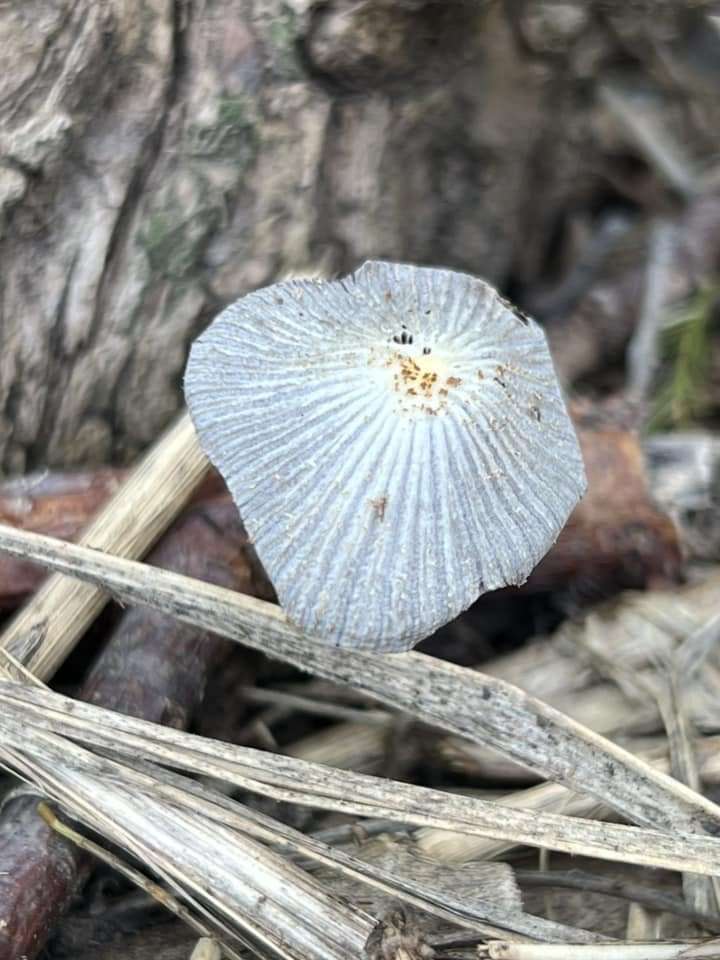
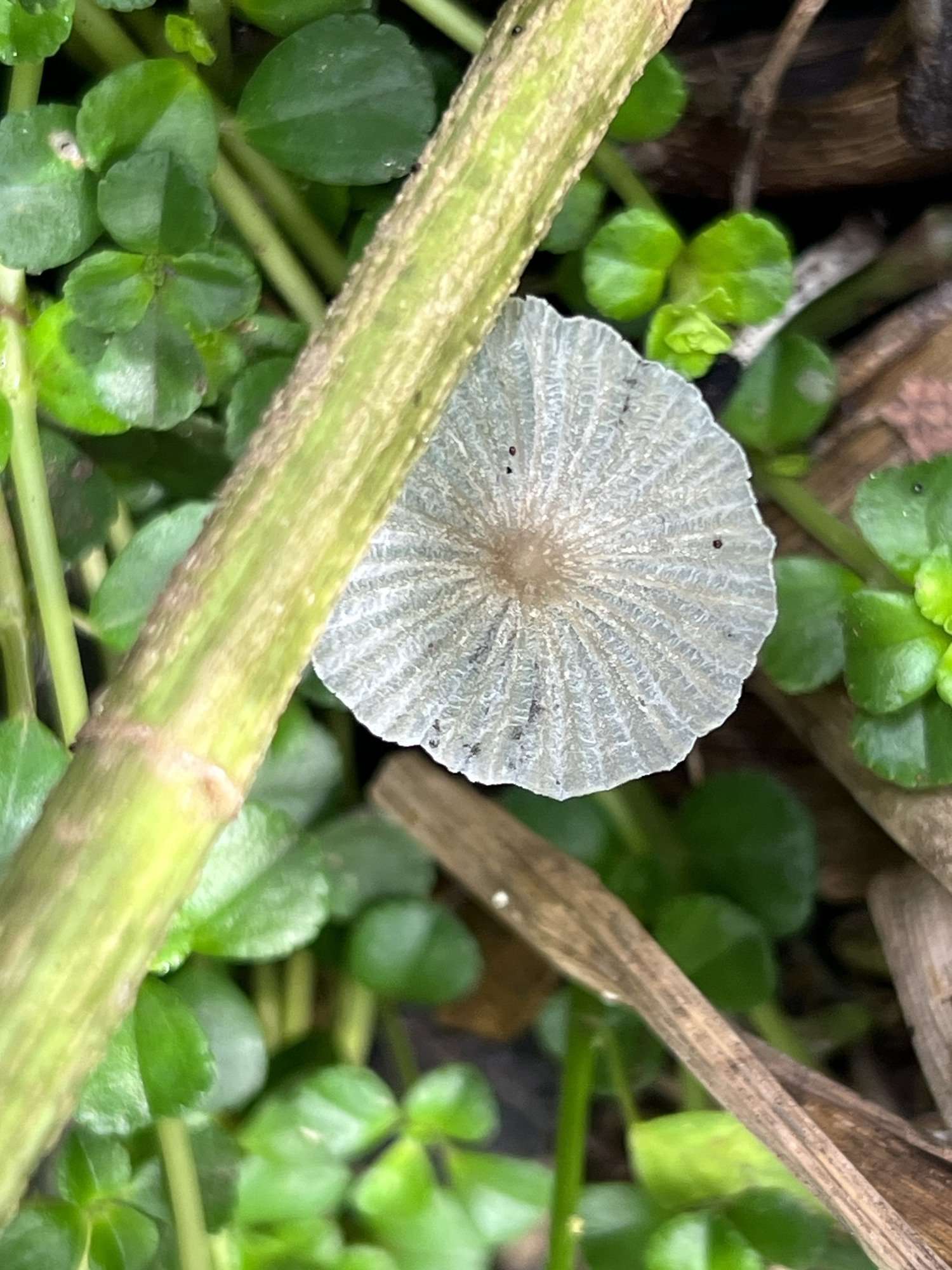
When we came, the soil around the house was too barren and dry for mushrooms. These days, we find mushrooms everywhere in the garden/food forest. It’s a sign that the microclimate is changing with the soil building, mulching, and wide diversity of young plant life. (The last one is from the main path and close to the big house.)

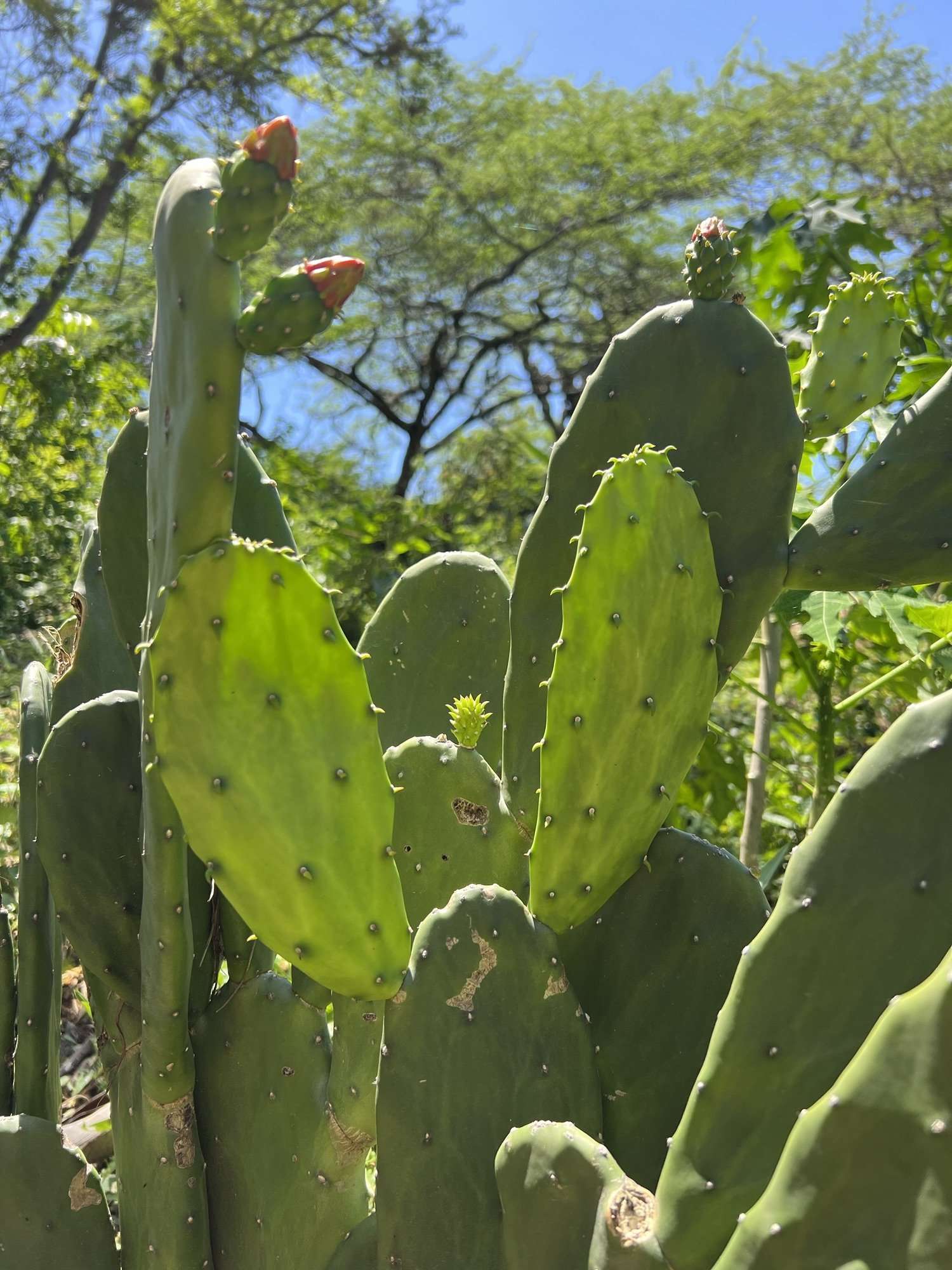
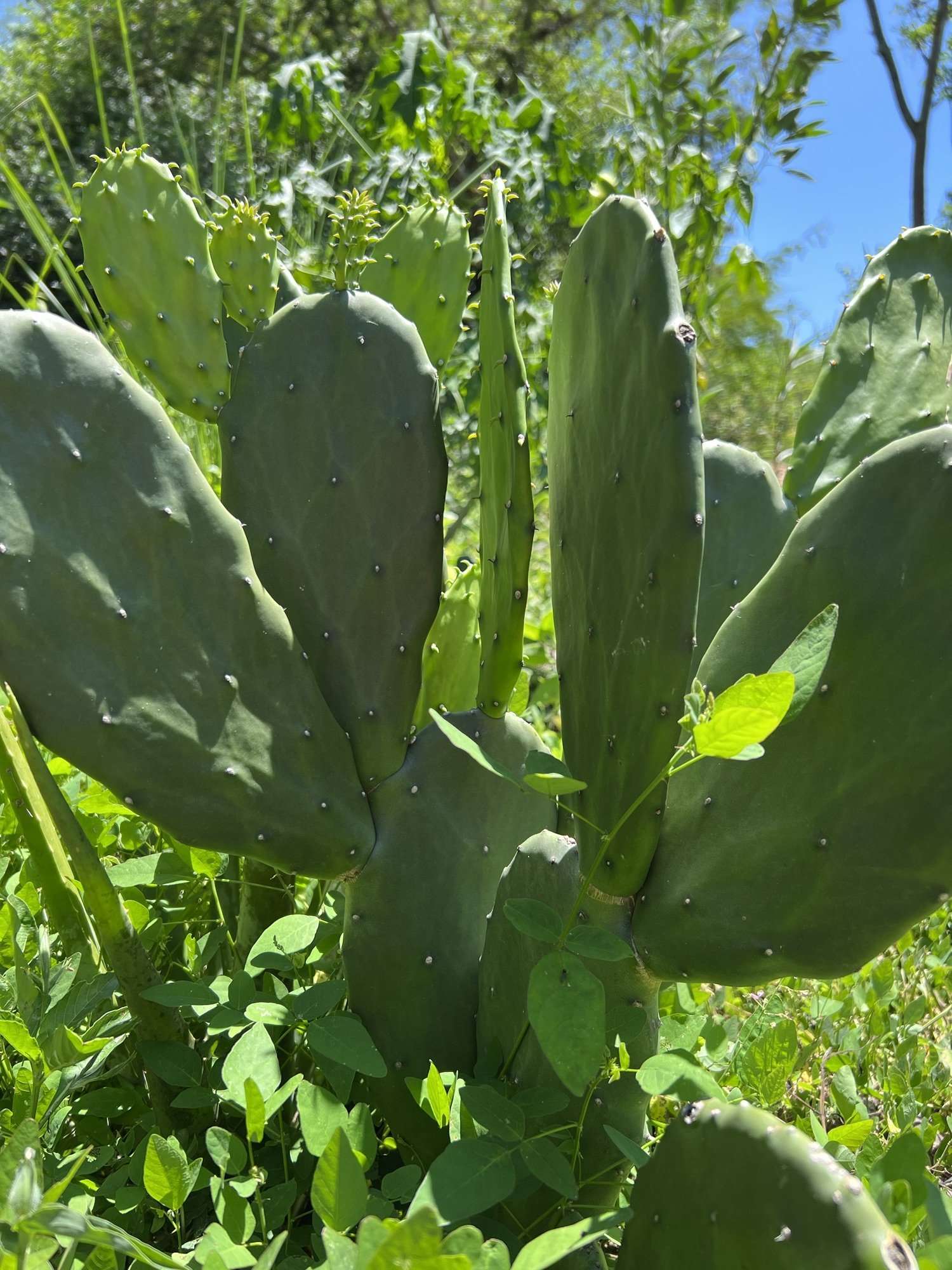
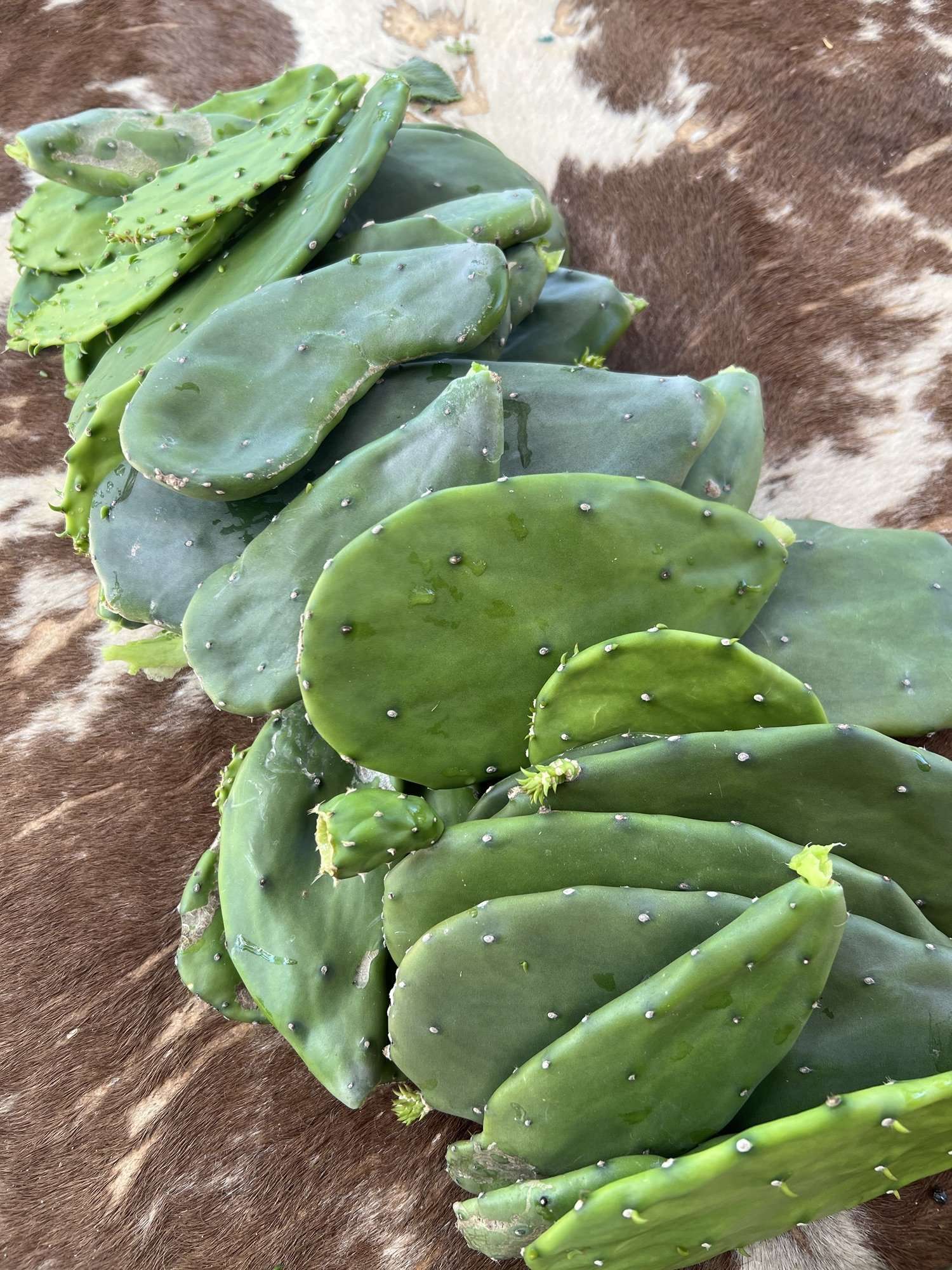
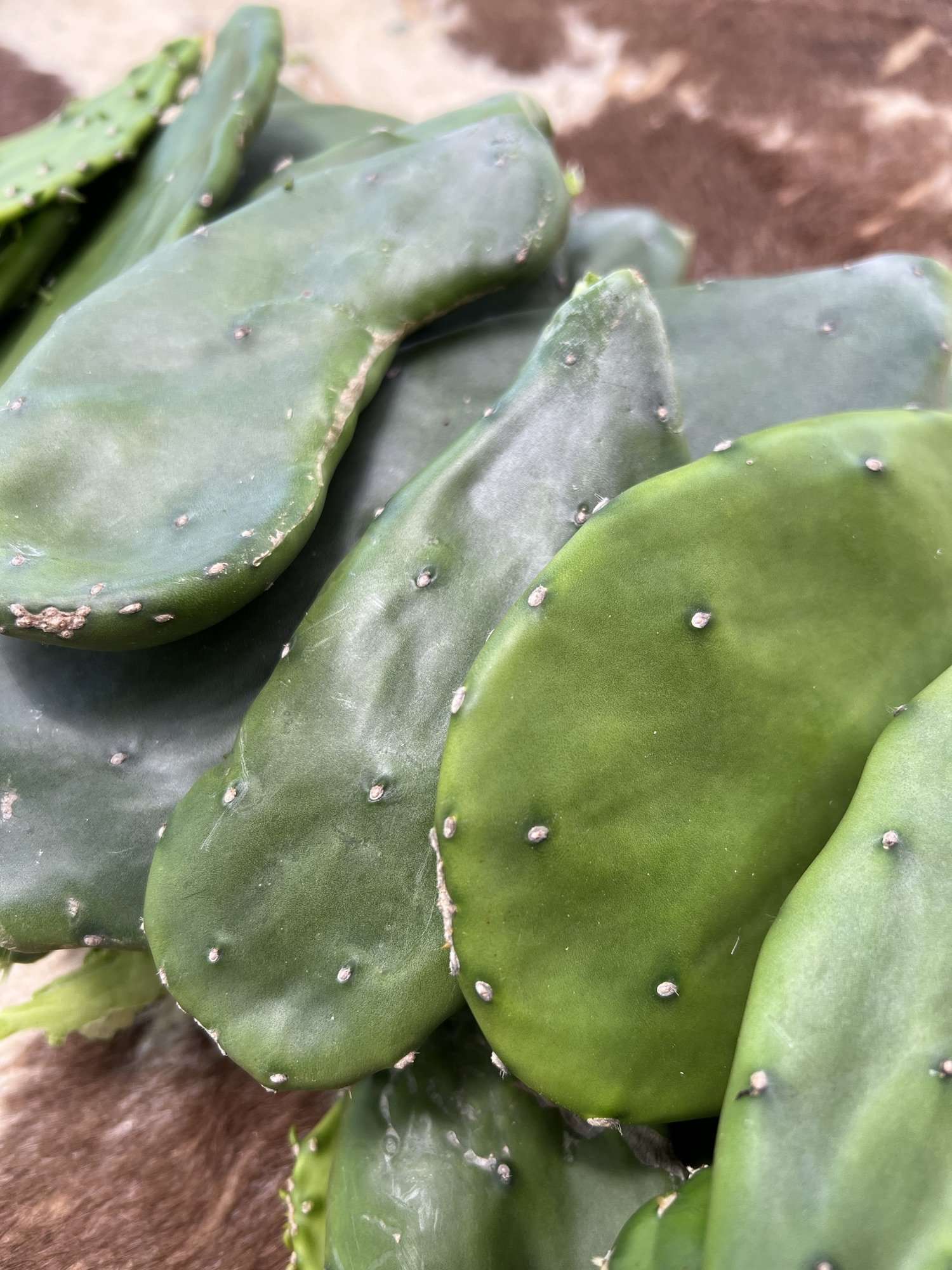
We found nopal (prickly pear) in town, close to Casa Comรบn, and brought a couple (?) of pads here. Now, we have maybe 30 or 40 nopals growing here. As they grow more pads, we take them and plant them in more areas of the food forest. They are a good food source and also help the soil and ecosystem. This is very likely a Mexican variety used for food.

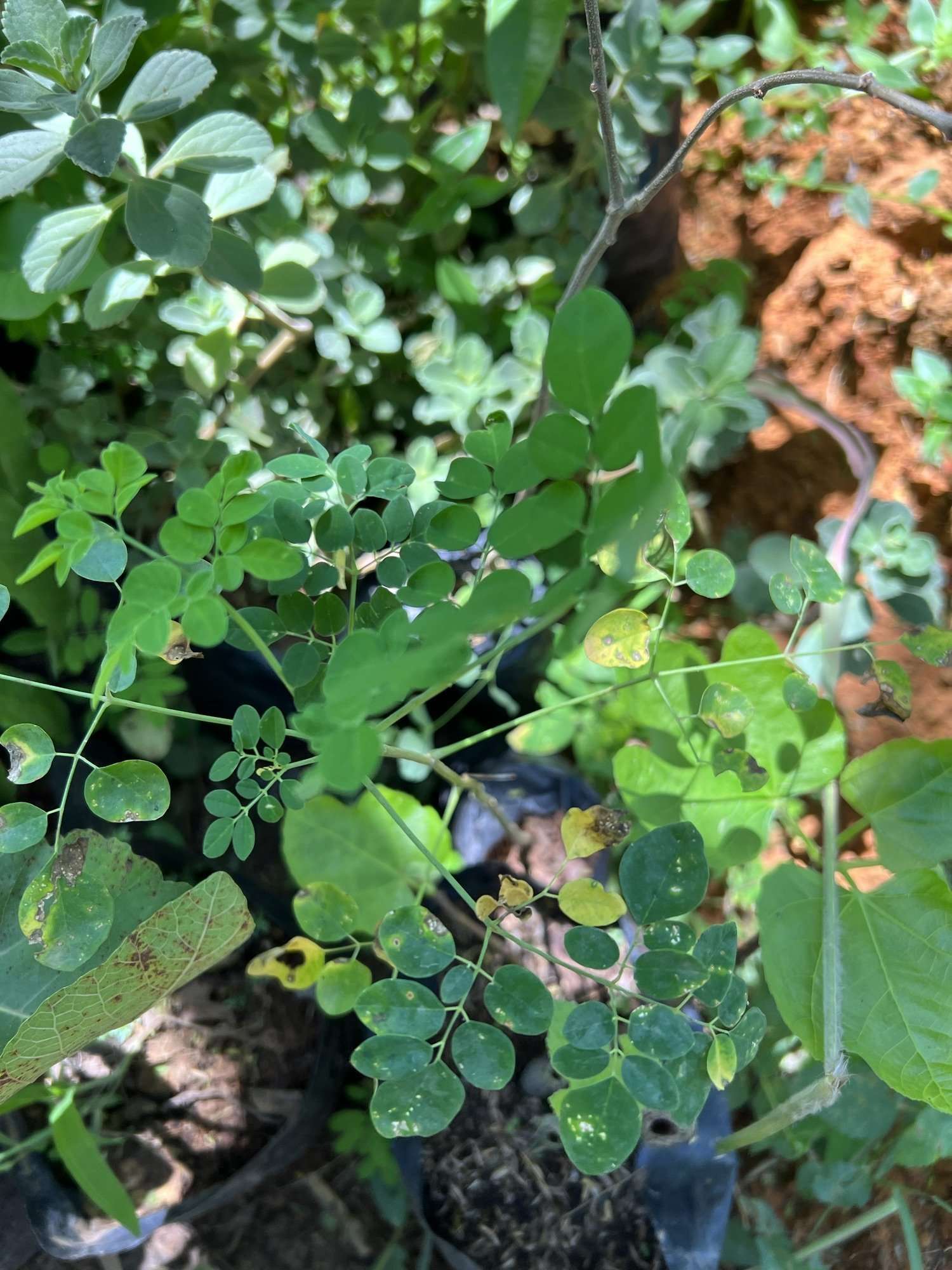
We have planted a few moringa trees, and I want to plant more. They are nutritious and medicinal.

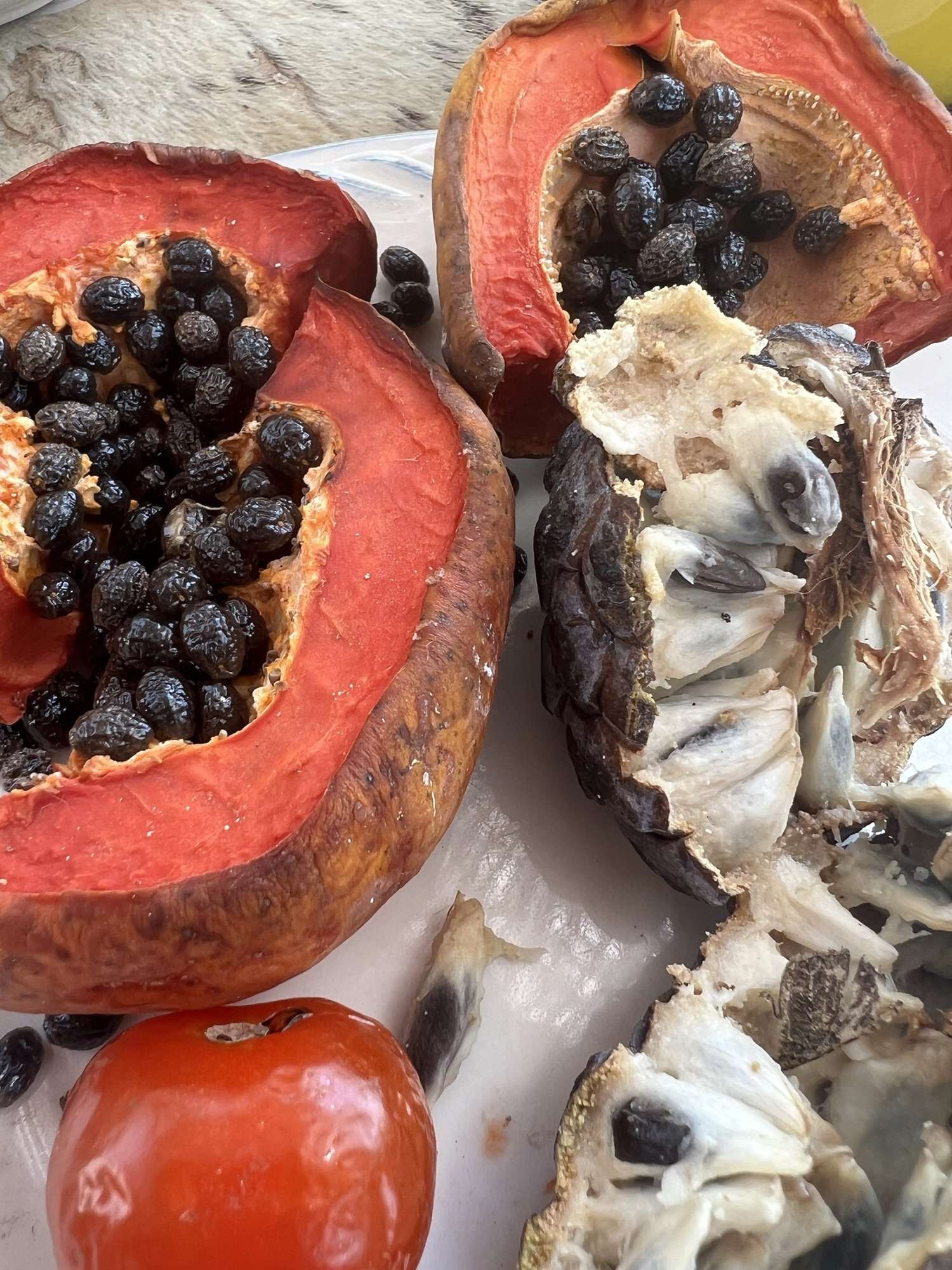
We save seeds from the food we are eating and plant them in the food forest. If we want to give them a good chance of survival, we plant them in the nursery first and then in the ground. If it’s a plant we already have several of, we may plant the seeds directly in the ground.

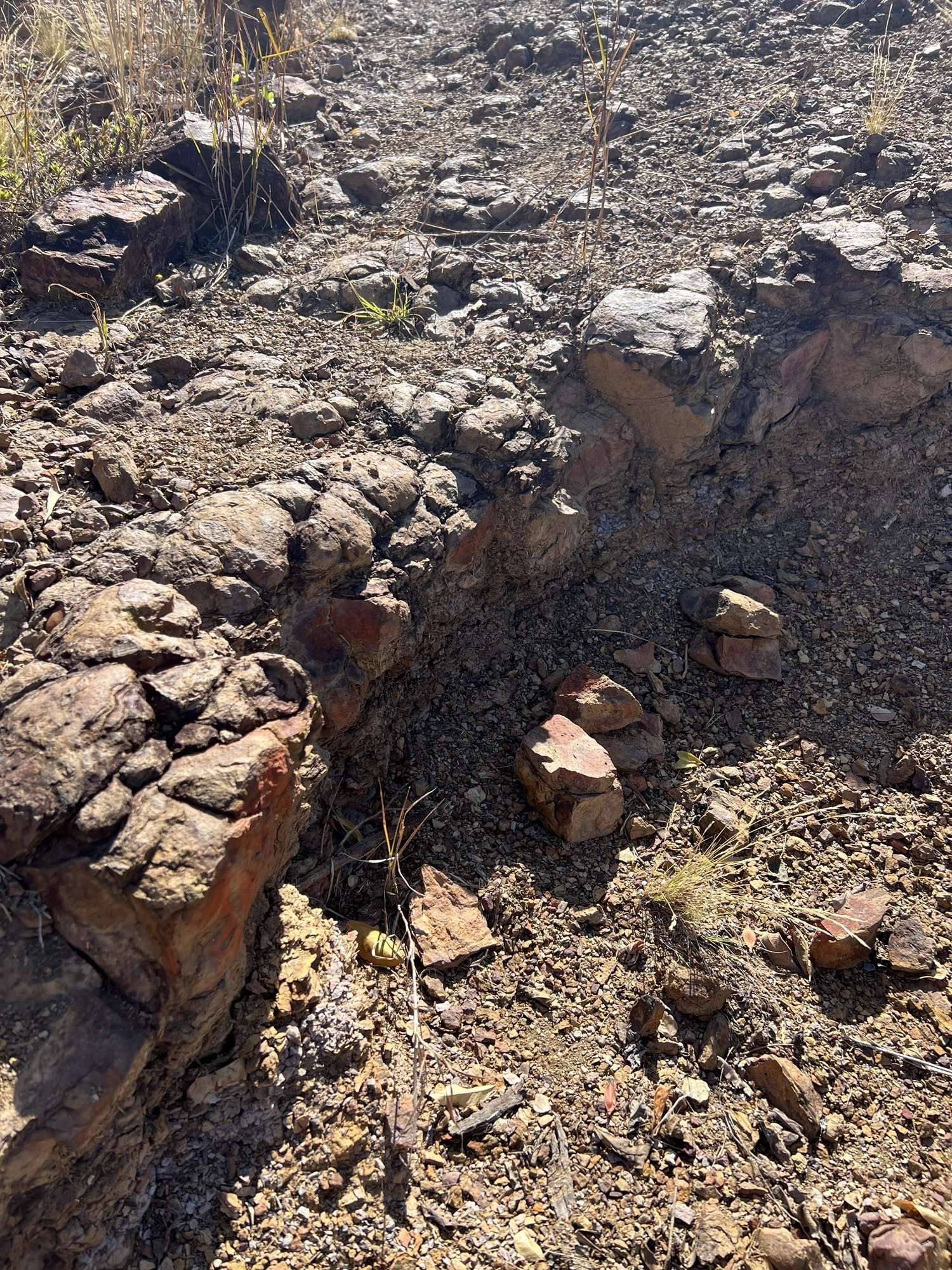
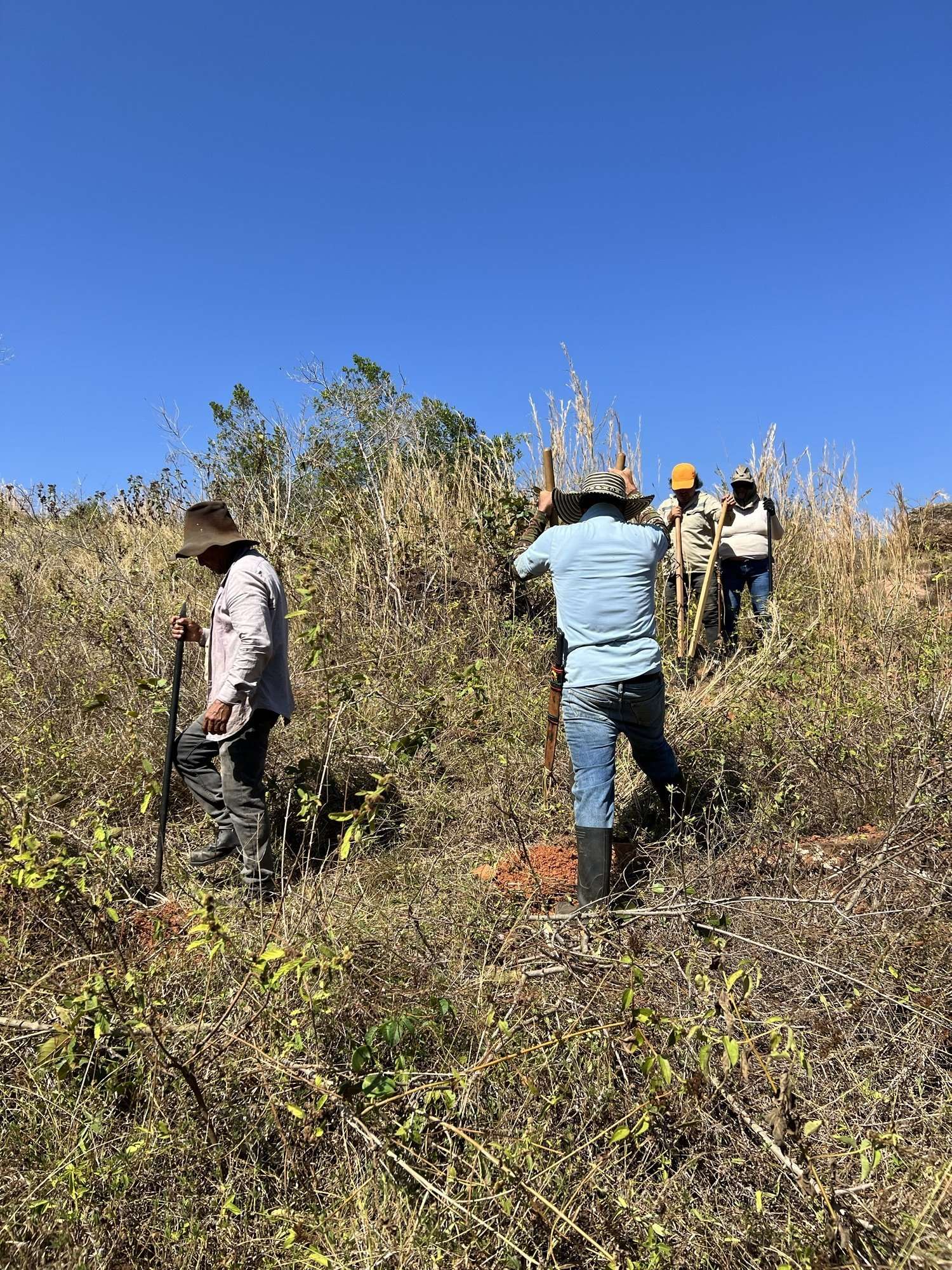
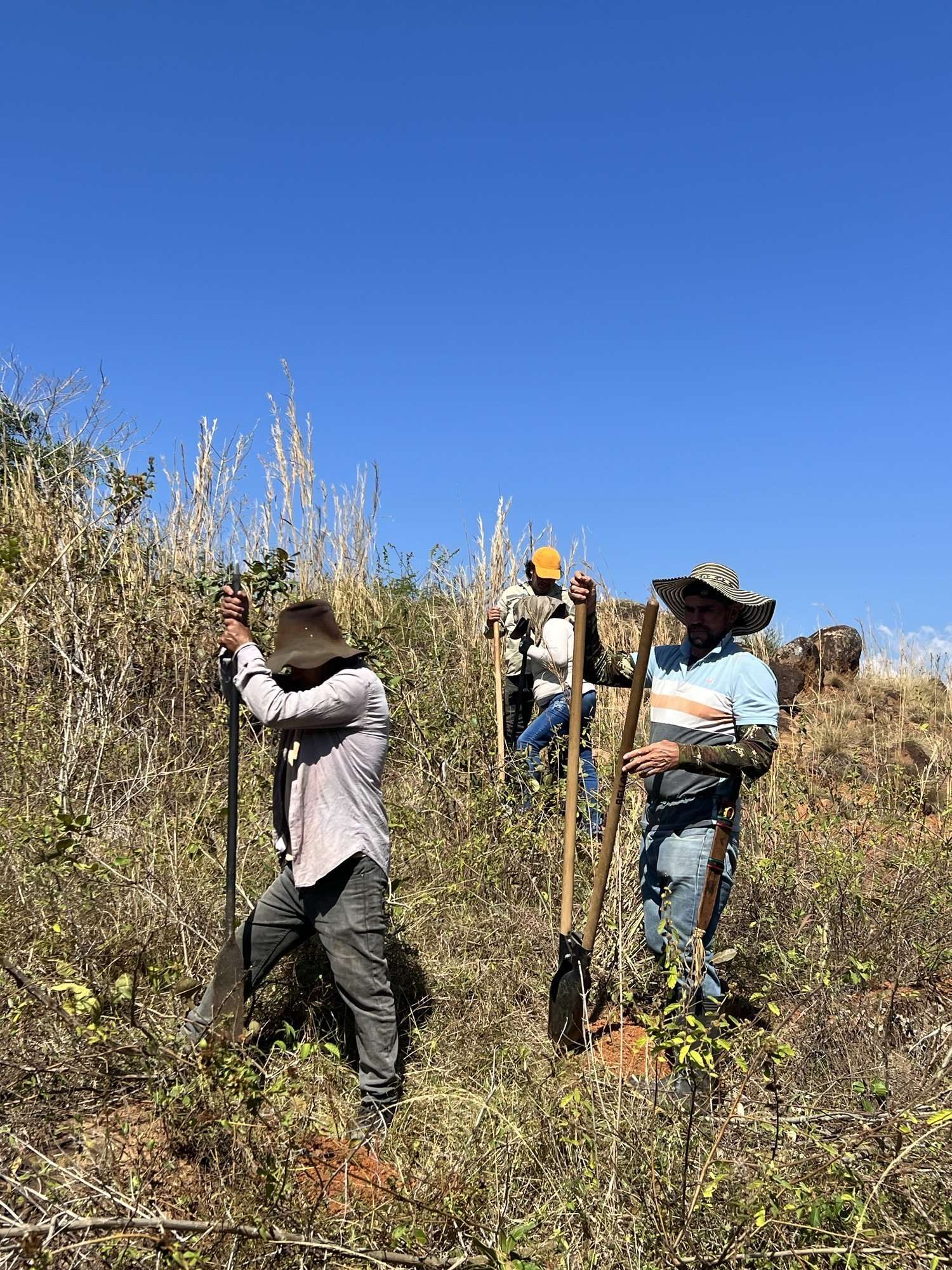
Some photos from January 2024 from the more arid and eroded area of Milagros. This is along the ridge and close to the peak. Other areas of the land have more vegetation, although often mostly pioneers.

A crew working with Fundaciรณn Guayacanal dig holes for later planting, on January 16, 2024.

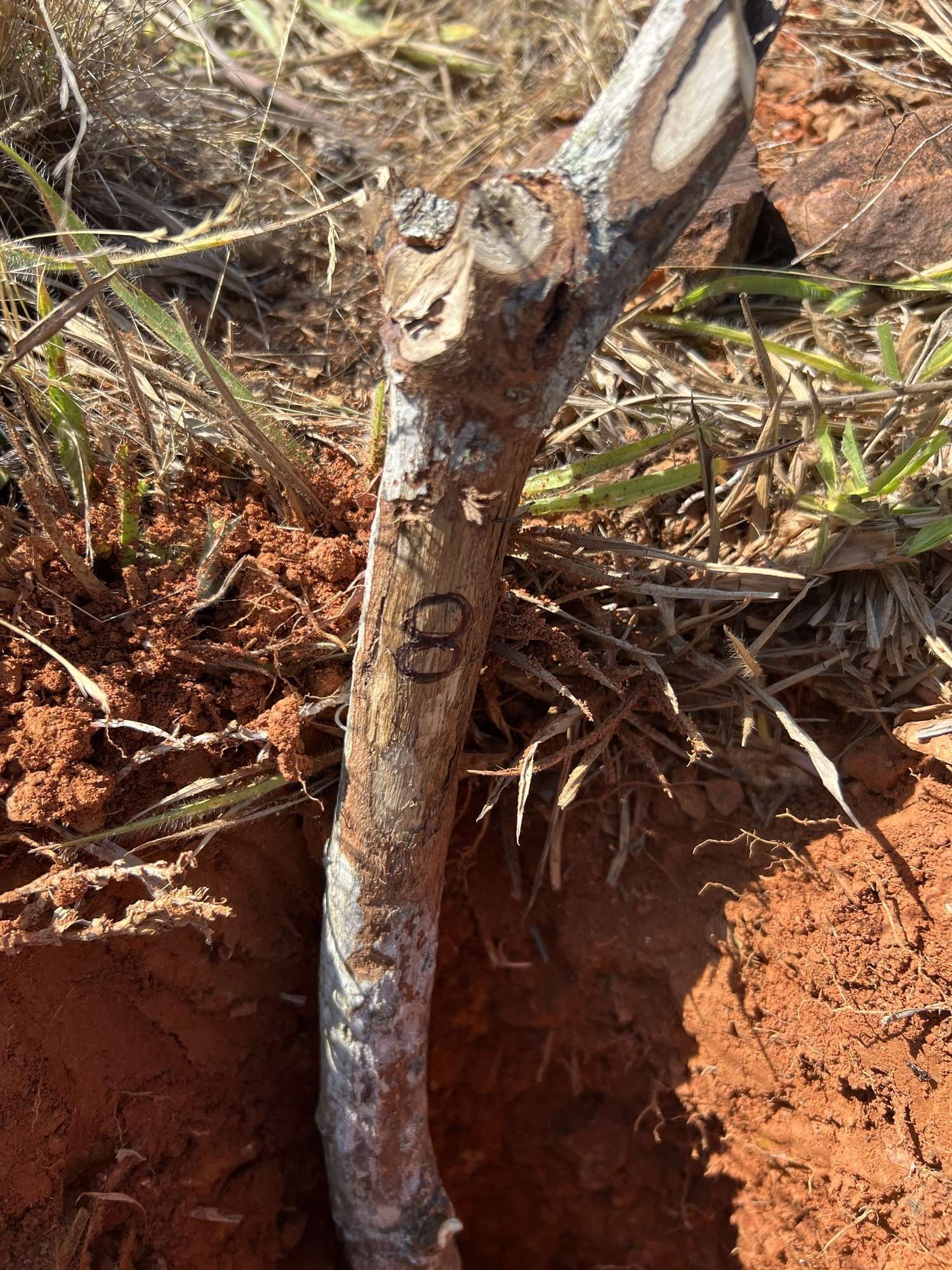
Some of the two thousand trees planted by Fundaciรณn Guayacanal in April 2024. The photos are from early October. I went to the areas with the most difficult conditions and got the very unscientific impression that about a third didn’t make it, a third were alive and small, and a third were larger and thriving. It is to be expected that some don’t make it, especially in these conditions, and we also had a few weeks without rain between April and now.

The photos were taken after a night of rain. Poor soil like this, with mostly sand, silt, and clay, is difficult for the plants in several ways. It lacks nutrients. It lacks a mulch layer to keep the moisture in the ground. Because of the compacted and hard soil, rainwater runs off and causes erosion instead of draining into the ground, and the roots have trouble penetrating the hard soil.

A few more photos from the arid and eroded zone. It has its own fleeting beauty. If all goes well, this will again be a forested area.

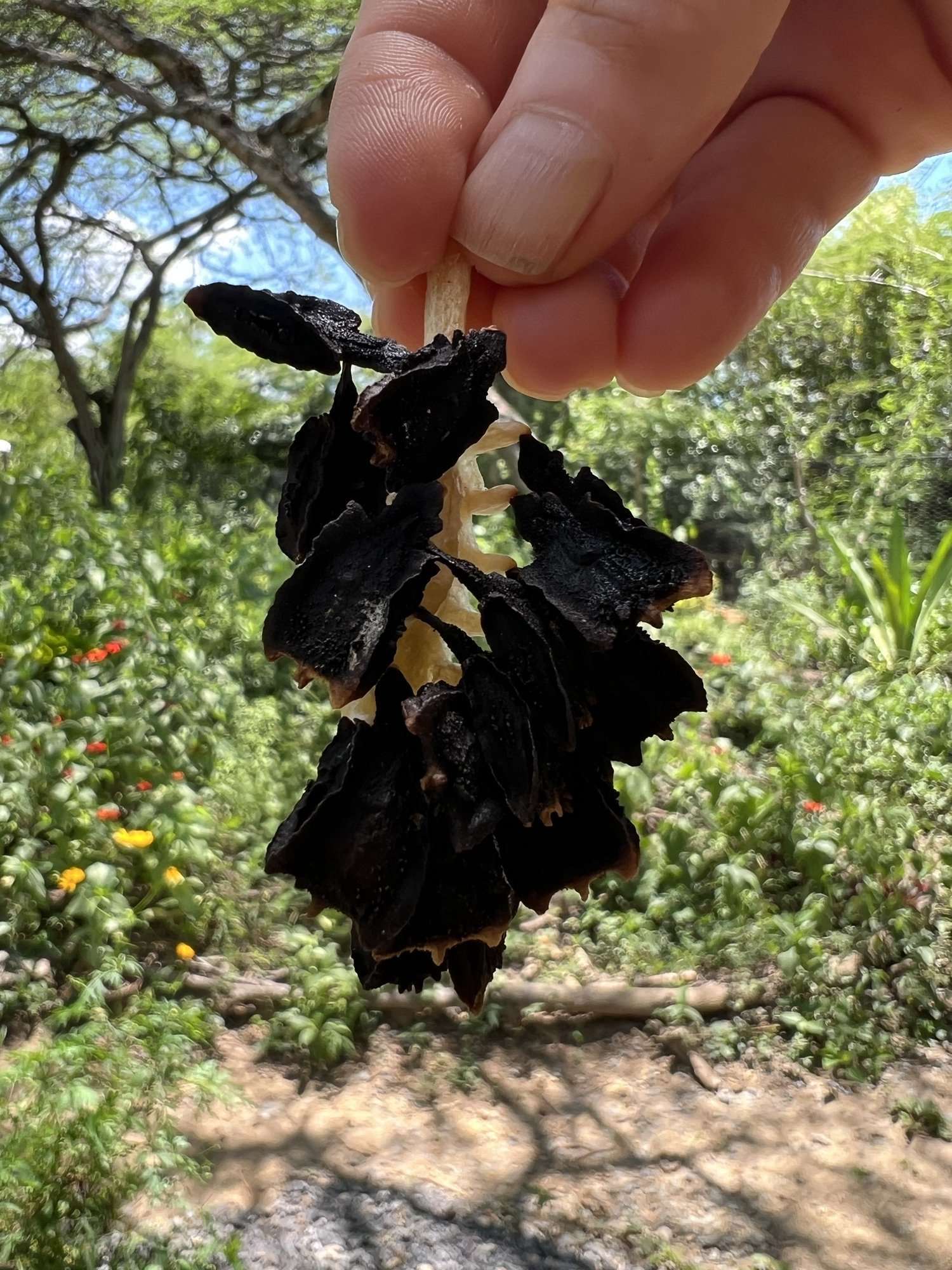
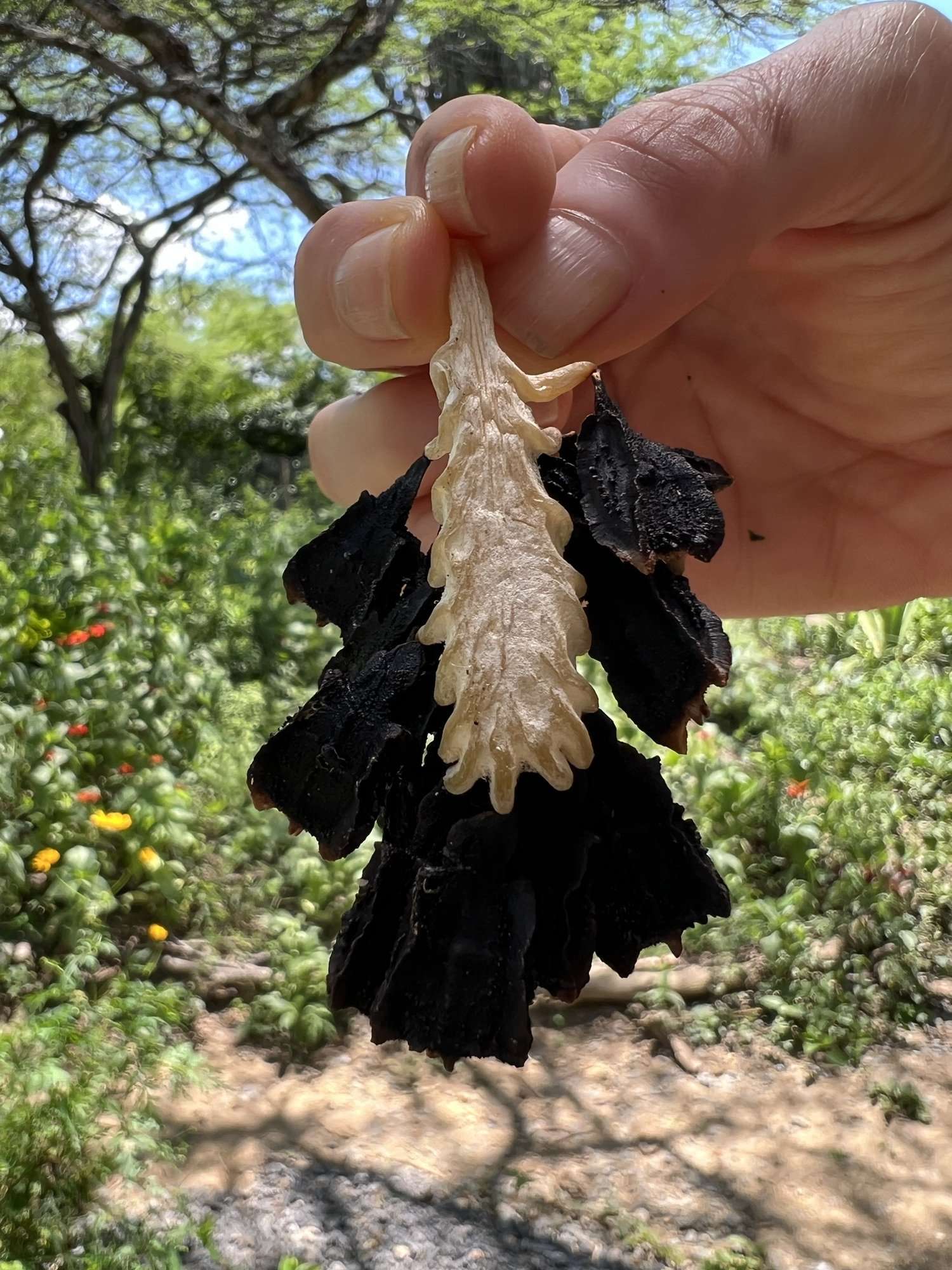
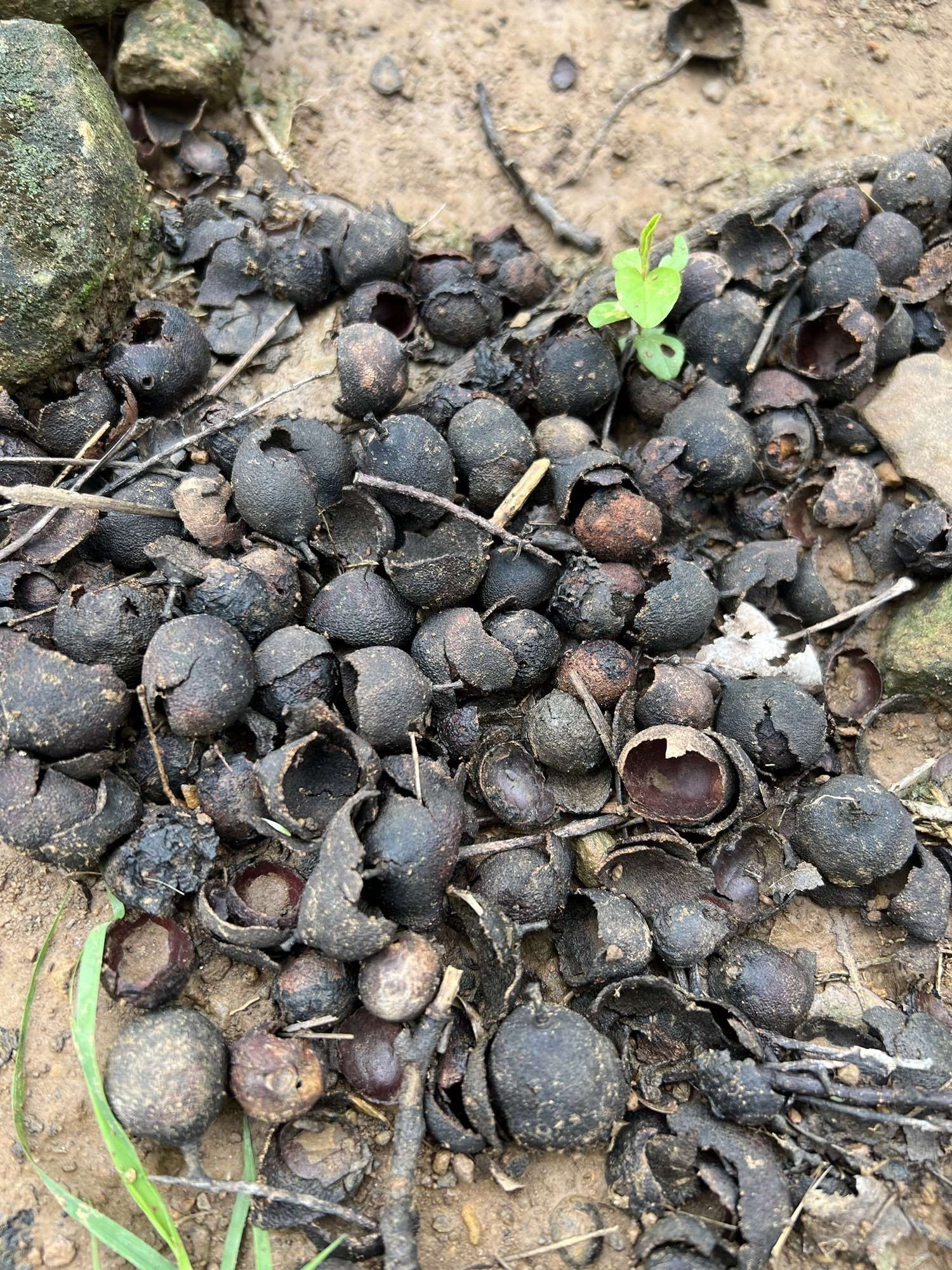
These are from along the main path through Milagros. The path largely follows the ridge so it is along the more eroded areas, although it’s not as arid and eroded as the peak area in the other photos. The photos are from earlier this month after a night of rain. The second photo is what’s left of the fruits from the mamรณn (Spanish Lime), which is one of the native fruit trees here.

Vermicomposting flush toilet on Milagros

We are installing a vermicomposting flush toilet system at the big house on Milagros.

VERMICOMPOST FLUSH TOILET

Inside, it’s a normal flush toilet. What’s flushed goes to a tank where the solids are held back and composted by worms. The water with soluble nutrients continues and feeds plants from an underground release system.

In some situations, it seems a very good solution. Inside, all is normal, and nothing goes to waste.

THE SYSTEM

It’s a pretty simple system. All that’s needed are some pipes, a couple of tanks, a metal screen, and some worms. We have two tanks so we can switch when one needs maintenance. We use the usual red wiggler worms.

The pipe channels the flushed water into the top of the tank. Solids are held back by the metal screen and the worms live on the layer on top of the screen. The water continues down and through more pipes where it’s led into the soil by a network of smaller pipes.

MAINTENANCE

The worms need to be fed so if nobody is at the house for a couple of weeks or so, someone needs to come and feed the worms with food scraps or similar.

Toilet paper can go into the toilet, but we have to use non-toxic and mild cleaners so the worms and plants are not harmed.

From what we hear, it’s good to check in on the worms once a week or so.

It’s not necessary to remove the compost very frequently. I think it can take years (?) before it needs to be removed, and it’s full of nutrients.

I suspect it’s good to check on and clean the pipes releasing the water into the ground to make sure they are not clogged by roots and more.

TEMPERATURE RANGE

I suspect the main challenge here may be temperature. The worms do best in the 20-25 Celsius range and can survive in the 10-30 Celsius range.

Here, daytime temperatures are often in the 25-30 range. It means the tanks need to be in the shade, they need good insulation, and we need to check in on them regularly โ€“ especially in the beginning.

PATHOGENS & CHEMICALS

In composting toilets, pathogens are less of a problem because of the time and heat.

Vermicompost flush toilet systems are different since pathogens will follow the water into the soil. I see others recommend using the water to feed plants that produce food far from the soil, which is what we will likely do too.

I have some questions about pharmaceuticals. Won’t some be absorbed by the plants and the fruits? Won’t antibiotics harm the microbial life in the soil? I need to learn more about this.

It’s also important to make sure that the water is absorbed and filtered sufficiently so it doesn’t contaminate the groundwater. That’s why it’s important to have a deep bed of absorbent material โ€“ like wood chips โ€“ in the area where the water is released.

RESOURCES

This is a video about the vermicomposting flush toilet system some friends installed a while ago. They have given us invaluable advice.

Vermicomposting Toilets โ€“ a website with detailed info about vermicomposting flush toilets

Vermicomposting Toilets โ€“ a page from the Earthworm Society of England

How to Make a Vermicomposting Flush Toilet โ€“ from an UK Permaculture site

Composting Flush Toilet โ€“ an example from Permaculturing in Portugal

OTHER SYSTEMS

The usual flush toilets are hygenic and also wasteful. They waste water, nutrients, and energy, in addition to creating a waste problem out of something that’s a natural fertilizer. (Here in the countryside outside of Barichara, flush toilets release into the ground which is terrible for the groundwater.)
Upside: Familiar, convenient, and the infrastructure is already there in many places.
Downside: Waste of water, requires local or public infrastructure, waste problem, and the public system requires a lot of resources.

A simpler option is some version of a composting toilet. The solids and liquids can go into the same container, or they can be separated. The solids can compost on their own or with the help of worms. Done right, there is little to no smell from these toilets. (I have lived with old-fashioned composting toilets at the cabin in Norway and have no complaints about them. In general, I prefer composting toilets and I plan on replacing the flush toilet at the small house with one.)
Upside: Simple, has been used for thousands of years, deals with pathogens, gives compost.
Downside: Requires some simple maintenance and knowledge of how to reduce or eliminate smell.

Vermicomposting flush toilets are described above.
Upside: Can have a regular flush toilet inside.
Downside: Requires maintenance, possible pathogen problems.

Incinerator toilets collect and burn the waste, leaving a small amount of ashes in the end. This requires some energy although not much. The upside is that it’s simple in use, hygenic, and doesn’t require much infrastructure apart from an energy source. The downsides are the energy requirement, cost, and waste of resources.
Upside: Simple and elegant, hygienic, and very little maintenance.
Downside: Expensive, requires electricity, waste of potential compost.

Biogas toiletsย use anaerobic bacteria to compost waste, and the gas can be used for cooking, heating water, and other purposes.
Upside: Makes gas for cooking etc.
Downside: Requires knowledge to install and some maintenance.

I love living machines and constructed wetlands for breaking down and making use of the waste. They are educational, beautiful, and may be especially useful for communities.
Upside: Beautiful, effective, educational, makes use of the resources.
Downside: Requires a lot of knowledge and some work to install, and requires regular checks and maintenance.

Read More

Building soil on Milagros

Milagros โ€“ the land we are stewards of in the Andes โ€“ has been used for grazing and small-scale food growing for generations. Around the big pond, we have a relatively healthy and mature ecosystem, and the rest is in various recovery stages. Some areas, especially along the ridge and the peak, are heavily eroded with just a few pioneer species.

We are in an early phase of the regeneration of Milagros, so we mostly focus on the area around the two houses. And since the soil is degraded, we are focusing on building soil.

The topsoil is mostly gone here and the soil is compacted. When it’s dry it’s like concrete. Rainwater runs off without being absorbed, and only the native pioneers thrive in this soil as it is.

HOW WE BUILD SOIL

How do we build soil? We are using a combination of approaches.

We plant as wide a diversity of plants as possible, mostly natives and food plants that work well in this climate.

When we plant, we use deep holes and add compost and some goat manure to improve the soil. This helps absorb the water, prevents water logging, and gives nutrients to the plants.

We plant densely, in as many layers as possible: ground cover, herbs, shrubs, bushes, small trees, and big trees.

We use a thick layer of mulch around the plants. This helps retain moisture, gives nutrients to the soil and plants, and improves microbial life. Most of this compost comes from pruning, and we buy some wood chips from local carpenters.

We make our own compost and we are also buying vermicompost from a friend with a permaculture farm in the area.

We add Korean microbes to the soil. This is on the recommendation of others doing similar work here, although I am a little hesitant to add foreign microbes. I would prefer native ones.

We build swales to help the rainwater drain into the soil.

We work on preventing erosion by planting plants with extensive root systems (agave, vetiver, etc.), slowing down the flow of water (stones, swales, mulch), and terracing in some areas.

We use green mulch from the existing trees and some of what we have planted.

We add ashes to the soil for some plants to provide certain nutrients and improve soil structure.

We avoid compacting the soil around the plants. We have paths and will install stepping stones in areas where there won’t be a regular path.

We may include animals in the future, perhaps starting with chickens. They will help provide fertilizer to the soil.

We use only organic materials and methods and avoid chemicals and pesticides. (Chemicals and pesticides harm soil health and the ecosystem in general.)


WHERE DOES THE MASS COME FROM?

When we build soil, the mass has to come from somewhere. About 90% of the dry mass of plants comes from CO2 in the air which is converted to carbon, with oxygen as a byproduct. Only 10% comes from nutrients in the soil. Of the wet mass, 70-95% is water.

Shade combined with water evaporation is a big reason why a forest is much cooler than bare ground.

REFORESTATION

As I have mentioned in other articles, we have partnered with an organization that helps us reforest the land. They plant a diversity of native trees without any cost to us and sell the carbon credits to multinational corporations. It benefits the land (reforestation), us (helps our project), them (make money), and the corporations (improve their image).

They are not doing anything to improve the soil while planting, but the growing forest will naturally improve the soil through increasing biomass, creating a mulch layer, and so on. It will also attract birds and wildlife which will help spread seeds and improve the soil.

EARLY DAYS

These are just a few of the things we are doing so far. We are still early in the process, and we are still โ€“ and will always be โ€“ learning. We are receiving immensely valuable advice and help from others doing the same in this area, especially Daniel P. who comes weekly.

These are all things we do because the land is degraded. By planting natives and a selection of non-invasive useful plants, we are giving the natural regeneration process a boost. We are doing our small part in helping this ecosystem again grow into a healthy, diverse, and vibrant ecosystem. Soil health is, quite literally, the foundation.

As the native forest regrows, and as the food forest grows near the houses and along the paths, the soil will naturally improve. Conversely, our efforts to improve the soil will help the food forest grow.

Soil health and ecosystem health are two sides of the health of the system as a whole.

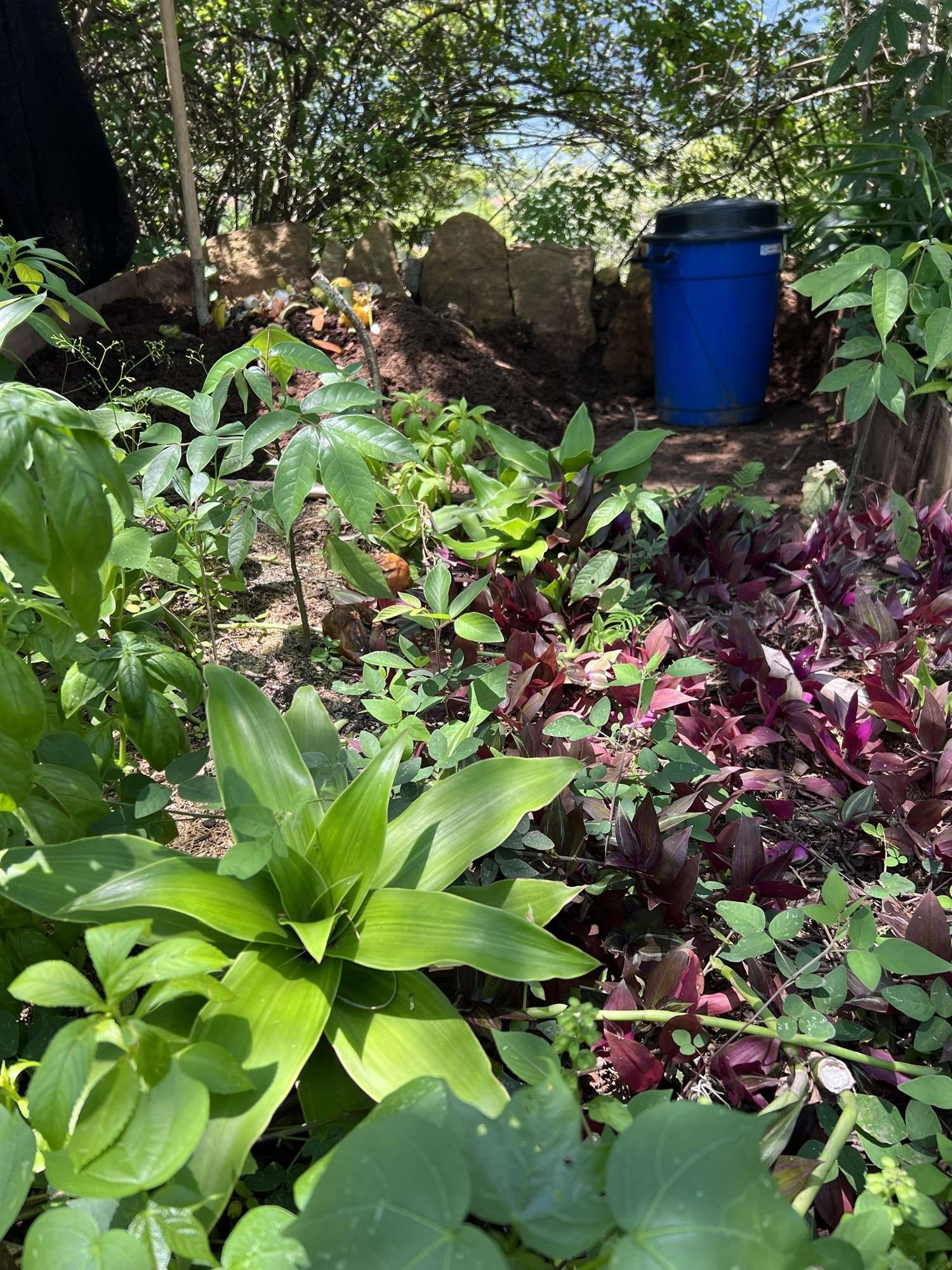
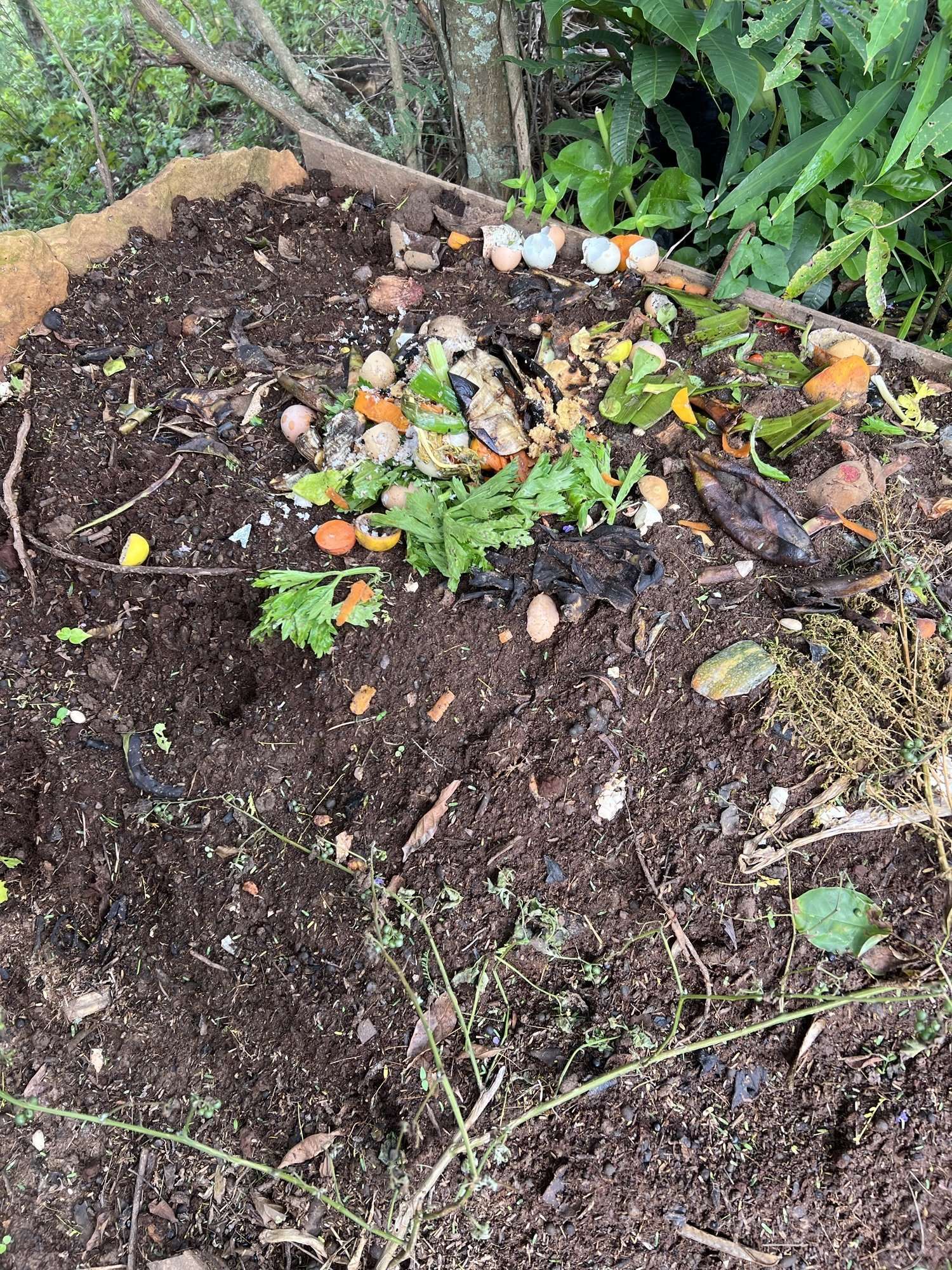
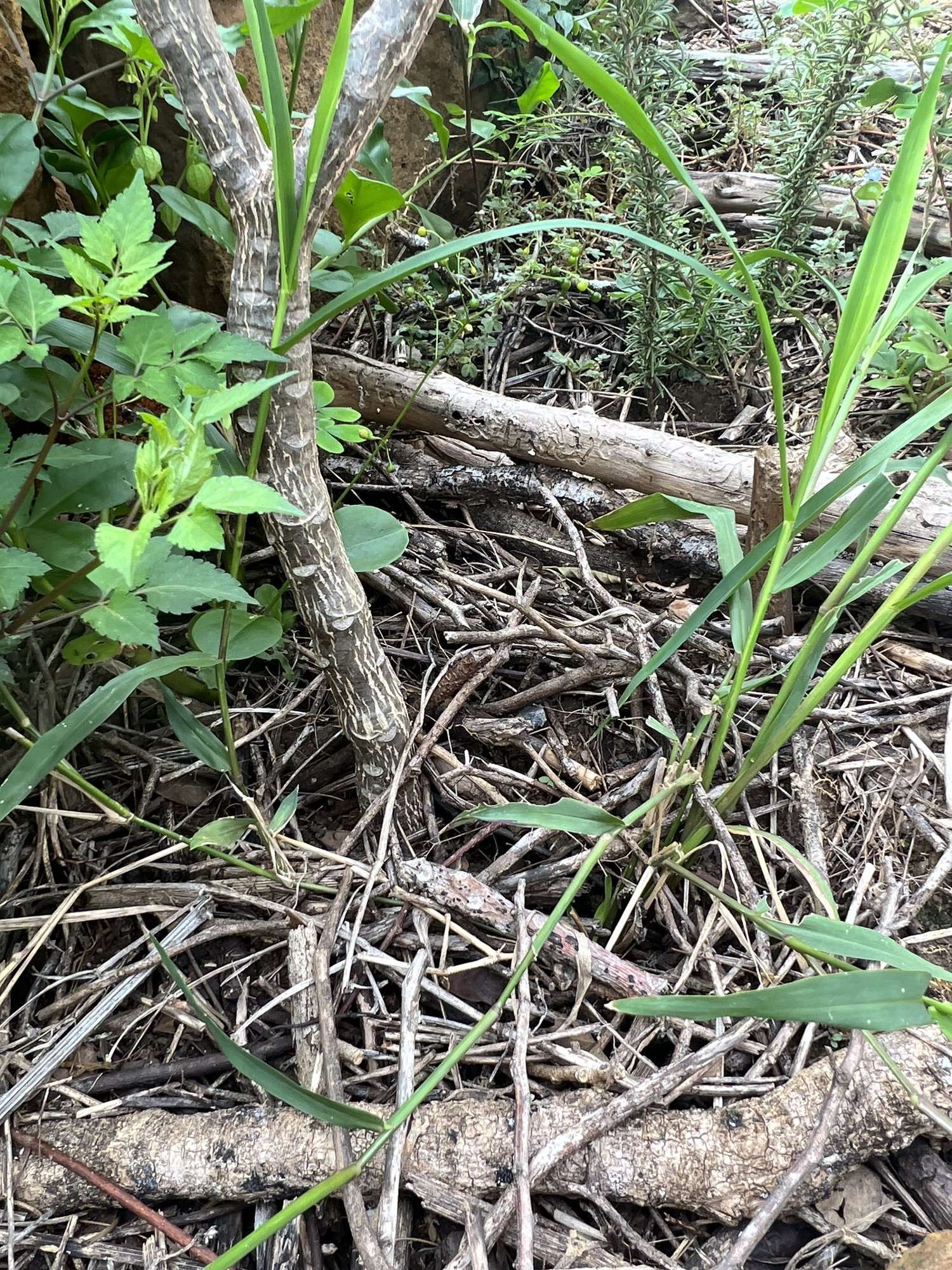
The images are from this morning from around the house. We have a very simple compost pile right now, but will build compost bins and start vermicomposting. We use stones to hold the soil in place and slow down rainwater. We use a thick layer of mulch and see that we need to replenish the mulch in several places. We buy wood chips from local carpenters and organic goat manure from a neighbor.

Read on for more info.

Read More

I am interested in what Zen is about, not so much Zen itself

I notice a calling to spend a few months, at least, at a Zen center, likely in The Netherlands or Spain because of the connections I have with the lineage and the teachers there.

I imagine the calling is for the meditation itself, with the community and teachings as icing on the cake, and the inevitable friction as likely the real reason for going there although it’s the least favorite part for my personality.

I love Zen. I loved my time at Kanzeon Zen Center. At the time, I couldn’t imagine not continuing and perhaps even taking on the role of a teacher if life went in that direction and I thought I could do it reasonably well.

Life took another direction, and now it seems to call me back.

The title of this article is something I have often said to myself and others: I am interested in what Zen is about and not so much in Zen itself.

What do I mean by that?

I mean that I am interested in exploring my nature and living from and as it.

I am interested in the tradition of Zen since I like history, I love many aspects of the Japanese culture, and I am fascinated by how spiritual traditions go about training human beings, and sometimes invite the consciousness we are to notice itself.

What I am not so interested in is learning Zen to be someone passing it on to future generations. I am not even quite sure why. I love that people do it and I see it as very important. It just doesn’t feel like it’s for me. It feels like fitting a misshapen peg into a round hole. I don’t know if I can fit myself into the shape necessary.

I am much more interested in exploring my nature, exploring living from and as it, and inviting more of my human self on board with it, using any means and approaches that make sense independent of traditions.

Zen has two aspects. On the one hand, it’s a tradition with a very specific form, and as a Zen practitioner โ€“ and even more so in the role of a monk or teacher โ€“ you are expected to learn it well and pass it on to the next generations. On the other hand, it’s all about authenticity, checking it out for yourself, and finding your own way. Rebels like Ikkuy are held in high esteem in Zen.

The solution is that you eat the fish whole and then spit out the bones, as they often say.

Is it OK that I have explored this more freely? Yes, obviously. It’s one of the many ways life explores itself. Life seems to want to explore itself in as much diversity as possible. At the same time, I am sure I would have learned a lot by going through the Zen system, or a similar system. I would have learned a lot of the obvious things โ€“ about the tradition, the process, pointers, practices, and so on.

More importantly, as mentioned above, I would have learned a lot through the friction.

These are some of the things bubbling in me considering spending a while at a Zen center again.

Read More

I don’t like dogs, I love them

I don’t like dogs so much, but I love them.

My personality has preferences, and this personality’s preference is for cats and some fluffy goofball dogs, not so much dogs in general and especially not short-haired ones.

It’s not something I am choosing. It’s just there, and it’s something I have noticed and observed over time. I cannot choose the preferences of my personality.

At the same time, there is love for dogs here. There is love for all beings. To themselves, they are consciousness just like me. To them, the world happens within and as the consciousness they are, just like for me. They wish to avoid suffering, just like me. They wish for comfort, just like me. They have feelings and an emotional life, just like me.

I also have hangups, wounds, traumas, and so on. My system has a fixation on certain painful stories. These inevitably color my perception and my life. And when they are triggered and more on the surface, they can cover up the more basic love that’s here.

All of that’s true. As this personality, I have preferences like anyone else. As what I am, as consciousness, there is recognition and love โ€“ a love that’s not dependent on feelings or states. When wounds are triggered, the consciousness I am sometimes gets caught up in it and covers over the love.

This is all coming more to the surface these days with Mila, our new lovable little short-haired dog. She was left at our doorstep one stormy night a few weeks ago. She is not the type of dog my personality prefers, but she is here, she needs us, and there is a lot of love for her.

And, of course, as I get to know her and love her, my personality also changes and start to really like her.

The images are of beautiful little Mila, 3 months old.

Working with nature to deal with mosquitos

There is a dengue epidemic in the tropics and also here in Barichara. We know people who have had a strong case of dengue and have been in hospital.

So how do we reduce the chances of contracting dengue? How do we reduce mosquito bites?

TWO GENERAL WAYS TO DEAL WITH MOSQUITOS

There are two general ways to deal with mosquitoes, and they reflect two general worldviews.

One is to work against nature: drain wetlands and ponds, use pesticides, use toxic insect repellants, and so on. This is severely destructive to ecosystems and life, and it’s the way of our civilization.

The other is to work with nature and support life.

WORKING WITH NATURE TO REDUCE THE MOSQUITO POPULATION

What are some examples of working with nature to reduce the mosquito population?

What we do, in general, is to support the local ecosystem and encourage as much diversity as possible. We are nourishing the soil. Around the house, we plant anything that works well in this climate and ecosystem with an emphasis on food-producing plants and plants good for pollinators. In the rest of Finca Milagros, we plant native trees, bushes, and shrubs, with the inclusion of non-invasive food-producing plants that work well here. (We are just starting on that phase.) We also have a pond and make sure it has a continuous supply of fresh water from a spring higher up the canyon.

This brings more insects, birds, bats, frogs, and others that eat mosquitos and/or their larvae.

SPECIFIC EXAMPLES

Here are some specific examples.

We use mosquito netting around the bed.

We use a ceiling fan at night which creates air currents that discourage the mosquitos.

We use natural and non-toxic insect repellants, which also happen to be locally produced.

We have small lizards in the house, which I assume eat mosquitos when they land on the walls.

I like to go to bed early, which reduces the time I am out at the same time as the mosquitos. (They are mostly dormant during the day.)

We have some standing water around the house, for the insects and smaller animals, although make sure the water is replaced as best we can.

We will install pumps to circulate the water in the rainwater storage tanks.

We keep the main pond filled with water. This helps dragonflies, frogs, insects, birds, and animals. We may install a solar-powered pump here to keep the water circulating better.

We have made Milagros into a nature preserve to support as much wildlife as possible. This will, hopefully, invite more insect-eating birds, bats, dragonflies, frogs, spiders, and so on.

We are adding different forms of mulch to the ground around the house to help the soil, and this also helps beneficial wildlife like frogs, lizards, spiders, and ants.

At least right now, we don’t have too many mosquitos here even if it’s the wet season, and I want to continue to support nature to reduce the mosquito population.

A MORE COMPREHENSIVE LIST OF NATURAL METHODS

I asked ChatGPT 4o for a list of natural methods. The list looks good, and it reminds me that I have wanted to get the BTI bacteria.

From ChatGPT 4o:

Here is a comprehensive list of natural, non-toxic methods you can implement at Milagros to reduce the mosquito population and minimize the chances of being bitten:

1. Encourage Natural Predators

  • Bats: Install bat houses around Milagros to attract bats, which can consume hundreds of mosquitoes per night.
  • Birds: Attract mosquito-eating birds like purple martins, swifts, and swallows by installing birdhouses and planting native trees and shrubs.
  • Dragonflies: Encourage dragonflies by maintaining small water features and adding native plants that attract them.
  • Frogs and Toads: Create small ponds to attract amphibians, which eat mosquito larvae and adults.
  • Fish: Introduce mosquito-eating fish like Gambusia (mosquitofish) or guppies in ponds and water features.
  • Spiders: Support natural spider habitats around the finca by maintaining leaf litter, tall grasses, and rock piles to attract web-building spiders that catch mosquitoes.

2. Mosquito-Repelling Plants

  • Citronella (Lemongrass): Plant citronella around seating areas and high-traffic spots.
  • Marigolds: Use marigolds to deter mosquitoes with their strong scent.
  • Lavender: Plant lavender around the house to act as a mosquito deterrent.
  • Catnip: Catnip is highly effective in repelling mosquitoes.
  • Peppermint: Grow peppermint around your outdoor spaces for its mosquito-repelling properties.

3. Habitat Management

  • Remove Stagnant Water: Regularly check and eliminate any stagnant water (in buckets, plant saucers, tarps) where mosquitoes can breed.
  • Install Water Pumps: Ensure that water features like ponds have moving water through solar-powered pumps to prevent mosquitoes from breeding.
  • Add Floating Plants: Introduce plants like water lettuce or water hyacinth in ponds to create habitat for mosquito predators and reduce open water surfaces.
  • Reduce Dense Vegetation: Clear out dense vegetation where mosquitoes may rest, especially near sitting areas.

4. Introduce Beneficial Insects

  • Predatory Beetles and Nematodes: Release beneficial insects like predatory beetles and nematodes that feed on mosquito larvae in the soil.
  • Parasitic Wasps: Encourage parasitic wasps by planting nectar-rich plants (fennel, dill, yarrow) that attract them, as they can help control mosquito larvae.

5. Use Natural Mosquito Larvicides

  • Bacillus thuringiensis israelensis (BTI): Apply BTI in stagnant water sources. BTI is a natural bacterium that specifically targets mosquito larvae without harming other wildlife. Use mosquito dunks or granules in ponds or rainwater catchments.

6. Install Mosquito Traps

  • CO2 Traps: Use solar-powered mosquito traps that mimic human breath by emitting CO2 to lure and trap mosquitoes without chemicals.
  • Light Traps: Install UV mosquito traps in outdoor areas where people congregate.

7. Create a Thriving Ecosystem

  • Plant a variety of native plants to encourage a diverse ecosystem of insect predators like dragonflies, spiders, and birds that keep mosquito populations in check.
  • Promote Ant Colonies: Support ant populations, especially ground-dwelling ants, which can help reduce mosquito larvae in soil and stagnant water.

8. Natural Repellent Methods

  • Essential Oil Sprays: Create homemade repellent sprays using citronella, eucalyptus, tea tree, lavender, or lemongrass oils. Spray on skin or around outdoor areas.
  • Diffusers: Use essential oil diffusers with natural mosquito-repelling oils in outdoor sitting areas.
  • Garlic Sprays: Apply a garlic-based spray on plants or areas where mosquitoes rest; mosquitoes avoid the scent of garlic.

9. Promote Airflow

  • Fans: Mosquitoes are weak fliers, so use outdoor fans in seating areas to create airflow that will reduce mosquito activity.

10. Install Physical Barriers

  • Mosquito Nets: Use mosquito nets around beds and outdoor seating areas to prevent bites while resting or relaxing.
  • Screen Doors and Windows: Ensure that all doors and windows have tight screens to keep mosquitoes from entering the house.

11. Encourage Ground-Dwelling Predators

  • Chickens and Ducks: Free-range chickens or ducks (especially Muscovy ducks) can patrol grassy areas and eat mosquitoes, their larvae, and other insects.

12. Personal Protective Measures

  • Wear Light-Colored Clothing: Mosquitoes are attracted to dark colors, so wearing light-colored clothing when working outdoors can help reduce bites.
  • Long Sleeves and Pants: Opt for long sleeves and pants in the early morning or late afternoon when mosquitoes are most active.

13. Use of Mud and Natural Coverings

  • Apply a thin layer of mud to the skin as a natural mosquito deterrent when working outdoors in highly infested areas. Mosquitoes are less likely to bite through mud.

By using a combination of these strategies at Milagros, you can naturally reduce mosquito populations while protecting yourself and preserving the ecological balance on your land.

The image is created by me and Midjourney

Scrรถdinger’s land: Paradise or hell or both, and a reflection of our ecological crisis

We are legal stewards, as humans think about it, of beautiful land in the Andes, at the western slope of Chicamocha Canyon.

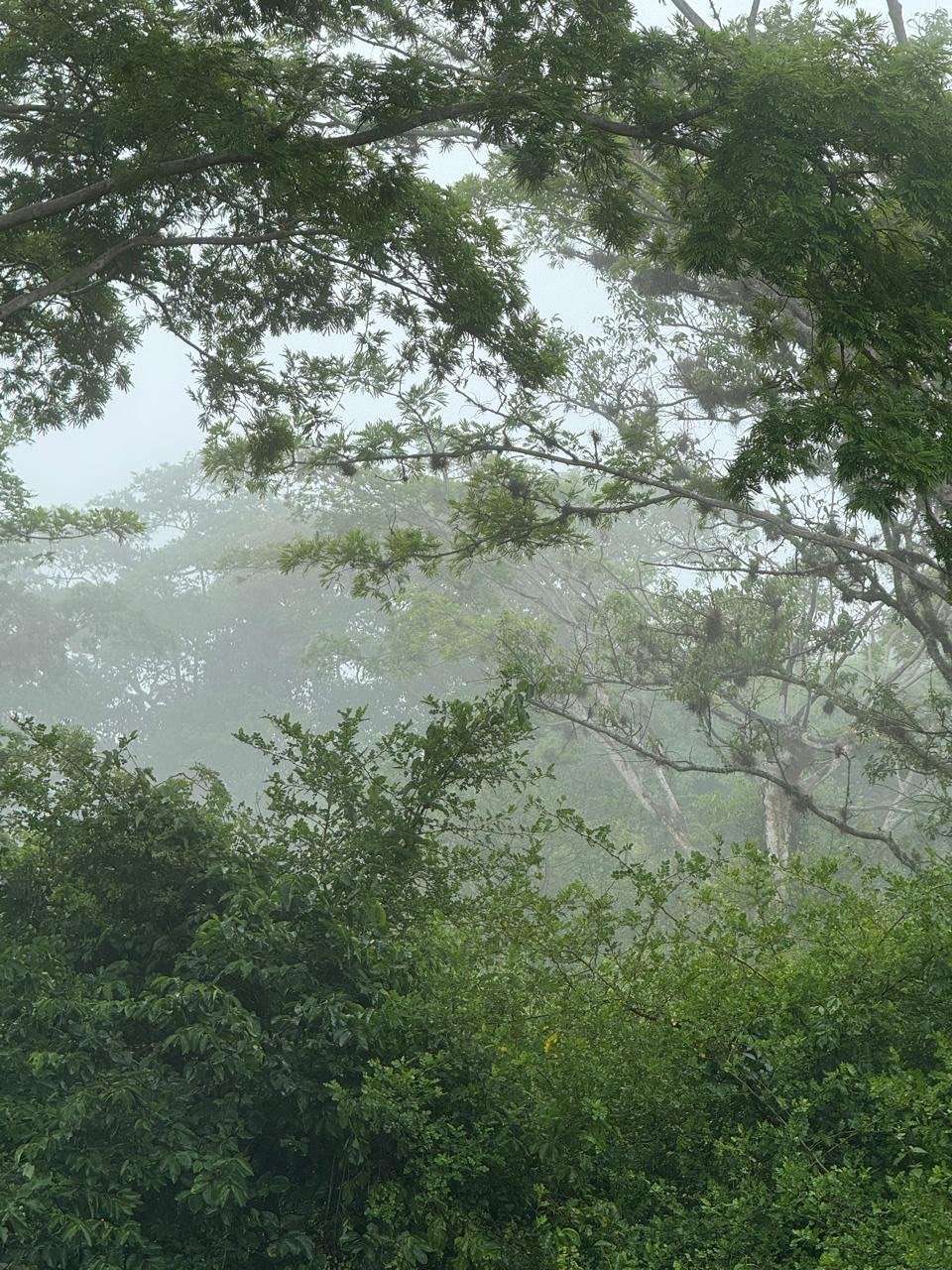
I walked in the forest at early dawn, after a heavy rain, and it reminded me of something difficult to escape these days.

PARADISE OR HELL OR BOTH

This land is paradise or hell or both.

It’s a paradise for us now. It’s in a beautiful area, and although the land is degraded by centuries of grazing, it’s still very beautiful. Right now, at dawn, it’s quiet. There is only birdsong.

It can easily be hell as well. When the neighbors blast out their music, it’s a kind of hell. When the extremely noisy motorcycles go by, it’s similar. More importantly, a huge hotel and shopping center project is being built across the road, as one of our closest neighbors. If that actually comes into existence, it can very well be hell with constant noise, music, increased traffic, and more.

For the ecosystem and wildlife here, this place is also heaven and hell. For the ones currently living here and doing well here, it’s paradise. They are left alone. For the ones impacted by centuries of grazing and chopping down trees for wood, it has been hell. For all the new life that’s coming after the grazing was stopped, it’s paradise.

A REFLECTION OF OUR ECOLOGICAL CRISIS

All of this is a reflection of our ecological crisis, and of our civilization that’s profoundly out of step with ecological realities.

Our ecological crisis has been going on for centuries, and the previous use of this land is an example.

The local farmers mostly have cows and goats, so for them, grass is wonderful and anything else โ€“ apart from a few trees for shade โ€“ is a waste of land. They even call pioneer species that help recreate a more mature and rich ecosystem “malezas”, bad plants.

They have cut down the forests and made it into mostly grassland and savannah, with predictable consequences: The wildlife has been severely impacted. The rivers and springs are dry. And the climate in the region is likely changing, and probably already has.

The hotel project is another example. How can the local authorities allow a hotel project they know will be immensely destructive for the land and the community? (It wouldn’t be allowed in most well-regulated industrial countries, but this is not and they do things differently here.)

AN ECOCIDAL AND SUICIDAL CIVILIZATION

This all points back to our civilization. It’s a civilization built on several principles that lead to this kind of destruction: A power-over mindset instead of a power-with mindset. The sacred as “out there” and not in here in the land, life, and us. Nature as “out there” instead of seeing us as nature and part of the web of life. And so on.

Mainly, we have an economic system that assumes that nature is infinite in its ability to provide resources and absorb the waste of civilization. It evolved that way because it could at the time. We were few enough and had a simple enough technology so for most practical reasons, it was true.

These days, our numbers are many times higher and our technology is many times more powerful, so it’s an assumption that is, quite literally, suicidal. We have a civilization that’s ecocidal and suicidal. And many still don’t realize it.

Many do still not realize the profound systemic changes needed for our civilization to continue.

GLOBAL ECOLOGICAL OVERSHOOT

The simplest way to frame this may be in terms of our ecological footprint.

Our collective ecological footprint is far larger than the Earth. We will need two or more Earthts to support our current civilization, and we don’t have it. If everyone had the lifestyle of industrialized countries, we would need closer to ten Earths. That’s clearly not sustainable.

This global ecological overshoot is similar to living off the money in our savings account. It looks fine for a while until we reach the bottom and our lifestyle comes crashing down.

In our case, it means that our civilization comes crashing down.

This is not hyperbole. This is a simple reality. Even a child can understand it.

WHAT WE CAN DO

So what can we do? Do we have time to change?

I don’t know if we have time to change. If we all suddenly found the collective will to make the needed changes, we could do it, of course. But that seems very unlikely. Most people continue as if nothing is happening.

What can the ones of us who realize the urgency do?

I vote for the Green Party in Norway.

I bought this land and is making it into a nature preserve. We have partnered with an organization that will plant thousands of native trees here, with some diversity (around twenty different species). We are making a food forest around the houses and the main paths.

I eat mostly local, organic, and seasonal food when I can. I eat low on the food chain, with only occasional fish and meat.

I find like-minded people and join, to some extent, communities of like-minded people.

I learn. I learn about ways to partner with this land in terms of regeneration, reforestation, and making food forests.

I actively explore and immerse myself in different worldviews. Worldviews that are more life-centered and aligned with our ecological realities. (Universe Story, Epic of Evolution, Deep Ecology, systems views, integral models.)

I actively work with my distress and grief over what’s happening with this land and neighborhood, with Earth, and with humanity.

I cannot save humanity or our current global ecosystems. But I can save myself and this land, as best I can. I can do what I can for our civilization to turn around. (The Great Turning.) And that’s more than worth it, no matter what happens with us collectively.

Read More

Exploring resistance (AKA fear, fearful thoughts)

It’s morning, the sun is out, and I wish to do qigong in the sun.

I also notice what a thought may call resistance. A part of me has fear about it. So I thought I would explore it.

EXPLORATION & DIALOG

I notice where the fear is in my body. It’s in the chest, throat, solar plexus. A contraction, density, heaviness, with some tingling.

I notice a fear of going in, of connecting undistractedly with sensations, murmuring stressful thoughts. There is some identification with a part of me connected with these bodily sensations and murmuring and half-emerging words and images.

I connect with it. Rest with it.

You are allowed to be here. You are welcome. Stay as long as you wish. (I notice a part of me disagreeing with this.)

I connect with the part of me disagreeing. You are allowed to be here too.

Thank you for your love for me. Thank you for protecting me. Thank you for wanting me to be safe.

What do you have to tell me? What are you protecting me from?

I notice a roar, a scream in fear.

I love you. I love that you want to keep me safe. Thank you.

What do you fear will happen?

Thank you. I see you are concerned and want the best for him. You want to protect him.

What’s the worst that can happen?

Has that happened?

Even if he can’t, what will happen?

What do you think realistically will happen if he does qigong this morning?

OK. Would it be OK for you to allow him to do qigong, and similar things, now and then?

SENSE FIELD EXPLORATIONS

I rest with the sensations. Notice that they are physical sensations.

I notice images. Me several years ago when the immense primal fear surfacing.

I rest with the image. I notice a slight contraction and density in my throat area. I rest with those sensations. I notice a contraction in the solar plexus. I rest with those sensations too.

I notice the sensations happen within space with no boundary. They are within infinite space. They are space taking the form of those sensations. I take time resting with that noticing.

I notice an image of my father with a concerned look. He says “people who go ‘in’ get weird, it’s not good”. (He told me this about therapy when I first mentioned I was going to study psychology.)

I rest with the image. I notice the space around the image, and that space takes the form of the image.

The density in the solar plexus is still here. I rest with the sensations. I notice space is taking the form of these sensations.

I notice space is taking the form of these sensations happening in space, and an overlay of a mental image of this body.

Is it dangerous to do qigong?

Yes, a part of me feels that way. A contraction in the solar plexus. (It’s not very strong, maybe 2 out of ten.)

I rest with the sensations in the solar plexus. It goes to a half. I notice it’s space. Awake space.

A BRIEF SCAN

I do a scan. I notice the sensations โ€“ with an overlay of images and words like solar plexus, arms, feet, neck โ€“ are awake space.

I open my eyes and notice the visual field is awake space.

I hear the sounds of the traffic in the distance and notice the sounds are awake space.

I notice the taste and smell that’s here, words say it’s mostly herbal tea. I notice the taste and smell is awake space.

CHECKING

Is it dangerous to do qigong?

I notice sensations in the chest, a density and vibration. I rest with the sensations.

I notice density in the solar plexus and rest with that too.

Thank you. Thank you for being here. Thank you for your love for me.

I love that you are here to protect me. (I can find that genuine love.)

SOME BACKGROUND

In my late teens and for most of my twenties, I loved “going in” metaphorically with tai chi, qigong, basic meditation, training stable attention, Heart Prayer, Christ meditation, tonglen, Taoist inner practices, and so on. I typically did it for hours each day. I loved it more than anything else, felt deeply at home, and was deeply fascinated by it.

Something happened in my late twenties when I left my clear inner guidance on a major life issue. When I turned “inward”, what met me was the inner guidance telling me what to do and the distress of not doing it. It became more difficult for me to continue this exploration, and I threw myself into community and sustainability work instead. (Which also was deeply rewarding.)

In my thirties, after leaving the geographic location where I was, I was again able to explore all of this and go deeply into it.

During the more recent dark night, starting roughly fifteen years ago, a huge amount of trauma and primal fear surfaced. This time too, it became difficult to “go in” since what met me was what felt like an overwhelming pain and fear.

Even now, I notice a fear of going into it. There is a fear of going in, although I still often do. So I thought I would explore this fear.

The enso is created by me and Midjourney

From the archive: some early drawings

I am going through some of my old things, and I have found some of my drawings from my teens and early twenties. The self-portrait above is from when I was sixteen which was later accepted into Hรธstutstillingen, an annual juried exhibition in Oslo. I thought the drawing was lost, but found it when I went through some old framed drawings in storage.

Above is a small selection of sketches and practice drawings. The first and last drawings are from the mirror, the second is a copy of a drawing from an old master, the third is from a photo (likely National Geographic), the fourth is a copy from an old master or a drawing from a sculpture, and the fifth is a drawing from a sculpture in the Vigeland Museum in Oslo.

Below is a mix of live drawings (studies & croquis), studies in the mirror, drawings of sculptures, drawings from photos, drawings from anatomical drawings and photos, copies of drawings of the old masters, and a few drawings from etchings and paintings of the old masters.

Read More

Using AI to create a food forest

I am using AI as an assistant to create a food forest.

OUR PROJECT

We have fifteen hectares in the Andes mountains near Barichara. Much of the land is degraded from grazing and is at different stages of recovery, and there is a dry riverbed going through it that used to have water some decades ago. We plan to reforest the land with native species and as much diversity as possible. We will integrate a food forest into this forest, mostly using native food-producing trees, bushes, and wines, and also some non-natives that work well in this ecosystem. It’s still early in the process and we are in the first year of both.

We are working with an organization that is helping us reforest with a variety of native species, and they planted close to 2000 trees a few weeks ago in the more barren and eroded areas of the land. We are also working with a local expert (Daniel P.) helping us create a food forest in the areas closer to the houses. Around our initial small house, we have planted relatively densely in a 10-30 meter circle so far and we are expanding out with more drought-tolerant species. We have also just started planting around the big house since it’s close to being finished.

USING AI FOR OUR PROJECT

Although most of the planning and work is done in the old-fashioned way, I am using AI as an assistant with this project and find it very helpful.

When we have potential plants for our project, I use ChatGPT 4o for information about the plants: their geographic origin, their climate of origin, their ideal microclimate, how drought tolerant they are, how suitable they are to the Barichara climate, how tall they get, how much sun they require, how much shade they cast, their root system, plant identification, how much they benefit pollinators, how long it takes before they are mature, how much annual yield if they are food-producing, medicinal use in traditional medicine and whether this is supported by research, how to propagate them, and much more.

A few days ago, I took a list of food-producing plants from a local nursery, asked the AI to sort according to drought tolerance, and asked it to sort out the plants with the highest yield among the most drought-tolerant ones. We plan to plant quite a few of these in the zone between the immediate surroundings of the houses and the wilderness areas. I double-checked the info with our local expert and he agreed that these were all good for our project.

Most of the plants have been suggested to us by locals and local experts, some are from local nurseries, and quite a few have been suggested by the AI as appropriate to our climate and project.

I love the information I am able to get, and it seems accurate.

I also use AI to develop a plant database for our project. I have created a Google sheet with about 250 plants so far, and maybe 30 columns of information. The info includes a general overview of about eight sentences, the Latin name, Spanish names, English names, etymology, origin and climate of origin, cultural history, natural history, degree of nativeness, suitability to the Barichara climate, drought tolerance, watering needs after maturity, succession stages, agroforestry layers, years to maturity, typical height and width, root system, typical annual food yield, plant identification, scent degree, pollinator value, medicinal use, and more.

I have also created a web interface for this info, using Google Apps Script and programming help with the AI. This includes a script that automatically collects image URLs from Wikipedia for each plant, and an interface to select the main photo and unselect the ones that don’t seem needed. Several fields in the database are numerical so the user can sort the plants according to drought tolerance, sun requirement, shade coverage, nativeness, food yield, pollinator value, scent, and more.

A FEW MORE THOUGHTS ABOUT USING AI AS AN ASSISTANT

In short, I find that using ChatGPT 4o is like having a good assistant. I can ask it for info, categorization, ranking, ideas and suggestions, help with programming, and much more.

Before we implement anything, I always double-check the info and check with our local experts and the info seems to be pretty reliable so far.

Why do I use AI? Right now, it’s because I am not there so this is something I can do and still feel involved. It helps me make decisions and get more ideas. Also, the info available for many of the naive plants is in Spanish, so this is a way to access it and get it presented to me in English. (My Spanish is not at that level yet.) Finally, I need localized info. Our climate is unique and some plants that work at even just a few hundred meters higher or lower altitudes, or in neighboring areas, won’t work in our location. I need to localize the info for our use.

As someone who loves nature and finds technology fascinating, this intersection of the two feels natural.

And just to mention it, I am very aware of some of the drawbacks of using AI, including the huge amount of energy used to train AI models. Still, the genie won’t be put back into the bottle, and I find this a good use of AI. It doesn’t take the work from anyone, it just helps improve the project.

The images above are from the area around the first small house and from our first year of creating a food forest there. One photo is from our nursery area where we propagate trees. When we came, the area was mostly barren with a few pioneer species and some medium to tall trees.

How do I navigate meaning and purpose in my own life? How do I find it? How do I find freedom from it?

How do I navigate meaning and purpose in my own life?

In general, I follow what’s fascinating to me, what sparks something in me, and what makes me come a little more alive. It may be something small or expressed in a small way, and then I see where it leads.

I take my surface wants and needs and trace them back to more essential, and often universal, wants and needs.

And I examine my stressful thoughts related to meaning and purpose to find more freedom around them.

EARLY IN LIFE

As a child, I was fascinated by just about everything. I loved nature programs on TV, I loved Cosmos by Carl Sagan, I loved reading science magazines, I loved reading in general, I loved exploring, I loved nature and the night sky.

When I was sixteen, there was a shift where the oneness and consciousness aspects of my nature came strongly into the foreground. The consciousness I am showeditss nature to itself very clearly.

This threw me in at the deep end in exploring my nature โ€“ as consciousness and consciousness taking the form of this human self and the world.

At a human level, I had been fascinated by parapsychology before this, but I was a self-proclaimed atheist and regarded religion and spirituality with disdain.

Now, I found myself fascinated by what spirituality is about, and in the process wanting to learn more about what others have found in their own explorations and how they talk about it.

I followed this fascination through my own explorations, reading, and also โ€“ to the extent I found it there โ€“ university studies.

I also followed my passion for art and expressing what I was exploring in art. Not by telling, but by allowing it to be expressed naturally and inevitably in what I created.

FOLLOWING THE VOICE OF WOUNDS

I also followed the voice of my wounds at a crucial point in my twenties, which dampened my spark and passion. I got married, she wanted to move to another state, and I decided to abandon my own life and the path that felt deeply right for me and instead support her.

I felt profoundly off track, and although I followed my fascination in my sustainability work, I also dampened my passion and spark for what was even more juicy for me including meditation, prayer, body-centered practices, and art. It was too painful to engage in it because as soon as I did, my inner guidance would tell me clearly to get out of the situation and back on track in life.

As I followed my unexamined fears, I knew what I was doing, although I was unable to get out of it for many years. Life had tapped into deep traumas in me that made me make life choices different from those I would have made if they were not there.

EXPLORING MEANING AND PURPOSE

How do I explore meaning and purpose?

As I mentioned above, I mainly explore it by noticing and following what sparks something in me, what makes me come a little more alive. Often, it’s small things and I see where it leads me. It can be going for a walk in nature, feeding the birds, eating ice cream by the ocean in the summer, the explorations I write about here, writing here, talking about something in an authentic and real way, finding plants for our food forest project, and so on. It can be anything.

There is an essence to whatever sparks something in me. One way to find it is to take any surface wants or needs and trace them back to their essence. What do I hope to get out of it? What do I hope to get out of that? And keep asking that question and notice what comes up, until I find a simple essence, usually something universal and very innocent. (This is from Adyashanti.) How can I bring this essence more into my life? Can I give it to myself here and now?

I identify and examine stressful thoughts I have about meaning and purpose and find what’s more true for me. I find The Work of Byron Katie very helpful here. For instance, years ago, I spent a good amount of time investigating stressful thoughts related to being off track and having abandoned myself.

I explore how all of this shows up in my sense fields. How does my mind associate sensations, mental images and words with each other to create an experience of meaning, purpose, being off track, and so on? Here, the Kiloby Inquiries are very helpful, or a simplified and more natural version of it.

FINDING FREEDOM FROM IT

The two inquires above โ€“ The Work of Byron Katie and the Kiloby Inquiries โ€“ are ways to find freedom from meaning and purpose, or rather from our ideas about meaning and purpose.

A related way is to notice my nature. The most effective ways to explore this that I have found, so far, are the Big Mind process and the Headless experiments.

At one level, I am this human self in the world. Everything about that comes and goes, so can it be what I more fundamentally am? When I look, I find I more fundamentally am what it all comes and goes within, what forms itself into the experience of all of it.

More fundamentally, I am what a thought may call consciousness, and this consciousness that I am forms itself into the experience of this human self, the wider world, and any ideas and sense of being an I or me, and of anything related to a sense of meaning or purpose.

Here, there is freedom from meaning and purpose.

FINDING FREEDOM TO FOLLOW IT

There is another freedom I should mention, which is to find the freedom to FOLLOW my spark, what fascinates me, what gives a sense of meaning and purpose at a human level.

Here, it’s more about finding healing. To identify and examine stressful thoughts saying I can’t or shouldn’t do it, or that say it needs to look a certain way. To meet and find love for the wounds in me holding me back from following my spark. To find a safe way to begin exploring and living it, and then allow it to blossom.

EXPLORING BEING OFF AND ON TRACK

A big theme in my adult life has been to be on or off track. I felt profoundly ON track in my late teens and especially early and mid-twenties โ€“ with art, university studies, meditation, prayer, body-centered practices, living at the Zen center, and so on. I then felt profoundly OFF track after I abandoned a clear inner guidance, moved to another location, and left much of what was most important to me.

What I am exploring has a couple of different aspects…

It’s not possible to be off track in any real and fundamental sense. The idea of being off and on track, and how it looks and feels, is created by my own mind. It’s a human idea and not inherent in reality.

In a human and everyday sense, it is possible to be off or on track. When I follow my inner guidance and what’s juicy for me, I felt and feel very much on track. When I abandon myself โ€“ย my inner guidance and what’s juicy and important to me โ€“ย I feel off track, and sometimes profoundly off track.

These two are both valid and important.

CURRENTLY

How is all of this for me now?

I still follow the juiceness and spark to explore what I rapport from in these articles.

I have found an outlet for my passion for sustainability and life in the regeneration, reforestation, and food forest project in the Andes.

The passion I have for art is still somewhat unexpressed in me, although I wish to bring it out more. There is still a deep pain there from abandoning it earlier in life.

In general, I am recovering from going off track โ€“ from leaving my guidance โ€“ in my twenties. It’s a long process. I am asking life โ€“ the divine, my psyche โ€“ to guide me to feel more deeply on track again, to live a life that feels deeply right and on track.

I feel halfway on track now, and I am very aware that I don’t know how it would look and even feel to be more deeply and profoundly on track again. It’s a mystery, which I love.

It’s part of the adventure.

NON-DUAL FOLKS AND MEANING & PURPOSE

I have heard some non-dual folks talk about meaning and purpose with disdain. (At the same time, it does seem that living a meaningful life seems important to them.)

I understand where they are coming from: Meaning and purpose are mind-created ideas, not inherent in reality.

At the same time, it seems quite one-sided to take the position they are taking. It’s a position. It’s not fluid.

It does not really reflect life and the fullness and richness of who and what we are.

The drawing is one I made when I was sixteen, in the middle of the initial oneness shift and when I found a deep passion for art. I would draw for hours a day and often long into the night, and did so for years.

Read More

Waking up with dread: at the mercy of myriad of thoughts and states versus taking charge of how I relate to it

When I woke up this morning, I noticed a familiar contraction in my chest, belly, and throat. A thought may call it a dull sense of dread and discomfort.

I notice a few options.

JOIN IN OR MAKE GO AWAY

One is to join in with it, to take the dread as saying something true about me and my life, spin stories that match the dread, and create a nightmare for myself that doesn’t help anything.

Another is to wait for it to go away, or do something to make it go away. I know that if I get up and drink water with electrolytes, it tends to shift how my system is. Even more so if I do qigong, and even more so if I do it outside in the early morning sun.

RECOGNIZE FOR WHAT IT IS

There is a third option. I notice the sensations and the way thoughts can interpret them. I know this is old, this is from childhood. (Maybe even older, from past lives and/or epigenetics). It’s a familiar visitor, although it’s always also new. I know what it is telling me is not true. (It’s about how I experienced the world when I was little, a long time ago.) I know it’s a part of me.

I know it’s a scared child, a scared little animal. It wants what all scared beings want โ€“ to be seen and understood, to feel safe, loved, and at home.

I connect with it, as I would a frightened child or animal. I lean gently into it.

I love you. You are safe here. Stay as long as you want.

I notice it’s made of the same as everything else in my world, it’s made of awakeness, awake space. The awake space I am forms itself into this contraction, as it forms itself into my whole world.

I rest in and as that noticing. I invite the contraction itself to notice its nature and reorganize โ€“ as it wants โ€“ within and as that noticing.

HOW IT UNFOLDED

I did notice the options mentioned above and did follow the third option. I took some time with it while still in bed and before moving too much. I got up, drew the curtains, gently petted Simba to say good morning, drank water with electrolytes, and sat down to write this while it’s still alive and fresh.

I am still with the contraction, noticing it, noticing its nature, although it has changed form as it always does.

TWO WAYS

Really, there are two ways to relate to these kinds of things.

One is to take the scary thoughts within it as saying something true and struggle with it… wait for it to go away, try to make it go away, try to make me go away from it by distracting myself, and so on.

The other is to recognize it for what it is… a scared child or animal, something from long ago, something that is born from unexamined scary thoughts, something that wants what we all want – to be loved, safe, home.

In the first way, I am at the mercy of the whims of life, of millions of thoughts and states that come and go on their own.

In the second way, I take charge of how I relate to it and the focus is on how I relate to it.

Instead of millions, it’s one.

It’s simpler, it becomes a new habit with time, and it’s also about how I relate to it when I am unable to relate to something in a more intentional way.

A FEW NOTES

As I mentioned above, I did several things to help myself. I stayed with the contraction for a while, and still do it as I write this and will likely keep doing it this morning as it comes to me. I also got up after a few minutes and drank the water with electrolytes since I could feel my system in a bit of imbalance (common when I wake up since I have CFS) and I know it helps shift things. I also plan to do qigong this morning, since I know that too helps me.

There are two ways to take these kinds of contractions seriously. One is to take the scary stories connected with it seriously as if they are saying something true. The other is to take the phenomenon seriously, explore it, befriend it, get to know it.

There is another aspect to exploring it, which I have written about in other articles, and that is to find curiosity about what’s coming up, allowing it to guide me, follow the process, and see where it leads me. It has medicine in it.

This all happens within and as the awakeness I am – the shifting experiences, this human self relating to it, and so on. The “I” above belongs to this human self, comes and goes as anything else, and is not what I more essentially find myself as.

Also, this awakeness is not a special kind of awakeness. It’s the awakeness we all already are, all of us who are consciousness to ourselves, or tell ourselves we “have” consciousness as a kind of appendix. It’s the awakeness that’s more familiar to us than anything else. It’s really all we have ever known.

My multi-faceted self

I have noticed that if I share one aspect of the richness that’s here, that’s what people tend to latch onto, so it seems important to put it in context and mention it’s just one of many things happening.

WHAT I NOTICE

Right now, I notice…

Sensations in my face, throat, chest, solar plexus, all towards the front of the body. Thoughts saying this is anxiety. A story of what it is about (my parents not having long left, losing my physical safe base in Norway, fear of not having enough money, fear about the future). Noticing these sensations are not very strong, maybe 3 out of 10. Noticing that the stories are mental images and words.

Sensations in my throat, face, and chest. A story saying this is a quiet joy and exitement. A thought saying it’s about life, enjoying the morning, being alive. Noticing that these sensations also are not very strong, about the same as the others. Noticing that these sensations may partly be the same as above, minus the solar plexus.

Sight and a thought saying it’s my to-do list. Sensations in the solar plexus. A thought saying it’s a dull sensation, a contraction. Mental images of me doing things in the house to get it ready for sale. Thoughts wondering if I will be able to do it all and do it in time. Thoughts about pressure from others. Sensations in my chest and face.

Sight and a thought saying it’s Simba the cat, and that he is sleeping on the carpet on the floor close to me with his head on a sheep skin. Sensations in the chest. A thought saying it’s joy. A thought saying I feel honored that he is here with me. A thought saying I love him. Noticing that these sensations too are quite mild, about the same as the rest.

Thoughts asking: What is here now? What is true now? Thoughts saying I am sitting here in this room. It’s a warm and comfortable room. Simba sleeps close to me. It’s raining and a bit windy outside. I have a free day, although I have a menu of things I can do if I am moved to. (Cleaning some berries from the garden and put them in the freezer. Put some of my books in storage boxes. Possibly sort out the most important books and put them in their own box.)

Thoughts saying I have the land in the Andes and the house there. I have a wife that loves me. I have friends and family that love me. Thoughts saying that if it all falls apart, I can likely still go to a Zen center โ€“ย the one in The Netherlands or Northern Spain โ€“ and do what I am called to do. Thoughts saying I can do that anyway, and there is an impulse to do so. I can do it as soon as some of the major projects are finished, like selling this house. A thought saying I can go deeper in my own explorations here and now. Noticing it feels good.

I can keep going. Some is here already. Some comes up easily through associations and in different situations.

RICHNESS

I can find an apparently infinite richness in me.

I can take any label, shift into the part of me that the labels fits, take on the role of and become that part, and explore it by speaking and moving from and as that part of me.

I can take any story I have about someone or something, turn it to myself, and find genuine and specific examples of how it’s true.

The world, to me, happens within and as my sense fields. It happens in sight, sounds, sensations, taste, smell, thoughts, and so on.

This world, to me, is a kind of island of phenomena floating in space. This human self and his surroundings is an island floating in space.

I notice this human self is here, and find myself as what this human self and the world happens within and as.

I notice the awakeness that’s here that takes all of these forms.

The world, to me, is like a dream. It happens within and as the awakeness I am.

A thought calls it consciousness. The consciousness I am takes all the forms of waking life and dreams. It seems I have never known anything else.

WHAT WE SHARE

How much of this do I share with others? Not much, obviously. In some situations, my mind picks out something and it becomes the focus for a little while.

I notice that with some people, and in some situations, the focus can be on what’s unresolved and distressing in me. I suspect this is happening because of the trauma from some of what has happened during the dark night and the deep trauma that has been surfacing. It helps to notice it’s just a small aspect of the richness that’s here.

Then there is also the question “how are you?”. With my friends, it seems it’s mostly not just a polite phrase and they want to know.

In one sense, the question doesn’t quite compute. There is far too much richness to say, and it’s all happening within and as what I am.

In another sense, I understand where the question is coming from. Most of the time, I say “I am good” or “mostly OK”, or I say “many things at once” which is accurate. If something is coming up strongly and it seems appropriate, I may share that there is some anxiety or sadness coming up or whatever it is.

Sometimes, I also go into stories about it, although most of the time, that feels a little bit out of alignment unless it has a practical purpose. Why? Becuase it invites both me and the other to take it more seriously than is sometimes appropriate or helpful.

Exploring brain fog and disorganization

Yesterday night and today, I have experienced a lot of brain fog and my system โ€“ย mind, body, energies โ€“ feels disorganized and is swimming around.

So why not explore it? Why not follow it? Why not follow its guidance?

I sink into the sensations my mind calls brain fog and disorganization, I become it. I follow the movements in it.

I find a calm center in and as it. Being. Awakeness taking the forms of what’s here. (The sounds of the raindrops, the traffic in the distance, the tapping of the keys, the sight of the screen, hands, forearms, rain and wind outside, the sensations in the belly, the forehead, the shoulders.) There is awakeness taking all these forms. It’s free of thought, apart from the essentials to write these words. It seems, there is not much energy for thought, just the natural presence inherent in what I am and what the world is to me.

It’s a kind of low resting point. It’s what’s here when luxuries like thoughts are turned way down.

There is a natural resting in and as this, as what’s here. Awakeness taking these forms, including now the fingers tapping on the keyboard and the black lines appearing on this screen. Noticing that it is happening on its own, like the rain, the sounds, the sensations.

There is another sensation and an impulse to drink. The body reaches for the cup of tea and drinks. The sensations in the body change and feel more comfortable. It feels nourishing. This human self takes care of himself.

He feels more comfortable now, also because of this process. Earlier, he fought slightly with what he thought of as brain fog and disorganization. Something in him fought with it because it wanted something different for him. Now, with resting in and as it and following the movement within it, there is more of a sense of coming home, of returning to the home that’s always here. When I follow it, it guides me to myself, to the awakeness always here and that all happens within and as.

Here, there is an inherent clarity that takes all the forms that are here, including what he sometimes calls brain fog. Here, there is a calm that takes all the forms, including the sense of disorganization.

What parts of this human self would like to see be different is (also) a guide to my nature. It’s a reminder of my basic nature which is always here. There is a blessing in it.

Now, there is also an impulse to help shift it, and the impulse comes from another place. It comes from a place of enjoyment, slight joy, and wishing to care for this human self. It’s not something that needs to happen, it’s just where that slight joy moves. There is an impulse to do qigong since that helps him a lot. To eat quinoa โ€“ with spinach, tomatoes, sunflower seeds, feta chees, and olive oil โ€“ since that helps him a lot too. To rest for a while, since that also helps him a lot.

Thank you. Thank you life, for the wisdom in you. Thank you this human system, for the wisdom in you. Thank you for the guidance you offer me when I am curious about it and follow it. Thank you, life, for reminding me of this.

Why did and do I feel like this? It’s likely because of PEM (Post-Exertion Malaise). I have done more than I normally would to get the house ready for some guests who will stay a few days. The symptoms โ€“ย brain fog and a sense of disorganization โ€“ย are typical CFS/PEM symptoms for me when I do a little more than I normally would.

How has my relationship with it changed from before and after this process? Before, there was a slight identification with parts of me not wanting it to be here. There was fear coming up. What if it would stay like this? Now, there is a slight joy instead. I love the guidance inherent in it. I love that life brought up the impulse to explore it in this way. I love arriving home โ€“ to the awakeness that’s always here taking all these forms โ€“ in a more visceral way through the process.

As I write this, I am very aware of shifting from first to third-person wording for this human self and the doer and so on. The first person is a more common language. The third person is more accurate. So somehow, it feels natural to shift between them.

Note: This is a form of Process Work (Process Oriented Psychology), or at least what remains with me from it after first studying and practicing it for many years and then not.

Image is created by me and Midjourney

Noticing the nature of anxiety

It’s 3:33 am and I go up after waking up with some anxiety and exploring it for a while.

I briefly notice the story aspect of it. The mental field adds stories: This is anxiety. The anxiety is because my parents are not doing so well, I need to get the house ready for sale, I won’t have this house as a base anymore, there are challenges with the project in the Andes, and so on. I see those stories and know they are stories. I also know that some of them may create anxiety, and some of them may try to explain it. Some of them may even find ways to use the anxiety in a constructive way and be a better steward of my life. Exploring that is for another time.

For now, I notice the nature of anxiety. I notice it’s made up of what I am. What a thought may label anxiety is made up of what a thought may label consciousness, and it may add a story saying “this consciousness I am takes the form of this whole field of experience, including anxiety”.

I rest in noticing anxiety as this awake space, as awake space taking that particular form here and now. It’s fine. When I notice, this human self is fine with it. I keep noticing.

This is simpler than these words make it sound. There is noticing โ€“ of this human self waking up, of the story aspect, of the nature of what a thought labels anxiety, that there is no “I” within the content of experience anywhere that this is happening to, that it’s this awakeness that’s my nature that forms itself into the anxiety and anything else within the content of experience, including the perception of this human self waking up, exploring, and now writing this. It’s the awakeness that’s here forming itself into all of it.

Image is created by me and Midjourney

A forest is worth more standing

Where we are in the Andes, most of the original forest is gone. It has been cut down for timber and firewoood and to make space for grass and grazing animals.

We are doing the opposite. We bought degraded land and are reforesting it.

Why? It’s not just because we love nature and it seemed the right thing to do. It’s because it’s also profitable.

MAYA NUTS

Right now, we are seeking out local maya nut (guรกimaro) seeds and hope to plant as many as possible over the next year.

One mature Maya Nut tree can produce 100-300 kg of nuts every two years on average and can remain productive for a century. This may give USD 50-200 in annual income for each tree, and perhaps half of that in profit. We can easily fit a few hundred guaรญmaros into our forest. This may give an annual income of a few tens of thousands of dollars.

There is some initial work in collecting and planting the seeds and planting out the saplings. After that, the work is to collect the fruits on the ground, remove and clean the seeds, dry the seeds, and either sell the seeds or roast/grind to make a finished product. Since they are native, the trees mostly take care of themselves. (Apart from a heavy pruning when they are a couple of years old.)

Here is my rough calculation based on my current understanding:

FOOD FOREST

This is just one potential income of several from a food forest.

We are planting a wide variety of food-producing plants around the houses. Some of these require some watering during the dry periods but mostly manage on their own. At first, most of this food will be for ourselves and the wildlife, alhough as we produce more, we will sell to local markets. If we eventually have a decent production of something more specialized, we may also sell internationally.

The rest of the land is mostly native forest at different stages of regrowing. With the help of an organization, we are in the process of planting a variety of native trees to make it more diverse. We plan on including a variety of food-producing trees and bushes along the main paths and in the areas closer to the houses. Many of these will be native to the area or the region, like the maya nut tree.

Combined, these trees will produce quite a lot of food for the wildlife and us, and also for sale.

CACAO AND COFFEE

The climate in our neighborhood is slightly too dry and hot for cacao and coffee, although many in this area – at a slightly higher altitude โ€“ grow them.

We already notice a change in the microclimate around the house. Where it was hot and dry, it’s now cooler and more humid, and we even have mushrooms growing. That means that we may be in a position to grow cacao and coffee. We plan on planting both soon to test it out.

As the native forest and food forest grows, it will only continue to make this microclimate cooler and more humid, which allows us to grow different plants. In this climate, those changes are very welcome for us too.

NURSERY

We have a small nursery with a few dozen plants. These are for our own use since we are still in the initial establishing phase of the food forest.

In the future, it’s likely that we will sell seeds and seedlings of native and/or food-producing plants. It’s possible we may also create a kind of cooperative where several people grow plants and sell it at a central location, perhaps once or twice a month to start with.

Local nurseries have a very limited selection of food-producing plants, and very few native plants, so there is a market for these kinds of nurseries.

ECO-TOURISM

In the future, it’s possible we can include eco-tourism in our activities. The main path through the land has beautiful views, and we are planning to plant food-producing trees and a wide variety of flowering natives along that path.

Within the end of the year, we will likely have three houses here, including a guest house. We may rent out one or more of these. We may also build one house specifically for renting out. I imagine that renting a house in a reforestation project with a food forest will be attractive to some.

TRAINING & WORKSHOPS

We may offer trainings and give workshops on the land in the future, either led by others or even ourselves as we gain more experience.

ANIMALS

We may include some animals in the future as well, possibly starting with a few chickens for eggs and fertilizer. This can also contribute to the overall income from the land.

In theory, we could do silvopasture โ€“ย graze animals among the trees โ€“ although that’s less likely. We prefer to have a forest.

CARBON CREDITS

We are working with an organization that will plant some thousands of native trees here. This summer, they planted two thousand in the most arid areas. It’s free for us, and they sell the carbon credits to multinational corporations.

There are ways for us to plant trees and sell the carbon credits, although it does require a solid verification process. It could be done through a local cooperative of land owners planting trees, going through the certification and verification process, and selling the carbon credits.

INCREASED VALUE

We don’t plan on selling Milagros. It will hopefully remain a nature preseve long after we are gone.

Still, the value of the land is significantly increasing as the forest is returning and we are creating a healthy and mature food forest.

FOR THE WILDLIFE & ECOSYSTEM

For the millions of beings living on Milagros, this forest is obviously more worth standing. It’s their home. They depend on it. It’s their world and their life.

As human beings โ€“ individually and collectively โ€“ย we depend on a healthy local, regional, and global ecosystem. We depend on it for our life, and for our own health and well-being.

THE ESSENCE APART FROM PROFITS

Mainly, we love living in a forest and it just feels right to help this land return to a more vibrant and alive state. That’s worth more than money.

See below for more info.

Read More

Maya Nut Trees / Guรกimaro โ€“ making a forest too valuable to cut down

We will soon plant our first three maya nut (guรกimaro) trees on Milagros. We will plant one in the small forest between the houses, one as shade for the big house, and one by the entrance to the land.

OUR SHORT-TERM PLAN

I am in contact with the Maya Nut Institute for information and guidance, and we hope to receive seeds from neighbors within the next few months. I hope to plant a few hundred trees next year. If we receive the seeds this fall, we can plant them in our nursery at the beginning of the dry season in December, water them through the dry season, and plant them out at the beginning of the wet season in April or May next year. Most will be planted along the road up to the houses and along the two main paths going through Milagros. I assume we’ll plant quite a few in the other areas as well.

MAYA NUT NAMES

The Maya Nut has many names: Brosimum alicastrum in Latin. Guรกimaro in Colombia and other countries, Ramรณn in Mexico and Central America, Ojoche in Costa Rica and Nicaragua, Ojite in some regions of Mexico, and Capomo also in Mexico. Indigenous people calls it Sak’a’ (Maya) and Uxpan (indigenous communities in Mexico). In English, it’s called Maya Nut, Breadnut, or Ramon Nut.

CHARACTERISTICS

They are typically 35-50 meters tall, although can grow up to 50 meters tall. Their root system is deep, suitable to a climate with dry seasons and they are an important part of the tropical dry forest in many areas of Latin America. They were used and likely grown by the Mayan people and many other indigenous people as part of their food forests. They take 5 to 7 years to produce nuts, and 10 to 15 years to give a full yield. A mature tree can produce 100-300 kilos of nuts at a time, sometimes up to 350kg. They produce fruits/nuts at irregular intervals, every 1 to 3 years, so the annual average is half of that. It also means having several trees for a more stable production is best. The nuts can be eaten whole and the roasted flour can be used for baking or a hot drink. They are highly nutritious and rich in protein, fiber, and essential vitamins and minerals.

INCOME POTENTIAL

What I have found so far suggests an income of roughly 100-400 USD a year from each mature tree, with roughly half going to expenses and taxes. (2.5 USD per kg x 50-175 kg annually on average = 125-438 USD). This obviously depends on a lot of factors, including the market value. It’s not too much for each tree, but it adds up when you have a small forest.

It will take 10-15 years to have a good income. In the meantime, we can prune the trees for green mulch or sell it as fodder for cows and goats.

A FOREST CAN BE MORE VALUABLE STANDING

With the loss of dry tropical forests in Latin America, the Maya Nut trees have become rare, although they seem to have a renaissance these days with several organizations promoting them and more people planting them as part of a reforestation project or food forest.

Over the previous decades and centuries, many landowners have cut down the forest to sell the timber and grow grass for cattle. These days, many realize that it can be as or more profitable to keep the forest and grow valuable food in the forest or use it as part of a silvopasture system (trees combined with grazing).

As mentioned above, we are regrowing the native forest on our land, and we are creating a food forest near the houses and along the main paths through the land. We will also plant several food-producing trees in the more wild areas to benefit the wildlife there.

My guideline is to create a forest that’s too valuable to cut down. If it has 500 to 1000 maya nut trees, the annual income is high enough so anyone would think twice about selling it or cutting down the forest.

RESOURCES

Above is a good video from Deutsche Welle in Spanish with English subtitles. They interview someone from Tamadรบa who produces the roasted guรกimaro I use as a hot drink, the chef at Mini-Mal which is my favorite restaurant in Bogotรก, and a researcher at the Humbolt Institute in Villa de Leyva.

The Maya Nut Institute educates on the benefits and growing of the maya nut trees and provides seeds and certification. To be a certified grower, you need to follow certain guidelines including sustainable and organic practices, ecological diversity, paying the workers well, and that 70% of the people involved in the production need to be women or younger than 30 years old. That suits us well.

And some articles:

Colombiaโ€™s โ€˜tree of lifeโ€™ births a new culinary and conservation movement โ€“ Mongabay

Latin America’s ‘Magic Tree’ Slowly Coming Back To Life โ€“ Jakarta Times

Exploring discomfort

Yesterday and today, my system has felt quite off and disorganized.

I suspect it’s a kind of CFS mini-crash. I don’t know exactly what it comes from, possibly from lifting a few heavy boxes yesterday, or doing some “healing from emptiness” for my system over the last two or three days.

It’s not just feeling unwell somewhere localized, it’s my whole world โ€“ the whole field โ€“ that feels out of balance. In addition, there is strong fatigue, headache, sometimes nausea, strong brain fog, and so on.

So why not explore it?

FOLLOWING IT

I follow the movement in what’s here, in where it’s inviting and guiding me. It goes down, down. I find myself as soil, as ground. I find myself settling as all that is here, without needing it to be different.

There is a deep relaxation here, in finding myself as it all and joining in with and as what allows it all. There is no effort to make it different. No image โ€“ of how the experience or this human self should be โ€“ to follow. I find myself like soil, what just is, allowing it all. It’s effortless, real, earthy.

CONSCIOUSNESS

Consciousness notices it all as itself.

The sensations, the discomfort, the tension, the contracted areas, the fingers, the screen, the sun, the wind, the sounds of traffic in the distance, a fly buzzing in the window, thoughts, any sense of a me or I, any sense of a center or periphery.

It’s all awake space taking these temporary forms.

It’s all sliding on the smooth surface of the awakeness that takes all these forms.

AWAKENESS IN THE FOGGINESS

I notice the brain fog โ€“ย the sense of cotton in and around the head, the sense of lack of clarity, the sensations of the headache. It’s lack of clarity, lack of organization. It’s this clear awakeness taking these forms, here and now. It’s the clear awakeness that’s always here, taking these forms, getting to know itself as that too.

This awakeness seems inherent in consciousness. It’s not a special awakeness. It’s the awakeness that I assume is there in any consciousness – whether it operates through humans or any other kind of being. The only difference is that sometimes, it recognizes itself as taking the form of its whole world.

FLOATING ISLAND

All of this is a kind of floating island in space.

This world โ€“ this room, the outside, and this human self โ€“ happens within and as awakeness.

What I am is also space for all of it. It’s as if these phenomena are an island floating in space.

NOTICES THAT IT NOTICES

Awakeness takes the form of it all and notices it and notices that it notices.

LIVING ITS OWN LIFE

There is a noticing of it all living its own life โ€“ these fingers, these thoughts, the sound of the traffic, the sunshine outside, the shapes on the screen, this human self, decisions, movements.

It’s all happening on its own, it’s all living its own life.

EARLIER IN THE MORNING

There is a memory of earlier this morning when this human self was more beaten down by how he felt. He slept. There was no effort to notice any of these things. And that’s OK too. That’s what happens sometimes. Sleep was likely more important then.

Now, after extra sleep and some food, there is this noticing. Clear awakeness takes the form of noticing. It’s noticing itself taking the forms here, taking the form of these experiences, of what’s here in this world, in this field.

A QUIET JOY

There is also a noticing of a quiet joy in all of this, likely from all this noticing.

What I am notices itself as this whole field of experience, and there is a quiet joy in that noticing.

WORDS

These words are extra. They make it sound more than and different from how it is.

It’s far less effortful. Far less having to do with the mental field.

ORGANIZING THE WRITING

When I initially wrote this, the mental field didn’t have much energy so it came out more as a flow and with less organization. A couple of hours later, as I had more energy, I went back, created headlines, moved a couple of sections, and edited the words slightly for clarity.

Read More

You are welcome here:ย this part of me visiting as I woke up this morning

I woke up with an uncomfortable feeling this morning. I couldn’t tell what it was about, or which story goes with it.

I feel that feeling.

You are welcome here.

Stay as long as you want.

I love you.

Thank you for protecting me.

What is your nature? What are you made of? What are you really?

I notice it’s already welcome. I notice it already stays for as long as it needs and wants. I notice it is protecting me. I notice the love for it that’s already here. I notice it’s nature, which is the same nature as everything else that’s here โ€“ what a thought may call awake space, or consciousness, or awakeness. (The ordinary awakeness that I imagine is the nature of all consciousnesses and the nature of anything of what appears in consciousness.)

I notice that what parts of me have seen as undesirable has immense value. It’s what I am. It is here to protect me. It is loved. It is what I am taking that form here and now. It brings all this into the foreground.

There is a sweetness here. Love. Coming home. It is coming home. I am coming home to myself.

I doesn’t need to go away, it’s more than welcome here.

I remember waking up with this feeling as a child and notice love for that child. He was scared. He felt unloved. He felt unsafe. He felt he didn’t belong.

Now he can be met as he wished to be met. I can give to him what he needed and still needs. I can be the one he was looking for.

Later, I notice the physical sensations. I notice the images coming up with it. I notice the sensations as sensations. I notice the images as images. I could have started with this, but I really wanted to meet this part of me as a being, as a part of me coming up wishing to be felt, seen, welcomed, loved, feel safe.

Wishing for its nature to be seen and rested in and as.

I then was with and welcomed the new plants on Milagros.

An island of ephemeral forms in space

How is my experience of the world these days?

There are a lot of old things surfacing, as usual for me. My system wishes to process whatever wasn’t fully processed in the past, so it comes to the surface to be felt, seen, loved, examined, and for it’s nature to be recognized.

Otherwise, the main noticing is that all is space and this human self and the environment he is in is like a kind of ephemeral island in space.

This space is not really the same as physical space. It’s more space for whatever is here, including physical space.

Also, the island of ephemeral sense phenomena is made up of this space.

It’s what we can call awake space or consciousness, and it takes all the ephemeral forms that are here.

There is no real center in this field of sensory phenomena and no real edges.

In a conventional sense, there is a kind of center here that comes and goes and is placed somewhere in or around this human self. This center is really a center of attention that’s here when this human self is doing things, including right now.

To others, I obviously appear as a normal person, which I am. Perhaps a little shy and I rarely talk about these things or anything even in that realm. Because of the fatigue and brain fog (CFS), I likely sometimes come across as someone with some challenges, which is also true enough.

As anything else, attention shifts. Occasionally, it gets caught up in old pain and trauma that’s surfacing. (Doesn’t happen very often but it did happen once last week.) Often, it’s on noticing all as consciousness. Sometimes, it goes into the emptiness aspect of it all, finding it all as emptiness taking the form of consciousness and all the other ephemeral forms. Sometimes, it’s on a task. Sometimes, it’s on a story told in writing, images, or spoken words.

Reforestation & carbon credit cooperative

Carbon credit is a hot topic these days, and a lot of businesses are buying carbon credits to make up for some of the damage they are doing to our ecosystems.

These carbon credit projects typically involve reforestation, with the idea that trees will absorb and store greenhouse gasses from the atmosphere. There is a great deal of difference between these projects. Some use sound ecological principles, use native plants, focus on creating biodiversity and good wildlife habitat, and so on.

Other projects plant whatever wherever without much consideration for the native ecosystem. (It may be faster and more convenient since nurseries typically don’t have many native plants.) In an ecological context, these may do more harm than good.

CURRENT CARBON CREDIT REFORESTATION ORGANIZATION IN THE ANDES

Where I live in the Andes, there is such a carbon credit organization. They provide reforestation for free to the landowners and sell the carbon credits to corporations.

They seem to do good work. They have a good understanding of ecology. They use a variety of native species. They develop the design in close cooperation with the landowners, and they adapt it depending on the wishes and needs of the landowners. For us, they include food-producing trees along the main path to help create a food forest, and they plant more flowering plants along the same paths for scent and pollinators. For others, they plant trees that work well with grazing animals (silvopasture), or they design and plant to provide good conditions for growing cacao, and so on.

I am in full support of what they are doing. We have joined their project, are very grateful for their help, and actively encourage others to join.

EMPTY NICHES

Not all landowners want to join their particular project, so there are some empty niches and space for another entity to fill these.

Most of the people who join the current project are people who have moved into the area over the last one or two decades. They tend to be well educated and all for regeneration. In contrast, many of the locals are generally skeptical about these types of projects. They are concerned, likely based on past experience, that they will be taken advantage of, that they will lose control over their land and what’s done with it, and so on. This is a classic dividing line between newcomers and locals in rural areas.

Several people have their own reforestation projects, so joining this one makes less sense to them.

Also, while the current group is planting mostly native plants, they are using a relatively traditional approach. They are not using methods developed within permaculture, syntropic agriculture, and so on.

So why not create a new organization to fill the empty niches of (a) locals skeptical to joining a project run by outsiders, (b) people who already have their own reforestation project, and (c) people who want to use a slightly different approach, informed by permaculture, syntropics, and so on.

A REFORESTATION & CARBON CREDIT COOPERATIVE

It could be a cooperative, and the members would be local landowners who want to reforest parts of their land in exchange for carbon credits.

We will need a strong certification and monitoring process, likely overseen by an independent third party.

We will need full transparency about all parts of the process โ€“ to the members, the certification entities, the carbon credit buyers, and the public.

We would need clear guidelines and rules for the members.

MEMBER COMMITMENTS

The commitment for the members would likely include:

Timespan. Likely a commitment to allow the trees to grow for 20-30 years minimum.

Planting guidelines. Following certain design patterns, use a minimum percentage of native trees, use a minimum variety of trees and plants, and plant at the beginning of the rainy season.

Maintenance guideline.

Sustainability. Chemical-free, possibly other sustainability practices.

Focus on biodiversity and wildlife habitat.

Monitoring, reporting, and audits.

Membership fees. An initial membership fee and an annual percentage of their carbon credit income.

Legal agreements.

Agreement to a code of conduction.

Community support. Attend meetings, share knowledge and best practices, etc.

Transparency. Records, audits.

Accountability. Consequences of breaking agreements.

A NURSERY

With our own small regeneration/food forest project, we are seeing that the main challenge is finding enough seeds and saplings for native plants. The cooperative could have its own nursery, either in a central location or distributed on the land of several members. The people in charge of the nurseries would be paid by the co-op.

A WIN-WIN-WIN SOLUTION?

To me, this seems a win-win-win solution.

Corporations have one more place to buy carbon credits, and some would likely prefer to buy carbon credits from a cooperative using sound ecological practices.

The landowners benefit from the extra income.

One or more people may be hired by and work full-time for the co-op.

The co-op and/or individual landowners will hire people to do the planting, initial maintenance, audits, and so on.

The land and wildlife benefits.

It would be a good model for others. A part of the commitment for the co-op would be to share and train others in creating their own cooperative.

I also suspect it may not interfere much with what the current organization is doing. There is plenty of land in the area ready for reforestation. The ones joining their project will likely be a different set of landowners than would join the co-op.

The photo shows the canyon during a rainstorm, I took it when we first came to the area a couple of years ago.

Architecture that feels good

My father is an architect and artist, and I remember he once told me his main guideline for architecture: It should feel good. It should feel good to be in and around the building.

I am trained in architecture (MA program at the University of Oregon), and have also learned a lot about it through my own studies of vernacular architecture, and it’s always stayed with me. For me too, it’s a guideline for good architecture, along with a few other essentials like building with the landscape, sun, wind, and water, building for the climate, using local and natural materials as much as possible, and so on.

I designed the big house on our land in the Andes, which is now close to being finished. Another architect took over and did the details and has overseen the building of the house.

In general, I am very happy with the work she is doing and we agree on almost all.

And yet, there is one thing that is bugging me. I wanted a solid stone or metal foundation for the wood poles outside of the building. (These poles support the roof of the veranda that wraps around two sides of each of the two buildings.) Ideally, I would have liked a strong metal ring to serve as a base. She wanted a very light and almost invisible metal support to make it look like the poles are hovering. Unfortunately, as I see it, her approach won out.

Her approach is a typical modernist approach. With modern materials, we can do things that wouldn’t be possible with traditional materials, and it’s often done just because it’s possible and unusual.

For me, it doesn’t feel good. The animal in me feels that it’s precarious and doesn’t feel safe. Viscerally, it feels precarious, unsafe, and uncomfortable.

Here, as with so much in life, it’s not about what we consciously know or how we consciously see it, it’s about how it viscerally feels to the animal in us.

So why do some prefer it? Why is this type of design so common in modern architecture? I assume it is because so many lead with their conscious thoughts, not how it viscerally feels to the animal in them.

It’s a symptom of a civilization that’s not aligned with nature and with us as animals and nature. (It also doesn’t feel good with unnecessarily tall stone walls around the outdoor shower area since they make it feel like a prison, but I think that may be changed.)

A part of me is annoyed by this, it’s a reminder of this aspect of our culture, it’s a reminder that I tend to put stones in my own shoes if life appears to not go my way, and I know it can be changed in the future.

Often with this Andes project, I have put forward my view and recommendation (usually based on a good deal of experience and knowledge), the others have ignored or dismissed it (as often happens in my life), and they later realize that my approach was a good one, and we try to remedy the situation as best we can.

The photos are from the last few weeks of the building project. The buildings are made with local and natural materials, mostly in the traditional style, with rammed earth (tapia pisada) which is a traditional building technique in the area, and they are mostly built by hand. The “hovering” poles can be seen in a couple of the photos.

Dream fragment: Regeneration and no animals

I am looking at a long artificial reef someone has made to attract sea life. There is no life there.

DAY RESIDUE AND CONSCIOUS CONCERNS

This reflects my waking mind. I am daily โ€“ through the day โ€“ reminded of the loss of life where I am outside of Oslo and in the world in general. There are almost no insects left. Very few birds. Very few of the many animals that used to live here. It has changed dramatically over just one or two decades, and it’s dramatically different from how it was here when I grew up.

The Oslo fiord is also almost devoid of life. I was in Stavern, a coastal town on the west side of the fiord, on Friday, looked down into the water several places, and saw no life. When I was little, I remember seeing a lot of life in those kinds of places in the Oslo fiord โ€“ seaweed, starfish, schools of fish, jellyfish, and more.

This is the collapse of our ecosystem, of the web of life we are an intrinsic part of and that gives us life.

Throughout the day, I see the absurdity in how people live their lives as if nothing is happening. They still drive their cars. They still buy non-organic foods. They still vote for political parties with little to no concern about the collapse we are in the middle of. They still maintain absurdly manicured lawns.

How can they buy food grown with chemicals and toxins when they know that’s a major cause of the loss of insects? How can they vote for parties and policies that don’t take our ecological crisis seriously? Why do they maintain their absurdly manicured lawn when they could have a natural garden full of food and life, and that requires far less maintenance?

I do some of these things too, of course. I sometimes fly, which is the activity that increases my ecological footprint the most. I sometimes buy non-organic food (if I can’t find organic). I maintain a lawn right now since this is not my own house. I sometimes buy clothes I don’t strictly need.

I live in this system too, a system that’s set up to not take ecological realities into account. A system that’s out of alignment with the fundamentals of living as part of a finite planet and ecosystem. A system that’s inherently insane and where what’s easy and attractive to do is also what’s destructive for the life we are part of and the life that gives us life.

I grieve what I see and what is happening with the world. I grieve for the many beings losing their homes. I grieve for the birds not having insects to eat. I grieve for the loss of the insects. I grieve for the animals that lived here โ€“ hedgehogs, badgers, snakes, reptiles, crickets, butterflies, lacewings, swallows, wagtails โ€“ that are no longer here because it’s all lawns now. I grieve for the Oslo fiord dying. I grieve when I see people living as if nothing is happening, voting for more of the same that is destroying our ecosystems and us.

ALL PART OF ME

One side of dreams is how they connect to my daily waking life. The other side is seeing it all as representing parts of me.

How does this dying world mirror me? What do I find when I imagine into it, when I connect with these parts and dynamics in me?

I find it uncomfortable to connect with, it’s not what my personality wants. It goes against certain identities my personality likes. (Exploring it is very good, it reminds me of more of the fullness of what’s here.)

I find that when I do things not enlivening and meaningful to me, it is as if parts of me are dying. They don’t receive attention. They are not engaged with. They are not enlivened.

In general, I feel more alive when I… Do qigong. Eat alive foods. Am in nature. Learn more about regeneration, permaculture, syntropic agriculture, food forests, reforestation, soil, and so on. Develop house designs for our project in the Andes. Draw. Bring in what’s juicy and alive for me in conversations. Connect with friends. Am authentic and sincere. Connect with what’s true for me, and especially what I know that I don’t want to know. Engage in quality rest with Simba the cat.

Also, parts of me lose their aliveness when my system gets caught up in identities. Large parts of me are excluded.

The same when I get caught up in reactivity. Yesterday, I had anger come up in my system following a healing session. At times, I did get a bit caught up in that anger. That leaves out large parts of the wholeness of who and what I am. It’s as if these parts of me are dying โ€“ or even dead and gone โ€“ when that happens.

My sense is that the dream reflects exactly that. At times, I got caught up in the anger dynamics. I got caught up in reactivity to it. The consciousness I am got caught up in it and identified itself as certain views and identities related to the anger. Everything else โ€“ the rest of the alive fullness of who and what I am โ€“ became dead to me.

Just like in the dream, it became a dead ecosystem.

If I were to write this section again, I would start with that. Although I think I’ll leave it exactly as it is. It shows the process I went through to arrive there.

WAKING LIFE AND INNER LIFE

It seems the dream points to two significant things in my life over the last two days.

One is seeing the dead sections of the fiord on Friday, and being very aware of the loss of life here and around the world.

The other is what happened yesterday when I, in a few moments, got caught up in reactivity to the anger surfacing. When that happened, it was as if large parts of who and what I am became dead to me.

The photo is from the Stavern trip on Friday, from the Fredriksten area.

UPDATE: It’s the next morning, and I remember dream fragments that were reversals of this one, nature with an abundance of life. It may be that my psyche wants to balance out from last night and remind me of the reversal. It may also, and likely is, because yesterday I did not get caught up in reactivity so the wholeness of who and what I am is more alive. It’s present with me and included in my conscious orientation.

Underground houses for hot days

The traditional buildings where we are in the Andes1 are built to stay cool on hot days. They have thick rammed earth walls, tall ceilings, large doors and windows to provide draft, wide corridors for shade, and are often in the shade of big trees.

We have built that way too, although it still gets hot on hot afternoons, especially in the dry season.

I am thinking of building an underground building with a living roof near the main houses. It will function as a living room on hot afternoons, and perhaps even a bedroom on warmer nights.

Building it into the ground will keep the temperatures down, as will the living roof.

As for details, I am thinking of a round room, 4-5 meters interior diameter, with stone walls, and with the wall facing out also in stone with a large door. It will likely have ventilation shafts to create a nice draft.

The walls will need a water barrier, and the roof may need extra insulation in addition to the soil and plants.

The main space is down a few steps from the entrance level. This allows the building to be built further down into the ground, and it will create a space to collect the cool heavier air that sinks.

I will have to explore what plants are suitable for the living roof. They need to have relatively shallow roots and be drought-resistant. A variety of succulents may work well.

We will also plant trees for shade, and create a multi-layered food forest around the house to further reduce the temperature.

It will not have a kitchen or bathroom since those will be in the main buildings. This is more of a retreat and/or cooling space.

Daytime temperatures are typically between 20 and 30 degrees Celsius, with rare days above 30 degrees. Night temperatures are typically in the mid teens to low twenties. I slept outside during the hottest time of the year, and it was comfortable. I suspect the temperatures in this room may be between the high teens and low twenties.

Why don’t they traditionally build into the ground in this area? I assume it’s partly because they don’t need deep foundations (no frost) so they don’t have basements2. And it has also not been necessary. These days โ€“ with climate change, increasing temperatures, and more extreme weather โ€“ย it makes sense to include at least one underground room. For all I know, this may be the first in the area built in this way. (Some friends of ours have outdoor toilets built similarly, but it’s not a living space.)

The drawings above are two quick diagrams I made of the plan and elevation.

(1) Barichara at 1000 meters above sea level and 6 degrees north of the equator.

(2) When the ground freezes, the foundation needs to go deeper than the frost. In cold climates, that means it makes sense to have basements since they already dig quite far down so you may as well make use of the big hole in the ground. In climates without frost, the foundation doesn’t need to go very deep into the ground, so the hole is more shallow, and it makes less sense to make a basement out of it.

From the archive: a few early drawings

I am going through my old things stored at my parents’ house, and found a few early drawings, mainly from my teens.

This drawing is a self-portrait in charcoal I made when I was sixteen. It was later accepted into a prestigious juried exhibition in Norway (Hรธstutstillingen).

These are a few of hundreds of drawings where I copied the old masters. I suspect the second drawing is from life.

I think this may be a copy of a drawing by Michelangelo.

A composition sketch from โ€“ I think โ€“ an etching by Rembrandt.

From the archive: A few books from teens & early-twenties

I am going through storage boxes from my teens and early twenties and found a somewhat random selection of my books from that time.

Here is No Boundaries by Ken Wilber which I found at Norli bookstore in Oslo in my lateish teens. It was the first book that clearly outlined and described what had been revealed here in the initial oneness shift when I was sixteen. I had found a book by Meister Eckart that showed that he perceived it too, but it was shrouded in the cultural differences between us and likely his attempts at aligning with Christianity. Ken Wilber’s No Boundary was a bit on the intellectual side, of course, but from a contemporary who described what was and is alive here. I absolutely loved the book and read it several times.

I found Jung before Wilber and loved his books and approach. Here are a few of the books I read by him at the time. I was especially fascinated with his books on synchronicity, dream work, archetypes, and alchemy. I still remember reading his book on synchronicities on the tram in Oslo. He described writing an essay on fish symbolism in religion and dreams and experiencing a series of fish synchronicities. As I read that, a man sat down on opposite me and put down a plastic bag facing me on the seat directly across from me. On the bag was a large colorful print of a big fish.

I also felt deeply at home in Jes Bertelsen’s approach. I read all his books multiple times and put the exercises into daily practice. His approach closely matches what I had found for myself at the time: A balance between head, heart, and life. Practices from Buddhism and Christianity. Working with energy. Using the depth psychology of Jung and his followers. And so on.

I loved and love the Heart Prayer or Jesus Prayer and did it as a practice throughout the day in periods. I also noticed how the prayer started living its own life, including through the night. I also loved and love the Christ meditation where you visualize Christ (as a light or presence) in all the six directions and in the heart. These are two books and a journal central to my life at the time. The Way of a Pilgrim describes the Heart Prayer and some of it’s effects. Kristen djupmeditasion by Wilfrid Stinnisen (he has many very good books). And the Epiphany journal issue on ecospirituality.

I remember finding these two Danish books (Politikens Forlag) fascinating and a good synthesis, one on a holistic worldview and the other on reincarnation.

I loved and love Taoism and Taoist practices, including these and more books by Mantak Chia. I did many of the practices described in these books and noticed an immediate and strong effect โ€“ both in my energy system and life. I unfortunately didn’t continue after I left for the US. I found these books and practices while living with my parents so it must have been in high school or just after.

Read More

What if this would never change?

What if this would never change?

I woke up this morning with discomfort throughout my system and world. Most likely, this is from having semi-crashed earlier in the week and also doing more than planned yesterday. It has brought up some of the crash symptoms of the CFS.

The question came up: What if this would never change?

And I noticed a shift โ€“ from some identification with a part of me that wants things to be different to finding myself as the whole of what’s here.

It’s a shift into finding myself as what’s already here and what I already am.

There are other ways to talk about this.

When I ask myself the question, I invite myself to explore how I can find peace with what’s here. If the situation and discomfort won’t and can’t change, and it doesn’t seem acceptable to parts of me, then what can and must change is how I relate to what’s here. How can I find more peace with it? How would it be to find more peace with it?

Instead of trying to change the discomfort itself, I can shift how I relate to it. Discomfort comes and goes and takes innumerable forms, so it makes sense to shift how I relate to it. (Of course, when I do, the experience of it changes too.)

This can be a shift within two contexts.

In one context, we still viscerally take ourselves to fundamentally be an I or me or something within the content of experience, and that’s fine. That’s very helpful.

In the other context, we viscerally and wordlessly find ourselves as what forms itself into what’s here. This softens or releases identification out of any content of experience. (The two cannot really be active at the same time.)

And a couple of more things.

When I said “throughout my system and my world” earlier, that’s because that’s the experience. Any state โ€“ including discomfort โ€“ fills my world. It is my world. It colors the whole sense field.

Also, I should mention that this is a familiar pointer and exploration for me, as is finding myself as the field as a whole. If this is early on in these explorations, I am sure the process will look different, as it should. We explore and discover slightly different things in different phases of the exploration, and there is an infinite amount to be explored for all of us.

Eating to 80% full

I noticed I have put on a bit of weight over the last few weeks, and I wondered why.

My whole adult life, starting from my mid-teens or so, I have eaten to about 80 percent full. I don’t stuff myself but leave a bit of room at the end. It helps me avoid feeling full and heavy after a meal, and, in general, it just feels better. I also naturally seem to eat slowly, which helps me enjoy the food more and for longer, and it also helps me notice when I get to 70-80 percent full. (I am usually the one who finishes the meal last.)

This started at some point in my teens when I noticed others stuffing themselves on special occasions and at special meals like Christmas, New Year’s, a birthday, and so on. To me, it made no sense. Yes, the food may be delicious, but it’s not more delicious if I stuff myself. On the contrary, it’s just uncomfortable.

At the Zen Center some years later, I was happy to see that they have a similar philosophy. The meal in the Zendo during retreats is called oryoki โ€“ which means “just enough”, and the instruction was to not eat until full but to leave room at the end of the meal.

I later learned about the term hara hachi bu, a Confucian guideline to eat to 80 percent full. People have noticed its beneficial effects for millennia.

So what happened over the last few weeks? I have noticed that when I cook my main meal of the day โ€“ usually at midday โ€“ I think to myself: fill up so you don’t need to make so many meals later. Since I need to save as much energy as possible for clearing out the house, and I am alone in that project, and making meals takes a good amount of energy even if they are simple, I decided to fill up to reduce the need to make further meals and save energy.

It doesn’t hold up to scrutiny. It only makes me feel too full and heavy, and it has very likely caused me to put on 2-3 (?) extra kilos. But it has been an attempt to save energy for the main task at hand.

As I woke up this morning, this insight came to me and I will โ€“ from now on โ€“ return to my habit of eating to 80 percent full. It feels far better, avoids the heavy feeling, and will likely bring me back to my normal weight which also feels much better.

I should also mention that I generally eat low on the food chain, eat only or mostly when I am hungry, and don’t eat so I feel very full. I also drink a lot of water, mostly in the form of herbal and spice teas. I am also not too strict and take the opportunity to, now and then, enjoy just about any kind of food.

The image is of my breakfast one year ago today: oatmeal porridge with fruits and berries. Looks like I used some kind of chocolate sauce on it, which is very unusual to me. I likely used it since I found it in my parents’ house where we were staying then. It showed up on my Facebook feed just now, so I thought I would use it here.

Update: It’s now about ten days later, and it feels very good to be back to the familiar 70-80 percent full way of eating. I don’t feel tired after meals as I did for the short period when I ate more, I feel generally lighter in body & mind, I am losing the little extra weight I put on, and it feels better all around.

Weeds? Pioneers? Foreshadowing a mature and rich ecosystem?

I am taking care of my parents’ house these days, and am doing some minimal garden work โ€“ mostly some weeding in the lawn and on the gravel in front of the house. (Since I prefer to minimize the work, I use hot water to get rid of whatever grows in the gravel.)

Our modern Western culture is obsessed with monocultures, including lawns. These are sterile and do not support much life. They are not very resilient or stable. They require a lot of maintenance and energy input.

What some call “weeds” are pioneer species doing the first step of transforming a desert โ€“ as lawns and gravel areas are โ€“ into a more diverse, healthy, mature, and resilient ecosystem. When I see these pioneers here, I see a beautiful old-growth forest in the future. They are doing invaluable work. They are amazing plants, far more valuable than the exotic ornamentals most people plant in their gardens here in Norway.

If I lived here, I imagine I would create a nature garden full of diversity โ€“ native trees, fruit trees, berry bushes, wildflowers. It requires more planning and input at first and much less after a while. It supports a wide range of life โ€“ insects, birds, hedgehogs, and so on. It’s beautiful, smells wonderful, and sounds wonderful in the wind. It stimulates the senses. These places make me feel alive.

I let the grass and flowers grow in May. The photos are of some of the wildflowers growing here at the end of May.

Read More

Using AI for programming

I use ChatGTP 4o as a programming assistant these days. It’s to create a web interface for a plant database for our regeneration, reforestation, and food forest project in the Andes. (Google Sheets + Google Apps Script.) In general, I find the AI assistance very helpful. I am also using it to fill in the information for the database, including ranking plants on a variety of dimensions. This info needs to be checked for accuracy, of course, although it generally looks pretty good.

AI PROGRAMMING PRACTICES

First, a few things I have learned about working with an AI programming assistant.

In general, as with all programming, it’s important to be methodical, do it stepwise, and communicate clearly with your programming assistant or partner.

At the beginning of any new dialog, I give the AI any relevant files and ask it to analyze and examine the project. It helps me, it may help the AI, and it helps identify things that can improve the coding or user interface, including finding duplicate code.

Stay on topic. I keep different subprojects in different dialogs. If I have a question not directly related to the current dialog, I start a new dialog for that question. (In a different tab.)

If the current dialog has been going on for a while and/or the AI starts to forget or mix things up, I start a new dialog for a fresh start.

Since it takes a while for ChatGPT 4o to generate a response, I typically ask for only the section of code that’s updated. That makes it go faster. I’ll ask for the full file if there are several updates throughout the same file, or if I am not sure if the AI is working with the same version of the file as I do.

Sometimes, I ask the AI to give suggestions without producing any new code. This can be helpful with troubleshooting, and for finding a strategy to implement a new complex subproject.

I stay involved with the troubleshooting. The AI seems to have a one-track mind to troubleshooting and tends to repeat the same strategy over and over. So I like to take a step back. I examine the code and give suggestions for other things to try. I ask the AI for ideas of other things to try. I often scrap what we did, go back to a clean version, and ask it to try a different approach. (The last one seems to work the best.)

It’s important to stay involved in general. I like to know roughly how it all works and where the different types of code go and help oversee the implementation and troubleshooting. As mentioned in other places, it will sometimes create duplicate code, put code in a place where it doesn’t fit in terms of the file structure, forget that a file exists, remove vital existing code, and so on.

I am in Europe these days, and I find that working with ChatGPT 4o in the mornings European time works the best. In the evening โ€“ after the whole of North America is awake โ€“ it seems to slow down and often freezes.

When ChatGPT 4o overloads from what I assume are too many people using it, it freezes, cannot reload, and/or it starts giving weird responses. If that happens, it’s a sign to take a break.

Update: It seems that as the project gets larger and more complex, ChatGPT 4o is no longer able to keep track of the different parts of the code and where it’s located. I need to oversee and direct more in detail and only give the files and sections of code relevant to what we are working on in the moment.

This is all not so different from working with a human assistant or in a team with other humans.

Of course, this is all related to my experiences with ChatGPT 4o. Other AIs may need a slightly different approach, and I am sure much of this will change in the future. For instance, I imagine the AI’s ability to keep track of the project as a whole, troubleshoot, and choose a different strategy when one doesn’t work, will all get better.

PROGRAMMING PRACTICES IN GENERAL

In addition to this, general good programming practices are helpful, of course.

I like to include file information in a comment at the top of the file. This describes the file name, its purpose, and the steps, and it helps me keep track of the different parts of the project. Who knows, it may also help the AI.

When I get a new piece of code, I like to check to make sure it goes into the correct file. I have also learned to regularly ask the AI to check for duplicate code in the files.

Since this is a relatively large project, I put the different types of code into separate files. (HTML, styles, front-end scripts, back-end scripts, scripts for search and sort, and so on.) This prevents any one file from getting too big, and it’s more clear where to put and find the different types of code. (Also, I don’t go overboard with this. In some cases, it makes sense to keep it all contained in one file.)

I make small and incremental changes, one bit at a time. This makes it easier to identify any problems.

I keep track of the versions (deployments). I write down the most recent version that works well and sometimes add a brief comment about what works and what’s left to work on. If something goes wrong and it gets too complicated to figure out, go back to the most recent deployment that worked well and start over with a different approach.

I use extensive logging during development. This helps the troubleshooting.

After I implement something new, I test the website to make sure everything else still works.

I find that if I do this when I am hungry or tired, it tends to not go so well. It’s better to eat, rest, and continue later. It’s amazing how something can be fixed after a good meal or a good night’s sleep.

I expect most of the time to be spent on the fiddly little details that don’t quite work. (The 80-20 rule. 80 percent of the project takes 20 percent of the time, and 20 percent takes 80 percent of the time.)

This is just good programming hygiene in general.

The screenshots are from my current project. The first is one page of the web interface. The look and content is still very rudimentary and needs to be refined. The second is a screenshot of the AI filling in a few columns in the spreadsheet. The third is the code used to retrieve image URLs from Wikipedia to be used to illustrate the text.

Read More

Biphasic / polyphasic sleep

In my late teens and early twenties, I experimented with polyphasic sleep. I would sleep for half an hour four times every 24 hours. It worked very well. I seemed to immediately go into very deep sleep, I never felt I didn’t get enough sleep, and I had a lot more time to study, do art, read, and so on.

So why didn’t I continue? For social reasons. If I was with others, I would sometimes need my sleep while others still wanted to be awake. I could have made it work, but it would have required prioritizing my sleep schedule over the social. (My university studies required me to only attend a couple of hours of lectures a day which I could easily arrange my sleep schedule around, and I had flexibility in when I did my work, so those aspects of my life worked nicely with polyphasic sleep.)

These days, I love going to bed early, getting up around 4 am, and then getting a second sleep in around 7 or 8 am for maybe one hour. I may also take one or two naps during the day, typically a shortish one (15-20 minutes) late afternoon. It seems to work well for me, and it feels very natural.

I enjoy my sleep more. When I sleep, it feels deeper and more satisfying. I also love being up early when the world is quiet and it feels like a bonus time and an extra gift. Knowing I can get up and sleep as needed gives me more flexibility. It reduces any felt pressure of needing to sleep at a certain time. It helps me be more in tune with my own bodymind and follow what feels right.

I am very aware that this is a luxury. Not everyone has the freedom to sleep and wake according to what feels right to them. We have created a society where schedule takes priority over our own natural cycles and what works better for us.

See below for what ChatGPT 4o has to say about this.

Read More
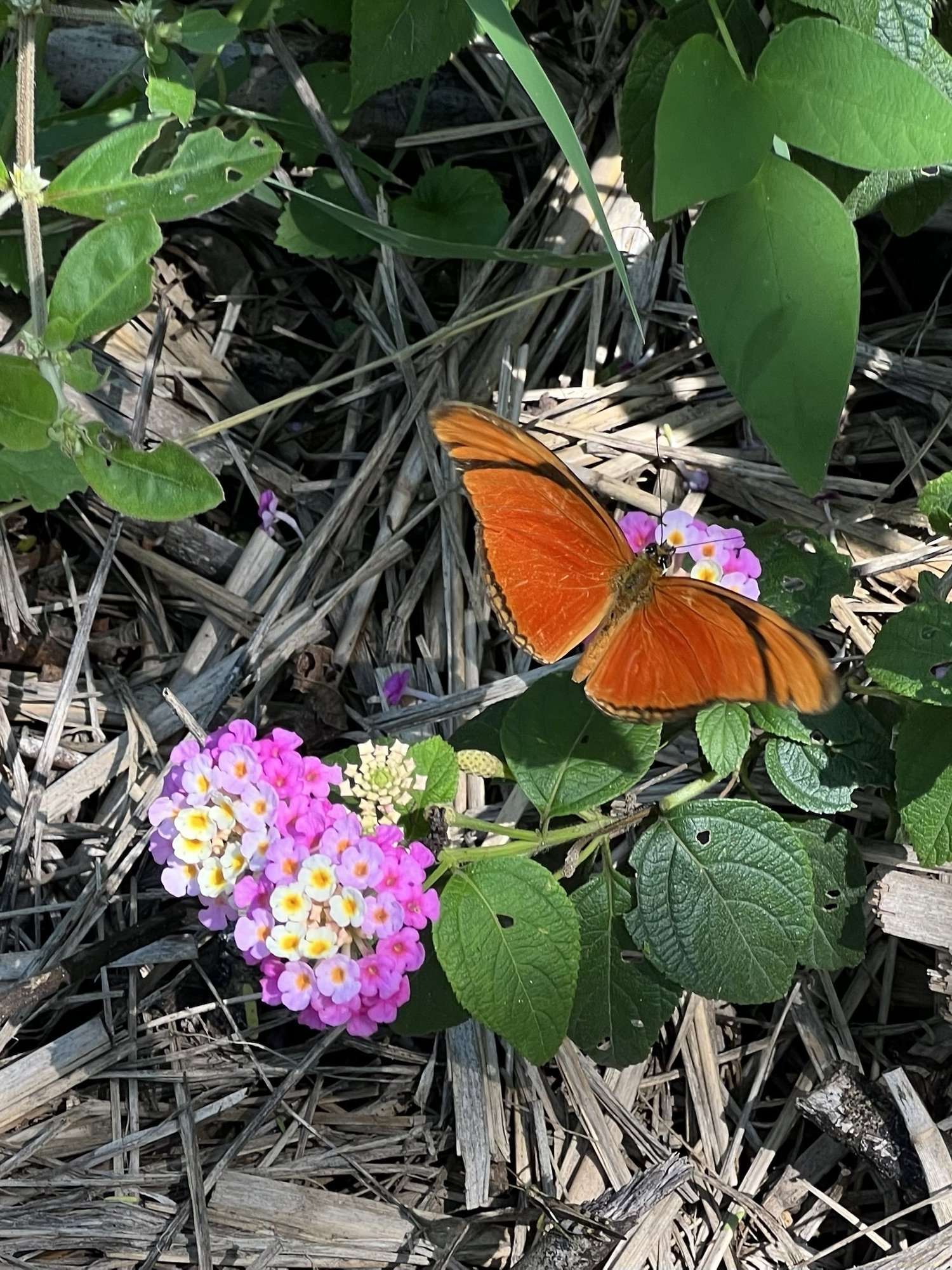
A few things from the archive: books important to me in my teens, a signed book, a lending list

I am going through storage in Norway, mostly from my teens and early twenties when I still lived in Norway. It’s interesting to revisit that time and see what has changed and what has remained as threads through my life.

I thought I would put a few things up here. It’s interesting to me, although I can’t imagine it’s very interesting to others!

A book by the painter Odd Nerdrum and signed by him. I was an apprentice/student of his at the time so it was easy to get it signed. I thought this book was lost, but it was just in one of the cardboard boxes from that time.

These are two books that were important to me in my mid-teens. They helped transform my worldview and orientation to life, I was passionate about both books and the topics they talk about, and remember searching out other books referenced in these.

My middle school teacher introduced me to Fritjof Capra’s The Turning Point in 1986, and it became hugely important to me. It’s about quantum physics, systems theories, similarities between certain areas of Western science and Eastern philosophy, and so on. I also loved his other books, and still do although I haven’t read them for a while. (I later got to see Fritjof Capra give a talk at Schumacher College at Dartington near Totnes.)

Likely the year after, I read Erik Damman‘s Bak tid og rom (“Beyond Time and Space”). This one is about scientific research that goes beyond the materialism that’s mainstream in science today. I love this kind of science, and for a while, I dreamt about doing it myself. I kind of did, in my own life. I also got to later meet and talk with Erik Damman, at one of his monthly Sunday gatherings at his house.

This is a book-lending list, to keep track of who I had lent which books to. I imagine some of these books could still be with these people!

My brother had Science, Order, and Creativity by David Bohm.

A friend from art school and university had Ken Wilber’s No Boundary. Another hugely important book for me at the time, reflecting and helping me further organize how I saw things.

A friend from school had a book by Rupert Sheldrake. I had several of his books and am not sure which one this was. (I later got to see Sheldrake too at Schumacher College at Dartington near Totnes.)

A friend from Art History at university had Goethe’s Fairy Tale of the Green Snake and the Beautiful Lily which I remember also made an impression on me at the time.

Another friend from Art History had borrowed Energi og bevissthet (“Energy & Consciousness”) by Jes Bertelsen. Jes Bertelsen and his books were very important to me at the time, especially as he took a similar approach to me in terms of using elements from Christianity (prayer, meditation), Buddhism (Buddhist practices), energy work, and depth psychology (Jung). I visited Vรฆkstsenteret, his place in Denmark, and felt deeply at home there. I likely would have been far more involved with that community had I not left Norway and Europe at around that time.
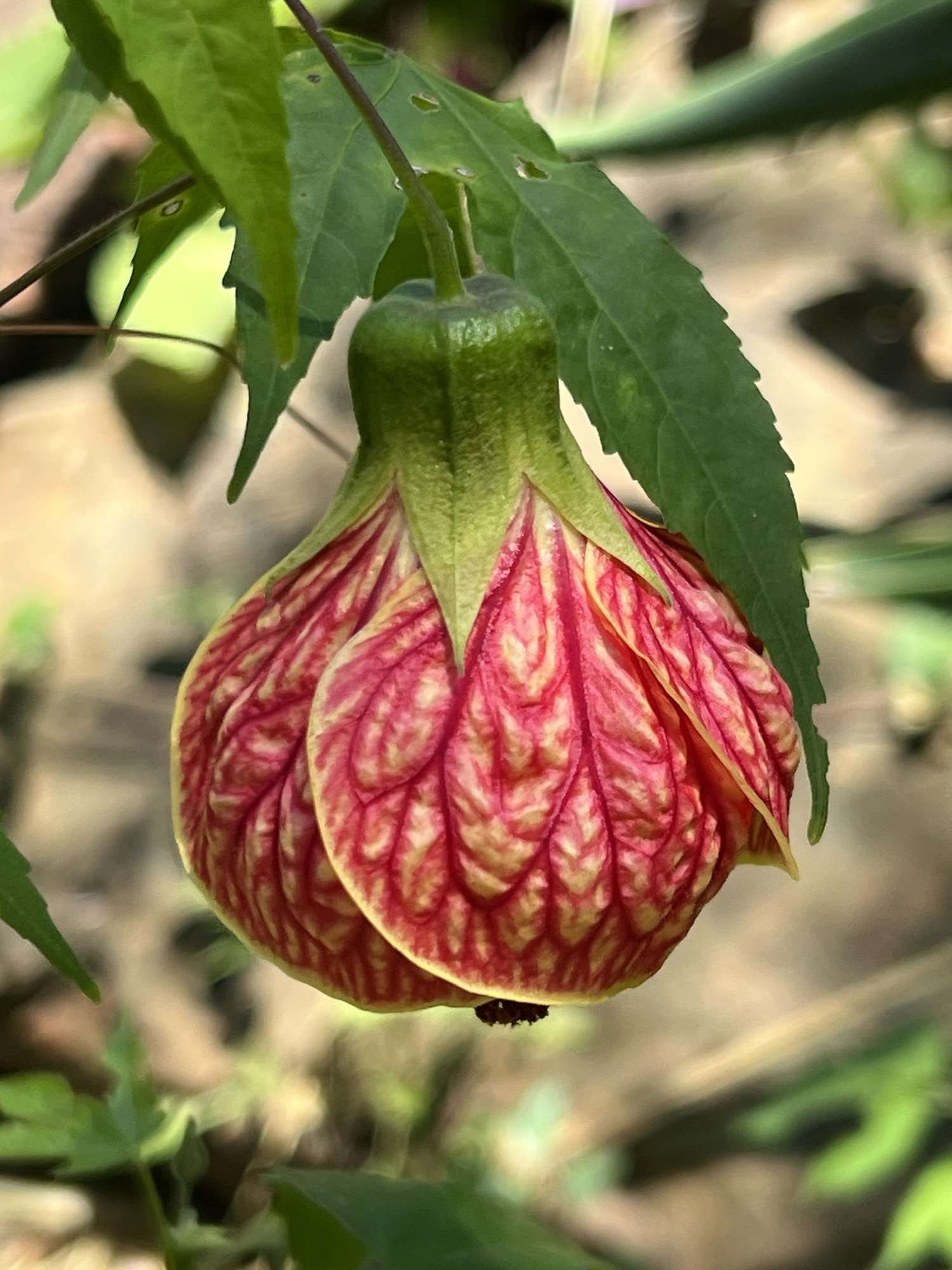
She also borrowed a collection of short stories by Kahlil Gibran. I loved his writing and drawings.

Marianne borrowed two books by the Jungian analyst Strephon Kaplan-Williams. He lived in Oslo at the time, I had done some sessions with him, and I loved his books and his dream cards. Marianne is Marianne Ihlen whom I met in a workshop in Oslo held by Hanne Bertelsen. We became friends. (She was a whole and amazing human being in her own right, although is publicly more known as the ex-partner and muse of Leonard Cohen. I discovered it when we talked on the phone one time, and she told me she had to go to catch a concert with her ex-partner.) Hanne divorced Jes Bertelsen, and I am not sure if she continued to teach. I had a very good connection with her and met her in person several times, so I miss that connection too.
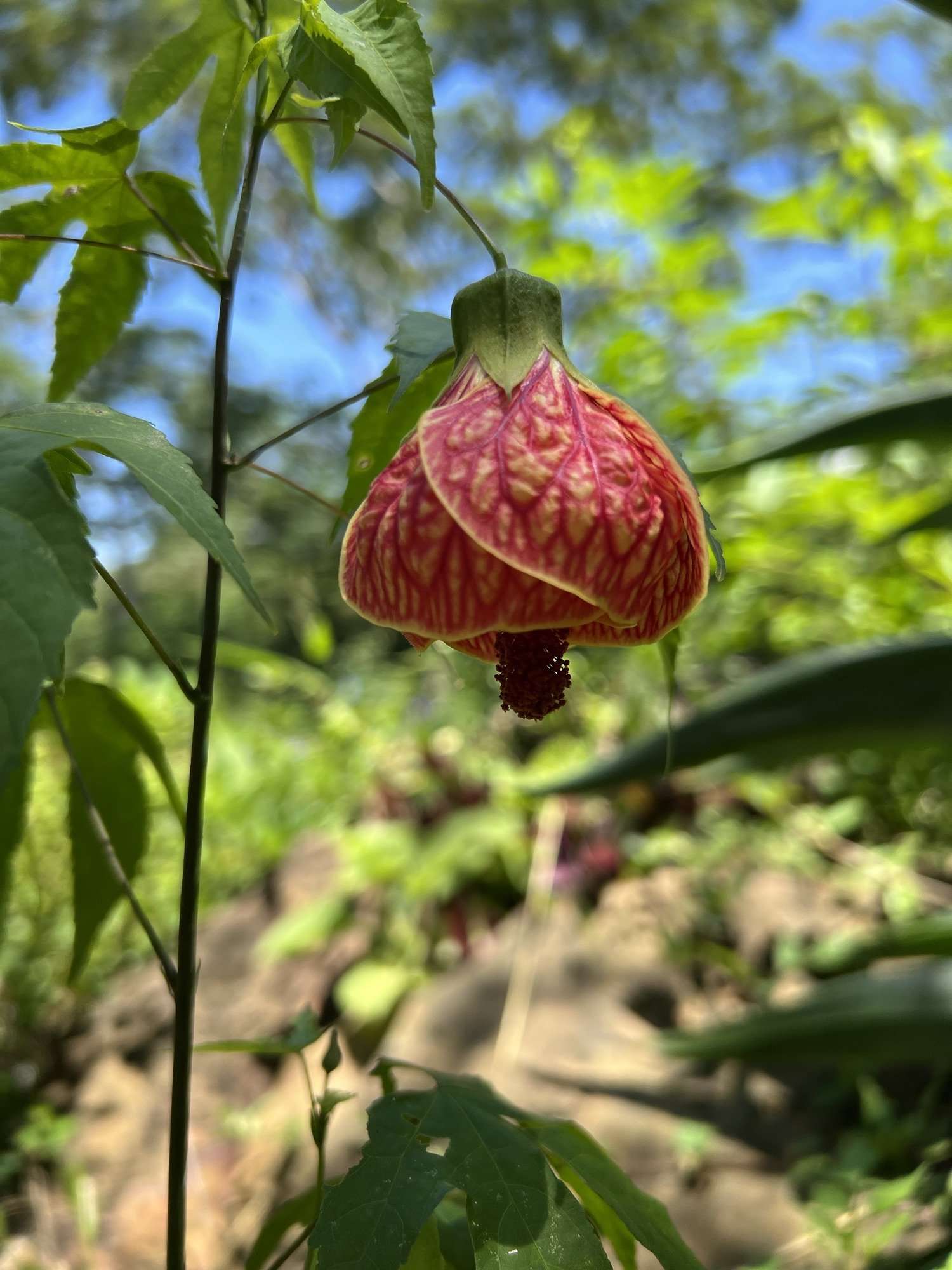
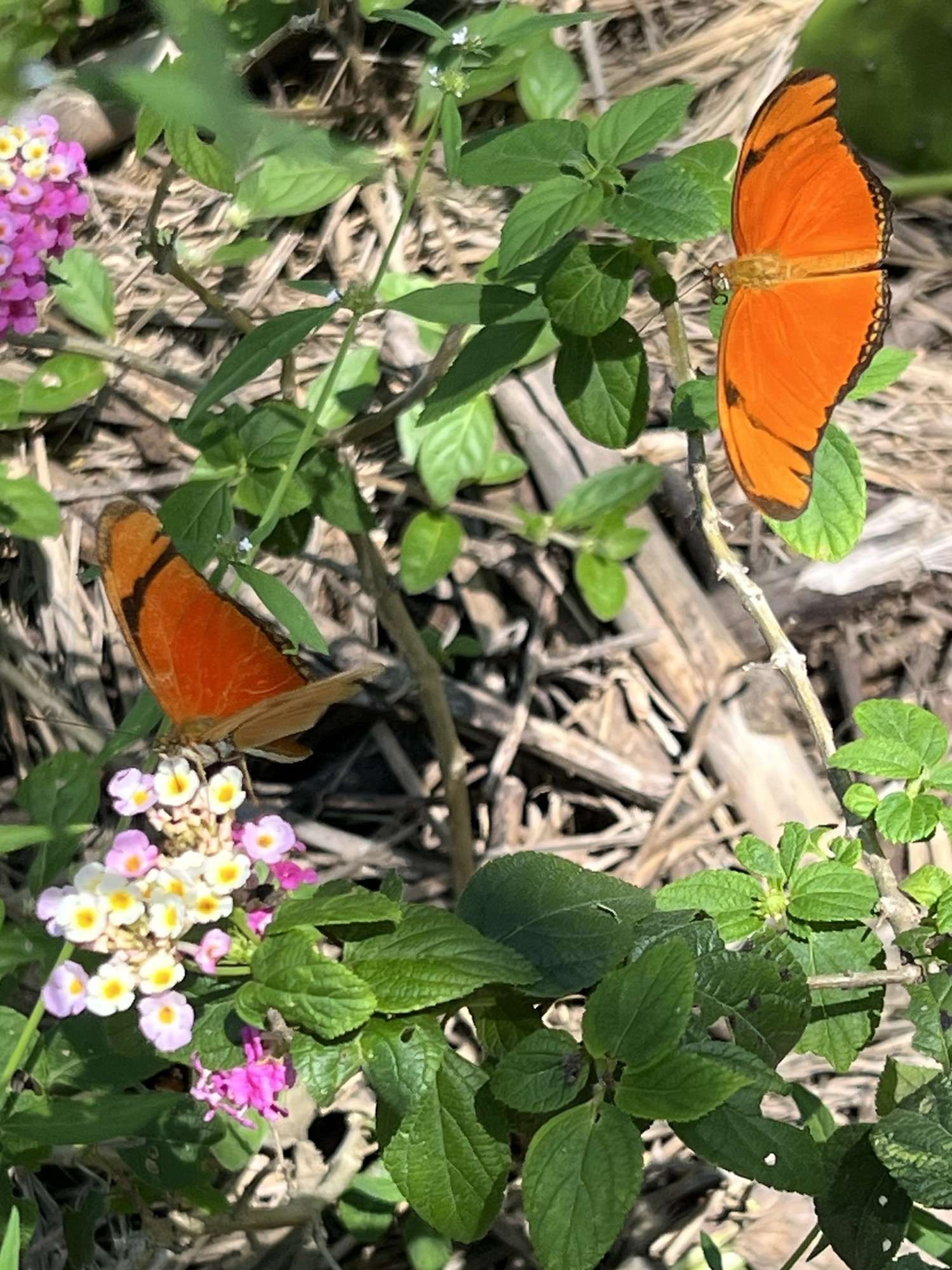
A friend I met in Tai Chi class, Bitte, borrowed Smilende livskunst (The Importance of Living) by Lin Yutang, and also Tao Te Ching . I loved Lin Yutang’s books and read whatever I could find from him. Even more, I loved Tao Te Ching by Lao Tzu (Laozi), and I read and re-read whatever Taoist classics I could find or order through the main bookstore in Oslo. Bitte was and is far along the awakening path and is highly sensitive and clairvoyant. I remember we sat at the train station after tai chi class, comparing what we saw in the energy system of the different people there. We always saw the same. (Maybe she saw more than me, I wouldn’t be surprised.)
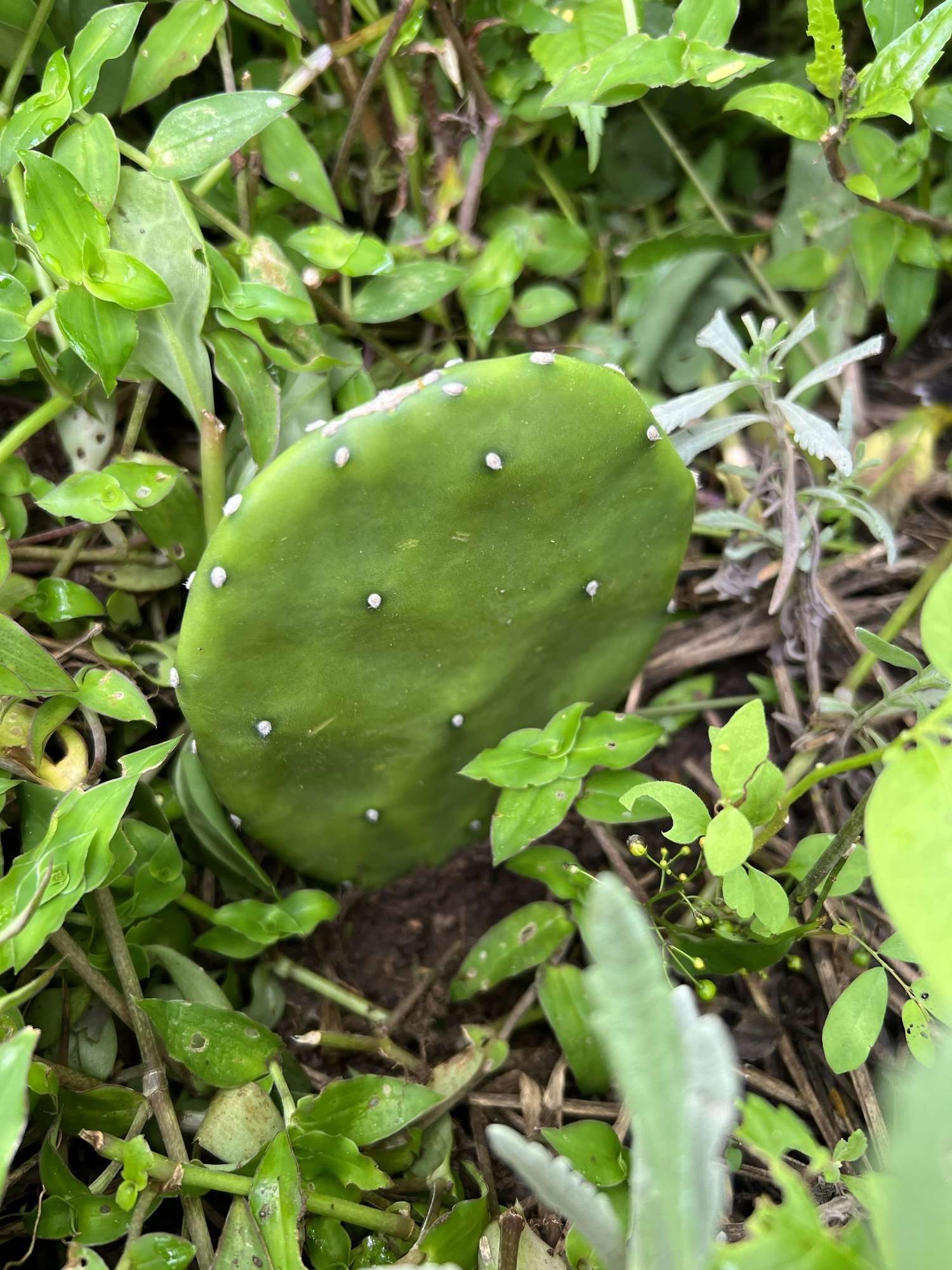
There is also a note I don’t quite understand about “a larger whole” and someone called Boyesen.

The world as a floating island: Infinity in all directions

The process of being is always new and changing, and I assume it’s like that for all consciousnesses.

INFINITY IN ALL DIRECTIONS

What’s come to the foreground lately here is infinite space in all directions.

It’s not new, but the way it shows up feels new and fresh.

All is awake space happening within infinity in all directions.

What I see in front of me โ€“ the things and the ground โ€“ and the sensations and other sensory experiences all happening as awake space and within awake space with no end.

The world is a kind of island (made up of awake space) floating in infinite awake space.

GROUNDING IN (FINDING MYSELF AS) INFINITE

I notice there is a groundedness in it.

The ground disappears, and there is more grounding.

There is a grounding in something more real and fundamental.

LIKELY THE SAME FOR ALL CONSCIOUSNESSES

Of course, this is the inherent characteristics of the consciousness I am and I assume all “conscious beings” are to themselves. It’s awake space. What’s happening happens within and as awake space. There is no end to what I am to find anywhere.

That’s one of many apparently inevitable characteristics of the consciousness we are โ€“ it’s one and seamless, it has no beginning and end, it has no real center or edge, it’s awake space, it takes the form of all of its content, it’s capacity for all of the content it forms itself into, any beginning or end or center or edge happens within and as this awake space.

Here, the infinity aspect of it happens to be more in the foreground now, it’s featured so to speak, it shows itself to itself so it can be more consciously noticed.

It’s also more visceral, likely because it โ€“ย in the context of time โ€“ has been noticed off and on for a few tens of years. It comes into the foreground so it can become more visceral, or it’s more visceral so it comes more into the foreground, or it’s just what it is: one process within a seamless whole.

Image created by me and Midjourney

Asking the divine

I talked with someone recently who said he only asks the divine for help if he can’t do it himself.

I imagine where it comes from. It seems to assume separation and it makes sense in that context, if you see the divine as a kind of parent you don’t want to bother and it’s better to do it for yourself.

For me, it’s different. I like to ask the divine for help and guidance as much as possible in daily life and in transforming this human self. I ask for support with the day, with energy, with projects, with healing and transformation of myself, and so on. I find it opens me to be more receptive and more connected with the divine as everything.

This is the divine locally connecting with the divine as everything.

It creates a different kind of communication, mutuality, relationship, and dynamics between these different parts of the divine. The divine is in a more conscious team with itself.

The image is created by me and Midjourney

Read More