When our nature notices itself, why is it sometimes valued and sometimes not?

I was on a Headless Way Zoom call earlier today, a daily one between Christmas and New Year. One of the topics that came up was sharing seeing.

When we share headless experiments with others, and they notice their nature, why do some value and pursue it while others don’t?

There is no right or wrong, or better or worse here. It’s just nature and life playing itself out in many different ways, but it is still interesting.

There may be several answers, as usual.

THE PSYCHE

First, what is valuing it or not? What’s interested in it or not?

It’s this human self with a particular psyche, personality, and orientation.

All of the answers below have to do with how our psyche responds to what’s noticed and the context of the noticing.

ORIENTATION

One answer is the general inclination of this human self and personality.

Some are more inclined to want to explore things thoroughly, including who and what they are. There is a natural curiosity there and an attitude of leaving no stone unturned. We are not satisfied with the answers our culture gives us and want to look for ourselves.

Others may be satisfied with the ordinary answers or not looking. Some may feel it’s enough to focus on daily life activities.

TOO FAMILIAR

Another is a common answer from Buddhism: It’s too close, ordinary, familiar, and simple.

It seems like this cannot be it since it’s what we already are familiar with and always have been.

The mind may want something “over there”, more complex, and more unusual. It has built it up in its imagination, and what it finds doesn’t match.

THE CONTEXT

I also suspect that the context of the noticing plays a role.

Our human self may value it more if…

It happens after a long period of exploration. We have invested a lot into it, and have wanted to notice it for a long time, so when it happens we value it more.

It happens in the context of a tradition and with a teacher we respect and admire. We respect the setting and what they tell us, so we value the noticing more.

It’s verbally set up in a way that resonates with this human self. For instance, we may share how it has helped us in daily life, and the person is interested. Or it may be phrased in a way that resonates with what they are already familiar with from religion or spirituality.

It comes with a lot of fireworks and side effects. There may be strong states, strong energies running through our system, a flood of insights, and other side effects, and these make us pay attention more. (We may also confuse the side effects with the essence and it can take a while to learn to differentiate.)

The noticing is strongly and undeniably in the foreground and any sense of being something within the content of experience gone or far in the background.

WHAT NOTICES?

Another answer may be in our experience of what notices.

Our nature already does everything, so it’s always our nature that notices itself.

The experience of it, and the way it’s understood, can be different.

In some cases, there may be an experience of this human self noticing its nature as space for the world, capacity for it all, what the world moves through, and so on. There is still fundamentally a sense of being a human self. If so, it may seem like a party trick and something peripheral.

Of course, there is an inherent contradiction here. If we are space for it all, we are also space for this human self so him or her is not what we fundamentally are. But that may not be noticed or taken seriously.

In other cases, we realize that we are space for all of the world, including this human self and everything related to it. That’s a profound shift. It turns everything upside down and inside out.

I imagine that when this is noticed, we are much more likely to take it seriously and want to continue to explore.

LIFE MOVING

As mentioned above, there is no right or wrong here. Any ideas or right or wrong, or better or worse, are created by the human mind. They are imaginations and not inherent in life.

What’s happening – a consciousness noticing its nature or not, and deciding to continue to explore it or not – is all life moving in different directions.

In one sense, this has to do with readiness. We can be ready or not to explore this more thoroughly, and if we are not, the experience may sow a seed that sprouts later.

In another sense, it’s all – no matter what it is – life, existence, the universe expressing, exploring, and experiencing itself in always new ways. It seems that the exploration is a goal in itself.

And it does make a difference for this human self. When it’s ready and explores its nature more thoroughly, it can and likely will change its life, in ways its personality likes (more ease, flow, sense of being home) and doesn’t like (all sorts of unprocessed material surfacing to be seen, felt, loved, and recognized as consciousness).

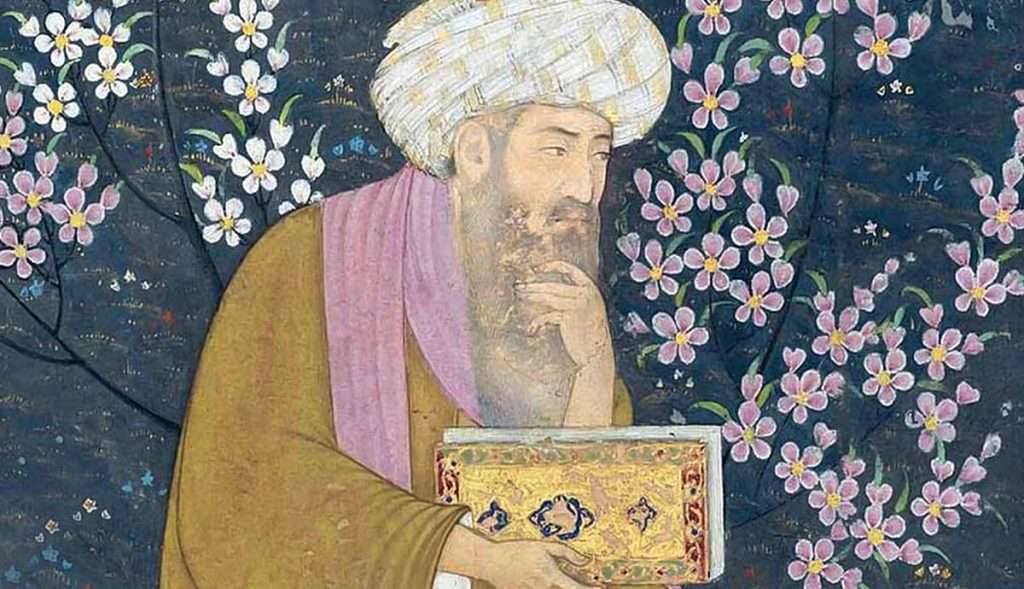
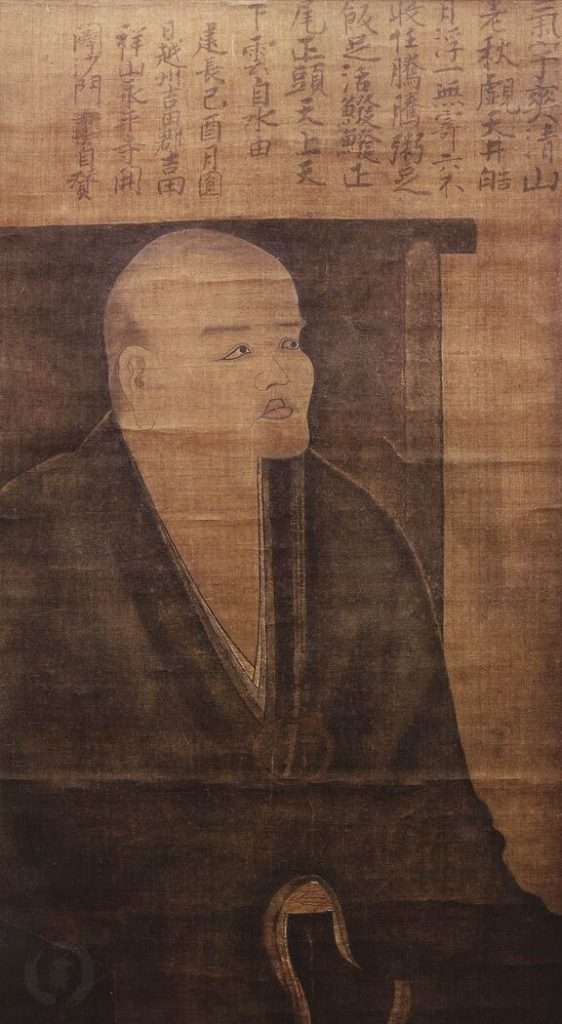
The image is from a video interview with Richard Lang, and likely originally from one of Douglas Harding’s books.

He is living his own life

This human self is happening on its own, just like everything else. He is living his own life.

And when attention goes there, he is a little bit freaked out by it!

A COUPLE OF SHIFTS

There were two major shifts in my teens.

One happened when I was fifteen (January 1st in front of my parents’ house) and the world, including this human self, seemed very far away. It seemed like this human self was living his own life along with everything else, although there was still a sense of being an observer, something observing it all.

The other happened almost exactly a year later, when I was sixteen (between Christmas and New Year, on the gravel road to my parents’ house). Here, everything without exception was revealed as God. It was all Spirit and consciousness. This human self, everything associate with him, and the whole of existence, was revealed as God.

Any sense of being a part of it, and not the whole, came from God exploring itself in that way, fleetingly and locally. All of existence is God expressing, exploring, and experiencing itself in always new ways.

This turned everything inside out and upside down and it profoundly changed everything related to this life. For years, there were enormous energies going through my system, an endless stream of insights and noticings, endless inspiration for music, drawings, and paintings. Endless amazing synchronicities. And so on.

At the human level, there was also a good amount of turmoil in response to all of this, from a lot of accumulated trauma through childhood, and from not finding anyone or any book that seemed to clearly describe what seemed so obvious: That all of existence is consciousness continuously forming and reforming itself into everything.

After some years, I did find some hints of this in the writings of Christian mystics, and I also could see it – usually behind a lot of terminology and ideology – in some Buddhist texts. I also saw that systems views and Taoism were aligned with it, although they usually didn’t point to it directly.

HE IS LIVING HIS OWN LIFE

This is just to point to one aspect of what was hinted at in the first shift, and revealed very clearly in the oneness shift: This human self is living his own life.

This human self is happening on his own, just like everything is happening on its own.

There is usually a part of consciusness that keeps track of which human self I am in a conventional sense, but even that has occasionally gone. (The one I am in a conventional sense is the one I have inside information about.)

RELEASE OF IDENTIFICATION

At first, it was just an unavoidable noticing. When I tried to explore it in thought, it seems that it’s what happens when identification goes out of this human self or ideas of being a doer or observer. When there is not identification there anymore, he is just happening, he is living his own life, just like anything else.

THIS HUMAN SELF IS STILL SOMETIMES WEIRDED OUT BY IT

Most of the time, this noticing is happening in the background and attention is on other things – either aspects of what I am (aspects of consciousness) or practical things in the life of this human self (consciousness taking those forms). Sometimes, attention is also on distress and hangups. (One of the forms of consciousness.)

When attention goes to this human self living his own life, this human self sometimes responds by freaking out a bit. Still, after fourty years of living with this, it weirds out this human self when attention goes there.

It’s not a big reaction. It’s just a hint of it, but it’s there.

It’s natural and understandable, and charming and cute in a way too. (As this human self sees it.)

A PART STILL ASSUMES THAT IDENTIFICATION IS NEEDED

It’s understanable since our psyche is trained to think that identification is required for this human self to function properly in the world. There has to be identification with this human self, or at least an image of a doer or observer, for this human self to be able to take care of himself.

We assume that because that assumption is part of our culture, even if most may not be aware of it and it’s usually not talked about.

It’s something we viscerally learn growing up.

So even if there is a general and conscious noticing of this human self living his own life, and a noticing that he can still function normally without being identified with, a part of his psyche is still weired out by it.

And, as I mentioned above, that’s understandable and has some charm.

Ibn Arabi: None loves God but God

None loves God but God, and there is no lover and no beloved but God. Lovers grasp this when they reach the point of seeing God in everything that exists.

– Ibn Arabi

This is what was revealed in the oneness shift when this human self was an angsty atheist sixteen-year-old. All is God, without exception. It’s all God expressing, exploring, and experiencing itself in myriad ways. It’s God that takes the form of the universe, the stars, the trees, the wind, this human self, and any temporary sense of being anything else than the whole of it.

If there is a lover or beloved here – one that loves God and God loves – it’s God taking that local and temporary form. It all happens within and as God.

At the time, I said that existence as a whole is God and consciousness. Existence forms itself into all there is to express, explore, and experience itself in always new ways. Since I didn’t have anyone interested in this, I wrote it in my journals in different ways, always aware that words cannot come even close to touching it.

HOW I TALK ABOUT IT TODAY

These days, almost four decades later, I don’t mind saying it in the same way, although I notice I am more drawn to another way to say it. It’s not a better way, although it’s slightly more differentiated.

To myself, I am fundamentally consciousness. I am made up of consciousness, and the consciousness I am takes the form of this whole field of experience.

It’s not wrong that I am this human self in the world. It’s how others see it, it’s what my passport says, and so on. But more fundamentally, I find I am what the world – as it appears to me – happens within and as. I am what a thought may call consciousness, and the consciousness I am takes the form of the world as it appears to me.

Even more fundamentally, I find I am capacity for all of it – for consciousness and all it forms itself into.

Any sense of lover and beloved happens within and as the consciousness I am. Any sense of God, the universe, the world, others, trees, stars, this human self, and so on, happens within and as the consciousness I am.

I still don’t really talk about this with others, apart from briefly if I happen to be with someone who notices it for themselves. Just like when I was sixteen, I mostly put it to – in this case metaphorical – paper here in my journal.

Rumi: Even when tied in a thousand knots, the string is still one

Even when tied in a thousand knots, the string is still one.

– Rumi

Yes, my string is tied in a thousand knots and it’s still one.

At a psychological and human level, there are many hangups, wounds, traumas, parts of me holding onto painful beliefs, confusion, chronic illness, and so on.

And it’s all happening within and as this awake space I am. The consciousness I am forms itself into the experience of all of it.

The string is tied in a thousand knots (all the hangups and challenges at a human level), and it’s also one (the consciousness I am forming itself into all of it).

When the consciousness we are to ourselves notices this, it can lead to a big change.

We change our relationship with the knots. We recognize them as our own nature. To me, they have the same nature as I have. They are awake space. They are consciousness.

We can rest in the noticing of what we are, and in noticing the nature of the knots (which is the same as our nature), and that can help the knots loosen. With the help of inquiry, therapy, dialog, insights, and so on, some of them may even untie themselves.

In my experience, what’s most important is the changing relationship with the knots. Instead of struggling with them, I notice their nature. (And the nature of any struggle that’s here.) The loosening of the knots can certainly happen, which makes it all a bit easier. Although the untying of the knots may happen, it may take time and it’s not something I would count on for finding more peace with them.

It’s more direct to find peace with them by noticing their nature, and it may also be easier. There are many effective ways to notice our own nature and the nature of all content of experience. (My favorites are the Big Mind process and the Headless experiments.)

Feeling a million things at once

Last night, before falling asleep, I mentioned to my wife that I am feeling a million things at once, and she said she experiences the same. It’s like a field whispering in the distance.

It seems only natural.

We are as rich as the world. Everything – every characteristic and dynamic – I see in the world is also in me. It’s always here.

Mostly, it’s like a whisper in the distance. Sometimes, dynamics in the situation – in me and the wider world – bring some into the foreground. For instance, Whatever I actively look for comes to the foreground.

I notice a curiosity about all of this, and that it seems beautiful, which is part of the whisper too.

I don’t know how others experience this. I haven’t done a survey. I suspect it may have to do with the awakening process. As our systems are more awake and open, we may notice this more easily.

I remember this from the first oneness shift – which is still here. There is a myriad of faint feelings in the distance. Right now, I notice – when attention goes there and highlights something – sadness, joy, contraction, dullness, space, receptivity, gratitude, awe, to hell with it all, and so on.

I also notice that it all, including contractions, happens within and as awake space. The consciousness I am forms itself into all of it.

After writing this, I notice that this is connected with a general bitter-sweet experience of life and existence. There is awe, gratitude, joy, a gentle bliss, and so on mixed with grief, sadness, and more.

If I were to differentiate, I would say that the awe and gratitude is here for this amazing existence and all it forms itself into. There is a gentle bliss inherent in all experience, it seems, like a thread through experience. And it’s mixed in with grief, sadness, and heartbreak over the fleeting nature of existence and the suffering of beings, including myself.

The oneness I am to myself colors how I perceive the world

In my teens and early twenty, I was deeply into ideas of the evolution of the universe, how we are a temporary and local expression of the seamless whole of existence, how we can consciously participate in the creativity and evolution of the universe, and so on.

This all came from the oneness shift that happened when I was sixteen, combined with my interest in science, evolution, systems views, integral models, the Universe Story, and so on.

In my thirties, my focused shifted away from this. I focused more exclusively on my own first-person experience and left the storytelling aside for a while.

Ideas about the nature of existence, the evolution of the universe and this planet, systems views, integral models, and so on is all storytelling. We need stories to function in the world, and these are helpful and inspiring stories, but it was time for me to set it aside.

These days, perhaps inspired by the food forest, I seem to be getting back into it, and this time, it seems more important to differentiate perception and stories.

MY OWN FIRST-PERSON EXPERIENCE

In my own first-person experience, I am what the world – to me – appears within and as. I am consciousness and the consciousness I am forms itself into any and all content of experience. That means that all I have ever known is my own nature. All I have ever known is consciousness.

Even more fundamentally, I seem to be capacity for it all. I am capacity for consciousness and all it forms itself into.

WHAT I CAN KNOW SOMETHING ABOUT

I can know something about my own nature. It has all the characteristics of consciousness. It’s one. It’s seamless. It’s ephemeral. Whatever experience it forms itself into seems like a dream since it’s made up of the consciousness I am.

There is even a kind of love here. It’s a love independent of changing emotions and states. It’s the love of the left hand removing a splinter from the right. It’s a love that can be temporarily covered up by confused dynamics from wounds, hangups, and traumas.

WHAT I CANNOT KNOW FOR CERTAIN

That’s something I notice in immediacy, and I can imperfectly reflect it in words. (Words always imperfectly reflect whatever we try to put words on.)

I can not know anything for certain about the world or existence itself.

To me, since I am consciousness that forms itself into any and all experiences, the world will inevitably appear as consciousness. That’s how it has to appear, it’s inevitable.

That doesn’t mean that the nature of existence itself is the same as mine, that it is consciousness.

IDEAS ABOUT THE EVOLUTION OF EXISTENCE

In the initial oneness shift, all was revealed as consciousness. All of existence is consciousness AKA God, Spirit, the divine, Brahman, and so on.

Combine this with my existing interest in science and evolution, and it’s easy to imagine that the universe is the body of God, that it is consciousness taking material form, and that it evolves.

We humans are temporary and local expressions of the evolution of the seamless whole of existence and this universe. We participate in this evolution whether we notice or not.

We have the potential to consciously participate in this creativity and evolution. That’s an exciting idea, and it’s exciting and inspiring to me even now.

It’s an idea that fits science and it makes sense. It fits our times and culture, especially if we have a mystical bent.

BEING HONEST ABOUT IT

And yet, I don’t know.

What I know is what I notice about my own nature – that I am awake space that forms itself into the world as it appears to me, including this human self and anything related to him.

I also know that the world inevitably will appear as consciousness to me, since the consciousness I am to myself forms itself into my experiences of the world.

I know it makes sense to me to call the whole of existence God, whatever its nature may be.

I also know that any stories about the nature of existence, evolution, and so on, are ideas.

They are guesses about the world.

It’s worth holding it all lightly.

BRINGING IT ALL TOGETHER

For me, it means a few different things…

I’ll keep exploring my own nature since that’s something I notice in immediacy, outside of and before it’s reflected in thought. That’s what I can say something about.

I’ll keep noticing that my world appears as consciousness since it – to me – happens within and as the consciousness I am.

I may keep exploring ideas about the existence as a whole, the universe, evolution, humans having the potential to consciously participate in the evolution of the universe and existence, and so on. It’s fun, interesting, fascinating, inspiring, and possibly helpful for humanity.

I’ll also hold those ideas lightly. I know they are guesses. I know I cannot know any of it for certain.

A FEW MORE WORDS

I realize I should clarify something…

FINDING IDEAS THAT MATCH IMMEDIATE NOTICING

In my teens and twenties, I got into systems views, integral models, the Universe Story, the Gaia theory, Buddhism, Taoism, quantum physics, and more because it fit my immediate experience. It fit with the oneness I found myself and the world as in my own immediate noticing.

These were the ideas out there that best fit my immediate noticing, so I was naturally drawn to them. If there were other ideas out there that fit as well or better, I would likely be into them as well.

The fit is admittedly clunky. These ideas are ideas and different in nature to what they point to. They reflect a very young humanity trying to make sense of things.

They are the first baby steps in trying to make sense of the world in a way that matches an immediate oneness experience (or, in some cases, an intuition).

In many cases, they come from and reflect a mind that may not consciously recognize itself as consciousness so there is some lack of alignment from that too.

THE WORLD IS MY MIRROR

I should also mention that the world is my mirror.

Whatever ideas I have about the world reflect something that’s here now.

Whatever maps and worldviews I use reflect me here and now.

If I see the universe as a seamless system, it’s because my experience here and now is seamless. It’s a seamless whole.

If I have ideas about evolution, it’s because I can find evolution here. I can find how this consciousness I am evolves in terms of its content and how it reflects and relates to it all.

If I perceive existence as consciousness, it’s because I am consciousness. All I know and all I have ever known is consciousness.

How I experience the sense field

How do I experience the world of experience? The sense fields?

It’s a little difficult to put into words, but here is one way to do it.

SEAMLESS

I experience it as seamless, as one whole. The sensations of my legs on the sofa, the sight of the trees, the sound of the music, the warmth of the body, the sounds of the clicking of the keys, the taste of the delicious fruit salad for breakfast, it’s all one field, one seamless whole.

HAPPENING ON ITS OWN

It’s all happening on its own. It’s all living its own life.

The sounds, sights, the movements of this human self, the thoughts, emotions, decisions, and so on, is all living it’s own life.

DIFFERENTIATION

There is also differentiation here, which comes from an overlay of the mental field. There are imagined lines and boundaries saying what’s this human self and what’s the wider world.

Also, when this human self lives his life in the world, he is completely free to use normal language and say “I” and “mine” even if those words have limited validity.

GOES INTO FOREGROUND AND BACKGROUND

This noticing of (a) a seamless field of experience and (b) it all living its own life comes into the foreground or goes into the background at different times.

It depends on where attention goes. When attention goes to this, it comes into the foreground of attention. When attention goes into something else – a task, a story, or something else – this noticing goes more into the background. (Attention seems to always go to a story, by the way.)

There have also been states and phases where this noticing has come very strongly into the foreground.

After the initial oneness shift, it was very strongly in the foreground for years. (Mixed in with a lot of strong energies, this human self responding to the shift, a variety of states, and so on.)

Several years ago, there was a phase where it also came strongly into the foreground, this time with less of the drama of the initial shift and more clarity and calmness. This lasted about six months.

It also tends to come into the foreground during the times when I have done a lot of meditation for a long time, for instance when I was a resident at Kanzeon Zen Center and to some extent during longer retreats.

When it comes into the foreground in this way, it cannot be missed. It’s there the whole time. It’s the primary noticing even when other things are going on.

STATES HIGHLIGHT CERTAIN FEATURES

These states highlight certain features of my nature.

It’s my nature showing itself aspects of itself in a way that’s so obvious it cannot be missed.

In my experience, that makes it easier to keep noticing these features through changing states and experiences. Something in me knows what to look for.

WHO AND WHAT I AM

All of this is just another way to talk about who and what I am.

At one level – in a conventional sense and in the world – I am this human self. It’s not wrong, and it’s an assumption that works relatively well.

When I look in my own first-person experience, I find something else. I find I primarily am what the world happens within and as. I am what this content of experience – of this human self, others, the wider world, states, and so on – happens within and as. I am consciousness forming itself into whatever content of experience is here.

Even more fundamentally, I seem to be capacity for all of this – for consciousness forming itself into all these experiences.

MORE COMPLEXITY

There is always more to say about these experiences. There are always more details, layers, and perspectives.

Sometimes, this noticing – of the seamless field and it all living its own life – goes far into the background. It’s clouded over by getting caught up in wounds, trauma, and the perspectives and identities of the painful stories creating those. This usually doesn’t last very long, but it’s a part of the dynamics and process.

I am very aware that parts of me operate from painful stories that they hold as true. Consciously, I don’t agree with these stories, but that doesn’t make much of a difference for these parts of my psyche. This will inevitably color my perception and this human life. What I can do is be aware that they are here, even if I don’t know exactly what they are or how they color my perception and life. I can meet them with some understanding and kindness since they are here to protect this human self.

A NOTE ON THE SENSE FIELD

I often talk about sense fields in the plural – sight, sound, sensation, smell, taste, mental field, and so on.

Here, I talk about the sense field as a whole which includes all of those.

A NOTE ON THE WORD “I”

I should also mention that I use the word “I” here. Any sense of I – with an other – happens within the content of experience. That’s not the I that’s experiencing anything. Here, the word “I” is used because it’s familiar and I guess it can be used about my nature too, that which the content of experience happens within and as.

I could use more accurate language, and do sometimes, although then the wording becomes more convoluted. Our language is set up to work with an I with an Other.

If I did, the title could be “The experience of this sense field”. It’s more accurate since there is no I there, and also feels a little clunky because our language works better with a subject.

A few ways to think about others that bring a grounded understanding

I thought I would list a few ways to think about others that make sense to me, seems aligned with reality, and can be transforming.

THEY ARE CONSCIOUSNES LIKE ME

In one sense, I am this human self in the world. That’s an assumption that works reasonably well, although it’s not what I fundamentally am.

When I look in my own first-person experience, I find I fundamentally am something else. I find I am what any experience happens within and as, including this human self, others, the wider world, states, thoughts, emotions, and so on. I am what a thought may call consciousness, and the world, as it appears to me, happens within and as the consciousness I am.

Based on reports and what makes sense, I assume this is how it is for others as well. To themselves, they are fundamentally consciousness, and the world as it appears to them happens within and as the consciousness they are.

Whether we notice or not, we are fundamentally the same. It’s just the particulars of the bodymind that we function through that’s different. This shifts how I see others.

THEY MIRROR ME

Others and the world mirror me.

I can take any story I have about someone or something, turn it to myself, and find genuine and specific examples of how it’s true. Most likely, I can even find how it’s true in the moment I have the thought about the other.

It may not look the same, but I can find the same dynamics.

We are in the same boat. They help me find more of my own richness. They help me relate to more sides of myself in a more conscious way.

HOW I SEE THEM SAYS MORE ABOUT ME THAN THEM

How I see others inevitably says more about me than them.

It says how I tend to perceive the world. It says something about what stories I hold onto as true. It may say something about my wounds, hangups, and traumas.

I don’t really know anything about anyone, and I have far from the full picture, so it doesn’t really say much if anything about them.

THEY HELP ME SEE MY HANGUPS

Others help me find my own hangups, wounds, traumas, and where I hold onto a fixed view to find safety.

Whenever I get stressed, it’s a good chance it’s because (my ideas about) life – often in the form of others – rubs up against a fixed view and identity in me.

THEY WANT THE SAME AS ME

They want the same as me. They want to avoid suffering, and they want to find contentment, happiness, connection, love, acceptance, alivness, a sense of being home, and so on.

We all want the same, whether we are an insect, bird, or human. We are the same in this.

THEIR WORLD IS AS RICH AS MINE

Their world and life is as rich as mine.

To them, their life is as rich as my life is to me.

WHAT I (THINK I) KNOW IS MINISCULE COMPARED TO WHAT I DON’T KNOW

What I think I know about someone, or about anything at all, is miniscule to what I don’t know.

With more information, I may see them in a very different way. It’s almost certain that I would.

So it’s worth holding my ideas about others – and myself, and anything in life – lightly.

MY THOUGTS ABOUT THEM ARE GUESSES

My thoughts about someone are guesses. They are provisional.

They are based on very limited information and a lot of questionable assumptions, biases, and so on.

They are something to hold very lightly and as questions only.

IF I KNEW MORE, I WOULD UNDERSTAND AND FIND EMPATHY

If I knew more about the other, judgments would give way for understanding and empathy.

I may not agree with their words and actions. In some cases, I may even want to stop some of their actions. And I would still have understanding and empathy.

IF I HAD THEIR BODY AND MIND, I WOULD BE LIKE THEM

If I had their body and psyche, just as it is, I would be like them. I would be them.

IF I HAD THEIR CONDITIONING, I WOULD BE MORE SIMILAR TO THEM

A softer way to say it is that if I had their biologial, psychological, and social conditioning – if I had the same influences as they have – I would likely be very similar to them.

If I had their ancestry and genetics, if I had their upbringing, if I lived in their culture and subculture, I would be very similar to them.

WE ARE ALL A PRODUCT OF OUR TIME AND PLACE

We are all a product of our time and place. I grew up in a reasonably well-educated middle-class family in Norway, went to University, and so on. My views are generally very predictable based on my background.

If I grew up in a small town in Siberia or Texas, my views and life would likely reflect that background.

IF I BELIEVED THE SAME STORIES AS THEM, I WOULD PERCEIVE AND LIVE LIKE THEM

If I believd the same set of stories as someone, I would perceive the world and live in the world much like them.

Most of us seem to believe some of the same universal and painful stories, partly because we live in a similar culture, and partly because we are human.

I know how painful it is for me, and I imagine it’s as painful for them.

(I happen to have tools to identify and question these stories, and most don’t which makes it even more difficult for them.)

THEY HAVE CHALLENGES LIKE ME

We all present a certain image to the world.

I do too, and I know very well that what’s going on here is far more than the different images I present to others and the world in different settings and circumstances.

That’s how it is for others too. They present a certain image to the world, and it’s just a small part of what’s going on.

They have their own challenges, just like me.

A SMALL KINDNESS CAN MEAN A LOT

Whenever someone is extra kind to me, I remember. It makes an impression, and it can mean a lot to me, especially on difficult days or in challenging periods of life.

A small kindness can mean a lot to others, as it does for me.

COLLECTIVE AND INTERGENERATIONAL TRAUMA

We all have our share of collective and integenerational trauma.

It’s inevitable from growing up in a family and living in a society and culture.

And the further over on the dominance side of the spectrum our culture is, the more trauma we likely have inhereted. (Unless we happen to grow up in an unusually healthy and conscious family, although even then there will be blindspots and some inhereted trauma.)

We are in the same boat here. We are all dealing with much of the same, and it’s not as personal as it may seem.

HURT PEOPLE HURT PEOPLE

Hurt people hurt people.

If someone hurts others and themselves, it’s likely because they have been hurt.

They are reacting to and living out their own trauma. (And in the process possibly passing it on.)

I do this too. When I hurt others, it’s typically because I am hurt and I am unable to relate to it with kindness and awareness in the moment.

It doesn’t justify hurtful words and actions, but it can help us understand.

Here too, we are in the same boat.

WE ARE EXPRESSIONS OF THIS LIVING SYSTEM AND EXISTENCE

We are all temporary and local expressions of this living system and existence.

Everything we are and live has innumerable causes going back to beginning of time (if there is a beginning) and the widest extent of the universe (if there is a widest extent).

As Carl Sagan said: We are the universe bringing itself into consicousness. We are the local eyes, ears, thoguhts, and feelings of the universe.

We are fleeting and local expressions of the whole. What we see as personal is the fleeting and local expressions of the larger seamless whole we are part of.

We are existence – the universe, this living planet – fleetingly and locally expressing, exploring, and experiencing itself as and through us.

We are all part of this grand adventure.

WE ARE LOVE

The oneness I am is love. It’s a love independent of changing emotions and states. It’s the love of the left hand removing a splinter from the right. And the love we are can, and often is, covered up by hangups, wounds, hurt, and painful stories.

Here too, we are in the same boat.

NOT NEW BUT POWERFUL WHEN LIVED

None of these views or pointers are new or especially complicated.

It’s pretty simple. And they are also quite powerful and transforming when lived.

How is it to select one of these and stay with it for a few hours, days, or even weeks? How is it to live from it in daily life?

What’s missing from this list? Which ones are especially alive for and important to you?

Read More

Perspectives on Trump

Like many others, I have felt a need to process after the re-election of Trump, knowing what he wants to do, and knowing that he this time has plans and people in place to do it. (At least as far as is possible considering that he will receive pushback from democratic institutions and people who still support democracy.)

Here are some of the many perspectives on Trump and his followers that I find useful in that they seem accurate and kind. (Kind to myself!)

HAPPENING WITHIN AND AS WHAT I AM

It’s all happening within and as what I am. That’s the context for it all.

In my own first person experience, I am not most fundamentally this human self, a doer, and observer, or anything else within the content of experience. All of that comes and goes.

I find I more fundamentally am what it all happens within and as. The world, as it appears to me, happens within and as the consciousness I am. It happens within and as the oneness I am.

This is the insight of mystics across traditions and throughout time, and it’s what I find for myself as well.

This is the context of direct noticing.

THE PLAY OF LIFE

In the realm of stories, I can say this another way.

What we see unfolding in the world today is all the play of life.

It’s the unfolding of this universe and this living system we call Earth.

It’s the ephemeral and local expressions of this universe, Earth, and existence.

It’s existence expressing, exploring, and experiencing itself in this way, for a little while and locally here.

This living system we call Earth is expressing, exploring, and experiencing itself as all of this – as social dynamics, Trump, his supporters, those opposing him, me, the thoughts and feelings we have about it, and everything else.

It’s all the play of life. As far as I can tell, the purpose of existence and life is this exploration. It’s life expressing, exploring, and experiencing itself in always new ways, and this is one ephemeral and local way that it does so.

That’s the big picture context within the realm of stories.

SURVIVAL FOCUS, LACK OF EDUCATION, DISINFORMATION

We also have some of the specifics, for instance survival focus, lack of education, and disinformation.

Many have enough with surviving from day to day. They lack good education. And they are easy prey to disinformation.

That is, of course, part of the strategy for some politicians. They seek to erode K-12 education, keep higher education privatized and costly, do away with social safety nets, and create a citizenry that’s easy pray to disinformation.

Another part of their strategy is the “culture war” which is meant to distract from the far more important and fundamental issue of wealth inequality.

NEO-LIBERAL POLICIES

In the background are the neo-liberal policies implemented worldwide for some decades now, aimed at increasing the wealth of the already extremely wealthy at the cost of everyone else.

That creates dissatisfaction and large segments of the population that are easy prey to politicians who promote simple and misguided solutions, scapegoating, bigotry, and so on. We saw this in the UK with Brexit, and we are seeing it in the US now with Trump.

Although the neo-liberal ideology is relatively new, the dynamic of increasing wealth inequality and people falling for misguided solutions is not new.

THE ONES WHO VOTED FOR HIM DON’T AGREE WITH EVERYTHING

Although some voters may want the complete dystopian world Trump says he wants to create, many don’t.

They may vote for him because he is the supposedly “conservative” candidate, or they are in a squeeze with expenses going up faster than their wages and hope for a change (and don’t realize that they are experiencing a global problem that has little to nothing to do with Biden), or something else. They don’t know, or don’t want to know, all that Trump plans to do, or they think it’s political theater, or they naively think he won’t do it.

Trump won the majority of the votes, and that doesn’t mean that a majority of the population in the US agrees with, or even knows about, everything he wants to do.

WINNER-TAKES-ALL SYSTEM

The US has a winner-takes-all system which leads to a two-party system and polarization.

What we are seeing today is a consequence of this system combined with a fragmentation of the media and news landscape, massive disinformation campaigns, for-profit media that seek sensations and hype, and a significant portion of people receving their info from social media.

TRAUMA BEHAVIOR

What I see in Trump is trauma behavior. Hurt people hurt people. He responds to his own pain, wounds, and trauma with anger, denial, attacks, scapegoating, blame, victimhood, lies, and so on.

I also see trauma behavior among many who follow him.

Some feel they are allowed to deal with (distract themselves from) their own pain through xenophobia, misogyny, racism, and so on. They take his scapegoating as permission for them to act that way too, and it can feel like a relief. (Although it comes with a high cost, including that they don’t find healing for their own pain.)

Some are traumatized by authoritarian figures in their life, and deal with it by justifying it, joining in, and supporting an authoritarian politician. It’s familiar, feels safe, and allows for it all to continue.

Some have given up on mainstream politicians, and deal with their pain and disappointment by supporting someone who will disrupt the system. (Without too much thought of what will come.)

This is collective and intergenerational trauma. It’s the trauma of empire, of domination culture.

This trauma is created by the domination culture, and it perpetuates the domination culture. Collective and intergenerational trauma is part of how the domination culture perpetuates itself.

DOMINATION VS PARTNERSHIP CULTURES

The Trump phenomenon comes out of a culture of domination and power-over.

The origins of this, or at least the strong form, likely came with the agricultural revolution.

Before the agricultural revolution, we were all Indigenous. We lived in smallish groups, we were all more or less equal (apart from in abilities, knowledge, and so on), nobody owned much, we saw ourselves nature, we saw the sacred in everyone and everything, we had an intimate knowledge of the ecosystems we lived within, and so on.

With agriculture, some gained land, wealth, and animals, and others did not. At some point, the ones who had wealth felt a need to justify the wealth inequality, everyone likely felt the need to justify domination over land, plants, and non-human beings, and the ones who dominated other humans felt a need to justify that. They came up with a series of imaginations, and other people eventually bought into these imaginations. It became part of the culture and what new generations learned from early on in life. It became the water we swam in.

Some of these imaginations are: We are separate from nature. Nature is here for our use. We are inherently better than non-human beings and nature. We have a soul, other beings do not. The sacred is not here but somewhere else – in the sky, in a sky god, in the afterlife. You’ll get your reward in the afterlife so don’t bother changing the social order. If you are at the low end of the wealthy spectrum, it’s your fault – it’s because of karma, or laziness, or something else. Pretend to believe what someone tells you and you can’t test out for yourself, and you’ll be saved.

Nature is infinite, has infinite resources for us to use, and infinite capacity to deal with our waste. It’s fine to develop and use an economic system and other systems that assume infinite nature. We can do research on non-human animals because they are so similar to us, and we can mistreat them because they are so different from us. We can imprison and kill non-human animals for our use since they are unable to resist it, and we are more important than them.

We understand best by taking things apart to the smallest parts. A thought can capture a full, final, and absolute truth. If one thought is true, other perspectives are not. (Either-or thinking.) One end of most imagined polarities is good, desirable, and valuable, and the other end is bad, undesirable, or worth less. (Woman and men, adults and children, Europeans and non-Europeans, Christians and non-Christians, light and dark, heaven and hell, and so on.)

These are patently absurd ideas, and yet most people bought into it so it all seemed self-evident, how it is, and something we don’t question. The few who has questioned it have typically been ridiculed, shunned, ignored, or persecuted.

Western culture, and most agricultural societies, are over on the domination side of the domination-partnership spectrum. The US is quite strongly over on that side, not the least because they are an empire. Empires need to be far over on the domination side to survive. Trump is just an expression of this.

INGREDIENTS

The Trump presidency and what comes with it are part of life, they are part of the life that the ones of us alive now are living.

They are among the many ingredients in our life that we are here to make a meal out of.

What kind of meal would I like to make with these ingredients? How is it to look at it all as ingredients for a meal? How can I make it nourishing for myself?

A MIRROR

The world is my mirror. Whatever I see in the world is something I can find in myself.

I can take any story I have about Trump, his supporters, what will happen, and so on, turn it to myself, and find genuine and specific examples of how it’s true. It seems that even, or especially, in the moment I have the thought about someone else, it’s also true about me.

Even if my personality doesn’t like Trump or his policies, and what will happen during his presidency, it’s also a path to my own wholeness.

If I make use of him, and the world in general, as a mirror, it all becomes a way for me to consciously find and embrace more of the richness of who I am.

TONGLEN

Whenever I notice a dislike for someone or something, or distress in myself about something, it’s a reminder that I am caught up in something. I am out of alignment with reality.

I can just notice and relate to it a little more consicously, with perhaps some curiosity to see what comes up. I can take it to more structured inquiry. And one of my favorite explorations is tonglen.

I visualize the other (or myself) in front of me, with their suffering as black smoke. On the in-breath, I inhale that black smoke. And on the out-breath, I visualize breathing light into the person and the light fills them.

I can do this with someone my personality doesn’t like, like, myself, a part of me that’s suffering, and with individuals or groups or even humanity or Earth as a whole. (I sometimes also do it with all the living worlds I imagine throughout the universe.)

Often, I start with someone else, then include myself, and then include larger groups and the Earth as a whole.

Sometimes, I do just one or a few breaths as I go about daily life, and other times I set aside more time for it, especially before falling asleep or after waking up.

This is a powerful and transforming practice, and as I keep doing it and returning to it, it shifts how I relate to the world in general.

In this way, Trump and his followers becomes a reminder for me to do tonglen and allow that exploration to work on me.

LIFE GOES ON & LIVING WHAT I WOULD LIKE TO SEE MORE OF

No matter what, life goes on. This is just another of the many flavors of life.

I allow whatever emotions and reactions come up in me around Trump and what he does. It’s natural and healthy to feel a range of emotions in this situation. I notice these emotions are already allowed and noticed, and also notice whatever reactions come up in me in response to them, and that they too are allowed and noticed – long before any of it is conscious and before there is any intention here. I also remind myself that whatever reactions come up in me is the Earth and existence temporarily and locally responding that way.

I still get up in the morning, go about my day, and go to sleep in the evening.

My tasks are the same, including exploring projections, examining stressful thoughts, and living what I would like to see more of in the world.

In my case and these days, my projects include… Taking care of my health. (I have a chronic illness.) Befriending my experience. Being a good partner, as much as I can. Continuing with the regeneration, reforestation, and food forest project in the Andes.

For me, the main issue in the world today is our global ecological overshoot, and everything else ties into that. The regeneration project is a very small part of the solution, and it feels good to be part of that solution.

NOTICINGS & PERSPECTIVES AS MEDICINE

These are all medicine, or they can be depending on how I make use of them.

Noticing that all is happening within and as the clear awakeness I more fundamentally am is medicine to taking myself as something within content of experience. It reminds me of the more real context of it all as it appears to me.

Reminding myself of the systemic reasons for Trump – domination culture, neoliberalism, disinformation, trauma and so on – helps me see that none of what’s happening is really personal. It’s played out in people’s lives, of course, but the dynamics are much larger than any one of us. It’s medicine for taking it all as having mostly to do with individuals.

Seeing it all as ingredients helps me see that I can create a metaphorical meal out of it all, and seek to make it nourishing for me. It’s medicine for feeling it’s all happening to me and taking a more passive stance.

I can use it as a reminder for tonglen and other explorations. In that way, what’s happening is immensely valuable. It’s medicine for seeing it as (only or mainly) terrible.

Living my life and living some of the more life-centered alternatives is medicine for hopelessness.

Read More

Paradoxes: are there any?

I have written about this before, and feel called to revisit it.

Are there paradoxes? I cannot find any.

Right now, I am trying to find examples of paradoxes, and they are not coming to mind.

THE APPEARANCE OF PARADOXES

That said, I understand how there can be an appearance of paradoxes.

If we have bought into a certain set of ideas, we can make it look as if there are paradoxes.

Here are the two essential ones:

(a) A thought can reflect a full, absolute, and final truth. A thought is true or not.

(b) If one thought is true, alternate thoughts cannot be true. Only one perspective is true, not the other.

THE NATURE OF THOUGHTS

For me, it’s not that way.

(a) Thoughts are questions about the world. They are here to help me orient and navigate in the world and have a limited practical function only. They are provisional and always up for revision.

(b) Each thought has limited validity. The kind of validity it has is different for each thought and has to be explored. Usually, it’s valid in a few different ways.

APPARENT PARADOXES

So to a list of apparent paradoxes.

A good way to approach it may be too look for polarities since I imagine these may appear as paradoxes to a certain mindset.

God is everything – including all we call good and bad, or good and evil. –> God forms itself into all of it. It’s all the divine expressing, exploring, and experiencing itself in always new ways. The play in itself is the purpose. Our ideas of good and bad, or good and evil, are ideas. They are not inherent in reality. Here, we can replace the word “God” with existence, the universe, this living planet, or something similar.

I am consciousness and matter. –> To me, the appearance of matter happens within and as the consciousness I am. In my first-person experience, what a thought calls matter is made up of the consciousness I am. It has to be that way. I also see that the appearance of matter comes from sense field information – sensations, sight, sound, taste, and so on, with an overlay of mental field representations. (This only says something about my nature, it doesn’t say anything about the nature of existence itself.)

A person can be good and bad. –> Yes, of course. We all have all in us. Everything I see in the world mirrors what’s in me at a human level. I can take any story I have about someone or something, turn it to myself, and find genuine and specific examples of how it’s true. Also, ideas of good and bad are created by the mind, they are not inherent in reality. They reflect our own biases and culture, not anything else.

An experience, something I lived, can be good and bad. –> Again, yes of course. It all depends on the perspective, and they all have some validity. I have had a chronic illness since my teens. I can see it as unfortunate in that it has limited my activities and life in the world in many ways.

I can also see it as a gift. It has allowed me to find my value independent of activity and achievements. It has allowed me to explore simpler ways to explore my nature. (For instance, to notice that this whole field of experience is already noticed and allowed. It’s noticed by the consciousness I am before the noticing is consciously reflected in mental representations. It’s allowed by the consciousness I am, by the capacity I am, by space, by life.)

Also, good and bad are ideas created by this mind. They reflect similar ideas from my parents and culture. They are not inherent in reality or life.

I asked AI for a list of more apparent paradoxes, which had slipped my mind. These are ones I have explored a lot since my teens.

Emptiness and fullness. –> What I am is capacity for this whole field of experience, and forms itself into it all. The consciousness I am forms itself into any and all experiences. In that sense, I am emptiness and fullness. That’s the nature of consciousness. Empty and full are two aspects of the same.

One and many. –> To me, the world – and all experiences – happen within and as what I am. In that sense, it’s one and many. It’s all consciousness taking these appearances, and it takes many appearances. The mental field can create inumerable imaginary dividing lines that creates the appearance of many out of it. One and many are two aspects of the same.

No-self and self. –> There is a human self here, in a conventional sense, and also mental representations of a doer, an observer, and so on. And it’s not what I more fundamentally am. The consciousness I am, which forms itself into the appearances of all of it, can also be called a self, although it’s a self without an other.

Seeker and sought. –> This hasn’t been as big a part of my process as it has for some, but it can appear as a paradox. The consciousness I am seeks itself. It may take itself to be something within itself – this human self, a doer, observer, and so on – and seek itself without noticing that it already is it.

Doing and non-doing. –> This human self is doing a lot of things. And yet, it’s not what I more fundamentally am. He happens on his own. He lives his own life. There is also doing and non-doing in a more conventional sense. After waking up, I wait to see what this human self will do. When is he getting out of bed? At a human level, I wait to be moved, and it happens at the right time.

Doing and non-doing in explorations. –> When I explore my nature, or this human self, there is also a mix of apparent doing and non-doing. It all lives its own life. It’s all happening on its own. At the same time, there can be intention here, curiosity, receptivity, a sense of urgency. That too happens on its own, and moves this human self.

Effort and effortlessness in explorations. –> There is a mix of effort and effortlessness in explorations. Many explorations – basic meditation, inquiry, even heart-centered practices – involve noticing what’s already here. The noticing itself is relatively effortless, and nothing needs to be created or manufactured. At the same time, there is some effort in that there is intention.

Freedom and absence of freedom. –> There is freedom here in a few different ways. For instance, there is a freedom to notice and allow what’s here, since it’s already noticed and allowed. There is even a freedom to allow this human self struggling with what’s here. That too is already noticed and allowed. When there is healing for issues, there is a sense of freedom from the dynamics around the issue. When a story is seen through, there is more freedom around the story. At the same time, there is no freedom since it’s all happening. It all lives its own life. This human self cannot decide what’s here in the sense fields. At a human level, there is surrender to what’s here. Even if it’s a surrender to the struggle that this human self experiences, and sometimes engages with.

THOUGHTS ARE QUESTIONS

Are these paradoxes? Only if we stay within the realm of thought and assume the validity of different thoughts are mutually exclusive, and that seems misguided. (It’s an expression of the mindset that came with the agricultural revolution.)

I notice that each of the examples above involve a polarity. My mental field creates the idea of a polarity, to help make sense of the world. It also sees how there is validity in each end of the polarity, and in the polarity as a whole and its dynamics.

The thoughts are questions, and there are different kinds of validity in each thought. Togther, they create a richer and fuller picture.

They create a map, a way to help me orient, that gives a fuller picture, although there is always more to explore and further to go. These questions only scratch the surface.

Reality is always different from and more than my maps. It’s also less than my maps.

In what way is it less than? One example is that it’s capacity for it all, taking all these forms.

MY EXPLORATIONS

In the year before the oneness shift in my teens, I got into Fritjof Capra and systems views. This helped me explore all of this – how thoughts are questions about the world, provisional, and that the different thoughts and perspectives all have some kind of validity. (Even the most outlandish ones have some kind of validity, for instance, as projections.)

In the oneness shift, all this came strongly to the foreground. What I write about here was what was revealed to me and what I explored at the time.

I have continued to explore this in many different ways.

Mainly, by noticing.

And also through different forms of more intentional and structured explorations like basic meditation and different forms of inquiry. I have especially enjoyed the Big Mind process, sense field explorations / Kiloby inquiries, The Work of Byron Katie, and the Headless experiments.

Can you be awake and still hold onto fixed views?

A recent post reminded me of a question: Can the consciousness we are recognize itself (be awake to itself) while still holding onto fixed views?

I can only speak from my own noticing and experience and it’s all provisional.

To me, as so often, the answer seems to be yes, no, it depends, and it’s complicated.

YES

Yes, it seems it can recognize itself in a general sense, while many parts of our psyche still hold onto fixed views. Consciously, our psyche may also hold onto fixed views in some areas of life.

The consciousness we are recognizes itself, and different parts of our psyche holds onto fixed views that may or may not match our conscious view.

Our psyche may hold any kind of fixed view: political views, worldviews, ideas about how life should be and how people – ourselves and others – should behave, identities of being a victim or unlovable or anything else, and much more. Any thought can become a fixed view.

This seems to happen out of habit and to protect this human self. It’s from confused love. It comes from and creates a wound.

These are parts of us that are not yet onboard and aligned with the awakening. They live in and create their own world, and will inevitably color the perception and life of this human self.

NO

We can also say no, it’s not possible for both to be true at the same time.

If parts of our psyche operate from fixed views, they are not aligned with the awakening.

If we consciously adopt those fixed views, we are not aligned with the awakening.

The consciousness we are identifies with the viewpoint of the fixed story. It takes itself to fundamentally be something within the field of experience. (It pretends, for a while, it is.)

When that happens, the consciousness we are is mistaken about its nature. It doesn’t clearly recognize itself as what it all happens within and as.

It may fluctuate between (a) recognizing itself more clearly while the fixed views goes into the background, and (b) getting caught up in the fixed views and not recognize itself so clearly.

IT DEPENDS & IT’S COMPLICATED

A lot of this depends on definitions, and it’s nuanced.

In my experience, both of the views above are valid in their own way and neither is the full picture.

The yes above seems accurate in a general sense. Over some time, both are true, and they can even be true at the same time if there is not such a strong conscious identification with the fixed view.

The no is also accurate in that there tends to be a fluctuation between the two, with one in the foreground at a time.

IT’S A PROCESS

The consciousness we are noticing itself is not a process. It’s either here or not.

Just about everything else is a process.

To keep noticing through the day, and independent of changing experiences and states, is a process. It’s a new habit that forms and deepens over time.

To notice the different parts of our psyche holding onto fixed views is a process. Recognizing the signs, identifying them, inquiring into them, and so on, is a process.

To invite them to heal and align with our nature recognizing itself is a process. It involves learning to relate to them in a more conscious and intentional way, with more kindness, understanding, and support.

In short, for all the different parts of us to come onboard with the awakening is a process. It’s ongoing. It likely doesn’t have a finishing line. (At least not in this life.)

Tonglen

Tonglen is one of the explorations I keep returning to.

It’s simple and beautiful.

HOW TO DO TONGLEN

Visualize someone. See the person in front of you. Imagine their suffering as dark smoke. On inhalation, breathe in that dark smoke. (I like to imagine it transforming to light.) On exhalation, breathe out light that fills the person.

Do this with someone you like, are neutral to, or dislike. It can be someone you know in person or not. It can even be an imaginary person or someone from a dream. It can be one person or a group. It can be yourself too, or a distressed part of you.

If I notice I have a dislike for someone, I often do tonglen with that person, and after a while include me. I also do it for all beings, for the living system we call Earth and even all life in the Universe. (I assume there are other living systems out there.)

I also like to do it with a series of people, taking a few breaths with each and more if I notice something unresolved. I may start with my immediate birth family, then distant birth family, and then go through the timeline of my life and do it with anyone who shows up. If there is a sense of something unresolved, I either spend as much time as needed for a shift or I make a mental note to do more tonglen with that person (or group) later.

ORIGINS

Tonglen comes from the Tibetan Buddhist tradition and I remember reading, a long time ago, that some say it’s all you need. It’s all you need for awakening and embodiment. I suspect that may be close to reality.

If I had to recommend just one lifetime practice to someone, it would likely be tonglen. (Or basic meditation if the person is inclined that way.)

MY EXPERIENCE WITH TONGLEN

I started exploring tonglen in my teens, have gone deeply into it in periods, and regularly return to it.

I notice it becomes a new orientation and new habit. In periods where I do it more, it also seems to be ongoing, as if it runs in the background.

In a practical sense, it shifts my relationship to people in my life. It does release something. It makes it a little easier. My system seems lighter in the relationships.

It also shifts my relationship with myself – with the different parts of me and my experience. The way I relate to others is the way I relate to myself.

More fundamentally, it’s all happening within my sense fields. It’s all happening within and as what I am. It’s all about healing the relationship of this human self (the mental representations of this human self) with other beings (the mental representations of other beings).

The consciousness I am forms itself into the appearances all of it… a human self here with a strained relationship with someone, the tonglen process, the shifts, and so on.

The image is by me and Midjourney.

Read More

General awakening vs parts awakening

There is a difference between general awakening and parts awakening.

When the oneness shift happened in my teens, it was very clear that it turned everything upside down and inside out and that this human self still had a long way to go in aligning with it.

As I have written about in other articles, there is a big difference between a general awakening, and our human self – our psyche – getting more fully on board with it.

GENERAL AWAKENING

A general awakening is when our nature consciously recognizes itself.

It may have taken itself as fundamentally an object within the content of experience – usually a combination of this human self, a doer, an observer, human identities, roles, and so on. It pretended to do this since it can’t happen fully.

Then, it recognizes itself. It finds itself as what all content of experience happens within and as. It finds itself as what a thought may call consciousness. It finds itself as the consciousness the world, as it appears to itself, happens within and as. It finds itself as the consciousness that forms itself into any and all content of experience.

There is a general release of identification out of stories telling it is fundamentally anything within the content of experience.

This can happen as a glimpse or in a more stable way. Often, there is a long process after this where the consciousness we are explores itself and gets into the habit of noticing itself through daily life situations and changing content of experience.

In the lead-up to this, there can be a period of intuitions or apparently weird experiences: A tree may seem conscious. Things may appear to look back at you. There may be a sense of consciousness or Spirit in things or the whole world. And so on. These are our nature noticing itself, although veiled behind some relatively strong remaining identifications.

PARTS AWAKENING

As humans and a psyche, we consist of innumerable parts or subpersonalities. Any label or story is, in a sense, a part. It creates a part. These parts live their own life to a large extent.

They all inevitably color our perception and life, often without us consciously noticing.

Some of them – or maybe most? – operate to a certain extent from painful stories. They operate as if a certain story, different in each case, is true. They are wounds, issues, hangups, traumas, or whatever we want to call it.

TALKING ABOUT IT

There are different ways to talk about these two aspects of what we are.

One is using the language of who and what. As what I am, I am what all content of experience happens within and as. As who I am, I am this human self in the world. Both are accurate in their own ways. (To myself, I am what this world happens within and as. In the world and to others, I am this human self.)

We can also say it’s the difference between consciousness and system. One is the consciousness I am. The other is the system of this human self embedded in the larger social and ecological systems of the world. To me, the consciousness I am forms itself into the experience of the latter.

Or maybe context and content. The context is what I am. The content is whatever happens in the sense fields, in the content of experience. Here too, we can say that the context forms itself into the experience of any content.

INVITING HEALING AND ALIGNING

Noticing the many wounds of my human self is why I got deeply into working with projections and the shadow in my mid-teens, to invite more parts of my psyche to heal and align more consciously with my nature – and their nature, which is the same.

What are some of the approaches we can use to invite these wounded and confused parts of us to heal and align with our nature noticing itself?

The main one is our orientation – receptivity, curiosity, and genuine wish for healing and seeing the reality and truth of our different parts and how they operate.

Relationships are an important arena for noticing and being honest about what we see in ourselves, and also practicing what’s new to us, and having good boundaries. Relationships include our relationship with ourselves, our parents, our friends and colleagues, our children, the world, and so on.

Befriending is, in some ways, what it’s all about. Befriending the confused and suffering parts of us. See it. Feel it. Find love for it. Treat it with kindness. Treat it as we would like to be treated when we feel that way. (When those parts of us are triggered and on the surface.) Listen to it. Find the stressful stories it’s believing. Notice it’s nature. (Which is the same as our nature.) Rest in and as that noticing. Allowing it to realign within that noticing.

Therapy can help us identify and explore issues, in whatever form of therapy works for us, whether it’s talk therapy, somatic, parts work, or something else.

Different forms of mindful movement can transform energies and help us feel more at home in our system, whether it’s yoga, tai chi, qigong, Breema, dance, or something else.

Heart-centered practices help us shift our relationship with parts of ourselves, the world, and our experiences in general.

Basic meditation also helps us shift our relationship with our experiences. After trying and failing to consistently notice and allow our experiences, we may notice that what’s here is already noticed and allowed and rest in and as that noticing, and that noticing and allowing.

Training a more stable attention supports all of this, just about any activity, and also our well-being.

Inquiry can help us explore our nature, and also how our mind creates identifications and beliefs, and find what’s more true for us. I especially like the Big Mind process, Headless experiments, and sense field explorations including modern versions like the Kiloby Inquiries.

Some forms of energy work can help release the load in the system around certain issues. The one I have found that seems to really work is Vortex Healing.

MY STORY

How has all of this unfolded for me?

When I was fifteen, it was as if the world – any content of experience including this human self – went very far away. I also started having a sense of the divine in and as everything, and weird things started happening like seeing energies around plants, animals (also humans), and inanimate objects. I later saw this as consciousness releasing identification with the world and this human self, and retaining identification as an observer.

When I was sixteen, there was a dramatic and profound oneness shift that turned everything upside down and inside out. It was very clear that I was not fundamentally anything within content of experience. I was what it all happened within and as. This was followed by years of a flood of insights (same as I write about here) and strong energies running through my system. This noticing never went away, although it has clarified over time. (For instance, for a while it was associated with a certain state.)

In my mid-teens, I got deeply into Jung and the Jungian approach to working with projections, the shadow, and dreams (and waking life as a dream). I continued reading Jung and his followers in my twenties and thirties and applying it.

In my teens and twenties, I delved deeply into basic meditation, Heart/Jesus Prayer, tonglen, Taoist inner yoga, tai chi, qigong, and more.

I have gone to various therapists since my early twenties. The ones I got the most out of were one who took a very pragmatic approach with goals and ratings, and Process Work (Process Oriented Psychology.)

I got into Process Work for many years and did sessions and went to practice sessions, workshops, and trainings at the Process Work center in Portland.

I was there when Genpo Roshi developed his Big Mind process, which is an effective way to clarify our nature, check in with the different parts of our psyche and see how they operate and see us, and find ways to create a more conscious partnership with them.

I then got equally deeply into The Work of Byron Katie, which is an effective way to identify and examine stories that parts of us hold as true, and find what’s genuinely more true for us. Finding genuine and specific examples, and taking one of the turnarounds into daily life, helps us get this more viscerally.

Breema is an amazing way to find our wholeness in a deeply visceral way, and I this too became a daily practice for several years.

I got into sense field explorations from Buddhism, and also the Kiloby Inquiries which is a modernized version of traditional Buddhist inquiry.

Through that, I also found Vortex Healing which is a remarkably effective form of energy work – to support healing and the awakening process.

And then the essence of all of this, which is befriending the suffering parts of me as described above. See them. Rest with the sensations. Notice the stressful stories the part of me is operating on, and find what’s more true for me. Meet it with kindness. Find genuine love for it. (It comes from a wish to protect me, it comes from love for me even if it’s confused love.) Dialog and listen to what it has to tell me. Give it what it really wants – love, acceptance, support, a sense of coming home. Notice its nature, which is the same as mine since it happens within and as what I am. Rest in and as that noticing. Allowing it to unwind and realign within that noticing.

As I seem to have a slightly obsessive personality, I tend to go deeply into these things. I typically would set aside time for practice for hours a day, and keep doing it through daily life.

For the last 15 years or so, I have also been in a deep dark night. In my case, a kind of dark night of trauma where different things surfaced at different times – profound survival fear, childhood trauma, attachment challenges, and so on. This has come with a series of losses in life – of my house, belongings, health, friends, opportunities, and so on. As I see it, this is another phase in the process of inviting healing for more of my system.

NOT A NEW TOPIC

As usual, none of this is new. This is what people throughout history and across tradition have talked about, although in the language of their tradition and time.

If my process is similar to that of others, it’s hard to not notice the distinction between (a) a general awakening and (b) the many parts of our human self – the wounded parts – not quite on board with it.

This process of more of us getting on board with the awakening is what some call embodiment, which is a nice shorthand. It’s almost too much of a shorthand since people may have quite different ideas of what it means.

THE PURPOSE?

I imagine some may wonder what the purpose of all of this is?

I don’t think there really is a purpose, apart from the exploration itself. It’s life expressing, experiencing, and exploring itself as this too, through and as one of its local and temporary expressions which happens to be this human self.

At a human level, we can find or create different purposes. For instance, healing, well-being, finding meaning, being less of a nuisance to others, being a small part of the healing humanity needs right now, and so on.

When an awakening happens “out of the blue” versus when it happens after seeking and practice

I haven’t meet too many others where the awakening happened “out of the blue” so I don’t have a huge dataset, but I suspect there are some general differences between people where it happened without warning or preparation and where it happened after years of seeking and practice.

I’ll speak for myself here, and it may or not match the experience of others.

EXPLORING THE TERRAIN & FINDING HEALING

In my case, when the oneness shift happened, I had not been a “seeker” and I was not interested in awakening or spirituality. I was an atheist teenager with an interest in parapsychology.

After the oneness shift, I was mostly interested in learning to navigate the terrain, and to help more of my human self align with it (AKA heal).

I have been interested in spirituality, obviously, since I occasionally come across someone who clearly are familiar with the terrain and can give some good practical advice for how to explore and learn to navigate and live from and as it.

I am not interested in it for the same reasons as many are. That may be why I often feel I don’t fit in most spiritual groups. Many there are spiritual seekers and I am not, apart from seeking to explore and to heal at a very human level.

I am interested in what I notice here and now, in immediacy. Not so much what others say about it. Although it’s fun when others who are clearly familiar with the terrain share their experience, noticing, and explorations. They always have their own take on it.

PRAGMATIC APPROACH

Since I was an atheist, I don’t feel much allegiance to any particular spiritual group or tradition. I use whatever approach or tool that seems useful independent of where it comes from.

The tools I have found most useful have come from Taoism (Taoist inner yoga, tai chi, qigong), Tibetan Buddhism (tonglen), Buddhism in general (basic meditation, sense field explorations, Kiloby Inquiries), Buddhism and other traditions (training a more stable attention), Hawaian shamanic traditions (Ho’oponopno), Christianity (Jesus/Heart Prayer, Christ meditation), older unknown and modern known orgins (Breema), no tradition in particular (The Work of Byron Katie, Headless Way), modern psychology (Big Mind process, parts work, Jung, Process Work), and so on.

I honestly don’t care where it comes from as long as it seems useful.

CHALLENGES FROM LACK OF PREPARATION

Since it happened out of the blue, I was – at a very human level – not prepared.

It was profoundly disorienting at a human level. Everything was turned upside-down and inside-out. I felt profoundly alone in it. I was wondering if I was losing my mind.

At the same time, it was profoundly familiar – it was revealed as what is always here and all I had ever known. There was a profound sense of coming home.

There was an enormous constant deluge of insights (many of which I am still noticing and writing about here), and enormous energies ran through my system for years afterwards.

It took some years before I met someone who understood from their own experience, first Birgitte H. and then Hanne B. Both were, unsurprisingly looking back at it, also from outside of any particular tradition.

I assume that if you come from years of practice within a tradition, it can be a bit different. The initial upheaval may be similar, but there is also some understanding – at a human level – of what’s going on, and there is usually some support in place from the tradition, group, and teachers.

UPSIDES OF THE OUT-OF-THE-BLUE VERSIONS

So there are challenges inherent in the out-of-the blue versions, but also upsides, at least in my experience.

Some of them are mentioned or hinted at above: I am more free of traditions. I am more interested in exploring than seeking (apart from healing for my human self). I take a pragmatic approach. It all got started with a bang, although it made it very wobbly at a human level. When I meet others where it also happened out-of-the-blue, there is an instant recognition and excitement in finding someone who understands. (Although it’s always different in the details, as it should be.)

I am far more interested in what I notice here and now, in immediacy, than in what anyone is saying about it.

I also take not being very interested in spirituality – apart from the pragmatics of it – as a plus. (A lot of it is a distraction and comes from fantasies and wishful and fearful thinking, although when that happens, it becomes part of the path and fuel for exploration.)

An holarcy of identifications: pruning cat’s claw & working with beliefs

Yesterday morning, I was removing most of a cat’s claw (uña de gato, Uncaria tomentosa) vine near the entrance to the garden of the small house. The cat’s claw is a native pioneer and invaluable for the recovery of the ecosystem when the land is degraded.

In this case, I wanted to remove one to make space for new plants. The process wasn’t too easy, and somehow, it reminded me of inquiring into beliefs and working on identifications in general.

THE CAT’S CLAW NETWORK OF BRANCHES AND THORNS

The cat’s claw has sharp thorns that connect with whatever it touches, so I started by removing a lot of smaller branches on the outside of the vine.

I cut and pulled on them, but they would attach to other branches making it difficult to get them out. They would also attach to my clothes and skin.

After removing them, I would work on the next layer. And the next, until I finally got to the main central branches.

INQUIRY INTO A NETWORK OF BELIEFS – WITH THEIR OWN BRANCHES AND THORNS!

When I explore beliefs with The Work of Byron Katie, it’s similar. For it to be effective, I often need to work on a whole network of connected beliefs.

The Judge Your Neighbor (JYN) worksheet is great for identifying some to start with.

During inquiry, more come up and I keep a note of them for later.

It’s also possible to ask some questions under question three to get to connected and/or underlying beliefs. For instance: What’s the worst that can happen if…? What do you most fear will happen if… What’s your first memory of having that belief?

BELIEF = IDENTIFICATION = IDENTIFYING WITH THE VIEWPOINT OF A STORY

What is a belief?

There is a simple answer: It’s when I hold a thought as true. I hold the story told by the thought as true. I perceive and live as if it’s true.

More accurately: The consciousness I am identifies with the viewpoint of a story. It perceives and lives as if it is that viewpoint, at least as far as that is possible. It pretends to do so and makes it appear very convincing to itself.

A HOLARCHY OF IDENTIFICATIONS

It seems that beliefs and identifications form a kind of holarchy. A nested set of systems or networks from small to larger to the full system.

There are smaller networks of closely related identifications, often with one or a few underlying assumptions. Then, there are larger clusters of beliefs with a set of related underlying beliefs tying them together. Finally, there is the system of all the beliefs and identifications together.

Some are more closely related, and some are more distantly related, but they are all interconnected. They all prop each other up. And most of them rest on a network of a few underlying universal beliefs.

To take one example of a small network of beliefs, resting on one or a few underlying beliefs: If she is making that face, it means she doesn’t love me and will leave me. If I am not a good boy, they won’t like and accept me. I am different (and that’s bad). I am an outsider. Nobody likes me. And underlying these: I am unlovable. I am unloved.

A HOUSE OF CARDS?

I remember Adyashanti talking about identifications and, at some point, we may find and examine one that makes the whole house of cards fall apart. That’s like getting to the central vines when removing the cat’s claw.

I suspect it’s true and also not the full story. With the whole house of cards, I suspect he means that some central identifications fall away so that the consciousness we are more easily recognizes itself. That’s true enough, but there is likely a network of identifications left to be explored.

GLOBAL VS LOCAL

The consciousness I am may generally and globally recognize itself. That shift happened here when this human self was sixteen, and it’s still here.

At the same time, my system still holds onto a whole network of identifications and painful beliefs. Parts of my psyche hold onto painful stories as true, and perceive and operate as if they are true.

I am a whole ecosystem, and my conscious view and orientation is just the context for it all. It’s far from the whole story.

THREE STATES OF THE ECOSYSTEM

Default mode. Sometimes, the consciousness I am notices itself and recognizes all appearances as itself, at least when attention goes there. Not too much else is going on. That’s how it is right now.

Relating consciously to what’s triggered. Sometimes, the consciousness I am notices that wounded parts of the psyche are triggered. It’s able to notice what’s happening, recognize it as happening within and as itself, and relate to it more consciously. (Really, it’s my psyche relating to itself more consciously.)

In this state of the ecosystem, these wounded parts – the ones still holding onto painful stories as true – can be seen, felt, met, recognized as love, loved, welcomed, and so on. This helps them to unwind, relax a bit, and even recognize their own nature.

Caught up in what’s triggered. There is also another state of the ecosystem, and that’s when a wounded part of me gets triggered, and my conscious view joins in. The consciousness I am identifies with the viewpoint of the painful story that a part of the psyche holds as true. At an obvious level, this usually doesn’t last too long.

Of course, reality is not quite as clean. There can be a mix of some of these, and one can flow into another relatively quickly.

COLOR MY PERCEPTION AND LIFE

I am also very aware that no matter what state the ecosystem is in, many different parts of my psyche still hold onto beliefs. These inevitably color my perception and my life, and I am not even aware of exactly how.

That’s why a big part of my journey has been to explore healing and finding healing for these many parts of me still living in confusion, pain, and as if certain painful stories are true.

AN ONGOING PROCESS

When the initial oneness shift happened, it was astonishing and turned everything inside out and upside down. It completely changed the life of this human self in the world.

At the same time, I was very aware that it was only the beginning. There is always more to explore and get familiar with, more maturing that can happen, more healing to find, and so on.

One aspect of this is to identify and explore the painful beliefs parts of me still hold as true, even if my conscious view may be quite different from these stories.

It’s an ongoing process, and that’s wonderful in many ways. It means the adventure continues.

(I first wrote the previous sentence as “and that’s wonderful” and noticed parts of me that don’t see it that way feeling excluded. I changed it to “in many ways” as an acknowledgment of the experience of these parts of me.)

Giving it all to the divine

One of my regular explorations is to give it all to the divine.

I notice what’s here…

Especially contractions, fears, images of situations, and so on.

This human self and his life and the world.

Whatever is here in the sense fields – sensations, sight, sounds, smell, taste, mental images and words.

I give it to the divine…

I intend to give it all to the divine.

I say words, for instance: I give it all to you.

I notice it’s all already the divine…

I notice it’s all happening within and as what I am.

It’s all happening within and as the consciousness I am.

It all has the same nature as what I am.

What this is really about…

At one level, this is about giving it all to the divine. If I have trouble, or if it’s my life or the life of the world, I give it all to the divine. It’s a kind of prayer. It’s a receptivity. It’s an opening for a different solution. This is a relief, and it opens me up for something new. (Human level.)

It’s a reminder that all is already the divine. It’s all the play of life. It’s existence expressing, exploring, and experiencing itself locally as all of this. Even if it’s challenging, there is also a magic and mystery in this. (Worldview level.)

Even more essentially, it’s an invitation to notice it’s all happening within and as what I am. I am space for it, and the awake space I am forms itself into all of it. All content of experience is ephemeral, it’s not what I more fundamentally am. (Direct noticing.)

These different aspects are in the foreground at different times. Usually, it starts with the first and shifts to the third, and the shift is just a shift in attention. Sometimes, attention dips into the second too.

I usually do this in bed before falling asleep, after waking up in the morning, or if I wake up during the night.

A terrible person

Yesterday, I was with someone in our local town, Barichara, and she said “he is a disgusting man” about someone we saw.

I didn’t ask for details, but I have my own stories about it.

TRAUMA BEHAVIOR

What I saw was a local man, likely a farmer, who seemed to have lived a hard life.

If he does or says something that some see as disgusting, I imagine it comes from that hard life. He may have been abused as a kid. He may resort to alcohol to deal with it. And so on.

These things are typically passed on through generations.

He is still responsible for his own behavior and life, of course, as we all are. It’s the responsibility of people in his life to set boundaries and not accept harmful behavior from him.

And yet, this universal perspective does give me empathy for him, and it makes it all a little less personal.

THE CONSEQUENCES OF COLONIALISM

Since we are in the Andes and Latin America, this pattern that’s likely passed on through generations is connected to something even more universal and impersonal, and that’s colonialism. Colonialism harms everyone – colonizers and colonized. It creates a hard and uncaring society. It’s a big part of the reason for the big gaps between the few wealthy and the many poor here.

When I see this man, I see someone living with the consequences of colonialism.

HE IS A MIRROR FOR ME

I also see more. I know that what I see in him is also in me. It may take another form, but the essence is the same. I can take any story I have about him, no matter how terrible, turn it to myself, and find specific and genuine examples of how it’s true. Very likely, I am doing the same I see in him in the very moment I have these stories about him.

TO ME, HE HAPPENS WITHIN AND AS WHAT I AM

Also, he and the rest of the world and this human self happen within and as what I am. It’s all the consciousness I am forming itself into all these experiences. I am, in a direct and literal way, him as he appears to me.

Surrounded by idiots etc. and finding it all here

I have seen these books in bookstores and have no idea what they are about. I assume the title is a hook and the content is either pragmatic pointers for how to deal with challenging situations, noticing and owning that we are what we see in others, or both.

SUSTAINABILITY AS AN EXAMPLE

I am what I see in the world. For instance, I have been passionate about sustainability since my mid-teens and also exploring projections, so I am very aware that I am doing what I see in others – whether it’s the topic of sustainability or anything else. I also seek out and use worldviews that are inclusive of this.

A SYSTEMS VIEW ON OUR ECOLOGICAL CRISIS

Our ecological crisis is created by the system we all live within. We live in a civilization that assumes that nature is infinite, which is ecocidal and suicidal considering that we are more than 8 billion people and have advanced and efficient technology.

That means that I live a life that’s as destructive to our planet as anyone. It’s almost inevitable considering the systems we all live within. My life is very likely more destructive than most since I live a Western lifestyle with flying long distances, owning not only one but two cars (one in the Andes and one in Norway), and consumption of things I don’t need. Most people in the world don’t have the resources to have such a large ecological footprint. In that context, that I eat organic and local food when I can, take public transportation when I can, have a tiny reforestation and food forest project in the Andes, and so on, is a drop in the bucket. In the bigger picture, my life is more destructive to the planet than that of the vast majority of the world’s population.

When I see people who don’t seem to care much about sustainability, I see myself. It’s a reminder that we live in a system that’s inherently destructive to our planet. It’s a reminder that I too live in this system and are part of the problem, whether I want to or not, and whether I do tiny things here and there to try to counter it.

This perspective makes it all far less personal. It’s about the system. Our current system was developed at a time when our numbers were small and our technology less powerful, so we could assume an infinite nature. We just happen to still operate with that system even if our situation is dramatically different. In that context, it’s all far more innocent – although the destruction is no less real.

ORDINARY PROJECTIONS

Then there is the ordinary and more universal way to explore projections.

I can take any story about the world – in this case, people who live and act in a way that’s harmful to our planet – turn it to myself, and find genuine and specific examples of how I am doing the same. It’s not difficult to find these examples. (The Work of Byron Katie.)

It’s a relief to find these examples, take it in, and allow my images of myself, others, and the world to align with this information. It removes any strong sense of me vs others, or me vs the world. We are all in the same boat. What I see in others and the world is also what I have in myself. It’s what I am living too.

There are many other ways to explore projections, of course, including tonglen which is another of my favorites.

This type of projection is the conventional psychological projection. Whatever characteristics and dynamics I see in the world mirror the same in me and in my life. It may take another form, and it may look and be expressed quite differently, but the essence here and there is the same.

A MORE ESSENTIAL PROJECTION

There is a more essential projection: My mental field creates an overlay on the world. It interprets everything and has stories about everything. Even simple labels – man, woman, sustainability – are assumptions in themselves and typically have a large number of other stories and assumptions connected with them. Even the idea of a world with a mental field overlay is, in itself, created by the mental field. It’s all made up of mental images and words.

My world of images and words is projected onto the world, and it’s projected onto a world that is itself a projection.

THE WORLD IS WHAT I AM

Even more essentially, it’s all happening within and as what I am. The world, to me, happens within and as what I am. The consciousness I am forms itself into all content of experience, including this human self, others, situations, the wider world, states, emotions, ideas, and so on.

What I see in the world not only mirrors what’s in me, at a human level. It’s not only created by my mental field trying to make sense of the world. It is – in a very direct and literal sense – what I am.

The world, as it appears to me, is what I am. The consciousness I am forms itself into it, and it’s inherently ephemeral and always changing.

ALL TOGETHER

It’s all valid in its own way.

Yes, some are more focused on sustainability than others and that’s important and part of the deep systemic change that’s required for us to create a more sustainable civilization.

Since I live within this system, and since I have a Western lifestyle, I am not doing much better than anyone else. In reality, I am very likely in the worst few percent since most in the world involuntarily have a much smaller ecological footprint.

Whatever story I have about anyone in terms of sustainability – or anything else – is a story I can turn to myself and find genuine and specific examples of how it’s true. I do and live what I see in others.

My mental field creates my stories about the world, down to the most basic labels and assumptions.

The world, as it appears to me, happens within and as what I am. The consciousness I am forms itself into all of it. I am – directly and literally – it.

All of this together is a relief. It’s a relief because it’s a bit closer to reality than assuming I am somehow better than others, or blaming myself or others for something that’s an inevitable feature of our current system, or pretending that my stories about the world somehow reflect some final, full, or absolute truth, or pretending that my perception of the world is the world itself.

This frees me up to do more for the Earth. It frees me up to focus more on this reforestation and food forest project which is immensely important for all the beings that live their lives here and will live their lives here.

THE BOOKS

Back to the books by Thomas Eriksson: If they really are about how to deal with people we label idiots etc., I assume they have some practical approaches to deal with them. What I write about here is an addition to and a different context for that.

We can use different pragmatic approaches to deal with challenging situations. We can understand it in a context that’s more real, and kind, and makes it all a little more universal and impersonal. We can work on noticing and owning projections. We can notice how our stories are created by our mental field. And we can notice how the world, to us, happens within and as the consciousness we are.

I should also mention that if the title of the books is to be taken literally – if we think we are surrounded by idiots, narcissists, etc. without seeing it also in ourselves – it’s very likely that others see us as an idiot, narcissist, or whatever it is. We inevitably live out what we don’t recognize in ourselves, and others pick up on it.

Oneness and distance (AKA disidentification)

In noticing and exploring my nature, distance and space is one of the aspects I enjoy looking at. (This human self enjoys it when it’s happening.)

A SENSE OF NO DISTANCE

In one sense, there is no distance. Everything happens here within and as this awake space, within and as what I am.

Said another way, the consciousness I am forms itself into this whole field of experience. It’s not more or less of anything. There is no distance to anything.

At the same time, there is a sense of distance in two distinct ways.

A SENSE OF DISTANCE I: DISIDENTIFICATION

One of the ways there is a sense of distance is disidentification.

I notice this field of experience, including anything related to this human self, and it’s clearly not what I fundamentally am. It all comes and goes. It’s all ephemeral.

This human self lives his own life like anything else. Everything is happening on its own.

A more metaphorical way to say it, which reflects my experience but is not literally true, is that it’s all sliding on the surface of what I am, of this awake space. It’s also clear that what I am forms itself into all of it.

This sense of identification-distance is more in the foreground when attention goes there, and more in the background – and still available – when attention goes somewhere else.

A SENSE OF DISTANCE II: PHYSICAL SPACE

There is also a sense of distance in a conventional sense. If I see something, I can estimate the distance between things. This human self is able to move around in space. And so on.

When I look, I find that this sense of space is created by the mental field. The mental field creates images of space and places images of things in that space. This operates on its own, which is clear when I close my eyes. It also functions as an overlay on my visual field and the other fields (sound, sensations, smell, taste etc.).

I explore this by noticing each sense field at a time, and the most effective way I have found to explore it – thoroughly and in detail – is the Kiloby Inquiries which are based on traditional Buddhist inquiry.

SIMILAR TO TIME

This is similar to a sense of time.

In immediacy, there is no time. Everything is happening in presence, including any ideas of past, future, and present.

Any sense of time is created by the mental field. It creates images of time in general, as a timeline with past, future, and present. It then places images of things that happened in the past, things that’s in the present, and things that may be in the future. A sense of change is created by comparing images of the past, often very recent past, with images of what’s here in the present. Images of the present are really images of the recent past, they are always a little behind. Images of the future are based on elements from my images of the past.

How does disidentification come in here? I find that any images of this human self, of a doer, an observer, and so on, belong to the past. They are about the past. The awakeness I am forms itself into these images, and they are ephemeral as everything other content of experience.

WHO AND WHAT I AM

I have written about this in other articles but thought I would include it briefly here.

In one sense, I am this human self in the world. It’s not wrong. It’s an assumption that works reasonably well. If I take it as what I fundamentally am, it’s inherently stressful and uncomfortable since it’s out of alignment with reality.

In my own first-person experience, I find I fundamentally am what it all happens within and as. A thought may call this consciousness. To me, the world happens within and as the consciousness I am.

This is what mystics throughout time and across traditions and cultures have talked about, using the language that made the most sense to them in their context.

A FEW MORE WORDS ON MY NATURE

It’s not anything far away or special or magical. It’s closer to us than anything. It’s all we have ever known. It’s what we all are to ourselves. Very likely, all “conscious beings” are consciousness to themselves, and the world to them happens within and as the consciousness they are.

It’s also not so difficult to notice with some guidance and structured pointers. The most effective approaches I have found are the Big Mind process, the Headless experiments, and the Kiloby Inquiries. Over time, basic meditation – notice & allow what’s here, and notice it’s already noticed and allowed – will also reveal this.

It doesn’t even require spirituality. We can understand this in a secular way. If I “have” consciousness, then to myself, I inevitably am consciousness. If I am consciousness, the world to me inevitably happens within and as the consciousness I am. It’s all I have ever known. My nature is all I have ever known.

To me, the world will inevitably appear as consciousness since it happens within and as the consciousness I am. If we want to assume that the world – all of existence – IS consciousness, that’s fine. If we do that, we can call it God, Spirit, Brahman, or whatever label this human self resonates with.

The real work is in keeping noticing and learning to live from that noticing. The real work is inviting this human self to reorganize within the oneness I am. That’s a process without any finishing line, at least as long as this human self is around and perhaps beyond that.

If I find myself as capacity for it all – including time, space, and this human self – does that mean that this consciousness I am will continue after the death of this human self? I don’t know. I have what seems like clear memories of the time between lives, and even of past lives. There are a lot of experiences people share that suggest that we continue beyond this life. And yet, I don’t know. I cannot know for certain.

Read More

When apparently invariable parts of our identity change

I have thought I was 184 cm since my teens, and that’s what my passport and all official documents say. A friend suggested I must be taller so I checked, and I seem to actually be 186 cm!

I don’t remember where 184 comes from. Maybe it’s from my teens before my body was fully grown in height?

I am now putting 186 into my brain, and use 2 cm more than I previously thought as a way to remember.

WHEN IDENTITIES CHANGE, THE ECOSYSTEM OF IDENTITIES CHANGE

I notice that it does something to my human identity. I am someone 186 tall, not 184. I belong to a different category now. I can feel a visceral shift and difference in how I see myself.

Of course, it’s a silly example and it’s not exactly a core part of anyone’s identity unless, perhaps, you are very short or very tall.

That’s why it’s interesting to notice that my image of this human self is changing a bit with this new and updated information. Even something as peripheral as height is part of the total picture. It’s part of the network of identities making up the identity of this human self. They all make up an ecosystem.

OTHER SHIFTS

I am familiar with these kinds of shifts in overall identity and in the network of identities.

When I do The Work of Byron Katie, there is sometimes a visceral change in how I see the world and myself. It’s all different. What I saw in others or the world is also here, and always was. What I took to be what I was – at a human or more fundamental level – is not what I am.

The biggest shift happened when the consciousness I am recognized itself when this human self was sixteen.

The consciousness I am woke up from the visceral sense of of fundamentally being this human self, and instead found itself as awake space, as consciousness, and forming itself into any and all content of experience. What I am forms itself into the experience of this human self, any sense of a doer or observer, any identity, others, the wider world, states, and so on, and it’s always new, fresh, and changing.

This is a shift out of identities more than a shift in identities, although the shift is reflected in mental representations and identities too. It’s a shift that turns everything and the world upside-down and inside-out.

I thought I was in the world, and, in reality, I am what the world – as it appears to me – is within. It always was that way, I just didn’t notice.

It’s very likely that way for all consciousnesses, for all beings that “have” consciousness as we in our culture like to say it. We are all, most fundamentally, consciousness, and the world as it appears to us happens within and as the consciousness we are.

Exploring what seems the most like “I”

What seems the most like I? What seems the “closest”? Is there a center here that seems like an I?

How is it to take myself as it, even if it appears subtle? How is it to live from and as it?

How is it to notice it’s an object within the field of experience like any other object? How is it to perceive and live from and as that?

How is it to notice I am capacity for it all – the consciousness that forms itself into any and all appearances?

What sensations are connected with the sense of I? How is it to notice the sensations as sensations?

What are the words associated with it? How is it to notice these as words?

What are the mental images associated with it? How is it to notice these as mental images?

FASCINATION WITH WHAT SEEMS THE MOST LIKE “I”

I have had a fascination with exploring what seems the most like “I” since the initial oneness shift in my teens.

The way I have explored it has changed a bit over time and also reflects a particular phase of the process.

THE CONTEXT

In one sense, I am this human self in the world with roles, identities, skills, wounds, hangups, traumas, and so on.

I find that in my own first-person experience, I am something else. I am more fundamentally what all of this, and anything within the field of experience, happens within and as.

I am what a thought may call consciousness, and the world to me happens within and as the consciousness I am.

I find this through logic as well. If I “have” consciousness, it means that to myself I AM consciousness. It also means that the world, to me, happens within and as the consciousness I am. The consciousness I am forms itself into any and all experiences, with no exception.

A SENSE OF I

The consciousness we are can identify with and as a thought that says we are fundamentally something within the content of experience: this human self, a doer, and observer, and also a range of other identities like a son, daughter, parent, victim, and so on.

That creates a sense of being an I, and it creates a sense of the rest – whether it’s connected with our human self or the wider world – as Other.

PARTS OPERATING FROM SEPARATION CONSCIOUSNESS

Even when the oneness we are recognizes itself, there will be parts of the psyche – often wounded parts – still operating from separation consciousness.

These will color our perception and life even if they are apparently dormant.

When these are triggered and come more strongly to the surface, the consciousness we are may temporarily “forget” its nature and identify with and as the painful stories these parts of us operate from. It will temporarily go into duality and operate from duality.

It will take itself as an I with a particular view and identity, and everything else is Other.

SOME THINGS SEEM MORE I

In my experience, even when the consciousness I am notices itself, there are still some things that seem a little more “close” and more an “I”.

In my case, I notice it in some physical sensations in the top of my mouth towards the back and in top of the throat. I sometimes also notice it with the idea of a doer or observer.

They are like small and slightly more dense islands in the oneness, and when attention goes there, they are recognized as what they are – islands of sensations, mental images, and words.

INVESTIGATING WHAT SEEMS MORE AS AN I

I find it very interesting to explore these.

I notice anything within the field that seems a little more like “I”.

I notice these too are objects within the field of experience just like anything else. They don’t have a privileged position.

I notice the sensations. I notice they are sensations just like the other sensations here.

I notice some of the words and mental images associated with it. I notice they are words and images.

I notice I am what all of this – the whole field of experience – happens within and as. These parts of the field happen within and as what I am just like everything else.

BASIC MEDITATION

Basic meditation is a valuable support here.

It often starts with having the intention to notice and allow what’s here, and failing at both to some extent.

I then notice that what’s here in the field of experience is already noticed and allowed.

Over time, at a visceral level, and whether it’s consciously noticed or not, there is a grokking that all content of experience comes and goes, including any sense of an I. If that too comes and goes, can I fundamentally be it? Am I fundamentally something else? What it all comes and goes within?

This helps soften any identification with and as an I although it is, it seems, a long process.

MORE SYSTEMATIC EXPLORATIONS

Sometimes, I investigate this in a more systematic and guided way, and the more organic explorations outlined above are partly informed by these.

The Big Mind process creates a contrast between finding ourselves as Big Mind and the different perspectives created by thoughts.

The Headless experiments creates a contrast with our nature and what it forms itself into.

The Work of Byron Katie helps identify and investigate thoughts and find what’s more true.

The Kiloby Inquiries is a modern version of traditional Buddhist sense field inquiry and perhaps the most direct and effective way to explore any I sense.

WHERE WE ARE IN THE PROCESS

Some explorations into who and what we are seem useful throughout the process, including basic meditation and heart-centered practices.

Others are more specific to the particular phase we are in and our inclinations and other circumstances.

What I have written about here mostly applies when our nature is relatively familiar with noticing itself.

If our nature is less familiar with noticing itself, some of these approaches can be quite effective, especially The Big Mind process and the Headless experiments, along with sense field explorations.

IN MY CASE

In my case, my nature relatively easily notices itself. My world is recognized as consciousness forming itself into appearances. It’s all consciousness.

When attention goes somewhere else, this particular noticing goes more into the background.

Attention can go to an object or task. Here, the object of attention can be noticed as consciousness. Or attention may not go to that aspect of it. Either way is fine.

Several parts of my psyche still operate from separation consciousness. These are wounded parts of me. Here, consciousness locally – as these parts – identify with the viewpoint of painful thoughts. This inevitably colors my perception and life. Sometimes, when these are triggered, attention gets absorbed into them and there is identification with the part more at a surface level. (Get caught up in an issue.)

Even here, parts of me know what’s going on.

NOTES

There are close to 5000 private articles on this website, and this one was one of them for a couple of months. Why don’t I make them public? Mainly because something about them doesn’t feel quite right. They feel a little off and/or too convoluted. In that case, it makes sense to scrap what I have written and start afresh, and when I do, what comes out is usually simpler and clearer. In this case, I decided to publish the more convoluted article as is. Sometimes, I also keep long articles private because I keep finding more connections and things to say and it feels a bit too much for my brain-foggy mind. Often, I forget to return to the article to simplify it and instead move on to other topics.

The image is created by me and Midjourney

Read More

Your name AKA Buddha

A good friend of mine from Kanzeon came to mind this morning: Bruce W., who died more than twenty years ago.

I remember that during a wilderness retreat in Canyonlands, Southern Utah, he had a small blackboard with announcements of who was in charge of what duties (I think). After each name, he had written “AKA Buddha”.

In typical Bruce fashion, it was both funny and true.

To ourselves, we are inevitably consciousness, and to us, the world appears within and as the consciousness we are.

I assume it’s like that for all consciousnesses, for all creatures that “have consciousness” as we in our culture like to say it.

That means we are all Buddha. We all have Buddha nature. We are all consciousness. We all have the characteristics of consciousness. We all are those characteristics.

To us, we are oneness and the world, to us, happens within and as the oneness we are. Here, there is inevitably love, a pragmatic love that’s independent of fleeting feelings and states. The world, to us, appears dreamlike since waking life and dreams all happen within and as the consciousness we are.

We are the whole field of experience – this human self and the wider world – equally, and not one thing more or less than anything else. We are not fundamentally any content of experience.

Even more essentially, we are capacity for all of it, for consciousness and all the forms it takes, our whole field of experience.

The image is made by me and Midjourney

Ikkyu Sojun: The emptiness of life is my only joy

I drank sake, but it was not enough to make me drunk. Now that I am old and near the end, the emptiness of life is my only joy.

– Ikkyu Sojun (1394-1481)

I assume this is not the emptiness of existentialism, it’s the emptiness inherent in all experience. 

To myself, I am consciousness and the world, as it appears to me, happens within and as consciousness. 

The world, to me, is inherently empty of substance. It’s dreamlike. It’s ephemeral. 

It’s also empty of anything in particular that I fundamentally am. 

Of course, in a conventional sense, I am this human self in the world. That’s how most others see me, what my passport says, and so on. But it’s not what I fundamentally am. 

I am not fundamentally more or less anything in particular within the field of experience. The consciousness I am forms itself into all of it. 

Recognizing that emptiness can give some joy to this human self. It does for me, and it seems it did for Ikkyu. 

More essentially, it seems that my nature noticing itself comes with an inherent quiet joy independent of states and changing experiences.

I don’t like dogs, I love them

I don’t like dogs so much, but I love them.

My personality has preferences, and this personality’s preference is for cats and some fluffy goofball dogs, not so much dogs in general and especially not short-haired ones.

It’s not something I am choosing. It’s just there, and it’s something I have noticed and observed over time. I cannot choose the preferences of my personality.

At the same time, there is love for dogs here. There is love for all beings. To themselves, they are consciousness just like me. To them, the world happens within and as the consciousness they are, just like for me. They wish to avoid suffering, just like me. They wish for comfort, just like me. They have feelings and an emotional life, just like me.

I also have hangups, wounds, traumas, and so on. My system has a fixation on certain painful stories. These inevitably color my perception and my life. And when they are triggered and more on the surface, they can cover up the more basic love that’s here.

All of that’s true. As this personality, I have preferences like anyone else. As what I am, as consciousness, there is recognition and love – a love that’s not dependent on feelings or states. When wounds are triggered, the consciousness I am sometimes gets caught up in it and covers over the love.

This is all coming more to the surface these days with Mila, our new lovable little short-haired dog. She was left at our doorstep one stormy night a few weeks ago. She is not the type of dog my personality prefers, but she is here, she needs us, and there is a lot of love for her.

And, of course, as I get to know her and love her, my personality also changes and start to really like her.

The images are of beautiful little Mila, 3 months old.

Anais Nin: We don’t see things as they are, we see them as we are

We don’t see things as they are, we see them as we are.

– Anais Nin

This is true in a couple of different ways, as who we are and what we are.

WHO WE ARE

Our perception of the world reflects who we are. It says more about us than the world.

We perceive through the stories we identify with, so these stories say something about who we take ourselves to be.

As Ralph Waldo Emerson said: People don’t seem to realize that their opinion of the world is also a confession of character.

I can take any story I have about the world, turn around to myself, and find specific and genuine examples of how it’s true. I can find in myself what I see in others and the world.

WHAT WE ARE

To me, the world happens within and as the consciousness I am.

To myself, I am not most fundamentally this human self, I am consciousness.

The consciousness I am forms itself into the world as it appears to me. I see things as I am.

All I have ever known is the consciousness I am, taking all these many forms.

GROWING UP

Growing up means recognizing that we don’t see things as they are but as we are, and that’s an ongoing and deepening process.

It’s a process supported in the usual ways, mainly life experiences combined with receptivity and sincerity.

It can also be supported by therapy and dialog, and practices like parts work (Big Mind process, Voice Dialog, IFS), inquiry (The Work of Byron Katie, Kiloby Inquiries), basic meditation (notice and allow), heart-centered practices (tonglen, ho’oponopono), body-inclusive practices, and more.

GETTING IT AND NOT GETTING IT

We can get this and not get it at the same time.

We can get it in a general way and when issues are not too strongly triggered.

Sometimes, issues and wounds get triggered and we “forget” for a while, until things calm down and we are able to recognize and explore it.

Similarly, in some areas of life, we may have deep enough wounds and identifications with these wounds so we are caught up in issues without recognizing it, or we recognize it but it feels too difficult to fully acknowledge.

That’s why it’s an ongoing process.

HERE AND NOW

And really, it’s only here and now.

Do I get it here and now? Do I get it in this situation?

Do I notice that it’s my story about the world I am experiencing and reacting to?

Can I find in myself what I see in the other and the wider world? Can I find the story I have about them, turn it to myself, and find specific and genuine examples of how it’s true, here and now?

Do I notice it’s all happening within and as the consciousness I am?

Michael Meade: Life is change

Life is change and to be truly alive means to be repeatedly transforming ourselves.

– Michael Meade


Yes, I feel I have lived many lifetimes in this life.

It feels odd to say that it was me. Of course, it was, in a conventional sense. And in a more real sense, that person in the past – whether it was decades ago, yesterday, or a second ago – was another person.

He was also another person in that he now only exists as a mental representation and traces in the world like other people’s memories, photos, documents, and so on. In contrast, the person who is here now is also here in the other sense fields.

Life is a process and this person is part of that much greater process. He is a local and temporary expression of the unfolding process of the universe and existence. He is an eddy in a stream.

Even more essentially, change is here now.

The only reason I have an idea of change is because my mind compares mental representations. It compares mental representations of the past, including the very recent past, with mental representations it calls “now”. (Which just passed since the mental representations are always a little behind.) Without this comparison, there would be no sense of change.

Also, by noticing what’s here, I get, at a visceral level, that all content of experience is change and a process. Nothing is static. Nothing is ever the same.

So can I be any of it? Can I be anything within this changing content of experience? Can I fundamentally be this human self? Or any ideas of an I, me, doer, observer, or anything else?

If not, what am I more fundamentally?

(I find I am what it all happens within and as. I am what a thought may call consciousness, which forms itself into any and all experiences. It forms itself into its own always changing, always new content.)

Image by me and Midjourney

Dogen Zenji: The backward step

Cease from practice based on intellectual understanding, pursuing words, and following after speech, and learn the backward step that turns your light inward to illuminate your self. Body and mind of themselves will drop away, and your original face will be manifest.

– Dogen Zenji

This is one of the classic quotes from Dogen Zenji, and it’s one of the many quotes from mystics that may seem baffling if we haven’t noticed our nature and seem obvious and simple when we do.

To me, what I am is what my world happens within and as. I am consciousness and the world, as it appears to me, happens within and as that consciousenss.

That’s my original face. It’s all I have ever known.

Here, this body and this psyche drop away as what I imagined I fundamentally was.

My light is turned “inward” to illuminate what I am.

From being focused on mental representations to tell me what I am, I take the backward step and notice what I am. Attention is turned to the context of all of it rather than any particular content like words and mental images.

As Douglas Harding said, when we notice what we are, we don’t go to words to tell us what we are, we instead check to see how accurate they are and where they come from. Do they come from a consciousness that recognizes itself? In this case, the quote clearly does.

This precious life

I had a conversation with a friend (Joe B.) yesterday. His partner was recently very ill with dengue fever, and she found herself as Spirit, or as consciousness I as would say. Something also happened with her body so she couldn’t feel her emotions. Here, she realized even more how immensely precious this life of flesh and blood is.

That’s how it is for me too. From finding myself as consciousness – as what time and space and anything happens within and as – this life of flesh and blood is revealed as even more precious.

I am relatively familiar with finding myself as consciousness. I notice it now. I have explored it for decades of this human life. There has also been many phases where my nature as consciousness has been highlighted and come into the foreground even more strongly. It happens during health crises, for instance when I had a septic shock a couple of years ago. I remember the existence between lives. I had an out-of-body experience early in life. It came strongly into the foreground for years after the initial oneness shift, and also after the no-self shift some years ago.

As consciousness, as my more fundamental nature, I am timeless and spaceless and apparently not dependent on this body. That’s wonderful and amazing and endlessly intriguing.

This also reveals this human self as infinitely precious. He is fleeting. He is local. He is one of many. He feels, tastes, smells, hears, and more. He can stub his toe and feel pain. He enjoys good food, the breeze, sunsets and sunrises, touch. He sometimes feels at the mercy of life. He has hopes and desires. He has fears and traumas. He gets overwhelmed. He learns to navigate life as best he can.

All of that is so immensely precious. It’s precious because it is so rare and fleeting. Nobody and nothing like him has ever existed and will never exist again. He is one of a kind. He is a blip in the history of the universe.

Every single being is immensely precious for this reason. This living planet is one of a kind. It too is fleeting. It too will be completely gone.

CONSCIOUSNESS AND THE FLEETING NATURE OF ALL EXPERIENCE

Finding ourselves as consciousness, we also find a new and heightened appreciation for this fleeting human life.

The reverse is also the case.

Through noticing and getting familiar with the fleeting nature of all content of experience, we can more easily find ourselves as consciousness. That’s one of the reasons basic meditation can help us, over time, to notice our nature. Through basic meditation, we viscerally get that all content of experience comes and goes, including anything we take as who we are and any ideas about who or what we are. That means I cannot fundamentally be any of that. So what am I more fundamentally? Although this is mostly a visceral process that unfolds over time, it can be supported by more intentional inquiry.

WHEN WE DEVALUE THIS LIFE

Some devalue this life or human life in general. To me, that looks like a trauma response. We experience a lot of pain and suffering, want to escape that suffering, and we think the way to do it is to distance ourselves from this human self. In the most extreme cases, a wish to avoid suffering takes the form of wishing to end this life.

Some in the non-dual world do this too. They seem to devalue or dismiss this human life. Here too, it’s likely a trauma response, and it likely comes from getting caught up in certain unexamined painful stories.

If we live from noticing what we are, from finding ourselves as consciousness, it seems natural and inevitable to value this precious fleeting life.

The image is from the sunset when this topic came up in conversation yesterday.

How are you?

I often get a bit confused when people ask me this question.

Do they mean it sincerely? Is it just a polite phrase?

Which aspect of the immensely rich world that’s here now should I highlight and put words on?

Often, I default to “pretty good” and I may add a couple of things happening in my life. If they share from their own life and/or seem interested in what’s happening here, I may share more.

Sometimes, something in me – an old wound – may be triggered and I may share something about that.

THE DIFFERENT ASPECTS HERE

The reality is that too much is happening at once.

As what I am – as consciousness forming itself into all of it – it’s fine. It’s one taste as they say.

Unless attention is distracted by something else, a painful story, there is a quiet joy here from my nature noticing itself.

As a human self, there are innumerable parts here all experiencing this human self and the world in different ways. Just like in parts work, I can put attention on any one of these and speak from or about this part of me.

If a wound is triggered in me, then that part of me is typically more in the foreground. Sometimes, it’s tempting to put words on what’s happening, whether I speak as if I were that part (less mature) or I speak about it and what I notice (more mature).

There is an immense richness here and attention determines what has focus and comes more into the foreground.

HOW OTHERS MAY SEE IT

Others may take what I happen to put words on as (more or less) the whole, especially if they have not examined this for themselves.

If they have, they know that what’s highlighted is just one part of an immensely rich world. They may also know that it’s all very likely happening within and as consciousness for me. It’s all already one taste, whether I notice or not.

Considering that others may over-emphasize what I happen to put words on, it’s good to be somewhat conscious about what I focus on and how I frame it.

HOW I SEE OTHERS

This is similar to how I see others.

I know they are far more than whatever they happen to mention. Their life is far more rich. Their psyche is far more rich. Who and what they are – as a human and consciousness – is far more rich.

I know that there is the potential for healing and finding wholeness. I know how it may look and how they may relate to whatever they talk about from healing and wholeness.

I know they, to themselves, very likely are consciousness just as I am. I know their world happens within and as the consciousness they are, whether they notice it or not. There is one taste, even if they may not notice.

Here too, my attention determines what’s in focus for me of all of this and what comes into the foreground for me about the other. Attention is a big part of my perception.

Note: This topic came to mind and I remembered an article I wrote on this topic a while back, in 2008. I chose a slightly different angle here to mix it up and add something to it.

The image is by me and Midjourney and I am not aware of a strong connection between the image and the topic of this article, apart from that it looks a bit like a trickster and consciously playing with facets of who and what we are is a little tricksterish.

Jane Goodall: My next great adventure, aged 90, is going to be dying

My next great adventure, aged 90, is going to be dying. There’s either nothing or something. If there’s nothing there’s nothing, that’s it. If there’s something I can’t think of a greater adventure than finding out what it is. I happen to think there is something because of the experiences I’ve had, because of experiences other people have had. Very powerful ones.

– Jane Goodall

Yes, although I am not 90 this is how I see it too.

The most honest answer is that I don’t know what will happen. If it’s not nothing, I will likely be surprised one way or another.

That said, I also have some guesses. As a child, I had flashbacks to the time between lives – all as consciousness, disembodied, mostly timeless with a sense of time passing far away, and at some point some kind of dialog with other disembodied beings who served in the role of a guide.

A few months old, I had an out-of-body experience. I saw and remembered things I shouldn’t have seen or remembered, and that was confirmed by my family when I was in my late teens and asked about it.

What I remembered in the flashbacks is very similar to what people describe from near-death experiences, minus the tunnel and meeting deceased relatives. The out-of-body experience is also very similar to the floating-out-of-body phase of many near-death experiences.

There are many interesting reports and research on this, some of which are described in Leslie Kean’s book Surviving Death: A Journalist Investigates Evidence for an Afterlife.

I have also connected with people who have recently died, in a similar way to how I connect with people when I invite in healing for them. What I have sensed, and others have sensed as well, is a wide range of experiences. One was in some kind of confusion and turmoil (TH). One was in deep peace (the sister of a friend). One seemed frustrated that he had died because he had more left of his mission in life (MD). This is in the few days after death, and it seems that much of what’s related to our human experience and psyche is stripped off in the following period.

In Tibetan Buddhism, if I remember correctly, they talk about unprocessed material coming up at some point after death and since we don’t have the grounding in the body and the possibility for distractions, it can be extra challenging. I won’t be surprised at all if not unprocessed materials surface – to be seen, felt, loved, and recognized as happening within and as consciousness. That’s how it is life so why not also after this life?

That’s also why, for this life and maybe what follows, it makes sense for me to explore how to better relate to my experiences, especially the challenging ones.

I should also mention that although I find myself as what the world, to me, happens within and as, that doesn’t mean this consciousness will last forever. It’s fully possible that this consciousness I am is somehow dependent on this physical body. (Although I wouldn’t put my money there.) This is the small or secular understanding of awakening which I have written about in other articles.

As Jane Goodall says, most honestly, it’s going to be a big adventure. I cannot know what will happen and it’s either nothing or something, and if something, it will inevitably be surprising.

Photo by Muhammad Mahdi Karim

My nature is the characteristics of consciousness

My nature has – or is – the characteristics of consciousness.

In the realm of stories and time, this is quite familiar to me. It’s a familiar terrain.

At the same time, it’s endlessly fascinating and only in this endless moment.

WHO AND WHAT I AM

At one level, and in a conventional sense, I am this human self in the world with identities, roles, and so on. That’s how most others see me, it’s what my passport tells me, and it’s a perspective that’s essential for me to have if I am to function in the world.

To myself, in my own first-person experience, I find something else. I find I more fundamentally am what it all – this human self, the wider world, and all states and experiences – happens within and as.

I am what a thought may call consciousness, and the world to me happens within and as the consciousness I am.

Even more fundamentally, I find I am capacity for consciousness and all the phenomena and appearances the consciousness I am forms itself into.

SOME CHARACTERISTICS OF MY NATURE

My nature has several characteristics.

It’s all I have ever known. All I have known is my nature forming itself into any and all content of experience.

This content of experience includes any sense of a me, I, doer, observer, and so on, and any tendency to take myself as fundamentally that. It all happens within and as what I am.

My nature is timeless and spaceless and forms itself any experience related to time and space.

My nature has no boundary in space, and no beginning in time, and forms itself into any experience of boundaries, beginnings, and ends.

My nature is one, it’s a oneness that all content of experience and all apparently boundaries and separations happen within and as.

My nature has an inherent awakeness, which I assume is the awakeness in all consciousnesses. It’s not special in that sense. Whether my nature notices itself or is caught up in stories, the awakeness is here and the same.

When the consciousness I am notices itself, and itself as all there is to itself, there is a quiet joy in the background.

BRINGING IN MENTAL OVERLAYS AND MY HUMAN SELF

The sense of boundaries, separation, time, a self, a me, an I, an observer, a doer and so on all comes from the mental field creating maps, images, and stories to help this human self function and orient in the world. These are very helpful. They are questions about the world. They cannot hold any final, full, or absolute truth.

When this human self operates within my nature recognizing itself, there is a love for all. It’s the love of the left hand removing a splinter from the right, and it’s independent of feelings or states. It’s also a love that can easily be clouded over by the hangups, biases, and habits of this human self.

Some parts of the psyche of this human self still operate from separation consciousness. They were formed within a global sense of separation and still operate from within that worldview. These too have the same nature. They are consciousness and awakeness forming itself into these. There seems to be a natural shift over time from being caught up in the painful stories within these parts of the psyche to more easily recognizing them as happening within and as my nature.

A FEW MORE THINGS

There are a few more characteristics of my nature recognizing itself:

When this human self moves through the world, the world moves through me, it moves through this awake space it all happens within and as.

There is no real distance to anything, apart from in a conventional sense. It’s all happening within and as what I am, and this human self can still operate with distance and function within space.

There is no real time, apart from in a conventional sense. Time happens within the timeless nature I am, and this human self still operates with and within time.

Where the physical body of this human self is, I find awake space with a few sensations, sights, and mental images.

There is an island of phenomena – this human self and his surroundings – happening within his awake space with no boundary.

DOES IT SOLVE OR RESOLVE ANYTHING?

Does it solve or resolve anything when my nature notices itself?

It’s mixed.

There is a profound sense of recognition, coming home, stillness, and rest, so – in a sense – it “solves” some things there.

It does not magically fix anything in a practical daily life sense. For this human self, there is still daily life with things to do.

It gives a completely different context for it all, which does solve something.

It invites my human self to transform within this new noticing, which is profoundly challenging and welcomed.

It does seem to help my human self relate to itself and the many different parts of the psyche with a little more kindness.

It’s what I am taking the shifting forms of all of it – any content of experience, my nature recognizing itself, my nature not recognizing itself and being caught up in stories, being on a path of noticing my nature and inviting this human self to transform itself within it and live from and as it, and so on.

NOTES

I could say “my nature HAS the characteristics of consciousness” which would be accurate enough and more aligned with how most would talk about it. I prefer to say that it IS the characteristics of consciousness since it’s more accurate. What I am is not separate from these characteristics, it IS these characteristics and everything else too.

Also, as usual when I write “I” it variously refers to who or what I am, my human self or my more fundamental nature. It’s fluid in life so it’s a bit fluid in this writing too.

The image is created by me and Midjourney, and it’s only for decorative reasons.

Read More
Stephen Fry: We are not nouns, we are verbs

We are not nouns, we are verbs. I am not a thing – an actor, a writer – I am a person who does things – I write, I act – and I never know what I’m going to do next. I think you can be imprisoned if you think of yourself as a noun.

– Stephen Fry

THE FLUIDITY OF ROLES AND IDENTITIES

One of the advantages of writing and acting is that you get to imagine yourself into a lot of different roles and identities, and that, in turn, makes it easier to see that we are not inherently any of the different roles we play in life or the labels we or others put on us.

We are far more fluid than that. We can play any number of roles and find the truth in any number of labels.

Working with therapy can do the same, whether we take the temporary role of a therapist or client.

That’s one of the reasons I love exploring subpersonalities and dreams. It’s a reminder that I can take on any role and perspective and find the limited validity in any label.

THE MORE ESSENTIAL QUESTION

All of this brings up another more essential question: If I am not inherently any role, label, or identity, what am I?

There is a sense of something more essential, a thread that continues through it all. What is that?

What I find is that my human roles and identities are useful, although they are not what I more essentially am. When I look in my first-person experience, I find I more fundamentally are something else.

I am what all of this, and the whole field of experience, happens within and as.

I am what a thought may call consciousness, and the world, to me, happens within and as the consciousness I am.

Even more fundamentally, I am capacity for all of it – consciousness, content of experience, roles and identities, taking myself as it or not, and so on.

Everyone is a whole world

Each being is a world. When someone is born, a new world is here. When someone dies, a world is gone.

If we are a conscious being, then to ourselves, we are that consciousness. The world, to us, is created within and as the consciousness we are. It’s a unique world. That world doesn’t exist anywhere else. It doesn’t exist before or after. The world, as it’s experienced by any one consciousness, is one of a kind.

That goes for every single being. An ant is as much consciousness to itself as anyone else. It is as much a world as anyone else.

What’s different is the body it operates through and as and the world it creates for itself. Each of us perceives the world differently. We have a particular body and sensory organs, we are in a unique place in the world, we have our world we bring with us from the past. The world we create for ourselves is different.

Our fundamental nature to ourselves is the same. (Very likely, judging from reports and what makes sense.) The body and content of the world is unique.

What a beautiful combination.

Note: This is from one of the “brief notes” posts and I decided to make it a separate article. The image is created by me and Midjourney.

Testing teachings and teachers

Douglas Harding and others in the Headless community talk about what happens after a shift into headlessness: We test teachings to see if they align with what we are noticing for ourselves. Richard Lang touches on this in the short video above.

HOW HAS IT BEEN FOR ME?

How do I relate to texts, teachings, teachers, and fellow explorers in this area?

I look for how clear they seem. How familiar are they with this terrain? This is what Douglas Harding describes.

I resonate with those who use a more direct language without too much jargon and tradition, and with as little cultural differences as possible. (Adyashanti, Byron Katie, Douglas Harding.)

When it comes to fellow explorers and teachers, I look for the ones where there is an immediate mutual recognition. (Adyashanti, Bonnie Greenwell, and others.)

I am especially happy when I find someone whose shift happened “out of the blue” as it did in my case, although that’s more rare.

In addition to clarity, I look for kindness, wisdom, pragmatism, freedom from tradition, and often special skills and insights I feel I can learn from.

IF WE DON’T RECOGNIZE OUR NATURE, HOW DO WE GO ABOUT IT?

How do we go about it if we are not familiar with our nature, and we cannot test teachings and teachers based on our own immediate noticing?

The most direct approach is to become more familiar with our nature through guided explorations. The ones I find most helpful are the Headless experiments (Headless Way) and the Big Mind process.

Otherwise, the normal guidelines are often helpful: Look for a tradition or teacher that seems kind, wise, pragmatic, clear, and healthy.

Be aware of your own projections of hopes, fears, shadow, and so on. Whatever you see in the world, including in teachers, is what you have in yourself. Don’t put up with behavior that seems unethical. And it’s often helpful to think of the others as friends, guides, and coaches more than “teachers”.

A FEW MORE WORDS ABOUT HOW IT WAS FOR ME

When this human self was sixteen, there was a strong oneness shift “out of the blue”. All was revealed as God, with no exceptions. These days, I would say that consciousness woke up to itself.

I looked for others who were familiar with the same terrain, and that took years. Mainly because I lived in a little town in Norway and it was the 1980s.

BOOKS

First, the ones I found through books…

The first I found was Meister Eckhart. I still remember standing at a shelf at the old main library in Oslo, reading a book by him, and seeing that beneath layers of cultural differences and a Christian language, he seemed to come from the same or similar place.

In the beginning, that was a typical experience. The layers of tradition and cultural differences were there in Buddhist texts, although they too often seemed to come from the same place. I loved Taoist texts, although they were often more indirect about it.

I also loved systems views and the books by Fritjof Capra, although his books came at it from a more intellectual angle.

The first that seemed more clear and with fewer layers of cultural differences was Ken Wilber’s No Boundary which I loved. He seemed to come from a similar place as me in terms of culture and worldview.

This was all in the late 1980s.

I then found the books by Jes Bertelsen which combined a direct noticing with Jung, Buddist and Christian practices, and energetic work. For me, that was perfect, although he didn’t seem to come from a completely clear place at the time.

I also read a book by Vigdis Garbarek who lived in Oslo as I did, although I didn’t contact her since she didn’t come from a completely clear place. It was close but filtered through some layers.

At the Zen Center, in my mid-twenties, I got into old and new Zen texts, many of which came from a clear place and with less jargon and fewer layers of tradition. My Zen teacher also developed the Big Mind process which came from a clear place and felt completely at home for me.

Some years later, in my early to mid thirties, I found Adyashanti, Byron Katie, and Douglas Harding, and finally felt I had found “my people”. They came from a clear place and talked about it in a way that was less filtered through tradition and cultural differences.

IN PERSON

When it comes to in-person encounters, these have been more rare.

I did go to the Tibetan Buddhist center in Oslo for a while, although felt a distance there because of it all being so heavily clothed in terminology and tradition. When I initially happened to speak from my own direct experience, the Norwegian teacher seemed reactive and angry so I learned to not speak up.

I found my friend BH in my late teens, who seems very familiar with this terrain, and the same with Hanne Bertelsen a few years later. Genpo Roshi seemed very familiar with this terrain as well, and I love his Big Mind process. Later, my connection with Bonnie Greenwell and Adyashanti was very important, and there have been several others. I especially love the circle around Adyashanti.

THE UPSIDES AND CHALLENGES OF NOT FINDING OTHERS SO EASILY

There were upsides and challenges in not finding others for a few years.

The main upside is that I was free to explore and get familiar with the terrain on my own, without the influence of traditions or teachers.

The main challenge was at a much more human level. This human self lived within a context of oneness, and also was profoundly alone in these explorations.

A more nuanced view on no self

Some folks talk about no self, and I do too in some of these articles.

It can be a helpful shorthand, and it can also be a little misleading.

Here is a more differentiated view that fits more closely with my experience.

THIS HUMAN SELF

There is a self in a conventional sense.

To others and the world, there is a human self here.

Even here, there is a human self here. There are sensations, sounds, smells, tastes, thoughts, and so on that my mental field organizes into a human self. That organization is required for this human self to function in the world.

It’s amazing and beautiful, and remarkable that it’s even possible. It’s not something to be taken for granted at all. In the realm of time and stories, it’s here for only a short time, so let’s appreciate it while it’s here.

NOT WHAT I MORE FUNDAMENTALLY AM

It’s also not what I more fundamentally am.

In my own first-person experience, this self – and anything else within the content of experience – happens within and as what I more fundamentally am.

I find myself as what a thought may call consciousness, and the world to me happens within and as this consciousness that I am. Anything related to this human self, including any ideas of a doer or observer, happens within and as what I am.

It comes and goes as anything else the consciousness I am forms itself into.

WHEN THE NO-SELF ASPECT OF MY NATURE COMES TO THE FOREGROUND

There is a third side to this, and that is that the no-self aspect of my nature sometimes comes stronger into the foreground.

For me, that happened during the initial oneness shift in my teens. The oneness aspect of it all came very strongly into the foreground and it showed very clearly that any sense of a self – any sense of an I, me, doer, observer, and so on – is not what I more fundamentally am. This lasted, in terms of time, for years.

Another time it came strongly into the foreground, although in a different way, was in my mid-thirties. The metaphorical volume button on the no-self aspect of my nature was turned strongly up for about six months.

It has also happened many other times, although in terms of conventional time, for just days or hours or even minutes.

As I see it, these shifts – and these phases when it comes strongly into the foreground – are life’s way of showing aspects of itself to itself. When the metaphorical volume button on it is turned up, it’s a way for life to consciously get more used to it and familiar with it, and even more so when it lasts for a while.

HOW WE TALK ABOUT IT

This is, obviously, about our immediate noticing and not primarily about words or how it’s reflected in mental representations.

Still, our words and how we talk about it matter.

If we mainly talk about no-self, it can be misunderstood and create ideas telling us we should negate any sense of self, and this can get weird and out of line with our direct perception.

To me, it makes more sense to talk about self and find genuine appreciation for it, along with pointing out that it’s not what I more fundamentally am. There is this wonderful and weird and sometimes confused and troublesome human self, and it’s not what I most fundamentally am in my own immediate perception.

THIS AMAZING HUMAN SELF AND SENSE OF SELF

This human self – and any mental representations of a me, I, identities and so on – is amazing, beautiful, and wonderous. It’s a miracle just like anything is a miracle.

It’s complex and finely tuned, it has amazing feedback mechanisms. It can function in the world in amazingly complex ways.

The way any sense of self is constructed is similarly miraculous. What’s happening in the sense fields – physical sensations, sight, sound, taste, smell – is woven together by the mental field, which also adds to it a large number of identities, memories, and so on.

As is how there can be identification with these ideas or not. Sometimes, these ideas are held as true and reflecting reality, and there is identification with and as the viewpoint of these ideas. There is a sense of being an object within the context of experience, and I with an Other. Other times, there is a temporary shift out of these identifications – or a more thorough softening or release of them – and our nature recognizes itself more clearly.

All of it is a miracle of nature. And it’s not what I more fundamentally am.

That allows me to find an even deeper appreciation for it. More precisely, it allows my human self – within this context of my nature recognizing itself – to find a deeper appreciation for itself.

Dream: Golden light and bliss

Golden light and bliss.

I briefly half-way woke up during the night within a dream of golden light and bliss. There is only consciousness forming itself into golden light and bliss, nothing else.

This is similar to the flashbacks to the time before this incarnation that would come in childhood, especially when I was out on the west side of the house and the sunlight was filtering down through the leaves of the large birch trees there.

It’s so simple and visceral that it’s difficult to put it into words.

Why this dream now? Maybe as a reminder of what I more essentially am. I am noticing it in daily life, although I could intentionally notice it more as primary.

In the dream, the bliss aspect was turned way up and that’s something that comes and goes. What seems more inherent in consciousness is a very quiet joy.

My multi-faceted self

I have noticed that if I share one aspect of the richness that’s here, that’s what people tend to latch onto, so it seems important to put it in context and mention it’s just one of many things happening.

WHAT I NOTICE

Right now, I notice…

Sensations in my face, throat, chest, solar plexus, all towards the front of the body. Thoughts saying this is anxiety. A story of what it is about (my parents not having long left, losing my physical safe base in Norway, fear of not having enough money, fear about the future). Noticing these sensations are not very strong, maybe 3 out of 10. Noticing that the stories are mental images and words.

Sensations in my throat, face, and chest. A story saying this is a quiet joy and exitement. A thought saying it’s about life, enjoying the morning, being alive. Noticing that these sensations also are not very strong, about the same as the others. Noticing that these sensations may partly be the same as above, minus the solar plexus.

Sight and a thought saying it’s my to-do list. Sensations in the solar plexus. A thought saying it’s a dull sensation, a contraction. Mental images of me doing things in the house to get it ready for sale. Thoughts wondering if I will be able to do it all and do it in time. Thoughts about pressure from others. Sensations in my chest and face.

Sight and a thought saying it’s Simba the cat, and that he is sleeping on the carpet on the floor close to me with his head on a sheep skin. Sensations in the chest. A thought saying it’s joy. A thought saying I feel honored that he is here with me. A thought saying I love him. Noticing that these sensations too are quite mild, about the same as the rest.

Thoughts asking: What is here now? What is true now? Thoughts saying I am sitting here in this room. It’s a warm and comfortable room. Simba sleeps close to me. It’s raining and a bit windy outside. I have a free day, although I have a menu of things I can do if I am moved to. (Cleaning some berries from the garden and put them in the freezer. Put some of my books in storage boxes. Possibly sort out the most important books and put them in their own box.)

Thoughts saying I have the land in the Andes and the house there. I have a wife that loves me. I have friends and family that love me. Thoughts saying that if it all falls apart, I can likely still go to a Zen center – the one in The Netherlands or Northern Spain – and do what I am called to do. Thoughts saying I can do that anyway, and there is an impulse to do so. I can do it as soon as some of the major projects are finished, like selling this house. A thought saying I can go deeper in my own explorations here and now. Noticing it feels good.

I can keep going. Some is here already. Some comes up easily through associations and in different situations.

RICHNESS

I can find an apparently infinite richness in me.

I can take any label, shift into the part of me that the labels fits, take on the role of and become that part, and explore it by speaking and moving from and as that part of me.

I can take any story I have about someone or something, turn it to myself, and find genuine and specific examples of how it’s true.

The world, to me, happens within and as my sense fields. It happens in sight, sounds, sensations, taste, smell, thoughts, and so on.

This world, to me, is a kind of island of phenomena floating in space. This human self and his surroundings is an island floating in space.

I notice this human self is here, and find myself as what this human self and the world happens within and as.

I notice the awakeness that’s here that takes all of these forms.

The world, to me, is like a dream. It happens within and as the awakeness I am.

A thought calls it consciousness. The consciousness I am takes all the forms of waking life and dreams. It seems I have never known anything else.

WHAT WE SHARE

How much of this do I share with others? Not much, obviously. In some situations, my mind picks out something and it becomes the focus for a little while.

I notice that with some people, and in some situations, the focus can be on what’s unresolved and distressing in me. I suspect this is happening because of the trauma from some of what has happened during the dark night and the deep trauma that has been surfacing. It helps to notice it’s just a small aspect of the richness that’s here.

Then there is also the question “how are you?”. With my friends, it seems it’s mostly not just a polite phrase and they want to know.

In one sense, the question doesn’t quite compute. There is far too much richness to say, and it’s all happening within and as what I am.

In another sense, I understand where the question is coming from. Most of the time, I say “I am good” or “mostly OK”, or I say “many things at once” which is accurate. If something is coming up strongly and it seems appropriate, I may share that there is some anxiety or sadness coming up or whatever it is.

Sometimes, I also go into stories about it, although most of the time, that feels a little bit out of alignment unless it has a practical purpose. Why? Becuase it invites both me and the other to take it more seriously than is sometimes appropriate or helpful.

When matter appears conscious

All matter is conscious. All matter has life.

– Hilma af Klint in the movie Hilma (2022)

Yes, it can appear that way. We can sense it. Intuit it. Feel it. Even see it.

Why? It’s not so mysterious.

WHO AND WHAT WE ARE

It’s true that we, in a sense, are this human self in the world.

To ourselves, we are more fundamentally something else. When I look, I find am what the world –this human self, the wider world, and matter – to me happens within and as.

A thought may call it consciousness. I am consciousness, and, to me, the world happens within and as the consciousness I am.

THE WORLD WILL INEVITABLY APPEAR AS CONSCIOUSNESS

To me, the world is made up of consciousness. So it will inevitably appear as consciousness.

If the mind is strongly identified with ideas of being something in particular within the field of consciousness – this human self, a doer, an observer, and so on – then it may appear as if the world is fundamentally matter. I take myself as matter or an object, and the world appears as matter and full of objects.

When I notice my nature – as the awake space that takes the form of this whole field of experience – then the world is recognized as appearing that way too. The world appears as consciousness. It appears dreamlike because it’s made of what dreams are made of, which is the consciousness I am.

In between the two – in between taking myself and the world as matter and recognizing it all as consciousness – a lot can happen. There can be a sense of matter as conscious. That a tree or other object is looking back at me. And so on.

I suspect that’s where the Hilma af Klint quote comes from.

NOT SO MYSTERIOUS

Why is it not so mysterious?

It’s for a few different reasons.

This does not say anything about the nature of the world itself. It only says something about how we inevitably perceive it.

To ourselves, we have to be consciousness. Any “conscious being”, to itself, will inevitably appear as most fundamentally consciousness. It’s likely the same for humans, ants, antelopes, whales, and any other being that “has consciousness”.

Whether we notice it or not, it’s what we are most familiar with. In reality, we have never experienced anything else. We have never experienced anything other than the consciousness we are taking the form of all our experiences, including this human self, others, matter, states, thoughts, feelings, and so on.

It’s something we can explore for ourselves, for instance with the guidance of someone familiar with the Big Mind process or the Headless experiments. We can also find it through sense field explorations, for instance, a modern version of traditional Buddhist inquiry like the Kiloby Inquiries. We can find through basic meditation – notice and allow what’s here, and notice it’s already noticed and allowed – which can take a bit longer although may also be more visceral for that same reason.

It’s not so mysterious since… It’s only about how it appears to us. It’s what conscious beings inevitably are to themselves. It’s what we are the most familiar with, whether we consciously notice it or not. It’s something we can find for ourselves, especially with some skilled guidance.

Depersonalization vs disidentification

What’s the relationship between depersonalization and disidentification?

This is something I am curious about, and I thought I would explore it a bit here. I am sure many have already addressed this topic, although I am not very up-to-date1.

In brief, depersonalization is a term used in psychology and typically happens in response to trauma. Disidentification, as used in spirituality, is a softening or absence of identification with stories – with the viewpoint of stories and their associated identities.

DEPERSONALIZATION

Depersonalization is a dissociative phenomenon characterized by a subjective feeling of detachment from oneself, manifesting as a sense of disconnection from one’s thoughts, emotions, sensations, or actions, and often accompanied by a feeling of observing oneself from an external perspective. Subjects perceive that the world has become vague, dreamlike, surreal, or strange, leading to a diminished sense of individuality or identity. Sufferers often feel as though they are observing the world from a distance, as if separated by a barrier “behind glass”.

– Depersonalization in Wikipedia

DISIDENTIFICATION

Disidentification is simply the absence of identification, the absence of the contraction, the absence of the belief. If you believe that there is a part that is pushed away, you are making it real; the mind is still holding on, contracting in that place. The mind is still restricting itself. Identification is a contraction, and disidentification is a relaxation of that contraction.

– Diamond Heart Book Three, pg. 171

DEPERSONALIZATION & DISIDENTIFICATION

I can’t help wondering if the two are not quite similar, and I am reminded of this quote2:

The psychotic drowns in the same waters in which the mystic swims with delight.

– Joseph Campbell in Psychology of the Future: Lessons from Modern Consciousness Research

Could it be that depersonalization is the mind shifting center of gravity into Big Mind as a safety valve in response to trauma, and the psyche doesn’t understand what’s going on? It’s not familiar with or prepared for awakening, and the shift is not strong enough for Big Mind to come strongly and undeniably into the foreground, so what’s happening is interpreted in a scary direction. It feels that something has gone wrong. Could the main difference be in how the psyche responds to and interprets the shift?

DEPERSONALIZATION SYMPTOMS

Let’s look at the symptoms of depersonalization listed above:

a subjective feeling of detachment from oneself, manifesting as a sense of disconnection from one’s thoughts, emotions, sensations, or actions, and often accompanied by a feeling of observing oneself from an external perspective

When Big Mind comes more strongly into the foreground, there is a loss of identification with this human self or a doer or observer or anything else within the content of experience. This human self lives its own life, like anything else. There is no center anymore connected with this human self, at least not one that has any substance.

the world has become vague, dreamlike, surreal, or strange

To ourselves, we are consciousness whether we notice or not. The world, to us, happens within and as the consciousness we are. It has a dreamlike nature for that reason, whether we notice or not.

leading to a diminished sense of individuality or identity

A disidentification with this human self and its identities.

In the Wikipedia text, there is also this:

self and other or self and world may seem to be non-distinguishable

To us, any content of experience – this human self, others, the wider world – happens within and as what we are. It happens within and as the consciousness we are, whether we notice or not. In that sense, it’s all one to us, whether we notice or not. In this case, it may be noticed.

A DIFFERENT CONTEXT

This is not to minimize or dismiss the distress that can come with depersonalization or the seriousness of the trauma that’s behind it. All of it needs to be taken seriously, and there are fortunately ways to work with trauma.

Still, this perspective can offer a different context for understanding depersonalization. The consciousness we are may notice itself in those situations, and not understand what’s happening.

In addition to therapy and trauma and somatic work, and if the person is interested and ready, I suspect it could be helpful to invite in a noticing of the nature of what we are, for instance through the Big Mind process. In the right context, it would help demystify and normalize it.

Instead of being a problem, it would be a portal to exploring our nature and returning home.

NOTES

(1) I would love to read about this and many other topics, I haven’t been able to read more than brief texts for the last fifteen years due to the CFS brain fog.

(2) Just to be clear, Campbell talks about psychosis which is different from depersonalization, although it still applies as I see it.

Image is created by me and Midjourney

The awakeness in awakening is not special

When the consciousness we are recognizes itself, and that it forms itself into its whole world, we can label it awakening. It’s the first step in exploring how to live from and as it, and inviting our psyche and human self and life to reorganize within it.

The awakeness that’s here in awakening is the awakeness that’s here before awakening. It’s here whether it recognizes itself or not. Our nature is the same no matter what.

It’s the awakeness we are all familiar with. It’s the awakeness that’s inherent in our nature. It’s the awakeness reading and writing this. It’s the awakeness forming itself into the sound of an airplane, the sounds of the fingers tapping the keys on the keyboard, the sight of this screen, the sound and smell of the rain.

It’s the awakeness that’s here, I assume, for any consciousness, whether it’s connected to this human self, or any other human self, or any kind of “conscious” being – any being that, to themselves, are fundamentally consciousness and whose consciousness forms itself into its world.

It’s not a special awakeness, it’s the awakeness inherent in consciousness, in what we are, in our fundamental nature. It’s the awakeness that’s more familiar to us than anything else. We have never not know or experienced this awakeness. In reality, we have never known anything else than this awakeness.